Opinion

NUC University ranking and the looming 2021 ASUU strike

By Abdelghaffar Abdelmalik Amoka

There was this piece of trending news over the last week on a certain ranking from the National University Commission (NUC) where the University of Ibadan was the best, and Abubakar Tafawa Balewa University came last. The ranking received a lot of reactions. While there were jubilations from the graduates and students of the relatively younger universities (TETFund Universities as they are popularly called) as they were highly rated on the ranking, the students of some old universities (allegedly living on past glory) were not pleased with the ranking, especially those that were ranked very low despite their gigantic structures. On the other hand, some new universities without research infrastructures were reported to have high per capital google scholar index. Not sure how that was achieved, though.

While the argument was going on among the students about the ranking, ASUU members were having meetings across the universities on another looming strike. The ASUU NEC was reported to be in a meeting this weekend to decide on the looming 2021 strike. While we are awaiting the outcome of the meeting, the students seem to be more concerned with the ranking than the state of the universities and the ASUU strike.

I have been trying to imagine the merits and demerits of the NUC ranking but still trying to figure out one. All the public universities are in terrible shape. Is the ranking based on the best among the chronic underfunded public universities? The 2013 NEEDS Assessment committee of the former president, Goodluck Jonathan, chaired by Prof Mahmood Yakubu, the then TETFund Boss and currently the INEC Boss, revealed the terrible state of public universities and their lecture halls/rooms, and students’ hostels. Some of the hostels occupied by the students were reported not fit for humans.

Has all that changed in 2021? What are we ranking? FG is still dragging the revitalisation of public universities and releasing crumbs to the universities whenever ASUU barks. What are we ranking? Research is not adequately funded in public universities, younger universities have no research structure, and most of us are publishing papers just for promotion’s sake. What are we ranking? We can’t address several challenges from the university, a supposed hub for solution development. We can’t even develop solutions to solve our own challenges within the university. So, what are we ranking?

Who is NUC ranking the universities for? The government, with their deep poverty of sincerity on education, political class so that they can start patronising the universities rather than taking their kids abroad? The parents/students who care not about the quality but certificate, the few committed lecturers or the meal “ticketers”, or the International communities? If we have a structure to rank, there won’t be anxiety over another ASUU strike just a year after the suspension of a nine months strike.

Rather than expending resources on a ranking that changes nothing, the commission should have rather diverted the resources towards putting up a structure that will make the universities rank-able. We must develop strategies to fight both external and internal aggression.

The owners terribly underfund the Universities (Federal and state governments), and the academics are dreadfully paid with an Assistant Lecturer earning a net salary of about N115,000 per month and a Professor on the last step earning a net salary of N416,000. The quest for proper funding and better welfare has resulted in uncountable strike actions. However, I still maintain that if we define our priorities well, there is the fund to provide quality education for Nigerians.

Meanwhile, we also have internal issues to sort to improve the system. For example, we have Civil Engineering, Building, and Architecture departments in the universities where we train Civil Engineers, Builders, and Architects. Yet, we have awfully built new buildings and poorly maintained old buildings. We are training leaders in the universities but have terrible leaders in the universities who behave more like local politicians. We are training business and financial experts, but we can’t help the universities manage their resources and can’t help the universities to make money from the resources within the universities. We are training researchers to develop solutions for the world, but we can’t develop solutions for our challenges within the universities.

While the universities need proper funding, we have a lot to do internally to make the university work. Else, no matter how much money is injected into public universities, without responsible leadership to properly utilise the available resources for optimum impact, without academics (not meal ticketers) that are prepared to make things work and will objectively perform NUC accreditation, the funds will never produce the desired result.

Let’s do the cleanup, and everyone will be eager to see the ranking of our universities. You will see healthy competition where universities and departments compete to outperform each other.

Abdelghaffar Amoka Abdelmalik writes from Zaria and can be reached through aaabdelmalik@gmail.com.

A peaceful, secure and prosperous Kano is everyone’s desire

By Ibrahim Siraj, PhD

One must start by giving thanks and praises to Allah the Almighty for the peace being enjoyed in Kano. Like the Prophet time Quraysh, Allah has made our city a peaceful sanctuary while people are “being snatched all around us”. Known proverbially as tumbin giwa, Kano is not only northern Nigeria’s commercial hub. It’s also a bastion of manufacturing and industrialization, notwithstanding efforts to cripple it by successive governments.

For several decades, Kano has maintained its cosmopolitan status, housing Nigerians from all across the country. Kano is also home to many expatriate communities, many of whom have come to accept it as their first if not the only home. Analysts and historians have attributed Kano’s development to this welcoming and all-embracing posture. In trade and business, education and scholarship, politics and governance, media and entertainment, Kano has provided a level playing field for everyone (indigenes and non-indigenes alike) to prosper, with non-indigenes often making it at the expense of the indigenes.

In Kano, you do your things without fear of discrimination. Once your contribution is adjudged to be positive, you are as good as any bonafide Bakano. Unless, of course, it is realized that you are going to bring a bad name to the state, that’s when you risk being quickly disowned. There and then, you will be reminded that you are not “a son of the soil”. “Ba ɗan Kano ba ne” will now be the chorus around town.

The security situation in the country is so bad and pervasive that many think no place is safe. Innocent people are killed in towns and villages by marauding and murderous gangs of merciless armed men. Kidnapping for ransom has become a daily occurrence. Travellers take the roads not sure of reaching their destinations as many have had their journeys cut or diverted to bushes where they were subjected to the highest form of human humiliation for no sin committed. Such is the sad reality of the North-Western states with the only possible exception, apart from Kano, being Jigawa.

Amidst this terrible state of affairs, Allah has protected Kano from those assailants and made it largely peaceful. Not only is Kano peaceful, but it is also bustling. New businesses are springing up in various corners of the city. So are small and medium scale industries. Rice mills (big and small) are being established in almost all the industrial areas leveraging the Federal Government’s policy of encouraging local food production.

Many new millionaires and a handful of billionaires have been produced among the business class, don’t mind the much-touted poverty and widespread hardship in the country. In Kano, it is a case of “mutuwar wani tashin wani”, i.e. one man’s poison is another man’s meat, so to say. Or, as the Arabs would say, “masa’ibu qaumin inda qaumin fawa’idu” meaning what’s a bad situation for some is a good situation for others. While the poor masses are crying, this new super-wealthy are either smiling to the banks or busy spending lavishly on big houses or malls.

Indications have emerged recently that people from the troubled states in the North, especially Northeast and Northwest, are taking refuge in Kano with reports of several secret relocations. Politically exposed people from those states are alleged to have engaged in buying or building houses in the state with the intention of moving their families if they hadn’t done that already.

Alhamdulillah, Kano is now the place to be by everyone in search of peace and prosperity. Even the so-called bandits are believed to be relishing the peace in Kano. They are alleged to be sneaking into the commercial city to do business and return to their enclaves undetected. Although not confirmed by the intelligence community, this cannot be quickly ruled out given the large number of people coming to Kano daily from that part of the country.

Recently, someone suggested that one of the biggest mistakes of Boko Haram was attacking Kano. He reasoned that a safe and peaceful Kano would have been in their own nefarious interest as they could have exploited its vastness and used it as a cover from where they coordinate their insurgency activities. This may not be entirely correct, though, as we have seen recently, Kano has become the end-of-the-road for many high-profile criminals who wanted to make it their haven. Wadume readily comes to mind here.

The peace enjoyed in Kano is by no means absolute. The state has a myriad of sundry security challenges it is grappling with. Incidents of phone-snatching often with deadly consequences, thuggery fuelled by political actors, pockets of poorly organized abductions, and drug abuse are becoming a major security threat. Kano still has unresolved cases of kidnapped and sold out children, with many more still being reported missing. Yet, the absence of any large-scale acts of insecurity, the kind of which was witnessed during the dark and inglorious years of Boko Haram bombings or the sort happening in our neighbouring states, is giving us a cause to be thankful.

Many people have been wondering what could be responsible for Kano’s relative peace. Is Kano the so-called “God’s own” state? What are the people here doing that others are not? Or what are they not doing that others do? To whom goes the credit? How could the peace be maintained? For me, it’s only the wish of Allah and His mercy for Kano to enjoy this level of stability. As far as I can see, Kano is no less a sinful society than others facing security challenges. Of course, we have good people here, but we have our share of bad and notoriously evil ones too. Apparently, neither is it due to any conscious effort by security agencies – though not belittling their contribution – nor is it the making of government for some unscrupulous politicians to claim the credit.

But as it is often said, Kano is fortified by the blessings and prayers for peace and prosperity courtesy of those pious, sincere, devout, God-fearing and saintly scholars. They either resided in or visited the city several decades ago. It is believed that their remnants are still available, praying fervently though quietly for peace to reign in Kano and for the state to achieve economic prosperity. Their sacrifices and devotions – and not the deceptive shenanigans of those money-mongering, spiritually empty, morally bankrupt, ostentatious prayer merchants parading the corridors of power today – that are keeping Kano safe and secure.

Whatever it may be, maintaining the peace in Kano is in our own collective interest. We must, therefore, play our own roles. We must sustain prayers and shun sinful behaviour as much as we can. Let us all contribute in whatever way we can to preserve the peace. Let us cooperate with security agencies by providing them with the support they need to discharge their responsibility. Let us continue to pray for the quick return of peace and security to all troubled zones in the country and the world.

May Allah continue to make Kano more peaceful and safer. May He continue to protect it and make it more prosperous!

Dr Siraj writes from the Department of Mass Communication, Bayero University, Kano and is also a reporter for The Daily Reality.

Tawfiq al-Hakim’s satire and contemporary Nigeria

By Salisu Yusuf

Have you read Tewfiq Al-Hakim’s play Fate of a Cockroach? If yes, the Egyptian playwright has aptly satirized Nigeria’s current socio-political mood and reality. Though the play is deliberately written allegorically as the characters are cockroaches, they have fully depicted the inconsistency with obvious truth, the absurdity and folly of man in the 21st century when reasoning ought to replace emotion. From the King Cockroach, the Queen, Minister, Savant to the poor cockroaches, they have reflected and caricatured the careless attitudes of the leaders, the cronies, the upper class, and ordinary Nigerians.

The play opens with a problem bedevilling the majority of cockroach populations. If a cockroach slips on its back, an army of ants will round up the cockroach and take it to their house as food. And the cockroaches can’t have the gut to overcome the tiny ants. The ants are insignificant in the cockroaches’ world, yet, they prove to be integral in deciding the fate of the cockroaches. Hence, the title of the play: Fate of a Cockroach.

In Nigeria, the same scenario unfolds itself; a tiny group of bandits terrorizes the majority, kills and robs them of their possessions. The small armed group controls the fate of the majority.

From the beginning, King Cockroach blames the Queen for seeking to undervalue his authority and worth. While the King says that he tolerates the Queen because she’s of the weaker sex, the Queen argues that she’s more knowledgeable and reasonable than him. In addition, she complains that an existential threat posed by the ants is in the offing. However, the King can’t solve them because he’s weak and surrounds himself with wrong cronies.

In Nigeria, the same drama unfolds itself. The wife of Mr President, until recently, was at loggerheads with her husband. Can you remember when the president criticized his wife during a trip to Germany? The (in)famous “she belongs to the kitchen, my living room and the other room” is still fresh in the minds of Nigerians. The heated argument reached a boiling point when the wife said she might not back her husband at the then approaching elections. The president’s remark centres on his wife being the weaker sex (as declared by King Cockroach). Therefore, her role is limited to mothering, cooking and ‘the other room’ function.

Moreover, King Cockroach and the Queen quarrel over each other’s appearances. The King incessantly looks into a mirror and admires his long whiskers (the whiskers are the symbols of authority). He numerously says that his whiskers are longer than any other cockroach’s. This obsession with whiskers reflects the attitude of our president with power and the presidency (remember that he doesn’t go to funerals or ceremonies for fear of Corona that can wrench the presidency from him if he dies). In addition, he’s also obsessed with elegance and posing for pictures.

The Queen also looks at the mirror, admiring her beauty, and she tells the King that her whiskers are more beautiful than his. The Queen’s obsession is similar to that of our First Lady. Can you remember her long robe that was said to have cost some huge amount of money, which also generated social media arguments?

“Kitchen Cabinet” is also portrayed in Fate of a Cockroach. The trio of Minister, Savant and the Priest suitably reflect Nigerian cronyism. Minister Cockroach is suitable for his job because he proposes ‘disconcerting problems and producing unpleasant news.’ Can you also remember the allegation that some people shield Mr President from knowing the scorching Nigerian reality?

According to King Cockroach, the Priest is there as his priest because of the incomprehensible things he says. In Nigeria, some Northern Islamic clerics play the same role Mr Priest plays in Al-Hakim’s satire, of depending the morally undependable. They play the Public Relation role to the government.

The Savant in the play, on the other hand, is talented because he brings ‘strange information that have no existence.’ In Nigeria, he plays the same role as the president’s media team.

When the ants kill Minister’s son, he calls his death a ‘national catastrophe’, and King Cockroach declares a ‘public mourning.’ Since the infiltration of BH and banditry in Nigeria, many a death is greeted with silence. But when a relative of the upper class is affected, the power swiftly sends a federal delegate, or the president goes in person to mourn the bereaved. The King Cockroach is full of rhetoric, so is our Mr President.

When Queen Cockroach presses her husband for solutions to ants’ attacks, King Cockroach says he can’t be single-handed for a long-time problem. This can be equated with the ruling party’s reference to the previous government as the architect of BH and corruption. In other words, Nigerian leaders are always looking for a scapegoat.

In the play, the cockroaches look at themselves as superiors in knowledge to ants. So they reason that ants only know how to source and eat food, yet despite their superiority in knowledge, their collective fate rests with the tiny and minority ants.

In Nigeria, this is the same expressed mood; while the Fulani bandits are considered inferior, uncivilized and unknowledgeable, they hold the others’ fate. Where’s the knowledge then if you’re under the grip of the minority?

Those BH and bandits are in our midst; we know them, know their families, know their place of domicile, yet we can’t do anything against them.

As in “Fate of Cockroach,” where the cockroaches can’t come together and fight a common enemy, the ants, so are Nigerians who are divided by tribal, religious and sectional loyalty, giving way (like the cockroaches) to an armed minority group (like the ants) to destroy us. As in Al-Hakim’s satire, the ball is in the court of the bandits because they hold our collective fate.
Salisu Yusuf writes from Katsina.

Salisu Yusuf wrote from Katsina. He can be reached via salisuyusuf111@gmail.com.

In appreciation of Sergio Agüero

By Aliyu Yakubu Yusuf

Teenage Sergio Aguero first came into my football consciousness sometime in 2006 when his team Atletico Madrid took on their arch-enemies Real Madrid at the legendary Santiago Bernabeu Stadium. The match ended one apiece, and Aguero wasn’t on the score sheet. However, his name was on the lips of everyone who watched the game after he ran Fabio Cannavaro and Pepe ragged all afternoon long. Those 90 minutes were more than enough for me to realise that a legend was born. Before that match, I had no idea Atletico had signed the next footballing sensation from the football-mad Argentina.

Being an avid follower of everything regarding Argentina national team players, I am still surprised how I didn’t notice the presence of Sergio ‘Kun’ Aguero in the victorious Argentina team at the FIFA U20 World Cup in 2005. Perhaps, it was because he wasn’t part of the favoured starting lineup. And perhaps, it was because of the presence of another boy wonder, Lionel Messi, who won both the top scorer and the best player in the tournament. This tournament marked the beginning of a friendship between Aguero and Messi that has seen them share the same room for 16 years during national team duties.

If Aguero was upstaged in that 2005 FIFA U20 World Cup, he made up for it when he, too, guided Argentina to another title at the same tournament in 2007. And like Messi previously, Aguero also won both the top scorer and the best player gongs. That makes him the only player in football history to have played in and won two consecutive U20 World Cups. And just two years down the line, Aguero, alongside his friend, Messi, went on to win the Olympic gold medal for Argentina.

Aguero’s career is a spectacular story of success and glamour. This is a player who, at 16 years of age, became an undisputed starter in one of South America’s most storied clubs. From Independiente to Barcelona via Atletico Madrid and Manchester City, Aguero’s incredible talent, goalscoring exploits, and professionalism saw him capture the hearts of fans of all the clubs he played for.

If Aguero’s club career is that of being the first go-to man, in Argentina set up, the story was somewhat different. Despite playing alongside some of the best arrays of attacking talents in Messi, Higuain, Tevez, Lavezzi and Di Maria, Aguero more than held his own. His tally of 41 goals in 101 games is a respectable return for a player who had to share attacking duties with other illustrious names.

Although he won several trophies for almost all the clubs he played for, it is beyond doubt that the moment that best defined Aguero’s career came at the colours of Manchester City in 2011 when he scored a stunning stoppage-time winner that handed City their first-ever EPL title. This, coupled with four more EPL titles, more than 200 goals for City and being the non-European player with most EPL goals, saw him etched his name as one of the best ever foreign imports in the history of English football. And with a little south of 500 career goals, Aguero will surely go down as one of the best strikers of this generation.

As fate would have it, this remarkable player was diagnosed with a heart problem after playing just five games for his new club, FC Barcelona. As a result, doctors advise that it would be risky for him to continue playing professional football. As tearful Aguero announced his retirement from what he loves most, I just can’t shake the nostalgia. After all, this is a player with whom I shared so many happy and sad memories. All I have to say is: Adieu ‘El Kun’. The streets will never forget you.

Aliyu Yakubu Yusuf is a lecturer at the Department of English and Literary Studies, Bayero University, Kano. He can be reached via aliyuyy@gmail.com.

Bandits terrorisms is a 5-dimensional issue

By Zayyad I. Muhammad

Firstly, the military has been stretched doing other ‘peoples’ jobs’  the military is tackling the terrorist bandits at the ‘surface’- see and kill, while the root causes still remain. The military is not a policing institution. The Nigerian Army is under intense pressure to fill security gaps. Security experts say, globally military involvement in crime-fighting is problematic practically because they are not trained to do so.

Secondly, the police which are trained to uproot the causes of this kind of criminality, deal with it at the surface & seal the seals, are handicapped beyond tolerance level- the police are underfunded, ill-motivated, under-equipped, and neglected. If the Nigerian police can get half of what it needs, they will tackle the bandit terrorists from end to finish. The police are superb in gathering intelligence from primary sources because the police are everywhere and trained to do so.

Thirdly, it seems, President Muhammadu Buhari is so much relying on a bulk information-first line of information ( service chiefs) he should also get information from the second and third levels- field commanders and local communities dwellers. If he is doing it, he should seek more. Though, the presidency on December 12th, 2021 said “Alongside military force, the government is seeking to address the violence at its economic source. Massive infrastructure projects like the coastal rail and new train from the southern coast through the north-east to our neighbour Niger, aim to expand employment and opportunity across the country, bringing hope to our more remote and poorer regions where bandits and terrorists thrive”

Fourthly, Governors, security votes and benefits- some officials of government who in one way or another benefit from the opaque security vote system will always work hard to make sure bandits’ Terrorisms continue- it’s a business. some state governors are doing their best, but some of their officials may be sabotaging their efforts.

Fifthly,  communities social disorder- abject poverty, the death of community-living, everybody for his own has also contributed in oiling recruitments into the banditry business- this problem was as a result of one thing- the hijack of the local government system by the governors and state legislators. LGAs are the best sources to cater to the need of local people- when this source is no more, local people start searching for new sources to survive. Though, sheer criminality and materialism among some Fulbe including the international proliferation of small arms are also factors

According to a report by American Security Report (ASP)-  ‘Banditry in northwest Nigeria has become an appealing method of income in the region where weak governance, youth unemployment, poverty, and inequality have left people with depleted options for livelihood. Security services are often understaffed and lack the proper resources to effectively combat banditry. Vast areas of unregulated forests allow for easy concealment, and police and military forces have difficulty penetrating the rough terrain. In addition, under-policed borders have aided the proliferation of small arms and light weapons’ amongst bandit groups’

Bandits Terrorisms have reached the red level- the problem now requires a holistic approach – new and already established effective methods must be implemented to tackle the problem from the root causes. For example, academics and security experts have done some excellent research on the cause of banditry in the northwest and other regions, the intelligence community can use it for early warning and intelligence gathering.  Furthermore, the firing angle must be backed by more funding of the police by the federal government. Intelligence, accountability, selflessness, and national interest must also be a priority as well.

 We are in a war against ourselves.
Zayyad I. Muhammad writes from Abuja, zaymohd@yahoo.com.

Letter to late Sir Ahmadu Bello, the Sardauna of Sokoto and Premier of the defunct Northern Region

With pain and anguish, I decided to make this communication with your soul, which I believe is resting well. I must confess that I do not know you personally, as I was not born when you held sway as the Premier of the defunct Northern Region. However, I have heard so much about you from my late father. He narrated stories about how you conducted your political activities geared towards our region’s progress.

Today, things are no longer at ease in Arewa. The land of our great ancestors is in chaos and anarchy while life has become nasty, brutish and short. Arewa has been turned to a killing field by terrorists with the blood of innocent people crying for vengeance. The elites that took over the mantle of leadership from you have destroyed all that you laboured to build. They live in luxury and great comfort while most people are dying in poverty and hunger. Their children study in Ivy League schools in the West with public funds and return home to take the best jobs while the children of the poor are roaming the streets and eating from the dust bin. Many families can no longer eat three meals per day, as good food has become a luxury. The cost of living has continued to rise with stagnant wages.

Sardauna, you are known as a warrior who strived hard during your era to emancipate the poor by ensuring that parents sent their children to school, which was free those days. Your late daughter Hajiya Aishatu, whom I interviewed at her residence in Sokoto in 2013 during my stint with THISDAY Newspaper, spoke extensively on how you carried all along and worked tirelessly to ensure unity in the north irrespective of tribe or religious affiliation.

It is no longer at ease at the moment. The children of the poor that you trained free with the resources of the Northern region before Nigeria’s independence, and those who came after them, have ruined your efforts. They have become feudal lords and turned out to enslave us. They have sold all the assets that you and other great northerners toiled to build over 60 years ago, while organisations you set up like the New Nigerian and textile industries in Kaduna, among others, have all collapsed. They not only mismanaged these organisations but also destroyed your legacies. Many people in northern Nigeria have been homeless and are currently in IDP camps, frustrated and dehumanised. They have been sacked away from their villages by terrorists while vast agricultural lands have been left fallow without any farming activities.

Today our region is littered with many orphans and widows whose husbands have been hacked to death by bandits. We have so many children (Almajiris) roaming the streets without any future while the elites do not care. Some of the Almajiris, neglected by the society, lack basic education and opportunities, unleash terror on the society that neither cared for them. Your grandchildren no longer have access to what the people you earlier trained free in some foreign institutions enjoyed a few decades ago. Today the children of the poor no longer have access to quality education, as they study in dilapidated primary and secondary schools. At the same time, the political elites send their children to study in private schools both locally and overseas.

The painful aspect of this is that they now packaged a man without empathy and presented him to us as a messiah in 2015. Our people heeded the call and voted him into power, believing that he would usher us into prosperity. Since then, our region has never known any peace. Bandits have taken over our major roads in the north, especially Abuja-Kaduna road, kidnapping people for ransom. Families have been compelled to sell their properties to raise money for ransom. These hoodlums kill their victims, especially those whose families cannot pay the ransom, while their remains are thrown away in the forest.

Similarly, our farmers in rural areas can no longer go to their farms in peace for fear of being killed. Those who managed to plant their crops could not harvest them, as the crops were set ablaze by these urchins. The agricultural foundation of the region is being destroyed while those at the helm of affairs do not care.

Inequality is at its peak in Arewa. The political leaders are using politics and religion to balkanise our society. In fact, as a journalist who worked in the region for over a decade, I had it on good authority from a reliable source that some politicians are behind the killings in Arewa. I am, indeed, aware that you did not amass any wealth before your death. But the people that came after you have stolen our commonwealth and used the funds to purchase mansions and exotic houses in London, New York, Paris, Switzerland, Malaysia, Dubai and other top cities in the world. They do not care if our region goes up in flames because they believe they have a place to hide in case of an outbreak of war.

Today our people are being killed daily by primitive herdsmen while our women are raped indiscriminately in remote communities. The political elite in cahoots with the traditional rulers have neglected a large segment of the society. The clerics who are supposed to serve as a beacon of hope for the masses have been compromised. They have become silent and afraid to speak out for fear of the unknown. Those Islamic scholars, who had the courage to speak, admonished our youth not to protest but engage in fervent prayers. Allah will come down to fight our battle if our youth refuse to take action.

The painful aspect of this is that even the activists who protested a few days ago to create awareness about the ongoing genocide by Fulani bandits in rural areas of Sokoto, Zamfara, Katsina, Nigeria and other northern states have been threatened by the officials of the Department for State Security Services (DSS). So, who will fight for the poor and downtrodden and fight for the orphans and widows?

Our people have become hopeless. The issue that has been bothering me is what the Arewa dream is? Of course, it won’t be easy to answer at the moment. An average Arewa youth is just focused on marriage. That is the dream for many of our youth. Illiteracy, drug abuse, unemployment has become recurring decimal. Is our society on the brink? Are we heading towards a state failure? Who will rescue our people and wipe away our tears? Should we take the law into our hands or hearken to the voice of reason? What is the way out of this misery?

History will always be kind to you, Sardauna, as all and sundry adore you due to the sacrifice you made for the development of Arewa. However, history will not be kind to the present crop of leadership in Arewa, as they have mismanaged your legacies and our patrimony, thereby plunging millions of our people into misery. May you continue to rest in peace, and I pray Almighty Allah to forgive your mistakes and grant you Aljannah Firdaus.

Yours sincerely,

Aminu Mohammed

The writer is at the school of Sustainability, Christian-Albrechts Universität zu Kiel Schleswig Holstein, Germany. He can be reached via gravity23n@gmail.com.

Do you need a police permit to hold a protest in Nigeria?

By Rabiu Muhammad Gama

For a start, protest is something that you do to show publicly that you think something is wrong and unfair. Protest is an expression of disapproval; it’s done in different forms and on any day; it can be verbal or physical or via social media. In a democratic society like Nigeria, protest is an effective and legitimate tool, usually the only tool, that citizens can use to express their displeasure concerning some government measures or policies publicly. For example, when the government fails to discharge its duties, the citizens can hit the streets to register their grievances against the government. The nagging question, which this article sets out to answer, is: must people get a permit from a state governor or the Police Commissioner before convening a protest?

The Constitution of the Federal Republic of Nigeria, 1999 (as amended), is the fundamental law of the land. It is the law on top of which there is no other law. It is over and above any law, body or authority. It has been aptly submitted that the Constitution of any country, and don’t forget Nigeria is still a country, is the embodiment of what the people desire to be their guiding light in governance – their supreme law – the “grundnorm” of all their laws.

By virtue of Section 1(3) of the 1999 Constitution, any law, and that ‘any’ does mean ANY, that is inconsistent, or in conflict with a provision of the Constitution, that law is invalid and utterly useless due to its inconsistency with the Constitution. Please, permit me to draw an analogy; whenever there is a boxing match in a ring (read: court of law) between the Constitution and any other law, the referees (judges) always rule, and will undoubtedly continue to rule, in favour of the Constitution. No law can knock out the Constitution, no matter how strong and powerful its muscles are. The Constitution always prevails.

The Constitution provides for Fundamental Human Rights, precisely from Section 33 to Section 44, and these sections are in Chapter Four of the Constitution. These Fundamental Human Rights are simply those Rights that every human is entitled to simply because he is human. Therefore, these Rights cannot be taken away or restricted except in full compliance with Section 45 of the Constitution and some other relevant provisions therein.

Section 39 and Section 40 of the 1999 Constitution provide for the Right to Freedom of Expression and the Right to Freedom of Association and Peaceful Assembly, respectively: merging these two Sections gives us the Right to Protest. In the light of the foregoing, it is safe to submit that Right to Protest is a Fundamental Human Right that is clearly guaranteed and enshrined by the 1999 Constitution. Hence it cannot be restricted by anybody, including the DSS or the Police, or rather particularly the DSS or the Police. It is only the Constitution that can restrict that Right.

Before 2005, there was one undemocratic federal law (Act) that was dripping with dictatorship and some leftovers of colonialism mentality, the Public Order Act. The Law (Act) was initially promulgated as the Public Order Decree 5 Of 1979, and it later became an Act of the National Assembly under Section 274 of the 1979 Constitution. Sections 1 (2) (3) (4) (5) (6), 2, 3 and 4 of the Act required intending protesters to get a permit from the Governor (he can delegate the powers to the Commissioner of Police) of the state where the protest is to be held before they can protest. When the Governor, or the Commissioner of Police as the case may be, thinks that the protest is likely to disrupt public order, he can refuse to issue the permit.

However,  in the celebrated case of IGP v. ANPP (2008) 12 NWLR 65 when Malam General Muhammadu Buhari (as he then was) and his then political party, the ANPP, lost the presidential election in 2003 to Olusegun Obasanjo, requested the Inspector General of Police (IGP) by a letter dated 21st May 2004, to issue police permits to their members to hold unity rally throughout the country to protest the alleged rigging of the 2003 election. The request was refused.

General Buhari and the rest of them organised the rally without the permits. As a result, there was a violent disruption of the rally organised in Kano on 22nd September 2003, on the ground that no police permit was obtained as required by the Public Order Act. The Federal High Court invalidated the provisions of the Act that required a Police permit before a protest is staged on the ground of their being inconsistent with the provisions of the Constitution, particularly Section 39 and 40, and Article 11 of the African Charter on Human and People’s Rights ( Reification and Enforcement) Act, Cap. 10, Laws of the Federal Republic of Nigeria, 1990.

On appeal, the Court of Appeal also affirmed the decision of the Federal High Court. Right from the Federal High Court, the learned trial judge relied on the decision of the Supreme Court of Ghana in the case of New Patriotic Party v. Inspector General of Police (1992 – 93) GBR 585 – (2000) 2 HRLRA 1 where it was aptly submitted that:

“Police permit has outlived its usefulness, statutes requiring such permits for peaceful demonstrations, processions and rallies are things of the past. Police permits is the brainchild  of [the] colonial era and ought not to remain in our statute books.”

That was how the Court sent those unconstitutional provisions of the Public Order Act to their eternal grave. By the way, it may interest you to know that by virtue of Section 83 (4) of the Police Establishment Act, 2020, where a person or an organisation CHOOSES to notify the police of his or its intention to hold a public meeting, rally or a procession on a public highway, the police officer responsible for the area where the rally will take place shall mobilise personnel to provide security for the rally! The police or the DSS have no powers whatsoever to stop or restrict the Fundamental Right of Nigerians to freedom of expression and assembly once those rights are exercised within the ambit of the law.

As the law stands today, no police permit is required before staging a protest in Nigeria. The right to protest is a Fundamental Human Right given by the Constitution, which cannot be taken away or restricted except in accordance with the provisions of the Constitution.

Rabiu Muhammad Gama is a Law student from Bayero University, Kano (BUK). He can be reached on 09061912994 or via rabiuminuwa327@gmail.com.

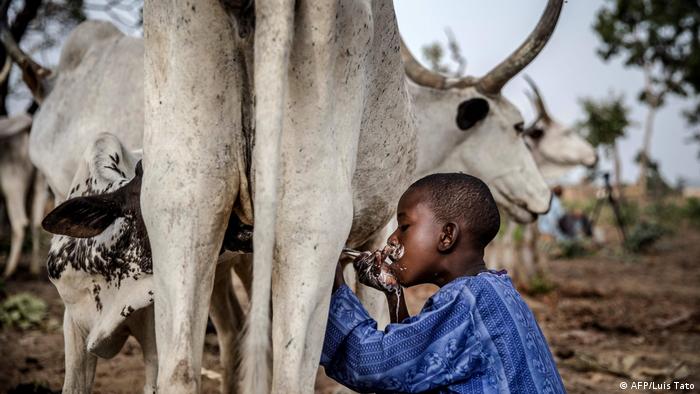
The cow does not need oil

Ahmadu Shehu, PhD.

It is true that the large chunk of Nigeria’s export comes from oil and that Nigeria depends to a great extent on this commodity for economic survival. However, this situation results from economic laziness – one of the many curses that came with crude oil to our country.

Pre-oil era, Nigeria was faring better, leading in many aspects of social and economic endeavours, especially agriculture and technical skills. This diversity of resources made our economy very resilient. Those were the days when Nigeria was a role model to the developing world.

Speaking of livestock and animal husbandry in today’s Nigeria leads to misleading insinuations that some supremacist ethnic group domiciled in the bush wants to hijack the “southern-oil-money” to rear cows.

These claims are not only wrong, but their makers are also pathetically ignorant of national and global economics. The fact is that, all over the world, animal husbandry is mainly economic and not ethnic, religious or regional. It is a matter of income, survival and sustenance. Data from butcheries, ternaries, restaurants, etc., in Enugu, Lagos and Port Harcourt can confirm this.

However, I do not squarely blame the proponents of these narratives for their lack of understanding of the fundamental economic outlook of this country. Instead, I assume that this kind of utter ignorance is also one of the curses caused by crude oil in Nigeria. Just as it killed all other viable sectors of our economy and transformed our political leadership into a set of docile, sit-and-wait set of people, it has succeeded in destroying our intellectual discourse. Today, all socio-economic conversations are viewed from the narrow prism of petrodollars.

Thus, our socio-economic and political conversation is now bereft of ideas and far from our social realities. It is sad to see many people failing to appreciate the glaring fact that six decades after the discovery of oil at commercial quantity, this country did not only fail to develop but has moved backwards in all indices of human and social development.

The topmost hierarchy of political leaders, policymakers, and civil society has failed to learn one simple, practical truth: our country’s strength, resilience, and prosperity are not in oil. They are right there under our feet and noses, at the backyards, waiting forever to be harnessed and utilised. Nigeria can take a cue from our mates, ala Malaysia, Indonesia, Brazil, India, etc.

Now, back to the “oil-money” narrative. Are herders and cattle breeders asking for “oil money”? No. In fact, herders do not care – or are not interested in crude oil in Nigeria.  Secondly, those of us advocating for the development of the livestock sector do so for the economic advancement of Nigeria, in general, and not just the herders, or “Fulani”, as would say the bigots.

For one, agriculture (livestock and crop) is the largest contributor to Nigeria’s economic growth. It contributes 40% of economic activities, employing over 60% of our country’s population – that is, one hundred and sixty million Nigerians.

You may think that the livestock sector is economically barren and that governments and other sectors of the economy do not benefit from it. You may even argue that only the “malams/awusas” benefit from the economic resources in this sector. But, you are dangerously mistaken, and I will show you why.

In Nigeria today, livestock is a multibillion-dollar business sector. Estimates by the Federal Ministry of Agriculture show that each year, Nigeria produces (and consumes) at least 18.4 million cattle, 43.4 million sheep, 76 million goats, 180 million poultry birds, among other things. Multiply these numbers to any amount of years and see the contribution of the livestock to the Nigerian economy.

For demonstration, let’s assume each of the 18.4 million heads of cattle is valued at $200 only. What you get is a staggering 6 billion dollars – three trillion naira per year – i.e. about ¼ of the country’s annual budget.

My experience in cattle businesses tells me that governments at all levels make a minimum of 10% direct revenue on each cattle, ranging from the market, local government, state, transportation, etc., levies that trail the cattle market chain.

But, this is just for cattle. These numbers multiply exponentially when other varieties of livestock come into the equation. Now, consider additional extended revenues on factories and sub-sectors that rely solely on livestock, such as leather, meat, and dairy.

While doing the maths, please remember that these raw and food materials serve Nigeria, one of the largest markets in the world, the most populous African country and the largest economy on the continent. Thus, the economic resources and taxations derived from this sector are massive!

Therefore, the question that naturally follows this arithmetic is: How much is Nigeria’s budget for the development of this sector and the millions of people it employs? 

As Nigerians, we are aware of the 12% derivation to the so-called oil-bearing states at the expense of other equal federating units. The basis for this disparity is to enhance the development of the immediate oil-bearing communities.

Similarly, a large chunk of the oil income is reinvested in the oil and gas industry development. Businesses and individuals in this industry benefit tremendously from these incentives and investments.

On the contrary, the Nigerian budgetary allocations for agriculture, particularly the livestock sector, have been very meagre and far below the lowest AU benchmark of 10%. For instance, from 2015, the allocations for agriculture have been below 2% of the budget, receiving a paltry N160 billion (1.37%) in 2020.

Obviously, this is far from commensurate to the economic and financial contributions of the sector in Nigeria’s GDP. It also negatively affects the lives of the majority of Nigerians whose livelihoods depend on agriculture.

While the government’s spending on agriculture is pathetic, the situation is even worse in the livestock sub-sector. For instance, under “promotion and development of animal production and husbandry value chain”, the 2020 budget proposes only N546, 156, 792 for the whole livestock sub-sector. Note that this amount was not budgeted for just cattle, sheep, or poultry but Nigeria’s entire livestock value chain. And that is just a proposal, not actual spending.

This, given the resources, financial and material contributions of the sector, is an insult on the human senses of any keen observer. Moreover, juxtaposing this estimate to that of the crop value chain makes the economic injustice against livestock producers even more glaring.

Therefore, it appears that livestock production and development are grossly marginalised across all three tiers of government and even within the agricultural sector. I had hypothesised elsewhere that this disparity is one of the major causes of the setbacks in Nigeria’s efforts at agricultural development.

Now, in this socio-economic reality, the governments and other Nigerians outside the economic chain of livestock anticipate a quick, sufficient, and even elegant modern livestock breeding system in Nigeria.

Worse still, the government expects these people who suffer from this severe lack of financial support, access to social development and political representation to be absolutely immune to the social consequences of this economic inequality and injustice.

This, without fear of contradiction, is an impossible mission. For, we have learned from the works of the philosopher-king, Emir Muhammad Sanusi II, that every economic situation bequeaths social reaction(s), as humans are not only social but also “economic animals”.

The points derived from the previous discussion are that herders and livestock breeders do not need oil or its by-products to grow livestock. They do not also ask for money accrued from the oil and gas industry to be invested in developing the sector.

What the livestock needs – which is legitimate and necessary – is the reinvestment of a fair portion of the wealth it creates back into the sector and the social development of the herding communities.

By and large, herders are not asking for “oil money” because the cow does not need oil to prosper. We are only saying that the money accrued from the livestock sector – a small portion of our contribution to the nation’s economic basket – be reinvested into the very sector that produces it as is done for other salient sectors of the economy. Full stop!

Dr Ahmadu Shehu is a herdsman and academic. He can be reached via ahmadsheehu@gmail.com.

Still seeking justice, six years after the Zaria massacre

By Najeeb Maigatari

It has been six years since the inhuman massacre of unarmed citizens in Zaria perpetrated by the Nigerian army under the guise of “alleged road blockade” to the then COAS, Tukur Buratai.

According to activists, civil organizations and analysts, the massacre is among the “notable human rights violation since the return to democracy” in Nigeria.

While the Nigerian army claimed that their personnel acted within laws of engagement, a finding by the Judicial Commission of Inquiry into the attack established by Kaduna State government in 2016 remarks, “The Nigerian army exerted disproportionate and excessive force against unarmed, defenceless civilians”.

The Commission further indicted top army officials for their role in the heinous crime and recommended that they be brought a book. Unfortunately, not one of them has been brought to justice to date, while the victims of the massacre and their grieving families still immeasurably suffer in silence.

In his testimony before the Judicial Commission of Inquiry, the then Secretary to Kaduna State Government noted that at least 347 people were killed and buried in mass graves. On its side, the Islamic Movement in Nigeria compiled a list of over 700 people missing since the incident.

During the attack, men, women, children and the elderly were mercilessly killed without regard for stipulated laws against such crime. For instance, the leader of the Islamic Movement, Sheikh Zakzaky (H), witnessed how his three sons, including a fifteen-year-old Humaid, were gunned down before his eyes.

The breadwinners of several families were killed, thus turning their wives into widows and children orphans. Some families were wiped out completely. For example, Dr. Bukari Jega, a lecturer at the University of Abuja, was killed alongside his wife and only daughter- a 6 months old Batoul; and several other families too numerous to mention.

Moreover, several hundred individuals were fatally shot at very close range during the attack, as a result of which some of them have become disabled, and others are still living with life-threatening injuries of great concern.

The release of the leader of the Islamic Movement in Nigeria and his wife from captivity after spending almost six years in illegal detention is commendable. It signifies a step forward to ensuring justice to the victims of the Zaria Massacre. We, therefore, hope that the President will live up to his words and ensure justice is also served to other families who have lost their loved ones in the incident.

There is no democracy without justice: irrespective of gender, tribe or religious inclination, it’s the pillar to peaceful coexistence in a society. The Zaria Massacre is amongst the recorded crimes against humanity in our time, and we, therefore, six years on, still demand justice for the victims and their families.

Maigatari writes from Jigawa State and could be reached via maigatari313@gmail.com.

#SecureNorth: Arewa is falling apart

By Muhammad Sagir Bauchi

The deteriorated security situation of Nigeria and specifically its Northern region is no longer news. Insecurity and terrorism have become the norm to its daily life. The North is now used to ugly situations. From paying enforced levies to terrorists for permission to farm, paying kidnappers ransom and other related dues is also the new normal, especially in the Northwestern part. Upon all these calamities, the usual response from the government is not beyond “press release” or “rhetorical warnings”, but with no effort to translate these rhetorics into concrete action.

If we count the number of terrorist attacks in Northwestern states, excluding those of the Northeastern states, we’ll surely make a bulk of the report. In all these incidents, President Buhari is nowhere to be found. His presence is only felt in press releases from his out of touch paid spokesmen. One consistent thing the presidency is good at is sending a delegation to represent him in the mourning spots. However, when it comes to attending foreign summits or international conferences (no matter how insignificant they are), a delegation of duty is not an option; self-presence is the order.

As the saying goes, good things should be reciprocated with good, for that is better. One can easily recall those days; when the President was actively everywhere, scouting for acceptance and mandate to lead the country, he had the chance of visiting almost all nook and crannies of the North, crying on cameras purportedly for the nation. That emotional gimmick tricked Northerners into believing that the 2015 presidential election was the last chance to secure a fair deal of social contract.

People did everything to ensure that Buhari was elected to give the country a new lease of life, where lives, properties, and rights are prioritised. Unfortunately, while doing that, lives and properties were lost to that cause. Some were sent to their graves early for standing up to actualise the birth of a promised new dawn. Based on that, these troubled spots deserved a sincere first-hand visit, assessment and action by the president, especially whenever a terror of high magnitude happened in the region. His in-person visit doesn’t mean instant eradication of its problems, but at least it would give them a sense of relief to the victims and rebirth ordinary person’s confidence in the government.

After the recent brutal burning of some innocent passengers in Sokoto State by some bloodthirsty terrorists, the assassination of Katsina State commissioner and 16 faithful in a mosque in Niger State, tension in the atmosphere and unusual critical voices were raised. Some choose to walk for peaceful street protests in their states, and others bombarded social media with protest hashtags. That shows how worried Northerners are about the insecurity bedevilling them and their region. Yet, despite this development, some VIP pens and voices were dead silent, and that makes me wonder whether they still exist or are hidden somewhere else.

If not because wishes are horses, I would’ve said that I wish the mighty pen of the current Minister of Education that pinned down “Tears of Haramain I & II” is still alive to pin the tears of present North. It also took me back to nostalgic moments, where the current Minister of Communications and Digital Economy’s tearful voice was name-calling the previous administration to take action on the lives of Muslims murdered in some Northern States. Not long ago, the most powerful leader of the Tijjaniya Movement (Not the Khalifa) alive, Sheikh Tahir Bauchi, met the President and discussed the unprovoked killing of his followers along Jos-Zaria Road on their way back home after their annual Zikr. But today, all those voices and powerful pens are nowhere to be heard.

Moreover, a heavyweight politician from the North, who is also eyeing the seat of presidency, boarded a plane to a Southern State, where he met the Governor of that state and discussed the situation that led to senseless violence that resulted in killing HIS fellow Northers! Additionally, when an ongoing project of a 21-storey building collapsed in Lagos, Northern States governors went all the way to Lagos to sympathise and show solidarity to the victims of that catastrophe, the Governor and people of Lagos state over that sad occurrence. Yet, despite this humane gesture, no Lagos or any Southern state governor has set his foot in Sokoto to sympathise with the victims and the State government!

Northerners in the diaspora are also left behind as they are only good at calling the poor masses in Nigeria to take over their streets for a protest without any effort from them. But, as we all know, their countries of residence are more comfortable than the whole NIGERIA. As such, they can stage a protest in their Nigerian Embassy. But we only heard the voice of a few among them.

In my opinion, if we want reasonable action from the President, we should apply the approach of the Coalition of Kano Ulama. I mean the method they used earlier this year to curtail the activities of someone they regarded as a reckless and blasphemous scholar in their domain. The coalition used a single voice and stood through a consensus of respected leadership that forced the government to take the desired action. The coalition set aside all ideological differences and faced what it considered a common enemy of all. Therefore, the region’s highest traditional rulers, religious leaders, politicians, and business community should apply the same strategy to face the government over this unprecedented waves of insecurity in the region. This will surely force the president to go beyond press releases or rhetorical warnings to these heartless terrorists.

Lastly, to borrow from the words of the #Nomorebloodshed Movement, here are our simple demands to the President;

  1. Federal Government should immediately organise a national security summit with all critical security stakeholders within and outside the government, with the sole objective of getting new/other ideas and approaches to end this state of insecurity.
  2. All the security forces and agencies that are often deployed to ensure successful elections in recent times should be deployed to all the theatres of insecurity across the nation immediately.
  3. The Federal Government must publish the names and identities of all the financiers of all insecurity as promised by both Mr President and the AGF, and they should be made to face the full wrath of the law.
  4. If the President cannot guarantee peace, security of the lives and properties of Nigerians, we at this moment advise that he respectfully RESIGN.
  5. We hereby unequivocally declare and submit that no Nigerian blood is less sacred than that of other compatriots from any part of Nigeria, enough of unwanted politicisation of these killings and insecurity.
  6. We are no longer at ease with the ongoing “condemnation” of the actions of criminals among us. We call for the State to effectively go after these criminal terrorists, apprehend them and put them before the courts of law.

May peace reign in Nigeria.

Sagir writes from Bauchi State and can be reached via ibrahimsagir1227@gmail.com.