Opinion

Bauchi State and politics of deforestation

By Abdul Ahmad Burra

Recently, a committee was inaugurated by the Bauchi State Governor, Dr. Bala Abdulkadir Mohammad to implement the Government’s White Paper on the report of administrative committee on land use abuse, illegal allocation and farmers and herders clashes in local government areas of the state.

This news, to some extent, soothed our hearts that have been burning helplessly for several months because of the impunity and lawlessness being perpetrated by government officials and politicians in our local governments which endangered everybody’s life in the State.

The scandalous sale and allocation of the historic Lame-Burra Game Reserve and Burra-Tamba Grazing Reserve by a group secretly formed by local government officials and local politicians is the heaviest blow we have ever suffered as community and environmental activists.

About two decades ago when we started our activism to protect our forests and reserves against deforestation and other harmful activities so as to avoid environmental disasters and other negative effects, we thought by now, the problem of deforestation in our area would have been reduced or eliminated completely.

Unknown to us that the menace would not only grow beyond our capacity but would reach the level that even the forests and its components would be put to sale by people who have the mandate of protecting them.

The Lame/Burra Game Reserve, which covers about 2,351.92 km2, is situated in Toro and Ningi Local Governments Area and the second largest after Yankari Game Reserve. The area was designated for nature reserve and maintenance of a natural habitats.

One will never expect that this Game Reserve being one of the greatest treasures and tourism attraction sites of the State will be carelessly managed and left to the hands of local politicians who subsequently decided to sell it to the highest bidders.

The intensive atrocity against our environment started after the local government election last year. The new local government officials and some local politicians set up the so called anti deforestation committees that masqueraded as tax collection outfit to collect monies from loggers.

Motivated by greed and the huge amount money they generated without hitches, the local government officials, local politicians and a certain bureaucracy of our traditional institution decided that more money would come if they allocate some of the forest reserves in the local government to themselves, cronies and any interested buyer. They immediately commenced their grand plan with unbundling and allocation of farmlands in the famous Burra-Tamba Grazing Reserve which is under the control of Ningi Local Government Council. The Reserve is located along Burra-Ningi road and used to be the beautiful forest with beautiful landscape and topography that welcome and attract travellers to Burra. Trees and other plantations were cleared, loggers and charcoal producers dominated the Reserve.

Their next grand plan was to sell out the Ningi Local Government’s portion of Lame-Burra Game Reserve to people but unlike the grazing reserve, it is under the control of the State Government, thus they don’t have its absolute control, but they hatched a plan. They formed a herders and farmers peace forum and made some religious and PDP leaders, Fulani leaders, farmers and politicians as members. The Forum voted some millions of naira and visited a certain Director in the ministry supervising the Game Reserve. They presented a request for allocation of the Reserve to farmers because it became hideout of criminals. They also claimed that the Toro Local Government’s portion of the Reserve has already been allocated to farmers and the Ningi portion is being encroached by the people of Toro.

The Director reportedly gave them approval to sell out the Reserve. Allocation commenced in which they started with collection of two hundred thousand naira and one hundred and fifty naira from farmers for allocation of farmlands. They also allocated hundreds of hectres of farmlands to themselves, politicians, traditional institutions and some notable individuals. When the news of the allocation spread, people from far and near trooped to the Forum for allocation. The price skyrocketed to one and two millions for allocation because Fulani herders from Zamfara, Sokoto, Katsina, Kaduna, Kano, Plateau and many states saw opportunity in acquiring the Reserve. In a short period of time the Forum generated millions of Naira. Loggers from all parts of the country trooped to the former former Game Reserve and up to today, the Reserve is the new mecca for charcoal, timber and firewood.

What is more dangerous in the activities of this Forum is that they don’t care about the profile of these herders coming from far and near to buy land in the Reserve. All they care was the money. It is alleged that many fleeing bandits and kidnappers from Zamfara and Katsina used proxies and relatives to buy farmlands in the Reserve.

Environmental activists and community leaders alarmed the government on the scandal and dangerous trend in the local government which is capable of plunging the State into serious security and environmental disaster. These local politicians would politicize any move to stop these activities and this slowed down any reasonable action from the Government.

Whenever an attempt is made to stop the atrocities, they would take bags of money and see the people at the top. It reached a level that these people have bribed almost every individual or institution we think we could get help. Also all attempts by some officials from the State to visit Burra and see the situation would be blocked in Ningi by the local government officials and certain bureaucracy of the traditional institution.

The District Head of Burra Alhaji Ya’u Shehu Abubakar has been the greatest force in the fight against deforestation but he is lone in the fight thus he watched them helplessly. Knowing that he was the major threat in their deforestation and farmlands allocation business, the local government officials connived and got him suspended from office. They used politics and other administrative tactics to hang him. The suspension of Sarkin Burra aided the smooth running of their atrocities up to today because the fear of Sarkin Burra has been one of the major factors that protected our forests from being destroyed for many years.

Later the State Government cancelled all the allocations in the reserves and set up a committee to investigate. But this didn’t stop the atrocities. They paused on the allocation and concentrate on logging and massive production of charcoal from the Reserve. Logging is now business of the day in all forests of Burra. This continue to fetch them money in which they use to carryout out some personal and political activities.

It’s obvious that local politicians see our forests as political bounties. Whenever an election is held, the target of the members of the winning party is to take control of forests and reserves in their communities. This twist of politics started more than a decade ago but worsened from 2020 to date.

The 2020 local government election in Bauchi State has produced set of leaders and officials who have strong desire to accumulate wealth by hook or by crook, to live a flamboyant life and to prepare for 2023 election in which many of them are nursing ambition. Because there is little money to steal from the local government treasury, the officials and local politicians with connivance of traditional institutions resorted to logging, illegal allocation of lands and forest reserves and other sharp practices. The legacies that stood the test of time are being destroyed by these local politicians.

Nobody will think that after many actions taken by Governor Bala Mohammad against the then caretaker chairmen of Ningi, Darazo and Misau as well as some traditional rulers on their involvement in deforestation and farmers and herders clashes, there will be any local government official or traditional ruler that will support or take part in these nefarious activities. But the crop of leaders and politicians we have at the local governments are doing more atrocities to the reserves and the environment and fueling more ill feeling and chaos among farmers and herders.

Most government officials and local politicians don’t share the vision of the present administration in protecting the environment and preventing farmers and herders clashes and it is clear that the warnings and policy pronouncements by Governor Bala Mohammad are falling into their deaf ears.

When I heard the Chairman of the State Independent Electoral Commission saying another local government election will take place in Bauchi State next year, my heart sank. With the massive urge for corruption and desire to destroy legacies bequeathed to local governments including forest reserves, lands and properties with impunity and audacity by local government officials, local politicians and bureaucracies of traditional institutions in Ningi and other local governments, I have the opinion that we don’t need any local government election in Bauchi State. Local politics in many local governments is about allocation of land and deforestation. This trend if left unchecked, will worsen security, social and environmental problems in the State.

The DIG Sani Muhammad led White Paper implementation Committee has a lot of work to do in investigating the institutionalized destruction of forest reserves in the State. Many big names in local governments are involved. The magnitude of the negative effects of these activities should be great thing of concern for any patriotic son of the State. Thus they should spare no one in their task.

I am also of the view that after punishing all people found wanting in these atrocities against the State, Government should come up with workable policy about all forest reserves in the State with a view to protecting and strengthening them for the optimal benefits of the State.

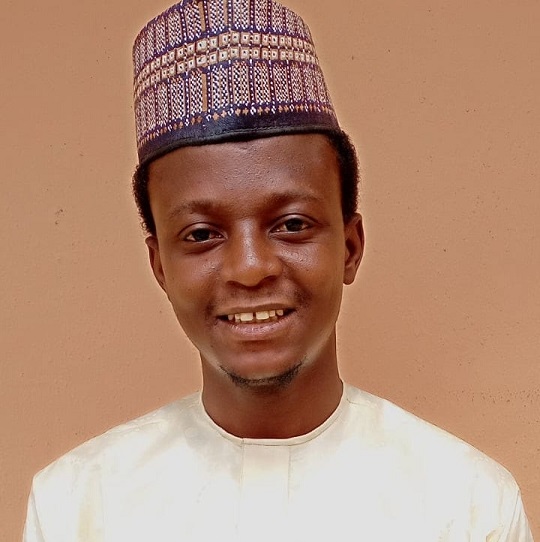
Burra is a farmer and teaches Mass Communication at Bauchi State Polytechnic

Abdul Ahmad Burra teaches Mass Communication at Bauchi State Polytechnic.
From Proliferating Worship Places to Empowering Worshippers: A Reflection on Philanthropic Reprioritization in Nigeria (I)

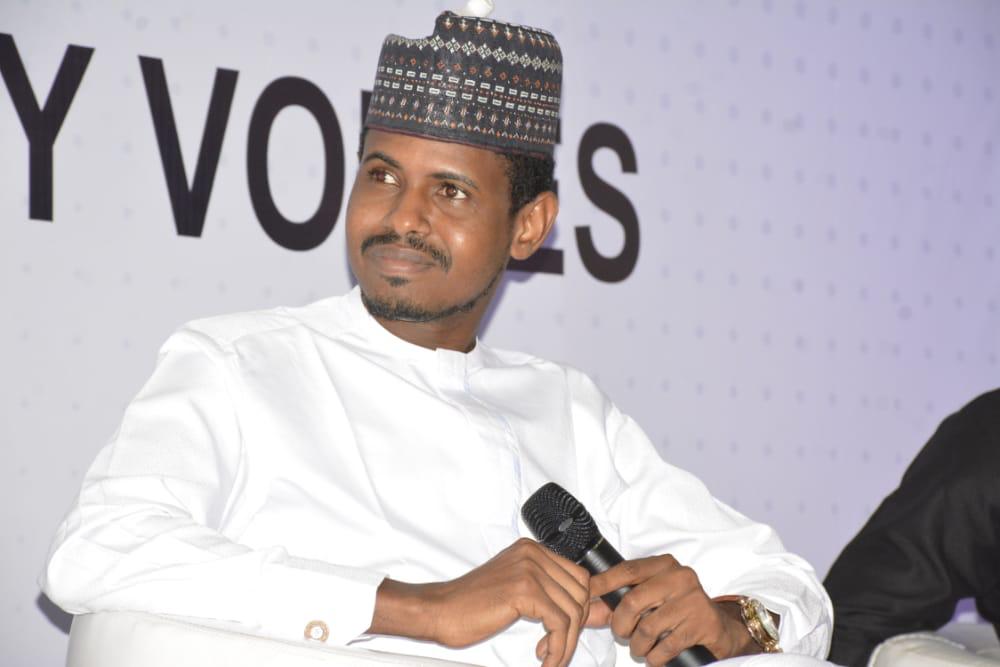
By Abdullahi Abubakar Lamido

Alhaji Halilu is a popular, wealthy businessman. Famous for his continuous investment in constructing mosques, people in his town, surrounding villages and neighbouring states came to know him as Alhaji Mai-Masallatai (roughly, the Mosques Builder). His main motivation is the authentic hadith that promises a house in paradise for anyone who builds a mosque for Allah.

Thus, whenever Mai-Masallatai is approached with a request for mosque construction, he gives an automatic positive response. Alhaji dedicated all his philanthropic budget to building mosques, with virtually zero allocation to any other act of charity. He never says no to a mosque request. Within some time, he had constructed mosques for almost all the communities within his town and neighbouring villages. His ultimate goal is to own wonderful castles in heaven, and, Alhamdulillah, he has got a guarantee for that in constructing mosques from an infallible mouth. 

Now, three things happened. One, as there are not many communities lacking mosques, people started requesting him to repair the mosques he built for them last five, ten or seven years; to rebuild their mosque, repair it, or buy them new sound system, new carpet for the mosque, electricity generator, or “solar” and so on. Mai-Masallatai gradually transformed into Mai gyaran Masallatai, from building mosques to redecorating and making existing mosques “befitting” and ultramodern.

The second trend then followed. Since Mai-Masallatai is not the only aspirant for paradise, other wealthy persons joined the mosque construction endeavour. As a result, the number of mosques increases – two or more mosques in an unnecessarily close distance. A  community that needs one mosque would request a second one for flimsy reasons; we have Sheikh XYZ, who should be an imam and has no mosque; why not get one for him so the society would benefit from his imamship! And any rich man who builds a new house would ensure that a mosque is embedded from the inception of the architectural design. So, each neighbourhood or street, and almost each “big” house, has a mosque attachment built by a person who wants paradise. Soon the third issue began to arise; imams scarcity.

It is noteworthy that Mai-Masallatai and all his emulators live and do business within a Muslim community that has thousands of orphans who live in hunger, disease, illness and squalor. They coexist with hundreds of widows who survive in shabbiness, battling the spiritual ills, psychological traumas and socio-economic vulnerabilities associated with poverty, ignorance and starvation. They reside in neighbourhoods bedevilled with noise, air and dirt population, with zero consciousness of environmental challenges; where people often urinate and defecate in the open, at public passages and places as crucial as mosques and marketplaces and stadia. They live in communities that use firewood as an energy source but with near-zero interest in planting trees.

Mai-Masallatai builds mosques for communities where well above 80% of the people cannot correctly recite the Fatiha and are mostly ignorant of the basics of purification, ablution and prayer. The worship places are beautiful, “befitting”, and “ultra-modern”. But the worshippers are ultra-ignorant, extra-hungry and super-poor. While the mosques are decorated, the mosque attendants are neglected.

The community severely lacks qualified imams and doesn’t have a plan to train religious scholars or imams. Nearly all are accidental scholars and imams. Most imams are less qualified, semi-qualified, or simply unqualified. Those with minimum requirements have no access to any “on the job training” and retraining. They have no grounding in jurisprudence nor appreciation of the complexities of their time and place. They might know a little of actually elementary Islamic texts, but not of their context. They continue to recycle their khutbas, reading for their congregation – often with a lot of mistakes – imported sermons presented for the 20th-century audience in Egypt or Morocco or Saudi Arabia or Algeria (depending upon the inclination of the imams), which are compiled in a collection of sermons or al-khutab al-minbariyya. The sermons are in Arabic, reread for an audience dominated by over 90% of people who do not understand Arabic except, perhaps, “Allahu Akbar”!  

Dear reader, to what extent is your community better than Mai-Masallatai’s? Should building worship places take priority over building the worshippers? Should we continue to construct “befitting”, “ultramodern”, and “world-class” mosques for largely poor, ignorant and confused Muslim communities? Should we, while, of course, building mosques where they are truly needed, not also prioritize producing a Muslim population that is religiously educated, morally upright, intellectually sound, socio-economic dignified and religiously conscious. What better serves the essence of the mosque as an Islamic institution: a beautiful building or an educated congregation? Should building mosques be the only priority in a village where there is not even a single person learned in the Qur’an and the jurisprudence of purification, ablution, prayer, fasting, and other rituals?

More questions are begging for answers. For example, what will be more critical between saving people’s faith through addressing their basic needs of life, thereby shielding them from the onslaughts of evangelism and other anti-Islamic missions on the one hand, and mere building a mosque where there are no qualified imams and scholars to teach them creed and worship on the other? Should we continue to have “comfortable places” for ignorant and hungry worshippers rather than building conscious and educated worshippers? 

Given the current religious and socio-economic realities of Muslims in Nigeria, what should be the focus and priority areas of intervention in terms of philanthropy? Please don’t mistake my position. No Muslims will disagree regarding the centrality of mosques as Islamic symbol numero uno. Where there is no mosque, it is a collective responsibility upon the Muslims to build one to the best of their ability. What, however, may need reflection is the question of when, where and why building a mosque should take primacy vis-à-vis other Muslim priorities and when not. Is it not imperative, for instance, for us to begin to remind ourselves that much as we can get a shortcut to paradise through building mosques, there are other philanthropic acts that not only guarantee paradise but even assure of a choice area and unmatchable edifice in Jannah?

Abdullahi Abubakar Lamido is the Chairman Zakah and Waqf Foundation Gombe, Nigeria. He can be reached lamidomabudi@gmail.com.

Restraining the illegal circulation of firearms in Nigeria

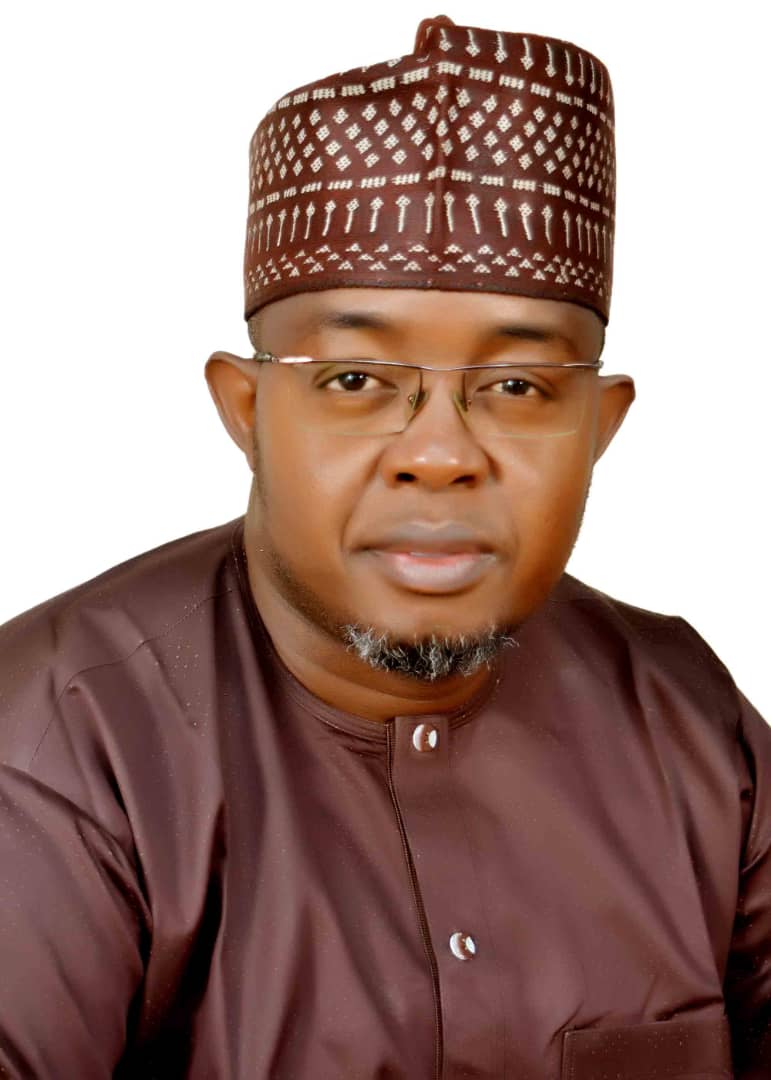
By Mukhtar Ya’u Madobi

The proliferation of Small Arms and Light Weapons (SALWs), occasioned by illegal and porous national borders and a booming business of gun-running, are the main factors fuelling Nigeria’s security challenges, giving rise to criminal activities across the country.

The proliferation of SALWs is a global phenomenon arising from global conflicts. According to a study conducted by the Geneva-based Small Arms Survey (SBM), it is estimated that more than 857 million SALWs are currently in circulation aside from twelve billion rounds of ammunition produced annually. An estimated ten million SALWs are in Africa, with one million in Nigeria.

This is connected with previous and ongoing conflicts in West and North African countries such as Liberia, Sierra Leone, Cote d’Ivoire, Chad, Niger, Mali and Libya. The proliferation of SALWs aid non-state actors, including Boko Haram/ISWAP terrorists, bandits, militants etc., while undermining the state monopoly of instruments of coercion. The threats posed by the proliferation of SALWs are of such magnitude that a security strategy that contemplates monitoring their flow and use is required.

Another report by SBM Intelligence noted that about 6145000 SALWs are illegally circulating among civilian non-state actors and criminals in Nigeria. Meanwhile, the country’s security institutions have a paltry 586600 firearms in their possession.  Indeed, the proliferation of arms across borders along with human trafficking and drug trafficking, especially in the Sahel region, ranks high on the chart of criminal activities constituting threats to national and regional stability in Africa.

Experts had identified a lack of effective legislation and enforcement mechanisms as a major reason SALW proliferation has a significant impact on crises both within and across many national borders.

To stem the rising tide of illegal weapons circulation, the federal government has established the National Centre for the Control of the Small Arms and Light Weapons (NCCSALW). The centre is under the Office of the National Security Adviser (ONSA), Major General Babagana Monguno, with retired Major General AM Dikko as the Pioneer Coordinator. The National Security Adviser said the centre would operate similarly to the counter-terrorism and cybersecurity centres, both under his office.

The NCCSALW was established to replace the defunct Presidential Committee on Small Arms and Light Weapons and is expected to serve as the institutional mechanism for policy guidance, research, and monitoring of all aspects of SALWs in Nigeria. Apparently, the federal government believes that the transition from PRESCOM to NCCSALW would provide more effective coordination and monitoring of progress regarding the proliferation of small arms and light weapons. When fully operational, the NCCSALW would have six regional offices that will work closely with security and intelligence agencies to prevent and control proliferated arms and track weapons in the hands of non-state actors.

Among several functions, the National Centre will be responsible for controlling the proliferation of SALWs in Nigeria, implementing strategies, plans, and policies for eradicating SALWs, and supervising the implementation of same by relevant government bodies. It will also create and maintain small arms and light weapons register and a national database, receive reports on firearms registration from the Nigeria Police, and update the database with such information.

In addition, it will also register, store and destroy firearms and ammunition possessed illegally by security agencies, criminals and other non-state actors, maintain a database of registered firearms dealers in Nigeria, among others. Furthermore, the centre will be responsible for updating and transmitting the national database to the United Nations (UN), the African Union (AU) and the Economic Community of West African States (ECOWAS).

In its relations with these inter-governmental bodies, the National Centre will identify legitimate national defence and security needs and obtain the required exemptions from specific international protocols to meet these needs. The National Centre is also empowered to carry out public education and awareness at national, state and local levels, to involve Nigerians in the efforts to control the proliferation of small arms and light weapons.

No doubt, the establishment of the NCCSALW is a move in the right direction. Still, to achieve maximum impact, it is expected to open up new regional and international cooperation and strengthen existing efforts.

In 2001, UN countries adopted the Programme of Action to Prevent, Combat and Eradicate the Illicit Trade in Small Arms and Light Weapons in All Its Aspects.

In the instrument, member states agreed to, among others, improve national small arms regulations, strengthen stockpile management, ensure that weapons are properly and reliably marked, improve cooperation in weapons tracing and engage in regional and international cooperation and assistance.

According to the UN, one of the most critical components in the fight against SALWs proliferation is weapons tracing. Hopefully, when the centre discharges its mandate fully, it will undoubtedly lead to a drastic reduction in national, sub-regional and regional illegal possession of SALWs, which will be crucial in mitigating the rising level of armed violence.

The NSA has recently declared that the government is preparing to constitute a security outfit responsible for safeguarding the nation’s porous borders. The move is very apt because it will curb transnational organized crimes, thereby reducing the level of security challenges currently facing the country.

Mukhtar wrote from Kano via ymukhtar944@gmail.com.

TETFUND at 10: The giant strides of the ‘Apostle of Research and Development’

By Tahir Ibrahim Tahir (Talban Bauchi)

Tertiary Education Trust Fund (TetFund) recently celebrated its ten years of service, having gone through many changes in its functions, duties, coverage and composition. It had existed under different names before now. Still, the amendments to the act establishing it have turned it into a Tetfund, with more coverage of tertiary education in the country.

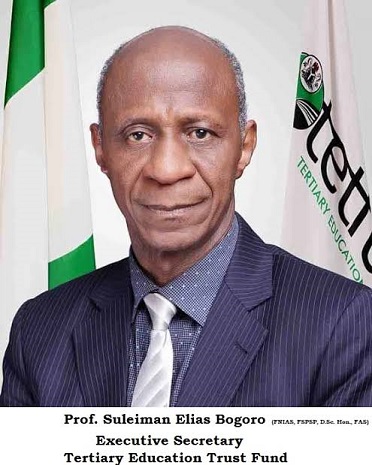
At the Tetfund at Ten event, its Executive Secretary, Prof. Suleiman Bogoro, was introduced as the apostle of research and development. A very apt description, narrating how he has turned the tide of the impact of Tetfund from infrastructure to research. The previous administration first appointed Bogoro, and barely two years after, the new administration of President Muhammadu Buhari (PMB) relieved him of his duties. Not long into the PMB administration, Bogoro was again re-appointed. This is a glaring testimony of the quality of stewardship he brings to the running of Tetfund. Tetfund staff rolled out the red carpets for him and welcomed him back to their fold amidst celebrations.

At Tetfund at 10, it was disclosed that 152838 infrastructural projects had been executed across the country. Thirty thousand lecturers have also been sponsored for Masters and PhD programmes. In addition, 68000 academic and non-academic staff of tertiary institutions have also been sponsored to attend local and international conferences. Tetfund has also supported 71263 lecturers under the Teacher’s Supervision Programme. Moreover, over two million books and 152000 E-resources have been procured by Tetfund.

The apostle of research and development came to improve funds for The National Research Fund, which had started with seed money of just 3 billion naira in 2011. Bogoro saw this fund’s growth by over 50 per cent, to an unprecedented 8.5 billion naira in 2021. So far, 9 billion has been accessed by lecturers to fund their research activities. Tetfund played a significant role in Covid-19 research. Tetfund approved four mega research clusters for Covid-19 vaccines and drug research and security and dairy research. The clusters had within the range of 250 million to 450 million to fund their research activities.

As the most pushful advocate for research in Nigeria’s tertiary institutions, Prof. Bogoro has achieved near-global fame among education sectors’ stakeholders. In recognition of his efforts, Afe Babalola University, Ado-Ekiti, named its research centre after him. This particular university is not even a beneficiary of Tetfund’s interventions and so cannot be accused of repaying him for any interventions in their school. Speakers at this event said Bogoro had earned for himself the appellation of Senior Advocate of Research, SAR. Bogoro emphasises advancing learning through research.

True to Bogoro’s advocacy for improved research and development, the Federal Government just received a draft executive bill for establishing the National Research and Development Foundation led by Tetfund. Bogoro, who received the bill on behalf of the Minister of Education, Mallam Adamu Adamu, thanked the Justice Ministry for drafting its staff to the exercise. This is a direct drive in turning Nigeria into a knowledge-driven economy. At the event, Bogoro stressed that Nigeria’s economy could not be competitive if it did not institutionalise Research and Development. He said that the most competitive nations placed innovation and creativity as the lead elements that drive society.

The Chairman of the drafting committee, Prof. Yadudu, commended Prof. Bogoro for putting the committee in place and his vision for the Research and Development Foundation. He also said that the country stands to reap bountifully when the bill is passed. “This is a bill which seeks to establish a National Research and Development Foundation to institutionalise, mainstream, and commercialise research and development; promote innovation and support enterprise development for job and wealth creation, for a knowledge-driven economy. This is the key thing,” Prof. Yadudu said.


Tahir is Talban Bauchi.

Without money, you mean nothing to many people

By Alkasim Harisu

In my neighbourhoods, a marriage contract that had stayed long in the making was recently cancelled. I received this news that made my worst news of the month about a week ago. My mother broke this tragic story about two families connected by blood and kinship marriage. They also were and are united by whereabouts. Above all, they once lived in the same house.

The two lovers dated for more than seven years. When the love commerce began, the girl was much younger. The guy, undoubtedly the older love partner, had kept courting the girl despite the difficulties that often arose. He had endured the immaturity girls the age of his date show. Whenever a misunderstanding happened between the duo, the girl would quickly fault him. But the guy would patiently swallow his anger, contrary opinion and eat humble pie even if he was correct. He is the epitome of patience. Because, as people close to him will say, the man epitomises patience in both his social and business intercourse with people. He never picks quarrels with people. He demonstrated more patience when the girl’s family postponed his wedding several times for no good reason because he should have tied the knot two years previously.

To cap it all, this guy was denied the girl on some loose basis. Guess why? He is not wealthy. It is sad to know that riches have capital importance to many of us. They mean everything, so to say. But, like it or not, in many circumstances, the continuation and/or breakdown of a relationship hugely rest upon riches.

I am not blowing my own trumpet, but I can indeed marry off my daughter to a responsible person provided he has got a job, and I don’t mind if he scavenges for a living. However, it is disappointing that today some people hate to give their daughters’ hands in marriage to people that carpenter, teach or plumb for a livelihood, no matter how morally and religiously good these people are. They consider such jobs disgusting and can’t bring themselves close to people in such occupations, let alone associating or identifying themselves with them. But you never can tell; such people can one day become stinking rich. Such is life.

Today, thanks to the difficulty of gaining employment, many people have had to combine jobs. As a result, many folks engage in various occupations, which fetches them a lot of money. I know one of such people who is currently building his own house due to his hard work and commitment.

To our dismay, the family of the girl I was earlier on talking about lost their humanity and sent back the engagement money of this guy. The marriage arrangement lacked architecture with them. This is evident in their frequent delaying of the wedding. They once said they were postponing the wedding to allow the man to complete his house because they did not want their daughter to languish in a rented house. As this occurred, only Allah knows how many sleepless nights the guy had experienced. Anyway, they have sufficiently assassinated their character themselves.

This girl has memorised some portion of the Holy Qur’an. Quite unfortunately, she shows it off. Even though she is not that beautiful, I can say she is averagely beautiful. And that does not matter. These and other reasons made her proudly say she could not wed someone with no gainful job. “Mai na sama ya ci, balle ya bawa na kasa“, the girl would often say. She was saying this because the guy is a jeweller. He is not rich enough to live up to her expectations. But he is responsible and can cater for her.

Towards the end of this love drama, the girl started making new dates. Just imagine the kind of family that permits this with a girl already betrothed. There was a time she got the number of my former colleague. Then, he was newly married. Not long ago, he got his firstborn. Seeing him in our neighbourhood with another co-working friend, she did the unimaginable to get his number. This Prince Charming stole her heart at first sight. No doubt, he came by car; that was why she lost herself to him. She ignorantly thought the car was his.

We share a neighbourhood with the elder sister of the ex-boyfriend. To be precise, she is our next-door neighbour. They rent their house. Shamelessly, the girl did not care to stand with her new boyfriends before her sister-in-law’s house and cousin. “Biri ya yi kama da mutum!” Indeed, she no longer had the guy at heart. Nevertheless, she summoned up all her willpower to do this to provoke her already-broken-hearted boyfriend.

When I passed by the girl’s house, I would often see her a bit far from the guy. I kept wondering how this was happening between lovers. From the perspective of space, the gap between them did not explain a love relationship. Those who study the science of space (proxemics) will tell us more. There is no telling that such a distance speaks about a lack of love. As I saw this, I always became the saddest.

Marriage is known to weld and cement relationships. But this cancelled marriage proposal will only devastate the relationship between the two families. I can’t think of the mess the two families will be in because the girl’s grandmother is the younger sister of the ex-boyfriend’s grandmother.

A lot of people think that peer pressure works on girls. I agree with them. Yes, most girls are misadvised by their close friends. This is even one of the disadvantages of collecting many friends. But this situation makes an exception. The problem originated from the girl’s family because the girl’s birth mother is worldly-wise; she only wants a wealthy person for her daughter. She is money-wise.

Indeed, you are a nobody to many people if you don’t have money. In sha Allah, they are only hoping against hope. The choice or dream husband will not come their way since they abandoned a poor person who sells jewellery for a living.

As the girl is becoming wiser with the passing of days, we pray she doesn’t end up in sexual commerce with people stealing her attention. Money talks, of course. But Allah is Ever-Awake. He will judge the situation.

Alkasim Hariru wrote from Kano. He can be reached via alkasabba10@gmail.com.

President Buhari, are you really a former military leader?

By Mallam Musbahu Magayaki

The insurmountable insecurity dilemma claiming the lives and worldly belongings of innocent Nigerians almost every day for decades is frighteningly very distressing. To the extent that Nigerians have begun to lose complete trust in you before being voted into power, you have assuredly stated that you might put a stop to the long and horrendous event.

Alas! The situation has remained unchanged, rather than erupting suddenly like a wildfire. While Nigerians believed that by the time you were sworn in as the President of Nigeria, all the tough catastrophes would be gone because of the promises you unquestionably made during your campaign. But annoyingly, it has now been revealed that you are not well prepared for the mantle of leadership or that you have lost your administrative blueprint and decades of experience as a former military general.

Sir, no single individual would, in his right senses, expect and even foresee the emergence of the current annoying unfolding scenario in your regime. Why so? If I can vividly remember, on Thursday, February 26, 2015, you pledged to defeat Boko Haram insurgents and other criminal sect activities. You charged the former President Goodluck Ebele Jonathan that “If the government of President Goodluck Jonathan had deployed the same resources to fighting Boko Haram as it had for political ends, the army would have rescued the more than 270 schoolgirls abducted by the extremist movement in Chibok local government area of Borno State” at Chatham House in London on that very Thursday.

Sir, I am sure you are fully aware of the killing and kidnapping of Nigerians almost daily. These ruthless fellows (bandits) have now turned patriotic Nigerians into sleeping with one eye open for fear of being gruesomely killed and attacked by these unpatriotic and salacious humans. No rational father would senselessly have peace of mind while his children were atrociously killed without due course.

Notwithstanding, it’s now clear that these bloodthirsty bandits don’t understand any other language than that of fire-for-fire. However, considering their day-to-day unlawful operations, they don’t want to give up until they are awfully and massively defeated. Therefore, in collaboration with other sub-security units from various states within the federation, the government should take decisive action against those who are traumatizing the peaceful condition of the people as their primary priority.

In conclusion, there is no pathetic excuse Nigerians can subsequently offer you for failing to protect their lives and property. As you swore to protect Nigerians in all possible terms, so too (both the people and their possessions) are the country’s product. If peoples’ lives and personal possessions are not well secured, no existing government would claim to cater to its people.

Mallam Musbahu Magayaki wrote from Sabon Fegi, Azare, Bauchi. He can be reached via musbahumuhammad258@gmail.com.

Why Geography Matters: The need of Geospatial Technique in Addressing Nigeria’s Security Challenge (I)

By: Murtala Uba Mohammed (PhD)

Recently, Nigerian government took an audacious step by throwing a baby and its bath water not only into a river, but to a deep and distant ocean. It was in 2013 that the country in its attempt to reform its educational system particularly at secondary school level, relegated some important subjects to the background; bringing up some newer ones. Subject such as geography and history suffered from this restructuring of making these corner stone subjects- in terms of what they offered in the understanding of man and his physical environment as well as the historical explanation of the past to build the future. Making these subjects optional at the crucial level of building an imprint of human-environment relationships in the minds of our younger is synonymous to drawing the country in terms of a better well-informed society. While one may not completely agree with the argument advanced by the authorities that the reform was made to introduce subjects that aimed at fostering self-reliance and entrepreneurship with a view to curving the rate of unemployment in the country. It is important to note that the reasons given were quite inadequate to justify the need for the replacement. It is imperative to note that a lot were written to convince the government on the need to revert back the curriculum to the status quo, especial considering the importance of the subjects in creating national consciousness and self-awareness in the case of history and on learning about the country and of being foundation to most environmental related discipline in the case of geography. This writing decides to differ a bit, approaching the issue from the perspective of national security challenges.

Nigeria is currently witnessing the most difficult challenge it ever faced in its history and territory; no part of the country is presently spared from one or more security threats. From its relatively wetter southernmost part to its most-drier north, the country is at war with itself, facing threats such as banditry, armed robbery, ethno-religious bigotry, tribal clashes and political thuggery. The threats of Boko-haram, IPOB and to a lesser extend Afenifere are sufficient enough to sink the already overloaded and about to crash ship called Nigeria. Most worrisome, is the daily reportage of killing of its citizenry by both known and ‘unknown devils’ that terrorize almost all part of the country. This is most especially in Northwestern Geopolitical Zone where daily killing and abduction for ransom has become a norm, more especially in Katsina, Zamfara and Sokoto States. In the mid of crisis at the periphery, one hopes the center to be secured; but in the case of Nigeria the ailment has afflicted all her body. Niger state is now so powerless that ‘bandits’ are now having their field days in many parts of it. Just like Niger, Kaduna to Abuja Road is so unsecured that travelers to and from Abuja were compelled to go for rail. Even in the nation’s state, the suburb is unsecured as most part of the country. While most people end up in nostalgic mood, recollecting mainly the past peaceful experiences the country witnessed and some such as general TY Danjuma had long time condemned the country as ‘failed state’, this article hopes the issue will be addressed by deploying the knowledge of this important subject. It is (without any doubt) through geography that colonialism was achieved in the past and it is through it that societies were both dissemble and assemble, creating new states and modifying many ones. The subject can equally be used as discussed below, to arrest the security situation of Nigerian State.

While the values of the geography are so much, this piece highlights some of security related areas in which geography would be of critical support:

  1. Regional Planning

As a discipline geography focuses on space which includes location and its attributes. In order to achieve the aim of place description, geography pays attention to details of location and tries to distinguish one location from another. Doing this helps in identifying uniqueness of an area which forms the basis for regional planning. Because each region is unique, its planning is based on its distinct characteristics which are used to harness its economic potentials. A vast country like Nigeria that traverses many climatic, geological, edaphic and demographic regions, is blessed in some way and have a particular advantage that can be tapped. The inhabitant of the region might have idea about this opportunity(ies), but it is government initiatives that can foster the best use and utilization of them. Regional planning especially at moderate to large scale is a domain of geography, and candidates with sound knowledge of geography particularly its regional sub-field will help a lot in regional planning which is conspicuously missing in the country. The way we are today is that the various entities that make up of the country are lacking in unique contribution each can offer to the country’s development. While governments are doing a lot, they hardly consider regional specialization in their programmes. They are rather imitating one another, and in many instances compete in urban based project. Recently, states in Northwestern Nigeria were suspected on competing in building bridges and underpasses in urban areas rather rural and agricultural development projects. This urban based development may only worsen the situations of the already poverty striking states by encouraging rural-urban migration which put more pressure on urban infrastructure and deprived hinterland its able builders. A combination of edaphic, eco-climatic and relief factor alone can be used in zoning the country for agricultural production which will not only cushion the current poverty level in the country, but foster regional complementarity and economic diversification. The country is also rich considering the various mineral resources gift of its diverse geology which can also the basis for planning. Also its cultural landscape and physiography can form the base for regional planning.

  1. Identifying and Modelling the Crime Hotspot

One of the recent and most used geographic tools is the geographic information system (GIS). As an information system GIS is unique in that it gives emphasis to location in all its analyses; it is the capability of GIS to analyze display and model location-based events and situations that makes it appealing to all other fields and disciplines. Crime and conflicts have both temporal and locational attributes and can therefore be addressed through GIS. With GIS pattern(s) of conflicts and criminal activities can be established in more robust way, and can be arrest in a better way. GIS can tell the areas of high crime probability often known as hotspots with high level of precision. Modelling and prediction can be done for various crime types. This is essential for security and safety of the territory. With good data recording, digital based maps can be produced to inform users on security situation as they travel via road or train. GIS integrates various layer of information which can be used to explain and describe why crime happened in a location or time trajectory. When GIS is employed with it multi-layer combination capability, it has higher tendency to explain three key security questions of when, where and why. With answers to this question management of crime become becomes better. Doing all these require manpower with good background in geography.

Dr. Murtala teaches geography at Bayero University, Kano and can be reached via email: murtalamuhammadu@gmail.com

Learn to listen more, talk less

By Amara Sesay

History is replete with cases of people who listened and excelled as well as those who rebelled. In any case, there was always an exchange of content, and there was a reaction, too.

If anything has mattered over the last 15 or 20 years, it is the shortage of listeners. We have an economy that encourages speed more than anything, and in such cases, the first thing that is suspect is the patience to be calm, which is essential to listening.

And because it’s a lot of hard work to listen, people can only pretend and get away with it. So instead of the total body, which includes listening with the ears, heart and limbs, most people only listen with the tongue. And truth be told, the worst form of ignorance in the world stems from the inability to listen.

To listen with the tongue is to assume you don’t need to hear what others have to say and that you are only quiet out of a false sense of courtesy. It means you already have a lot to contribute, and no new information will be crucial to you. It means you are “loaded.”The problem with such an assumption is that it leaves you with something more dangerous than ignorance; it’s the delusion of knowledge.

Many individuals and civilizations would have made it to the promised land if only they had listened and obeyed. But, unfortunately, most people found delight in their ability to rebel.

While questioning the status quo is neither intrinsically wrong nor evil, the act of listening, even when an enemy is involved, is critical to success.

My advice to the younger generation is: listen more and talk less. That’s the best way to celebrate the gift of two ears and one mouth.

Amara Sesay wrote from Lagos. He can be reached via amarasesay.amir@gmail.com.

Fulani: The endangered species of Nigeria (II)

Ahmadu Shehu, PhD.

The first part of this essay published here highlights the necessary ingredients for genocide which are vividly in the advanced stage in Nigeria against the Fulani, one of the largest ethnic groups in the country. The socioeconomic and sociopolitical conditions that preluded genocide in various countries worldwide have been well documented in history books. Therefore, the worst anyone could do is to fail to see the looming disaster in Nigeria.

Decades ago, some political leaders had set the ball running when Bola Ige, a prominent Yoruba leader, called Fulani the “Tutsis” of Nigeria. Threatened by Fulani leaders’ socioeconomic and political clouds, politicians across the country who saw the Fulani not just as rivals but as a threat to their desired political hegemony borrowed a leaf from Ige’s playbook.

Those were the framers and promoters of diabolic stories against the North and northerners, especially the region’s political leadership. The narratives of “owners of Nigeria”, “northern oligarchy”, “Kaduna Mafia”, and such epithets as the cabal, northern domination, Islamization agenda and the completion of Danfodio jihad were given persistent, often aggressive, currency in the Nigerian public domain.

Another set of narratives to debase the intellectual competence and meritocracy of the North is put behind the federal character, with any northerner attaining success being assumed to be a beneficiary of some affirmative action, sheer luck or even the corrupt Nigerian system, regardless of their proven intellectual and mental capabilities.

This constant and persistent brainwashing has blindfolded a large chunk of southerners to the extent that many of those I meet believe that being Hausa-Fulani, even the richest black man on earth – Alh. Aliko Dangote – did not actually earn his wealth. So some of them would ask if I got some favours to be able to obtain a PhD from Europe, or question my academic job in Nigeria even when I teach them in Hamburg, Cologne or Vienna.

An average southerner has been made to believe that a northerner is an empty shell, a dullard, an illiterate who is incapable of any mental or physical success. Of course, these deliberate, false narratives are geared towards maligning and disorienting the North. But, the North is one large, diverse, but culturally interwoven community that cannot be beaten as a whole. There is, therefore, the need for a scapegoat.

Indeed, the orchestrators of this scheme got a few points wrong, but one thing they got right was the point of attack, i.e. the Fulani. Yes, Fulani, because they are the traditional rulers. They are the religious leaders. They are the political leaders. They have become Hausa-Fulani, and therefore the focal point of unity. The cultural war of the ’70s has failed to disunite the North simply because the Fulani historical and cultural orientation was left intact.

However, an opportunity presented itself when the media stereotyped the Fulani as herdsmen in all the reportage around herder-farmer conflicts – a stone-aged human resource conflict that has existed for ages – but only to be used as a tool for demonization and stereotyping of the Fulani people.

Populist politicians ala Ortom, Darius and their cronies in the North and South of the Niger seized the moment to first and foremost cover up their asses against the glaring failures of their administrations and to complete the agenda for the social, if not geographical, disintegration of the North. It was yet another tool for fighting a perceived Fulani president.

Throughout 2015 – 2019, the electronic, print and social media was flooded with the “Fulani herdsmen” stories. Headlines, editorials, columns, opinions, misinformation, disinformation, fake news – the word “Fulani” became the vogue in the media.

Today, this stereotyping has taken us a step closer to the looming genocide. Displaced Fulani herders in the northwest have become easy targets for recruitment into banditry and kidnapping. While arms dealers, informants, financial collaborators from other ethnic groups have established a business cartel in robbery, banditry and kidnapping, young, impoverished Fulani herders have become the foot soldiers that carry out these physical acts of crime.

Their knowledge of the forests and ecological terrain, their military-like lifestyle, bravery, coupled with the excruciating economic conditions, have made these unsuspecting lads easy prey of the city-based cartels. These are nomads who knew nothing, had nothing, and depended on nothing other than livestock, which is no longer a dependable source of livelihood, as indicated in the first part of this essay.

Millions of nomadic and sedentary herders’ continued destitution provided a vast army for crimes and criminalities we see today. This fact has been confirmed by research and is attested to by the governments. For example, in a recent in-depth study of banditry in northern Nigeria, Dr Murtala Rufa’i of Usman Danfodio University shows that bandits are victims of circumstances and tycoons from all other ethnic groups in the country.

Although this has been a known fact, have we ever heard of Igbo arms dealer, Hausa kidnap kingpin, Bagobiri kidnapper, Kanuri Boko Haram, Nupe informant, etc.? Do we know of Hausa yan-sa-kai, Bagobiri yan banga, etc.? How many people know that bandit Turji is actually ethnically Bagobiri and not Fulani? Why do we hear of “Fulani kidnappers” or “Fulani herdsmen”?

The implications for this sweeping criminalization of a whole community are as dangerous as they are numerous. Firstly, it has set the most united, cohesive ethnic groups, Hausa and Fulani, on each other’s throats. This is the arrow that might break the camel’s back in the scheme of setting the North on fire.

Secondly, it has criminalized the most important northern ethnic group in the sociopolitical front, making political cohesion impossible. Thirdly, it legitimizes crime and criminals by ascribing them to ethnicity or other human value systems. Fourthly, and sadly, that is the last bus stop on the road to Kigali.

When a whole community, ethnic group or society is viewed as criminal, worthless and or dangerous, the natural reaction is a sweeping, conscious and deliberate elimination of the community. Their elimination becomes a duty as the larger society feels unsafe in their presence. And yes, these feelings are illusions but have been entrenched in people’s minds to the extent that restraint becomes impossible.

Today, people (including Fulanis) consciously or subconsciously talk of killing the “Fulani” in Zamfara, Sokoto or Katsina. But then, in reality, when you kill Turji or his lieutenants, you do not kill Fulani. Because when you killed Shekau, you did not kill a Kanuri, neither did you kill Igbo by killing Evans. You have, in reality, killed a blood-thirsty criminal.

Now, why is the Fulani case different? Why are the media and various sections of this country bent on demonizing millions of Nigerians in the bad light of a few rugged criminals? At the risk of sounding conspiratorial, I will give my take in the next part of this essay.

Why we must eradicate the menace of campus prostitution

By Lawi Auwal Yusuf

Prostitution is a global phenomenon and not particular to one society. However, it’s a worsening problem in tertiary institutions as female students take it as a means of livelihood and accomplishing their academic objectives. Moreover, extravagant lifestyles, peer-group influence, and drug addiction are also reasons for such deviance in academia.

This is the business of providing relatively indiscriminate lustful services to another person who is not a spouse in exchange for immediate payment, valuables, or a contracted favour. The absence of deep emotional liking is an essential element of passionate relationships.

These students readily accept these benefits in return for services to virtually everyone willing to pay, with few exceptions of relatives. Hence, the basis for engaging in the act is the reciprocal material benefit or favour while the male partner participates for pleasure.

The immoral students provide these illegitimate services to nefarious staff, co-students and off-campus lovers. They exhibit themselves enticingly to get undeserved favours like altering the marks of their failed courses to pass, upgrading their CGPA, divulging examination questions and other confidential information or giving admission to unqualified candidates. Moreover, their indecent and seductive dressing, revealing sensitive parts of their bodies, is an open invitation to lure men.

It is incredible to see how boisterous female hostels are at dusk and the splendid cars that pick up girls to hotels, nocturnal occasions, jamboree parties, clubs, and other joyous night entertainment. Affluent clients are supplied with enough quantity to satisfy their amorousness as simple as pressing a button. Similarly, tourists, especially those travelling from foreign countries, also patronise them. These harlots are also hired for politicians at the expense of taxpayers.

The effects of this illicit trade are enormous. It should not be perceived just as a victimless crime. It leads to other heinous crimes and unpredictable consequences. Corruption, favouritism, infidelity and the spread of venereal diseases are also repercussions of prostitution. Similarly, it contributes to the precarious state of education and the nation at large.

Higher institutions churn out these incompetent graduates who are employed into various positions to provide services to the public which require expertise. Today it’s so sad that jobs are given to the highest bidders or these strumpets who engage in the wicked services with employers before they are recruited. Lack of specialisation leads to rendering poor services. Thus, meritocracy as a core principle of bureaucracy and a catalyst for Nigeria’s advancement is at its lowest ebb.

The proliferation of brothels is noticeable in the neighbourhood of most schools. Student-whores find men on campus and in town whom they may never meet again and contact STDs. They subsequently infect several others, which may include innocent wives or husbands. These dangerous or fatal ailments are impediments to a healthy and productive population. Furthermore, the used paraphernalia not correctly disposed of are potentially hazardous to public health.

Violent crimes are also perpetrated on campuses as prostitution attracts anonymous visitors and criminals who rape, assault, dupe or even slay their lovers and other students. These criminals also engage in drug dealing and addiction. Crime is so dangerous when rates of victimisation are high because communities become dismembered. People become distrustful of one another and prefer to stay indoors. This will make students and staff uncomfortable and hinder teaching and learning.

Prostitution facilitates corruption and favouritism in government whereby politicians and civil servants steal public funds or make unmerited favours in exchange for the services. Policing also worsens extortion and bribery as it creates opportunities for police and college guards to engage in unethical conduct like collecting bribes in exchange for non-enforcement.

Furthermore, it is a nuisance to uninvolved people. Legitimate businesses lose customers who avoid the area due to inconvenience and traffic congestion, affecting the local economy. In addition, married people engaged in these promiscuous activities seem lackadaisical about the consequences when their spouse realises. Indeed, they run the risk of separation, resulting in higher divorce rates and broken families.

The untainted students can develop an interest in prostitution by intermingling with tainted ones, especially intimate groups and friends. The senior prostitutes influence those close to them in the environment and serve as the source of learning for new ones.

Moreover, such activities give room for ungodly male students and staff to sexually abuse innocent female students. They put them under duress or undue influence to concede and give in.

This makes numerous parents and husbands apprehensive and reluctant to let their daughters and wives pursue further education. In addition, some hate and stereotype Western education, which causes significant setbacks to girls’ education and gender equality.

Many of these erring personnel are apprehended and their appointments terminated while others are prosecuted. Unfortunately, this punishment seems to have no appreciable effect because it is becoming more rampant nowadays.

Finally, I hope this article will attract the attention of all the stakeholders more to make concerted efforts to exterminate this menace from our campuses.

Lawi Auwal Yusuf wrote from Kano, Nigeria. He can be contacted via laymaikanawa@gmail.com.