Month: January 2022

On morality and politics

By Abdulrahman Yunusa

The fact is that no matter how saint or pious you tend to be in the realm of politics, the rotten eggs surrounding the defined political territory must, at all cost, drag you to the diabolical clique of corrupt individuals.

“Politics at whatever level has no nexus with morality,” I have said this over and over, and I will reiterate it now and forever. Therefore, when you see people ditching or bashing people of high repute and class, be it among scholars or royal personalities on a political basis, don’t ever worry about it. They buy it themselves by aligning themselves to the dirty game of politics and paying the price at all costs.

You can’t eat your cake and have it. It’s either you stay away from politics and get your dignity saved or choose to be part of the game and get your dignity torn apart. That’s just the truth. As a person of class, if it appears must for you to associate with men of power, you can do it but with diligence and yet without being actively part of the game. Therefore in another term, you can choose to be passive in the sense that you can air your advice from far for that will earn you more respect in the world of murky politics as of today.

Although, under no reasonable circumstances, you can dive into the gutter with a clean dress and still expect to come out as clean as before. Don’t hoodwink yourself, my man. However, in the meantime, you can possess the guts and audacity to challenge power on behalf of the weaker masses and remain respectful ever in their sight, but getting intimidation by power can worsen your personality. So get this, don’t say we don’t tell you. 

However, suppose you have an interest in politics. In that case, I can advise you to humbly naked yourself from that regalia of dignity and respect for the simple reason that environment you set to get yourself involved in doesn’t favour people of such type. Instead, it brings about gross damage to your hard-earned personality knowingly or unknowingly. 

The case of Sheikh Pantami and Kwankwasiyya supporters of 2019 isn’t far from us, as it trended over and over anyone conversant with Nigerian politics can attest to the overt fact that it’s the Sheikh that once crossed the path of their Messiah (accidentally) without knowing the repercussions that might follow back. Thus, since he believes he is ready to play the game, he has to pay the price of his action in such an unwanted way. 

In addition to that, the bulger case against Bukar Abba, former Yobe state governor, is also a famous instance to prove me right. His private affairs with some ladies who were once brought to media. Such a dirty act cost him much from his dignity. Because many went with the idea that HE IS A WOMANIZER and you know how sensitive every saner society react to case related to sexual content thus, Bukar was trolled and later left in the abyss of shame. However, he wasn’t showing any sign of regret about it, but none can deny the fact that his dignity was mischievously touched.

Meanwhile, you better know that when you get yourself into the chaotic environment, don’t ever anticipate a position that won’t get you compromised. It’s either you recant and make a public apology against your step or delve deeply and get compromised.

Therefore, anyone trying to make “Politics and Morality” two exclusive things in the case of Nigerian politics will forever be proven wrong. The system is designed to favour nothing except indecency, corruption lewdness and injustice at all realms.

Even if they find it sweet and succulent to ridicule the personality of our beloved Sheikh on every single move taken by him, don’t be anxious or worried. The Sheikh is not the first and will never be the last victim of such devastating and nauseating political reality. For many will rush to get themselves into the corridor of power, thinking they are shrewd enough to escape the traps set on the paths without knowing the fact that those deadly traps are not set in the way someone can go through them without being injured or distracted.

Know when and how to set your foot in politics and prepare well for the challenges ahead. 

Thank you!

Abdulrahman Yunusa is a political and public affairs analyst. He writes from Bauchi and can be reached through abdulrahmanyunu10@gmail.com.
The Wise Souls

By Habeeb Abdullah Musa Kiru

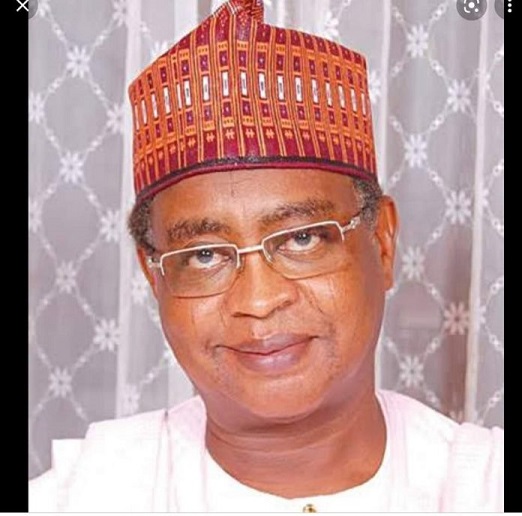
Tofa the last of the black-maned lions is no more!
May you walk amongst the saints,
As God enriched your life in this world may he grant you a Billion folds in the hereafter.

You didn’t neglect your portion of this world!
Opportunities unwasted nor a life of regrets,
A life at its best!
If I want to be Tofa Oh! From where do I start?

Is it Tofa of the beautiful palace and the most elegant of Mosques !?
Whom the good Lord granted a life of wealth, piety, fame and prestige !?
Whom he honoured above most men,
Bestowed him with talent and he utilized it all?

A former presidential aspirant,
Whom had a passion for Nigeria
Makes us wonder what could have been!
The travails you’ve foreseen
The security of the Nation of which you were so keen! 

The father to all, a mentor to many,
A connoisseur of the arts; A keen student of religion, the sciences include!
The historian whom tried his best to preserve an Emirate of which he was immensely proud.
“Advocates for a united Kano” we recall!

Tofa the Philanthropist who contracted tailors whose work was to sow for the destitute by night and day.
An Author of great works that would suffice a life of peace in this chaotic world.

An Ambassador of Islam,
A prince of the North,
A Poet, Reformer and Astronomer.
His collection of telescopes till date are unmatched!

A statesman, an icon of democracy, a colossal Pillar;
His Philosophy is not what can the North do for me but what can I do for its people!
You tried to secure our lives and future, generations will forever be grateful.

Men sat to mourn you,
A madwoman came!
Thus she spoke:
“From home, you’ve had your fill;
Now you have buried the one, who gives us feed.
Now I’m hungry
Have you no feelings?”

Such was the generosity of Tofa,
A saintly character,
With his absence now you will see!

So what will be the fate of the Nation when the Lions keep ascending and the reigns falls to the Jackals?
Who will steer the cubs away from fracas?

We always believe such men immortal,
Constantly putting it off, that we’ll find time and meet them.
Forgetting that as we grow so their time draws nigh!
When a great man dies, a whole library burns…
All the ideas they envisioned for Arewa unless in print, flees and with it comes our doom!

We didn’t tap into the wisdom of Sardauna nor of Balewa to study the art of statecraft!
So we procrastinated in meeting Dan Masani to learn diplomacy and eloquence.
We believed Bayero would forever be here to shield us!
And Sheikh Jaafar left; Ahmad Bamba same, Albany is at faraway Zaria we can’t take the bus;
Deluding ourselves that Dantata is inaccessible to us,
His Highness Sanusi just too busy for us!
Nor would I go to Alfurqan to rid my heart of its rust.
No wonder we are lost!

We’d rather disparage the Tofas amongst us;
Ridicule their reverence,
Tell them they are useless, toothless and clueless!
Our utterances reckless;
And manners thoughtless.
You friend,
Without them, rudderless!

And so they keep going,
And morals are ebbing,
Our heritage dissecting,
Standards are falling,
Culture’s corrupting,
The Nation is ailing,
‘Cos the wise souls keep leaving!

Why do we ignore religious domestic violence?

By Sabo Ibrahim Hassan

Did I just say Religious Domestic Violence? Of course, you heard me very right. It may though initially sound quite odd and obfuscated, but when you allow it to sink and give the brain some time to analyze the phrase critically, it will indeed become your today’s take-home. While countless homes unknowingly suffer from this type of domestic abuse, notably in religious geographies, the need to unveil and tackle this type of intimate partner violence becomes an inevitable obligation.

According to the United Nations (UN), Domestic Violence, also called “domestic abuse” or “intimate partner violence”, can be defined as a pattern of behaviour in any relationship used to gain or maintain power and control over an intimate partner. Abuse is physical, sexual, emotional, economic, or psychological actions or threats that influence another person. This includes behaviour that frightens, intimidates, terrorizes, manipulates, hurts, humiliates, blames, injures, or wounds someone. 

In line with the definition above, we can say that religious-domestic violence refers to the use of half-baked understanding or rather misconception of religious command, painted with sentiment, to inflict a sense of insecurity, and manipulate or frighten the psychology of partner, to ultimately have their total control.

The ill-conceived interpretation and manipulation of some scriptural verses is the primary cause of this religious-domestic violence. However, the issue remains controversial because many deem it the only way to sustain their power and maltreatment against their intimate partners. Besides, our inability to question any irrational interpretation of any scripture, simply because the compass of our thought has been disoriented, hence forced to think in lower rather than higher resolution, has chiefly contributed to the escalation of this menace. Meanwhile, we are not challenging the scripture rather the unfair interpretation of it. Additionally, the fear that you can be easily given your certificate to hell by some so-called custodians of religion has made this type of domestic violence seemingly undefeatable.

The effect of this pseudo-domestic violence is such apparent that it has stolen the joy and peace of many homes, leaving most women helpless with severe psychological trauma. Moreover, the effect is not restricted to the primary victim. It also affects the closest people to the victim, like children, affecting their psychology and perspective. Hence, the fear, insecurity, and misconception of the sacred meaning are passed through different generations, leaving potential victims banged up in fright and uncertainty.

Religious domestic violence often cuts across mental, economic, and psychological boundaries. For example, in a situation where one, due to his badly thought-out interpretation, renders one’s wife inferior, with no regard in decision making, it becomes psychological. Similarly, when one marries or bears children more than one’s capability, that certainly involves both the mental and economic nature of domestic violence. The superiority of men over women lies in their ability to protect them with all their might, provide for them, support them with all they have, and be a shoulder for them to lean on, anywhere, any time.

Rational and fair explanations of some sacred commands, notably those related to marriage, should be the priority of any society that wants to see the end of this menace. That reminds me of a viral video of a woman perceived to be a scholar, preaching to some Muslim women that, should their husbands slap them, they should be patient and respectful enough to, perhaps, kneel and ask for forgiveness while pretending like nothing though happened. I still can’t see any rationale behind her counsel, let alone relevance. Authorities should inexcusably halt such fake scholars. Fair counter-explanation and how to morally react under situations of such nature should be explicitly taught and encouraged.

Until a reasonable explanation of the scripture becomes paramount, and an irrational interpretation painted with sentiment is scrapped, many homes will continue to live in agony. Many men will continue to hide under the masquerade of religious interpretation to maltreat their partners. Therefore, creating a paradigm shift in geographies affected by this unfair perspective becomes necessary. Sensitization is vital, and the responsibility to do that is collective.

Know your religion and what it says, seek rational interpretation of the scriptures, and do not hesitate to question anything irrational.

Sabo Ibrahim Hassan sent this article via ibrahimsabohassan60@gmail.com.

EFCC rearraigns Mompha on fresh money laundering charges

By Ahmad Deedat Zakari

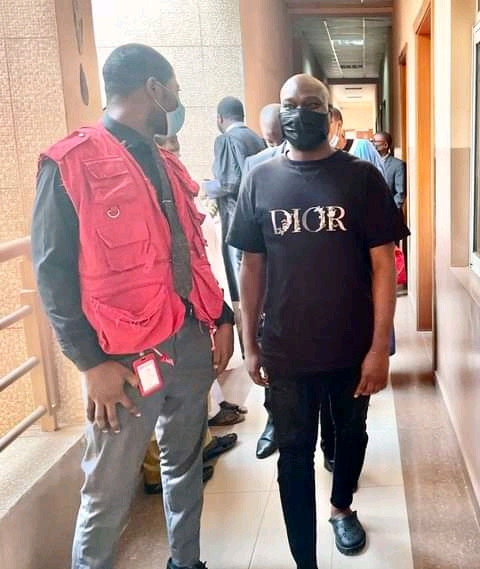
The Economic and Financial Crime Commission (EFCC) rearraigns Ismaila Mustapha, popularly known as Mompha on charges boardering on money laundering. He has been rearraigned in a Lagos Special Offences Court sitting at Ikeja, Lagos.

The commission made this known through a post on their verified Facebook account on Wednesday, 12-1-2022.

The post reads: “Operatives of the Lagos Command of the Economic and Financial Crime Commission, have re-arrested a suspected internet fraud star, Ismaila Mustapha for laundering funds obtained through unlawful activities of alleged proceeds of crime”

The statement also noted that Mompha was arrested on Monday, January, 10, 2022.

The Commission added that: “The suspect is currently standing trial alongside his company, Ismalob Global Investment Limited on an amended twenty two-count charge boardering on cyber fraud and money laundering to the tune of N32.9bn (Thirty-two Billion Nine Hundred Thousand Naira brought against him by the EFCC”

The Instagram celebrity was first arrested at the Nnamdi Azikiwe Airport, Abuja on October, 19, 2019. And since his first arrest has been in and out of the courtrooms.

Kidnappers cart away many traders on Kaduna highway

By MMuhammad Sabiu

Suspected bandits kidnapped an unknown number of traders from Birnin Gwari Local Government in Kaduna State on Wednesday.

According to a witness, the gunmen blocked the roadway between Birnin Gwari and Kaduna at Unguwar Yako bush, where the traders were taken.

According to the source, the abducted people were among dozens of people travelling on business from Birnin Gwari and nearby areas in Niger State to Kano.

The source was quoted as saying, “We were travelling in a convoy with security escorts but they (bandits) abducted those who moved ahead of the convoy, which made them easy preys for the bandits.“We came and met about four empty vehicles, while seeing the bandits moving into the forest with the captives.

The soldiers are tracing them, we are stranded at a dangerous spot in the forest (Unguwar Yako) while the security escorts are chasing to rescue the abducted traders.”

As of the time of filing this report, police in Kaduna have not released an official statement on the incident.

Former Oyo State governor, Alao-Akala, is dead

By Ahmad Deedat Zakari


A former governor of Oyo State, Christopher Alao-Akala, is dead.


Alao-Akala died on Wednesday at the age of 71. The sad development was confirmed by the Publicity Secretary of the state chapter of the ruling party, the All Progressive Congress, APC, Dr Olatunde Abdulazeez.


Dr Olatunde, in affirming the news, said, “The news of his death is out. He did his best for the state, May his soul rest in peace.”


Mr Alao-Akala was the governor of Oyo State from January 12, 2006, to December 12, 2006. He was also elected on the platform of the Peoples Democratic Party, PDP, in 2007 as the Executive Governor of Oyo State, where he served till May 2011.

A Daidaita Sahu Strike: BUK suspends CAs

By Uzair Adam Imam


Following the strike embarked upon by the Commercial Tricycle Riders (alias A Daidaita Sahu or Keke Napep), the management of Bayero University, Kano, has directed the university lecturers to suspend all continuous assessments (CAs) that were to be conducted this week.


The directive was on a social media post which the Bayero University Spokesman, Malam Lamara Garba, has confirmed to The Daily Reality. 


It said all planned continue assessments that were to be conducted by the lecturers this week had been suspended pending the strike’s outcome.


The A Daidaita Sahu Riders commenced a seven-day warning strike on Monday, January 10, 2021.


It was gathered that the riders are protesting against the Kano Road Traffic Agency (KAROTA) registration fee.


The agency is charging new registrants N18,000, while renewal is N8,000 annually.

Pantami: ‘FG spends N152bn on ICT projects’

By Uzair Adam Imam

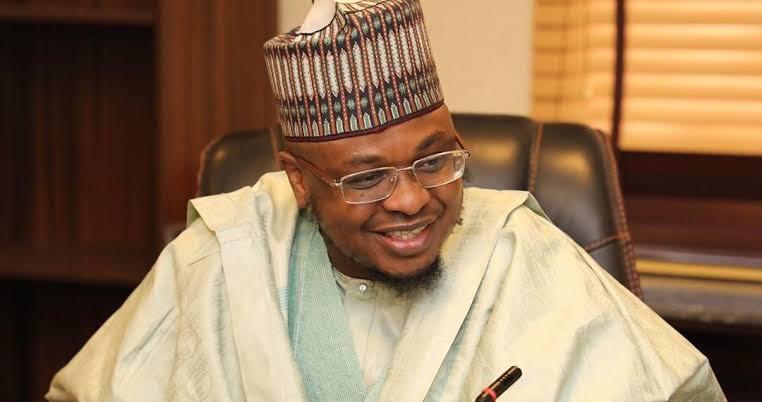
The Minister of Communications and Digital Economy, Isa Ali Pantami, said that the federal government had spent N152bn on digitization projects in 2021 across the country.

Pantami disclosed this in Abuja Tuesday at the closing of the 2021 Service Wide capacity building programme on e-Government at the e-Government Training Centre.

He said the amount constituted the total sum approved by the NITDA for the CBN, the NNPC, the CAC, the Immigration Service and Customs, among other agencies.

Meanwhile, the Minister also assured Nigerians that the government would migrate to a paperless government by 2030.

He said they have put in place all the necessary measures to achieve the objective through the National Policy on Digital Nigeria.

UN: Buhari commends Amina Mohammed on reappointment

By Uzair Adam Imam

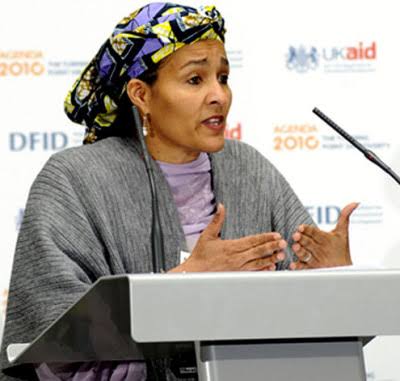
President Muhammadu Buhari rejoiced with Amina Muhammed on her reappointment as United Nations Deputy Secretary-General for a second term.

Buhari stated that in a release signed Tuesday by his spokesman, Mr Femi Adesina.

He assured her of the prayers and support of Nigerians, especially the Federal Executive Council, where she served for some years.

He also commended the UN Secretary-General, Antonio Guterres, for his confidence in the former Minister of Environment by giving her another opportunity to serve the global body and humanity.

Moreover, Mr President has also commended Muhammed, saying: “She remained an inspiration to many women in Nigeria, Africa and the global community.”

Cultural heterogeneity: Where it comes from, how to confront it?

By Safwan Suhaib Ibrahim

Culture, just like science, is never static. As we read more, travel more and impinge more and more on one another through trade, schools, international and religious organizations, our culture and behaviour patterns become heterogeneous – more cosmopolitanised. As people who are committed to the acquirement of wealth and knowledge for the power and insight they give, we must accept the challenges (?) they come with, which is, “Cultural Dynamism”.

Culture, to put it in a mild way, does not only centre on customs and attitudes inherited from our predecessors or the circulation of folktales by word of mouth. It’s also a formal way of training the young in a body of knowledge or creed, borrowing techniques and fashions of others, adopting and selling new ideas or products. Thus, cultural homogeneity is our – everybody’s – way of life.


It’s often not realised, least of all by a layman, that culture is a step further from people’s traditional food, dress, language, music and ceremonies; rather, it’s the people themselves and the society they live in. The human being is an evolutionary animal who is always assimilating new changes brought about by the socioeconomic wind. As we live, we design our culture and we also get designed by it. The everyday flirtation of native dress, songs, dances and language, skin colour or faith are never what exactly our culture is; they only represent a wee portion of it. Our ideas, our ties, our standards and the logic we reflect on a specific problem that confronts us speak more about our culture. 


We – Hausa – have perpetually claimed to be a unique breed of people who despise, or claim to despise, copying others, especially the Western world, though our current moral attitudes and ceremonies are in no way different from theirs. We’re now men of two worlds. So, It’s, of course, a sheer delusion for some of us to pretend to reject everything they’ve acquired from foreign culture simply because it’s “foreign”, but it’s not foolish to rescue one’s culture from total extinction. There’s a need for the revival of awareness of Hausa culture with its great philosophy and epos of music and poetry, dress and language and its ancient literature, but not a total rejection of foreign or alien culture; for that’s as illusive as self-defeating. 


Lest I be misunderstood, I’m not denying that foreign culture or ideas cannot have a destabilising influence on us (of course they do), but I believe there are some that impart a new impulse that prods us to create a new method of organisation and new hope for development. Thus, before we start thinking of driving those alien cultures and ideologies away, we need to study our culture and our people well. We need to start from the basics. That’s, I think, there’s a wider conception of our culture which we give little or no particular emphasis that needs to be tapped now.

Our respect for elders, hospitality to strangers, our feeling of brotherhood and community, our mutual aid for the provision of support and development of services like health protection and education, our freedom of expression, our readiness to provide an economic surplus to neighbours which was so deep-rooted in us that none was allowed to starve, wander in the street or suffer when there’s anything could be done to help him out, and our democratic statecrafts are all but an adventure to us and our progeny. Don’t you think the fight should be on our abstract, not physical culture? 


Safwan Suhaib Ibrahim sent this article via bagwaisafwan@gmail.com.