University Education

My life, my choice: Why I rejected university job for catering (I)

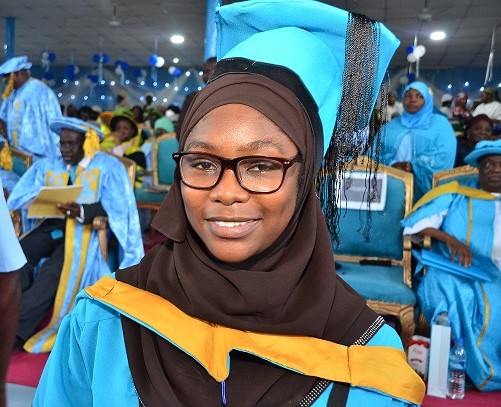
By Aisha Musa Auyo 

Today, as a wife and mother, my definition of success is being an excellent homemaker that nourishes and nurtures my family in the best way possible. I want my topmost contribution to the world to be a set of individuals who are peaceful, loving, respectful, intelligent, honest and hardworking people. I want to be more successful as a homemaker than in school. I want to be always there for my family, not relying on others to discharge my primary responsibilities. Today, this is my priority!

In the world of academia, nothing counts better than degrees and working in the university. I was born and brought up in that world. My parents are academics, and their dream for us is to have as many degrees as possible and as early as possible. We know nothing but books. And lucky enough, the books love us.

I finish secondary school at 16 and my bachelor’s degree at 20. I wanted to be a doctor like every brilliant student, but life had it; I had a chronic ulcer in my teenage age. Thus, I was always in and out of the hospital. That ailment made my dad change his mind about letting me study medicine. He said he couldn’t stand seeing my dream and hard work being crushed by (University) Senate committees because I was sick and couldn’t write or pass medical school examinations. “I’m in the committee for years, and I know these things”, he told me.

That’s how I was advised to study education. It was not what I wanted, so I wrote exams to pass, not to fail. I graduated with a 3.46 CGPA, below almost everyone’s expectations. I’m always known for acing my exams. The least they expected from me was 2:1. I learned not to do what I didn’t want from that result, never again. It’s either “A” or nothing. 

I have a passion for cooking, and it’s known to everyone around me. So, after graduation, my mom enrolled me in a catering and hospitality management program –to ‘kill’ time before the mandatory National Youth Service Corps (NYSC) scheme. I gave that program my all and finished with an excellent result.

I got married a few days after my catering program. The plan was to live in our state, but my husband was transferred to another state two weeks after marriage. So, NYSC came, and I was posted to my home state as planned. However, I was alone, and my husband had to travel to and fro every week to his place of work and his new bride. It wasn’t easy on us, and we decided to stay together after service.

But before finishing my service, my parents advised me to register for a master’s degree. So, I started lectures a few days after my POP. Unfortunately, this delayed our decision to stay together with my husband, as we are constantly travelling to meet each other whenever we have a break in school and work, respectively. Fortunately, the master’s coursework is an 8-month program. So, I left the state immediately to settle with my husband, coming to school every month to see my supervisor. But this time around, I decided to study what I wanted.

I had to convince them that I couldn’t give it my all if it were something I didn’t like. Let’s negotiate; you want master’s, huh? Let it be something I like so that I’ll bring you the “As” you always want, I said to them. My parents wanted me to major in Biology, but I wanted Psychology, as it’s the only thing that caught my interest in education. It’s the only thing close to my medical career dream. Thus, I studied it with passion and graduated with First Class honours!

At 22, I was the youngest and the only one without a job in our class. The result proves to me passion breeds excellence. Kiyosaki’s Rich Dad, Poor Dad, and Angela Duckworth’s Grit taught and encouraged me to make employment out of what I love. They taught me how working on one’s passion can bring money effortlessly. I learned and practised making money out of what I love – cooking. Catering allows me to work in the comfort of my home, regardless of the location. People must eat anywhere, and many of them appreciate good food. Nonetheless, this passion of mine generates controversies.

Since I was young, those who have known me always thought this girl’s future was in academia. She’s a bookworm, brilliant, etc. So, they’re disappointed; such a waste of intelligence! Some bold ones even ask why I don’t work. Won’t your husband let you work? Why are you furthering your education since he will not let you work? Why continue wasting time, energy and resources on school if you don’t want to work? This and that.

Back to my academic life, I continued travelling from where I stayed to where I schooled, and vice-versa for my thesis until another transfer came – too far away location now. At that time, I was almost done with my master’s thesis as I was waiting for external defence. I had to wait for good eight months before I was called. Travelling from the new location to the university was far and stressful, as one had to travel by air.  So, there’s additional strain on travelling and financing. I had two kids then, and I travelled with them whenever school called.

We went for the viva, which was so relieving. At least now we can rest, I thought. A few weeks later, my parents advised me to register for a PhD. I tried to convince them that the distance was too much, promising them that I’d do that whenever I settled in one place, not now that I’m on the move. I also told them PhD was for those with a career in academia and that I was not working yet.

Moreover, a PhD is expensive, and I have never seen a self-sponsored unemployed candidate doing that. I even argued that at 26, I was too young for a PhD. But no, they would not hear me. I didn’t want to hurt them or make them think that I put my husband before them; I applied. They were delighted.

I went for the aptitude test, and my score was high. I was ranked the second-best; my admission number is 00001—the first to be given admission that year. But deep down, my husband and I were not comfortable with the decision. We thought it was too early to be living apart as our marriage was still young, less than ten years. Within me, I have this fear of what would happen to my marriage? Should I leave my husband and come to pursue worldly degrees? It’s not like he failed in any of his responsibilities. He is, in fact, the one sponsoring the PhD.

Being in the barracks has opened up my eyes to the realities of life. Sadly, gentlemen turned to womanisers due to a lack of family around. I have seen how northern Muslim men change or are lured and tempted by the evils of the world. I have seen many scary things that I had never thought could exist or happen. Even though living alone should not be an excuse for their behaviour, their bad behaviour couldn’t have escalated to that level. I vowed never to leave my man at the mercies of those home breakers, so I planned to go back immediately after coursework.

Aisha Musa Auyo is the CEO of Auyo’s Cuisine and wrote from Abuja. She can be contacted via aishamuauyo@gmail.com.
Career choice in Universities: A tribute to academic giants

By Aldelghaffar Abdelmalik Amoka

When I was admitted into the Ahmadu Bello University School of General and Remedial Studies (SGRS) in the 1992/1993 academic session, I registered with the intention to study medicine after the one-year remedial program. During the program, I started having a second thought on medicine and was considering Engineering. But by the end of it, I was offered Physics. I was like “what will I do with physics?”. This is a subject you can hardly find a qualified teacher to teach in secondary schools. So why physics? I wanted to change, but transfer rules changed that same academic year, and changing courses, especially to the so-called professional courses, became difficult.

I had two choices at the end of my first year when it was obvious I can’t change from physics. It was either I carry on with my studies or leave. So, l chose to stay but without any love for the subject. That continued till my final year when we were taught Solid State Physics by this Professor, an Indian, that changed my mind about physics. He made us see the beauty of physics. He made us see how basic physics is changing the world. He told us how physics concepts like the total internal reflection in optics have revolutionalised medicine and telecommunications. He was an inspiration. What he taught us in 1999 came to my mind when I had a shoulder operation in the UK in 2011 that was done without a visible scar on my shoulder.

That interaction in our final year made me desire I do my final year project under his supervision. I eventually returned to do MSc Physics under his guidance to tap more from his wealth of knowledge and personality. He introduced me to the field of dielectric physics, the field that opened the opportunity to my travel to some countries and has made me meet great minds. At the end of the MSc program, his recommendation got us a job in the department in 2005. I was walking towards the ABU North Gate when Prof’s call came in: “Amoka, where are you? Congratulations, the VC has approved your appointment. Please inform Tajudeen”. The best news for an unemployed graduate.

I was employed as an Assistant Lecturer under his guidance, registered for PhD in ABU in December 2005, and the work on dielectric physics continued. In August 2007, I informed him of the Islamic Development Bank (IsDB) scholarship opportunity that my brother told me about. Like he knew he had not more than a year to live from then, he encouraged me to apply. He followed it up till I submitted the scholarship application with the full PhD proposal that I was working on under his guide. A few weeks later, I was returning from Italy on a 2 weeks workshop trip in October 2007 and I called to inform him that I had arrived in Lagos when he informed me that he was sick and on his way to the airport. He got to India and was diagnosed with Cancer of the Colon. I became scared.

In January 2008, I received a handwritten note from him with a prayer request to make it through the cancer treatment. From the handwriting, I could figure out he was weak. I prayed hard that he get well and return soon. It was a shock when I made that call to India that early morning on Thursday, 17th April 2008, and I was informed that Prof was no more. The Giant was gone. He gave up that morning after about 6 months of battle with Cancer. I was broken. I have never seen anyone as humble as him. He has regard for everyone and he finds it so easy to relate with everyone including the cleaner. As the Head of Department, he made me realize that with proper management and financial discipline, which we lack these days, you can achieve a lot with little.

While I was still wondering how to proceed with the PhD without the only person that could supervise research work in material physics in the department, I got an email from IsDB of an award of scholarship for PhD under their Merit Scholarship Award for High Technology. The scholarship application was successful. It was unbelievable. Then the University of Leicester offered me admission for PhD in engineering research. That was how I met the famous Prof. John C. Fothergill, another Giant that I am standing on his shoulder.

Prof. Fothergill was such an amazing supervisor and shared similar characteristics with Prof. Hariharan. The 3 years 3 months with him was an amazing one with lots of memories. He doesn’t just bother himself with your personal development and the progress of your research but also your welfare. As he commends your efforts so do he point out the weakness to work on. With his tight schedule and the head of the department, I was always on his priority list.

Even after the PhD, John was concerned about my career development in my home institution. He sends to me any materials he finds useful to help my career growth and development. His notification and recommendation for a postdoc job in Norway got me the 2 years job. The postdoc job introduced me to partial discharges in power equipment components. He inspired me to start a lab. I did not just learn how to do dielectrics and electrical insulation research from Prof. John C. Fothergill, the British Professor of Engineering also taught me the benefits of writing in simple sentences. The Giant is still there for me to this day.

In my struggle to survive as an academic with all the peculiarities in our Universities in Nigeria, my path crossed with another Giant on whose shoulder I am standing. Academics are trained critics. They are also expected to have leadership skills. While I enjoyed being a critic right from my university days, I run away from leadership responsibility till I got a phone call in May 2020 during the ASUU strike about a letter for me and I told the caller I will pick it up when I get to the university later in the afternoon.

I opened the envelope and it was an appointment letter. I didn’t see that coming and could not run. The Giant found me worthy to lead (head) a Unit of the University. I was confused and scared as I have always had this feeling that critics hardly make good leaders. I later took it as a chance to see the other side of just being a critic. It has been tough but an amazing experience and have made me learn a lot. A colleague jokingly told me that I am an expert in reviving dead areas. I hope I will be able to live up to that expectations.

I think I am really lucky to have got many Giants on whose shoulders I am standing to see farther. If I have ever inspired or impressed you with my little efforts as an academic in the university, it was because God made it possible for me to meet these Giants in my life. They among other people paved the way for me to get here.

As the 2021 calendar year comes to an end in a few days, I wish to appreciate Prof N.I. Hariharan, Prof. John C. Fothergill, Prof. Kabir Bala, and all the giants on whose shoulders I am standing.

©Amoka

TETFUND at 10: The giant strides of the ‘Apostle of Research and Development’

By Tahir Ibrahim Tahir (Talban Bauchi)

Tertiary Education Trust Fund (TetFund) recently celebrated its ten years of service, having gone through many changes in its functions, duties, coverage and composition. It had existed under different names before now. Still, the amendments to the act establishing it have turned it into a Tetfund, with more coverage of tertiary education in the country.

At the Tetfund at Ten event, its Executive Secretary, Prof. Suleiman Bogoro, was introduced as the apostle of research and development. A very apt description, narrating how he has turned the tide of the impact of Tetfund from infrastructure to research. The previous administration first appointed Bogoro, and barely two years after, the new administration of President Muhammadu Buhari (PMB) relieved him of his duties. Not long into the PMB administration, Bogoro was again re-appointed. This is a glaring testimony of the quality of stewardship he brings to the running of Tetfund. Tetfund staff rolled out the red carpets for him and welcomed him back to their fold amidst celebrations.

At Tetfund at 10, it was disclosed that 152838 infrastructural projects had been executed across the country. Thirty thousand lecturers have also been sponsored for Masters and PhD programmes. In addition, 68000 academic and non-academic staff of tertiary institutions have also been sponsored to attend local and international conferences. Tetfund has also supported 71263 lecturers under the Teacher’s Supervision Programme. Moreover, over two million books and 152000 E-resources have been procured by Tetfund.

The apostle of research and development came to improve funds for The National Research Fund, which had started with seed money of just 3 billion naira in 2011. Bogoro saw this fund’s growth by over 50 per cent, to an unprecedented 8.5 billion naira in 2021. So far, 9 billion has been accessed by lecturers to fund their research activities. Tetfund played a significant role in Covid-19 research. Tetfund approved four mega research clusters for Covid-19 vaccines and drug research and security and dairy research. The clusters had within the range of 250 million to 450 million to fund their research activities.

As the most pushful advocate for research in Nigeria’s tertiary institutions, Prof. Bogoro has achieved near-global fame among education sectors’ stakeholders. In recognition of his efforts, Afe Babalola University, Ado-Ekiti, named its research centre after him. This particular university is not even a beneficiary of Tetfund’s interventions and so cannot be accused of repaying him for any interventions in their school. Speakers at this event said Bogoro had earned for himself the appellation of Senior Advocate of Research, SAR. Bogoro emphasises advancing learning through research.

True to Bogoro’s advocacy for improved research and development, the Federal Government just received a draft executive bill for establishing the National Research and Development Foundation led by Tetfund. Bogoro, who received the bill on behalf of the Minister of Education, Mallam Adamu Adamu, thanked the Justice Ministry for drafting its staff to the exercise. This is a direct drive in turning Nigeria into a knowledge-driven economy. At the event, Bogoro stressed that Nigeria’s economy could not be competitive if it did not institutionalise Research and Development. He said that the most competitive nations placed innovation and creativity as the lead elements that drive society.

The Chairman of the drafting committee, Prof. Yadudu, commended Prof. Bogoro for putting the committee in place and his vision for the Research and Development Foundation. He also said that the country stands to reap bountifully when the bill is passed. “This is a bill which seeks to establish a National Research and Development Foundation to institutionalise, mainstream, and commercialise research and development; promote innovation and support enterprise development for job and wealth creation, for a knowledge-driven economy. This is the key thing,” Prof. Yadudu said.


Tahir is Talban Bauchi.

Why we must eradicate the menace of campus prostitution

By Lawi Auwal Yusuf

Prostitution is a global phenomenon and not particular to one society. However, it’s a worsening problem in tertiary institutions as female students take it as a means of livelihood and accomplishing their academic objectives. Moreover, extravagant lifestyles, peer-group influence, and drug addiction are also reasons for such deviance in academia.

This is the business of providing relatively indiscriminate lustful services to another person who is not a spouse in exchange for immediate payment, valuables, or a contracted favour. The absence of deep emotional liking is an essential element of passionate relationships.

These students readily accept these benefits in return for services to virtually everyone willing to pay, with few exceptions of relatives. Hence, the basis for engaging in the act is the reciprocal material benefit or favour while the male partner participates for pleasure.

The immoral students provide these illegitimate services to nefarious staff, co-students and off-campus lovers. They exhibit themselves enticingly to get undeserved favours like altering the marks of their failed courses to pass, upgrading their CGPA, divulging examination questions and other confidential information or giving admission to unqualified candidates. Moreover, their indecent and seductive dressing, revealing sensitive parts of their bodies, is an open invitation to lure men.

It is incredible to see how boisterous female hostels are at dusk and the splendid cars that pick up girls to hotels, nocturnal occasions, jamboree parties, clubs, and other joyous night entertainment. Affluent clients are supplied with enough quantity to satisfy their amorousness as simple as pressing a button. Similarly, tourists, especially those travelling from foreign countries, also patronise them. These harlots are also hired for politicians at the expense of taxpayers.

The effects of this illicit trade are enormous. It should not be perceived just as a victimless crime. It leads to other heinous crimes and unpredictable consequences. Corruption, favouritism, infidelity and the spread of venereal diseases are also repercussions of prostitution. Similarly, it contributes to the precarious state of education and the nation at large.

Higher institutions churn out these incompetent graduates who are employed into various positions to provide services to the public which require expertise. Today it’s so sad that jobs are given to the highest bidders or these strumpets who engage in the wicked services with employers before they are recruited. Lack of specialisation leads to rendering poor services. Thus, meritocracy as a core principle of bureaucracy and a catalyst for Nigeria’s advancement is at its lowest ebb.

The proliferation of brothels is noticeable in the neighbourhood of most schools. Student-whores find men on campus and in town whom they may never meet again and contact STDs. They subsequently infect several others, which may include innocent wives or husbands. These dangerous or fatal ailments are impediments to a healthy and productive population. Furthermore, the used paraphernalia not correctly disposed of are potentially hazardous to public health.

Violent crimes are also perpetrated on campuses as prostitution attracts anonymous visitors and criminals who rape, assault, dupe or even slay their lovers and other students. These criminals also engage in drug dealing and addiction. Crime is so dangerous when rates of victimisation are high because communities become dismembered. People become distrustful of one another and prefer to stay indoors. This will make students and staff uncomfortable and hinder teaching and learning.

Prostitution facilitates corruption and favouritism in government whereby politicians and civil servants steal public funds or make unmerited favours in exchange for the services. Policing also worsens extortion and bribery as it creates opportunities for police and college guards to engage in unethical conduct like collecting bribes in exchange for non-enforcement.

Furthermore, it is a nuisance to uninvolved people. Legitimate businesses lose customers who avoid the area due to inconvenience and traffic congestion, affecting the local economy. In addition, married people engaged in these promiscuous activities seem lackadaisical about the consequences when their spouse realises. Indeed, they run the risk of separation, resulting in higher divorce rates and broken families.

The untainted students can develop an interest in prostitution by intermingling with tainted ones, especially intimate groups and friends. The senior prostitutes influence those close to them in the environment and serve as the source of learning for new ones.

Moreover, such activities give room for ungodly male students and staff to sexually abuse innocent female students. They put them under duress or undue influence to concede and give in.

This makes numerous parents and husbands apprehensive and reluctant to let their daughters and wives pursue further education. In addition, some hate and stereotype Western education, which causes significant setbacks to girls’ education and gender equality.

Many of these erring personnel are apprehended and their appointments terminated while others are prosecuted. Unfortunately, this punishment seems to have no appreciable effect because it is becoming more rampant nowadays.

Finally, I hope this article will attract the attention of all the stakeholders more to make concerted efforts to exterminate this menace from our campuses.

Lawi Auwal Yusuf wrote from Kano, Nigeria. He can be contacted via laymaikanawa@gmail.com.

ASUU: FG impoverishes us, no going back on strike

By Uzair Adam Imam

The Academic Staff Union of Universities (ASUU) has threatened that there is no going back on its planned strike action as long as the government did not meet its demands.

The union also tackled members of the National Assembly for earning  ₦1.5 million or thereabout monthly to the detriment of professors with ₦416 000 monthly takehomes.

Mr Adelaja Odukoya, the Zonal Coordinator of ASUU, Lagos Zone, made the disclosure on Tuesday while addressing journalists at the end of the zonal meeting of the union held at the Federal University of Agriculture Abeokuta (FUNAAB), Ogun State.

Odukoya also criticized Senators and House of Representatives members over “jumbo pay”, adding that academic members “are being impoverished by the federal government.”

Why are graduates unemployed?

By Uzair Adam Imam

Every year Nigerian institutions produce thousands of graduates who come out to compete for the few available job opportunities in the country.

There is no doubt that Nigeria labour market has continued to see a steep increase in unemployment.

Professionals have argued that there is a need for urgent action to save the country from an impending danger posed by the exponential increase in unemployment.

According to the National Bureau of Statistics (NBS), the unemployment rate increased to 33.30 per cent in the fourth quarter of 2020 from 27.10 per cent in the second quarter of 2020.

Today, Nigeria battles a high rate of crimes: insurgency in the Northeast, banditry in the North West, and IPOB attacks in the Southeast, aside from the cybercrime, which is inviting to the youths.

 These security threats are believed to have been caused by some circumstances, especially unemployment.

The root cause
A lecturer at the Department of Business Administration and Entrepreneurship, Bayero University, Kano, Dr Mu’az Hassan Mu’az, attempted to trace the root cause of unemployment among graduates in the country.

He said that the issue of unemployment would persist if graduates continue to look up to the government for jobs.

He added that graduates need to be self-employed to eradicate poverty and unemployment in the society.

However, according to him, one major factor contributing to the rising unemployment in society among graduates is wishful thinking of great life after graduation.

He said most students do not want to venture into small scale businesses as they think they would be employed in big offices when they graduate. This, he said, increases the number of unemployed youths in the country.

He stated, “If students will be innovative, the effect on the economy will be fruitful.

“Many will be self-employed, poverty will reduce, social vices will drop and above all, the government will generate revenue from these entrepreneurial ventures.

“Graduates will have to look inward, explore some of their capabilities so as to start something, no matter how small that could make them financially liquid.

“There are needs in the society that no one is offering to satisfy for a premium; try to do that, then one is in business.”

Unemployment breeds crimes
On his part, Malam Hassan Sule Adamu, an entrepreneurship lecturer with the Kano State Polytechnic, stated that unemployment might unfold to all sorts of crimes.

 Muhd said, “It leads to societal ill-being, human trafficking, prostitution, insecurities like banditry, armed robbery, burglary, social and political crises, and any other crime.”

Students air their grievances
Several students expressed their grievances over the lingering issue of unemployment.

They urged the government to come to their aid by creating more jobs opportunities.

A university graduate, who preferred not to be named, said that he bagged his Bachelor’s degree eight years ago from Bayero University.

He added, “Since then, I have been applying for different sorts of recruitment. But, up to now, I am not employed.

“But I thank God because I am running a small scale business from which I earn my living and even help my relatives.”

Bad governance complicates the situation
Another university graduate, Abdulmalik Ibrahim, said bad governance complicates the situation.

Abdulmalik added, “Bad governance, mainly corruption and inhumanity of political leaders, contribute to the present situation in Nigeria.

Suleiman Ishaq believed that the only way to arrest the situation was for the authorities concerned to create more business and job opportunities.

TETFund 2022: Research Grants targets N10bn

By Hussaina Sufyan Ahmad

The Tertiary Education Trust Fund (TETFund) has announced its target to raise the annual allocation to the National Research Fund (NRF) from N8.5 billion in 2021 to N10 billion in 2022, during a virtual meeting on the marking of the International Open Access Week October which holds October 25th – 31st, Nairobi, Kenya.

TETFund executive secretary, Professor Suleiman Bogoro, stated this for the theme “Democratisation of Higher Education in Nigeria through Open Access.” A meeting co-hosted by the Fund and the Training Centre in Communication, Nairobi.

According to the TETFund boss, following the agency’s proposal, the Board of Trustees’ had in 2019 graciously approved N5 billion for NRF, which was raised to N7.5 billion in 2020 and N8.5 billion in 2021.

“Over the last two and half years now, we have raised funds available for research. There are two categories; institution-based and National Research Fund.

“The institution based has a ceiling of N3,600 US dollars and it is mainly for basic research while the higher ceiling grant of about 92 – 93,000 US dollars is the National Research Fund aimed at promoting applied research. To this extent, in 2019 I made it a case to the Board of Trustees of TETFund to increase the threshold.”

“It used to be a kind of seed money. Seed money of N4 billion for eight years but from the year 2019 to last year and this year, 2021, we have increased it to N5 billion annually. Last year we increased it from N5 billion to N7.5 billion and this year it is N8.5 billion; and we are hoping in 2022 it will move to N 10 billion.”

Of Professors in the Ivory Tower: Inner Rumblings

By A. A. Bukar

Let me preface this with the caveat and confession that part of the reason I recently slow down hobnobbing with professors is my increasing abhorrence of this culture of excessive bootlicking and kowtowing that is creeping into academia and eroding the ideals of independent thought, spirit of free inquiry and detachment that hitherto characterise intellectual discourse. The radical critique of issues and events for the betterment of humanity and irradiating the society is slowly taking a wing, supplanted with overt politicisation of minor issues (and even non-issues). Today, young academics, like myself, are becoming increasingly afraid to express even simple admiration of who they consider as the IDEAL TYPE among their teachers and mentors in academia because of “interpretations”. For this, you can even be reported to the enemy of such a scholar to possibly victimise you “sabida ai yaron wane ne! Ku kyale shi, ai zai zo defence, ai za’ a kawo papers dinsa for assessment”. And on and on. Such pettiness and vendetta. Hence, many – out there – see  Nigerian academics as the worst enemies of themselves and are happy with how FG is dealing with them.

Little wonder whether this culture is obtainable in other parts of the world. Departments are compartmentalised into cliques and camps a la political parties in the larger society. Professors are becoming like emirs fortified by sycophants, making them unnecessarily snobbish and covetous of flattery. PhDs are deliberately delayed or tactically killed because a candidate does not BELONG. A blind eye is turned to obvious wrongs, mediocrity, and crass injustice because “our oga” is INVOLVED. Entitlements and privileges (especially of the younger ones) are stampeded to settle SCORES.

A friend sent me a Jumaat goodwill message, a quotation from Rumi which reads: “Listen to silence; it has so much to say”. How many PhD/MSc candidates do you know writhing in silent pain of frustration? Prof sirs and mas: listen to our silences and that shy smile that says “ba komai sir”. When I was an undergrad, I once overheard my teacher, Dr Gausu, talking about one of his colleagues in Economics, Business or Accounting (I can’t remember exactly) who’d become agoraphobic and almost schizophrenic because of PhD manhandling from a senior colleague. Of course, then I was too inexperienced to understand the heck that was about. They sarcastically even refer to the initials as “Pull Him Down”.

Whether this augurs well for generation, production and dissemination of ideas and knowledge typical of the Ivory Tower, I leave it to your imagination.

For these and more, many ideal intellectuals are on the lookout for escape windows from the suffocating atmosphere of poverty and frustrations taking over academia like a thick cloud on the horizon. Many are “diversifying”, hence diverting their attention from the absolute commitment ideal scholarship demands. Others are increasingly becoming nonchalant – that I-don’t-care attitude of: “if the department or unit fuels the generator set, fine, otherwise I teach the SPSS or Word Processing on the whiteboard”. Elsewhere blackboard. So Nigerian hospitals are not alone; medical practitioners are just a cohort.

Despite all odds, I love being at the University. It is a place where I feel I naturally belong. And our campuses are still dotted with the IDEAL TYPE (just as there are IDLE TYPES who do not “profess” any knowledge) that constantly bring back to one’s memory my favourite: Edward Said. Critically engaging. Highly unassuming – like Mazrui. Passionate about nourishing the mind; concerned with the public good and Humanity as a whole. People who will unconsciously make you feel you are far from arriving without making you feel embarrassed. I have recently met and enormously admire one such intellectual is Professor Abubakar Mu’azu of the Mass Communication department, UNIMAID.

Interpret this one too the way you like. Report me anywhere. Land me into trouble. I no longer care. But Allah knows whether this is coming from the bottom of my heart or elsewhere. Such as an attempt to curry favour.

After all, what use is admiring people if you cannot tell them or others you do? Or should we hold on till they are no more? Wouldn’t that serve as a token of encouragement to maintain the course and tempo against all odds?

I have earmarked a few other similar intellectuals I will write about in due course on this space. I will unburden my heart about people I feel positively towards. Yes, I will specify those who fit my definition of the ideal intellectual. Part of this is, of course, honesty. Wallahi, no matter how engaging you are, you are out of the equation once it comes to the light you are dubious and too self-centred. If you’re extorting money or sex from your vulnerable students, you cannot be my model. But again, I am not looking out for an angel.

Back to the subject, I have met with Prof Muazu only a few times. One was when he came as an external examiner to my thesis in April 2018 and some months earlier as an accreditation team member for the college I taught in Yobe state. The last, some weeks back. Each, he left me with nothing but admiration and deep respect.

When I phoned my referee and supervisor at undergrad, late Prof Maikaba, to congratulate him on his last promotion, he typically enquired about the progress of my thesis. I told him then, “I was done with viva yesterday and effecting corrections now”. Curiously, he returned with a finder about the examiner. When I replied that it was Mu’azu, he said: “kace an sha aiki”. Toh Bukar. PhD beckons. You can’t wait, especially for one in this business. He admonished me as usual; I giggled, thanked and said my goodbye.

I don’t know whether it’s appropriate to reveal this too. Some hours before the viva voce, my supervisor, Dr Binta Kasim Mohammed, called alerting me “to prepare very well. Because the external examiner brought is extremely thorough and critical”. Sir, you are appreciated and held in high esteem not only by nonentities like us but also by your colleagues. But my assessment of you from afar is that: these things matter little to you (if at all) – out of humility.

From both you and the late Maikaba, I graduated with distinction. But each time we met, you left me feeling inadequate, making me wonder ‘when will I arrive?’. Parts of this are the books you recommend, which I never read, or know not exist. But somewhere in WHERE I STAND, Sheikh Gumi has opined along this line that knowledge is such enigmatic that the more you learn, the more you realise that you know very little. I wonder whether you feel something similar sometimes. Yes, despite the accomplishments. In just your last visit, you recommended, as the situation warranted, many texts. Among these are Peter Winch’s THE IDEA OF A SOCIAL SCIENCE AND ITS RELATION WITH PHILOSOPHY. Then the POSITIVIST DISPUTE IN GERMAN SOCIOLOGY. The latter is such a rare collection – in fact, my first time to meet Adorno, Habermas and Karl Popper in one place. Both books remind me of similar stuff I read from the staple of Claude Ake and Yusuf Bala Usman of blessed memory.

In this vein of characteristic modesty, you specifically asked me to read Ben Bagdikian’s MEDIA MONOPOLY after the viva voce in order to steel my argument on the influence of profit drive in media content production. A copy of my thesis still carries your adorable handwriting suggesting the title and other points. But little wonder you never drew my attention to the fact that you have written extensively on media in peacebuilding until my curiosity took me to the internet and a bookshop where I stumbled CONFLICT MANAGEMENT AND THE MEDIA IN NIGERIA  – a book coedited by you and Gani Yoroms. This was despite your awareness that my thesis is squarely about this matter of controversy. Quite recessive indeed.

With the crisis engulfing Nigerian Universities (the worst I have ever seen) and academics running helter-skelter for greener pasture, I equally wonder what becomes of the academia after the few of you that remain out of passion pass on to something else or the inevitable great beyond. And especially if this maddening ill-treatment continues from the federal government. Allah Ya kiyaye, amin.


Bukar teaches Mass Communication & Journalism at Ahmadu Bello University, Zaria.

M.D. Aminu: A transition from academia to consultancy

By Ahmadu Shehu, PhD.

Recently, my friend Dr Mohammed Dahiru Aminu took a step further in realizing his promised greatness. He joins PricewaterhouseCoopers (PwC) as Manager in Sustainability and Climate Change consulting. PwC is one of the ‘big four’ accounting/management consulting firms and the world’s second-largest professional services networks, operating in 157 countries with over 742 locations. The annual revenue generation of the company is around $42.4 billion, which is greater than Nigeria’s annual budget.

Dahiru, as he is known and called by persons close to him, was born in Yola to Dr Aminu Raji’s family, a descendant of Modibbo Raji—one of the most prominent 19th-century Islamic scholars in northern Nigeria and the most important scholar in the Fombina emirate. Dahiru earned a bachelor’s degree in geology from the University of Maiduguri and a master’s degree in petroleum engineering from London South Bank University. In addition, he holds a PhD in carbon capture and storage from Cranfield University.

Upon completing his master’s degree, Dahiru launched a career in academia as an Assistant Lecturer at the Modibbo Adamawa University of Technology before moving to the American University of Nigeria as an Assistant Professor of Petroleum Chemistry. Brief as it may seem, Dahiru’s academic career is a story of success. He is amongst the world’s first generation of PhDs in the emerging carbon capture and storage area and has produced consequential papers in the leading journals in that discipline. One of his papers, entitled “A review of developments in carbon dioxide storage”, published in Applied Energy—a leading journal within Energy and Environmental Science—is arguably the broadest published paper in the open literature on any aspect of carbon dioxide storage. Other contributors to the article were Professor Vasilije Manovic and Dr Syed Ali Nabavi of Cranfield University, and Dr Christopher A. Rochelle of the British Geological Survey, Keyworth, Nottingham, UK.

Because of the paper’s relevance within the field, it won an award as one of the most cited papers ever published in Applied Energy since the journal’s inception in 1975. The award was announced at the International Conference on Applied Energy (ICAE) in 2020, which was scheduled to hold in Bangkok (Thailand), but due to the Covid-19 pandemic, the event was held in a virtual conference in December 2020.

Similarly, all chapters of Dahiru’s thesis, completed under a research program entitled “Carbon Dioxide Storage in the UK Southern North Sea: Experimental and Numerical Analysis”, were published in leading scientific journals as the International Journal of Greenhouse Gas Control and Heliyon.

Dahiru has also been actively involved in community service and is a member of several advisory boards, councils, and committees. He is a member of the Roster of Experts of the United Nations Framework Convention on Climate Change (UNFCCC), Bonn, Germany; and serves as member and secretary of the Working Group on Solid Waste Management for implementation of the Nigeria Climate Change Response Programme (NCCRP), Federal Ministry of Environment, Abuja; amongst others.

Although Dahiru’s scholarly achievements in academia were remarkable, nonetheless, those of us who know him have always felt that the academic career path was a transitional phase. His expertise would be better harnessed for the more public good in the private or policy sectors, where he could apply his training and knowledge in a more instrumental setting. This move should also offer him greater visibility and voice in meaningful African conversations around sustainability and climate change.

Beyond academia, Dahiru’s profile reaches into the arena of public commentary and public service. He is one of Nigeria’s prolific and influential young public intellectuals. His writings and talks on national issues and sharp analyses and prognoses of Nigeria’s economic and developmental challenges are as informed as they are illuminating. He publishes opinion pieces in Nigeria’s leading online and traditional newspapers. He is also a visible and strident voice in Nigeria’s vibrant cyberspace. As Dahiru joins the world of consulting, where he will work on finding solutions to the problems posed by climate change as one of humanity’s greatest challenges, he will undoubtedly deploy his expertise and experience in a more hands-on approach, now more than ever.

Dr Ahmadu Shehu holds a PhD in Linguistics and writes from Yola, the Adamawa state capital. He can be reached on ahmadsheehu@gmail.com

NAPTAN rejects teacher-service elongation, stipends for students

By Uzair Adam Imam

The National Association of Parents/Teachers of Nigeria (NAPTAN) has rejected the federal government policies on education, particularly the elongation of service years and payment of stipends to students reading education in higher institutions.

The association added that the government should implement the minimum wage of N30,000 to workers first, which is considered more important than the stipends.

Recently, the Minister of Education, Adamu Adamu, announced the payment of N75,000 per semester for every student of public universities studying education programmes and N50,000 for students of colleges of education.

Dr Ekundayo Ademola, the National Publicity Secretary of NAPTAN, made the information available to reporters on Sunday, warning the federal government of Nigeria not to politicize education.

However, Ademola described the new policy of salary scale for teachers and the elongation of years of service from 60 to 65 years as a Greek gift.

He added that the promise made by the federal government is nothing but deceit: “We think that the promise by the government that has refused to diligently implement N30 minimum wage to increase salary for teachers is nothing but deceit.

“If one may ask, how many states are, in truth paying N30,000 Minimum Wage to workers? Asking the state to start paying with a special scale to teachers, when minimum wage of N30,000 is not dutifully given to them, will lead to industrial unrest.

“We demand that federal government and states should pay N30,000 minimum wage to teachers first before considering special scale for teachers.”

“Elongation of service year from 60 to 65 years is also odd, in a situation the country is presently is. Many educated graduates are seeking unemployment. Keeping those that are supposed to rest in service till 65 is nothing but a misplaced priority. Instead of doing that, FG and states must gear efforts towards timely payment of retirement benefits to teachers. If that is done, many of them will prefer to go on retirement even before reaching 60 years, knowing full well that their benefits would be paid.

“We also consider payment of N75, 000 and N50,000 to students reading education in University and NCE as ill-conceived and quite uncalled for. This amount is even bigger than the minimum wage. Before coming up with this idea, is the FG aware that the number of students studying education-related courses is in multiple thousand?

“Also, after being paid in school, do we have job placements waiting for them? Is there a plan for several unemployed graduates and NCE holders that read education-related courses? Many Nigerians that had passed through the Npower programme and worked in schools, are now back on the streets looking for jobs.”

The association also called upon the government to have a special package for teachers working in the rural areas that are facing security challenges.

“We also advise the government to have a special package for teachers working in the rural areas and areas facing security challenges.”