University Education

What next after NYSC?

By Fatima Usman

During their compulsory National Youths Service Corps (NYSC) scheme, many people don’t usually ask themselves, “What next after the service year”? Many people know what they want and what to do, but they don’t have any concrete idea of what they want or even what they want to do.

But now, the service year is over. For many, the reality will face them right in the face, NO MORE ALLAWEE (33,000 stipends). As small as this money is, it will become gold to many who could not find a job after some months of completing service.

The scheme’s purpose is primarily to inculcate in Nigerian youths the spirit of selfless service to the community and emphasize the spirit of oneness and brotherhood of all Nigerians, irrespective of cultural or social background. This is because the history of our country since independence has indicated the need for unity amongst all our people and demonstrated the fact that no cultural or geographical entity can exist in isolation.

The Joy of every student is to see that they graduate and serve their father’s land without minding the stress they passed through while in the school, but then what next after the one year of NYSC? This is the question many people ask themselves while still on camp, but when you know the answer to it, you are good to go, and vice versa.

After the service year, you are faced with the next phase of life. Some very lucky ones will get a well-paying job or will further their education, while others may have to start all over again after the 33k allowance must have stopped coming.

Back in the day, when a person graduated from tertiary institutions, there was a high tendency that such a person would get a well-paying job without any stress of going to look for a job, but now the case is different. Many students are scared of even leaving the NYSC because they know that there’s no job.

Millions of graduates with outstanding results out there are looking for white-collar jobs, but the country doesn’t have jobs to give everybody. Thus, you should try as much as possible to acquire one or two skills that can be of help after your service year. Don’t wait to finish NYSC before you start thinking of what to do next. Before you even go into NYSC, ask yourself these questions:

What is life after NYSC?

What am I going to do after NYSC?

How am I going to start with life?

When you know the answers to these questions, you are 50% on the track. Today’s world requires us to do more than going to school or graduate with good grades.

Don’t be carried away by the title “graduate”; get yourself something doing. If you have a skill already, develop it; start from small. Yes, it’s pretty stressful, but you will reach that goal with determination and hard work.

Many people who are now successful today passed through a lot, but today they are doing fine. So if those people can do it, there’s no excuse for you.

Fatima Usman is a 300 level student of mass communication at IBB University, Lapai. She can be reached via usmanfatima499@gmail.com.

Pantami’s ministry and NITDA responsible for prolonged strike, says ASUU

By Ahmad Deedat Zakari

The Academic Staff Union of Universities (ASUU) has asked Nigerians to hold the Ministry of Communication and Nigerian Information Technology Development Agency (NITDA) responsible for the lingering impasse between ASUU and the Federal Government.

ASUU Zonal Coordinator, Buchi Zone, Professor Lawan Abubakar, briefed reporters on Monday, March 4, 2022, in Jos, where he alleged NITDA is misleading Nigerians on the credibility and acceptability of UTAS which he said has passed the integrity test. 

“Ironically, NITDA, in conjunction with its parent Ministry (The Ministry of Communications where Pantami is minister), is seriously sabotaging the government at resolving the impasse. This is obviously capable of prolonging the current strike, thereby bringing untold hardship on Nigerian University students and the University System.” Prof. Abubakar stated

He further explained that NITDA, who scored UTAS high in the past, can not suddenly say UTAS failed integrity test. 

“After scoring UTAS this high, NITDA went further to contradict itself by making a fallacious statement that UTAS has failed integrity tests. The union wonders how a score of 97.4% will amount to failure.

“The Union still agreed to another Test by NITDA on March 8, 2022, in the presence of observers front the Federal Ministry of Education/National Universities Commission (NUC), Federal Ministry of Finance/OAGF, Federal Ministry of Labour and Employment and the National Salaries, Income and Wages Commission.

“This most recent test still scored UTAS 99.3% in all the Tests metrics. ASUU is Therefore surprised that NITDA, having scored UTAS this high on two different occasions, unpatriotically went to the press to deliberately mislead the public into believing that UTAS has failed Integrity tests again.” Prof Abubakar clearly explained.

Therefore, he called on Nigerians and the Federal Government to call the Ministry of Communications and NITDA to order to resolve the labour crisis.

Automatic employment to first-class graduates will worsen Nigeria’s dwindling education system

By Ambali Abdulkabeer

During a plenary on Wednesday a couple of weeks ago, a member of the House of Representatives, Emeka Chinedu Martins, moved a motion titled Need to Grant Automatic Employment to First Class Graduates. It means that all first-class graduates in Nigeria should be given automatic employment. He stressed that the move would minimize the rate at which intelligent graduates troop out of the country on a daily basis in search of better opportunities abroad.

He also argued that Nigerians would be discouraged from seeking admission into universities abroad in the hope of getting well-paying jobs upon their graduation. But, much as fabulous as this motion appears on the surface, it will lead to a total collapse of Nigeria’s already battered university education. Here is why.

It is a simple fact that university education in Nigeria has changed from being a source of automatic access to decent jobs. In the past, people with university degrees were begged to take up well-paying jobs right from school time. Upon graduation, opportunities surfaced in numbers because there were already places in government and private institutions in need of their priceless knowledge and skills. In Nigeria today, given the terribly saturated labour market due to the government’s continued irresponsibility, graduates, including those with first-class, roam the streets in search of good jobs that are not available.

This reality is worsened by the culture of ‘job sale’ which affords well-to-do individuals and politicians the illicit opportunity to buy jobs for their children and their mistresses, usually at the expense of brilliant but poor graduates. As this continues to drive employment philosophy in Nigeria’s public and private institutions, graduates seek opportunities elsewhere because they no longer believe in the system.

Should the motion transmogrify into law, the entire university system will completely pass as where everything goes only for students to graduate with any class of their choice. In other words, one of the dangers of the thoughtless move is that the university certificates will become ruthlessly commodified. Students that know their way will graduate from settling lecturers for good grades to going to any length to secure a class they don’t deserve, thereby rendering university education more irrelevant than it has been.

Consequently, recruiting empty-headed first-class graduates into severally sensitive government institutions means that the country will be in more disaster. After all, it’s no longer news that Nigeria is notorious for the culture of placing the wrong hands in the right places or vice versa. That’s why both federal and state civil service systems are rife with people that constitute a threat to the country’s progress.

Automatic employment to first-class graduates, needless to say, isn’t a bad idea at all, but that is in a country with a serious, trustworthy and top-class university education system. But unfortunately, Nigeria’s university system is grounded in systemic crises ranging from corruption, lack of human and material resources and others. This is manifest in the ongoing closure of universities due to the ASUU strike emanating from the government’s poverty of sincerity in public education and lack of interest in the welfare of lecturers.

In lieu of giving automatic employment to first-class graduates, the government should be advised to start fixing our dwindling education system first. They should begin to place a premium on genuine education as the foundation for the prosperity the country urgently demands. The fixing should start with a cosmopolitan review of the university curriculum to align our system with the 21st century.

Moreover, it won’t be a bad idea for the government to learn from the education systems of developed countries of the world while working tirelessly and sincerely to strike an innocuous balance between our reality and what our education system deserves to be globally competitive. If truth be told, a university education that graduates cannot leverage to live a decently meaningful life is an embarrassment.

Government must cease being wasteful and corrupt. A considerable amount of money diverted to fund irrelevant projects such as elections should instead be used to rejig our deteriorating education system. Nothing is as depressing as the fact that most Nigerians don’t have a smidgen of belief in the ability of the county to make their dreams a reality. That is why they prefer staying in countries other than Nigeria.

On a final note, what kind of illogical plan deems a crop more critical than the soil that produces it? This question analogically says a lot about the thoughtlessly greedy perspectives of our leaders who are supposed to lead us in the match to make our education system enviable and standard.

Ambali Abdulkabeer is a writer and critic of contemporary writing. He can be reached via abdulkabeerambali@gmail.com.

Why campus journalism is a necessity

By Fatima Usman

Campus Journalism gives students the opportunity to hone and practice their journalistic skills and be the voice of change by getting readers to think about pressing issues that they probably wouldn’t have read anywhere else.

The endeavor provides a platform for students or student communities who look to expand their horizons beyond just the campus and discuss topics such as gender equality, human rights, or even the protection of animals.

Campus Journalism plays a role in information dissemination, enlightenment, and educating the general public just like journalism did in the broader society.

Quite unfortunately, students of communication who are supposed to be the engineers of campus journalism are the ones who have shown little or no interest in campus journalism practice on our campuses.

Many journalists doing exceptionally well in the mainstream media today were one time in their lifetime campus journalists. The like of Adejumo Kabir of the HumAngle, Adeyemi Ibrahim Olarotimi of Foundation for Investigative Journalism (FIFJ), and recently our own very one, Yakubu Mohammed of (FIJ).

The guys mentioned above are all products of campus journalism, doing exceptionally well in the mainstream media immediately after graduating from the university.

However, I see no reason why campus journalism wouldn’t prosper in our universities, looking at the impact of being people’s voice. Three things are involved in campus. You rather be a campus politician, campus journalist, or bookworm.

I think many students choose the former over the latter because of its monetary incentive. However, in campus journalism, it’s all selfless service where at a point in time, you get threatened with ratification because of one story or the other.

However, campus politicians get to receive dues from students they spent and be big guys on the campus without proper accounting. This makes many students choose politics over journalism on campus.

Setting Ibrahim Badamasi Babangida University Union of campus Journalists, which is still at its infant stage and doesn’t witness the desire to progress as it is supposed to, could be attributed to the unfriendly atmosphere given to the union by the University management.

Students are threatened whenever they make a publication, either good or bad about the university. Unfortunately, this has also killed the vibe of many students writers who are afraid of being expelled from the university.

In universities like the University of Ilorin (UNILORIN), Usman Danfodio University (UDUS), and Ahmadu Bello University Zaria (ABU), campus journalism is doing great because of the utmost recognition given to them by the University management.

Finally, as a campus journalist, you must learn how to report facts, nothing but fact, as nobody will give the ghost to threaten you when you do what you have to do rightly.

So, journalism is a selfless service and, when practiced appropriately, can correct the wrongs, tell the people what to do, how to do it, and when to do it.

I, therefore, call on any journalism student to have the habit of writing, as writing is the only difference between a journalism student and a science student.

Fatima Usman is a 300 level student of mass communication, IBB University, Lapai. She can be reached via usmanfatima499@gmail.com.

ASUU NEC members to meet tomorrow amidst one–month warning strike

By Muhammad Sabiu

The Academic Staff Union of Universities (ASUU) will meet on Sunday for its National Executive Council (NEC) to assess the ongoing strike and determine the appropriate action to take next.

The union’s president, Emmanuel Osodeke, a soil science professor, stated this on Saturday but did not provide details about the scheduled meeting.

A member of the NEC who did not want to be named to avoid sanctions, however, indicated that the meeting would be held in Abuja.

Recall that about a month ago, the union declared a one-month warning strike to mount pressure on the Federal Government to have its promises fulfilled.

Therefore, tomorrow’s meeting is the determinant as to whether the strike will continue or not.

Can we tell the truth to ourselves?

By Isma’il Alkasim

Education is the passport to the future, for tomorrow belongs to those who prepare for it today— Malcolm X

Unequivocally, the educational sector requires critical and colossal funding from various stakeholders, whether civil society or a particular individual, not only the government. The intervention programs, which are basically designed to address the critical challenges bedevilling the sector, contribute a greater percentage to the educational sector’s wellbeing. 

The United Nations Educational, Scientific and Cultural Organization has recommended that 20—25% of the country’s budget be allocated to the educational sector to ensure the sector’s effectiveness. 

Notwithstanding, Benjamin Franklin, asserted that an investment in education pays the best interest. This has been a rejoinder to the elites who had no clue what would guide them through, thereby emanating a cohesive plan towards the educational reform.

A concert series of strikes, declared by the Academic Staff Union of the Universities (ASUU), leave a deep scar in the memory of the students whose interest and ambitions were solely dependent upon their studies. And this is a serious threat to the nation where insecurity and poverty threaten the lives of its citizens. The ASUU and the government should understand the gravity of the tension this strike may accelerate.

Furthermore, the last industrial action in 2020 through 2021, which ASUU has spent almost a year striking, led to a gigantic imbroglio to university education. Meanwhile, nearly every university could not fulfil its academic calendar in a duly prescribed time. This strike, all despite a whole year spent due to the outbreak of the Covid—19 pandemic, but both parties, the government and ASUU, had failed to get rid of the strike before the lift of lockdown. This indicates how lackadaisical the government is to prevent the ASUU from continuing an indefinite, elongated, and pervasive strike.

Are we really serious?

Probably, not; we are not serious at all. If the government and ASUU can’t sit and share the same cup of tea to find the lasting solution to this horrendously, repulsive and awful strike, as citizens of conscience can’t hold both parties accountable? Why can’t to come out en mass and protest against the lackadaisical of both parties? It worked in an EndSARS protest, so we need to borrow and use the same language as a last resort.

The worst part of this ASUU—FG drama is that those at the centre of the controversy do not value the Nigerias’ education system. Perhaps, their sons and daughters aren’t the victims of the elongated strikes since they spent or are spending their educational journey abroad; the great countries that have done everything possible to redefine and standardise their educational sectors.

The United Kingdom, for example, had spent at least 900 solid years revitalising and meliorating their educational sector before it came to fruition and privatised the industry. This indicated that the suggestions and recommendations made to the government of Lugards’ amalgamation in 1914 to take a bold step towards commercialising the sector would not yield any positive result. Instead, it’s a giant stride to uplift, breed and enhance corruption in the educational sector. More so, privatising the sector is unbecoming. The reason is that the educational sector is a system that is a babysitter that has weaned and breastfed every individual in the Nigerias’ domain.

How should it be?

On a lighter note, we should embrace ourselves collectively. As a whole entity, we shouldn’t lie to ourselves; there’s a limit to what government can achieve within its capacity about the economic status. This deserves no clarification to any discerning individual, but that shouldn’t be an excuse to circumvent and leave our educational sector (not only universities) in the stage of mediocre. We must value the system to make progress.

The education we are supposed to give our utmost priority is the basic education as the foundation ground and necessary stage for all citizens. But, until we resolve the odds vexing the UBE, the thirst to get rid of our universities’ problems can’t be quenched. So, at this juncture, the clamour to refine and redefine the universities system in Nigeria by ASUU is graceless and unbecoming.

May Nigeria prosper.

Isma’il Alkasim writes from Garki, Jigawa State. He can be reached via kogasgarki@gmail.com.

Job for sale: Jobseekers recount travails in Nigeria

By Uzair Adam Imam

Jobseekers in Nigeria have narrated harrowing tales of how job offer sale decimates their chances of securing jobs in a country where the national economy has remained increasingly stagnant.

According to a recent report by Bloomberg, unemployment in Nigeria has surged to the second-highest on the global list, jumping to 33.3%.

Graduates, who took to social media to condemn the menace, decried how bribery, corruption and politics militate against the growth of institutions in the country.

They argued that buying and selling of job offers are affecting almost all the institutions in the country, as it will be at the expanse of merit and skills

Fraud in employment is believed to be the reason the standard of education in the country continues to witness a fatal decline, and unemployment rises at child’s Christmas wishes.

Graduates narrate harrowing experiences

Every year Nigerian institutions produce thousands of graduates who come out to compete for the few available job opportunities.

A graduate, Usman Bello Balarabe, said that he was once asked to pay N1.2 million for a lecturing job offer.

Immediately he returned to Nigeria from India after bagging his Master’s degree. He was greeted with an outrageous N1.2 million job offer to teach at a Federal University in northern Nigeria.

Balarabe, who was initially over-excited, said his hope was dashed upon learning that it was a give-and-take offer, as he had to break the bank if he indeed wanted to land the job. 


He said, “I was all smiling when I was told, until when I heard him saying that I have to pay N1.2 million to get that offer. The amount shocked me to the marrow”.

Auwal Mukhtar Usman, a university lecturer, said recently someone shopped her job offer for N3.5 million.

He said, “A lady recently confided in me that she bought her offer for about N3.5 million to teach in one federal government agency. It’s equally disheartening how these politicians connive with the university administrators by allocating slots for them. In the end, it is the University that suffers.”

A.S Mohammed also shared his experience, saying that a lecturing offer was advertised to him for N1.5 million in June last year.

He added, “I was asked to bring a potential buyer for a lecturing job offer at the Federal University, Dutsen-Ma, for N1.5 million; no discount whatsoever.

“And it didn’t matter what course the buyer studied or what class of degree he graduated with. That incident stroke me dumb with surprises and left me paralyzed. It took me almost a month to recover from that shock.”

Pay, get promoted

From job offer sale things are worsening to ‘promotion’ for sale, as workers at various institutions in the country pay to get promoted. 

Sa’idu Mustapha Buhari argued that it is not only job offer that is sold, but also promotions are purchased.

He said, “It is not only job offers that are sold.  Promotion, advancement, transfer, release for training, among others, have their prices in some sectors.

“Though fixing Nigeria must be a collective effort, people as individuals must change.

“The bitter part of the story is that: everyone works for himself, not for the people. The sense of nationalism is totally absent among us. That’s why I support the mantra: CHANGE BEGINS WITH ME…If any Nigerian applies this, Nigeria will be fixed,” he added.

Also commenting, a media consultant, Yahya Abdurrahman, stated that the fraud is not only rocking not only the education sector.

He said, “The deeper you dig, the more worrisome information you would come across. Unfortunately, the rot is also prevalent in the Nigerian Police, Customs Service and other Security affiliated Agencies.”

ASUU Strike: Students protest in Kano, other cities

By Uzair Adam Imam

The National Association of Nigerian Students (NANS) has stormed Kano State roads to protest against the ongoing nationwide strike by the Academic Staff Union of Universities (ASUU).

The association that has frowned upon the incessant strike in the country is protesting to tell the world the situation they are facing in the country regarding their education.

The students who converged on the Kofar Nassarawa bridge in Kano City decried over delays in academics.

Singing solidarity songs against ASUU’s action with their hands clinking placards, the students said the menacing issue of the strike should by now be put to an end.

They also called on the federal government to intervene and call off the strike.

Recall that the Vice President of the Union, Comrade Yazid Tanko Muhammad, disclosed their intention to protest on Monday.

Comrade Yazid added, “So, it is a protest which, if we start, will not stop until the issues are resolved, and the lecturers resume work.

Musings on the solution to university education in Nigeria

By Ahmadu Shehu, PhD

Once again, there is a total blackout in Nigerian public universities. Last week, the Academic Staff Union of Universities (ASUU), the umbrella Union of academics working in Nigerian public universities, declared a one-month warning strike to remind the government of their promises signed just a year or two ago. 

It has been decades since the rift between ASUU and the Federal Government of Nigeria took the lives and progress of Nigerian students to ransom without a foreseeable end to the debacle.

ASUU was a child of necessity born out of the precarious situation Nigerian lecturers found themselves in the 70s under the various military juntas bent on killing the tertiary education in Nigeria as they did basic education. 

Thanks to radical scholars and the rise of socialism as an alternative economic and political ideology to capitalism the government prefers, ASUU got a deep ideological rooting. It also gets a wide acceptance among diverse social domains of the Nigerian society, who, like ASUU, were disenfranchised by and dissatisfied with the tyranny of successive regimes. 

The confrontations between ASUU and the military junta of Ibrahim Babangida and Sani Abacha made the association a front-wheel of social activism in Africa and gave it a legitimate voice that is believed to stand for the masses not just on education but also human rights and socioeconomic advancement. 

Over the decades, ASUU became very wealthy and stubbornly anti-establishment, which had assisted in its success against the government and lost popularity among Nigerians. But, these are topics for another day. 

While there are physical successes credited to ASUU struggles, the incessant strikes have killed many, delayed millions and subverted trillions of aspirations, destinies and successes of millions of Nigerians. Thus, one of the emergencies facing Nigerian university education today is this endless and worthless rift between ASUU and the Federal Government. 

A serious-minded government in Nigeria should have education as a priority. Any education policy that does not consider the solution to this rift is not comprehensive enough and may not solve the quagmire of education in Nigeria. 

How do we end this decades-old problem that has defied most solutions? Some people have advocated for the privatisation of Nigerian universities to have a purely money-driven university system reminiscent of the US-style, where citizens have to pay through their noses to acquire tertiary education. 

An opposite idea is one the one ASUU pursues. It is a totally free, accessible, and one hundred per cent public university education where all willing and qualified citizens can enrol and acquire tertiary education in fields of their choices and mental capabilities. 

ASUU’s idea is noble and ideal of a functional socialist society where education is an inalienable right of citizens. However, the situation in Nigeria and our economic ideology doesn’t allow for either of these ideas to work. It is why ASUU and the government have been going around the same hole of self-deceit and conscious pretence. 

To provide a lasting solution to this endless crisis that have killed our education and our economy,  I believe that privatisation is not the right solution, just as a costless education is not. We’re not America that the insensitive capitalists admire without reason nor the defunct Soviet Union that ASUU loves to imitate. These approaches do not fit our realities.

The alternative is for the government to collect and allocate special taxes to fund education. Again, we can see the models in Western and Central Europe, even in Asia, where citizens pay special taxes to fund education. In this regime, a specific percentage of all taxations will be allocated to education, and citizens will access this service which has been paid for in a different way, supposedly free of charge. 

Then, all federal universities shall submit and defend their budgets at the national assembly, effectively giving universities financial autonomy and removing them from the shackles of the ministry of education and, by extension, the cumbersome nature of mainstream Nigerian civil service. 

That means that each university will be an independent government entity responsible for 100% of its affairs without recourse to other government agencies. This equally requires that we abolish bottlenecks such as Tetfund or limit their capacity to specific funds. The ministry of education will only be a regulatory body in collaboration with the National Universities Commission (NUC). 

That way, the university management can be charged with the responsibilities of funds generation and management to the extent that lecturers no longer need ASUU as an association as all employees of a given university are totally within the purview of the university that employs them. The Federal Government doesn’t need to deal with the basic needs of university academics, such as salary and allowances.

In this model, academics take up their jobs knowing that their remuneration and social welfare are subject to their immediate employers, which is the university management. In turn, they submit their budgets yearly to the national budget and planning office, which will be debated and approved by the national assembly. Whatever they get is their own cup of tea. 

That effectively means that ASUU as an association will cease to exist because each of its members will be totally and absolutely under the purview of their immediate employers  – their home universities. There won’t be the federal government to fight. The common enemy will be gone, and there won’t be the basis for a national strike because each is on their own. 

This, as simple as it is in words, is a herculean task that cannot be easy to achieve. It requires a huge political will, legislative and administrative changes. 

No matter how long it takes, making universities entirely independent and autonomous while subjecting them to the same accountability measures prevalent on other government agencies is the surest, if not the only way to achieve a stable, qualitative and functional university system.

That way, there won’t be ASUU talk more of strikes, and the quality and quantity of education will be solely a responsibility of the universities and, therefore, the academics. 

Dr Ahmadu Shehu writes from Kaduna and can be reached via ahmadsheehu@gmail.com.

Alhaji Musa, Khadija University Majia founder, and philanthropy per excellence

By Salihu Sulaiman

Hard work and appreciation are part of human existence at the individual or government level. Appreciations for deeds that are more than worthy of commendation is a form of motivation to spur the individual that is so much appreciated to do even more. And as I will demonstrate it today in this little tribute, I will celebrate this epitome of hope with this accolade. He’s someone whose humanity transcends his friends, families, community members, and even adversaries. 

Alhaji Musa Majia is the subject of my glowing tribute. A seasoned-cum philanthropist born in poverty in the slums of Majia town of Taura local government in Jigawa state but strived and succeeded in business by venturing into his productive money-making schemes. Alhaji Musa, while transiting into that rigorous walks of life and reaching his Eldorado, he has since become a renowned public philanthropist in his unmatched quest to help children born with wooden spoons with whom he shares the same circumstances. 

He’s the modest wealthiest man I know.  He lives a simple life and completely loathes ostentation. Yet, he’s warm around people and always wears his heart on his sleeve. The most self-effacing, in words and action. Someone who always stands through thick and thin, always well-meaning that it always takes him long to lose in anybody. 

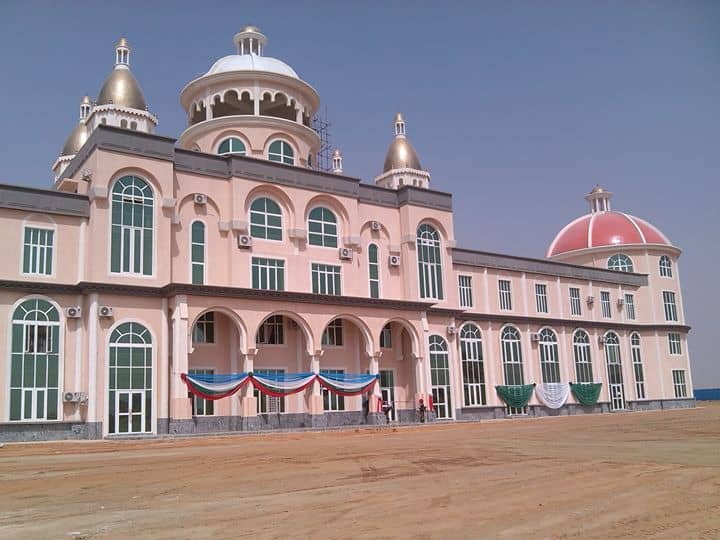
Alhaji Musa’s footprints will forever remain in the sand of time and indelible in his hometown of Majia and Jigawa state at large. A man not known to have acquired any conventional tertiary education in any chosen endeavours, by providence, he established the first conventional, integrated, subsidised, well-equipped, highly strategised private University in Jigawa. He named it Khadija University Majia, after his beloved mother. This is a deliberate philanthropic gesture worth commendation. 

However, Alhaji Musa Majia demonstrated the potency of his patriotic favour when he offered automatic scholarships to indigenous Majia candidates who obtained the minimum requirements to gain admission to the university. 50% waiver to Jigawa state indigenous students and 30% waiver to others from Kano state. This commendable initiative will surely encourage and pave the way for willing and determined students who have a passion for furthering their studies but couldn’t afford the tuition due to their various financial constraints. 

Alhaji Musa’s clean-hearted, grass rooted, and inexhaustible philanthropic gestures are too numerous to enumerate extensively. However, he has distinguished life of service to God and humanity in the cause of his life. He continues to reverberate this, especially in his impeccable character, thoroughbred humanity records, and enviable stature.

In all this heroic precedence he has set, he has proved that character, generosity and purpose are the ingredients he needs to deploy in helping back and lending his helping hands to his community. Thus, he provides them with a first-class private institution at their doorsteps to assist the masses in furthering their education and achieving their full potentials in their various life endeavours. Moreover, he displays courage and integrity in contrast to the willingness and opportunism that other equally wealthy people haven’t shown given the similar circumstance. 

An instructive insight on some of his inexhaustible philanthropic gestures would reveal a man who has a consistent and unmatched commitment towards improving the life and well-being of the members of his community. Little wonder how he has distantly distinguished himself from the general culture of the wealthy. On different occasions, he kept his word on the transitions of helping the needy and carried out with utmost transparency with complete blindness to any family lineage or any discrimination. 

Alhaji Musa Majia has overseen the construction and distribution of over 120 houses to people in his community who have no shelter and have sponsored over 40 students to further their studies abroad from 2011 to date. Alhaji Musa has also facilitated the construction of arguably one of Jigawa’s best secondary schools with the tahfiz section known as Adams Science and Tahfizul Quran academy Majia in 2020. It is situated in his hometown of Majia to also aid in realising the full potentials of the willing and talented students of Majia town. 

In job creation, he has facilitated the employment of indigenous youths of Majia town in various professions, especially the bureau de change professions. Many young graduates and non-graduates who have benefitted from his benevolence have excelled in that endeavour and created manpower for other equal contemporaries to curb unemployment in the community. Alhaji Musa has also facilitated the situation of the FRSC division and police division in Majia town to curb the menace of security in the community. 

Additionally, in his generosity, Alhaji Musa has also provided white-collar jobs to numerous Majia youths in the Central Bank of Nigeria (CBN). Over a hundred youths were provided with police offers, FRSC civil defence, and other para-military agencies across the country. With also a large farm settlement and a multi-millionaire plaza that employs over 500 workforces.  

This exceptional gesture of establishing a world-class private institution in his hometown of Jigawa earned the commendation of Vice-President Yemi Osinbajo and the Minister of Education, Mallam Adamu Adamu. They both describe his efforts as motive born out of patriotism and commend his potency of inherent  Ingenuity, which will be invaluable to the people of Majia, Jigawa and Nigeria. 

From the ongoing and his burgeoning philanthropic trajectories, it is evidently clear that Alhaji Musa Adamu Majia is a man of history. He has left a permanent mark in the annals of his community. He is also a worthy role model and inspiration for many aspiring philanthropists.

Salihu Sulaiman wrote from Dutse. He can be reached via salihusulaiman6540@gmail.com.