Social Media

A serious humour: Bello Galadanchi’s comedy skit for social commentary

By Sa’id Sa’ad

Earlier this year – when Bello Galadanci’s videos were becoming popular on digital platforms – a colleague posted a video of his skit on his WhatsApp status. From what might be a simple curiosity, I asked him if he knew who the person was – of course, expecting him to at least know a bit – but he replied that he did not know him beyond his not-so-much-funny recent “comedy skits.”

That was weeks after the publication of my recent essay, A Crack on Hadiza Gabon’s Wall: Humanizing Northern Nigeria Storytelling, where I described what the show meant to storytelling in Northern Nigeria and the impact of what I called “hypocritical denial and intentional lack of acknowledgement” from the northern community. As it has always been, I bumped into a tweet where a young person from “northern” Nigeria condemned the entire comedy skits made by Bello Galadanci. If I weren’t from the North, I would have wondered why Northern consumers always find a way to devalue Northern content creators in whatever discipline. But I didn’t, because I understood the game. So. Well. It is nothing to raise a brow at, mainly because, as creatives, criticism as such is often expected, “Thanks for the PR” was the short response Galadanchi gave him.

Even with the recent trooping of young creators into the skit-making industry in Nigeria, majorly due to its financial and digital-popularity lakes tunnelled by TikTok, Instagram and YouTube, one could guess accurately – as most other useful or even useless “developmental” growth – that adoption of content creation as a business by young people in Northern Nigeria, came very late, as well. It is difficult to mention by name – the northern skit creators who began early – and still maintain the same consistency as one would mention Taoma or Aproko Doctor or Mr. Macaroni from the South. Only Galadanchi and a few others still retain their craft consistently.

Many young people in northern Nigeria continue to comment, criticise, or label Bello Galadanchi and his skits in multiple ways.

Aside from the unpopular northern Nigeria population that perceives his skit as the “working-for-the-white” theory (or the painting north black belief), and the many who – due to educational standards and exposure – fail to comprehend the satirical nature of his contents, most of those who do not find him funny do so due to Broda-Shaggying or Sabinufying Galadanchi’s skit.

Unlike most skit makers in Nigeria, whose focus is majorly only on sowing laughter and entertainment into the market and reaping their golds, built on creative juice – Galadanchi’s contents are meant for social and political commentary using humour and satire. Backed by journalism, creative, and educationalist careers, it might seem almost impossible for Galadanchi – even by himself – to create non-questionable or fluid content only meant for laughter because creatives are muscled with the hunger to correct and change using their art. His could be simplified as addressing serious problems without being too serious.

Therefore, this makes it difficult for those Broda-Shaggying and Sabinufying him to comprehend the content as, thus, they expect a consciously endowed full-length comedy. I don’t mean to belittle content created by skit makers whose conscious aim is to create a hundred-percent comedy piece. However, expecting an all-comedy-induced piece from a skit maker whose purpose is challenging social and political ills using humour could be as good as expecting something from nothing.

While writing this essay, I shared on WhatsApp status a short clip from an interview Bello Galadanchi granted CGTN where he sat on stairs with three other Chinese, in a swagger-spirited looks with polished accent and blonde hair. Most GenZ’s (respectfully) responded to have known him only through his comedy and never “expected” him to be this “polished”, so far away from what they expected Dan Bello (his character) to be.

That means most of those who denigrate his content would have been from their “expected lens” through which they measure him to be. As argued in my previous essay above – could this also be what I called “hypocritical denial and intentional lack of acknowledgement” of the northern population for contents and creators coming from the north? Because, of course, what Bello Galandanchi is doing for northern Nigeria-specific social and political issues is what Aproko Doctor is exactly doing for Nigeria’s health sector and health-related issues.

Though satire could emerge in professional, amateur, elitist, and popular forms, those who do not comprehend his satire might also be due to their level of comprehension rather than the perceived educational standard or exposure. However, I believe both play a role here. Of course, satire is meant to use humour and irony to criticise, as in the case of the Nigerian writer Elnathan John with his famous book, Be(com)ing Nigerian. However, because Galadanci focuses on the “North”, he is quickly labelled with the “working-for-the-white theory”.

Perhaps if Elnathan’s book was a digital piece as Galadanci’s – and produced in the same form and language – the same label could have been blanketed for him, too. Sometimes, the theory sounds a lot like a comedy skit as well because even a deported northerner fighting the cause of his people – in any way different from the (usual) northern norms – would be considered brainwashed to work for the whites.

More so, those who do not comprehend the satire in the contents are often blindfolded from seeing the patriotism in these pieces. If not for a deep love for a people, I wonder how one would continue to create these provocative contents that question deep political ills in the region. While also soaking insults from young people in the same region who barely understood the depth of what his craft was uprooting.

However, looking at his pieces of art critically (beyond Broda-Shaggying them), how they are deeply immersed in satire and sheer creativity, one could vividly tell how varying it is from the contents created by other skit makers. If other skit makers called theirs “contents”, a creative could easily describe Galadanchi’s as a “piece of art”. The beauty in the work is so immense that one could smell creative fragrances all over the place.

Imagine if the digital youths in the north focus on – if not creating – promoting creators from the region rather than policing social media in the holy name of the north. Imagine if we all question the system in the individual creative juices deposited in us. Imagine if we learn to place a market value on the creators and contents from the north rather than wasting our time watching these wayward girls crowd-chasing nonsense on TikTok in Hausa and serving them to your screen back-to-back. Imagine if we focus on the problems rather than those who help us understand the problem. Imagine if we don’t call for the heads of those who create alphabets to remind us of where we are.

Galadanchi didn’t just find questioning the ill social and political system for Nigerians in Nigeria. He has lived with the system, experienced the system and carried dozens of scars from the system to wherever the world took him.

If these pieces of art are what come out from creatives whom the ill Nigerian system has wounded, then very soon, the Bello Galadanchi in all of us will prevail.

Sa’id Sa’ad is a Nigerian writer, poet, and playwright from Maiduguri. He won the Peace Panel Short Story Prize 2018 and the NFC Essay Prize 2018. He tweets @saidsaadwrites and can be reached directly via saidsaadabubakar@gmail.com.

One life, one liver: Hello North, a hero has fallen – Adieu Dr Tijjani Ibrahim

By Fadhila Nuruddeen Muhammad

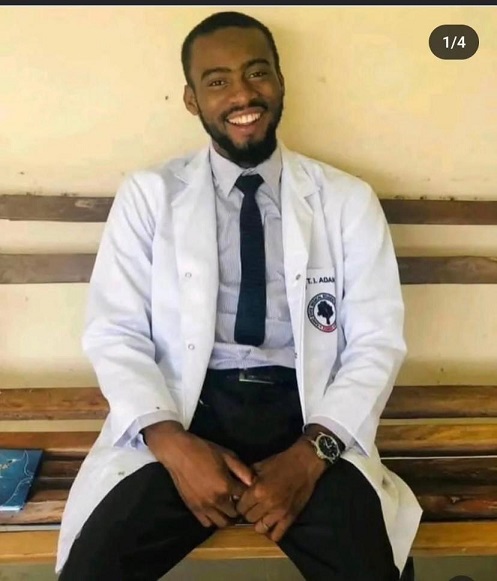
The journey towards becoming a doctor often begins in childhood, driven by a deep desire to help others and positively impact people’s lives. For many, like myself, the path may take unexpected turns, leading to different callings. I recall my childhood fascination with medicine, even playfully emulating the role of a doctor in my school days, using improvised tools such as cloth face masks and hand gloves to “perform surgery” on classmates’ pens. I’d then transfer the ink from one tube to another, all to save my classmates from running out of ink. Life has a way of guiding us, and for me, that path led to journalism.

Tijjani Ibrahim, however, followed his childhood passion to become a committed and dedicated young medical doctor. His journey was filled with promise, but it took an unfortunate turn when he was diagnosed with advanced Chronic Liver Disease, Liver Cirrhosis, a consequence of Hepatitis B Viral Infection in June 2023.

Dr Aisha Danbatta, a medical consultant at Murtala Muhammad Specialist Hospital, explained Hepatitis B as a global health challenge that targets the liver, causing both acute and chronic illnesses. “This virus can be transmitted through various means, such as from mother to child, unscreened blood transfusions, exposure to contaminated materials, sexual contact with an infected partner, and even through saliva. Unlike HIV, Hepatitis B has a longer lifespan, making it easier to transmit.”

Dr Danbatta emphasised the prevalence of undiagnosed cases due to a lack of immunisation, leaving many unaware of their condition. Those diagnosed often struggle to afford vital tests like viral load measurements, which determine the quantity of the virus in the blood and assess the extent of liver damage. Physical examinations, ultrasounds, and fibroscans are also crucial in evaluating liver fibrosis and scarring monitoring the progression of the disease.

Dr Tijjani was first at the National Hospital, Abuja, where he was doing his house job and diagnosed with Liver Cirrhosis at the same hospital in June this year. The cost of his treatment was quite high, and he could not afford it. The National Hospital Abuja could only support his medical bills by creating an official memo. He was later transferred to Aminu Kano Teaching Hospital in Kano.

Hamza Danyaro, a friend of the late Dr Tijjani Ibrahim, explained that “his return to Kano was motivated by the hope that the National Medical Association (NMA) Kano State chapter could provide support. However, it was revealed that to benefit from their assistance, he needed to complete his National Youth Service Corps (NYSC), pay his dues, and work for at least a month or two before becoming eligible.”

“Tijjanii was not strong enough to go through these. Instead, we rallied to seek help from dignitaries such as politicians, the House of Representatives members of his local government in Kumbotso, and organisations. Unfortunately, the lengthy protocols inherent in today’s politics prevented direct outreach,” Danyaro added.

Tijjani was left with no other option than to seek funds. His friends organised the fundraising. The campaign was expected to raise a sense of urgency and necessity to help support a young medical doctor with funds to support his medical bills. This kind of transparency can prompt people to contribute to the cause. But only a tiny amount was raised after several days of campaigns.

Fauziyya D. Sulaiman, a philanthropist with a heart of gold, shared her disappointment on social media, writing, “It’s unfortunate that despite our community boasting politicians and business leaders among us, we couldn’t muster N25,000,000 to support Tijjani. If this were about some trivial matter, you would have seen some of us at the forefront. This is undeniably a disgrace.”

Dr Khalid Sunusi Kani, a medical doctor and health advocate, penned an open letter addressed to President Bola Ahmad Tinubu through Solacebase online newspaper. In this heartfelt letter, he expressed the critical need for Dr Tijjani Ibrahim’s services in Nigeria, emphasising the pressing issues within the country’s healthcare sector and the alarming rate of “brain drain syndrome.”

He wrote, “Your Excellency, Nigerians too are in desperate need of his services, looking at the manpower deficit in the health sector and the rate at which we suffer from ‘brain drain syndrome.’ I strongly believe Nigeria and Nigerians are unprepared and cannot afford to lose someone like Dr. Tijjani Ibrahim.”

Chronic Hepatitis B places individuals at a high risk of cirrhosis and liver cancer, leading to severe health consequences. In July 2023, the World Health Organization revealed that 296 million people were living with chronic hepatitis B infection in 2019, with 1.5 million new conditions occurring yearly. While there is no specific treatment for acute hepatitis B, medicines can effectively slow the progression of cirrhosis, reduce the incidence of liver cancer, and improve long-term survival.

Dr Tijjani Ibrahim died on September 6, 2023. His dedication to the medical field and his efforts to make a difference in the lives of others will be remembered and cherished.

Witnessing a doctor who devoted his life to saving countless others facing such challenging circumstances is genuinely disheartening. He dedicated his life to the mantra of ‘One Life, One Liver,’ yet our society struggled to come together to save his life. In a world where trivial issues on social media can garner an astonishing number of likes, it’s heartbreaking that Tijjani needed just 25,000 people to contribute a mere dollar each or someone who can just pay the total amount.

Tijjani’s story serves as a poignant reminder of the power of collective action and the importance of rallying together to support those in need, especially those who have dedicated their lives to serving others. Let us reflect on this unfortunate situation and take it as a call to action. Together, we can make a difference and ensure that the heroes who dedicate their lives to saving others do not suffer in silence.

“One Life, One Liver”: A heartfelt tribute to a fallen hero leaving an indelible mark on the world. May Allah rest his soul, amin.

Fadhila Nuruddeen Muhammad is a social media influencer based in Kano and can be reached via fadhilamuhd@gmail.com.

Reviving our nation

By Nafisa Ismail Sadiq

In a world brimming with distractions, it’s time for us to turn our gaze inwards and confront the pressing issues that plague our society. As citizens of this great nation, we often find ourselves ensnared by fleeting trends and shallow debates, all while the true problems continue to fester unchecked. It’s high time for a transformative shift, a change that will not only uplift us but also propel us towards a brighter future.

In Nigeria, a land rich in culture and potential, we are facing challenges that demand our immediate attention. Instead of delving into the depths of our problems, we gravitate towards inconsequential matters that only steer us away from progress. Our nation is grappling with issues like poverty, unemployment, and a crumbling education sector. These are the trends that should be at the forefront of our collective consciousness, yet they remain overshadowed by trivial concerns.

Consider the paradox of our society, where wrongdoers are hailed as heroes and those who strive to create a positive impact are left to languish in obscurity. Our universities, once shining beacons of knowledge, are now plagued by neglect and inadequate resources. Educators, who hold the power to shape the minds of the next generation, struggle to make ends meet. The rising cost of living juxtaposed with stagnant salaries has left them in a dire predicament.

Our dependence on imports further weakens our economy and undermines our potential for self-reliance. Instead of leveraging our resources to bolster local industries, we remain fixated on foreign goods that drain our wealth. We must learn from those who have charted their own course to development, adopting strategies that suit our unique circumstances while staying true to our cultural identity.

The power of social media is undeniable, yet we often wield it irresponsibly. We showcase the inconsequential, turning a blind eye to the stark realities that demand our attention. People are suffering, struggling to find their next meal, while the rich amass greater fortunes. The ever-widening wealth gap is a stark reminder of our misplaced priorities.

It’s time to redirect our focus, to channel our collective energy into tackling the issues that truly matter. Poverty, education, employment – these are the trends we should be confronting head-on. By acknowledging and addressing the hardships that many endure, we can foster a society that thrives on compassion and cooperation.

As we stand at this crossroads, let us unite to create a narrative of change and hope. Let us shatter the shackles of complacency and dare to dream of a Nigeria where progress is not just an aspiration, but a reality. The path won’t be easy, but it’s one that promises fulfillment, prosperity, and a legacy of positive transformation.

It’s time to rise above the noise, to champion the causes that truly define us. Together, let’s pave the way for a better tomorrow, one in which our efforts reflect our values and our actions resonate globally. The change begins with us – let’s make it count.

Nafisa Ismail sadiq is a 300-level student in the Department of Mass Communication, Bayero University Kano. She can be reached via nafisasadiq005@gmail.com

Twitter changes own logo

By Muhammadu Sabiu 

Elon Musk, the owner of Twitter, and its new CEO announced on Sunday that the social media platform would get rid of its bird emblem, change its name to X, and soon enter the payment, banking, and commerce sectors. 

According to the design website Creative Bloq, Twitter, which was founded in 2006, gets its name from the sound of birds chirping. 

The firm has used avian branding ever since purchasing a stock symbol of a light blue bird for $15. 

Late Sunday night, Twitter CEO Linda Yaccarino tweeted a photo of the company’s new logo: a white X on a black background. She wrote, “X is here! Let’s proceed. 

Later on the same Sunday, Musk also updated his profile image to the business’s new logo, which he dubbed “minimalist art deco,” and his Twitter bio to “X.com,” which now reroutes to twitter.com. 

“If a good enough X logo is posted tonight, we’ll make (it) go live worldwide tomorrow,” Musk tweeted.

To wash, or not to wash: The bloody Samaritans contemplated

To wash, or not to wash: that is the question

‘Whether it is nobler in the mind to suffer the slings and arrows of outrageous’ servitude,

or to take a stand against a sea of troubles, mediocrity and ‘by opposing, end them?’

Since washing the husband’s clothes has found its way to the topmost topic worthy of discussion amidst many other issues ravaging our dear region, let’s talk about it then. We are unserious, first of all, I must admit. After wasting time and energy on such trivial topics, I wonder how we still expect an actual transformation to occur. How is that possible?

By the way, washing the husband’s clothes is not a crime; it fetches rewards from Allah and love from (some) husbands. If you want to be a diligent wife and conquer his heart by washing his clothes, please do, as there’s no user guide to a successful marriage. Just do what works for you. But remember, no good husband will wish slavery and suffering upon his wife. If he/she has the means to make life easier for you and they are not doing that, then dear, you are probably with the wrong partner.

Who are you married to? A lover or a husband?

Yes, because it’s about time we differentiate between the two. But I was married to both in one person, so to say that I washed his clothes out of love shouldn’t be surprising. We were newly married then. I was young (and not naive, thanks), energetic, and most of all, wanted to prove the ‘I am a good wife’ point. We both were pursuing our masters in India, so whenever he had classes and I didn’t, I would wash and iron his clothes before he returned. I love to see him appreciate me. That ‘Allah ya yi miki albarka‘ meant a lot to me, and I would do anything to get those blessings.

So while I was washing, he would try to dissuade me. Other times he would join when he was around, and because I wouldn’t stop, he searched, found and patronised dry cleaners in the neighbourhood until we got our washing machine. So, whether or not to do these little things is absolutely perspectival. I washed not just his clothes but those soiled with poop and vomit (when he was sick). It doesn’t make me feel lesser, and I would do that again if necessary because if I don’t, who will? I did it diligently, with enthusiasm and so much pride.

Moreover, that made us happier; it fetched me lots of love and admiration and earned me a good repute. As such, he washed mine and the kids’ too. We were abroad without any other relative, so whenever I put to bed, he’d be fully in charge of the laundry – and other domestic chores. What is love and compassion in marriage for?

I have seen similar arguments about cooking as well. So if you say women shouldn’t care for or serve their husbands in these little ways, how else should they do it if he is not rich enough to afford such services? Just how?

I am not saying being a slave is the only way to a man’s heart; instead, I want to rebuke the adamant claims that rule out the possibility of making these little gestures. If care is not taken, someday, women will argue about whether to have intercourse with their husbands. Hello!

It saddens me every time I see women following a so-called ideology trashing the institution of marriage – in the guise of ‘woke-ness’, for we may escape the traps of their unwavering criticisms, but what about our kids? The louder their voices, the more sceptical the next generation would be about marriage. Many youths are now feeling pessimistic about the whole idea of marriage – thanks to influencers and bloggers. Remember, if we continue to applaud life without marriage, we will watch our societies relapse into lethargic savagery.

I am not saying being a slave is the only thing about marriage; no, there’s a lot more. But please, let’s engage in marital discourses more positively and always keep in mind that the younger generation is watching. Marry, wash or cook if you want to, and if you don’t want to, just shut up! We shouldn’t be accomplices to the tacit agenda infesting our region.

Please do not misconstrue my opinion. Being servitude isn’t the key to every man’s heart. It depends on the man and the circumstances. Also, washing his clothes (among other courtesies) wouldn’t keep him, if you like wash his clothes and all of his village people’s, he will replace you in a snap if he wants to. No amount of endurance, sacrifice, compassion and diligence would guarantee that you have won him, my dear; only a man that wants to be kept can be kept.

So, as you put all your efforts into building your home, do everything for Allah’s sake to earn His pleasure only because man is naturally dynamic. Wash if you want to, I reiterate, but remember, it’s not your religious duty as a wife. However, you may do it for the fun of it. Be a bloody Samaritan. It’s fun! What is love without compassion and foolishness? Although my ‘breakfast’ was just recently served, I choose to say objectively: Marriage is sacred and an achievement, take it or leave it!

Yours humbly,

Dr Sadiya Abubakar

Bauchi husband killer, netizens and the other side of the story 

By Lawan Bukar Maigana 

Maimunatu Suleiman, 21, stabbed her husband, Aliyu Mohammed Gidado, to death on July 5th, 2023, in their residence at Kofar Dumi in Bauchi State, Nigeria. 

Since then, I have read different narratives about the tragic incident. Some said she killed him because it was a forced marriage, while others said she murdered him because of his willingness to remarry. 

As a trained journalist and fact-checker, I needed to investigate the narratives’ source, save the public from being misled by merchants of misinformation and fake news, and feed the crowd with authentic information.  

Using Facebook, I identified his neighbour and demanded that he send me his phone number so we could talk about the incident, and he did. He told me that Aliyu and his wife married in January 2020 and have one child—a boy. 

“Their marriage was out of love. Everybody knows them, and most people in their area have admired them because of their love for each other which culminated in their marriage. 

“And they never had any serious issues until recently when Aliyu realised that Maimuna had been going out without his permission as her husband.

“Aliyu returned home three days ago and expressed sadness about her deviant conduct, which later resulted in a serious misunderstanding between them that nearly broke their marriage, but his father and older brother intervened”, the neighbour explained.

On the day the incident happened, Gidado’s father saw Maimunatu’s friend coming out of their house after they spent hours in her room holding her plasma TV, but he didn’t talk to them. 

It is a tradition in their house that the last person who comes in after 10:00 pm ensures everyone is around before closing the gate. 

Wednesday night after 10 pm, his older brother called his name and asked if he was around so he would lock the gate, but Aliyu didn’t answer. His brother asked thrice but to no avail. 

Worriedly, his brother approached his room and observed that he was gasping for breath. He quickly got back to his room and took a touch and entered the room and saw his brother soaked in blood while his wife, the prime suspect, was facing him. 

That was when he quickly called their father to see what happened and subsequently sought help from their neighbours to rush their brother to the hospital. Unluckily, Gidado died before they got to the hospital. 

Out of patience, concern, and resilience, they rushed his wife to the hospital, thinking she was stabbed. The doctors informed them that she was safe and had only sustained bruises on her stomach. 

After she regained consciousness, Gidado’s father asked what had happened, and she told them that thieves had jumped over the fence and killed her husband when she went to the toilet to pour her child’s urine. 

She even told them that the thieves ran with her plasma TV, unknown to her that the bereaved old man saw her friends going with her plasma TV hours before the unfortunate incident but didn’t argue with her. 

Curiously, the victim’s father told her that there was no way thieves would jump over the fence without being seen by a tea seller beside their gate, whose place is always busy with people. 

After discovering that she was suspicious, they called police on her. 

The cops took her to the station, where she confessed that she stabbed him twice in his chest because of a misunderstanding in the evening. 

It was also reliably confirmed that she has a three-month pregnancy for Gidado. 

Therefore, those who said the murderer was forcefully married to him are just lying to the public. Their marriage was out of enormous love. 

Similarly, an Abuja-based lady Maryam Sanda mercilessly stabbed her husband to death on November 2017. 

Many media outlets, largely online alongside social media influencers, had disseminated unverified chronicle stories about the tragic incident without confirmation from the parties involved. 

Sharing unfiltered and fabricated information is seemingly becoming a norm in Nigeria among media outlets and internet users to manipulate people’s perceptions of facts. 

It is necessary to call on spreaders of information and netizens to please desist from sharing unverified information and cultivate the habit of digging into stories before publishing them. 

Please pray for the repose of Gidado and his mother. She died in early January 2023. 

Lawan Bukar Maigana writes from Borno and can be reached via email:lawanbukarmaigana@gmail.com.

BUK dismisses rumours of increased registration fees

By Uzair Adam Imam

The news making the round about the increment in school fees by the management of Bayero University, Kano (BUK), has dragged many students into a sheer panic while others fear the increment would be the end of their academic journey.

However, the school management debunked the circulated news on Wednesday and described it as fake news meant to startle students.

Malam Lamara Garba, the school Deputy Registrar, Public Affairs, told The Daily Reality that the story was baseless, urging the general public to reject it as “there is no official disclosure on that effect”.

The Daily Reality recalled that the news about the increment in the school fees to N170,000, initially said to be leaked information, has gone viral since the beginning of the last week.

The Students Union Government (SUG) claimed to have made several attempts to highlight the negative consequences the increment would have on students and subsequently held two meetings on the process with the school management.

Auwal Lawal Nadabo, the school acting SUG President, stated that all their efforts were in vain as the school management remained firmly on its stands after all the meetings.

Nadabo, who relayed this on a Facebook post, said, “The school management, after all consultations and finalizing the proposed fees, called for a second meeting where it was confirmed to the student leaders that the new range of school fees would be N97,000 to N170,000, as the case may be.

However, asked whether what the SUG President said was true, Garba denied knowledge of the meetings, saying, “I don’t even know when they had the said meeting with the management.”

Please, hide my identity

By Abubakar Suleiman

If you are conversant with the Arewa cyberspace, it will be surprising if you are unaware of the cliché, “Please, hide my identity.” It has gained so much currency (or notoriety) on Instagram, Facebook and Twitter. And it is mainly followed up with bad news, especially related to relationships and marriages – cases of incest, infidelity, marriage battery, heartbreaks and others.

People usually send their relationship or marital problems to popular social media pages or handles managed by self-styled marriage counsellors. These counsellors or opinion shapers then subject the problems to the public for solutions while hiding the identity of the sender of these problems.

Surprisingly, these people who found themselves in a toxic relationship or abusive marriage have parents or guardians who married them off to their spouses. Still, they many times seem to bypass them for advice or counselling.

They also rarely approach certified marriage counsellors or therapists for solutions. Therefore, the problem is thrown to the public, and with too many disjointed ideas or solutions, sieving the best solution to the peculiar problem becomes complicated.

Not so fast; how are we even sure these stories or problems are true? What if someone sits in the comfort of their room or basement and concocts these unfounded narratives to make the stories trend? Many people don’t check the logical validity or fallacy of these stories.

Social media gave everyone a platform to air or voice out their views. The problem with the advent of these platforms is not the access to information but rather the processing of information. Many people find it uneasy to check the authenticity of stories or the validity of statistics.

The blowback or unintended consequence of this ‘hide my identity’ trend is that it has made many young people consume many negative stories, thereby fuelling suspicion between both genders. Moreover, stories of successful and happy marriages have been in short supply. Therefore, some young people no longer see marriage as a worthwhile endeavour wherein you invest your patience, energy and prayers.

On the one hand, love movies from Nollywood, Bollywood or Kannywood made young people see marriage or relationship as a perfect bed of roses or land of Eldorado instead of the cocktail of happiness, sadness, compromises and sacrifices that it is.

On the other hand, ‘hide my identity’ stories have increasingly made partners or lovers dine with each other with a very long spoon. Each sees the other as a veiled threat or a potentially dangerous person. These trends have created overnight feminists and misogynists.

The above backdrop does not downplay the effects of abusive or toxic marriages or relationships that appropriate authorities could reasonably address – parents, guardians, certified counsellors or the court. However, young people must be guided on what marriage entails, its prospects and its challenges. They need a direction or triangulation amidst a plethora of negative information and scary marital or relationship stories.

They should also be fed with successful marital examples or stories and the possibility of a happy marriage. And this makes parenting a more difficult task in our contemporary world.

The last time I checked around, we still had more good homes than broken ones. But, unfortunately, the familiar stories of abusive marriages or relationships are just the case of bad news flying more than the good ones.

Check out families around you, your pairs, neighbours, colleagues at the workplace or married classmates. You’ll understand that except for the usual day-to-day challenges in marriage, they are relatively not bad as it is being portrayed. However, we can canvass for improvements, coping mechanisms or detailed exit plans for worst scenarios. Therefore, ‘hide my identity’ stories are many times fabricated stories or isolated cases than the whole.

Abubakar Suleiman wrote from Kaduna and can be contacted via abusuleiman06@gmail.com.

Leveraging social media for better opportunities

By Mujahid Ibrahim

As I sat in the conference hall at the Kano Social Influencer’s Summit (KANSIS) of 2021 and 2022, organised by the Centre of Information Technology and Development (CITAD), I couldn’t help but wonder about the immense power of social media. The conference brought together a diverse group of social media influencers, entrepreneurs, and enthusiasts who shared their experiences and perspectives on how social media can be leveraged to drive social and economic growth.

However, amidst all the exciting stories and success tales shared at the conference, one thing was clear: the effects of mismanaging social media can be disastrous. From cyberbullying to misinformation and hate speech, social media has the potential to be a double-edged sword. While it can be used to amplify positive messages and drive change, it can also be a breeding ground for negative and destructive forces.

One instance of the adverse effects of social media mismanagement is the infamous #EndSARS protest in Nigeria, which was initially launched on social media platforms. The protest started as a peaceful campaign to end police brutality but eventually turned violent due to the spread of fake news and misinformation on social media. The consequences were dire, with many lives lost and properties destroyed.

However, it’s not all doom and gloom. Social media platforms provide endless opportunities for individuals and businesses to connect, engage, and grow their brands. From advertising to influencer marketing, social media has become indispensable for businesses looking to reach new audiences and drive revenue.

Numerous success stories exist of individuals and businesses leveraging social media to achieve their goals. For instance, the fashion brand Fashion Nova has grown from a small online store to a multi-million-dollar brand by utilising social media platforms to drive brand awareness and engagement. Similarly, entrepreneurs like Jeffree Star and Kylie Jenner have built successful cosmetic brands by leveraging their massive social media followings.

Other examples of social media success stories include:

Salt Bae: The Turkish chef Nusret Gökçe went viral on social media after a video of him sprinkling salt on a steak went viral. Since then, he has built a global empire of restaurants and has over 20 million followers on Instagram.

Wendy’s, the fast-food chain, has become famous on social media for its witty and engaging responses to customers. Wendy’s Twitter account has amassed over 3 million followers and has been hailed as a masterclass in social media marketing.

Glossier, the skincare and beauty brand, has built a cult following on Instagram, with over 2 million followers. Glossier has used social media to build a strong community of loyal customers who engage with the brand and share their experiences online.

GoPro, the action camera company, has used social media to create a platform for user-generated content. By encouraging users to share their GoPro footage on social media, the company has created a vast library of high-quality content that promotes the brand and inspires others to purchase their products.

Old Spice, the men’s grooming brand, revitalised its image through viral videos that parodied traditional male grooming advertisements. The videos were hugely popular on social media and helped to reposition the brand as edgy and irreverent.

These success stories, however, demonstrate the power of social media in building brand awareness, engaging customers, and driving revenue. By leveraging the unique features of each social media platform, businesses can create targeted and effective marketing campaigns that resonate with their target audience. Social media also provides opportunities for individuals to build personal brands, connect with like-minded people, and share their passions with the world.

To sum it up, social media has the potential to be a powerful force for good or bad, depending on how it’s managed. By understanding the power of social media and leveraging its unique features, individuals and businesses can drive social and economic growth. However, it’s important to use social media responsibly and to be mindful of the potential adverse effects of mismanaging it.

As social media continues to evolve and shape our world, we must use it to build a better, more connected, and more inclusive society. So, whether you’re an entrepreneur, an influencer, or just a casual user, remember to use social media to spread positive messages, connect with others, and make a meaningful impact.

Mujahid Ibrahim, Program Officer, Centre for Information Technology and Development (CITAD), can be contacted via littlemujahid4@gmail.com.

On pseudo-intellectual engagement in Nigerian social media

By Iranloye Sofiu Taiye

One of the essential elements that strengthen the unity of countries with numerous ethnicities is the mutually esteemed mode of communication, respect for their diversities, and by extension, mutual political relationship. But presently, the Nigeria social media fora are nothing but a channel for perpetrating, promoting, and sowing seeds of national discord, anchored on the uncivilised conduct of the politician and the supporters of political parties. It’s now conspicuous, apparent, and plausible that the spurious actions of the users of the social media platforms encompassing Facebook, Twitter, Instagram, and WhatsApp groups have nourished the already perturbed and suffocating political terrain. 

Glaringly, this is an indication that we have a long battle to wrestle with, considering the pandemonium that ravaged the online space aftermath of this year’s general election. It’s very disheartening and daunting that we now freely strike and attack each other on the online space devoid of decorum and let alone having regard for divergent political opinions, which ought to be the beauty of democracy. The uncultured and vulgar attitude of the Baptists, Obidient,s, and Articulators was very appalling, which invariably made users of social media jettison the esteemed hitherto cultural mode of interpersonal communication, alas! we’ve now regrettably substituted it with barbarous, sadistic, and wanton mannerisms. 

The magnificent of social media platforms being a free platform where people exchange ideas, audio-visual content, and debate political perspectives with the use of internet connection had forthwith metamorphosed into caliginous and obscurity due to the pretentious salvage rhetorically disseminated by politicians to their naive and gullible followers who have been brainwashed with the grandiloquence of their preferred candidate. Hence, mutual content-sharing and collaboration have become hallucinations in the social media space.

It’s a known fact that all the political parties now budget a humongous and whopping sum of money on social media purposely to manipulate the thinking of the people to kowtow to their interests. These are cliques and gangs the political parties recruited as an online army of soldiers to perform several tasks, including the following: cyberbullying, paddling false information, using hate hashtags, threatening and intimidating their opponents with their unguarded utterances and abusive statements, spreading derogatory anonymous articles and engaging in an illogical debate just to mislead the public. 

This is quite terrible, horrendous, and awkward. Many youths have been cajoled and fed with negative thoughts and hatred about the country. After all, youths are the major users of social media, and this uncivil engagement is a stigma on the image of our nation State. The hate speech and this needless confrontation, brawl, and hullabaloo have set the citizens against each other, which is a setback to our nascent democracy and a violation of the expression of freedom, respect for the dignity of man and freedom of association as entailed in our national constitution. 

However, Since the ill-ambitioned politicians and the hatred-fed supporters of the political parties have no monopoly on expression and the online space is free for all citizens to utilise, then the intellectuals, scholars, and objective writers should brace up their pen to engage in thoughtful and analytical political discussions, and logical debates on the Facebook, Twitter, Instagram, and other online space, to stem this delinquency before it wakes up the sleeping dogs. Let’s remember that the pen is mightier than the gun.

Note a Yoruba maxim said, “When elders are in the market square, the head of a new baby cannot be laid upside down”

Iranloye Sofiu Taiye (Optimism Mirror) is a public affairs analyst, public speaker, writer, and youth advocate. He can be reached via iranloye100@gmail.com