Science and Technology

Why Engineers and Foresters Need to Talk

By Abubakar Idris Misau 

Altitude: 120 m AGL; Latitude: 9.0538° N; and Longitude: 7.4913° E.  Through an aerial assessment, we see clearly Mr Engineer working in a high-tech lab [read: field] and dealing with the precision of machines and equations, and Oga Forester standing in a quiet woodland handling the unpredictable messiness of nature. The picture shows two different professionals occupying completely distinct worlds. On the ground, however, a meticulous survey presents two applied scientists, each drawing on established knowledge from the basic sciences and working to solve real-world problems. The Engineer collects data from Physicists, Chemists, and Mathematicians; the Forester receives inputs from Biologists, Agronomists, and Ecologists — all for the very same reason: improving life on land. In other words, they do not study the laws of nature merely out of curiosity [though curiosity is one reason], but as applied scientists who take foundational science and use it to create practical solutions for humanity. 

Historically, however, their professional training has led them to view the same landscape through different lenses. For example, when an engineer looks at a rural community, they see a need for roads, bridges, transmission lines, and power grids. A forester, by contrast, sees ecosystem dynamics, deforestation, desertification, and climate change. Meanwhile, if these scientists are to solve Nigeria’s pressing energy challenge, the two views must merge. The engineer must realise that the answers to our modern energy crisis might just be growing right outside their laboratory windows, and the forester must accept that “climate activism” has to go beyond anti-deforestation policies and tree planting campaigns. Tangible solutions must produce clean, affordable energy alternatives for people. This piece argues that the engineer-forester marriage can give birth to the figurative “ɗan mai ido”.

It’s unfortunate that, on the basis of the current arrangement, when modern engineers think about renewable energy, their minds instantly drift toward fields of sleek solar photovoltaic panels or towering wind turbines. These technologies are undeniably the vanguards of the global energy transition. However, as any engineer in the field will admit, solar and wind power have certain vulnerabilities. Solar panels, for example, lose efficiency as ambient temperatures increase, and wind turbines face structural strain from turbulent, unpredictable wind currents. Here, engineers can reliably work with foresters to strategically design and deploy agroforestry shelterbelts and windbreaks around large-scale solar farms and wind corridors. Foresters know exactly which deep-rooted tree species can thrive in specific zones to act as localised, natural cooling mechanisms through transpiration. By lowering the ambient temperature of the surrounding microclimate, a well-managed forest perimeter helps solar panels operate closer to their optimal temperature, boosting overall performance.

Nigerian media houses have had enough of national grid collapse news. While solar and wind energy alternatives are decentralised and, as such, cannot cause national grid collapse, anyone using these technologies knows they have their own version of intermittency. This is due to the limited storage capacity of their batteries. This means that, beyond structural protection for solar and wind, the forestry-engineering alliance has to solve the notorious puzzle of grid intermittency without relying exclusively on expensive, environmentally unfriendly chemical battery storage. Simply put, it must produce its own clean, affordable energy! 

Here, the energy security crisis in Nigeria cannot be divorced from the broader threat of climate change. In fact, they exist in a destructive feedback loop. Isn’t it true, for example, that severe droughts drastically reduce the water levels of our major hydroelectric dams (like Kainji and Shiroro), cutting off baseline electricity generation? Well, how about extreme heatwaves adding pressure to transmission grids? Documented evidence points to desertification in the north forcing human displacement and completely altering local energy demands. Most importantly, fossil fuels are not considered clean for obvious reasons. All of that. What do we do?

In my view, to break this cycle henceforth, engineers must design systems that operate in harmony with natural carbon cycles. Applied forestry science could be essential here. Since forests sequester greenhouse gases directly from the atmosphere and store them as biomass, foresters can work to improve efficiency in the production process while engineers tackle the energy-conversion part of the equation… You gerrit?!  After all, as a forester, I know that forestry is the active protection, scientific management, and wise usage of trees for the benefit of the present generation while considering future generations. It doesn’t say we shouldn’t use them.

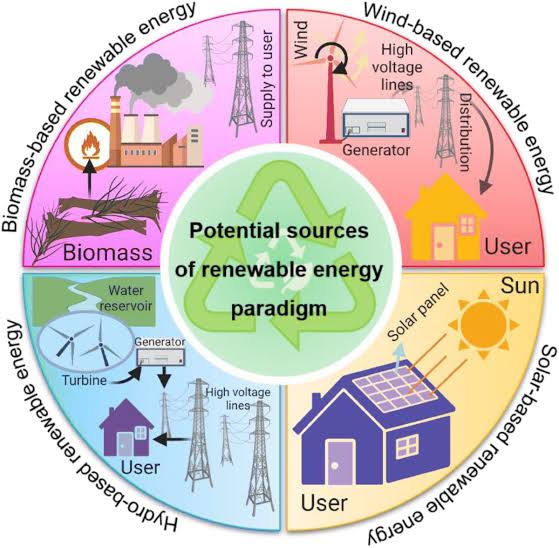
As I see it, therefore, the future of energy security, especially in rural communities, lies in hybrid bio-solar and bio-wind microgrids. In these systems, solar or wind power serves as the primary energy source during peak daytime or windy conditions. When these sources drop, a localised, automated biomass gasification system fueled by a continuous, scientifically managed pipeline of forestry and sawmill residues kicks in seamlessly to provide baseline power. Biogas is here to serve us. It should be utilised. Since forests produce biomass, we can maintain them as a living component of solar and wind grid infrastructure. In this unified, resilient ecosystem the forester manages the inputs, and the engineer optimizes the outputs.

Following this line of thinking, therefore, working with foresters is a sure path for engineers to efficiently transition from carbon-emitting energy to carbon-neutral or carbon-negative energy systems. Consider establishing “energy plantations” on degraded lands. Foresters choose species that restore lands and ensure high biomass production, while engineers build localised conversion plants. Because the carbon released during biomass energy generation is exactly equal to the carbon the trees absorbed while growing, the entire cycle remains net-zero. For a country like Nigeria, heavily bedevilled by oil pollution in the Niger Delta and desert encroachment in the North, this approach lets us restore ecosystems while securing a sustainable fuel source that displaces petroleum dependency. This is beyond win-win.

Whenever issues like this are discussed and similar solutions proposed, people dismiss them as unrealistic, inefficient, expensive, and so forth. But those are not academic submissions. History offers examples of even more dismissive assumptions that innovations and engineering solutions later proved wrong. Perhaps the clearest example was the global perspective on coal in the 19th century. No sensible person thought oil would take the place of coal, and it happened. In his 1865 book The Coal Question, to show the supremacy of coal over all other alternative energy sources, the English Economist William Stanley Javons even praised the black substance as “the sole necessary basis of our material power”. And, “the naturally best source of power as air and water and gold and iron are, each for its own purpose, the most useful substances and such that would never be superseded.” Javons published his work when oil wasn’t even discovered in commercial quality. But alternatives always exist.

Back to the solution. The engineering-forestry partnership is very relevant to the Global Agenda 2030, famously known as the United Nations’ Sustainable Development Goals (SDGs). When we fuel decentralised bioenergy grids with managed forest products, we directly support SDG 7 (Affordable and Clean Energy) by providing power to communities using local resources. And because this energy cycle displaces fossil fuels and prevents open-air waste burning, it directly contributes to the almighty SDG 13 (Climate Action). Meanwhile, as foresters oversee resource generation, this energy security is achieved without destroying ecosystems. Isn’t that aligning with SDG 15 (Life on Land)?

The marriage of engineers and foresters also breathes life into the African Union’s Agenda 2063, which envisions “The Africa We Want”. Its goals include climate-resilient economies and sustainable natural resource management. Genuinely, I don’t think achieving Agenda 2063 is feasible if we import foreign technological solutions wholesale and ignore local geographical realities. Instead, I see the place of capitalising on our ecological endowments (forestry) with structural innovation (engineering) to pioneer a uniquely African model of green industrialisation.

Notably, I believe this collaboration is the missing key to the Nigeria Energy Transition Plan (ETP). Nigeria’s bold roadmap to achieve carbon neutrality by 2060 includes an aggressive milestone: phasing out 72% of decentralised diesel generators by 2030. For decades, Nigerian industries and homes have run on an expensive, polluting “shadow grid” of petrol and diesel generators. To eliminate them, the ETP explicitly calls for a dramatic ramp-up in solar PV, hydro, and biomass integration. However, the ETP’s ambitious targets are mathematically impossible if treated as purely mechanical problems. We cannot replace millions of diesel generators with intermittent solar power alone. As argued in this piece, we need a steady, dispatchable baseline power source. Sustainable biomass, managed by professional foresters and processed by engineers, provides that exact baseline. Without the forester to secure a sustainable, non-deforesting supply of wood residue, sawdust, and other forms of biomass waste, the engineer’s transition turbines will simply run out of fuel.

There’s no doubt at all: the complex riddle of Nigeria’s energy security will not be solved by a single breakthrough in a software lab, nor will it be answered by digging deeper into old oil wells. The challenges of our time demand that we outgrow the rigid intellectual silos built into our university curricula and professional institutes. As long as engineers look only at cables and solar panels, and foresters look only at climate change impacts on biodiversity and nature conservation, we will remain trapped in a landscape of fragmented, half-baked solutions.

Go to Brazil, and so forth; the story is different. It says we are behind. It says it’s doable.

It’s therefore high time we rethink what “technology” actually means. In my view, a forest gives us fertile ground to invent and test technologies. A tree is a highly sophisticated solar-powered machine that captures carbon, cools the environment, and manufactures organic energy. When we learn to treat the forest as a vital partner in our infrastructure plans, we unlock an entirely new toolkit for national development.

As a forester, I invite engineers to a talk on and in the forest. I am confident that together, through the shared practical language of the applied sciences, we can build a highly resilient, decentralised, and truly self-sustaining Nigeria. The answers, I opine, to our nation’s energy security are growing right outside our windows, waiting for us to start talking.

It’s July. We are in the second half of 2026. Those farmers who, during the first half of the year, prepared their lands in what the agronomists call [pre-planting] “cultural practices”, are today already smiling. Others are probably green with envy. A famous proverb attributed to ancient Chinese wisdom captures my call for a proactive mindset. “The best time to plant a tree was 20 years ago. The second best time is now.” I believe this proverb perfectly mirrors my visionary argument. A long-term proposal that says we haven’t done what we should have, but still, we should.

Abubakar Idris, a graduate in Forestry and Wildlife from the University of Maiduguri, writes from Benin City, Nigeria. He can be reached at abubakaridrismisau@gmail.com.


ICPC Nabs Ex-Minister Nnaji Over Certificate Forgery at Abuja Airport

By Abdullahi Mukhtar Algasgaini

The Independent Corrupt Practices and Other Related Offences Commission (ICPC) has arrested former Minister of Science, Technology and Innovation, Mr. Geoffrey Uchechukwu Nnaji, over allegations of certificate forgery and submission of a false National Youth Service Corps (NYSC) discharge certificate.

The arrest was executed on Wednesday at the Nnamdi Azikiwe International Airport, Abuja, upon the former minister’s arrival into the country. Operatives of the Department of State Services (DSS) assisted in apprehending Mr. Nnaji before handing him over to the anti-graft agency.

The ICPC had previously invited the former minister for questioning through a formal letter referenced ICPC/HC/CSTF/GUN/GBT/T.1/VOLV16, dated 15 May 2026. The invitation was delivered to his known addresses in Abuja and Enugu, as well as through his email, but Mr. Nnaji failed to appear on the scheduled dates.

Following his refusal to honour the invitations, the Commission secured a bench warrant from the Federal High Court in Abuja (Suit No: FHC/ABJ/CS/1160/2026) on 11 June 2026, authorising his arrest.

The allegations against the former minister include:

1· Forgery of academic credentials, specifically a degree certificate from the University of Nigeria, Nsukka (UNN)

2· Submission of a false NYSC Discharge Certificate during his ministerial screening in 2023Mr.

Nnaji is currently in custody at the ICPC headquarters in Abuja as investigations continue.

The Commission has assured the public that the matter will be pursued diligently in accordance with the law.

Improving Nigeria’s technology development to drive high-value production

By Aminu Babayo Shehu

Nigeria is entering a period where technology is no longer optional for national development. Around the world, countries that once depended on natural resources are rapidly transforming their economies through innovation, high-tech manufacturing and knowledge-driven industries. Nigeria’s long-term plan, Nigeria Agenda 2050, recognises this reality. One of its key policy directions is to accelerate technology development across all sectors to increase the production of high-technology products. This policy is not simply aspirational. It is urgent, practical and necessary for economic survival.

For decades, crude oil has dominated Nigeria’s revenue base. Yet oil is a finite resource, prone to global price shocks and increasingly less attractive as the world shifts to renewable energy. Technology products, on the other hand, are expanding at a scale that dwarfs resource-based industries. The global tech market is projected to exceed $10 trillion over the next decade. Nations that embrace high-tech production are generating new wealth, attracting investment, and creating jobs at a pace unimaginable under traditional economies.

Countries such as South Korea, Singapore, India, and China were once struggling nations with limited natural resources. South Korea transformed from poverty to a top global economy by investing in electronics, telecommunications, robotics and semiconductors. Today, companies like Samsung contribute more to South Korea’s GDP than the entire oil sector contributes to Nigeria.

China shifted from low-wage manufacturing to high-tech dominance in areas such as electric vehicles, drones, AI, and telecommunications. Its tech exports now reshape global markets. India invested heavily in its tech talent, building the world’s largest IT outsourcing industry and becoming a leading hub for software engineering, fintech, and space technology. These countries show that consistent investment in research, innovation, and human capital produces national transformation.

Nigeria has the potential to make similar progress, but time is not on our side. The world will not wait for us. If we continue to rely on crude oil as our primary revenue source, we will fall even further behind. Our young population, one of the largest in Africa, is an asset only if it is empowered with digital skills, research opportunities, and innovative platforms. Otherwise, it becomes a liability.

High-technology production can reshape Nigeria’s economy in several ways. First, it will diversify national revenue and reduce the need for excessive borrowing. Countries with strong technology sectors generate significant income from intellectual property, digital services, hardware production, and global tech partnerships. Nigeria can do the same by promoting local manufacturing of electronics, renewable energy components, agri-tech equipment, medical devices, cybersecurity solutions, and AI-powered tools.

Second, investment in technology drives innovation across all sectors. Agriculture can be transformed through agri-drones, smart irrigation and data-driven farm management. Healthcare can be strengthened through telemedicine, diagnostic tools and biotechnology research. Security agencies can rely on surveillance drones, satellite imaging and digital intelligence rather than outdated methods. Education can be improved through digital learning platforms, simulation labs and computing infrastructure. These are the kinds of advancements that lift entire nations.

Third, high-tech development creates high-quality jobs. Instead of exporting raw materials, Nigeria can export advanced products and services. Instead of depending on foreign technology, we can build our own solutions. Instead of losing talented youth to migration, we can build an economy that retains and rewards them.

However, none of this will happen by accident. Nigeria must deliberately invest in research and development, strengthen universities and technical institutions, build innovation hubs, support local manufacturing, and fund STEM programs from primary school through postgraduate level. Policies must be consistent, leadership must be committed, and institutions must have the resources needed to produce world-class results.

If Nigeria takes the Nigeria Agenda 2050 technology policy seriously, we can transition from a raw-material exporter to a high-tech producer within a generation. But if we continue to postpone action, the cost will be grave. Nations that invest early in technology win the future. Nations that delay are left behind.

Nigeria has the talent, the population and the potential. What we need now is the political will and the investment to match our ambition. High-technology production is not just an economic option. It is the pathway to sovereignty, prosperity and long-term stability.

Aminu Babayo Shehu is a Software Engineer, Mobile Developer, and Technology Advocate. He can be reached at absheikhone@gmail.com.

Nigeria must turn to modern technology to defeat insecurity

By Aminu Babayo Shehu

Nigeria is facing one of its toughest internal security battles in decades. From the kidnapping of schoolchildren in Kebbi and Niger states to the killing of senior military officers, including a Brigadier General, criminal groups continue to operate with increasing boldness. Bandits, kidnappers and terror cells now openly upload videos on platforms like TikTok and WhatsApp, displaying weapons, hostages and propaganda with little fear of consequences.

This is no longer an era where outdated tactics can secure the nation. Criminal groups are becoming more technologically aware, while the state still relies heavily on manual intelligence and slow-response systems. Countries facing similar threats have adopted advanced tools and strategies. Nigeria must follow the same path.

The United States and Israel use drones, satellite intelligence and geolocation trackers to disrupt hostile organisations long before they strike. Rwanda has established a modern drone command system to enhance surveillance and national security. India employs mobile tracing, SIM mapping and digital pattern analysis to dismantle kidnapping networks. These examples show that even in challenging environments, technology can expose criminal movements, reduce their operational freedom and strengthen national response.

Nigeria can apply the same approach effectively.

Real-time aerial surveillance remains one of the most critical gaps in Nigeria’s security architecture. High-altitude drones equipped with night-vision cameras and thermal sensors can monitor large forest areas where bandits hide. Such drones transmit live data to command centres, enabling tracking of movements and coordination of precision strikes. In many cases, soldiers need not be deployed on foot into ambush-prone areas; operations can be guided or executed remotely.

Mobile intelligence is another powerful asset. Every phone, even when switched off, leaves digital traces. With firm collaboration between telecom operators and security agencies, criminals can be located through cell-site analysis, call patterns and movement anomalies. India has successfully used these tools to reduce large-scale kidnapping syndicates.

Satellite imaging, when paired with artificial intelligence, can detect camps, vehicles, and human movement in remote areas. Modern software can analyse thousands of images within minutes and flag suspicious activity such as heat signatures, makeshift shelters, or recently cleared land. This drastically improves early detection and reduces operational delays.

State governments can also invest in early-warning technologies. Community CCTV networks, automated alarm systems and remote-sensor alerts can shorten response times. Local initiatives that once existed in a few states need consistent funding and national integration.

At the federal level, the Presidency should coordinate a national security technology blueprint. This would bring together drones, cyber-intelligence tools, biometric systems, satellite monitoring, and geospatial-analysis platforms into a single central command. Strategic partnerships with technologically advanced nations can reduce costs and strengthen capacity.

Nigeria’s security forces have courage and dedication, but courage alone cannot defeat modern criminals who rely on speed, shock and terrain mastery. Technology is the equaliser. It exposes hideouts, cuts communication lines and allows the state to strike before criminals mobilise.

The tools exist. They are affordable. They have worked in other nations. What Nigeria needs now is clear political will, long-term investment and an understanding that 21st-century threats demand 21st-century solutions.

If embraced, technology can save lives, disrupt kidnappers and terrorists, and restore the confidence of millions of Nigerians who deserve safety.

Aminu Babayo Shehu is a Software Engineer and Mobile Developer with experience building technology-driven solutions, including systems for logistics, telecommunications, e-commerce, and security-focused applications. He writes on technology, national development and digital transformation.

Converting ATBU to a conventional university: A backward step in a forward world

By Aminu Babayo Shehu

The recent move by Senator Shehu Buba Umar, representing Bauchi South, to convert Abubakar Tafawa Balewa University (ATBU), Bauchi, from a University of Technology to a conventional university has stirred deep concern among stakeholders, alumni, and advocates of science and technology education. The bill, which has already passed second reading in the Senate, risks undoing decades of progress that ATBU has made in advancing technology-driven learning and innovation in Nigeria.

In an era when nations are competing through science, technology, and innovation, Nigeria cannot afford to take a step backwards. Around the world, technology is driving development, job creation, and national competitiveness. From Artificial Intelligence to Robotics, Biotechnology, and Cybersecurity, the future of work and industry is being reshaped by technology. It is therefore troubling that, instead of strengthening one of Nigeria’s most respected technology-based universities, the discussion is now about diluting its identity.

ATBU has earned its reputation as one of the country’s leading technological institutions. For decades, it has produced graduates who are not only competent but highly sought after in both the public and private sectors. Alumni of the university are excelling in software engineering, telecommunications, construction, fintech, and data science. Many are leading teams, building products, and contributing to the growth of major organisations across Nigeria and abroad.

In recent years, the university has made even more progressive strides. The Faculty of Computing, for instance, has expanded its curriculum beyond traditional Computer Science to include new, globally relevant courses such as Artificial Intelligence, Data Science, Software Engineering, and Cyber Security. These additions are clear evidence that ATBU is aligning itself with international trends and preparing students for the realities of the modern digital economy.

Instead of seeking to convert ATBU into a conventional university, the Federal Government and relevant stakeholders should focus on strengthening its technological capacity and research base. There are better, more visionary ways to make the institution self-sustaining and impactful. Establishing Artificial Intelligence research laboratories, cybersecurity and digital forensics hubs, robotics and automation labs, and technology incubation centres would attract both local and international partnerships. Such facilities could become national assets for innovation, startups, and industrial research.

Globally, top universities have achieved great success by maintaining and deepening their technological focus. The Massachusetts Institute of Technology (MIT) in the United States, Tsinghua University in China, and the Korea Advanced Institute of Science and Technology (KAIST) are shining examples of institutions that have transformed their nations through technology-driven education and research. Nigeria should be learning from these models, not abandoning its own.

Turning ATBU into a conventional university would water down its focus and weaken the very foundation on which it was established. What Nigeria needs today are more institutions that specialise in applied sciences, engineering, and emerging technologies; not fewer.

This proposal, though perhaps well-intentioned, is ill-timed and misdirected. The challenges of the 21st century demand more innovation, not less. The future will belong to nations that invest in science, technology, and knowledge creation.

ATBU should remain what it was meant to be: a University of Technology dedicated to building Nigeria’s next generation of innovators, engineers, and researchers. To do otherwise would not just be a loss for Bauchi or Northern Nigeria, but for the entire country.

Aminu Babayo Shehu is a Software Engineer and alumnus of Abubakar Tafawa Balewa University, Bauchi. He writes from Kano via absheikhone@gmail.com.

Nigerian chemist advances research on carbon conversion for sustainable energy future

By Rabiu Elkanawi

Mr Sulaiman Abbas, a Nigerian-born researcher, is contributing significantly to scientific innovation with his groundbreaking work that has the potential to transform global approaches to climate change.

Abbas, having obtained his MSc from Tianjin University in China, co-authored a highly cited paper on interface engineering for the electrocatalytic reduction of carbon dioxide (CO₂). His research investigates the potential of meticulously engineered nanomaterials and catalyst interfaces to transform CO₂, a significant factor in climate change, into useful fuels and industrial chemicals.

“I have consistently demonstrated a commitment to identifying solutions in the face of challenges,” Abbas stated. 

In Nigeria, industries and power stations emit significant quantities of CO₂, which is frequently regarded merely as waste. My research aims to convert waste gas into valuable resources for energy production and manufacturing.

This study elucidates the engineering of metal–metal, metal–oxide, and molecular interfaces to facilitate the efficient breakdown of CO₂, addressing the resilient chemical bonds that complicate its processing. Abbas’s research enhances catalyst performance, indicating novel methods for producing clean fuels, chemicals, and power storage systems, while simultaneously decreasing greenhouse gas emissions.

Nigeria’s reliance on oil and gas causes environmental issues like rising emissions. Abbas’ research suggests capturing CO₂ from industries, developing low-carbon sectors for green jobs, and rural electrification using CO₂ conversion with solar and wind energy.

Mr Abbas is pursuing a PhD in Solid State Chemistry at the University of Cincinnati and is part of international networks on sustainability and clean energy. His work highlights a circular carbon economy, where Nigeria and developing nations turn environmental challenges into innovation catalysts.

In the pursuit of carbon-neutral technologies, innovators such as Mr Abbas demonstrate that Nigeria’s emerging scientists are prepared to take a leadership role.

Uche Nnaji and the burden of forgery

By Zayyad I. Muhammad

It was only a matter of time. Everyone paying close attention knew that Uche Nnaji, the former Minister of Innovation, Science, and Technology, could not survive the certificate forgery storm. The handwriting was on the wall, and it finally happened. Nnaji bowed out.

The truth is simple and damning: Nnaji himself admitted that the University of Nigeria, Nsukka (UNN), never issued him a degree certificate. So the million-naira question is, where did the one he brandished come from?

UNN has washed its hands off the matter. The institution categorically stated that Nnaji never completed his studies and was never awarded a degree. In short, the certificate he paraded is fake.

And that’s not all. The National Youth Service Corps (NYSC) has also distanced itself from Nnaji’s so-called NYSC certificate, describing it as “strange.” A Premium Times investigation revealed yet another oddity: Nnaji’s NYSC record shows that he supposedly served for 13 months. Thirteen months! Even the NYSC found that hard to explain.

Of course, Nnaji claims that political enemies are behind his ordeal. But even if he knows the truth, no opponent can forge a certificate on your behalf. He laid the trap himself and walked right into it.

Let’s remember the facts. Nnaji was admitted into UNN in 1981 to study Microbiology/Biochemistry and was expected to graduate in 1985. But he reportedly failed some courses and never graduated. That means for over 40 years, Uche Nnaji neither regularised his academic records nor obtained a valid certificate, yet he rose through political ranks, occupying sensitive positions and waving fake credentials. Nnaji was careless, so to speak

Forty years of deception finally caught up with him. And this time, not even political connections could save him.

But beyond Nnaji’s personal fall lies a bigger question: how many more “Nnajis” are out there, quietly occupying sensitive positions in government, hiding behind forged papers and political influence? Some commentators are beginning to say that Nnaji’s case might just be the tip of a very large iceberg.

  Zayyad  I. Muhammad writes from Abuja via zaymohd@yahoo.com.

Open letter to Governor Alhaji Abba Kabir Yusuf

Accelerating Kano’s Future Through Technology and Innovation

Your Excellency, 

I write to you with profound optimism about the transformative potential of technology and innovation to position Kano State as a beacon of progress in Nigeria and beyond. As Africa’s youth population surges, Kano, rich in culture, commerce, and human capital, is uniquely poised to harness this demographic dividend by embracing technology as a catalyst for economic growth, social equity, and sustainable development.  

Your Excellency, I recognise and commend your commendable efforts and those of the Kano State Ministry of Science, Technology, and Innovation, under the visionary leadership of the Honourable Commissioner, in laying the groundwork for transformative projects already in the pipeline. The recent establishment of the Kano State Information Technology Development Agency (KASITDA) is a particularly strategic leap forward, signalling the state’s resolve to institutionalise tech-driven growth. These efforts are a critical foundation, and I urge sustained momentum to ensure their timely execution. 

The recommendations outlined herein aim to complement and accelerate these existing plans, providing additional frameworks to attract global partnerships, amplify local talent, and unlock scalable opportunities. By building upon the Ministry’s initiatives and KASITDA’s mandate, Kano can fast-track its rise as a regional leader in technology-driven development.  

Why Technology Matters

Technology is not merely a tool but a foundation for modernisation. It drives efficiency, creates jobs, and bridges gaps in education, healthcare, governance and more. For Kano, where over 60% of the population is under 25, investing in tech equips our youth with skills to compete globally while addressing local challenges like unemployment, agricultural productivity, and access to public services.  

Globally, nations such as Rwanda and India have demonstrated that prioritising tech ecosystems can spur prosperity. Closer home, Lagos’s emergence as a start-up hub highlights the power of deliberate policy and infrastructure. Kano, with its strategic location, historical significance, and entrepreneurial spirit, can surpass these models by tailoring solutions to our unique context.  

A Blueprint for Transformation

To unlock this potential, I propose the following actionable initiatives:  

1. Establish Kano Tech City

Create a dedicated innovation district with co-working spaces, labs, and incubation hubs. Partner with organisations like Google, Alison – Free Empowerment Platform, Microsoft Africa, Altmentor and more to offer training, mentorship, and funding access. This ecosystem will nurture startups in EdTech, AgriTech, FinTech, HealthTech, etc, sectors critical to Kano’s economy.  

2. Revolutionise Education

Integrate digital skills into school curricula. Launch “Kano Code Clubs” and sponsor scholarships for students pursuing careers in STEM fields. Collaborate with Universities to offer advanced degrees in emerging technologies, ensuring a pipeline of skilled talent.  

3. Upgrade Infrastructure

Prioritise broadband expansion, especially in rural areas, and deploy solar-powered tech centres to overcome energy challenges. Reliable internet and electricity are non-negotiable for attracting global investors.  

4. Enact Innovation-Friendly Policies

Offer tax breaks for tech start-ups, streamline business registration, and establish a regulatory sandbox for testing solutions. Launch a Kano Innovation Fund to provide grants and venture capital. Some Innovation-Friendly Policies are outlined below;

-Tax Incentives & Financial Support

  • 5-Year Tax Holiday: Exempt early-stage start-ups (0–3 years) from corporate income tax, PAYE, and land use charges. 
  • Investor Tax Exemptions: Offer 100% capital gains tax relief for investments in Kano-based tech start-ups. 
  • R&D Grants: Fund 50% of R&D costs for startups in priority sectors (AgriTech, EduTech, renewable energy).
  • Kano Equity Fund: Establish a state-backed venture capital fund to co-invest in high-potential startups, matching private investments 1:1.  

-Ease of Doing Business

  • 24-Hour Start-up Licensing: Create a dedicated tech desk at the Kano Investment Agency to fast-track business registration, licenses, and permits. 
  • Regulatory Sandbox: Allow start-ups in FinTech, HealthTech, and mobility to test products for 12 months without full regulatory compliance. 
  • Land Grants: Allocate subsidised land in Kano Tech City to start-ups and investors who commit to hiring at least 60% local talent.

-Talent & Immigration

  • Tech Talent Visa: Partner with the Federal Government to expedite visas for foreign founders, engineers, and investors relocating to Kano. 
  • Residency Rebates: Offer 50% discount on residency fees for startups that train and hire 100+ Kano youths annually.  

-Market Access & Growth

  • Government Procurement Quota: Mandate 20% of state procurement contracts (e.g., e-governance tools, agri-supply chains) to be awarded to local tech startups.
  • Export Incentives: Subsidise Saas (Software-as-a-Service) startups to scale across Africa by covering 30% of their cross-border marketing costs.  

-Investor Confidence & Exit Opportunities

  • Investor Matchmaking: Host quarterly pitch sessions connecting startups with angels and global VC networks.
  • Acquisition Support: Legal and financial advisory subsidies for startups exiting to foreign or local acquirers.  

-Sector-Specific Boosts

  • AgriTech Subsidies: Free state-owned farmland for AgriTech startups piloting IoT-enabled irrigation or crop-monitoring drones.
  • AI Ethics Framework: Develop Nigeria’s first state-level AI governance guidelines to attract ethical tech firms and global grants.  

-Long-Term Stability

  • 10-Year Policy Guarantee: Legislate a “Kano Innovation Charter” to lock in incentives beyond political cycles, ensuring investor confidence. 
  • Kano Tech Ambassadors: Appoint youth innovators as global ambassadors to showcase success stories in international media.  

5. Host Annual Tech Conferences

Showcase Kano’s potential through events like “Kano Innovates,” attracting investors, entrepreneurs, and thinkers. Celebrate local success stories to inspire a culture of innovation.  

Attracting Investment

A thriving tech ecosystem signals stability and opportunity. By cultivating homegrown talent and infrastructure, Kano will attract investors seeking opportunities in untapped markets. Public-private partnerships can further de-risk investments, while success stories will generate organic interest.  

A Call to Legacy

Your Excellency, this vision demands bold leadership. Imagine a Kano where farmers use drones to monitor their crops, artisans sell their products globally via digital platforms, and students use AI to solve community problems. Championing this agenda will secure Kano’s place as a hub of African innovation, creating jobs, reducing poverty, and inspiring generations.  

The time to act is now. Let us collaborate with stakeholders, businesses, educators, and youth to build a Kano that leads, not follows.  

Abubakar Sadiq Umar writes from Kano and can be reached via email at aserdeeq@gmail.com

Why do we underestimate science, technology, and innovation in Nigeria? 

By Abba Ado

I believe the Ministry for Science, Technology and Innovation is not a graveyard ministry where no development or policies will bring positive and sustainable achievement to our state or country. I learned that many people think science and technology are not among the portfolios that can contribute immensely to economic development and growth. 

The Ministry is designed to promote education, scientific research, and development at the state and national levels and evaluate their impact on society. Science, Technology, and Innovation (STI) play a significant role in addressing issues such as agriculture, sustainability, food security, climate change, healthcare, and education. 

Recently,  Kano State Governor Engineer Abba Kabir Yusuf announced his cabinet reshuffle, changing the commissioner for Higher Education to the Ministry for Science and Technology. Some people were mildly upset, while others mocked the commissioner and even underestimated the ministry for political reasons. 

Nigeria has a massive gap in STI policy, and we need to address it to achieve sustainable economic growth. We alsoneed to start relying on technological innovations to solve our existing problems. 

We need an effective policy to help our scientists, technologists, and entrepreneurs develop and commercialise their products. With this, we can start exporting our products, and at the same time, our currency will add value.

I hope the newly assigned commissioner for the Ministry for STI will work hard and implement the “Triple Helix” concept, a collaborative model between industries, academia, and government to promote technological innovations and economic growth. As a commissioner, his duties are to facilitate knowledge from the universities to the industries and eventually to progress it to the society for commercialisation. 

Since 1949, China has focused on Science and Technology, and its economic development has been remarkable. The country has implemented effective policies to exploit local innovation and facilitate its commercialisation. 

Domestic companies like Moonlight Communication should not be taken for granted. We urgently need to optimise their efforts, and the government needs to engage heavily and provide strong networking, which can transform our sustainable development. 

Afri Venture Capital is another opportunity to leverage as a commissioner for STI to establish networking and investment; interestingly, this company has launched its funding opportunities in Kano State.  

I advise the newly appointed commissioner to ignore any discouragement from the naysayers who think his assignment to the Ministry for STI has downgraded him. He should focus on providing a suitable platform for huge investment in research and development in our domestic institutions in Kano State and translating this research into a usable product. 

It might not be easy, but it is possible with hard work and perseverance. As an economist who can think critically, I believe he can easily integrate STI with economic development to help Kano State. This new role will undoubtedly contribute to solving the state problems of energy, climate change, agriculture, and healthcare.

Abba Ado wrote via abbaadomusa0@gmail.com.

Classroom Dynamics: A call for modern teaching methodologies in Nigeria

By Buba Kamal Danladi

In education, the approach to teaching is as crucial as the content itself. Teaching methodology, the comprehensive plan or strategy for systematically presenting material in the classroom, goes beyond merely delivering facts. It embodies beliefs about learning and teaching and specific techniques and activities aligned with these ideologies.

The choice of teaching methodology profoundly influences knowledge acquisition, skill development, and capacity building. Educators must embrace innovative methods that promote critical thinking and interactive learning in an era that transcends traditional role learning. This is especially pivotal in Nigerian tertiary institutions, where outdated teaching approaches often lead to disengagement and subpar academic performance.

Several methodologies warrant attention and adoption in Nigerian educational settings, such as Differentiated Instruction, Catering to diverse learning styles and abilities; Lecture-Based Learning, Traditional yet evolving to include interactive elements; Inquiry-Based Learning, Encouraging curiosity and critical analysis; Technology-Based Learning, Integrating digital tools to enhance understanding; and kinesthetic Learning: Emphasizing hands-on experiences and physical engagement. 

Reflecting on my undergraduate experience at Skyline University Nigeria, I recall the transformative impact of Mr. Abdulhameed Olaitan Ridwanullah’s teaching methods. He epitomised effective education through interactive sessions that valued each student’s thoughts and promoted a culture of inquiry and confidence. His teaching philosophy centres on interactive and student-centred learning. 

Unlike the conventional lecture-heavy approach, his classes are characterised by lively discussions, group projects, and the use of technology to facilitate learning. By integrating digital tools into his curriculum, he engages students and equips them with essential skills for the modern workforce. This tech-savvy approach is particularly relevant in mass communication, where understanding digital platforms is crucial.

Also, his departmental seminar, which he organised, nurtured my public speaking ability. He mandated that all students offering his courses research specific topics and present their findings to seasoned academics. Many students at first despised it, but as some of us inevitably embraced it, it became a ritual. 

The students’ seminar approach not only fostered a deep understanding of the themes the students researched but also ignited a passion for learning, a stark contrast to the disinterest prevalent in many Nigerian institutions.

Educators must critically assess and adapt their teaching strategies to address the disconnect between teaching methodologies and student engagement. The goal is to cultivate an environment where learning is not a passive experience but a vibrant journey of discovery.

However, the transition to such innovative teaching practices requires systemic changes. It calls for investment in digital infrastructure, teacher training, and curriculum development. Policymakers and educational institutions must recognise the value of these modern methodologies and provide the necessary support and resources to implement them.

To our students, I offer this reminder: “Do not merely pass through school; let the transformative power of education pass through you.” Embrace learning as an active participant, for the quality of your education shapes your future.

Buba Kamal Danladi writes from Lagos via kamalbuba05@gmail.com.