
Science and Technology

Negligence of technology careers in northern Nigeria

By Salim Sani Haladu

The medical industry held the most lucrative career prospects in the past, and parents encouraged their children to study medical-related courses. During those days, parents were willing to invest any amount to see their children as doctors, nurses, and pharmacists. Some even compelled their children to study these courses. Consequently, these children achieved remarkable success in these fields.

However, the landscape of lucrative careers has shifted in contemporary times. Technology-related careers have emerged as the new leaders in terms of profitability and job opportunities. According to the US Bureau of Labor Statistics, “the projected employment growth for computer and information technology occupations from 2021 to 2031 is 15 per cent, significantly above the average for all occupations”. This shift is becoming evident even to a layperson.

This change has led many parents to guide their children toward technology careers. Nevertheless, there exists an uneven distribution of this awareness within Nigeria. While parents in southern regions have readily embraced this change, their counterparts in the northern areas lag in grasping its significance. As a result, the northern part finds itself taking a backseat in technology careers.

In 2000, the former governor of Jigawa State, Saminu Turaki, established one of the first ICT institutes in Northern Nigeria—the Jigawa State Institute of Information and Technology, located in Kazaure. Strikingly, several students who enrolled in the institute did so solely to acquire a free laptop. They then sold the computer to fund their journey to Lagos, where they eventually engaged in dead-end handwork.

Furthermore, a project manager’s experience at the NITDA Blockchain meeting in Kano State last year highlighted the technological apathy, stating, “It is evident how far behind Northerners are in the world of technology.” Even in technology projects directly related to the Hausa Language, the predominant ethnic group in the northern region, participation was surprisingly minimal. I was astonished that only two of us from the North joined a Hausa transcription project I recently participated in.

Moreover, looking at the UTME cut-off marks for most northern universities reveals that tech-related courses like Information Technology and Cybersecurity have low cut-off marks, reflecting the limited number of applicants. Numerous examples abound, illustrating how Northerners are trailing behind in technology careers. The prevailing aspiration revolves around courses that promise a meagre N150,000 salary job.

A primary reason behind this negligence is that Northerners view technology careers as unconventional, failing to perceive them as real jobs. Mainly, if someone is working from home, it is often seen as a sign of aimlessness or lack of purpose. Unfortunately, some Northerners still hold the negative stereotype that individuals working in the technology industry are merely scammers.

Another reason is many people’s preference for security. Consequently, many opt to stay within their comfort zones rather than take risks to pursue greater opportunities. Most technology careers offer wages instead of salaries, which aligns with the Northern preference for security. It’s disheartening to learn that some people are even selling their farms to secure low-paying jobs, a profoundly unfortunate decision.

I recommended an IT course to a young man inquiring about a lucrative career. He expressed concerns about finding a job immediately after graduation. I suggested he consider creating jobs instead of continuously seeking employment.

With the rapid development of Artificial Intelligence (AI), there’s a legitimate concern that the careers Northerners heavily invest in might eventually become automated. For instance, professions involving routine tasks and predictable outcomes, such as data entry, assembly line work, and customer service, are particularly susceptible to automation. As AI technologies advance, they can handle these repetitive tasks more efficiently and accurately, potentially displacing human workers. It would be disheartening for someone to invest significantly in a career only to discover that their desired job has already been automated.

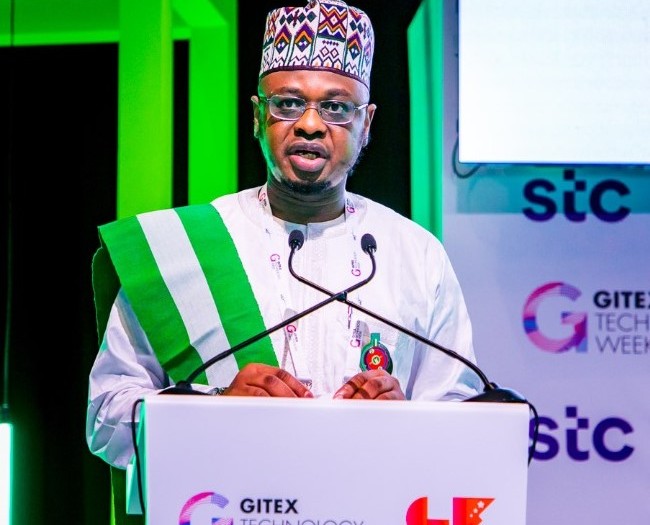
Prominent figures like the late Sheik Muhammad Auwal Adam Albani and Dr. Isa Aliyu Pantami are examples from the North who have embraced technology and achieved remarkable success. They’ve made indelible marks on the country’s technological landscape through innovative technology use.

Enhancing the curriculum of high schools is essential to address this challenge. While Data Processing and Computer Studies are part of the curriculum, introducing practical skills like coding and web development is crucial. Equipping students with these skills will better prepare them for the digital age and empower them to thrive in today’s tech-driven world.

In conclusion, the negligence of technology careers in Northern Nigeria presents a concerning trend that warrants immediate attention. The shift in lucrative career prospects from traditional fields to technology careers is undeniable, with evidence supporting the exponential growth and opportunities in technology-related jobs. While the southern regions have recognised and embraced this change, the northern regions lag due to a lack of awareness about technology careers, negative stereotypes, and a preference for security over risk-taking. Educational institutions and policymakers must take proactive measures to address this issue. By integrating practical technology skills into the curriculum and promoting a positive perception of technology careers, Northern Nigeria can bridge the gap and empower its youth to thrive in the dynamic world of technology.

Salim Sani Haladu is a Pharmacy student at Bayero University, kano. He can be reached via pharmsaleemskhaleed@gmail.com.

English: Language of science and emancipation

By Abdurrazak Mukhtar

English has become the language of science and emancipation. Whether we like it or not, this is a fact that we cannot ignore. The reasons for this dominance are complex, but we can trace them back to several historical and cultural factors.

In many ways, the emergence of English as the language of science can be traced back to the scientific revolution of the 17th century. This was when scientific knowledge expanded rapidly, and scientists needed a common language to communicate their findings. English became the obvious choice as the language of the dominant scientific culture in Europe and North America.

Over time, English has become the dominant language of science for many other reasons. First, it has a large and growing population of speakers worldwide, making it a common second language for many people.

Second, English has a relatively simple grammar and spelling system, making it easier to learn than many other languages. Finally, English-speaking countries have historically been major scientific research and development centres, giving English prestige in the scientific community.

Beyond science, English has also become the language of emancipation in many parts of the world. The spread of English has been closely tied to the expansion of Western political and economic power, and many countries have adopted English as a way of breaking free from the legacy of colonialism. Today, English is seen as the language of global commerce, and proficiency in English is often seen as a key factor in social and economic mobility.

Of course, the dominance of English is not without its drawbacks. Many languages and cultures risk being marginalised in the global marketplace, and there is a growing recognition of the need to promote multilingualism and cultural diversity. Nonetheless, proficiency in English remains a valuable asset for individuals looking to succeed in science, business, or other areas of international engagement.

The good news is that mastery of any language can be rewarding personally and professionally. The ability to speak multiple languages opens up new avenues of communication and understanding and can lead to greater cultural exchange and collaboration opportunities. Moreover, mastering a language is an art in itself, requiring discipline, creativity, and perseverance. Whether you choose to focus on English or another language, the art of mastery is a valuable skill that will serve you well in any field.

In conclusion, English has become the language of science and emancipation for various historical and cultural reasons. While there are challenges to this dominance, the rewards of mastering any language are great in terms of personal growth and professional success. So, whether you want to improve your English or learn a new language entirely, mastery is always worth pursuing.

Abdurrazak Mukhtar can be contacted via prof4true1@gmail.com.

Celebrating Prof. Pantami: The architect of Nigeria’s digital revolution

By Yakubu Sani Wudil, PhD

During the last three and a half years, Nigeria’s Minister of Communications and Digital Economy, Prof. Isa Ali Ibrahim Pantami—a digital dynamo—has demonstrated quality in leadership and has raised the bar of good governance in the country. Specifically, the Digital Economy sector has come to the limelight under his stewardship.  Since his assumption into office, he has become the champion of Nigeria’s digital revolution.

Prof. Pantami has exhibited exceptional leadership skills in driving the Communications and Digital Economy sector to record several unprecedented achievements. His leadership has not only escalated the sector’s quarterly revenue generation by more than 500 per cent due to his digital innovations but also played a pivotal role in lifting the Nigerian economy out of recession.

Under his watch, the Digital Economy sector has multiplied the revenue generated from fifty-one billion Naira quarterly to about four hundred and eight billion Naira, according to an independent assessment carried out by the Foreign, Commonwealth & Development Office (FCDO). On the other hand, the ICT sector recorded the highest growth rate in the year 2022, as reported by the National Bureau of Statistics.

From the onset, Professor Pantami has identified eight priority areas for development: developmental regulation, digital skills, solid infrastructure, service infrastructure, digital services development and promotion, soft infrastructure, digital society and emerging technologies, and indigenous content development and advancement. The Minister has done exceptionally well in these areas by implementing policies and projects that have significantly impacted the Nigerian economy.

For instance, he has established ICT skill acquisition centres across the states and has recorded over 219,000 direct beneficiaries of digital skills training. Additionally, he has laid about 19 kilometres of fibre cable to expand reach and coverage to MDAs (covering 28 MDAs). Furthermore, he has established digital economy centres to support the growth of the economy in the country. He has also developed policies and initiatives to promote indigenous content and created an enabling environment for the sustainable development of Nigeria’s economy, which has been able to resolve challenges that have lingered for decades.

Under Professor Pantami’s leadership, a significant number of National Policies have been developed. Currently, over a dozen of these policies are already being implemented, one of which is the National Digital Economy Policy & Strategy 2020-2030, which sets out a comprehensive plan for the growth and development of the digital economy in Nigeria.

The Minister has also executed several projects, too numerous to mention, which have significantly impacted the Nigerian economy. Nevertheless, some of these projects include the establishment of ICT skill acquisition centres in most of the states, registration of all mobile sim cards, emergency communication centres, virtual examination centres, Data Sharing Centres, Digital Industrial Parks, Wireless Internet Cloud, Digital Capacity Training Centres, NITDA Community IT Training Centres, IT Innovation Hubs, IT Capacity Building Centres, and Provision of ICT Facilities in our Institutions of learning.

In his effort to transform governance to the 21st-century model, the minister has established the E-Government Training Centre to equip stakeholders with the necessary skills to achieve optimum productivity. He also constructed several E-Health Facilities, E-Libraries, and E-Accessibility Projects. Furthermore, the minister has coordinated the establishment of multiple Community ICT Centres, NIPOST Digital Centre, Tertiary Institution Knowledge Centres, School Knowledge Centres, Rural Broadband Initiatives, National Centre for Artificial Intelligence and Robotics. He also empowered Farmers through the National Adopted Village for Smart Agriculture Program.  The Accelerated Mobile Phone Expansion-Base Transceiver Station was also accomplished under his watch.

Furthermore, to complement the efforts of security agencies in ensuring adequate National security, there have been over 92 million unique National Identification Number enrolments as of November 2022.  These achievements are a testament to the hard work and dedication of Professor Pantami, who has been tireless in his efforts to drive the digital revolution in Nigeria.

It is worth acknowledging that President Buhari must be commended for the wise decision to appoint Professor Pantami as the Minister of Communications and Digital Economy. He is one of the best-performing ministers in the cabinet and has succeeded in delivering on his mandate to the Nigerian people. The country needs more brains like him to drive the nation’s development and ensure that we can compete on the global stage.

As we look to the future, it is clear that Professor Pantami has the ability and vision to continue to drive the growth and development of Nigeria’s Communications and Digital Economy sector. The erudite scholar has distinguished himself for integrity and selflessness. In addition, he has been a worthy ambassador for Nigeria’s young population.

We pray that he will have the opportunity to serve the country in many capacities and higher positions in the future. His leadership and expertise are vital to the continued progress of our nation. The policies and projects executed under his leadership have significantly impacted the Nigerian economy and have laid the foundation for a sustainable future in the sector.

Dr Yakubu Wudil writes from King Fahd University of Petroleum and Minerals, Saudi Arabia, and can be reached via yswudil@yahoo.com.

In defence of Professor Yuval N. Harari

By Rabiu Muhammad Gama

Prof. Yuval N. Harari might be a fake scholar, as some critics are desperately “begging” us to accept and believe. Some critics also imply that he might be the most grossly over-hyped and rigorously marketed scholar in the West. Harari might be basking in unearned attention. He might even be an irritating know-it-all or an intellectual nuisance.

The scientific community might have debunked most of his claims. His works might be riddled with some historical and scientific errors here and there. He might not deserve the wide global acclaim he is receiving today. His works might be replete with idle speculations and groundless generalizations that many scholars find annoying.

However, you cannot dismiss the fact that Harari always asks the big questions – the earthshaking questions that every intellectual worth his salt should be obsessed with. And there’s some “indismissable” magic that seems to clothe his books: when you read his books, you can’t help but feel a bit smarter and/or more informed than anyone who hasn’t read them.

To say Harari is highbrow is a sheer understatement. He is a perfect definition of a polymath. He is blessed with an unusual brain, a razor-sharp brain. His grasp of the esoteric world of science and the humanities is as baffling as it is admirable. Very few scholars can merge science and the humanities as Harari does.

If anything, the torrent of bashings and roastings that Harari is receiving lately from some of the finest critics in the world is a testimony that he has come up with something fascinating that makes his readers curious and his critics restless. Of course, some people might like to dismiss him as a mere talented storyteller. Nonetheless, and at the risk of sounding hyperbolic, he is one of the greatest intellectuals around!

Rabiu Gama wrote from Kano, Nigeria via rabiumuhammadgama0@gmail.com.

Engausa Global Tech Hub trains 1353 youths in modern technical skills

By Muhammad Sabiu

A Nothern Nigerian technology firm, Engausa Global Tech Hub, has trained and certified 1353 persons, including men and women, in different modern technical skills in its effort to reduce the rate of the ravaging unemployment affecting the country.

In attendance at the certification event were the Director General of the National Information Technology Development Agency, Malam Kashifu Inuwa, and representatives of the Emir of Kano and Emir of Karaye, among other dignitaries.

Speaking on the purpose of establishing the firm and training the young people, the founder of the firm, Engr Mustapha Habu Ringim, said they had saddled themselves with the responsibility to train young people in digital technology in their mother tongue (Hausa).

He added that every human has the right to learn technology through his mother tongue, and “ENGAUSA is here to break barriers and bridge gaps” in teaching technology.

“We brought out those who speak Hausa, even if they understand Arabic or English, to train them,” according to Engr. Ringim.

While commending dignitaries on the high table, Mr Ringim said his firm wouldn’t have achieved all it achieved in the past three years without their collective efforts, stressing that he could not have done the work alone.

He noted that you mustn’t understand English before you begin to innovate, as there is what is called formal and informal education.

“Here in Northern Nigeria, we have this misperception that anybody who is not into formal education is not regarded as a literate person. This is a big mistake because the basis of this formal education you see was developed from non-formal education.

“One of our most significant efforts is getting these over 1000 young people we just concluded training. And it’s only for this year. In the year 2020, we trained over 300 people. This is proof that the knowledge of science and technology can be learned in one’s mother tongue because that was when we started featuring innovative young people, like Osama. Now, Osama owns a firm, and any is an employer.

“We also have Muhammad, who fabricated an excavator made from cartons and has now started fabricating a solar-powered generator. The BBC came here and covered what we were doing at Engausa. The news went viral. Afterwards, Muhammad is also now an employer.

“If these young people didn’t get to understand that we at Engausa teach in Hausa [mixed with English], they wouldn’t have come here to get trained,” Ringim is quoted as saying.

The firm’s founder further noted that by bridging the gap in the medium of imparting knowledge of technology, Engausa is in no way discouraging its learners from acquiring knowledge of the English language because efforts are underway to begin English, Arabic and French classes.

“We are doing all these because we have understood that the language barrier is one of the reasons that bar our people from understanding Mathematics, Physics and so on,” he said.

Another milestone achieved is that of those trained previously; about a hundred of them now own their own firms.