Russia

Niger Coup d’État: The gale of change and the balance of global power 

By Bilyamin Abdulmumin

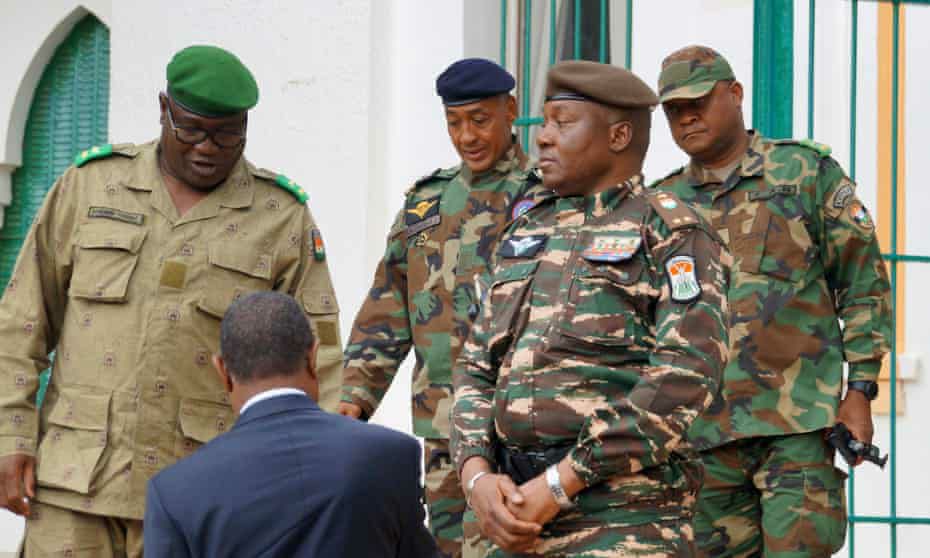
What initially appeared as rumours of a coup attempt in the Niger Republic gradually and eventually proved true. Even when the leader of the coup d’état, Presidential Guard Commander General Abdourahamane Tchiani, announced the overthrow and proclaimed himself the leader of a new military junta, there remained a doubt in the air due to the exclusion (or so it seemed) of the Nigerien Chief of Army Staff. However, all traces of doubt cleared when the military declared their support for the coup. They cited loyalty to avoid casualties from internal military clashes. Since then, news and developments have dominated the public discourse hourly. Small and major national and international media outlets pinched their tenths on this event. 

The Nigerien coup has drawn significant attention compared to other recent similar operations. For instance, in Conakry, Chief of Army Mamady Doumbouya ousted his authoritarian leader Alpha Condé. In Mali, the junta overthrew its transitional president a few months after their appointment. In Niger’s neighbouring Burkina Faso, the junta toppled another transitional government they had installed months earlier. 

The reasons for the global condemnation of the Nigerien coup differ among various blocs. France and its allies might be concerned about the potential loss of influence over their former colonies. The U.S. stance is partly rooted in their role as self-appointed global police guardians of democracy. It is also due to their military base housing thousands of soldiers within the country. Russia, on the other hand, seems to be benefiting from the situation. However, for organisations like the African Union (AU) and the Economic Community of West African States (ECOWAS), the coup posed a direct threat to democratic leadership, reaching an alarming level. So the ECOWAS bigwig Nigeria, which not only shares proximity with Niger but also has its president as ECOWAS leader, tends to overreact. Bola Ahmed Tinubu was fighting from a dual role. 

The Nigerian coup came as a surprising shock, sudden and unexpected. Unlike many similar military strikes, this coup lacked potential factors pointing to its occurrence. Such factors often include internal crises, insecurity, tension, hardship, prolonged presidential tenure, crackdowns on the opposition, and suppression of dissent. The renowned Ghanaian coup leader Jerry Rawlings once noted that the success of his coups was owed to the ripe situation in his country. He likened the atmosphere for coup success to a saturated atmosphere filled with gas, waiting for ignition to burst into flames. However, in the case of Niger, none of those factors seem to be in play. 

One plausible theory regarding the reason behind the Niger coup has been put forward by a friend who also serves as an elder brother figure. This theory revolves around the wave of change sweeping through Francophone Africa. The leadership of France appears to be faltering due to its neo-colonial approach toward its former colonies. This approach doesn’t align with the interests of the affected countries, leading to increasing unrest. Both civilians and the military are discontented with this interference, creating an environment conducive to a coup. This theory gains weight considering the surge of support that followed the coup. The military cut all ties with France to bolster this perspective and sought to shift their allegiance towards Russia. But wait! President Basoum’s public statements aligned with this shift. His videos, circulating on social media, included threats to sever remaining ties with France gave rise to the conspiracy theory as the reason behind the coup. But with the current unfolding, the question arises: Is Basoum genuinely committed to this path, or is he merely putting on a facade? 

Russia appears threatened by Western encroachment, mainly through proxy conflicts in its neighbouring countries. The most recent instance of this is the situation in Ukraine. However, suddenly, Russia found a windfall at the doorstep: developments in Africa. Aggrieved African countries with the West swiftly shifted their allegiances towards Russia as a rival to Western powers. This scenario offers an alternative to the dominant Western influence—a sort of counterbalance. The concept of the BRICS (Brazil, Russia, India, China, and South Africa), akin to NATO or perhaps a stronger G7, also garners mass interest in joining. Six countries, namely Iran, Saudi Arabia, the United Arab Emirates, Argentina, Egypt and Ethiopia, joined this movement in January 2024. Such a development holds promise for rebalancing global power dynamics. It provides other developing countries with an alternative.

Those who previously leaked atomic technology to Russia would be very happy with this development. After the United States successfully developed and detonated nuclear bombs on Hiroshima and Nagasaki, effectively ending Second World War II, some of the bomb’s developers had worries: the disruption of the global power balance. As a result, according to reports, they leaked the technology to their arch-rival, the USSR.

Bilyamin Abdulmumin is a Doctoral candidate in Chemical Engineering at ABU Zaria. He is also a social and political affairs commentator and science writer.
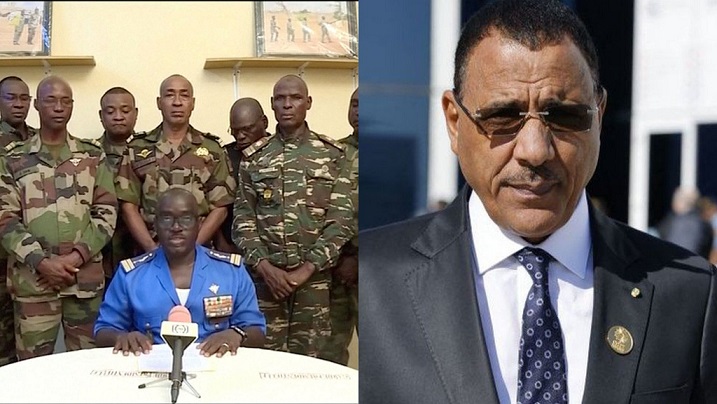
Niger Republic, Bazoum and France

By Muhammad Muhammad Salisu

In case you don’t know, the coup d’etat in the Niger Republic is not about the standard of living, as Nigerians are insinuating. It’s about France, Mali and the radical revolution in French West Africa.

French-speaking West African countries are beginning to divorce themselves from French neo-colonialism. The recent developments in Mali testify to this. The Russian mercenary Wagner Private Military Company’s persistent presence is a direct threat to French interests in West Africa and the US, EU and NATO, who are currently fighting Russia by proxy in Ukraine.

To the French and other Western powers, Russia is expanding its influence to Africa, which is a slap on their Caucasian faces. Moreover, Mali has now dropped the French language as its official language. France is not happy with this. To all these, even if President Mohamed Bazoum does not support the Malian radicals, France is afraid it may spread to Niger.

Another problem France is facing is Nigeria. Nigeria has always been a thorn in the flesh of France. France is not happy with Nigerian wealth and is openly jealous. It is not news that France supported the secessionists in the Nigerian civil war fought in the 1960s. And also, it is not news that the insecurity issues Nigeria is facing now, fingers are pointed at France as the prime culprit, at least from the illegal flow of weapons into Nigeria. Bazoum is lately trying to strengthen ties with Nigeria. This makes France more and more afraid.

History will never forget the fate of the late President of Niger, Ibrahim Baare Mainasara. His close ties with Nigeria under General Sani Abacha, who was also viewed in the West as an enemy, led to his overthrow and his subsequent tragic end.

This is the actual reason behind the coup d’etat in Niger. Niger has been an impoverished nation, and the West has no interest in the poverty-stricken populace there. All they are after is their political interests there. Some Nigerians are calling for similar development in Nigeria. It will not augur well should it happen. The West is more comfortable with the insecurity herein than a change in leadership.

Muhammad Muhammad Salisu can be contacted via muhdibnmuhd@gmail.com.

Vladimir Putin blames West over death of Russian journalist in Ukraine

By Uzair Adam Imam

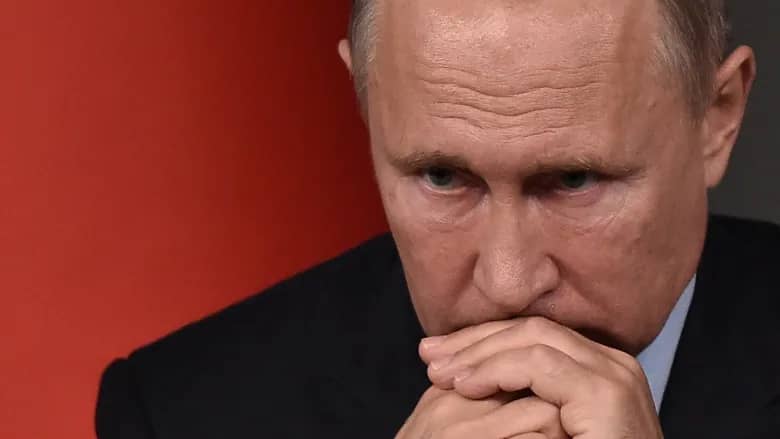
The Russian President, Vladimir Putin, has blamed the Western powers over the death of Russian journalist in Ukraine.

Putin described the death of the journalist as “a heinous, premeditated crime” committed by Western powers and Kyiv.The Russia’s foreign ministry on Saturday vowed a decisive “response” against the perpetrators.

The Daily Reality reports that Russian military announced that Rostislav Zhuravlev, a war correspondent working for the state RIA Novosti news agency, had been killed. He died as a result of a Ukrainian strike in the southern Zaporizhzhia region on Saturday.

“As a result of a strike by the Ukrainian army using cluster munitions, four journalists were wounded in various levels of severity,” the Russian army said in a statement.

“During an evacuation, the RIA Novosti journalist Rostislav Zhuravlev died from his wounds that resulted from the cluster munitions exploding.

“Everything indicates that the attack on the group of journalists was not carried out by chance,” the Russian foreign ministry said.

“The competent international organisations prefer, as before in such cases, to turn a blind eye to this heinous crime”, it added.

According to the ministry, “the journalists were gathering material for a report on the bombing by the Kyiv regime militants of settlements in the Zaporizhzhia region using cluster munitions banned in many countries around the world.”

Ambassador Joanna Tarnawska: A change of narrative  

By Ahmadu Shehu, PhD

For the first time in history, the President and Commander-in-Chief of the Republic of Poland, H.E. Andrzej Duda, visited Nigeria on 6th September 2022. Apart from being a landmark in history, this visit has renewed the longstanding alliance and friendship between these great nations and has substantially reduced miscommunications and misperceptions among the citizens and officials of both countries.

The visit has yielded bilateral agreements of enormous importance to both nations, especially on agriculture and technology transfer. Moreover, judging by its history and relationship with Nigeria, nay Africa, Nigeria and its sister nations stand to gain more level playing ground in bilateral negotiations with Poland than many other more advanced western countries. This, however, is a topic for another day.

The resilience of the Polish – Nigeria relationship was tested in the early days of the Russian invasion of Ukraine. As the Russian army steadily and mercilessly advanced toward major Ukrainian cities, foreign residents scampered for safety across all Ukrainian borders in search of safety. Thousands of Nigerians, mostly students, found themselves at the Polish border, which was already overwhelmed by destitute refugees struggling to cross into Poland. The scenes and images of the border control points shall never be missed!   

While a lot of misinformation and deliberate spinning of Poland as a racist, intolerant country was being cooked and distributed, the Polish diplomatic mission in Nigeria busied itself with solutions and helping Nigerians trapped in this conflict. A few days later, news surfaced that Polish officials were actually particularly kind to all citizens, especially Nigerians who were given special treatment by various missions based in Poland.  

Back at home, Polish companies and financiers have landed significant business deals to ramp up Nigeria’s solid minerals sector to ameliorate the foreseen global energy crises occasioned by the war. In addition, the Polish agro sector looked at Nigeria as the next solution to the food crises, raising the hope that the Nigerian agricultural value chain would become a global competitor.

Tracing the roots of Poland’s contribution to the growth of Nigeria’s tertiary education in the ‘60s, ‘70s and even ‘80s, several Nigerian universities have found valuable opportunities to collaborate with major Polish universities in various academic fields.

The Nasarawa State University, for instance, had a significant project that translated the works of a Polish scientist whose contributions to the Nigerian academic community cannot be quantified. Several first-class Nigerian universities, such as Bayero University, Kano, have maintained a functional MoU with the University of Warsaw for many years.

In line with its cultural heritage and educational development support, the Polish mission in Nigeria built a specialized school to support Almajiri and out-of-school children in Kaduna State. Although many foreign non-governmental organizations do these kinds of projects, Poland is the only country to start this foresighted initiative as part of its foreign mission activities.

The Polish mission established and sustains a vibrant Polish Alumni forum, which is meant to foster and strengthen the understanding between the citizens of the two countries. Nigerians who studied, trained or visited Poland in a working capacity discuss relevant issues of interest to Nigerians in Poland and the bilateral relations and areas of cooperation between the two countries. This initiative has led to mutually beneficial opportunities for Nigerians and Polish people willing to study, live or do business in either country.    

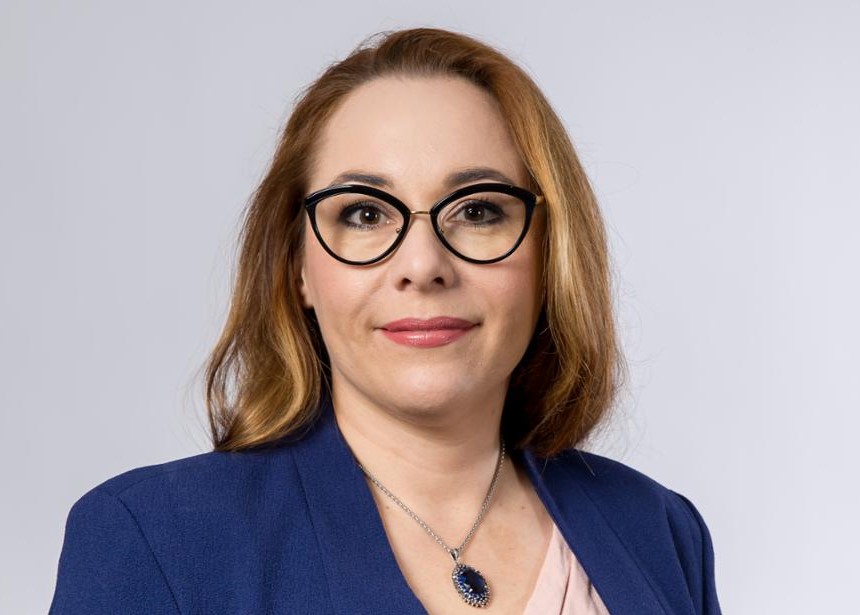
Polish – Nigeria relations is a sixty-year-old business that stood the test of time. However, to whom do we owe this enthusiastic revival of the friendship between these crucial countries? The bulk stops at the table of Her Excellency Joannah Tarnawska, the Poland ambassador to Nigeria.

Tarnawska is an African-born and bred Polish lady with a degree in African studies from the Faculty of Oriental Studies of the University of Warsaw. Mrs Tarnawska is currently doing a PhD in economics, with a research interest in economic issues in Africa.

Her cultural ties, deep understanding and love for Africa are unmatched. Thus, the amount of success she will record as a diplomat in Africa is promising. Her resilience and understanding of the murky waters of the Nigerian political landscape give her an edge to thrive. The balanced, respectful and dignified way in which the Polish mission now treats Africans will undoubtedly bring back the glory of the Republic of Poland as a true, non-colonial ally of this continent.         

Africa is the future! Therefore, this shall be a win-win for Poland and Nigeria!

Ahmadu Shehu is an Associate Professor at Kaduna State University. You can reach him at ahmadsheehu@gmail.com.

Ponzi scheme: An ugly race for easy money (1)

By Bilyamin Abdulmumin

Needless to say, everyone wants money. Most of us have an insatiable love for them. There is this Hausa rhetoric:  if anyone says, “you have too much love for money, then the person saying that is playing with your intelligence”. In other words, the accuser is being unserious because what he said is a fact not only about you alone but everyone.

However, that is not the nitty-gritty of the matter because the like for money is one thing, and getting them is another. Getting the money is not as easy as pushing a standing pestle. Neither is it as easy as slapping a chick (in Dan Anace’s words)

To get the Phoenician’s invention, one has to invest a lot. It is a struggle for “survival of the fittest”. Those who bring or have the best ideas or strategy get them, thus putting us in constant skirmish and outweighing one another (capitalism in short).

Through their programs, some people have allegedly found a platform that can bring us this money almost effortlessly. In other words, the Ponzi scheme, alias pyramid, promises to free us from the bandage of suffering before getting the money.

To get to the utopia, according to these organizations, one will only invest a certain amount of money, and instantly a fixed profit is ensured (which one can claim after some time). The return of these investments is usually from 10 to 1000 per cent.

Initially, these Ponzi organizations’ operations were physical, with their offices and agents well known. One of such schemes that once cut across nook and cranny in Zamfara State was “oil and gas investment.”

The gale of the scheme in the state swept aside everyone on its path. It left neither business people, politicians, government workers, or even town heads. The “oil and gas” claimed an investment with a 100 per cent return in two weeks. For instance, an investment of 10,000 would qualify one to cash out 20,000 in two weeks. This is the type of eldorado business everyone can envisage, making it difficult to resist.

With the global transition from a physical to an online platform, the Ponzi schemes have followed suit. They would unleash their various applications where subscribers follow laid-down rules. Although different from the physical schemes, the concept remains the same: invest a certain amount of money and recoup mouth-watering profit (at 100 % assurance).

MMM was one online Ponzi that traversed the length and breadth of Nigeria, thanks to the subscribers’ testimonies like that of the oil and gas scheme. MMM promised and initially delivered 30 per cent profit to subscribers at every kobo invested within two weeks. This online investment was even riskier because the subscribers were dealing with faceless agents. When the MMM finally crashed, the bang of the burst was heard everywhere across the globe.

How the MMM founder from the far East of the globe, Russia, was able to convince Nigerians (some of whom are learned) to use not only their savings but other people’s money (staff salary, school registration fees, or money entrusted to them) was a mystery

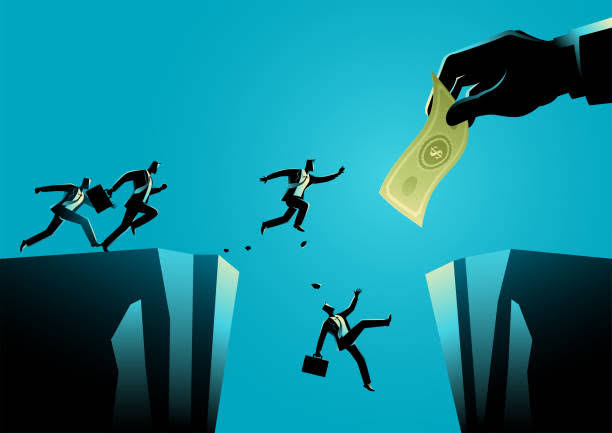
The basic modus operandi of any pyramid scheme is the same: one particular schemer (the Ponzi initiator) would convince one to two people. Next, these two people convince four, four convince eight, and it keeps cascading like a symbolic pyramid hence the name pyramid scheme. Note the new subscribers in the pyramid pay the older ones; those at the top, especially the schemer who is at the top, bag the most money out of the scheme to the detriment of those at the bottom. For the scheme to remain healthy in operation, the new subscribers must always be able to pay the older ones; otherwise, the scheme becomes stuck in the mud.

Some of the Ponzi schemes recently to have met the waterloo are ISME and OSTIME. And according to “nogofalmaga”, an NGO specialist in dealing with Ponzi schemes, some other currently active schemes are only a matter of when not if they flow suit. These are SunPower, Tesla-recharger, Bitmaincenter sabrinascala, stormgain, among others.

In order not to take too much space, I reserved for the next article the discussion of some funny traits of Ponzi schemes

The elixir for easy money doesn’t exist. The Ponzi scheme can only provide for a few while robbing many others. If it is too good to be true, don’t trust it.

Bilyamin Abdulmumin wrote via bilal4riid13@gmail.com.

Nigeria Civil War: Conspiracies and interest of the World Powers

By Tijjani Hassan

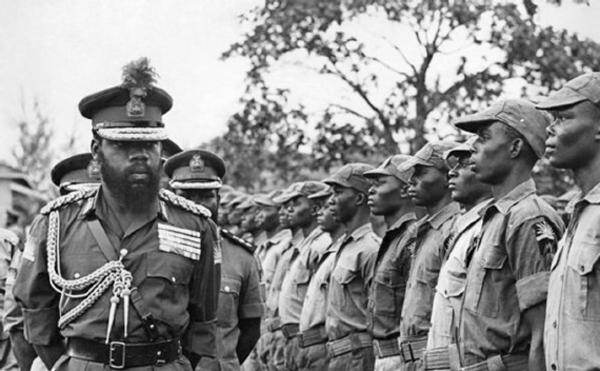
War is a business of interest. Like the Russian invasion of Ukraine over the fear of western domination of the geopolitics of the defunct Soviet Union, Nigeria had her fair share of international politicking of how the superpowers wrestle for relevance in the post-World War II era, climaxing into the Nigerian-Biafran Civil war of secession.

As Chinua Achebe summarily spelt out in his book There was a Country, Harold Wilson, the PM of Britain, maintained a firm stance about one of the Queen’s priced colonies. The UK would not support the breaking away of Nigeria in the guise of secession. That would mean challenging their preplanned neocolonialism programme.

The BBC’s Rick fountain, in a story on Monday, January 3, 2000, titled “Secret papers reveals Biafra intrigue,” shows how Britain would and currently was more interested in her oil holding than a “united Nigeria”. The Cold War would see Britain and the Soviet Union wrestling for supplying the largest cache of ammunition to General Yakubu Gowon-led Federal government.

Russia, part of the former USSR, took a step further by sending MiG fighters and technical assistance to Nigeria. Moscow later expanded her bilateral relation with Nigeria with an eye on the Ajaokuta Steel Company. As a result, a $120 million contract was signed in 1969. However, the Steel Company, situated in present-day Kogi State, North Central Nigeria, remained a testament to the elephant project without producing steel for the manufacturing needs of Nigeria to date. 

The UK was, however, much concerned about France’s secret antics.

France, the other big player in the dark colonial days in Africa, was secretly shipping weapons and ammunition to the Biafran enclave through their former colony of Ivory Coast and Gabon. Moreover, France has always been sceptical of Nigeria’s growing domination and influence over the Paris Francophone clients in the West Africa Subregion. The Size of Nigeria is intimidating to her French neighbours of Cameroon, Niger, Chad, Benin Republic, and others in the geography of the West Africa sub-region.

The Caribbean Island of Haiti was the first to make a rush in granting full diplomatic relations with the breakaway Biafra Republic in 1969. That means a little to Nigeria anyways. It was, however, a moment of celebration in Biafra as it rekindled the hope for the sovereign Biafra Republic. 

France, who openly claimed to be neutral in her initial response to the crisis, issued a statement from the Council of Ministers in July 1968 sympathizing over the heart-trembling development in the heartland of Biafra. It was orchestrated by Charles de Gaulle, the French President who led Paris’s resistance against the Nazis in World War II.

Like the UK, it was about resource control. Paris has already hatched a plan for her multinational corporation, Elf Aquitaine, to become later the primary explorer of the crude oil deposit in West Africa. Nigeria’s oil in the old Eastern region would be the spoil of war.

While the war ragged, the United States of America openly looked elsewhere, neither supporting Nigeria nor Biafra. Instead, they advocated for a united “One Nigeria”. President Lyndon Johnson toed the line of Britain until Richard Nixon. Upon his assumption of office, President Nixon called on the Nigerian Military Forces to cease hostility to ease the suffering in Biafra.

The Portuguese were much more clever as they paved the way for Lt. Col. Emeka Odumegwu Ojukwu to land Biafran planes in Sao Tome, a Portuguese colony. The agreement was, however, shrouded in secrecy.

The Chinese were not left out of the Civil war politics in Nigeria. Although Biafra got most of her weapons from the black market and produced a few locally, China later provided military equipment to the breaking away part of Nigeria.

African leaders were not left out too. Despite the organization of Africa Unity (OAU)’s efforts to reconcile Gowon and Ojukwu, Julius Nyerere of Tanzania, on April 13, 1968, openly declared Dar-es-Salaam’s recognition of the Republic of Biafra. Tanzania was the first African country to take this overt stance. Gabon, Ivory Coast and Zambia would later follow the footsteps of Tanzania.

In sum, it was more about international politics and the desire to have a share of Nigeria’s resources in colossal oil deposits. As a result, western powers contributed less towards ending the Civil War, which ended in 1970.

Tijani Hassan A. wrote from Kano, Nigeria. He can be reached via tijanihassan2020@gmail.com.

Russia-Ukraine War: British PM honours Ukraine’s President

By Ahmad Deedat Zakari

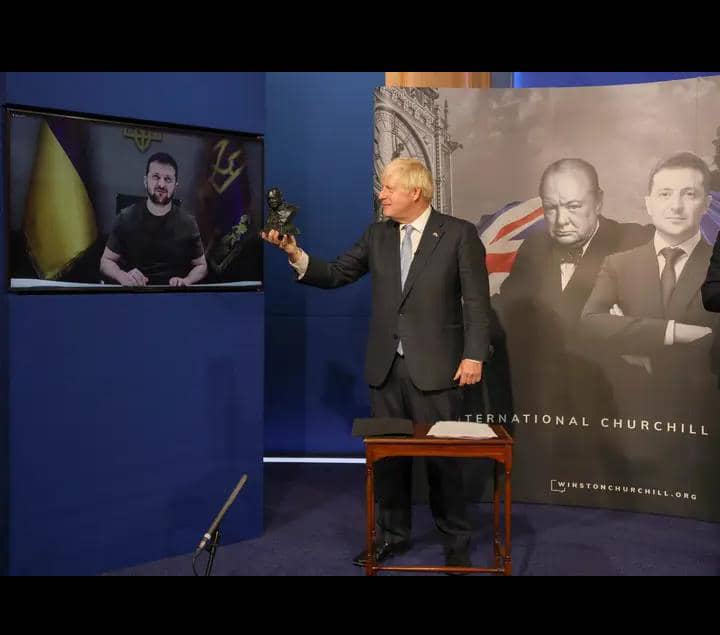
British Prime Minister, Boris Johnson, has honoured Ukraine’s President, Volodymr Zelnesky, with the Winston Churchill Leadership Award.

This was disclosed in the UK Prime Minister’s verified Facebook page on Tuesday, July 26, 2022.

“Today Prime Minister Boris Johnson presented President Zelenskyy with the Winston Churchill Leadership Award for incredible courage, defiance and dignity in the face of Putin’s barbaric invasion. ” The post reads.

The Prime Minister also said the UK would always stand with Ukraine.

On February 24, the world woke up to Russia’s invasion of Ukraine, which has thrown the two countries into war.

Between citizen and parachute journalism 

By Abdullahi A. Maiwada

“‘Parachute Journalism’ trivialize and sensationalize events that are more complex than a 30-second clip can capture” – Thomas L. McPhail.

However, this era of social media has made citizen journalists more dangerous than parachute journalists. While practitioners of the former are utterly ignorant about the basic principles of the profession, the latter is about placing journalists into an area to report on stories with little knowledge or experience. Lack of knowledge and tight deadlines often result in inaccurate or distorted news reports, especially during breaking news. 

While citizen journalists lack the fundamentals of news judgement, one cannot neglect their relevance in the business of news reportage. In some cases, the traditional media rely on citizen journalists for updates about issues in the form of eyewitness reports. 

The above implies that both parachute journalism and citizen journalism are interrelated at specific points. In most cases, their characteristics can be catastrophic and misleading instead of informing and educating. 

Even though I am not a fan of CNN, my recent update about the strategies by the new CEO Chris Licht making frantic efforts to redefine the usage of breaking news is a step in the right direction. “Moving away from alarming news distributing styles”, he said.

Both citizen journalists and mainstream media have fallen into the trap of fake news and hate speech precipitated by digital media. This is to satisfy the urge to take the lead in breaking the news.

In the word of my journalism lecturer Dr Kola Adesina “no time to think syndrome”. The outcome is having limited know-how to strike a balance between speed and accuracy. Thanks to convergence which created a blurry line between mainstream and digital media.

The primary reason we dish out content is to inform and not disinform, misinform and mal-inform. Why can’t we think twice and have a sober reflection before writing or talking? We should endeavour always to put a round egg in a round peg to avoid misleading society towards the direction of Rwanda. 

Influential media effect theories are still relevant in the digital age. The hypodermic needle/bullet, agenda-setting theories and the likes play a critical role in shaping the perception of the gullible and media illiterates who form the majority in our society. 

I have encountered a colleague who changed his perception of Russia based on an American movie. We have so many of them out there.

Finally, I will end my piece with the saying of our beloved Prophet (SAW). “Whoever believes in Allah and the day judgment should utter what is righteous or keep mute”. Gbam!!!

Abdullahi A. Maiwada is a superintendent of Customs attached to the Public Relations Unit, Nigeria Customs Service Headquarters, Abuja.

Russian courts fine Tiktok and Meta for not removing LGBTQ+ content

Newsbriefs

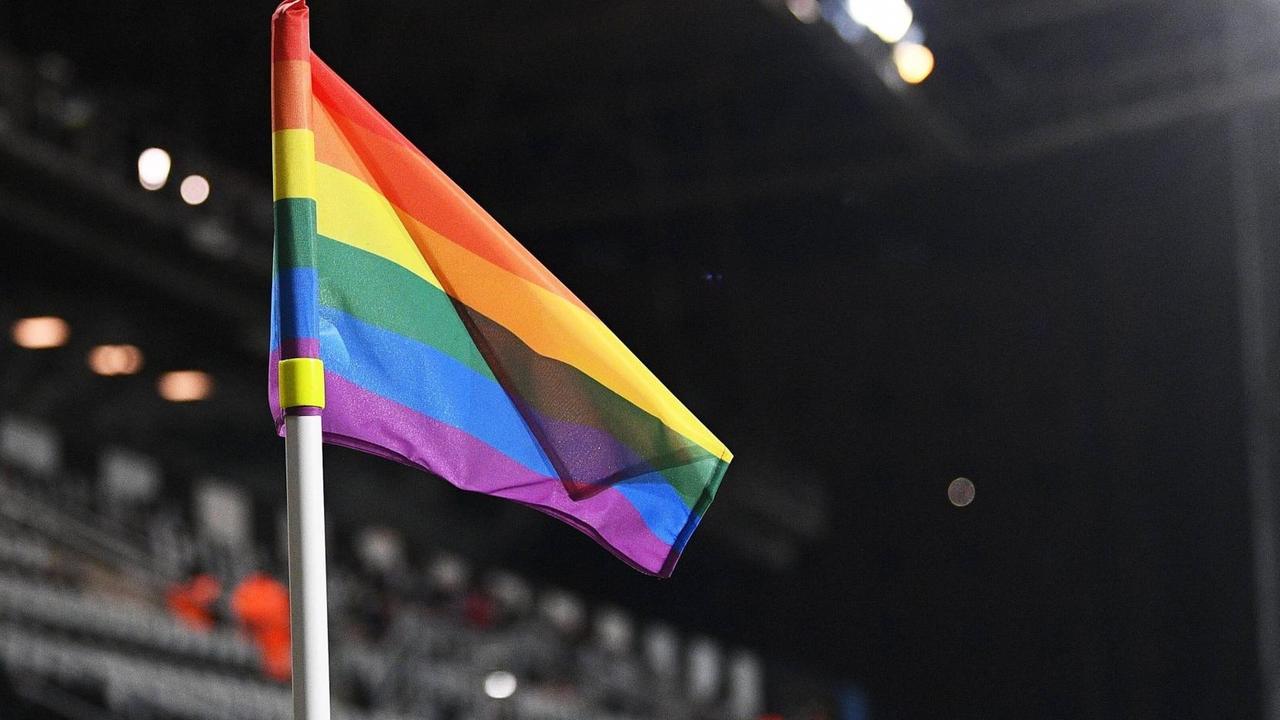
Russian courts have fined TikTok and Meta for failing to delete LGBTQ+ content. Meta was fined 4mn rubles by a court in Moscow. The US tech giant had failed to remove content that ‘promoted LGBTQ+ rights’, ruled the judges. 

TikTok was also fined 2mn rubles in another trial for a similar violation. LGBTQ+ advocacy, such as gay pride marches, and the pride flag, are banned in Russia.

Racism: Poland at it again

By Usama Abdullahi

I didn’t want to talk about this. But my mind is sick of it and wants me to spell it out. My piece centres on racism today. It’s something that most of us are barely familiar with. Yes, most of us, who haven’t travelled to the white world, know next to nothing about it. Some of us might not know that this ill-treatment against black people exists. While others, like me, do hear and read about it either on television or in newspapers. 

As a kid, I knew nothing about racism. Neither did I ever acknowledge its existence. It is because I was too young to understand what that meant. I used to think that the whites were superior humans that accord us, the blacks, some respect. But, contrary to my little kiddish thoughts about the whites, a vile or an irresponsible white man loathes this glowing dark skin. This blessed skin that wrestles all sorts of skin threats or irritation, someone from the other part of the world has aversions for it. 

This skin that withstands the sun’s heat, someone who’s driven by hatred for the faultless black men, considers it hell. I came across the word Ku Klux Klan at 12. At the time, I had Longman Dictionary with me. I would carry it wherever I go. So when I first took a glimpse at the then unfamiliar word, I paused for a while. Afterwards, I proceeded to read its meaning till the end. I couldn’t believe it at first. 

True. I couldn’t believe that there used to be a secret society during the 20th century which supported white supremacy in the Americas. This outlawed secret society fights the blacks and drives them out of the United States despite being legal citizens. I’m glad that this fraternal group is now defunct. But the problem is that racism is feathering again. It is fast dominating the white world. Some of them, the racists who have no respect for individual differences, honour its stay. They see nothing wrong when a black person gets badly treated because of his skin.

Sadly, we are entangled in a world that supports baseless animosities toward the people we share different views, faith or race with. The world we dwell in is a respecter of evil. We live to dine at the expense of our oppressed brothers from other parts of the universe. We see skin colour as a barrier to our unity and coexistence. Hence we look at each other with intense disgust. Unknowingly, this racism kills our hope to live a meaningful life.

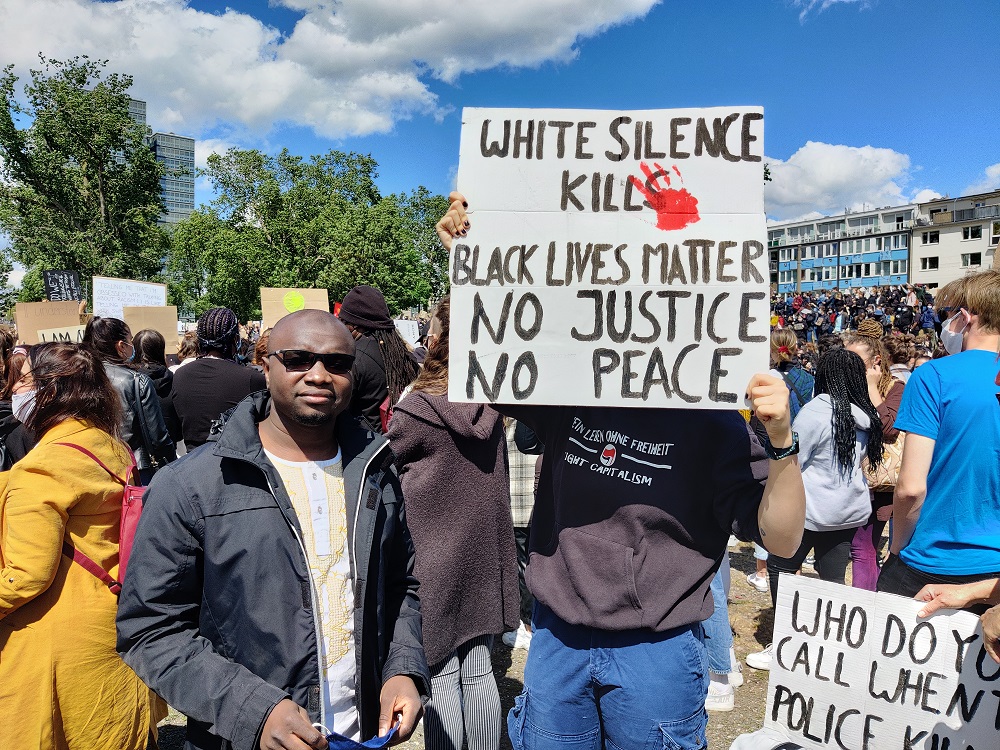
Last year, we were hit by the tragic news of an African-American man who had his fate crushed in the hands of a cruel white policeman. The news filled up the media until it captured public attention. Concerned black folks, particularly the deceased’s bereaved family, went through hell as a result. As a result, many people took their outrages to the streets, protesting against racism with the hashtag, “Black lives matter”. And they were assured of drastic measures to prevent such by the American government.

Considering America’s quick intervention on the matter, we thought the issue of racism was laid to eternal rest, but it, like Lazarus, has been resurrected. We saw the uproar and slighting comments which trailed the media over the failure of Bukayo Saka, Marcus Rashford and Jadon Sancho to score during the penalty kick of the Euro 2020 final. We also saw the unusual treatment against Zouma over a minor offence on his cat, costing him millions of dollars. And, unfortunately, Poland is at it again.

It’s sad to watch how the blacks were denied entry into the train conveying people from the war-ravaged Ukraine to Poland. Despite the threats they face, the racial prejudice in these racist morons prevails and has got to the point of favouring the Ukrainians over Africans or blacks – as if they aren’t all humans in need of urgent aid. Racism is a disease that bites deep into our hearts. It is also a barricade that holds back our progress as humans. So, It’s high time we stopped promoting racial discrimination.

Usama Abdullahi wrote from Abuja, Nigeria. He can be reached via usamagayyi@gmail.com.