Religion

Upending Unanswered Prayers, Unlike Ye

By Ugochukwu Ugwuanyi

Kanye West, better known as Ye, is an American songwriter and rapper with 24 Grammy Awards under his belt. Some comments he made several months ago have resurfaced on social media when his daughter disclosed her ambition to be a pastor. The convenient coincidence seemed more like a ploy by dark forces to dampen the impact of the piercing message delivered by Northwest, the child of Kanye and Kim Kardashian. 

Joined by her mother in an interview with Entreview Magazine last week, North said it is her passion to learn more about God and sharing the Gospel to help others. The teenager expressed her resolve to “tell people about God, and how problems get solved if they follow His word and His ways”. Indeed, North’s words are didactic enough to strengthen the backsliding believer. It even goes to the heart of her dad’s exasperation when he said the following: “I am a Christian, but I have my issues with Jesus. There’s a lot of stuff I went through, and I prayed but I didn’t see Jesus show up… We’re so into the belief that prayer is all we need to solve our problems. But we ain’t praying our way out of prison. These prayers ain’t working. We have to apply actual physical work.” 

If that were the way to go, Luke 18:1 wouldn’t have demanded that “Men ought always to pray and not faint.” With North asserting that people’s problems get solved when they follow God’s word and His ways, isn’t it wondrous how God has used the daughter to correct her father? From God’s Word, you will know His ways, the application of which is the solution to our problems. Let’s hope that Ye has repented of his issues with Jesus. If only he had sought to know God better, as his daughter recommended, he would have realised that nothing is as effective as prayer. That’s what the Word of God says. Let God be true and every man a liar. 

Now, many a Christian must have at one point, or another found themselves in Kanye’s quandary, thinking that this faith thing isn’t working. They must have cried their hearts out to God for intervention without answers, as if it isn’t the same God about whom Matthew 7:11 testified: “If you then, being evil, know how to give good gifts to your children, how much more will your Father who is in heaven give good things to those who ask Him!” 

Whenever there is no proof of prayer, the supplicant should, before giving up on God, check how they went about praying. With Jesus declaring in Matthew 6:7 that “when you pray, do not use vain repetitions as the heathen do,” how then do you expect God to answer prayers made as animists would to their god? If He does, won’t those gods take the glory? 

The concluding part of the scripture pointedly says, “For they think that they will be heard for their many words.” To be clear, repetition of a prayer request isn’t what is being condemned here. After all, Jesus, in the Garden of Gethsemane, prayed three times, “O My Father, if it is possible, let this cup pass from Me; nevertheless, not as I will, but as You will” (Matthew 26:39). The unacceptable “vain repetitions” in reference is rendered in other translations as “babble,” “empty phrases,” “ramble”. The Contemporary English Version defines it as: “talk on and on as people do who don’t know God.” In other words, the phrase means saying many things of nothing! 

The point must be made that too much talking isn’t necessary for effective praying. Christians only betray ignorance of their identity in Christ and shallow confidence in God when they babble at the prayer altar. When they pray as if they need to convince God, it’s because they don’t see Him as their Father. This makes them beat about the bush (pardon the cliche) when they should go straight to the point. Duration doesn’t determine the potency of prayers because much of that time is usually spent blabbing.

Why use too many words to convey your plight to the God who Matthew 6:8 says already knows what’s in our hearts before we ask Him?  We shouldn’t be praying to inform God since He is more informed about our predicament and needs than we will ever know. We can barely present our causes to Him because our language of expression is deficient, hence our need for the Holy Spirit to intercede on our behalf (Romans 8:26). 

The saints’ approach to prayers must show their conviction that they are asking of the Lord with the capacity to meet all their needs according to the riches of His glory in Christ Jesus (Philippians 4:19). We don’t have to pray to convince God because He is liberal and gives liberally. James 1:5 says, “God gives generously to all without finding fault.” He is therefore kind enough to give without us asking, as has been the case with our basic needs. 

Here is something else that seems rather simplistic yet is a proven route to receiving answers to prayers: the lifting up of holy hands while praying. The same way that the stretching of arms skyward exercises the body, especially while standing, that is how it exercises your faith when done in the place of prayer, praise and worship of the Lord. Lifting holy hands isn’t merely a gesture but a spiritual signal of triumph. Since faith requires a corresponding action to deliver, outstretched arms can be the catalyst for victory.

This calls to mind what happened during Israel’s battle with Amalek as documented in Exodus 17. Israel prevailed as long as Moses’s hands were lifted, but when his hands grew weary and came down; their opponents dominated the war front. The hands of Moses were so instrumental that Aaron and Hur cleverly devised a means for Moses’s hands to be perpetually lifted. That way, the Israelites carried the day. What a winning strategy the stretching of hands towards Heaven is! 

It is the Eagle that stretches its wings that gets to soar above stormy clouds. There is a sense in Apostle Paul recommending the lifting of hands while praying (1 Timothy 2:8). The psalmist even likened the posture to evening sacrifice, which is very pleasing to the Lord (Psalm 141:2). So, before concluding like Ye that prayers don’t work, also try lifting holy hands every so often and behold the turnaround that follows! Suffice to add that this throwing up of hands also symbolises total surrender unto the Lord Almighty as admittance that one has hit their wits’ end. It is at such a point of desperation and humility that God usually steps in to save the day.

VIS Ugochukwu is a Sage, Narrative Architect and Branding Strategist who responds to feedback via X @sylvesugwuanyi.

NDLEA intercepts cocaine concealed in religious books bound for Saudi Arabia

By Hadiza Abdulkadir

Operatives of the National Drug Law Enforcement Agency (NDLEA) have intercepted a consignment of cocaine ingeniously hidden inside 20 sets of religious books intended for export to Saudi Arabia.

The discovery was made on Tuesday, April 15, at a courier company in Lagos by the Directorate of Operations and General Investigation (DOGI) officers. During a routine search of outbound cargo, the officers uncovered 20 parcels of cocaine, weighing a total of 500 grams, carefully buried within the pages of the books.

The NDLEA described the concealment method as a “desperate and deceptive tactic,” aimed at evading detection. The books were among items listed for shipment to Saudi Arabia, raising concerns over the potential abuse of religious materials to traffic illicit substances.

This interception is part of a broader crackdown by the agency, which has recorded several major seizures across the country in recent days. However, the religious bookcase has drawn particular attention due to its audacious nature and the sensitive destination.

NDLEA Chairman, Brig. Gen. Mohamed Buba Marwa (Rtd) commended the Lagos command for its vigilance and professionalism. He emphasised the agency’s resolve to disrupt drug trafficking networks using any means, no matter how disguised.

Investigations into the identity of those behind the shipment are ongoing.

Constitutional rights to religion and their manifestation in Uganda and Nigeria

By Salihi Adamu Takai 

Religion is the most important thing to live with on earth – and for embracing the ultimate life as the avenue to a – successful life and the last day. As a Muslim, you have been ordained in the religion you have faith in to accommodate everything said therein. Various verses in the Glorious Qur’an have an emphasis on being submissive to the religion completely.

In chapter 2 of the Qur’an, Verse 208, Almighty Allah asks the believers to enter Islam to the fullest extent of its laws, adhere to the Book – and refrain from transgressing to everything disliked therefrom. This has encompassed the extent of being surrendered in anything of the Almighty Allah.

Contemporaneously, we interact in a secular world where religious belief is becoming disliked by some people who deem themselves “humanists”. But, there had been a generation that had manifested the idea of religion and propagated the natural school of thought. They believed that the world should be controlled by the Lord against manmade laws.

Nowadays, secularism allows for democracy, reduces the power of religion, and empowers manmade laws. To them, religious law undoubtedly must be in conformity with manmade laws. This is, of course, stated in every Constitution of every secular state.

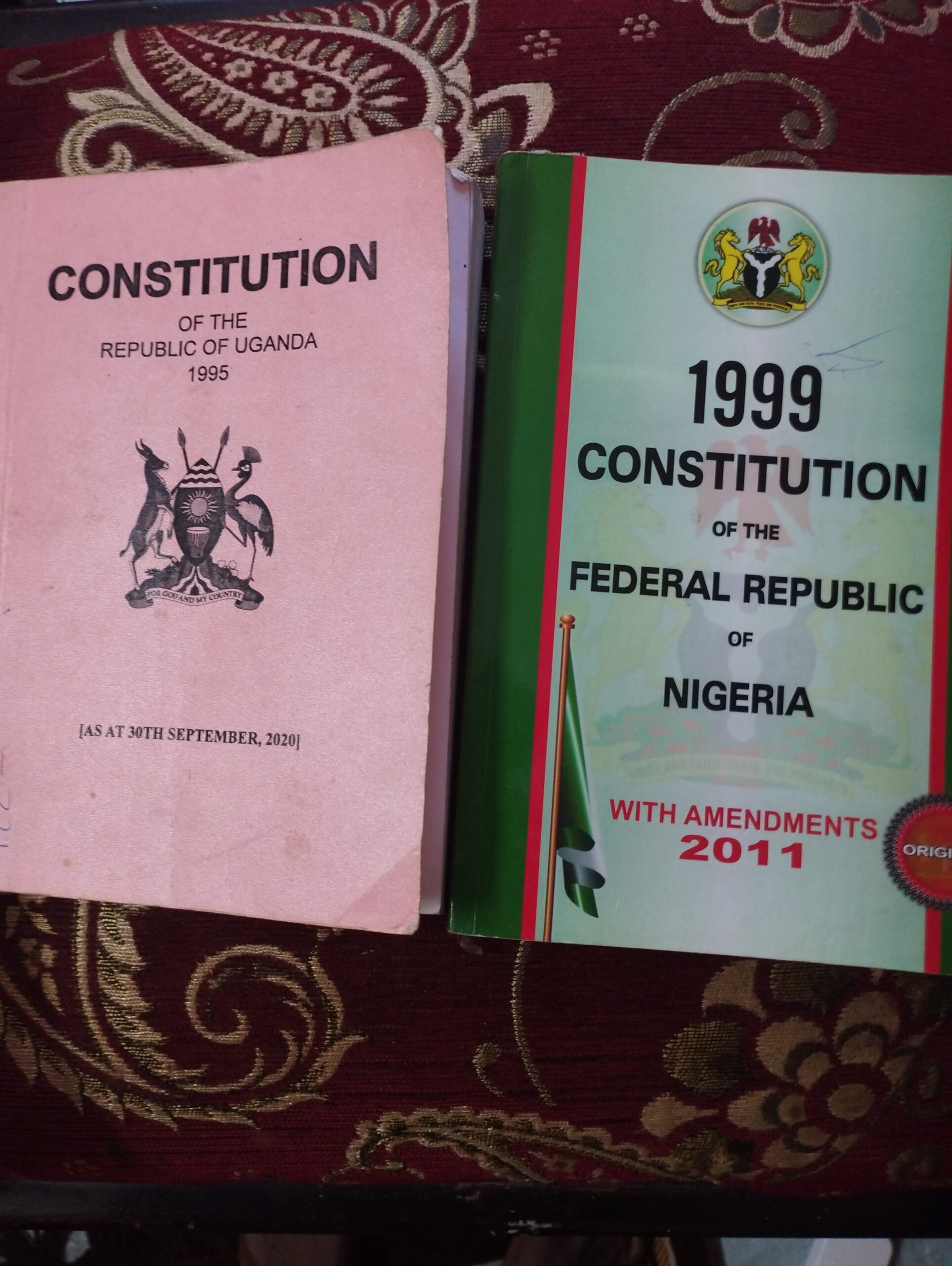
Section 10 of the 1999 Constitution of the Federal Republic of Nigeria mentions that ” The Government of Federation or of a State shall not adopt any religion as State Religion. This is the same as in the 1995 Constitution of the Republic of Uganda, Article 7, in which the Constitution says: “Uganda shall not adopt a State religion”.

Moreover, the same Constitutions give the right to practise a religion in both countries, Nigeria and Uganda. Section 38 of the 1995 Constitution of the Federal Republic of Nigeria gives the right to a religion in both countries, Nigeria and Uganda.

Section 38 of the 1995 Constitution of the Federal Republic of Nigeria gives the right to a religion. Also, in Article 29 of the 1995 Constitution of the Republic of Uganda, the right to religion has been protected. But the Constitution of Uganda, in the aforementioned Article, continuously says that the practice of the religion shall be in a manner consistent with the Constitution as it’s said in Article 2 ( Supremacy of the Constitution).

Nigeria, as a Federal State that encompasses diversity in tribe, culture and religion, indirectly gives room for the adoption of a religion but not to the extent of its laws. The establishment of the Shari’a Courts by the Constitution is, of course, a move to the adoption in the Eighteen States of the Northern parts of Nigeria. The Courts are not yet as powerful as the conventional courts of the Country.

The Sharia Courts are limited to hearing only Islamic Personal matters – not other crimes. Section 277 (1) of the 1999 Constitution of the Federal Republic of Nigeria says: “The Sharia Court of Appeal of a State shall, in addition to such other jurisdiction as may be conferred upon it by the law of the State, exercise such appellant and supervisory jurisdiction in civil proceedings involving questions of Islamic personal law which the Court is competent to decide in accordance with the provisions of subsection (2) of this section.”.

Marriage is doubles tennis

By Umm Khalid

I used to play tennis in high school on the girls’ tennis team. I always preferred playing singles to playing doubles.

Playing singles means you are playing by yourself with no one else on your team. You face off against another individual opponent. I found playing singles easier because it was simple: I knew that every ball that comes over the net was my responsibility. No one else was there to share the responsibility with. Playing a singles game is straightforward. One on one.

But it is exhausting. Every ball is your responsibility. There’s no one to help you, no partner to get the balls you can’t reach, no one to back you up. You have to run back and forth to cover the length and width of your side of the court by yourself.

Playing doubles tennis, on the other hand, means you have a partner and the two of you are a team facing off against another team of two. You and your teammate work together to hit the ball back over the net, so each of you has fewer balls to hit, less court space to cover.

But I hated it because it’s very easy to lose when you play doubles. Very often, the ball comes sailing right between the two of you as both of you look, startled, at one another and neither person hits the ball.

The first person assumed that the second was going to get it, and the second person assumed that the first person was going to get it. Neither gets it, and the ball bounces off the court and you lose the point.

Continue playing like this, and you lose the game, the set, and the match. You walk off the court, defeated and disappointed.

Marriage is a little like playing doubles tennis. The only way to win is to have well-defined tasks and to communicate CLEARLY with your partner. The two of you must coordinate so that nothing falls through the cracks. Each person knows exactly what he or she is going to cover. You know you’re on the same team and that you’ve got each other’s back–but you still need to talk about who’s going to do what and what your expectations are and ask for help when you need it.

To have a good marriage, the husband and wife need to work together like a well-oiled machine.

It is, of course, challenging to work so closely with another person, to coordinate tasks, to divide labor evenly based on each person’s strengths.

This is why many modern women prefer to just play singles games, living the single life without the hassle of being on a team or dealing with another person.

But living that single life is exhausting and lonely. Sure, you don’t have to work things out with anyone else and can do things all by yourself…but… you are all by yourself.

Marriage is a joint effort for the sake of Allah, a combined struggle of both the husband and the wife to build and maintain a strong Muslim family. The husband and the wife are a team: they each have clearly-defined assigned roles, but they also don’t hesitate to lovingly step in to help one another if it’s needed.

If you play it right, you can reap all the benefits of playing doubles tennis without the drawbacks.

Make sure that you:

  1. Have a clear division of labor, so each person knows which side of the tennis court they’re responsible for. In marriage, we call this gender roles.
  2. Communicate clearly, so no points are lost due to each person expecting the other to hit the ball. In marriage, the husband and wife have to communicate effectively with each other to decide which non-obvious tasks fall under whose domain so that all tasks are covered.
  3. Ask for help if you need it, so that unlike in a singles game, your doubles partner can bail you out or back you up if you try to hit your ball but miss. In marriage, each spouse has a well-defined role, but one of the beauties of marriage is the ability to ask your spouse for help if you need help. Marriage is a soft, loving relationship between a man and a woman who have love and mercy for one another. You have someone who will willingly step in to carry your load on the days you find it to be too heavy, until you get back on your feet.
  4. Be a team player, not selfish, self-centered, or negligent of your role. In our modern age, hyper-individualism has made many people selfish and narcissistic, putting themselves and their own individual whims above the needs of the group or their role in the collective. When you play selfish, whether in tennis or in marriage, you lose.

May Allah bless our marriages, our homes, and our families, ameen.

Easygoing, chill husband is an enormous blessing

By Umm Khalid

When I was in college and still single, I was considering a proposal from a certain brother (named Daniel).

I had a conversation with one of my closest friends about what qualities are important to look for in a husband. Alhamdulillah, this Saudi friend was 5 years older than me and had seen many of her peers get married, and she gave me some wise advice.

She told me, “After checking on the basics, his deen and his خلق (character), you know what the most critical qualities are? He needs to be هَيِّن لَيِّن.”

These two Arabic words refer to basically the same general characteristic: one of ease, leniency. A man who is laidback, relaxed, easygoing. Basically, he should be a chill dude.

Of course, he can’t be chill about everything. We all have to stand for something, to care deeply about SOME issues, to be strict in SOME matters. But he should be strict when it matters, when it’s warranted; like when it comes to the commands and limits set by Allah, for example. Then he should absolutely not be chill or lenient, as that amounts to negligence and abandonment of the laws of Allah, and that leads to destruction.

But when it comes to other matters, smaller issues of inconsequential everyday things, you want your husband to be laidback. Not uptight, nitpicky, rigid, inflexible, exacting, OCD about the littlest things, overly sensitive to every small detail. Some people, just by their nature or personality, would be classified by most as “difficult people.”

You don’t want this type of rigidity in a husband. It makes everyday life unnecessarily stressful. Life is already hard enough by itself, that the last thing we need is a spouse who nitpicks and needs everything to be just so. Then married life would be a nightmare.

A good husband is a man who is tough or strict when he needs to be, but with his wife in their home life, he is relaxed and easy. He has a fun side and a sense of humor about life’s ups and downs, and is understanding when things go south. He is lenient with her and indulgent and forgiving (up to a point, of course! Within reason!). He doesn’t, for example, ask her why she moved this small object from this side table to the coffee table, or castigate her for accidentally putting in the wrong address into the GPS, or flip out if dinner is 15 minutes late or on the verge of being under-salted, or interrogate her about small and inconsequential details that are innocuous. Someone who acts this way is usually not easy to be around or live with.

You want your husband to be easy to live with. Because… you will live with him.

Alhamdulillah, now looking back more than a decade later, I completely confirm that advice. An easygoing, chill husband is an enormous blessing.

Of course, the thing is: as a wife, don’t forget to return the favor! If you are blessed with a chill husband, extend the same courtesy back to him and let the little things go. Don’t nitpick or nag him when he annoys you. No person is perfect.

Dangers of entrusting religious leaders with sex education responsibility

By Aishat M. Abisola

A few weeks ago, I read that the federal government ordered the Nigerian Education Research and Development Council (NERDC) to remove sex education from the basic school curriculum. This decision was made by the Minister of Education, Mallam Adamu Adamu.

This followed the call by experts that sex education should be placed in the hands of parents and religious institutions so that it would not be taught in schools in ways that would not further “corrupt” young children with phones and access to technology.

Adamu stated that since Nigeria is a religious country, morals and values should be taught in Mosques and Churches, adding that it would bring up children with strong morals and reduce the rate of out-of-school children.

When I read this, I was shocked for many reasons. First of all, the introduction of sex education into the basic education curriculum is still recent, and most schools are not even implementing it.

When I was in secondary school, my classmates and I were mainly taught about the biological and chemical aspects of reproduction, not the elements concerning sex and sexuality.

Secondly, how are they sure that sex education has not benefited the youths who are barely taught about it in schools?

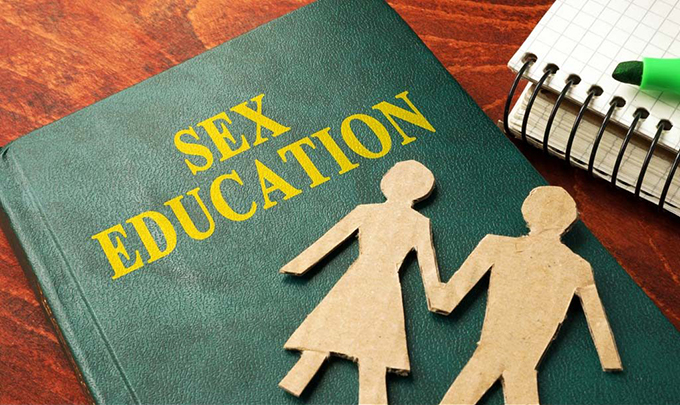
Sex education can be defined as teaching and learning about a myriad of topics related to sex and sexuality. It dives into the values and beliefs regarding these topics. It helps people gain skills they will need to navigate their relationships with themselves, their partners, and their community and helps them manage their sexual health.

Sex education can be taught anywhere, in one’s house, school, community setting with trusted individuals, or online. As I stated earlier, I was not taught much about sex education in secondary school.

Luckily, my parents were there to answer my questions on sexual education and even imparted helpful knowledge that has helped me a lot in many ways.

When I learnt more about sex education and focused on what my parents taught me, I learned more about myself, my body, and how I could improve in terms of mental and physical health.

Despite common misconceptions that sex education corrupts children when taught about it at school, sex education can be more beneficial than you might expect. The full description of what sex education entails is as follows:

Human Development

This involves human anatomy, puberty and how it will affect them both physically and mentally, sexual orientation (the different types of sexual orientations), and gender identity (what it means to be male or female).

Relationships

Relationships consist of Interpersonal relationships such as family, friendships, romantic relationships, and relationships with healthcare practitioners.

Personal Skills

This involves areas surrounding communication, boundaries, negotiations, and decision-making.

Sexual Health

Sexual education covers the areas that deal with sexual health, like sexually transmitted diseases, Birth Control, and pregnancy.

Society and Culture

This involves Media Literacy, Shame, and stigmatisation associated with sex and sexual education, the way that power, identity, and oppression can affect sexual wellness and reproductive freedom.

But besides all this, my main concern is how sex education is so callously put in the hands of religious leaders and institutions.

Most parents can be trusted to impart their knowledge about sex education to their children so they are more aware and careful.

On the other hand, religious leaders and institutions cannot be trusted in the same way.

Historically and in recent times, both religious leaders and religious institutions have been known to use children’s lack of sexual knowledge against them in ways most foul.

Priests, pastors, and Imams have preyed on young children entrusted to them by unsuspecting parents.

The more commonly known religious institution to do so are the Catholics, but other religious institutions and their leaders have done the same.

In some Islamiyah (Islamic religious learning academies), Imams have inappropriately touched young children they were supposed to care for.

Some examples would be a French Catholic church that was reported after discovering that its clergy and lay members had sexually abused at least 330,000 children over the past 70 years.

Another example would be a young girl from Lagos whom a Friar sexually abused at her parish church. In 2020, an Imam had taped himself raping a five-year-old girl, and earlier this year, in July, another Imam was arrested for the sexual abuse of seven children.

In October this year, another Imam was arrested for sexually assaulting an 11-year-old. Men (Women as well) who are placed into positions of power are more often than not predators who seek to prey on those weaker than them.

These days, anyone can become an Imam or a pastor. Because of the relaxed nature in discerning whether someone is an actual man/woman of god or whether they can be trustworthy in a position of power, many people get hurt.

Young children should not be placed in their care, nor should they be allowed to discuss sex education with them.
For all we know, they could teach these young and highly impressionable children wrong things and could hurt them badly in the long run.

Statistics have shown that when children have been sexually abused, there is a high likelihood that they will go on to commit the same injustices that were performed on them.

Ultimately, it will perpetuate a cycle of pain and torment.

Appropriately trained sexual education professionals should be tasked with training children on what they need to know about sex education from a young age. This way, they will learn more about their bodies and the best way to know if what is being done to them is right or wrong.

Along with this, their community should also take care of children.

If more than one eye is trained on a child, then any odd behaviour will be noted and told to their parents so that they can take the proper actions necessary.

With these two in hand, parents won’t need to rely on religious leaders or religious institutions to teach children about sex education when children are more likely to be abused by them.

Perhaps then, the government will have more trust in the education system instead of leaving such a delicate and complicated matter in the hands of people who would instead make matters worse than fix anything.

Children are blank canvasses, and teaching them the right things will make lovely and ethereal colours glow on their canvas, but teaching them in the wrong manner will damage it.

Children are the hopes and future of their parents and forefathers; It is with them that a legacy of peace, faith, and kindness is ensured.

I hope whoever reads this takes my words to heart and acts righteously for these children who might be led astray due to improperly placed trust.

Aishat M. Abisola is a member of the Society for Health Communication, Wuye District, Abuja, via Aishatmohd02@gmail.com.

Soyinka distances self from any religion

By Muhammadu Sabiu

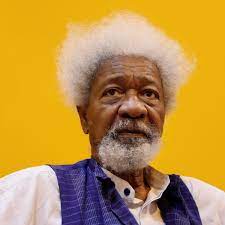
The Nobel Laureate, Wole Soyinka, has stated that he does not need a religion and does not worship any gods, stating that he does not practise any religion.

At a public presentation of his two-volume collection of essays on Sunday, Soyinka made this revelation and said he saw nothing wrong with embracing mythology as an integral part of his creative process.

As a mythologist, he added, people have the right to fabricate stories about themselves based on their personal experiences.

The professor was quoted as saying, “Do I really need one (religion)? I have never felt I needed one. I am a mythologist.

“But religion? No, I don’t worship any deity. But I consider deities as creatively real and therefore my companions in my journey in both the real world and the imaginative world.”

Police rescue many kids from church dungeon in Ondo

By Ahmad Deedat Zakari

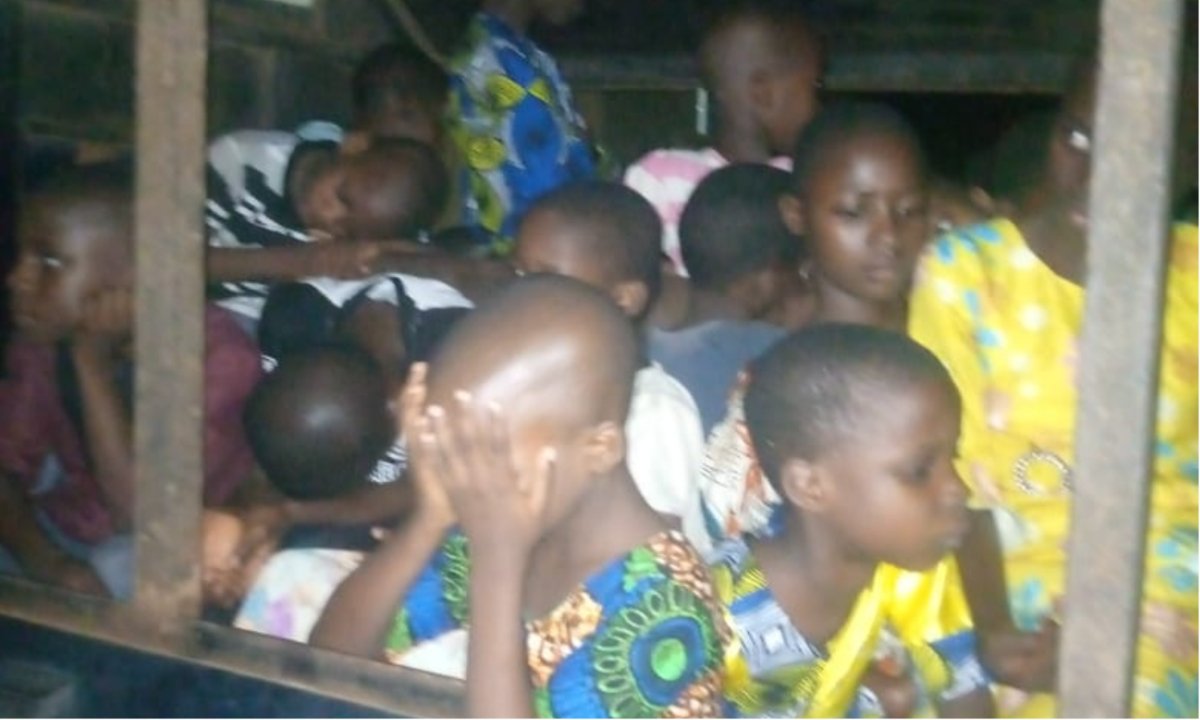
The Nigerian Police Force, NPF, have rescued scores of children from an underground church apartment in the Valentino Area of Ondo town. 

According to a Twitter user with the username DejiAdesogan, among other multiple sources, a pastor and some church members have been arrested in connection with the incident. 

“DISTURBING NEWS: Scores of kidnapped children were allegedly found and rescued from an underground apartment of a church in the Valentino Area of Ondo town, Ondo State, on Friday evening. A pastor and church members already arrested in connection with the case.” DejiAdesogan tweeted 

The Twitter user also accompanied his claim of the rescue with a video and picture of the scenario.

He also berated religious leaders who perpetuate criminal activities in the name of religion.

“The allegedly kidnapped scores of children rescued from an underground of a church in Ondo town is a clear proof that some Clerics hide under the religion to perpetrate evil. Inhumane, Wickedness & Condemnable,” He tweeted. 

At the time of writing this report, the NPF have yet to comment on the development.

2023 elections and religio-regional struggle

By Ali Tijjani Hassan

One would be amazed while looking at the similarities between the words “Religion and Region.” One will be even more amazed by how these twin factors play an unimaginable role in Nigerian politics.

Nigeria is divided into six geopolitical zones; North-central, Northwest, Northeast, Southeast, Southwest and South-South. In a nutshell, South and North. In terms of Religious diversity, we have only two major religions: Christianity and Islam. Subsequently, Christianity and Islam dominate South and North, respectively.

As the main opposition party, the People’s Democratic Party, PDP, elected Alhaji Atiku Abubakar as its flag-bearer in the forthcoming polls of 2023. On the other hand, the ruling party, the All Progressive Congress, has yet to choose their flag-bearer capable of winning the election against Atiku.

The APC has zoned their presidential quota to the South-West and Vice President to the Northeast. Their front-line aspirants (Tinubu, Osinbajo) are already from the Southwest. Alhaji Ahmad Bola Tinubu was a former governor of Lagos state. Prof. Yemi Osinbajo is currently on the echelon of his second-cum-two terms as Vice President of Nigeria.

Religion is another factor we have seen since the birth of Democracy in Nigeria in 1999. How religion plays a role in who would be President or Vice President, the candle of Muslim-Christian or Christian-Muslim tickets is still flaming. We witnessed Obasanjo/Atiku, Yar Adu’a/Jonathan, Jonathan/Namadi, and Buhari/Osinbajo.

The nightmare to the APC is how to relate their zoned system with the emergence of their candidates. Both Tinubu and Osinbajo are competent, but Tinubu, like his counterpart of PDP, is a gigantic gorilla that wouldn’t allow any candidate to win over them.

If Tinubu emerges as a flag-bearer, he has no option but to pick the former speaker of the house of representatives, Rt. Hon. Yakubu Dogara, since he is the only influential Christian of the party from the Northeast. Sequel of this, both North and South wouldn’t produce a candidate that is not condign to their religious interest.

Professor Yemi Osinbajo

Prof. Yemi Osinbajo is an influential Christian Southerner that was once seen as ready to serve in the eyes of Nigerians. Still, the disregard of the present Buhari-led administration tarnishes his striking image with red.

If Osinbajo gets the ticket, he must pick his running-mate from Northeast. Then Osinbajo’s running-mate must be an influential Muslim and northerner with integrity, accountability and competency. The qualities mentioned above would win the hearts of Northerners to revive the fallen hope that they put into the APC earlier.

It has been in the tradition of Northern politics since 2003, when president Muhammad Buhari stepped his foot into the presidential race arena. There is a constant twelve million votes that were captives in his favour. Therefore, whosoever would be Osinbajo’s running-mate must have the passkeys to open or conquer the twelve million vote bank.

Who will be Osinbajo’s running-mate?

Here in the Northeast, we have only two politically influential actors capable of running with Osinbajo and likely to conquer: The first is Prof. Babagana Umara Zulum, the governor of Borno State.

Prof. Zulum was a legend of fortune. Although he became the governor of Borno when the state was in the sorrow of insurgency, his braveness, doggedness, and justice with fairness made him the messiah of the Borno people then. That fortunate promotion paved Zulum’s way to be loved by many Nigerians.

The second influential Muslim northeasterner that could win the hearts of northerners and retain or succeed the Buhari’s twelve million votes is the minister of communication and digital economy, Prof. Isa Ali Ibrahim Pantami. Due to his Islamic religious sacerdotalism, the Sunnis sect fanatic would vote for him. Mainly, northern Muslims are Sunni. Therefore, a Pastor/Sheikh ticket is also possible.

Ipso-facto, we should say that the upcoming 2023 will be a “religion and region” war.

Ali Tijjani Hassan writes from Potiskum, Yobe state.

Is prayer genuinely worthless? 

By Usama Abdullahi

I came across a post from a supposedly intelligent person in which he foolishly stated that prayer is worthless and doesn’t count. What surprises me more is that he’s a practising Sufi Muslim. It’s hard to believe that Sufism teaches people to utter things or act contrary to the teachings of Islam. Even though I’m neither a pro-Sufism nor share similar ideologies with any of them, I still don’t think Sufism teaches people to behave and write irrationally as that self-deluded person. 

He believes that being realistic or pragmatic is the only solution to the everyday security challenges troubling this country. While I agree with him that being practical is one of the surest ways that could help bring such age-long challenges into a state of discontinuity, yet, on the other hand, I disagree with him that our prayers are usually obsolete and worthless. Perhaps unknown to him, prayer is but a spiritual tool that fends, heals and grants the guided people some peace of mind.

Prayer is a beautiful and easiest way of expressing our deeply felt gratitude to God for his mercies upon our dear lives. It describes how thankful, devoted and religious we are towards our creator. The problem with that person is that he’s shifted his focus on God and thinks that his so-called realistic mind provides him with the answers to all the lingering security threats we are experiencing in this country. Well, that’s the biggest blunder one could ever make. 

When we stray or rather deviate from the right course, our minds often tell us things differently. Our minds would make us feel liberal and lure us into acting in the wrong way. Sometimes it makes us view things narrowly, which is not how they seem in reality. It simply corrupts and deceives us. The manner we reason speaks volumes about how we often tend to foresee the future.

As humans, we are capable of being wrong at any time. But it is funnily unrealistic to believe that your ideology is always appropriate and should be followed. Over the years, I have come to terms with the belief that one with higher academic qualifications doesn’t mean they are the most knowledgeable among people. I respect people’s opinions, but only when they appear rational. Abusive and persuasive views are sure to be avoided because they can instigate hostile disagreement among people like this.

I don’t see prayer as a worthless thing. Even if I feel it doesn’t count, I will keep on praying. Indeed, I believe in the miracle of prayers. I know God answers prayer. He has told us in the Holy book that we should supplicate and call on him whenever we get into trouble or need something. My or your prayers might be delayed but not rejected. When this happens, the Holy book always reminds us to be patient because patience pays. 

And prayer is also an act of worship. Moreover, it shows the level of one’s faith in God. I know we cannot pray all of our problems away without being pragmatic in confronting and dealing with them. Yet that shouldn’t give us the green light to decidedly underestimate the power of prayer, for it’s a natural remedy on its own. 

Prayer saved Prophet Isa (Jesus) from the brink of crucifixion. Prayer protected  Prophet Muhammad (S.A.W) and his companions against their ruthless foes. Prayer saved Prophet Abraham when thrown into the fire by his people and prayer attracted God’s sympathy and mercy over Prophet Yunusa (Jonah) when he got drown and swallowed by a whale. Despite going through hell, Yunusa still prayed to God and was happily rescued afterwards. So, how would you expect me to buy into your notion that prayer is worthless?

Usama Abdullahi wrote from Abuja, Nigeria. He can be reached via usamagayyi@gmail.com.