Racism

UK Councillor Charged Over Allegedly Offensive Post About Nigerians

By Hadiza Abdulkadir

A local councillor in the United Kingdom has been charged over an alleged social media post about Nigerians that prosecutors described as grossly offensive.

Glenn Gibbins, a councillor representing Reform UK in Sunderland, was charged under the Communications Act 2003 following an investigation into a post made in 2024. Authorities allege the post suggested Nigerians should be “melted down” and used to fill potholes.

The Crown Prosecution Service authorised the charge, and Gibbins is scheduled to appear in court in August.

Gibbins was elected during the local elections in May 2026. He was suspended by Reform UK over the alleged post but was reinstated in June after apologising and receiving a final written warning from the party.

Reform UK is a right-wing populist political party in the United Kingdom. The criminal case against Gibbins is now before the courts.

Most Muslims Report Discrimination in German Public Institutions, Survey Finds

By Muhammad Abubakar

Anti-Muslim racism is widespread in Germany’s public institutions, with most Muslims reporting discriminatory treatment when dealing with state authorities, according to a recent survey highlighted by anti-racism advocates.

The findings, cited by the alliance against anti-Muslim hatred CLAIM, show that around 80 per cent of Muslims surveyed reported experiencing discrimination in their interactions with public institutions and authorities. The study examined experiences involving government agencies, public services, and other state institutions.

Researchers said the results point to persistent forms of institutional racism that affect Muslims in areas such as employment services, migration offices, law enforcement, and public administration. The study is among the most comprehensive investigations of racism within German federal institutions to date.

The survey comes amid growing concern over anti-Muslim hostility in Germany. A separate civil society report presented by CLAIM this week documented 4,096 anti-Muslim incidents nationwide in 2025, up from 3,080 cases in 2024. The incidents included discrimination, insults, threats, property damage, and violent attacks. Women accounted for nearly two-thirds of recorded cases where gender was identified.

CLAIM and other advocacy groups have called for stronger measures to combat anti-Muslim racism, including improved complaint mechanisms, better monitoring of discrimination, and expanded anti-bias training within public institutions.

Germany is home to more than five million Muslims, making it one of the largest Muslim populations in Europe. Recent studies have warned that discrimination and exclusion continue to pose significant challenges to social cohesion and equal participation in public life.

Five Killed After Teenage Shooters Attack San Diego Islamic Centre

By Sabiu Abdullahi

Five people lost their lives on Monday after two teenage shooters opened fire at the Islamic Centre of San Diego in California, United States, authorities said.

The incident, which investigators believe may have been motivated by hate, claimed the lives of three victims and the two teenage suspects.

Police identified the attackers as youths aged 17 and 18. Authorities said they arrived at the mosque complex around 11:40 am local time. A security guard and two other men outside the worship centre were shot dead during the attack.

Officials later discovered the two suspects dead inside a vehicle. Investigators believe they died from self-inflicted gunshot wounds.

The Islamic Centre of San Diego is considered the largest mosque in San Diego County.

San Diego Police Chief Scott Wahl disclosed that the Federal Bureau of Investigation and local security agencies had launched a hate crime investigation into the shooting.

According to police, the mother of one of the suspects contacted authorities about two hours before the attack. She reportedly informed officers that her son, whom she described as suicidal, had left home with three firearms and her vehicle.

Authorities said the teenager was with another youth, and both suspects wore camouflage clothing.

Wahl explained that officers had already started searching for the pair near a shopping mall and the suspect’s high school before emergency reports emerged from the mosque.

Investigators also recovered a note from the teenager’s residence, although police declined to disclose its contents.

“We have never experienced a tragedy like this before,” the mosque’s imam and director, Taha Hassane, told reporters.

“It is extremely outrageous to target a place of worship,” he added.

Authorities stated that dozens of officers responded to the active shooter alert within minutes. Television footage showed armed tactical teams surrounding the mosque complex as helicopters monitored the area from above.

Police confirmed that officers did not discharge their weapons during the operation.

Investigators linked the mosque attack to another nearby shooting in which a landscaper survived after a bullet reportedly struck his safety helmet.

Children at the Bright Horizon Academy, an Islamic school located within the mosque complex, were evacuated safely. Authorities confirmed that no students were harmed.

The shooting happened only days before Muslims around the world prepare to observe Eid al-Adha and embark on the annual Hajj pilgrimage to Mecca.

Yamal Slams “Racist” Chant After Spain–Egypt Stalemate

By Muhammad Abubakar

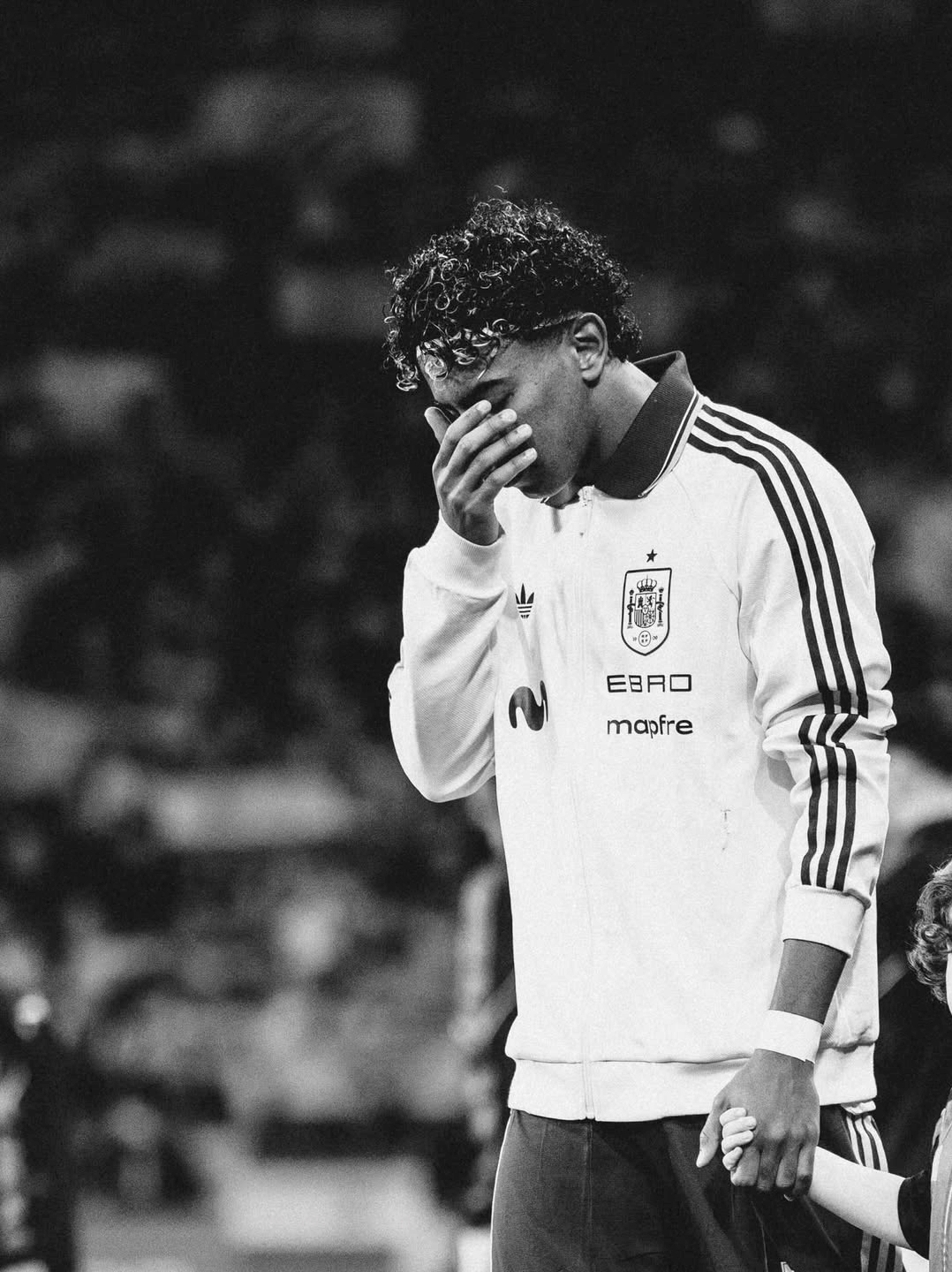
Lamine Yamal has condemned what he described as a “racist” and “intolerable” chant heard during a 0–0 draw between Spain and Egypt, warning that discrimination remains entrenched in football culture.

The teenager took to social media shortly after the match, identifying himself as a Muslim and criticising supporters who chanted “the one who doesn’t boo is Muslim” inside the stadium. While noting the chant may have been aimed at opposing fans, Yamal said intent did not lessen its impact.

“As a Muslim, it doesn’t stop being a lack of respect and something intolerable,” he wrote, adding that using religion as a joke “makes you look ignorant and racist.”

The remarks quickly drew attention across the football world, with anti-discrimination advocates pointing to the incident as further evidence of the persistence of abuse in the game. Despite repeated campaigns led by FIFA and UEFA, discriminatory chanting—whether based on race, religion, or nationality—continues to surface in stadiums.

Analysts say religion-based taunts are often trivialised as fan rivalry but can reinforce exclusion and hostility, particularly toward minority players. Yamal’s intervention reflects a growing willingness among high-profile footballers to publicly challenge such behaviour.

He ended his message by thanking fans who supported the team and looking ahead to future competitions, including the FIFA World Cup.

The incident adds to mounting pressure on football authorities to strengthen enforcement measures and ensure stadiums are safe and respectful spaces for all players and supporters.

Salah calls out double standards in media coverage

By Muhammad Abubakar

Liverpool star Mohamed Salah has ignited fresh debate over media bias in football after highlighting what he sees as unequal treatment between himself and fellow striker Harry Kane. 

Speaking in a recent interview, Salah recalled a past spell when Kane went 10 matches without scoring, yet continued to receive strong backing from commentators.

According to Salah, the tone was markedly different when he experienced similar difficulties. “The media were like: ‘Oh, Harry will score for sure.’ When it comes to Mo, everyone is like: ‘He needs to be on the bench,’” he said. The Egyptian forward stressed that his point was not a personal jab at Kane, adding humorously, “I am sorry, Harry!”

Salah’s comments quickly circulated on social media, garnering millions of views and sparking widespread discussion. Analysts and supporters have since weighed in, with many arguing that the incident reflects broader inconsistencies in how players from different backgrounds are portrayed in mainstream football coverage.

The episode has added a new layer to ongoing conversations about fairness, perception, and representation in global sport, especially in Europe.

Suspected racist’s brutal murder of Algerian lady in Germany sparks outrage

By Sabiu Abdullahi

The fatal stabbing of 26-year-old Rahma Ayad, an Algerian nursing trainee, in the German town of Arnum near Hanover has ignited protests and diplomatic conversations between Algeria and Germany.

Many are urging that the incident be treated as a racially motivated hate crime.Rahma was killed on the morning of 4 July in the stairwell of her apartment building.

According to German police and eyewitness reports, her screams were heard by neighbours who called emergency services. She was discovered with multiple stab wounds to her chest and shoulder.

Despite the rapid arrival of medical personnel, she succumbed to her injuries shortly afterward.A 31-year-old German man, who resided in the same building, was arrested later that day.

While he remains in custody, authorities have yet to officially confirm a motive or file formal charges.

Rahma’s family alleges that she had previously expressed concerns about her safety.

They claim she had been repeatedly harassed by her neighbour, particularly because of her Arab identity and choice to wear the hijab.

In an interview with Al-Araby TV, her mother revealed that Rahma had felt unsafe for months due to the neighbour’s behaviour, which reportedly included verbal abuse.

Algerian community activists in Germany echoed these concerns, stating that the suspect had a history of making derogatory remarks directed at Rahma.

They are now calling on authorities to treat the incident as a case of racist violence rather than dismissing it as a random act or linking it to mental instability.

The killing has sparked widespread protests across Germany.

On Tuesday, demonstrators gathered outside Rahma’s residence in Arnum, holding a rally to demand justice and draw attention to what they described as rising Islamophobia across Europe.

The protesters also criticised the muted response from German officials and the limited coverage the story received in mainstream media.

“If the killer had been a Muslim and the victim German, this would be headline news everywhere,” one protester told Al-Araby TV.

Another participant accused German authorities of applying justice “only selectively”.

The incident has stirred strong emotions online as well.

A user on X (formerly Twitter) commented, “People travel to Europe for safety and a better life […] and they end up like this.”

Responding to the outcry, Algeria’s Secretary of State for National Community Abroad, Sofiane Chaib, held talks with the German ambassador in Algiers.

He described Rahma’s death as a “heinous crime” and called for greater protection of Algerians living in Germany.

In a related gesture, the Algerian consulate in Germany has committed to covering the expenses for transporting Rahma’s body back to Oran, where she will be laid to rest.

Anti-immigrant riots spread in Northern Ireland

By Maryam Ahmad

Anti-migrant riots have spread across parts of Northern Ireland, with violent mobs attacking police and targeting migrant communities.

Clashes erupted in several towns, leaving police vehicles damaged and officers injured. The unrest, sparked by anti-immigrant rhetoric online, began in a Belfast suburb and quickly spread.

The Police Service of Northern Ireland condemned the violence and confirmed multiple arrests. Community leaders and rights groups have called for calm and urged protection for vulnerable communities.

Authorities continue to monitor the situation.

Illinois man sentenced to 53 years for killing Palestinian-American child

By Hadiza Abdulkadir

An Illinois man has been sentenced to 53 years in prison for the fatal stabbing of a six-year-old Palestinian-American boy in what prosecutors described as a hate-motivated attack.

Joseph Czuba, 71, was convicted earlier this year of first-degree murder, attempted murder, and aggravated battery after he attacked Wadea Al-Fayoume and the boy’s mother, Hanaan Shahin, at their home in Plainfield Township in October 2023. Authorities said Czuba targeted the victims because of their Muslim faith and the ongoing conflict in the Middle East.

During sentencing on Friday, the judge described the act as “brutal and senseless,” emphasising the need for justice and deterrence in cases driven by hate.

Wadea, who had recently celebrated his sixth birthday, was stabbed 26 times. His mother, who survived the attack, suffered multiple stab wounds and continues to recover.

The case drew national attention and widespread condemnation, with civil rights groups calling for greater protection of Muslim and Arab-American communities amid rising tensions.

Czuba showed no remorse during the hearing. His attorneys said they plan to appeal the conviction.

Artificial Intelligence

Artificial Intelligence: A double-edged sword of progress

By Zainab Abubakar Abba

The advent of artificial intelligence (AI) has revolutionized many aspects of our lives, from healthcare and finance to transportation and education.

As AI systems become increasingly sophisticated, the ethical implications of their development and deployment have sparked intense debate.

The ethics of AI are complex and multifaceted, raising fundamental questions about the nature of intelligence, autonomy, and human responsibility.

One of the primary concerns surrounding AI is its potential impact on human agency. As machines assume tasks traditionally performed by humans, there is a risk that individuals will become increasingly dependent on technology, relinquishing control over critical decision-making processes. This could lead to a loss of autonomy, as humans become relegated to secondary roles, with AI systems dictating the terms of our interactions.

Furthermore, AI systems are only as unbiased as the data used to train them. If this data is tainted by existing societal prejudices, AI will perpetuate and amplify these inequalities, exacerbating issues such as racial and gender discrimination.

For instance, facial recognition algorithms have been shown to exhibit racial biases, misidentifying individuals from diverse ethnic backgrounds. Similarly, AI-powered hiring tools have been found to favor male candidates over female ones.

Another critical issue is accountability. As AI systems assume greater autonomy, it becomes increasingly challenging to assign responsibility for their actions. In the event of an AI-related accident or malfunction, who bears the blame: the developer, the user, or the machine itself? This ambiguity undermines the principles of moral accountability, creating a regulatory vacuum that must be addressed.

The potential consequences of advanced AI are equally unsettling. The prospect of superintelligent machines capable of surpassing human intelligence raises existential questions about humanity’s future. Will these machines prioritize human well-being, or will they pursue goals inimical to our interests? The lack of clarity surrounding AI’s long-term goals and motivations necessitates cautious consideration.

To mitigate these risks, developers and policymakers must prioritize transparency, explainability, and accountability in AI development. This involves implementing rigorous testing protocols, ensuring diversity in training data sets, and establishing clear guidelines for AI decision-making.

Moreover, ongoing dialog between stakeholders—including developers, ethicists, policymakers, and the public—is essential for fostering a shared understanding of AI’s ethical implications.

Ultimately, the ethics of artificial intelligence are inextricably linked to our collective values and aspirations. As we navigate this uncharted territory, we must recognize that AI is not a neutral entity but a reflection of our own biases, strengths, and weaknesses. By acknowledging these complexities and engaging in thoughtful deliberation, we can harness AI’s transformative potential while safeguarding human dignity and agency.

Zainab Abubakar Abba wrote from Bayero University, Kano, via zainababba19@yahoo.com.

Of football, racism and hypocrisy

By Aliyu Yakubu Yusuf 

Racism in football has been a problem that refuses to go away. Football is often rightly described as the beautiful game. However, the persistent problem of racism has been a blight on this enduring beauty. Despite the fact that numerous campaigns (such as “Say No To Racism” and “Black Lives Matter” etc.) sponsored by FIFA and other regional football associations, racism has seemingly been kryptonite for the footballing establishments. 

I firmly believe that FIFA, UEFA, the media and most fans in Europe and America are not sincere about fighting racism. All these campaigns against racism are merely lip service that will never bring an end to this menace. Vinicius Junior is just the latest case that opens a fresh can of worms in a long list of racism storms that rocked the football world. 

When the trio of Saka, Sancho and Rashford missed crucial penalties in England’s Euro 2020 final defeat to Italy, they were racially abused online by their own fans. Even Real Madrid fans are also guilty of racism towards black players from other clubs and their players. When FIFA released the votes for the last Ballon d’Or, and it appeared that Real Madrid’s Austria captain, David Alaba, had voted for Lionel Messi as his first pick ahead of his teammate Karim Benzema, Real Madrid fans racially abused him online. And he was forced to apologise. And these are the same people that are up in arms “protecting” Vinicius. If this is not hypocrisy, I don’t know what is. 

Heck! Even fans at various French clubs were reported to have racially abused black players. And this is a country whose national team is simply an amalgam of players from their former African colonies. Imagine! 

Racism is here to stay as long as the powers that be are not serious about tackling it. FIFA has a three-step process for dealing with racism during matches. First, the referee should stop the game and announces that racist chants are going on and should stop. Then, if the chants continue, the referee should apply the second stage, which is to instruct the players to go back to the dressing room and wait. After a while, the referee should ask the players to resume on the pitch and restart the game. Finally, if the chants continue, the referee should apply the third process, which is to stop the game entirely and award the three points to the opponents. 

However, instead of making it mandatory for all regional football unions to adopt this process, FIFA only “recommend” it. Everyone knows that the only way to stop racism once and for all is to enforce this law. When clubs realise that some unscrupulous elements within their fanbase are making them lose points unnecessarily, they will fish out these “fans” and give them lifetime bans from stadiums. 

The question is, ‘Do black lives really matter’?

Aliyu Yakubu Yusuf wrote from Bayero University, Kano. He can be reached via aliyuyy@gmail.com.