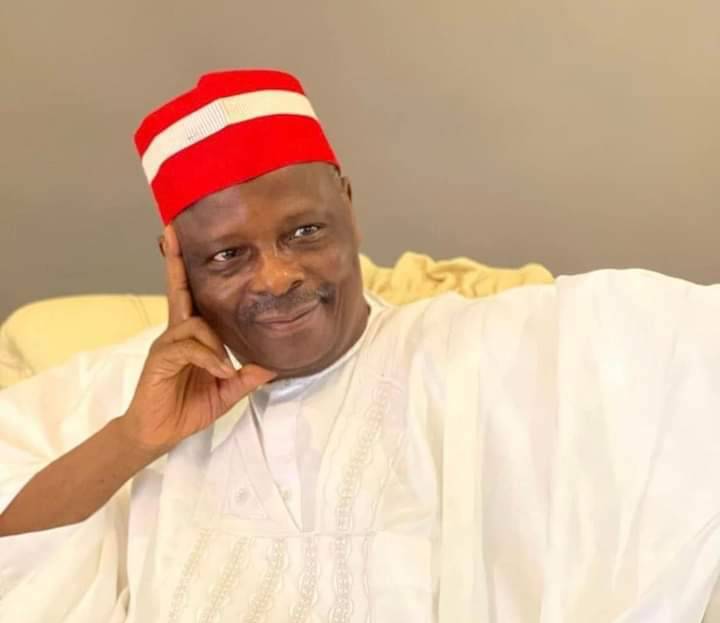
Rabiu Musa Kwankwaso

Kwankwaso/Obi ticket – A nice combination nobody should have thought about

By Muhammad Sulaiman Abdullahi, PhD

Many good things should have happened to Nigeria, but such good things were and are still averted by Nigerians who feel threatened by others. Our collective psyches teach us to be myopic and to lack reason. These make us promote selfishness, ethnic chauvinism or even other material gains at the expense of the best public interest.

Now that Kwankwaso/Obi ticket has been ethnically killed, I am happy that it didn’t come to fruition. It would have been disastrous to the nation as Peter Obi supporters are turning into something else. Now that it didn’t happen, it left some issues to ponder, especially on our reasoning that it shouldn’t have even been thought of in the first place. It left us with no hope as to the politicians we see, who are a sort of “young” blood, compared to those whose actual age, patriotism, source of wealth and health status are all not certain.

All of us in the North, without a doubt, believe that Dr Rabiu Musa Kwankwaso is far better than Obi. They are not comparable in whatever capacity, from academic credentials to practical experience, national spread, political platform and even patriotism. However, one irony about the ticket was that the way Northerners believe in Kwankwaso is similar to how South Easterners believe that Obi is better. They think that Obi is the only answer. In their bid to justify that, they reduced Kwankwaso to pieces, saying he was over-ambitious. This is where they woefully failed. This was what made the thought of bringing the ticket even more worrisome.

Obi’s supporters shouldn’t be blamed, as the country is programmed this way. People only know and promote people they are so much close to, naturally. What will happen if this natural knowledge is mixed with bitter secessionists’ sentiments and arrogance that beclouded their thought of anything if not theirs?

There are some reasons why Kwankwaso shouldn’t have even thought of Obi. Perhaps Kwankwaso did that out of nationalism and as another way of garnering support from the other end. Still, one thing Kwankwaso failed to realize was that Obi’s candidature was no longer his own. It has long been hijacked by a fake Christiandom, Obidients/OBiafrans and other disgruntled politicians from the other end. First, however, let’s consider some points here.

The way Nigeria is, a country with such a vivid religious divide, with Muslims as the majority and Christians with a significant number, the Christians must feel offended if they do not feature as number two, if not number one in the country. In this case, someone may say that democracy is, to some extent, a hoax. If not, why shouldn’t the majority carry the board all the time? But in Nigeria’s situation, Christians are many, and they would feel somehow alienated by the APC’s Muslim/Muslim ticket.

Therefore, it will be a miscalculation for anyone to ask Obi to deputize instead of being the lead. Christians may not take it lightly. They have already fought the Muslim/Muslim ticket and failed, and now the only option left for some of them shouldn’t be tempted or played with. Therefore, looking at it from this angle, it was a terrible idea right from the beginning. Reuben Abati confirmed this in an interview when he opined that, during one of their talks about Kwankwaso/Obi, he asked one question! And the answer to that question, given to him by the NNPP representatives, convinced him that the Kwankwanso/Obi arrangement was dead on arrival.

He asked them, is it fair that after a Northener – and maybe a Muslim – finishes his eight-year tenure, another Northerner will rule again immediately? He said the Kwankwanso/NNPP representatives responded that that is not an issue to worry about. This is their point of reasoning which should be understood.

Another point is regional affiliation. This doesn’t give much, but many Southerners may prefer to have someone healthier than Bola Tinubu, not minding his religion the way the Northerners do. Here, Obi as the lead may be more appealing to them.

On the other hand, there is an issue of the Igbo presidency. Igbo politicians have been too stubborn, divisive and too regional in their approaches to national discourse. They always create problems for themselves, of which Obi’s candidature is part. You can’t disown your country, engage in a series of treasonable felonies, condone crimes, support terrorism against your nation, and then think you would be trusted.

The idea of rallying behind Obi as the only source of salvation is another mistake made by the Igbos. It will make them more stubborn or more alienated. If Obi fails – which will likely happen, some of those overzealous OBiafrans who now threaten all who talk against Obi will surely be more stubborn and restless. And the mainstream politicians would put them aside as they know they are inconsequential.

Now that the ticket has been killed, most commentators agree that it wouldn’t change anything even if it had happened. The real fight is seen to be between the two giants. Now both camps should sheath their swords and forge ahead.

Kwankwaso and his supporters should continue to aim high. Merging with anyone among the two major parties cannot produce a result, and going alone is not the solution. Madugu and his team should think within and outside the box and develop a real solution.

As for Obi’s real supporters, the real Obidients, they should learn tolerance and know that Nigeria is not Imo, Abia or Enugu. Two states’ votes in the North can equal the total number of states in the South-East region. This is based on the latest voter statistics released by the Independent National Electoral Commission (INEC), which shows that the North has more voters registered in the continuous voter registration that ended last Sunday.

Therefore, these OBidients, including the OBiafrans, should be more civil, tolerant and open-minded. They should interact well with others, show decorum in their manners, and not allow the OBiafrans to lead them.

Dr Muhammad can be reached via @muhammadunfagge (Twitter) or email: muhammadunfagge@yahoo.com.
Tricycle operation in Kano: To ban or to regulate?

By Tijjani Ahmad

Before banning the use of commercial motorcycles, popularly known as “Achaba”, most of us couldn’t imagine life in Kano without them. At that time, most Kano metropolis residents relied on Achaba as a means of local transport. 

The business of commercial motorcycles was booming and popular during that time, known for its lucrative nature, employment generation and ease of use to residents. 

Suddenly, the then governor of Kano State, Dr Rabiu Musa Kwankwaso, announced the ban on 22 January 2013. The government explained that many crimes, particularly attacks on security operatives in the Northern Nigerian state, were carried out by men on motorcycles.

Even though there was no specific arrangement for the alternative means from the government’s side, the ban was effective and gave birth to the rise of the tricycle popularly known as “A-Daidaita Sahu”.

A Daidata Sahu was not new in Kano because it was first implemented by the then Kano State governor, Malam Ibrahim Shekarau, in 2005 but was not popular because of Achaba. 

However, immediately after Achaba, investors started diverting their investment to A Daidaita Sahu. And residents accepted it since there were no alternative means of transport. It was reported that most of the Achaba riders also followed their investors and started trooping the streets of Kano.

For almost a decade, A Daidata Sahu has been found wanting in many offences, from criminal to civil. On that account, the government took many decisions to regulate the operation of commercial vehicles generally in Kano.

Unfortunately, the purpose of these decisions has been defeated by concentrating on the monetary aspect of most of the policies meant to curb insecurity and regulate motorists’ activities within the state.

Now, Kano State Government placed another ban on A Dadaita Sahu – restricting its operations at night, from 10:00 pm to 6:00 am. The question is, how sure are we this will solve the problem of insecurity?

Kano, one of the largest cities in Africa – known for commerce, agriculture and industrialisation, is becoming more sophisticated as its population grows, new businesses emerge and naturally expand. Therefore, whatever policy we bring, we should consider the consequences on the populace, businesses and the environment. 

Despite these, it seems like proactive measures are not what we are interested in; we are instead scratching the surface. That’s why it is always quick banning, restrictions, curfew and many more reactive moves. 

If we are indeed serious, we don’t need to borrow money and install CCTV in the name of curving insecurity. All we have to do is regulate the activities of commercial vehicles within the state and block the leakages of revenue generated from their activities. This will go a long way in checking the crimes and improving the overall revenue of the state.

Three years ago, my friend, a key player in the industry, asked my opinion on whether the government should ban it due to insecurity.

I said this could be done through an effective and efficient database where all the players within the industry, from owners, riders, sellers and service providers, and warehouses. The data must be linked with BVN and NIN. To be part of the industry, you must comply with the requirements. 

By doing so, no motorcycle or any player within the industry should be seen on the street or within the city without registration. Furthermore, each person’s number or tracking ID should be placed on the bike and should correspond with what is in the database. So that whenever any player perpetrates a crime, all you have to do is to know the tracking number. 

This can be used to know the owner and the rider of the motorcycle used to commit that crime. My friend is trying to implement this within their company. Where all their riders can be tracked in real-time using GPD enable tracker. Thus, this is all we need: regulation, not reactive measures such as banning.

Tijjani Ahmad wrote from Kano via ahmatee123@gmail.com.

We’ll give priority to education — Kwankwaso

By Muhammad Aminu

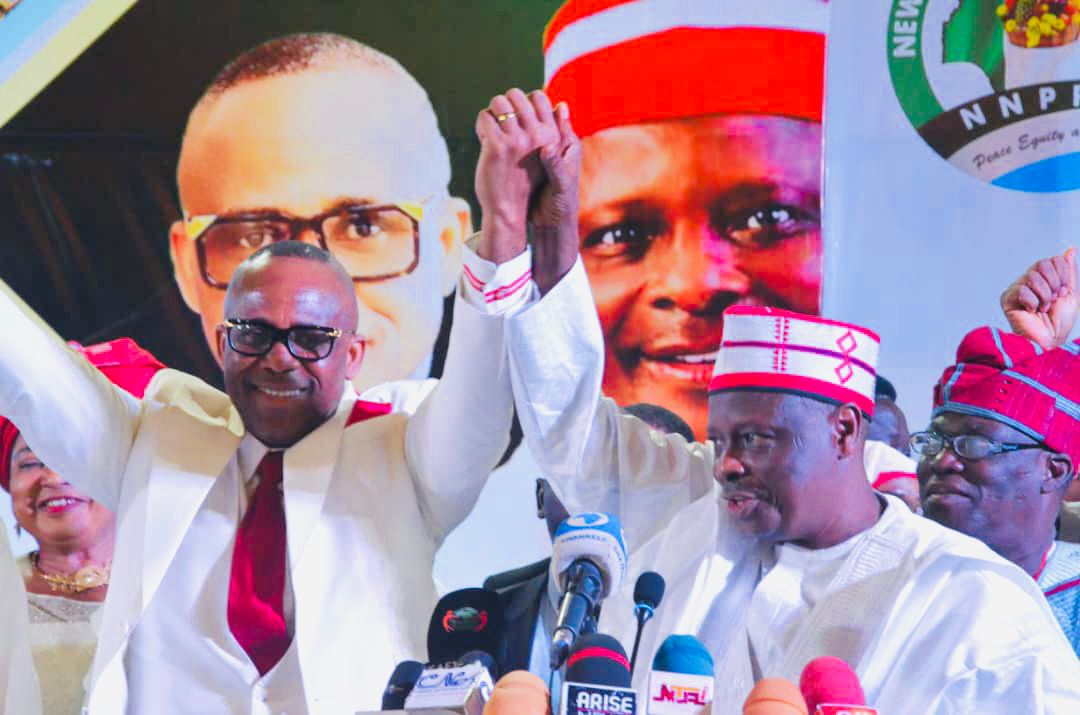
The Presidential Candidate of the New Nigerians People’s Party (NNPP), Dr. Rabiu Musa Kwankwaso, has said that he would give priority to education if Nigerians give him the chance in the forth coming general election.

Speaking at the official presentation of his running mate, Bishop Isaac Idahosa, Kwankwaso also decried collapse of tertiary education under the current administration of President Muhammadu Buhari.

According to the former Kano State Governor, Nigeria is bleeding from severe wounds inflicted on it by the incompetence and insincerity of the APC-led government.

“The sad reality is that our country is bleeding from several and severe wounds inflicted on her either as a result of incompetence or insincerity of the operators of government or the total lack of the understanding of how to govern a multi-cultural, multi-religious and multiethnic country like our own.

“Their insincerity and intolerance has inflicted injurious wounds to the social fabric of Nigeria. Their nepotism and parochial approach to governance has inflicted severe wounds to the country. Their ineptitude and lack of empathy has dealt a damaging blow on the body psyche of all Nigerians.

“Their condescending arrogance and sense of entitlement has further widened the fault lines in our country and their nonchalant attitude towards the core functions of governance is causing dangerous escalation of insecurity,” he said.

The former minister of defence further lamented the rising inflation and unemployment in the country, saying the current economic statistics in Nigeria were unacceptable.

Bishop Idahosa, in his acceptance speech, said Nigeria is on a critical juncture where a fresh start is imminent.

“Nigeria deserves a fresh start and fresh ideas. Nigeria deserves a fresh deal that will steer the country away from division and hate. A fresh deal that will steer the country away from incompetence and cluelessness; a fresh deal that will steer the country away from insecurity and economic woes,” he said.

He therefore, urged Nigerians to register and obtain voters card to be able to bring about the desired change in the country.

Earlier, the National Chairman of the party, Prof. Ahmed Rufai Alkali, said that NNPP is the fastest growing party in Nigeria, adding that Kwankwaso’s sterling leadership is responsible for the growth.

“The NNPP entered the political space at the most critical time and is going to take the opportunity to give Nigerians hope because Kwankwaso is the man Nigerians are waiting for,” he said.

He further stressed that NNPP has a dream and a formidable team that Nigerians are waiting for because they posses the qualities to steer the affairs of Nigeria.

“With this winning team Nigerians should be hopeful that Nigeria shall rise again. The party is committed to building bridges across all socio-political divides,” he added.

More clarifications ahead of 2023

By Amir Abdulazeez

When President Obasanjo carelessly picked Goodluck Jonathan to serve as Umaru ‘Yaradua’s potential Vice President in 2007, little did we know that the politics of choosing running mates would later become complex and problematic. The death of Umaru, the ascension of Jonathan, the surprising emergence of Namadi Sambo and Patrick Yakowa becoming the first Christian Civilian Governor of Kaduna State would all combine to later add more relevance to the politics of running mate selection. In 2014, APC had more headaches picking a presidential running mate than the presidential candidate himself. It took them so much time and effort that one thought they would organize a new convention for that purpose.

Today, the Muslim-Muslim ticket debacle is the bane of Nigerian political discourse. While clamouring for fairness and balance, which are needed for a fragile system like Nigeria’s, we should also remember that from 1999 to date, no religion can claim any net gain from this Nigerian version of democracy. Ordinary followers of all faiths have been victims of bad governance, even pagans. We have suffered so much that if a pagan/pagan ticket will eradicate insecurity, fix the economy and bring development while being fair to all interests and affiliations, we should allow it. Therefore, the choice is between searching for solutions and satisfying sentiments; we seem to favour the latter.

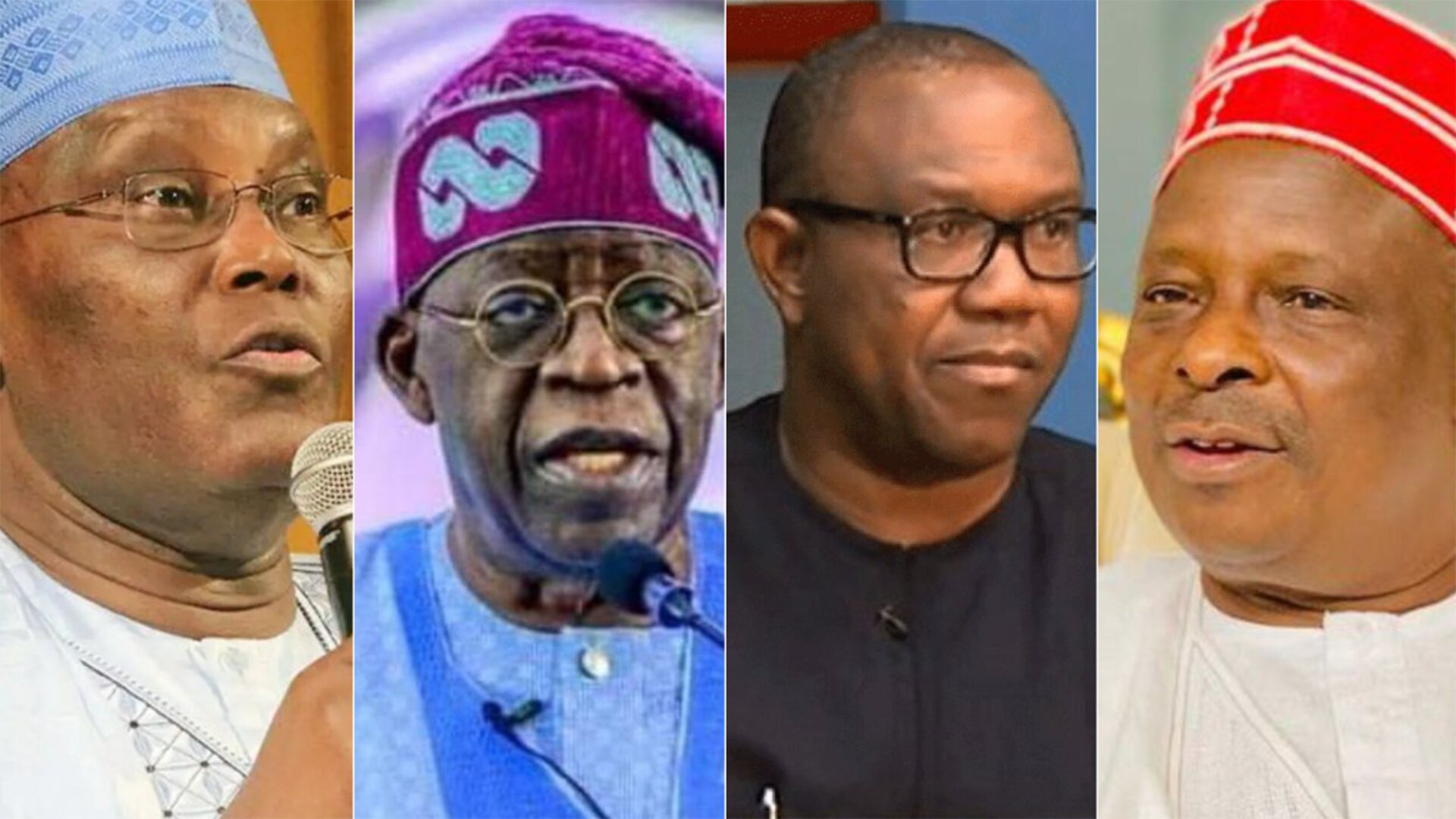
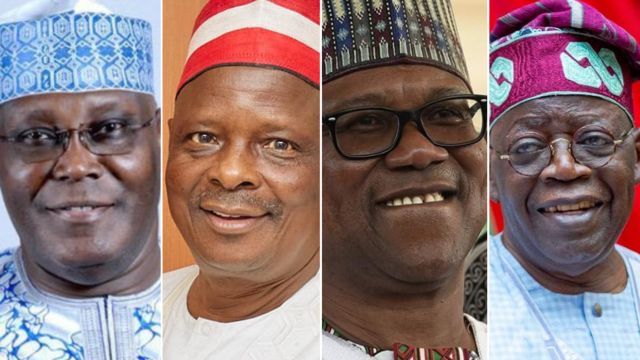
A section of public commentators and spectators are already suggesting a walkover for Atiku Abubakar in the 2023 polls. That is the biggest complacency I have ever seen in contemporary Nigerian politics. How can you be facing a ruling party with almost 65% of political stakeholdership in the country and be expecting to have a walkover? Atiku is an institution, but his successes in the last two PDP primaries are more financial supremacy than political dominance. That aside, barring a Buhari-like scenario, Atiku will make a good president. He is perhaps the only fully independent candidate with a clear and accessible blueprint since 2007. In 2011, he had a better manifesto and approach than President Goodluck Jonathan; he only lost the PDP primaries to the power of incumbency. By the way, what happened to the Jonathan 2023 candidacy?

From 1992, this is Atiku’s 7th attempt at the Presidency, with 2019 being his closest to success. Many believe 2023 is his year, and so many apparent factors call for optimism in his camp. However, two fundamental things may haunt Waziri; (in)consistency and (un)popularity. Buhari and Tinubu are successfully reaping the harvests of consistency and perseverance; they stuck to opposition politics all their lives. Atiku should’ve remained in opposition when he decamped to Action Congress in 2007 or should’ve stayed in the ruling PDP when he decamped back in 2011. Ambition had kept him running from one place to another, making him neither establishment nor anti-establishment. The second question is whether there is a single state in Nigeria in which Atiku can secure one million votes or more in 2023? I hope we all remember Dr Rabi’u Kwankwaso’s 3-K States theory?

Tinubu’s boast in Ogun State over his role in the emergence of Buhari as President needs some revisiting and clarification. To avoid doubt, Muhammadu Buhari did not lose the 2003 presidential elections; it was brutally rigged to return Obasanjo for a second term. 2003 will easily enter the list of the worst elections in modern world history. In 2007, the results of the presidential election were simply written, so we can’t even call that election not to talk of who won or lost. I have never relied on 2003 and 2007 election figures for research or serious analysis because they are primarily fabricated. The 2011 elections were relatively fair, but at least 40% of the vote was rigged, written, or inflated, especially in the South-South and South-East.

In the circumstances like these, we cannot comfortably declare Buhari a loser of all the previous elections he contested and only became a winner when he met Tinubu. Although 2015 was indeed the weakest version of political Buhari, it was confirmed that he had lost hope and that the APC merger spearheaded by Tinubu was what brought him back to life. But it is also true that so many other factors other than Tinubu contributed crucially to Buhari’s victory. One major one was the abysmal performance of Goodluck Jonathan. One, however, is that, without Tinubu’s support, it would’ve been near impossible for Buhari to emerge APC flagbearer against the financial powerhouses in Kwankwaso and Atiku.

This brings us to the argument that access to public funds is why some candidates (not aspirants) are stronger than others. Supporters of a particular presidential candidate even claimed that if their man had equal access to public funds, he would be better than certain candidates. This is laughable; a debate like this will take us nowhere. Just campaign for your candidate and persuade people to vote for him. If we are talking about the abuse of people’s trust and the utilization of our commonwealth for personal political development, none of the prominent politicians in Nigeria will come out clean. So, let us not deceive ourselves and others.

Where are our smaller political parties who had spent most of their last four years fighting INEC over deregistration? This is a reasonable amount of time they would’ve spent coming together to form a strong bloc. In case we don’t know, 74 of them were deregistered for failing to meet the requirements to continue to exist as political parties. About 10 to 15 of the currently existing will be due for deregistration by this time next year. Instead of them to consider merging to form a decent alternative, they’ll rather hang on only to be fighting a legal survival battle with INEC next year. As the strongest and largest intellectual organization in West Africa, I don’t even know why ASUU is yet to form a political party or adopt any of the smaller parties to set up a path towards satisfying their own demands all by themselves instead of waiting and hoping for a hopeless Federal Government.

Why is nobody talking about the enormous task ahead of the next president, whom credible international reports suggest will have to use 100% of his revenue in servicing (not repaying) debts by 2024? To execute projects or even pay salaries, the next government may have to borrow further. Nigeria is in trouble. We are drowning in the ocean of foreign debts. Meanwhile, we are concerned over a presidential candidate’s religion more than his ability to bring us out of this mess. Buhari has failed because Jonathan had built a solid foundation for that failure. Now he has built a worse foundation for his successor. The possibility and danger of the next president, irrespective of his affiliation and preparedness to economically be worse than Buhari, is imminent. May God help us.

All of the political dynamics of today are closely related to 1999, some a bit earlier. Suppose you have not directly experienced Nigerian political development from 1999 with a mix of some pre-1999 historical knowledge. In that case, you will find it difficult, if not impossible, to connect specific dots that you see today. Extensive and intensive reading may help, but politely interacting with veterans will do better. Unfortunately, social media, where most of the political debates occur, is dominated by youths who knew little or nothing pre-2011 and don’t invest significant time in reading but trying to engage or even confront the same veterans that would’ve been their best opportunity at understanding the genesis of the current situation.

There are some visible changes in Nigeria’s socio-political spaces, although not new but have taken a different twist from the previous. The renewed order is the attempt to criminalize certain political choices against others. Between 2014 to 2018, discourses were dominated by hate, campaigns of calumny, fabrications and outright abuse. Today, political promoters are trying hard to make it appear that only their candidates are good enough, and any other choice is treason. This is extremism. Let’s be careful, everything is a matter of opinion, and everyone is entitled to his.

Twitter: @AmirAbdulazeez

Some clarifications ahead of 2023

By Amir Abdulazeez

The primary elections of the two leading political parties, APC and PDP, had come and gone. However, the dust raised by the exercises across various states of the federation is yet to settle. As things are going, it is unlikely that both parties’ primary election appeal committees will adequately or significantly settle the dust to the extent of amounting to a major change of the status quo. After all, everything was clear; the contests were majorly a measure of financial power.

As usual, our attempts to digest the intrigues and expectations of the upcoming grand 2023 event have once again resulted in endless debates that often lead to more confusion than clarifications. Certain political dynamics cannot be adequately explained by simple analysis or even complex ones. This is truer for cases like Nigeria, where deep insight is considered old-fashioned, authentic information is always scarce, and genuine narratives are always twisted.

Ahead of the just concluded APC Primaries, many accused Yemi Osinbajo of being a traitor and betrayer by contesting against his benefactor Tinubu. However, few people will understand that only one out of a million people will go so close to the presidency as Osinbajo did without succumbing to the temptation of taking a shot at it. The cabal theory notwithstanding, he is perhaps the Nigerian Vice President who was closest to the full privileges of the presidency in recent history. At a time, the Professor himself appeared like the next President in waiting. In sincere terms, Osinbajo may feel that running for the Presidency is more of an attempt to fulfil a destiny than betraying a godfather whose help he may not need any longer.

Maybe, many have forgotten that the Vice President had at a time been an Acting President with virtually full Presidential powers. He is aware of people’s confidence in his competence and knows that many factors are against Tinubu’s candidacy. With the Southwest as the default region where APC will likely have its next candidate, it is only natural he (the second default candidate) tries his luck in case Tinubu (the default candidate) does not get the nod. How can he cash in on a Tinubu collapse if he doesn’t contest? If he hadn’t competed, his promoters would never have forgiven him. Now that he had competed, he knows the extents and limits of his political strengths, which might have been hitherto exaggerated.

Some analysts have accused Tinubu of trying to become President at all costs despite being sick and unstable. We have forgotten that he had, since 1998, invested almost 25 years of his life (and health) trying to reach this point, and we all know he will need an ultimate reward at the end of it all. Now that the prize is within reach, only one out of a million people will back off over health challenges that are yet to prevent him from managing a public appearance. When he made all those sacrifices and concessions, many of us did not bother to understand the larger picture of where he was heading. If not for democracy, one will suggest that the APC ticket should’ve been handed over to him unopposed.

Therefore, Tinubu has fought for long. He has been in the opposition all his life. He has helped build a new political order in Nigeria. Without him, power will still likely be with the PDP and maybe forever. It’s not his making that his health appears to be failing him at this moment of near fulfilment, but as a human, he will continue believing his condition is good enough to manage him to the finish line. The late President Ƴaradua’s situation in 2010 should teach us some lessons, that of Buhari in 2017 too. Tinubu is undoubtedly not the best APC had on offer capacity-wise, but he is the most formidable. His political structure is out of this world. Win or lose, at least they have repaid a significant part of the debt they owe him.

In the build-up to the primaries, we all thought everyone was an enemy of the Southeast since the rest of Nigeria had refused to zone the presidency to the region exclusively. In his speech at the APC convention, Ogbonnaya Onu emotionally shouted for justice against the Igbo marginalization. If not for the APC and PDP Southeast delegates who proved the Igbos’ unpreparedness by refusing to vote for any of their kinsmen, everyone would simply be emotionally blackmailed. Besides, we have all seen how disorganized the Southeast aspirants were across both parties.

From 2003 to 2010, the Southeast was considered a formidable political bloc, but they wasted opportunity after opportunity to consolidate. Instead, they focused on ethnic and religious politics. Conceding the Presidency to the Southwest in 1999 was basically a military arrangement executed against democratic principles. The Southeast demanding the same in a maturing democracy is quite tricky. In this era, no one will gift you the Presidency; you have to earn it.

Another aspirant is NNPP’s Rabi’u Kwankwaso. His critics accuse him of being a local champion. However, his supporters insist on rating him higher than Atiku and Tinubu based on a tangible track record. However, the debate is not as simple as it seems. The same scale cannot be used to measure Tinubu, Kwankwaso and especially Atiku, as their political career paths are distinctively different. The truth is that Kwankwaso is a national figure who has invested too much energy in local politics, which was why he achieved what he has achieved. However, this has come with a price because he has dominated and taken away all the local relevance he could’ve easily allowed his subordinates to coordinate, a feat that would’ve given him a Tinubu-like aura. In the end, he ends up fighting for crumbs with local people, making him unavoidably local.

What of Peter Obi? He appears to have more packaging than substance, but he is yet another litmus test for the Southeast. They feel denied, marginalized and short-changed. Their response should be a massive vote for him. Even if he may not win, they will succeed in sending a strong message ahead of 2027. However, there is a wiser option. They can use Petr Obi as a bargaining tool with someone like Kwankwaso for example; form an alliance, challenge the red-cap man to deliver the Northwest zone while offering Southeast and see whether something will come out of it.

The bottom line is that we don’t need to be too upset or over-obsessed with anybody’s ambition, any region’s miscalculations or any party’s misdirection. There are so many choices in the political landscape that our myopia hinders us from utilizing. For example, if you genuinely want an Igbo president, the Labour Party has fielded Peter Obi. If you want somebody whose hands are not shaking, NNPP has fielded Kwankwaso, etc. So quietly do the needful and urge others to do the same. Give it a try. The strong parties and candidates are only front liners because you and I made them so.

Nigerian public discourse often makes complex political analysis look simple and simple political analysis look complex. And finally, we end up achieving no political analysis at all.

Twitter: @AmirAbdulazeez.

Why Kwankwaso deserves more accolades

By Najib Ahmad, PhD

We often hear people saying that ‘he [Sen. Rabiu Musa Kwankwaso] did it with the government funds.’ And so? Oh, you expect him to do it with his money; then, you will ponder whether he’s worthy of their gratitude. But, this is not how things have been done right from the inception.

If you read over the history of the previous great Muslim rulers like Umar Ibn Abdulaziz (61-101 AH), may Allah have mercy on him, you will realize the incredible impressions he left on people despite being a caliphate for a short period. But, it is known that all he had achieved and built weren’t from his funds. Still, he’s remembered and admired.

People often appreciate the history of how other nations developed, which primarily transpired through human development. But, for example, how do you think today’s China and Singapore got it right? Do you think they only wake up to all this in the morning? No, it was because some leaders decided to do it right and went on to create policies that enabled them to reach where they are today.

For instance, if you take China, they unconditionally relish Deng Xiaoping – the architect of modern China. While Singapore’s Lee Kuan Yew is also highly recognized as the founder of modern Singapore, they constantly appropriate him for its development. During their time as leaders of developing nations, all they have accomplished weren’t with their funds but with the government funds.

Those leaders’ priorities then were primarily policies on education and the industrial revolution transformation. Sending students, including the peasant farmers’ children, to universities worldwide via scholarships was part of Mr Xiaoping’s most significant policies that China benefited from. His initiatives have matured into a whole system, i.e., the China Scholarship Council (CSC) and China Postdoctoral Science Fund. This remarkable initiative alone helps them strengthen their universities and vocational colleges with a quality workforce and, in turn, enables them to become the world’s industrial powerhouse.

Today, check all your household belongings to verify the above. Those two leaders are still relevant in China’s and Singapore’s present days. You can’t underestimate their significance no matter how you try due to the enormous opportunities and equal advantages they created for their people.

I understand your frustrations, which is why one person out of more than 12 million people of Kano is receiving too many accolades. First of all, it is their choice to appreciate him, mind you. This is because he means so much to them. The good thing is, you can’t deny them this satisfaction even if you try. So, why the resentment? Allow those that prefer to do what suits them to continue thanking and re-thanking him till the end of time, if that is their wish. What’s your problem with their choice, fisabilillahi?

Above all, the main thing to look at is that appreciating Kwankwaso’s effort doesn’t physically hurt you or anyone else or destroy any of our fundamental values. In fact, it is teaching people to learn to recognize good deeds and be thankful to whoever is responsible or part of their progress in life. Isn’t this a harmless mannerism to learn, emulate, and propagate?

Dr Najib Ahmad is a Postdoctoral Researcher at Shandong University, China. He can be contacted via namuhammad03@gmail.com.

Three more Kano Assembly members dump APC, join NNPP

By Ibrahim Nasidi Saal

Days after nine Kano State House of Assembly members defected from the opposition Peoples Democratic Party, PDP to New Nigeria People’s Party, NNPP, three more lawmakers have dumped the ruling All Progressives Congress APC, for the new party.

On Wednesday, a spokesman for the Assembly, Uba Abdullahi, announced their defection, citing three separate letters the legislators sent to the speaker, Hamisu Chidari.

According to the statement, the members notified the House of their defection from the ruling APC to NNPP through the letters dated May 5, officially received by the House.

The defecting lawmakers are:

Hon.Abdullahi Iliyasu-Yaryasa, member representing Tudunwada Constituency;

Hon.Muhammed Bello Butu-Butu, member representing Tofa/Rimin Gado Constituency.

Hon.Kabiru Yusuf Ismail, member representing Madobi Constituency.

Mass defection rocks Kano State House of Assembly

Ibrahim Nasidi Saal

Nine members of the Kano State House of Assembly elected on the Peoples Democratic Party (PDP) platform have defected to the New Nigeria People Party (NNPP).

The spokesperson of the Assembly, Uba Abdullahi, announced this in a statement he issued on Friday. He said the members had sent a letter to the Speaker of the House notifying the House of their defection.

He said some of the members cited a leadership tussle in the PDP at state and national levels for their action.

The affected members include:

 Isyaku Ali Danja (Gezawa Constituency), 

Umar Musa Gama (Nassarawa Constituency),

Aminu Sa’adu Ungogo (Ungogo Constituency),

Lawan Hussain Chediyar ‘Yan Gurasa (Dala Constituency)

Tukur Muhammad (Fagge Constituency).

Mu’azzam El-Yakub (Dawakin Kudu Constituency)

Garba Shehu Fammar (Kibiya Constituency)

Abubakar Uba Galadima (Bebeji Constituency)

Mudassir Ibrahim Zawaciki (Kumbotso Constituency).

Earlier on April 29, the House announced the defection of a member representing Kano Municipal, Salisu Gwangwazo, from the PDP to the ruling All Progressive Congress (APC), also citing an internal crisis in the main opposition party

However, the latest defections are widely seen to be connected to the movement of a former governor of the state, Rabiu Kwankwaso, from the PDP to the NNPP.

Mr Kwankwaso moved to the NNPP earlier this year and is expected to run for president on the party’s ticket.

Kwankwaso’s defection has triggered the mass defection of his followers from the PDP to the NNPP. Some of them have taken party positions ahead of the party’s primaries.

Adamu Garba ll and the audacity of fundraising

By Ali Tijjani Hassan

Lately, in the previous weeks, Adamu Garba, from Adamawa state, declared his interest in vying for the office of the President of Nigeria under the platform of the ruling party, the APC, in 2023. Adamu, a young entrepreneurial pedagogy with fervent learning ability, nestled the slogan of the Youth-4-Youth movement. He’s a source of motivation, inspiration, and encouragement to the young generation.

After watching his declaration of interest speech and reading his visionary parable, “This is my Nigerian vision for the Presidency”, I learnt that; bundles of courage and braveness are kept in this young man. He meant business-like to his ambition. If elected, Adamu vows to tackle national threats like corruption, unemployment and insecurity.

The young Adamu, in his 40s, held no public office before his declaration. He’s likely to be a corruption-free citizen, and he could make a good President if elected and be the ‘Mr. Integrity’ we were craving earlier. As he said, “we failed many experiments with individuals that know nothing but public service”. Adamu’s mind is not obsessed and dominated by lively greed.

Adamu dreams of lifting the country close to heaven by transforming it into 21st century Nigeria. So, we can compete globally in diplomacy, development and economic productivity.

The audacity of fundraising:

President Muhammadu Buhari bamboozled Nigerians to send their accumulative income to his ‘fes benk’ account when contesting in 2015. Numerous Nigerians see it as fraudulent and daylight robbery that the aspirants use to avoid bankruptcy. If they do, so they lose to make it in the primaries. Buhari used this beguiling technique twice during his democratic terms, becoming a modus-operandi among shining politicians. It’s one of Nigeria’s political cultures that many Nigerians hate.

If this fraud has to be put into practice amidst this life plight and economic hardship, no politician fits the kind of supportive gestures from his followers than two political idols; Sen. Shehu Sani of Kaduna state and Sen. Rabiu Musa Kwankwaso of Kano state. But to all my pleasure, these humble men surreptitiously take their form of interest without coward ploy.

Adamu Garba ll has adapted this weapon and paved his way to national legendary. The matter arose and transmuted to night thunder not only to Adamu Garba ll but also to many deceitful cartoon-sketch candidates. But alas, he received the shocking response of his life, as most of the responders took his notion as a joke and responded with a kind of joke we’ve never witnessed.

The saddened part is that some people are busy promoting this delusional love to the spendthrift governor like one of Yobe state. In a saner clime, people to used their hard-earned money to sponsor any candidate is not a good idea. Still, with the kind of deception we witnessed from the previous candidate that went through the same system, the culture has to be stopped and allow people to deal with the incompetency of these politicians.

Ali Tijjani Hassan wrote from Potiskum, Yobe state via alitijjanihhassan@gmail.com.

2023: Kwankwaso declares presidential ambition next week

By Uzair Adam Imam 

The two-term governor of Kano, Engr Rabi’u Musa Kwankwaso, said he had concluded plans to formally declare his political ambition next week.

Kwankwaso, who has been nursing the ambition over the years, would contest for president on the New Nigerian Peoples Party (NNPP) platform.

Speaking at a news conference on Friday, Mr Kwankwaso said he consulted widely on his plan, and the responses were positive.

“I have been consulting widely with friends and Nigerians of diverse interests, and the outcome has been positive. 

“I will be informing Nigerians of my political ambition sometime early next week,” he said.

Kwankwaso also acknowledged the successes recorded by his new political party at its recently-concluded membership registration. 

He added, “the support for the NNPP had been overwhelming going by the responses recorded at its recently-concluded membership registration drive.”