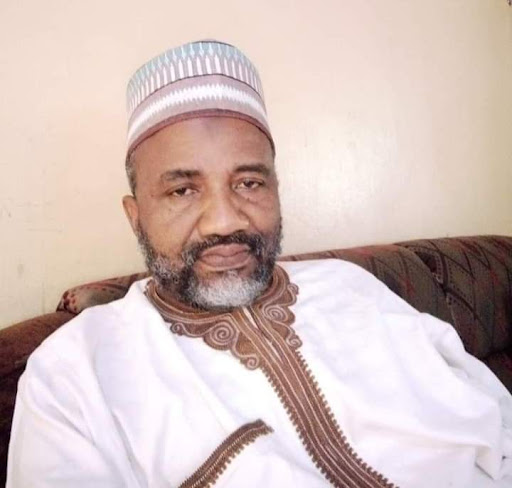
Rabiu Musa Kwankwaso

Kwankwaso, Kwankwasiyya and Arewa beyond 2023

By Aminu Alhassan Kuba

During the 2023 general elections, Eng. Rabiu Musa Kwankwaso contested for the office of the President Federal Republic of Nigeria under his newly registered party, the New Nigeria People’s Party (NNPP). Unfortunately, he came a very distant 4th, winning just one State out of 36 plus the Federal Capital Territory, Abuja, with a little over 1 million votes. His party also presented candidates for the governorship in a few other states apart from Kano, and the closest it came to winning apart from Kano was in Taraba.

Before the elections, Senator  Rabiu Musa Kwankwaso had been engaged in a fierce political battle with his erstwhile political friend and deputy and present governor of Kano State, Dr Abdullahi Umar Ganduje.

In 2015, Kwankwaso supported Ganduje to succeed him, but afterwards, trouble started. In a video I watched sometime in 2018, Ganduje accused Kwankwaso of envy. He said he did everything to respect and be loyal to his former boss, but it seemed Kwankwaso wanted everything. He accused Kwankwaso of wanting to be governor by proxy.

The fight between the two finally culminated in the now infamous inconclusive governorship election of 2019, where Kwankwaso tried to unseat Ganduje and replace him with his former PA, former commissioner, son-in-law, now governor-elect Eng. Abba Kabiru Yusuf. In that titanic battle for Kano, Ganduje emerged victorious.

The win led to other unfortunate matters, including the dethronement and banishment of the then Emir of Kano, His Royal Highness Muhammadu Sanusi II, the balkanisation of the Kano Emirate into five (5) smaller entities and the eventual appointment of two of Sanusi’s cousins among others as Emirs of Kano and Bichi, respectively.

In the succeeding four years, the political rivalry and fight between Kwankwaso and his old friend and political ally only intensified, culminating in the defeat of Ganduje’s candidate by same Kwankwaso’s son-in-law Eng. Abba Kabir Yusuf in the just concluded governorship election in the State.

Following NNPP’s victory, Kwankwaso’s supporters mainly and some commentators have sought to present Kwankwaso as some political wizard in Northern Nigeria. While this is true to a certain degree and circumstance, it is more accurate if Kano and not Northern Nigeria was the point of reference.

Kwankwaso has indeed managed to remain politically relevant compared to his Northern governor colleagues, alongside whom he contested and won elections to become governor in 1999. However, since his stated goal is not to become or produce the governor of Kano State but to lead Nigeria as President and Commander in Chief, the fairest comparison should be with those who have demonstrated similar ambition. And in this category, the most worthy comparison should be with the President-elect, His Excellency Asiwaju Bola Ahmad Tinubu, former Senator and Governor of Lagos State.

This comparison is even worthier considering that Lagos and Kano share similarities in population, political history, economy and commercial relevance to South and Northern Nigeria, respectively.

Let’s take a dive

In 1992 when Tinubu won a seat to become Senator of the Federal Republic, Kwankwaso won one in Nigeria’s House of Representatives and became its deputy speaker.

In 1999, both Tinubu and Kwankwaso contested and won to become governors of Lagos and Kano, respectively.

In 2003, while Tinubu was re-elected for a second term in office despite Obasanjo’s backstabbing and cynical takeover of the entire South West (except Lagos, of course), Kwankwaso lost his seat to a former permanent secretary, Malam Ibrahim Shekarau, whom he had humiliated and relegated to a classroom teacher. Shekarau went on to serve two full terms as governor of Kano. Kwankwaso was eventually appointed Minister of Defence by Obasanjo.

In 2011 Kwankwaso returned to Kano for a second shot and won. He served the next four years, delivering spectacularly on the massive infrastructural transformation of Kano and investing heavily in education and social services. In addition, he provided scholarships to hundreds of Kano indigenes to undertake postgraduate studies around the world. By the end of his tenure in 2015, he easily transited to the Senate under the newly minted alliance party, the APC, with General Muhammadu Buhari’s CPC, Asiwaju’s AC and Atiku’s rebellious PDP G-5 governors.

 In the same period, Tinubu chose not to run for office but worked to build a formidable political base with the South West as its fulcrum, installing governors in at least four of the region’s six States, many of them his former commissioners and going beyond to support former comrade Adam Oshiomhole to take Edo from the PDP.

In the same period, Tinubu not only built the Lagos-Ogun axis as Nigeria’s financial and economic powerhouse, but his former appointees also became a Vice-President, ministers, governors, chief executives of agencies and parastatals of the Federal Government.

Kwankwaso and his Kwankwasiyya movement have failed to go beyond the borders of Kano into neighbouring states like Jigawa, Katsina, Kaduna, Bauchi, etc.

Notably, they have ruled Kano with his former deputy turned adversary for 16 years. Despite its industrial and commercial potential, Kano has failed to significantly grow its internal revenue base to compete favourably with its peers in the country. In a shocking manifestation of its leadership crisis, a civil service state like Kaduna now generates more internal revenue than Kano.

Again, in education, Kano tops the list of states with the most out-of-school children. This is where I find difficulty in understanding Kwankwaso’s education investment model of sending vast numbers of Doctors, Pharmacists, Nurses, Engineers and other university graduates outside Nigeria to undertake postgraduate studies while millions of children are roaming the streets wretched, hungry and illiterate.

While I do not begrudge the beneficiaries of his scholarship largesse, many of whom I know personally, I think the billions of naira public funds he spent in that endeavour would have been best spent in strengthening Kano’s capacity to educate its underprivileged poor urban and rural population.

Therefore, it’s now twenty-four years after Kwankwaso and Tinubu first became governors; Tinubu could comfortably lose Lagos but still win in the rest of Nigeria and become President; Kwankwaso could only win his Kano and ended up a distant 4th in the same presidential race. This is a testament to how far both have come.

To bolster the point further, while Kwankwaso has managed to build a competent and diverse political team across Nigeria, on the one hand, even in his beloved Kano and over 24 years, he could only find his son-in-law and former PA worthy of his trust to become governor.

Beyond Kano in the wider Arewa, he has failed to create a political support base. Instead, he is mainly seen as the head of a violence-prone, uncouth, fanatic and cult-like group willing to insult and denigrate anyone who dares to disagree with its methods. This is not without justification either. Evidence in utterances, actions and inactions from him, his closest lieutenants and supporters that they are willing to use violence to achieve political ends when push comes to shove.

The behaviour of his supporters after the governorship election in Kano in which his candidate was declared the winner and his silence speak volumes. After attacking and burning down Rarara’s property within the Kano metropolis, no word of condemnation or reproach came from the Madugu [leader] or this party.

Despite Kwankwaso’s failings, however, at this moment of Nigeria’s political journey, Arewa needs a viable opposition to put the APC-led government on its feet from May 29th this year. And Kwankwaso’s NNPP, with a base in Kano, could position itself as a viable platform for the role. From the results of both Presidential and Governorship elections so far declared and its history in this part of Nigeria, PDP can no longer pose a serious challenge to the ruling APC.

Now practically wiped out of the North East, North West and North Central except in some minority enclaves like Taraba and Plateau and unfortunate governance failure examples like Zamfara and possibly Adamawa, PDP is practically dead. In Bauchi and Adamawa (maybe), I don’t see PDP surviving beyond 2027. All these added that Alhaji Atiku Abubakar, its leading financier, is now both old and tired. A Kwankwaso-led NNPP could therefore become a viable alternative for the greater North.

But for NNPP and Kwankwaso to take up this role, I suggest they need to rebrand; Kwankwaso needs to convince the rest of Arewa and Nigeria that his movement can grow beyond the personality cult Kwankwasiyya is now.

He must also convince the rest of Arewa and Nigeria that Kwankwasiyya is not a violence-prone provincial cult that quickly resorts to arson and looting at the slightest opportunity. Finally, he must convince the rest of Nigeria that when his interests clash with that of the State, that of the State will take precedence and that he is willing and able to reign in his supporters.

Aminu writes from Kaduna and can be reached via aminukuba@yahoo.com.

Abba’s supporters jubilate in Kano

By Uzair Adam Imam

As votes were cast yesterday, the Kano State people continue to wait for the official announcement of the Governorship and the State House of Assembly elections` results by the Independent National Electoral Commission (INEC).

The umpire electoral body has this evening started the official announcement of the result today as returning officers of various polling units across the 44 local government areas submitted their elections results to the INEC.

However, some supporters of Eng. Abba Kabir Yusuf, the gubernatorial candidate of Dr Rabiu Musa Kwankwaso`s New Nigerian Peoples Party (NNPP), have started celebrations, given the wave of success they see from the results of various local government areas of the state.

The supporters took to their various social media platforms to celebrate Eng. Abba Kabir Yusuf said they foresee a better Kano under his administration, adding that they voted for him to continue the good work of his political godfather, Eng Rabi`u Musa Kwankwaso.

The supporters predicted that Abba would win the election, and their posts, “Abba is coming, in sha Allah”, went viral on Facebook, Twitter and WhatsApp, among many other social media platforms, including Tiktok.

Eng. Abba Kabir Yusuf, popularly known as Abba Gida-Gida, has been the major opponent of Dr Nasir Yusuf Gawuna, the gubernatorial candidate of the All Progressive Congress (APC).

Gawuna, who is the Deputy Governor of the state, was nominated by Governor Abdullahi Umar Ganduje to succeed him.

During the BBC`s debate for the governorship candidates in the state, Gawuna was also reported to have said that he would continue the good works of all his predecessors, Malam Ibrahim Shekarau, Eng. Rabi`u Musa Kwankwaso and Dr. Abdullahi Umar Ganduje.

Other candidates include Sadiq Wali of the Peoples Democratic Party (PDP), Sha`aban Sharada of the Action Democratic Party (ADP), and Malam Ibrahim Kalil of the African Democratic Congress (ADC), among other candidates.

Kawu Sumaila, the Sabo Bakin Zuwo of our time

By Mukhtar Sani Yusuf 

I heard Senator-elect Honourable Kawu Sumaila describing himself and Senator Rabiu Musa Kwankwaso as Sabo Bakin Zuwo and Aminu Kano of our time in an interview he granted to local radio stations in Kano a few days after he was declared the winner of the just concluded election on Kano South Senatorial district under the platform of New Nigeria People’s Party (NNPP). Perhaps, Kawu Sumaila’s analogy has to do with the relationship that existed between Malam Aminu Kano and Aliyu Sabo Bakin Zuwo, the relationship between a leader and his disciple and those who fought and championed the course of emancipation of the poor people and the downtrodden. Kwankwaso and Kawu are now under the same umbrella, as a political leader and his loyalist following the same path of fighting for the common man’s rights.

Although Malam Aminu Kano and Alhaji Sabo Bakin Zuwo are household names in the political history of Nigeria and Kano state in particular, Kawu Sumaila’s recent statement aroused my attention as passionate of political history to take a deep dive into the political history of the two ace politicians of the blessed memory. And in this piece of writing, I laid my emphasis on where Bakin Zuwo and Kawu Sumaila shared some similarities and differences.

According to Wikipedia, “Sabo Bakin Zuwo had no background in formal education, he missed the opportunity to get formal education at an early age but was said to enrol himself at the age of sixteen at Shahuci primary school adult literacy class in 1950-1954, Igbo community school Sabon Gari and a course on local government administration in ABU Zaria. He also attended Malam Aminu Kano political school in Sudawa, Kano. An outspoken politician, Zuwo was said to have used radio more effectively than any other politician in Northern Nigeria. He was elected to the Senate in 1979 and sponsored more bills than any other senator at the time.”

Unlike Bakin Zuwo, Kawu Sumaila acquired formal education at an early age. He attended Sumaila  Gabas Primary School, Sumaila, and Government Secondary Sumaila, where he earned his First School Leaving Certificate and Secondary School Leaving Certificate in the years 1976 & 1988, respectively. He proceeded to Bayero University Kano and acquired a Diploma and an Advanced Diploma in Educational Management before he was elected to the House of Representatives in 2003 and spent 12 years representing Sumaila/Takai Federal constituency. Like Bakin Zuwo, Kawu utilises radio oftentimes to enlighten the local populace. An outspoken lawmaker, Kawu sponsored many important bills that reshaped the status of Nigerians during his days in the House of REPs.

In the 1983 gubernatorial election in Kano, Bakin Zuwo contested the election under the platform of PRP and defeated former governor Alhaji Abubakar Rimi. Even though he had the shortest reign as a governor of Kano state from October to December of 1983, he is remembered for his act of closing down the popular palace cinema in Kano, which was considered the haven of immorality at the time after listening to the yearnings of people. 

Like Bakin Zuwo, Kawu also contested the seat of Kano state governor in 2015 after he finished three tenures in the House of Representatives. He later withdrew the contest on the day of the APC primary election to support the candidacy of the current governor of Kano state, Dr Abdullahi Umar Ganduje. He was appointed SSA to the president on National Assembly matters shortly after president Buhari emerged as president of the Federal Republic of Nigeria in 2015.

In what appears similar to the act of Alhaji Sabo Bakin Zuwo in 2016, there was a public outcry in Kano on the federal government’s proposed film village to be cited in the state after listening to the peoples’ call who vehemently rejected the project, Kawu singlehandedly took the bull by the horns to approach the president on the matter. This single act led the federal government to rescind its position about the project.

One thing I learned about Alhaji Sabo Bakin Zuwo and Senator-elect Kawu Sumaila, which they shared in common, is vociferousness in voicing out their stance, especially when fighting for the interest of their people.

Hon. Kawu Sumaila is now elected Senator who will represent the people of Kano South in the Red Chamber, and before he was elected, he reached the pinnacle of formal education as he bagged PhD in political science.

Mukhtar Sani Yusuf wrote from Kano and can be reached via mukhtarsaniyusuf678@gmail.com.

Coalition asks Atiku to step down for Kwankwaso

By Muhammadu Sabiu

A coalition of civil society organisations asked Atiku Abubakar, the candidate of the Peoples Democratic Party, to step aside in favour of Musa Kwankwaso, the candidate of the Nigeria Peoples Party, to prevent needless vote splitting in the North.

Bishop Godwin Abah, the coalition’s head, said in a press conference at the NNPP secretariat in Abuja on Wednesday that Nigeria’s future was in jeopardy and that, as a result, the Kwankwaso Presidency’s political sagacity and tenacity of purpose were needed to turn the country around.

Abah noted that the organisations had carefully examined the presidential candidates of major political parties, as well as their backgrounds and democratic credentials, adding that Kwankwaso stood out among the other candidates.

He was quoted as saying, “A servant-leader with milk of human kindness, Kwankwaso transformed Kano State as a two- term governor and will bring his wealth of experience as former Minister of Defence, Ambassador, Senator, Deputy Speaker, House of Representatives etc., to bear on national governance as President of the Federal Republic of Nigeria.

“It was also the opinion of the rural Nigerians that the coalition interfaced with that Alhaji Atiku Abubakar should set aside his presidential aspiration for a dynamic, pragmatic, energetic and resourceful Kwankwaso.

“Accordingly, the coalition calls on Alhaji Atiku Abubakar, the Peoples Democratic Party’s presidential candidate to step down for the NNPP presidential candidate, Rabiu Musa Kwankwaso to avoid unnecessary splitting of votes in the North.

“Kwankwaso will inject fresh air in governance, restore hope to a bewildered nation that has seen more carnage than dividends of democracy and build a new Nigeria we all desire.

“Atiku has done his best for the nation, we appreciate his contribution as Vice President of Nigeria. He remains a statesman.

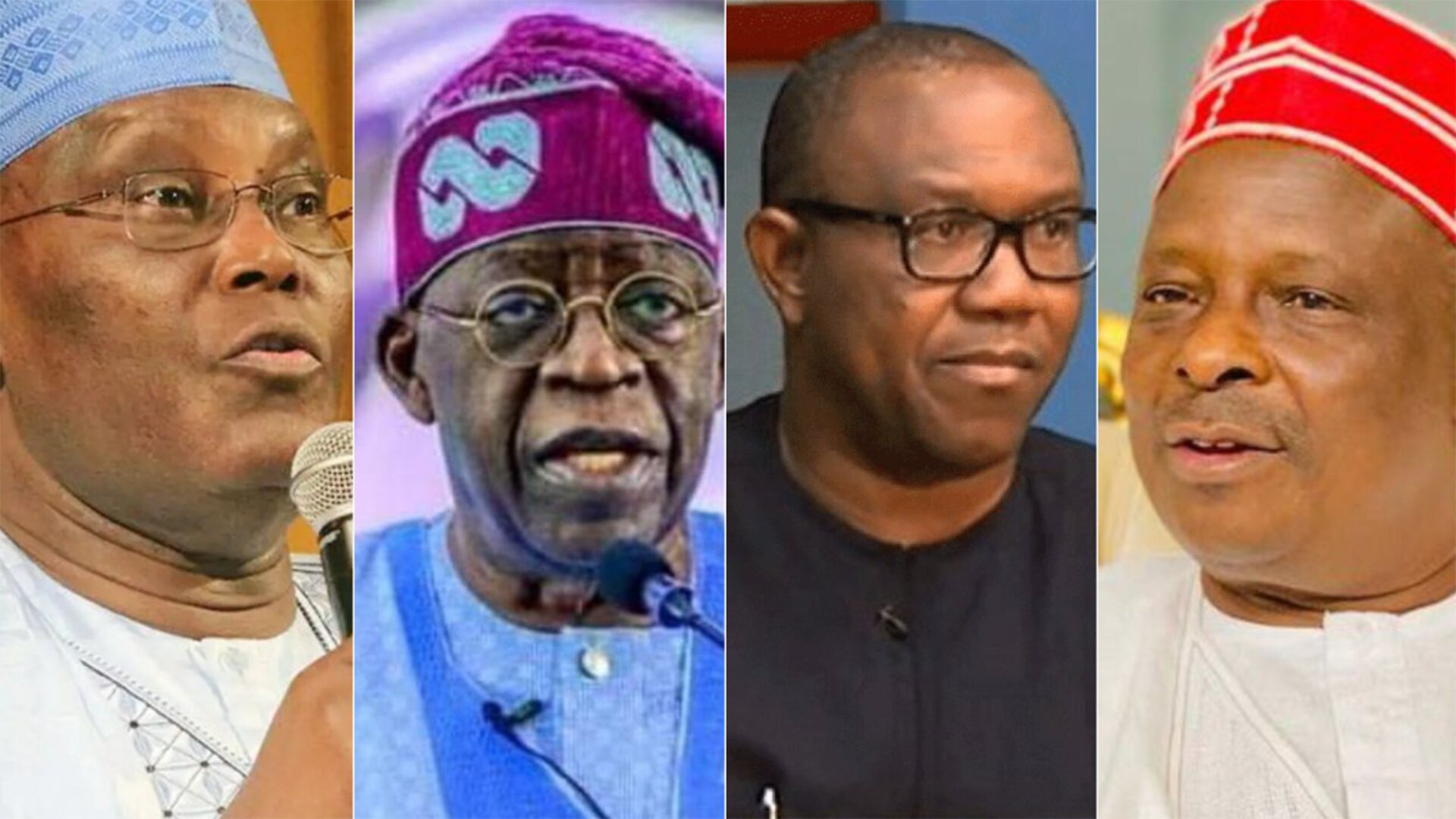
There are now about three days left until the presidential election, which involves four major contenders, including Bola Tinubu (APC), Atiku Abubakar (PDP), Rabiu Musa Kwankwaso (NNPP), and Peter Obi (LP).

Religion and the 2023 presidential election: A quick take

By Muhsin Ibrahim

Religion was central to Bola Tinubu’s emergence as the APC’s candidate for the 2023 presidential election. We discussed the issue as if it would not end. Since the 1993 annulled election of Abiola/Kingibe (both Muslims), no major candidate and his running mate have ever come from the same religion until now: Tinubu/Shettima (both Muslims). But, as the election approaches (we are, in fact, counting hours), only a few people talk about that. However, religion will play a significant role in the voting pattern.

The wild popularity of Labour Party’s Peter Obi on social media and his appeal to foreign media has something to do with his religion. I know this may sound controversial, but it is so. The three other front candidates are Muslims, while Obi is Christian. Besides this, I can’t see a glaring difference between him and NNPP’s Engr. Rabiu Musa Kwankwaso per se.

Tinubu and PDP’s Atiku Abubakar are in their 70s, while Kwankwaso and Obi are in their 60s. The four leading candidates are stinking rich and belong to 1% of the Nigerian elite. Interestingly, the candidates represent Nigeria’s so-called major ethnolinguistic groups of Yoruba, Hausa and Igbo, alias WAZOBIA.

Though, there is a parallel between Obi and Tinubu. Many people will vote for them because of their religious identities. I learned that many churches, especially in the North, had ordered their members to vote for Obi. Likewise, the faith-based civil liberties organisation Muslim Rights Concern (MURIC) recently “reminded Northern Muslims of their promise to support a Southern Muslim [i.e. Tinubu] in the 2023 presidential election”.

Given the above, I agree with some observers and analysts that Obi may surprise his critics, such as myself, in the upcoming election. The votes from his Christian brethren and others supporting him for other reasons will make a difference. However, Tinubu has many more advantages – being APC the ruling party and his decades-old political footprints, among others.

Anyway, we hope for the best and pray for peaceful elections. But, please, stay away from violence. Your safety should be your most treasured possession. No politician or political party is worth dying for.

With love from a disenfranchised Nigerian citizen.

Muhsin Ibrahim works and lives in Cologne, Germany and can be reached via muhsin2008@gmail.com.

2023: Does Obasanjo still have any electoral value?

By Mubarak Shu’aibu

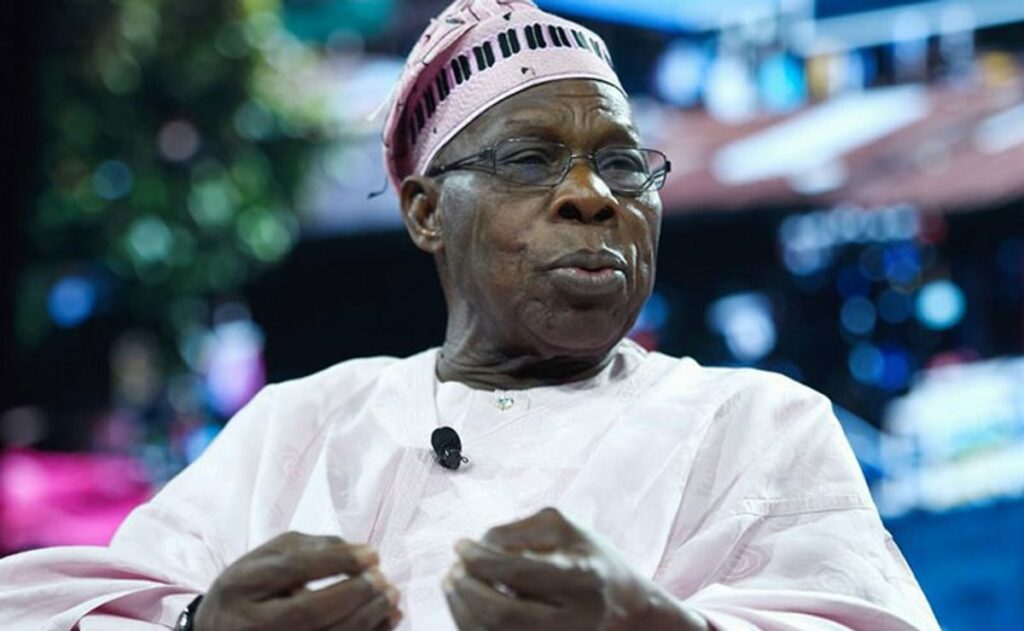
With the 2023 general election close at hand, the former President of Nigeria, Chief Olusegun Obasanjo, has released a six-page letter of appeal to Nigerians, targeting the youths in particular.

In the letter, Obasanjo eschewed the likes of Alhaji Atiku Abubakar, his former deputy, Bola Ahmed Tinubu, and his mentee, Engineer Dr Rabiu Musa Kwankwaso and settled for Mr Peter Obi of the Labour Party. The choice has lent credence to those who believed Obasanjo is on a mission to scuffle Atiku’s presidential ambition comes February 2023. It’s in the public domain that former President Obasanjo is embroiled in a conflict with his former Vice,  and that is a good reason to disagree less with those that held such views. 

But, the good news for Atiku and his fanbase is the fact that the letter of his former boss, when placed in brackets with the 2023 presidential election, is a political featherweight. And here’s why.

Regardless of his exaggerated shortcomings, his broad political war chest, vast experience, and first name recognition have put him in the best stead to blitzkrieg the ruling All Progressive Congress (“APC”), a party which is currently battling for its existence. 

Exploring the more contentious articles against Atiku, either from his former boss or any other individual, it only emanates from a phobia that revolves around Atiku’s tendency to resuscitate Nigeria and rewrite his name in the book of history from the bad opinions sold publicly about him, to what he really is.

Another bullet point, unlike Buhari in 2015, the ruling party candidate, Bola Ahmed Tinubu, does not have the overwhelming support of his people. Some of his rebellious allies, such as Professor Yemi Osibanjo, Babachir Lawal, Akinwunmi Ambode, Rotimi Amaechi, and Rauf Aregbesola, are seriously plotting to ambush his ambition. 

These, and a wealth of other reasons, have unsettled  Obasanjo and the G-5 camp, who now looked marooned. However, Atiku’s victory is eminent (by the  Grace of the Almighty). Meanwhile, he’s one Nigerian [Obasanjo] whose opinion, whether right or wrong, doesn’t mean anything to Nigerian youths. As a former military officer, he, along with others, created problems for the country. When we revolted against them, they went through the back door. They’re the chief reason why our democracy is built in such a way that only the interest of the “elites” is protected. And it’s no wonder the last Military Head of State is the political ombudsman of Nigeria. They feel that they’re the power brokers, and anyone seeking a political office must lick their shoes.

And by his assertion that Obi has people who can pull his ears if and when necessary, he’s just trying to muffle the fact that Atiku won’t listen to the cabals. But that’s the sort of President Nigeria needed at this material time.

So, how much electoral value does his letter brings? Zero, I guessed!

Mubarak Shu’aib writes from Hardawa, Misau LGA, Bauchi State, Nigeria. He can be reached via naisabur83@gmail.com.

Can Atiku Abubakar be trusted? 

By Yakubu Nasiru Khalid

If Atiku Abubakar can be trusted, why did he contest the presidential election five times and not win?

Atiku is the most frequent presidential candidate in Nigeria. He started contesting for a presidential position in 1991 under several parties, including the People’s Democratic Party (PDP). However, he has consistently failed all the time. 

Also, General Muhammad Buhari, the current president, contested for the presidential position from 2003-2015 and failed three times.

Eng. Rabi’u Musa Kwankwaso is the second presidential wannabe who contested the presidential primaries election. He has never stood for an election at the national level. Standing election at the national level is a lot.

Note: Whoever blindly and persistently needs to take a particular post in politics should not be voted because he only needs the immunity, favour, or title needs to prefix on their name, not the country’s property. Nigeria will only remain poor and unstable If Atiku wins.

Eyes measurement is enough for a wise; all those presidential contestants are on the same boat as Buhari. They are only dying to prefix the title of president to their names, not to lead Nigeria to the ever brighter state.

There are two major popular political parties in the South All Progress Congress APC and People’s Democratic Party PDP. However, the New Nigerian People’s Party NNPP is rare because it has few supporters.

This means the South’s votes are shared among two parties, PDP and APC, and Asuwaju Bola Ahmad Tinubu dominates almost all southern States. Therefore, Atiku will get fewer votes from southern Nigeria. This means Asuwaju Bola Ahmad has 63% of the votes, Atiku has 37% votes, and 10% will be shared amongst the rest parties. 

In the North, three political parties are populous, each with a large number of supporters. Atiku and Kwankwaso are northerners, and Bola Ahmad is from the South and the ruling party, APC. Kano is the largest state in the North that produces high votes, and each party will eat into the other. This means none has the majority. So they will be vulnerable to each other. Lagos’s votes are automatic belong to Asuwaju Bola Ahmad Tinubu.

Casting votes for PDP or NNPP is a waste. So, vote wisely for the solution for humanity. Nigeria needs a fresh, diligent and experienced leader. Age or educational status doesn’t matter a lot. Vote for someone who optimistically thinks Nigeria will be economically strong with a political cloud. 

Yakubu Nasiru Khalid wrote via yakubunasirukhalid@gmail.com.

NNPP drags INEC to court, demands Shekarau’s replacement

By Uzair Adam Imam

The New Nigeria People Party (NNPP) has started a legal duel with the Independent National Electoral Commission (INEC) for refusing to allow the party to replace Senator Ibrahim Shekarau for Kano Central Senatorial District in the 2023 general elections.

NNPP wanted to replace Shekarau with the former senator, Rufa’i Sani Hanga, after his defection to the Peoples Democratic Party (PDP) some months ago.

Shekarau defected and joined PDP citing irreconciliable differences with the party’s presidential candidate, Rabiu Kwankwaso, as his reasons.

On it’s part, INEC argued that Shekarau has not officially informed the electoral body about his defection to PDP reiterating that it can not replace his name with another person.

In an interview with journalists on Wednesday, the NNPP presidential candidate Rabi’u Musa Kwankwaso said: “We have conducted (fresh) primary election where we elected Rufa’i Sani Hanga, as a replacement and if INEC can do justice to us, based on the constitution, the time for the replacement of candidates is not yet over.

“We have taken the matter to court because INEC did not understand the process. The court will make them understand it.”

Kwankwaso, who wondered why INEC refused to replace Shekarau’s name with their new candidate, asked “would INEC announce Shekarau as the legally elected representative for the district if NNPP wins the senatorial seat?”

Peace Accord: Waste of a good action?

By Mohammed Aliyu

The National Peace Committee, headed by the former Head of State, General Abdulsalam Abubakar (retd.) and other elder statesmen would have been more respected and crucial had they played the committee with the grandeur it deserves. Established in 2014, the committee has not achieved anything following its record. As such, its function is nothing but a jamboree, where aspirants meet and share some private moments, thereby deceiving the gullible who trusted them by their words.

The vulnerability of the committee was so evident in 2019 when one of its members was seen dancing with another aspirant and denouncing the other candidate rather than playing neutral by preaching the peace he claimed to be advocating. Such an immodest attitude alone can create chaos, put doubt in the minds of other aspirants, and ridicule the entire process. Again, no need to mention names but a committee like this ought to have credible individuals that are all respected, who are also mindful of their utterances, actions and even public image – by extension, be less controversial.

To revisit the past, in 2015, President Goodluck Jonathan accepted defeat on his own without any influence from any quarter, as he stated in his book Transitional Hours. In 2019, electorates massively voted for President Buhari, yet no crisis was recorded. Still, the committee’s capacity has not been proven, although they claimed to have calmed Atiku Abubakar, who insistently went to court on his own but failed there.

The 2023 election that brought religion into politics is perhaps dosed with fear of violence, and this is the moment that the peace committee may save the country, but will they? The National Peace Committee is the initiation of some individuals that called themselves ‘Elder Statement’, and members were selected without merit. The peace committee is concerned with only the aftermath of election violence and not other forms of insecurity, let alone proffer solutions to lingering critical issues that the country is bedevilled with now and then. Like the present ASUU strike, agitations, persistent farmer/herder clashes, communal clashes, religious intolerance, and other vital issues that threaten national peace and security that may even not allow any election to hold.

To send a message that the peace committee is not credible, in 2019, PDP presidential aspirant Atiku Abubakar failed to attend the accord signing for reasons known to him. Instead, he went after the public ceremony. Bola Tinubu, another aspirant of APC, again failed to attend the September 2022 Peace Accord. Instead, he sent his running mate, Kashim Shettima. All this weakens the credibility and popularity of the committee. The priority given to candidates rather than parties is a clear sign that the peace agreement has lapses that must be corrected if they want to be relevant in the future. Electorates choose a party, not a candidate, even though they are by extension. Candidates are identified by their parties because, without the platform, they are idle. The peace committee must look inward and prioritise party chairpersons during such occasions. That way, they are dealing with an organisation, not an individual.

In my opinion, the National Peace Committee should be changed to the National Council of Elders, and their mandate should be transformed so that it will have a national look and have representatives from all sections of the country. The members should be credible people who are respected. They should advise the government on solutions to bring lasting peace before, during and after the election circle.

However, the interest of the National Peace Committee is not for peace to reign, nor for good governance but for the personal interest of what they may get in the new government. As such, expect nothing but flaws in their shoddy policies. While they are signing the accord in Abuja, I wish my fellow compatriots would do the same locally since we are the anticipated thugs that will cause violence.

Mohammed Aliyu wrote via aliyu.wasilu@gmail.com.

2023: Shekaru, associates dump NNPP, join PDP in Kano

By Muhammadu Sabiu

Malam Ibrahim Shekarau, a former governor of Kano State, has formally rejoined the Peoples Democratic Party (PDP).

Shekarau joined the PDP on Monday in Kano after leaving the New Nigeria Peoples Party (NNPP).

The PDP’s presidential candidate, Atiku Abubakar, Iyorchia Ayu, the party’s national chairman, and other PDP members met with the former governor.

Shekarau joined the NNPP from the All Progressives Congress (APC) and left it two months later.

Shekarau, a senator for Kano Central, previously served as Kano’s governor for two terms and as Nigeria’s minister of education.

He also contested for president of Nigeria in the 2011 general elections.