PDP

The Kano APC ship on the verge of capsizing

By Musa Sa’adu

Political parties remain the only vehicle or platforms for candidates/politicians to aspire for political offices. This, however, leads to the emergence of various interest groups within a party. The groups work harmoniously together to pursue their common goals. However, the success or otherwise of a political party depends mainly on how the stakeholders manage these interest groups in the distribution of party positions, party tickets, appointments and the traditional largesse as the case may be. Failure to do these for any reason has, on so many instances, led to the internal party crises.

Kano APC faces the formidable opposition PDP-Kwankwasiyya that is waxing power to unseat them. Yet, the party is bedevilled with internal crises that by day slim and reduce its electoral chances comes 2023. Internal party crises are the primary driving force that negatively affect party performance in a poll. Before governorship elections in Kano that spring surprises are born out of internal party squabble and wranglings.

The 1983 election that produced Senator Sabo Bakinzuwo against a well-performing Governor Abubakar Rimi, seeking reelection resulted fromf party crises. The PRP crises that metamoposed into ‘Tabo‘ and ‘Santsi‘ factions, led by Malam Aminu Kano and Rimi respectively, forced Rimi as a sitting Governor to dump PRP for NPP to seek reelection. However, this was one of the cardinal reasons behind his Waterloo despite his performance in office throughout Kano and Jigawa.

In the botched Third Republic, one can learn a lesson from it. The popular and well-accepted SDP lost the Governorship election to NRC due to the internal crises in SDP, which was an offshoot of Santsi and Tabo from the Second Republic. After about three primary elections that produced an independent candidate, Engr. Magaji Abdullahi against Aminu Inuwa of Santsi faction and Ahmad Rufa’i of Tabo faction. The wrong choice of Ahmad Rufa’i as running mate to Magaji Abdullahi led to Santsi group to revolt and enter an agreement with NRC candidate Kabiru Gaya. This development changed the election outcome in favour of the NRC candidate.

Senator Rabiu Musa Kwankwaso, Malam Ibrahim Shekarau and, of course, Dr Abdullahi Umar Ganduje are no doubt the principal actors of the Fourth Republic Kano politics. The three have benefited and suffered the consequences of internal party crises.

Our memories are still intact on how the political hullabaloo, shenaniganism and internal party wranglings ruined the reelection bid of Governor Kwankwaso during the 2003 Governorship election. The defection of Danhassan, crises between Kwankwaso and some members of the National Assembly, notably the then speaker of the House Of Representatives, Hon. Ghali Na-Abba and perhaps General Buhari factor were among the contributing factors that led to the Kwankwaso/Ganduje downfall and the emergence of Malam Shekarau.

Likewise, Shekarau suffered the repercussions of internal party crises; his anointed candidate Salisu Sagir Takai was defeated by Kwankwaso/Ganduje. The crises between Shekarau and his deputy, Abdullahi Gwarzo, popularly known as Ruwa Baba, the over fifty thousand votes garnered by him during the Governorship election, has smoothly leveraged the second coming of Kwankwaso and Ganduje in the 2011 election.

The current turmoil rocking the Kano APC is a cause of concern to any committed party member. The internal crises that paved the way for two parallel conventions that produced Abdullahi Abbas and Haruna Zago representing Ganduje and Shekarau led factions respectively will create a hole that will gradually sink the Kano APC ship, and neither the Ganduje nor Shekarau will survive the mishaps including their supporters.

In politics, number matters; everyone is important! Don’t tell me someone who’s Governor for eight years and a serving senator doesn’t have political influence, and these G-7 members, as they fondly called themselves, are blessed with sturdy supporters and resources to bankroll political movements that can make or mar an election.

With the Tuesday court verdict favouring the Shekarau-led faction and considering the nature of Nigerian litigation processes, I’m afraid that whichever faction the pendulum swings and even if they won the general polls, the replica of Zamfara 2019 is imminent.

Both Ganduje and Shekarau should tread with caution; there is still time. They shouldn’t listen to the sycophants instigating the crises. Let them sit, discuss and iron out the grey and problematic areas and find out political solutions; otherwise, Kwankwaso will send them to political oblivion.

Musa Sa’adu wrote from Sumaila and can be reached through musasaadu0181@gmail.com.

On power rotation, Nigeria should face reality

By Aliyu Ammani Junior

Leadership has been one of the common unbalanced difficulties in Nigeria’s political space since independence: 1964 Federal Election Crisis, January 1966 coup, 1966 counter-coup, Nigeria/Biafra civil war, Gideon Orkar’s failed coup, post-June 12 political crisis, and more. All in one way or another—linkable to one part’s sentiment of being marginalized, omitted, or denied the sense of representation.

Ideally, merit, competency, integrity, and capacity are the benchmarks in selecting a leader, not a power rotation or sharing formula. Nevertheless, the situation in Nigeria, a complex country of multiethnic and multi-religious organizations with uneven federalism that is almost consolidated, is not about competency, merit, integrity, and capacity.

A centralized structure ravaged by agitation, deep suspicion of fear of ethnic and religious hegemony demands a rotating power between north and south to accommodate the emotions and sentiments of these regions and their people. Providing a rotation formula would go a long way in sustaining a united Nigeria considering the existing deep divisions among Nigerians. It will produce fairness, equality, equity, justice, a sense of possession, and identification.

Unless a requisite equate is attained, where every part and tribe has developed a sense of possession, identification, and the federalism is no longer leaning; Nigeria will always require a practical formula for unifying the diverging segments that formed ‘The Federal Republic Of Nigeria.’

The fault of power rotation is theoretical and unrealistic; some argue that it is ‘undemocratic’ because it deprives certain people with competence, capacity, and experience the right to be voted—for when zoning does not favour their locus. There is no universal structure of democracy; what is universal about democracy is the basic principles that guide it. The focus of democratic practical demands remains locally confined. As a substantial social value, democracy has complex and diverse considerations and needs. Therefore, it should be hacked to suit local conditions and circumstances.

It is deceiving and tricky to limit the democratic system to mechanical conditions (popular will) without referring to instrumental conditions like the blanket sense of identity—inclusiveness—possession from every component.

Another narrowed argument against the rotating formula is that it is ineffectual and of no help – since a typical citizen from the leader’s zone is not better comforted ‘materialistically’ than other citizens from distant zones. Realistically, it is restricting, reducing, and neo-Marxist to limit the decisive quest of political aspirations and struggles to ‘distribution of resources’ without appreciating other factors; recognition, possession, and sense of identification. In a heterogeneous populace, it is significant to feel represented and connected by having someone from your spot and its experience, occupying a high post (including the office of the President) at least—in a while.

As earlier acknowledged, in usual events—merit, competency, integrity, and capacity should be ‘benchmarks’ in deciding a leader, not a formula. Undeniably, the merit, competency, integrity, and capacity test is a dubious and probable trial.  With a power rotating procedure, the questionable and possible trial remains untouched. Except that something is going to be fixed, every portion will develop a sense of possession, identification, and responsibility “I played: it’s time for someone.”


Aliyu Ammani Junior

Kaduna, Nigeria.

Youth leadership in Nigeria and the Muhammed Kadade’s example

By Abdulrazak Iliyasu Sansani

I am not a card-carrying member of the Peoples Democratic Party (PDP) or any other party. But I was on the cusp of becoming a member of the Congress for Progressive Change (CPC) in 2010 as a young man, who was majorly stopped by the constitutional requirements of being a card-carrying member, which I did not fulfil certain aspects of.  And, of course, other thoughtful considerations have prevented me from joining any party officially.

So, when the CPC merged with the ACN, ANPP, and a faction of APGA, the urge to join was renewed, and it only took God’s guidance for me not to have joined it or any other party. Nevertheless, I have always done all these with patriotic conviction and buoyed by the zeal to help my country in my little ways.

I am not a blind follower of any cause and certainly not a supporter of broad generalisations. This explains why I have never jumped on the bandwagon where youth leadership is equated with exemplary leadership, especially with optimal performance. I have clearly shown why it is not so in so many of my writings in the past. Nevertheless, I still believe that good leadership can be gotten in both the young and old. Throughout history, this has been proven to be spot on.

But when it comes to the issue of any leadership position that is reserved for youth. I am wholly in support of only youth leading in that instance. I do not subscribe to older men holding offices kept for the youth, which was absurdly becoming a given.

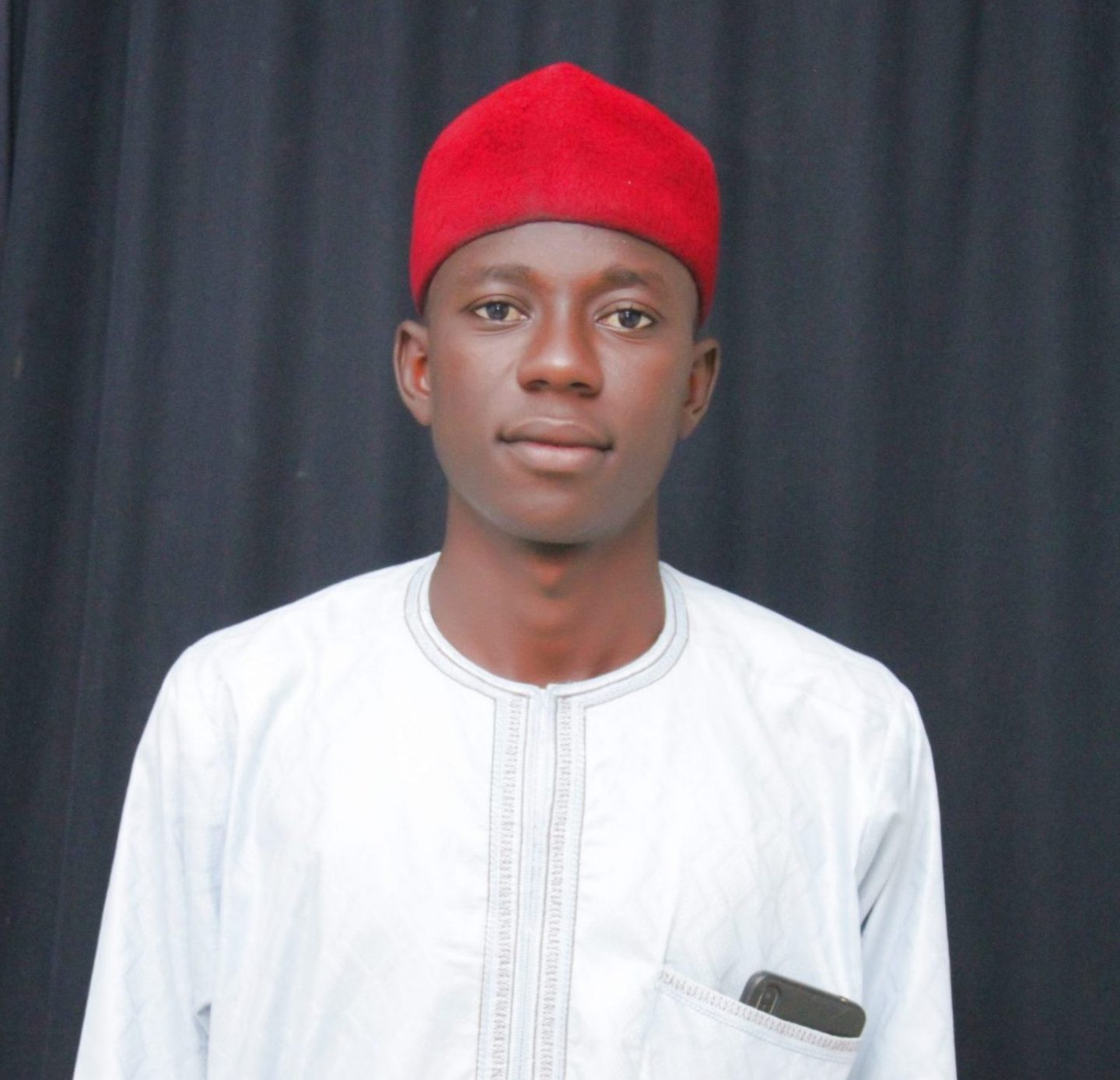
Hence, on October 31,  early Sunday morning, when I received the news of the emergence of the new National Youth Leader of PDP, Muhammed Kadade Sulaiman, whose age has been reported in so many newspapers, blogs, tabloids, etc. to be 25, I received it with great delight. It is a refreshing deviation from the past that had largely made a mockery of the contribution of the youth in respect of all the major parties in Nigeria. While this doesn’t repay all that, not even close. But it is the right step in the right direction.

If certain positions were mainly preserved for the elders, I would have had the same abhorrence if the youth destroyed this arrangement and occupied offices exclusively for the elders. I am a stickler for rules. Thus, I respect conventions and believe everyone should only get what is reserved for them.

In essence, I celebrated the victory of the PDP National Youth Leader, Muhammed Kadade Sulaiman, with the clarity of the triumph of the right thing over absurdity. Some have argued about his influential or rather affluent family background being the two reasons for his success. Whatever it is, there are numerous families with considerable influence in the polity who have had scions, who are political aficionados, and have vied for positions less significant than this and lost. They would have grabbed with both hands this grand opportunity, should it have been just for the two reasons above.

Therefore, the People’s Democratic Party, no matter your grouse against the party, has done something strategic and commendable. And for some of us, we applaud anything good and positive. We leave the rest for the pundits, political scientists, and seasoned politicians to analyse.

I hope Muhammed Kadade Sulaiman does well in this big assignment, and I pray that his emergence will pave the way for the massive influx of good and responsible youth in leadership positions. In the end, I also believe that the young and the old shouldn’t be denied a constitutional right to vote and be voted for simply because of their age. Merit must always be the watchword whenever we commence leadership discussion anywhere.

Abdulrazak Iliyasu Sansani wrote from Turaki B, Jalingo, Taraba State.

PDP will return to Aso Rock in 2023 – Kadade

By Uzair Adam Imam

Peoples Democratic Party (PDP)’s National Youth Leader-elect, Prince Muhammed Kadade Suleiman, said that they will work assiduously to return PDP to Aso Rock in the forthcoming election of 2023.

Kadade declared this in a statement issued in Kaduna, adding that “Under the leadership of our newly-elected Chairman, Dr Iyorchia Ayu, myself and other elected members of the National Working Committee (NWC), we will work assiduously to return PDP to Aso Rock in 2023.”

He added that they are well aware of the challenges currently bedeviling the youths in the country as a result of bad leadership of the APC government.

Kadade also stated that his emergence as the youth leader is a demonstration of the party’s youth inclusiveness, adding that: “Whether you voted for me or not, whether you supported me or not, I want to assure you that this is a victory not just for me, but for the entire PDP and the youth of Nigeria.”

However, Kaded also said he will be open to all, for advice, contributions and support in discharging his functions.

Baffa Bichi celebrates Kwankwaso’s birthday

I, Dr Baffa Abdullahi Bichi, on behalf of my family, One-2-Tell-10 Compassion and the entire good people of Kano State, rejoice with His Excellency Sen. Dr Rabi’u Musa Kwankwaso on his 65th birthday.

We thank Almighty for sparing our lives to witness another propitious anniversary of our leader, Kwankwaso.

The achievements of your first and, especially, your second tenures as Kano State Governor, in both human and capital development, are unprecedented. The revival of education, leadership by example and touching the lives of millions of people, among many things, will always make me proud to associate myself with you.

As I join millions of Nigerians in felicitating with you on this joyous occasion of your 65th birthday anniversary, I wish you Allah’s guidance, good health, prosperity and many happy returns.

Happy birthday, sir!

Rumour of my arrest is false and baseless – Kwankwaso

By Uzair Adam Imam

The former governor of Kano State, Engr. Rabu Musa Kwankwaso, has described the rumour of his arrest by the Economic and Financial Crimes Commission (EFCC) as false and baseless, contrary to media reports.

This was contained in a statement signed by the Coordinator of Kwankwaso Media Center, Malam Sunusi Bature Dawakin Tofa.

The statement said that Kwankwaso personally visited the commission’s office to clear his name over some allegations made against him.

The former governor, according to the statement, has described the petition as politically motivated.

The statement reads in part: “The rumour of my arrest is false and baseless. As a law-abiding and respected citizen, I personally visited the commission on Saturday in order to clear my name and exactly that’s what happened.

“I met with them, the officials of EFCC, and told them that I came to clear my name over a petition written since 2015 against me. I provided answers to all the questions raised by the officials,” the statement quoted the former governor.

2023 Elections: Kano politics so far…

By Salisu Uba Kofar-Wambai

Kano politics is unique, unmatched and unparalleled in all its ramifications. The uniqueness begins from its genres of political communication. The encapsulation of comedy, funny utterances and other rhetorics in the body politic define Kano politics since the First Republic. One can authoritatively posit that the Kano political propaganda through name-calling and other techniques cannot be found anywhere in the world.

The other philosophy and unequalled precept that distinguish its politics is radicalism and politics of ideology. It is the home of Malam Aminu Kano, the renowned masses emancipator and the leader of Nigeria’s democracy of doctrine and dogmas. The ideology taught by the past generation of Kano politicians is always passed from generation to generation. This will explain why, no matter the circumstances, our governors must work harder than other governors of Nigeria to win the electorate’s support. Every governor is struggling to wipe the history of their predecessor in projects executions even when the politics of corruption and deception take centre stage nationwide. Many didn’t know this secret of Kano distinct way of politics. It is our talisman.

However, you can’t superimpose a candidate in Kano politics no matter who you think can control and influence public opinions. There are easy swings in loyalty; therefore, it is the electorate that decides their fate. The maxim of collecting any candidate’s money and vote your choice on election days is attributed to Malam Aminu Kano. It is still very relevant in Kano politics.

Looking at the two camps of Kano political heavyweights today will be an interesting analysis. APC, as a ruling party, is a powerful force to reckon with. It has encompassed renowned politicians like Malam Ibrahim Shekarau, Senator Kabiru Gaya and what have you. The party has become an escaping ground of many seasoned politicians who cannot stand Engr. Rabiu Kwankwaso’s kind of power grip in the PDP.

Although these sets of politicians are not relevant to the APC’s camp, they’re not happy with the way, and manner Governor Abdullahi Ganduje’s government is run, especially the land matters and prioritization of projects that only serve the interest of the governor to earn his mighty 10 per cent. Let alone how the APC chairman and his cronies run the party as if they’re military dictators. There is nothing like internal democracy. And the chairman’s utterances have become a source of worry and grief to those party followers who want to see the sustenance of the party’s success come 2023.

Now that the struggle for 2023 has started and the politicians have already beat the drum, APC faces a threat and an uphill task on who will take after Ganduje. One can easily fathom and decipher from the hottest exchange of politicians how tough the politics will be.

So far, the top contenders are the deputy governor, Nasiru Gawuna, who remains mute, and the commissioner for local government affairs, who’s considered to be Ganduje, and his wife’s anointed son, who is doing all the talks for the deputy governor. The seconder is  Kano North senator and chairman senate committee of appropriations, Barau I. Jibril.

However, the recent outburst by Dr Hafsa Ganduje alias Goggo, the governor’s wife, who let the cat out of the bag, bluntly showed the governor’s support. So it lies with the deputy governor’s camp even though the commissioner of the information spun her statements where he said: she wasn’t understood, her utterances were twisted. The other contenders are AA Zaura and Barrister Inuwa Waya.

It seems the governor is caught between the devil and the deep blue sea. It is an undeniable fact that Senator Barau is the man of the moment. His political machinery is increasingly gathering momentum, and he’s believed to be the man who can challenge PDP Kwankwasiyya political movement in popularity and funds wise. But the governor seems not to be with him. And Gawuna has no political and economic wherewithal to fight for the Kano seat. Nobody will argue this. So, if the governor mistakes the gubernatorial candidate, it is at his own risk, for his sworn enemies may likely grip on to power, and he knows the consequences.

However, the meeting of Shekarau, Gaya, Barau and some reps like Shaaban Sharada and Abdulkadir Jobe says a lot. They all felt that they were relegated and marginalized to mere party members during the recently conducted local government party executives positions elections and the upcoming Saturday state executive party positions contest. It is a clear pointer that the party is facing severe intraparty wranglings. And such tussles can quickly become an undertaker of the ruling party.

As the opposition party, PDP is facing its kind of internal disputes between the Kwankwasiyya political movement and the Aminu Wali’s camp, former minister of foreign affairs, one of the remaining PDP founding fathers and member of the PDP board of trustees. There have intense struggles with who will control the party at the state level. Wali’s camp is accusing Kwankwaso of total domination of the party and blaming him of anti-party activity during the 2019 general elections when Atiku Abubakar contested for presidency. On the other hand, Kwankwasiyya is equally boasting their number of supporters, the popularity of their grand leader, Rabiu Kwankwaso, the former Kano state governor.

As things keep on twisting by day, we wait to see how far the gum will be shot into the air.

Salisu Uba Kofar-Wambai wrote from Kano. He can be contacted via salisunews@gmail.com.

The Igbo Presidency!

By Mohammed Zayyad

The debate that the presidency moves to the South in 2023 has gained momentum. Also, presidential hopefuls from the North, like Atiku Abukar, Sule Lamido, Senator Bala Mohammed, Senator Rabiu Musa Kwankwaso, are also effectively playing their games.

The calls for power to shift to the South have further triggered permutations and realignments in the polity. Both the Peoples Democratic Party (PDP) and the All Progressive Congress (APC) have strong candidates from the South. But these candidates have their respective baggage, and the parties have internal squabbles that must be resolved.

The APC has its stronghold in the Northwest, Southwest, Northeast and Northcentral – four of the nation’s six geopolitical zones. The PDP has strong structures in the six zones with a stronghold in the Southeast and Southsouth. However, the APC has moved into the Southeast in full force. Before the 2015 elections, nobody had ever thought that the APC would someday have even a ward councillor in the Southeast. But, today, the party has two state governors, senators, House of Representatives members, state house of assembly members, local council chairmen, councillors and formidable party structures in all the five southeastern states.

Come 2023, the APC has no reasons to retain power in the North, but there is strong politicking by some governors and other bigwigs to maintain power. This will mean the APC contravening the unwritten agreement between the North and the South on power rotation. In any case, the APC does not have a strong presidential candidate from the North. This is a big plus to the presidential hopefuls from the South, or Southeast, in particular. Furthermore, the Southeast has a strong case to present based on a plank that the Southeast is the only geopolitical zone in the South that has not produced a President or vice president on any political party platform since 1999.

If APC picks its presidential candidate from the South, especially Southwest, the PDP may attempt to outwit this by looking to the North for its presidential candidate. This, as well, will put the  PDP in a catch-22 situation on how to explain this to the South, especially the Southeast and the South-South, why the North again, after eight years of the North being in power.

PDP has good candidates in their own ‘rights’ from the Southeast and South-South. Enugu State Governor Ifeanyi Ugwuanyi, Peter Obi from Southeast and Governor Nyesom Wike from the South-South. Obi does not have friends in the North and has never tried to pull an appeal from the region, directly or by proxy.  His deportation of other Nigerians to their states when he was governor of Anambra state was used against him in the North during the 2019 campaign, and it worked.

For Wike, his words, ‘Rivers is a Christian state’ will be used against him in the North like Governor El-Rufai’s Muslim-Muslim ticket in Kaduna can be used against him (El-Rufai). This is how local politics impact a candidate’s wider political opportunities. Some young people in the north are also campaigning for  Enugu State Governor Ifeanyi Ugwuanyi. Still, the IPOB issue will be a significant hindrance in the North, but it is not insurmountable. Advocates of secession appear not to understand Nigeria. There are massive inter-marriage, friendships, business links and political alliances, among other ties, between many northerners and many Igbos.

Some nationalistic politicians from the Southeast have started to convince other Nigerians to support the region to produce the Nigeria president of Southeast extraction in 2023.  The bigwigs’ forefront presidential hopefuls are Governor David Umahi,  Orji Uzor Kalu, Governor Ifeanyi Ugwuanyi, Rochas Okorocha, Chris Baywood Ibe, Ken Nnamani, Minister of State for Education, Dr Chinedu Nwajiuba, Sen Osita Izunaso and many others. Of course, these politicians have their political baggage and controversies. However, people like Chris Baywood Ibe are new faces without any political baggage and controversy-free.

A thorough understanding of how Nigerian politics works is paramount in achieving the political goals of a group, a region, or individuals. There are so many conflicting interests in Nigeria. Still, there are always windows for alliances, give-and-take, a hand of friendship, and convincing others to support a particular political cause or an individual’s.

For the 2023 presidency, the Southeast should present a candidate with a new face, no controversies, no political baggage and who has friends and is well-known across the Niger. For both the APC and the PDP, it will be an opportunity to reunite Nigeria and rekindle the historical political alliance between the north and the southeast while maintaining the partys’ current national. The Igbo presidency is possible through the spirit of one Nigeria.

Zayyad I. Muhammad writes from Abuja. He can be reached via zaymohd@yahoo.com.

Celebrating Governor Bala Mohammed at 63

By Sulaiman Maijama’a

What aspect of life deserves celebration, and what parameters do people use in deciding whose life is worthy of celebration? Becoming a celebrity? No! Obtaining a university degree? No! Getting married? No! Accumulating wealth? No! To give you a clue, who cares to celebrate a person whose life has no impact on their fellow beings? Only people of thought who see beyond the surface; whose life is inspiring and motivating; whose track record speaks volumes, deserve this celebration!

It is not how much but how good. Not the quantity but the quality. It was, however, narrated in an authentic tradition, our beloved Prophet (peace be upon him) said that “the best of human beings is the one whose life is elongated and his deeds are good, and the worst, on the other hand, is the one who is privileged to live long, but his works are bad.”

Governor Bala Mohammed of Bauchi State has had a good fortune to join the cadre of the chosen few, spared to witness sixty-three (63) years of existence on earth and, most importantly, serving humanity throughout the journey. This is, coincidently, coming few days after the Federation of Nigeria celebrated her 61st  independence anniversary.

Born on October 5th, 1958 in Duguri to the royal family of the District Head of Duguri in Alkaleri Local Government Area of Bauchi State, little Bala Mohammed, as it is with tradition in Northern Nigeria, was enrolled in Qur’anic school where he was well trained, given strictly regimented orientation germane to Islam, in order to toughen him up to face the realities of life early. He, after that, had his primary education in Alkaleri from 1965 to 1971 and started his secondary school from 1972 to 1976.

Coming from a Royal Family, Bala Mohammed began to exhibit leadership traits in his teenage age by being so dutiful to his elderly, generous to people, and affectionate to younger ones. His selflessness in serving humanity, devotion to duty and sense of humour made him beloved to his family, friends and all people, thereby making him attractive like a magnet, and his name echoing in their village.

In 1979, Bala Mohammed went to the famous University of Maiduguri and obtained his First Degree, graduating with BA in English in 1982. Upon graduation, in 1983, he worked as a journalist with The Democrat as a reporter and later News Agency of Nigeria (NAN). After that, he rose to the pinnacle of journalism as the editor of The Mirage Newspaper.

Mohammed later quit journalism and joined the civil service as an administrative officer from 1984 to 2000. He bowed out of public service as Director of Administration in the Nigerian Meteorological Agency. He then took a Political Appointment as a Senior Special Assistant to Governor Isa Yuguda from 2000 to 2005. He was also Director of Administration at the Nigerian Railway Corporation from 2005 to 2007.

Bala Mohammed ventured into partisan politics in 2007 when he was elected to the Senate representing Bauchi South Senatorial District under the All Nigeria People’s Party (ANPP). As a lawmaker, he was among the pre-eminently vibrant members who stood firm to ensuring that positive policies and programmes were made in the interest of their constituents.

In 2010, Senator Bala Mohammed put party politics aside for the country’s interest and moved the “Doctrine of Necessity” motion on the floor of the Senate, which gave way for the then Vice-President Goodluck Ebele Jonathan to emerge as Acting President. Bala then was a senator under a defunct All Nigerian People’s Party (ANPP), but he stood for Jonathan, who was in the People’s Democratic Party (PDP). Consequently, President Goodluck Jonathan appointed him minister of the Federal Capital Territory (FCT), despite being a member of the ANPP.

As FCT Minister, Bala Mohammed brought extensive reforms to the FCT. He sanitized the land administration of the FCT and expanded the airport roads of Abuja. He built many roads, including the Kubwa expressway expansion. He also built the rail track from Abuja to Kaduna and Idu rail station from the $500m loan that the Nigerian government secured from China. In addition, he introduced the land swap policy that used the land as a resource to fast track infrastructural development in the FCT.

In 2018  Senator Bala Mohammed emerged as the Peoples Democratic Party governorship candidate for Bauchi State and was elected as the governor in 2019.

Ever since he came on board as the Executive Governor of Bauchi State, the state has been undergoing an extraordinary and unprecedented metamorphosis in infrastructural development, health, education, agriculture, among other sectors.

In the area of infrastructure, Bauchi State has witnessed what could have taken others long to complete within the two years of Bala Mohammed’s led administration. The governor has completed over twenty (20) road projects with an aggregate of 286.7 kilometres long. This excludes the recently awarded massive projects across the state. Today, Bauchi State is a gleaming new city with roads and 12-hour uninterrupted streetlights.

Beyond constructing roads, the governor has procured 251 vehicles and 1000 Keke Napep through Kaura Economic Empowerment Project. This has greatly impacted positively on the transportation industry in the state.

As the saying goes, “health is wealth” Senator Bala has renovated 126 primary health care centres in less than two years, constructed 12 new world-class hospitals and a primary health care centre in Dorawar Dillalai, Bauchi. Additionally, many general hospitals across six local government areas are currently under renovation. The governor also actualized a Molecular Laboratory in the State for testing of COVID-19, Lassa fever, Yellow fever and other hemorrhagic diseases.

In Education, Governor Bala Mohammed, in less than two years, has constructed over 270 new classrooms and renovated over 405 across the state. In addition, these projects were expanded into hard-to-reach areas of the state to ensure that quality education isn’t the prerogative of only urban dwellers.

On the other hand, in July 2020, under the leadership of Governor Bala Mohammed, Bauchi State became the first and only state in the North-Eastern region of Nigeria to domesticate the VAPP Act since it was enacted. The VAPP Act is the single law that transcends the criminal and penal code in guaranteeing justice and protecting the rights and properties of victims of sexual and gender-based violence across the country.

Please show me your Governor; here is mine!  Dear my Governor, do not relent, do not give up and do not listen to predators and political gladiators who do not mean well for our state, whose aim is to distract you from taking the state forward. The sky is not your limit; even the orbit is limitless.

Fatan alkhairi, Allah Ya qara tsawon kwana da rayuwa mai albarka, ameen.