Northern Nigeria

Where will Buhari retire to?

By Ahmadu Shehu, PhD

Since The Daily Reality has become the darling medium through which northern elites are called to task, I would instruct them to extend a short message to President Muhammad Buhari this weekend. Although Nigerians are used to the deafening silence of this administration to most of our perils and concerns, the president needs to be reminded of a few disturbing, foreseeable facts.

Let me first state that the people of this country, especially his brothers and sisters in the north, can’t wait to see the end of his rule. His ethnic group, the Hausa-Fulani, have carried his cross for too long. For over a decade, they gave their lives, wealth and resources for his candidature, and for seven years, they bore the blames, stereotypes and animosities for his presidency. What is their gain? An avoidable but seemingly inevitable genocide. If the president does not know, I will tell him that the people of this region are tired! They are no longer looking for what he can do for or to them. They are only anxious to survive the remaining days.   

I want the president to observe a few things. First, all Nigerian leaders lucky to have left the Villa alive went back to their hometowns after their tenures. For instance, Shehu Shagari, who was overthrown by then General Muhammadu Buhari, moved permanently to Shagari, securing a serene, fruitful life after that. While in retirement, Shagari remained relevant and served in various traditional positions within the Sokoto Caliphate. His love for his people, his engagements with his roots throughout his career, his pride in his people and culture and constant, persistent and proud leaning to his region endeared people to him even after his tenure. That love held him physically and psychologically intact, made him relevant and happy all through his old age.  

General Ibrahim Badamasi Babangida, who succeeded Gen. Buhari, retired to Minna, his birthplace from where he and his wife established great organizations that engendered socio-economic development. As a result, Babangida’s home became a centre of excellence in Minna metropolis, and people trooped to his doors for all kinds of support and favours.

General Abdussalami Abubakar became the Head of State after the death in office of Gen. Sani Abacha. Abdussalam followed the footsteps of his predecessors and retired in Minna, his hometown. This was possible for the two Generals only because of their good to their people and region. To date, Niger and indeed the North-Central are thankful for their service as Heads of State. They gained relevance and recorded developmental strides hitherto impossible without the emergence of their worthy sons.   

Then came Olusegun Obasanjo, who returned to power for the second time. After eight years in office, Obasanjo moved to Otta – not even Akure – to start a new life as a statesman. While Yar’adua died in office, his successor, President Goodluck Ebele Jonathan, immediately vacated Asorock for Otuoke, his birth village and assumed his gentle duty as the breadwinner of his people and region. Jonathan has was devilishly maligned as the enemy of the north, the clueless president of the country. But he ensured that the Niger Delta amnesty program succeeded, for he was conscious of life after office in the creeks. He, therefore, begot for himself and his people a place to live in peace. 

Here at home, the breadwinner of Adamawa state, former vice president, Alhaji Atiku Abubakar, ensured that the state’s economic strength is sustained. He established institutions, provided hundreds of thousands of employments, empowered businesses and established banks for entrepreneurs and start-ups. Atiku Abubakar built his retirement home in Jada and moved his business headquarters to the state. He ensured that human development services, such as education, healthcare, media and IT industries only obtainable in the cultural West are brought home to the doorsteps of his compatriots. Thus, he was able to stay at home and proceed with his political career gracefully.  

But with all the situations in the northwest, especially Katsina – his home state – and Kaduna – his preferred haven, where does President Buhari intend to retire and spend the rest of his life? For one, at 80, Buhari will be the oldest Nigerian president to leave office and probably the sickest at that weak point of human life. That is the moment he needs people the most and will undoubtedly go through the most painful retrospections of his administration’s actions and inactions. Then, he would face realities – poverty, inhumanity, misery, deprivation, etc. – that have become the norm on Nigerian streets. At that point, Buhari would need Nigerians, and Nigerians would not need him for anything.

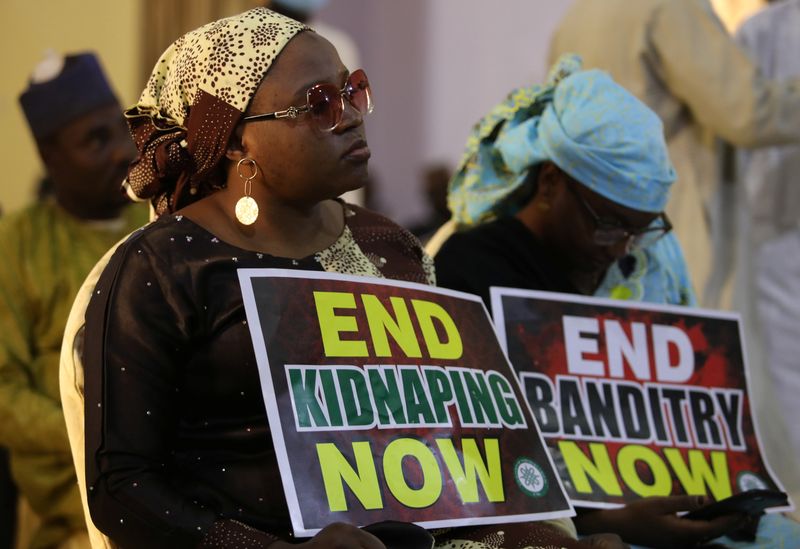
The excoriating economic disaster in Buhari’s northwestern region today has not been seen in a long time. Thousands of people are homeless, hopeless and desperate for food and shelter. In Daura, for instance, hundreds of thousands of youth are unemployed. At the same time, his close relatives and families have bought over most farms and grazing lands around the emirate, extending the wicked hands of poverty to more people than ever. As it stands, hundreds of thousands of people are fleeing this region for safety, as kidnapping and banditry have overtaken citizens’ daily lives. Worse still, the president’s disposition and sheer lack of concern on anything “north” make it impossible for him to enjoy his cult-like mob that kept his military retirement years afloat.

Sadly, there is no going to be Buhari the messiah, Buhari Maigaskiya or Buhari jagoran talakawa. There will be only one Buhari in the world: the one who became president and failed to help his people. The one that has disappointed his most loyal supporters; the messiah that couldn’t save his people from hunger, deprivation and poverty. The Buhari who oversaw the worst economic period of his country. That Maigaskiya supervised the most criminal and cruellest regimes of corruption. The one that promised heaven but gave hell. How life looks for someone at that age in this condition will be very interesting to see.

Dr Ahmadu Shehu is a nomad cum herdsman, an Assistant Professor at the American University of Nigeria, Yola, and is passionate about the Nigerian project. You can reach him at ahmadsheehu@yahoo.com.

JUST IN: Kaduna releases fresh resumption dates for schools

By Sumayyah Auwal Ishaq

The Government of Kaduna State has announced a new resumption date for its schools after months of disruption in the school calendar due to insecurity ravaging the state.

The state’s commissioner for education, Shehu Makarfi, disclosed this while participating in a virtual workshop organised by the Education Writers’ Association of Nigeria. According to him, students of the state are expected to resume on Sunday, September 12, 2021.

However, the commissioner said rather than resuming for the third term that was aborted in the state, the schools will resume the first term for the 2021/2022 academic calendar.

Reminiscence of 7th September Jos Crisis

By Mohammad DonHussy

Tuesday was exactly 20 years since the breakdown of peace among communities and the beginning of the so-called ethno-religious conflict in Jos. Since then, thousands of innocent lives have been mercilessly killed, properties worth billions of naira destroyed, and hatred has been deeply entrenched, more than ever before, in the minds of the younger generation; vengeance has become a mantra on their lips. Thus, 7th September was a dreadful day that shouldn’t have repeated itself. But, unfortunately, it became the beginning of an era of chaos, conflicts and incessant killings.

Two things led to these horrible events. Firstly, religious leaders from both sides of the aisle did much to spawn the conflict either by abstaining from condemnation and reprimanding their audiences or fanning the flame with hate preachings. Secondly, and more morally reprehensible, politicians agreeably encourage the clash by not stepping up to quell the prerequisites that lead to the unrest. As a result, the conflicts have become a potent political weapon exploited by the elite to either consolidate power or amass luxury. Thus, the masses became pawns who reap the harmful consequences of the seed they never sow.

The crises have been heaped around many myths—that the conflict is an ethno-religious conflict is not only a hoax but an absurd claim that seeks to cast an illusion on the minds of the masses. Again, that Hausa-Fulanis have any grand plan to take over the helm of affairs in Plateau State is false. And, conversely, that the Christians are collectively responsible for the destruction of Jos Main Market, which plunged the Hausa’s into economic hardship, is equally false.

Few cabal members engineer these unfounded narratives to swerve the attention of the masses from demanding accountability from their incompetent leaders and have paved the way for kleptomaniacs and opportunists to reach up and embezzle our funds. To understand this better, reflect on what Samuel Ortom, the governor of Benue State, said, and I quote, “As Jesus died on the cross for Christians, I am prepared to die for Benue people.” The same person has now refused to pay civil servants their salaries and remain negligent on development and infrastructure. Scenarios similar to this are countless. By the way, Shari’a was once exploited by northern governors to mislead gullible Muslims. So it is more about vested political interests and amassing of wealth than faith or ethnicity.

Luckily, the panacea to this menace is within reach of the masses; all they need is the necessary introspection to grasp the problem for what it is: class warfare. And it’s also to resist the temptation of acquiescing in the vile tactics of divide and rule. If one scrutinises the conflicts, the masses, not elites, are constantly the victims of the mayhem. What sort of a people will be so adamant about inflicting such untold suffering to each other?

Does the killing of fellow humans strengthen anyone’s determination or make anyone’s life better? Why then the insanity and the insensitivity towards each other while those vultures are relentlessly sucking the masses and plundering the state’s treasury? The masses must understand that they share a common enemy, whether Christians or Muslims and that their enemies are within their respective faith or ethnic group. Regardless of any differences, the elite are hellbent on enriching themselves; neither their children nor closed ones participate directly in any conflict for whatever reason.

It is time for the masses to reflect on their actions, grasp reality and tolerate one other. The series of events that unfolded from the onset of the first crisis to today have caused indescribable suffering to the people of Plateau. It has slowed development and clogged prosperity. However, peace has no alternative, and tolerance is the only rational covenant.

Mohammad DonHussy writes from Jos. He can be reached via donhussy95@gmail.com.

BUK promotes Dr Sani Rijiyar Lemo, Dr Umar Sani Fagge, others to professorial chairs

By Muhammad Sulaiman

In recognition of their significant contribution to scholarship, research and development at the Faculty of Arts and Islamic Studies (FAIS), the governing council of Bayero University, Kano (BUK) has approved the promotion of Dr Sani Umar R/Lemo, Dr Umar Sani Fagge, others, to the coveted professorial positions.

The following faculty members have been promoted to full professor status: Shehu Ahmad (Arabic), Aminu Lawal Auta (Nigerian Languages), Usman Sani Abbas (Islamic Studies), Sani Ayagi ( Islamic Studies) and Umar Abdulkadir (Islamic Studies).

Furthermore, the following have been promoted to associate professor status: Umar Sani Rijyar Lemo (Islamic Studies), Aliyu Harun (Islamic Studies), Nura Sani (Islamic Studies), Isa Yusuf Chamo (Linguistics), Aishatu Umar (English), Tijjani M. Naniya (History), Muhammad Wada (History), Umma Aminu Inuwa (Nigerian Languages), Maryam Mansur Yola (Nigerian Languages), Halima Abdulkadir Dangambo (Nigerian Languages), Ahmad Salisu (Arabic), Matabuli Shehu Kabara (Arabic) and Umar Sani Fagge (Arabic).

More members from other faculties have been equally promoted based on their value of excellence in teaching and scholarship, and service to BUK. However, as of during filing this report, the lists were still incomplete.

Kannywood: consumer’s or producer’s market?

Northern Nigeria’s Hausa film industry, Kannywood, has been at the centre of brainstorming discussions over the years. One of the most interesting is why film consumers are attracted to the industry and otherwise. So often, the analysis of such magnitude is drawn concerning the industry’s foreign and domestic rivals because they provide an alternative to what the industry produces, which directly affects its local market. And like in any other industrial conglomerate, the sustainable conduct and development of Kannywood as an industry thrive on the quality, affordability and viability of its products.

As the so-called king of the arrangement, it’s impossible to conquer any market without exploring the psychological drivers of consumer’s preferences. That said, the primary concern of the teeming film consumers who boycott Kannywood movies revolves around the appeal, quality and uniqueness of storylines and whether it connects with the inner cravings of a modern watcher. A film consumer demands an illusion, one that not only tells him “this is the movie he wants to watch” but also if “it’s the one he should be watching”. An illusion that challenges his status quo creates a reception for the new order and paves the way for a route to escapism. Arguably, many people watch films to escape from their core reality. This occurs either by consuming movies that aim to rediscover an old order. Such order seeks to reflect on the current order or ones that wish to rewrite the order itself in the forms of fantasy movies, futuristic science-fiction movies, historical fiction and nonfiction movies, among others.

In the case of Kannywood, it has done reasonably well in producing movies that reflect greatly on the dynamics of the current order. But then that’s an order of which its potential consumers happen to be physically part. In which case, most of the content would appear familiar and cheap, which will bore the consumers and hand them the warranty to look elsewhere. Meanwhile, Kannywood competitors have religiously developed the culture of challenging the essence of everything a watcher stands for. This makes them more viable, even if more costly than Kannywood, because they satisfy consumer’s utility.

Interestingly, Kannywood’s content has been profiled as the one that agrees with its watchers’ demand. This is indifferent to saying the industry produces only the content which its watchers want to consume. But if that’s any good, why has the industry been economically stagnating and remain vulnerable to its rivals’ invasion? To be fair, Kannywood and its competitors aren’t of the same financial muscle. This plays a vital role in the distinction of their products. However, it is equally valid to mention that all other industries rivalling Kannywood have, at some point, been where it is today. So the most crucial point is how did they move forward?

Revenue, which is the excuse of Kannywood in comparison to its rivals, in the context of production, is a bi-product of the initial measures that a producer put in place to ensure the success of his product. That’s to say, as far as the producer has the initial capital, what happens next is dependent on him. And start-up capital is hardly the problem of Kannywood producers. The actual problem is recouping the expenses and profiting from the venture.

If indeed, Kannywood produces only the films that’ll appeal to its watchers for fear of losing revenue, then it’s vivid that the industry perceives the film market as a consumer’s market rather than a producer’s market. This is perhaps why they produce movies that watchers ‘want rather than the ones the watchers’ think they want. And there’s a big difference between the two. Failure to dissect this difference creates a dilemma that’s so sensitive; it makes or breaks the possibility of any market dominance.

For instance, the romantic, singing and dancing genres that Kannywood produce at a more regular rate is what Hausa watchers want. But the more adventurous and dynamic content being delivered in other film industries are what Hausa watchers think they want – hence they rush to. And the ability to deviate the latter from the former ensures whether a consumer illusion is created or not. Illusion is vital in production because it makes people consume something believing that it’ll satisfy their utility when it won’t. But, instead, it’ll only make them crave for more. And the more is being craved, the better is the chance of getting addicted, and that’s the trap of every capitalist producer.

Hollywood and Bollywood industries come from well-equipped capitalist societies where consumer psychology is conquered. Down there, it’s a producer’s market. Hence, the curve of their revenue never stops rising. Their movies are regularly subjected to sequels and prequels, defending what the producer wants. In the build-up to the preface of his critically acclaimed novel, “The Godfather”, the great author Mario Puzo confessed that a producer’s girlfriend could demand a movie scene to be filtered out. And the consumers would watch nonetheless. In my opinion, there’s no bigger evidence of control. Which greatly unlocks creativity and unhindered filmmaking viscosity.

Kannywood, on the contrary, produces what annihilates the utility of the consumer instead of what’ll make him crave more. Capitalist experts assert that if a consumer gets what he asks for, he’ll be satisfied. And if he gets satisfied, he’ll not need the product again. That’s why a wise producer never allows consumers to ask for products. Instead, he creates the product questions for them. And in turn, answer the questions in a way that’ll make them even more curious. Kannywood does the opposite. Producers obeying the trend of narrowly imaginative consumers is why the watchers don’t find the films as unique as the foreign ones, which is also why the industry is painfully stagnating.

To clear doubts, how the dubbed versions of foreign movies are being consumed at an equal if not higher rate than Kannywood movies in its native domain should erase any iota of doubt on film market being producer’s market rather than consumer’s. For if it was consumer’s, who researched the interest of a villager in Kano before making a movie in Hyderabad, India, that enables him to watch the film with keen interest?

In the end, movie producers need to conquer the fear of losing the market. The film market is a producer’s market contrary to their belief. Agreeing with that would be a new phase for creative filmmaking. They should sharpen and unlock their imagination to produce what watchers would marvel at. Hausa-Fulani society is rich with contents that can create consumer illusion—ranging from history, culture, geography, economy, politics, anthropology, etc.

MA Iliasu writes from Kano State. He can be reached through his email: muhada102@gmail.com.

Gun duel between vigilantes, bandits leaves two dead in Niger

By Muhammad Sabiu

A gun duel between suspected bandits and vigilantes in the Mayaki community in Lapai Local Government Area of Niger State has led to the death of two people.

According to the Daily Trust newspaper, the two victims were on the side of the vigilantes.

Confirming the death of his members, the Lapai division commander of vigilante corps, Muhammadu Ibrahim, said, “It is true that we lost two of our men during a patrol in an ambush by the bandits around Mayaki forest.”

He added that they had deployed their men to launch a manhunt for the suspected gunmen.

Zamfara and telecom disconnection

By Mallam Musbahu Magayaki

The Federal Government of Nigeria has ordered Zamfara state’s communication lines to be disconnected, ostensibly to thwart bandits’ heinous crimes, following bandit attacks in Zamfara State that resulted in the abduction of school children in the state governor’s home town on Wednesday, September 1, 2021, and similarly in Niger and Kaduna states.

Simultaneously, the governments of Zamfara, Niger and Kaduna states have ordered the closure of all weekly markets in the state as part of measures to address the state’s deteriorating situation.

However, the federal and state governments should look into the possibility of providing palliatives for state citizens, as some, if not all of them, maybe unable to put food on their tables due to the closure of their occupational practices.

Furthermore, the government must make immediate efforts to re-energize intelligence gathering regarding terrorists’ plans and use all legal channels available to prevent and prosecute terrorist activities and private sources of support.

According to reports, one kidnap kingpin has threatened towns, stating that everyone who follows the government’s strategy of closing markets and prohibiting the sale of gasoline will be assaulted at any time. As a result, more troops should be deployed to these towns if the government wants the residents to follow official policy.

According to one expert, no one will disobey terrorists he knows will kill him without the government’s help.

Nevertheless, we expect that the measures taken will provide a lasting solution to the high rate of banditry and kidnapping in these states. And the government should be cautious about its choice because these hoodlums could go on to other lanes and cause further havoc in the impacted neighbourhood.

Moreover, to overcome the country’s dreadful condition, inhabitants should completely cooperate with security. If we work together, we can eliminate the country’s threat of instability. Thus, everyone has a part to play in the situation.

In conclusion, traditional rulers in all the affected states should work closely with security forces to combat the security situation in their states because these terrorists are branching out into some of their villages. Residents wouldn’t tell security organizations about them for fear of being attacked or killed by bandits.


Mallam Musbahu Magayaki writes from Sabon Fegi, Azare, Bauchi State.

1 person killed, 1 other injured as gunmen storm Bauchi community

By Muhammad Sabiu

The Bauchi State Police Command has confirmed an incident that led to the killing of one person and injuring of another by some unidentified gunmen on Saturday in Burshin Fulani, a community on the outskirts of Bauchi metropolis.

Confirming the incident, a police spokesperson in Bauchi, Ahmed Wakil, told journalists that the deceased was a senior staff at the Federal Polytechnic, Bauchi.

He was quoted as saying, “Gunmen attacked Burshin Fulani village and killed one, Abubakar Muhammad, a senior staff of the Federal Polytechnic, Bauchi.

“He was shot on the neck and died on the spot. Policemen who rushed to the scene evacuated the victim to the Abubakar Tafawa Balewa University Teaching Hospital (ATBUTH), Bauchi, where he was certified dead.

Mr Wakil added that policemen stationed close to the scene of the incident quickly responded on hearing gunshots of the gunmen.

He said, “Our patrol team stationed at the polytechnic gate on hearing gunshots from the direction at about 4:000 am quickly rushed to the area, on sighting the light of the patrol van the gunmen fled.

“The deceased came out to rescue his children who were struggling with some people at the gate, and immediately he emerged, they shot him.”

Insecurity: Kaduna bans transportation of livestock

By Sumayyah Auwal Ishaq

The Kaduna State Government has banned the transportation of livestock from the state to other states in the country and the transportation of livestock into Kaduna state from other states with immediate effect.

The directive was contained in a press release signed by the state commissioner for Internal Security and Home Affairs, Mr Samuel Aruwan. The Government also reiterated that the transportation of donkeys into the state is a criminal offence, and anyone found engaging in this will be prosecuted accordingly.

Furthermore, “the Kawo weekly market which usually holds every Tuesday in Kaduna North LGA has been suspended with immediate effect. The previous directives suspending weekly markets, and selling of petrol in jerrycans in Birnin Gwari, Giwa, Chikun, Igabi and Kajuru LGAs, as well as banning the felling of trees for timber, firewood and charcoal and other commercial purposes in Birnin Gwari, Kachia, Kajuru, Giwa, Chikun, Igabi and Kauru LGAs, are still in force” Aruwan said.