Northern Nigeria

Baba Jalingo: A loving memory of an inspirational personality 

By Aisha Ahamd Jalingo

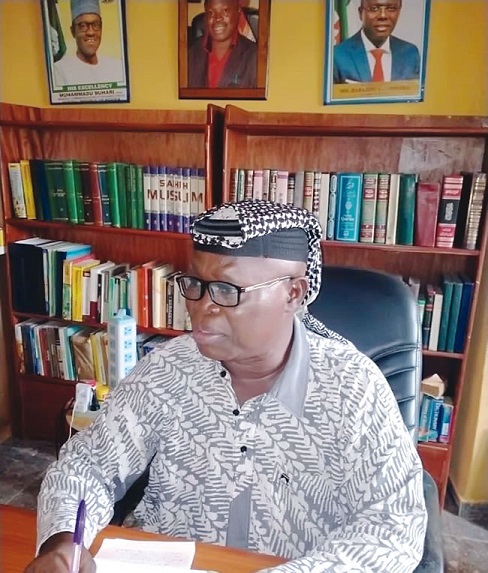
I barely have many memories of him beyond his signature, white clothes and red cap because I was a child when he passed away, but my husband insisted that I write a tribute for him today, being 11 years since his demise. All I know is Baba was an inspirational personality which means different things to different people. A father with a great sense of humour, a mentor that gave his all irrespective of differences in ideology or creed, and a unionist who fought to protect all till his last breath.

Everyone who knows him at Bayero University will always say how he jokes around with everyone. Whether you were his students, who I heard would rush to M block for his lectures because of how educative and entertaining his classes were, or his colleagues who always ran to him to seek support, morally or otherwise. He treated everyone equally with respect.

During his lecture, he would have the theatre filled with some students not because they registered for the course but only to listen to him speak.  Baba Jalingo was very religious. It is his norm to go to the BUK Central mosque for Magrib prayer and wait till after Ishaa before returning home. A pillar in the mosque is called ‘fillar Jalingo,’ meaning Jalino’s pillar. He would sit there from Magrib till Ishaa. I once saw someone write on Twitter that no one even dares sit in that spot, as when he arrives, he jokingly asks the person to get up. 

His kindness knows no bounds. One memory of his that keeps coming to mind is that whenever we travel home to Jalingo, we normally stop at Gombe to stretch our legs, pray, and eat at a particular filling station. Baba would sit with the people there and chat. He would buy what they are selling, most of which we don’t need. I heard an incident when Baba and our Mom were returning to Kano. Unfortunately, they had a flat tire in a village, Durbunde, just after Gwaram. He met a man who helped them fix the tire. Since then, he always stops at the village to see him, till date that man still visits our family. He named his son after Baba Jalingo when he passed away, named his daughter after mother and recently named another daughter after me.

The same thing happens around Dakatsalle just before Kano. When returning from Kaduna or Abuja, Baba would stop and sit with all those selling chickens, vegetables, fish and whatnot. He usually tells them, “kaima kawo abin da kake sayarwa” (“you too bring what you sell”). He will come home with so many things. 

When it comes to supporting family, I have never seen anyone who supports his family like Baba Jalingo. I know he helped my mother up to the rank of Professor, which she earned shortly after his death.  I heard he often travelled with her to Usman Danfodiyo University, Sokoto, when pursuing her PhD. He was her biggest cheerleader through it all.

I can remember the last incident when she was the HOD of the Economics Department, Bayero University, Kano. A conference was organised in the department, and he was then the vice-chancellor of Taraba state University. I remember him coming to Kano to attend the conference, and he was among the first to arrive, sitting in front with his signature white clothes and red cap.

He often travelled back from Taraba State for the termly visits to our school. Baba never got tired. I remember his last visit passionately during our Qur’anic graduation ceremony. In the picture, I can never forget smiling when he was called to give a speech all over the place. I could not remember what the speech was all about. All I know was he talked for a while, returned to his seat at the front row, walked back on the stage, and took a group picture with all of us when we were called for our recitation.

It was after his death we realised how much he had been sponsoring and taking care of other families without the knowledge of anyone. That is the kind of man Baba was. He made all of my siblings, and I feel special, that every one of us considers ourselves to be his favourite, though I firmly believe it is me because he calls me “kingin Baba.”

Late Prof. Ahmadu Usman Jalingo, fondly called “Baba Jalingo” by everyone close to him, was a UK-trained political scientist, a veteran, a renowned scholar, a great man who played it all around. A veteran unionist and academic per excellence who raised through the rank and became one of the earliest political science professors in Northern Nigeria. Baba was the secretary to the State Government old Gongola and Vice-Chancellor of Taraba State University, a position he held until his death.

Baba was very close to Malam Aminu Kano. He was, precisely, Malam’s personal secretary. I can remember loads of Malam Aminu Kano’s personal diaries we found in his estate when he passed, which my Mom officially wrote and handed them over to the centre for Democratic Research, Mambayya house. In the tribute written by one of his students, Onoja, I read that Baba Jalingo confided in him that the one thing Malam Aminu Kano had in excess was socks. He says he never wore the same socks twice.

He was among the 49 men committee under the able leadership of Chief Rotimi Williams, Alhaji Idris Gidado, secretary, established in September 1975. This committee was the brains behind the creations of ‘CLUB NINETEEN MOVEMENT’ and the ‘NATIONAL MOVEMENT’. Malam Aminu Kano and many northern representatives created the ‘’National movement in Lagos. They later changed its face to become a political party named the National Party of Nigeria (NPN). The National Movement launched recently was originated from the work of this committee. 

Baba Jalingo was a man of the people, loved and respected by all. He passed away peacefully in his sleep on March 1, 2011. March 1, 2022, marked 11 years since his death, but his memories are still very much fresh in our hearts. We will forever live in his image and will in sha Allah continue with his legacy. 

Rest on Baba, till we meet in Jannah….where we will be reunited forever in sha Allah

Aisha Ahamd Jalingo (Mrs) sent this article via jalingoaysha@gmail.com.

Job for sale: Jobseekers recount travails in Nigeria

By Uzair Adam Imam

Jobseekers in Nigeria have narrated harrowing tales of how job offer sale decimates their chances of securing jobs in a country where the national economy has remained increasingly stagnant.

According to a recent report by Bloomberg, unemployment in Nigeria has surged to the second-highest on the global list, jumping to 33.3%.

Graduates, who took to social media to condemn the menace, decried how bribery, corruption and politics militate against the growth of institutions in the country.

They argued that buying and selling of job offers are affecting almost all the institutions in the country, as it will be at the expanse of merit and skills

Fraud in employment is believed to be the reason the standard of education in the country continues to witness a fatal decline, and unemployment rises at child’s Christmas wishes.

Graduates narrate harrowing experiences

Every year Nigerian institutions produce thousands of graduates who come out to compete for the few available job opportunities.

A graduate, Usman Bello Balarabe, said that he was once asked to pay N1.2 million for a lecturing job offer.

Immediately he returned to Nigeria from India after bagging his Master’s degree. He was greeted with an outrageous N1.2 million job offer to teach at a Federal University in northern Nigeria.

Balarabe, who was initially over-excited, said his hope was dashed upon learning that it was a give-and-take offer, as he had to break the bank if he indeed wanted to land the job. 


He said, “I was all smiling when I was told, until when I heard him saying that I have to pay N1.2 million to get that offer. The amount shocked me to the marrow”.

Auwal Mukhtar Usman, a university lecturer, said recently someone shopped her job offer for N3.5 million.

He said, “A lady recently confided in me that she bought her offer for about N3.5 million to teach in one federal government agency. It’s equally disheartening how these politicians connive with the university administrators by allocating slots for them. In the end, it is the University that suffers.”

A.S Mohammed also shared his experience, saying that a lecturing offer was advertised to him for N1.5 million in June last year.

He added, “I was asked to bring a potential buyer for a lecturing job offer at the Federal University, Dutsen-Ma, for N1.5 million; no discount whatsoever.

“And it didn’t matter what course the buyer studied or what class of degree he graduated with. That incident stroke me dumb with surprises and left me paralyzed. It took me almost a month to recover from that shock.”

Pay, get promoted

From job offer sale things are worsening to ‘promotion’ for sale, as workers at various institutions in the country pay to get promoted. 

Sa’idu Mustapha Buhari argued that it is not only job offer that is sold, but also promotions are purchased.

He said, “It is not only job offers that are sold.  Promotion, advancement, transfer, release for training, among others, have their prices in some sectors.

“Though fixing Nigeria must be a collective effort, people as individuals must change.

“The bitter part of the story is that: everyone works for himself, not for the people. The sense of nationalism is totally absent among us. That’s why I support the mantra: CHANGE BEGINS WITH ME…If any Nigerian applies this, Nigeria will be fixed,” he added.

Also commenting, a media consultant, Yahya Abdurrahman, stated that the fraud is not only rocking not only the education sector.

He said, “The deeper you dig, the more worrisome information you would come across. Unfortunately, the rot is also prevalent in the Nigerian Police, Customs Service and other Security affiliated Agencies.”

SPECIAL REPORT: How desire for materialism affects marriages and relationships

By Uzair Adam Imam 

Materialism is not limited to friendship or brotherhood; marriages and relationships also suffer greatly.

Friendship and brotherhood are gradually losing their true meaning, if not buried at all, because of this sudden shift of behaviour to materialism, The Daily Reality gathered. 

The menace led and is still leading to the breakdown of many relationships, including marriages, thereby manifesting itself into a serious problem in society – such as the increase in the number of widows and heartbreaking individuals.

The Daily Reality speaks with some people on this issue.

People like Aisha Mujitaba believe that guys pretend to be rich in life in order to woo girls.

“Nowadays, both loves and marriages are based on materialism; that is how equivocation and deception have chipped in in the process of getting married.

“Guys pretend to be wealthy in order to win girls’ hearts. Consequently, when they are joined in matrimony, the true nature of what the person is will be revealed. This leads to the breakdown of relationships,” Aisha said.

Parents were also accused of encouraging this lingering issue in society, according to Suwaiba Umar. 

She said, “Today, parents encourage their children to marry rich people. Marriages nowadays are not for the sake of Allah, the almighty. That is why guys make-believe a big life.”

Frowning at this behavioural change, Juwairiyya Aminu compared marriages in the past and marriages today.

She said, “Marriage in those days was entirely different from the marriage in these days, including the process, lefe (trousseau), ceremonies and whatnot.”

Both girls and their parents find it very exciting to have rich as their husbands or sons-in-law, making it difficult for the poor to get married.

“A poor man finds it very difficult to be loved, much less being married. But when a rich person proposes, without hesitation or any proper investigation on his religion, habit or maturity, he will be accepted,” Sa’adatu Shu’aibu.

Buhari Ahmad posited that guys fear being rejected by the girls, let alone the parents. For this, he said, “Guys make a pretence of big life out of fear of being rejected by girls and their parents.

“That is why guys now rent clothes, hats, shoes, bikes or even cars when visiting their suitors.” 

Materialism: What Brings About It?

Dr Muhammad Sulaiman Abdullahi is a lecturer at the Department of Nigerian Languages, Bayero University, Kano. He told this reporter in an interview that many reasons made our society materialistic.

“There are so many reasons which contribute to the moral decadence we are witnessing today in the Hausa society. I can summarily list them as follows:

“1. Deficiency in terms of Islamic education and pursuing more in terms of Western educational life and style.

2. Negative modernity

3. Access to the new media and multi-media stuff which led to increasing in absorbing haram items.

4. Lack of proper orientation, etc.”

The solution to materialistic life

“Having sound Islamic education and fear of Allah, pursuing what is halal in any form of education and social life; and abiding strictly to Islamic teachings are the solution,” Sulaiman added.

Goje: Sunset at dawn

By Kabiru Danladi Lawanti

After the modest stewardship of Governor Abubakar Habu Hashidu, may Allah rest his soul (1999-2003), Mohammed Danjuma Goje took over amid tremendous efforts made by patriotic Gombawa to move quicker to the mission and vision of the creation of the state. As Governor, Danjuma Goje realized early the challenges faced by the new state, especially in terms of 21st-century development.

As a Governor, Goje worked hard with his team in laying the foundation for a modern state, where critical infrastructure and development initiatives hallmarked his administration. As Governor, we have to give it to Goje because he remains an illuminating leader of modern Gombe. After his illustrious tenure, he showed the way for competitive stewardship and possibilities in Gombe State.

However, fast forward to his representation as a Senator of the Federal Republic of Nigeria representing Gombe Central. Much was expected from him as an astute politician, a political science graduate, and a two-term governor.

In August 2020, the Daily Trust newspaper listed Senator Danjuma Goje among senators who had only two bills to their names. Therefore, when he announced his retirement from active politics early last year, many thought Goje, an elder statesman, was paving the way for his mentees to replace him in the Senate Chamber. Albeit, a few months after the announcement, Goje ate his words.

According to media reports, Goje was compelled by a group of “stakeholders” to rescind his decision and threatened to take legal action if Goje refused to heed their calls to stand for future elective positions. In an article I wrote last year, I advised Goje not to allow some people, calling themselves “stakeholders”, to drag his hard-earned political reputation into the mud. However, I later learned he sponsored the movement.

Since Goje has decided to remain in elective and active politics, our responsibility as stakeholders is to call his attention to some fundamental issues he plans to do for his constituency. It’s already the 2022 fiscal year, as this may be his final tenure in the senate. It is also essential to remind Goje that he needs to be careful about his legacy to bequeath to those coming after him.

In the constituency projects I sighted, what drew my attention was his intervention in education. All the projects he listed and the amount to be spent on the projects is commendable. However, as someone who works in the educational sector, I think what was mentioned is far from the needs of his constituency. If I may come in here, and if electorates have a voice in the way projects are cited or allocated, I think what I saw in the submission made by Senator Goje is, to say the least disappointing.

For instance, Goje’s constituency project for the 2022 fiscal year included distribution, supply and provision of educational materials, textbooks, educational aids, writing materials, educational charts and fertilizer to schools and farmers across the constituency. The project will cost a whopping N3bn. But, what attracted my attention was the materials to be supplied, provided or distributed.

Since my concern is education, I did a small analysis, looking at the places these “educational materials”, “educational aids”, “textbooks”, “writing materials”, and “educational chart” are going. In that alone, Goje is to spend N2.2bn for this project. However, most of these schools receiving these do not need these interventions; instead, they need good classrooms, qualified teachers, and a conducive environment for learning.

Recently, the Punch newspaper report shocked the world when it visited a community in Akko Local Government, Goje’s constituency, where about 150 children learn under harsh conditions after a windstorm demolished their school years ago. I don’t think Goje or any of his aides is not aware of the plight of these communities. The community is a few kilometres from the NYSC temporary orientation camp at Amada, stressing that they were tired of promises.

It does not make sense for the Senator to put N200m to supply writing materials in Kembu when a whole community has children learning under the harshest conditions you can imagine. Also, even if there are no communities like Wui-wui, does it make any sense to put N2.2bn for the “distribution”, “supply”, and “provision” of educational materials (forget the repetition of one word in different synonyms) while most of our rural communities are without schools or drinking water?

As an elder statesman and a politician of repute, I think Goje ought to know better. History will not be kind to him if these are the legacies he wants to leave as a senator of the federal republic. Goje is not too late to review these constituency projects and channel our resources to where we need them.

Kabiru Danladi Lawanti wrote from the Department of Mass Communication, ABU Zaria, via kblondon2003@yahoo.com.

Governor Zulum: Restoring hope amid adversity

By Abdullahi Adamu

His name rings a bell across the landscape of Borno State and Nigeria. Yet, many Nigerians have never met him face to face. Still, his strings of achievements anchored on people-oriented projects have made Governor Babagana Umara Zulum of Borno State a household name in the country, drawing ceaseless applause for him.

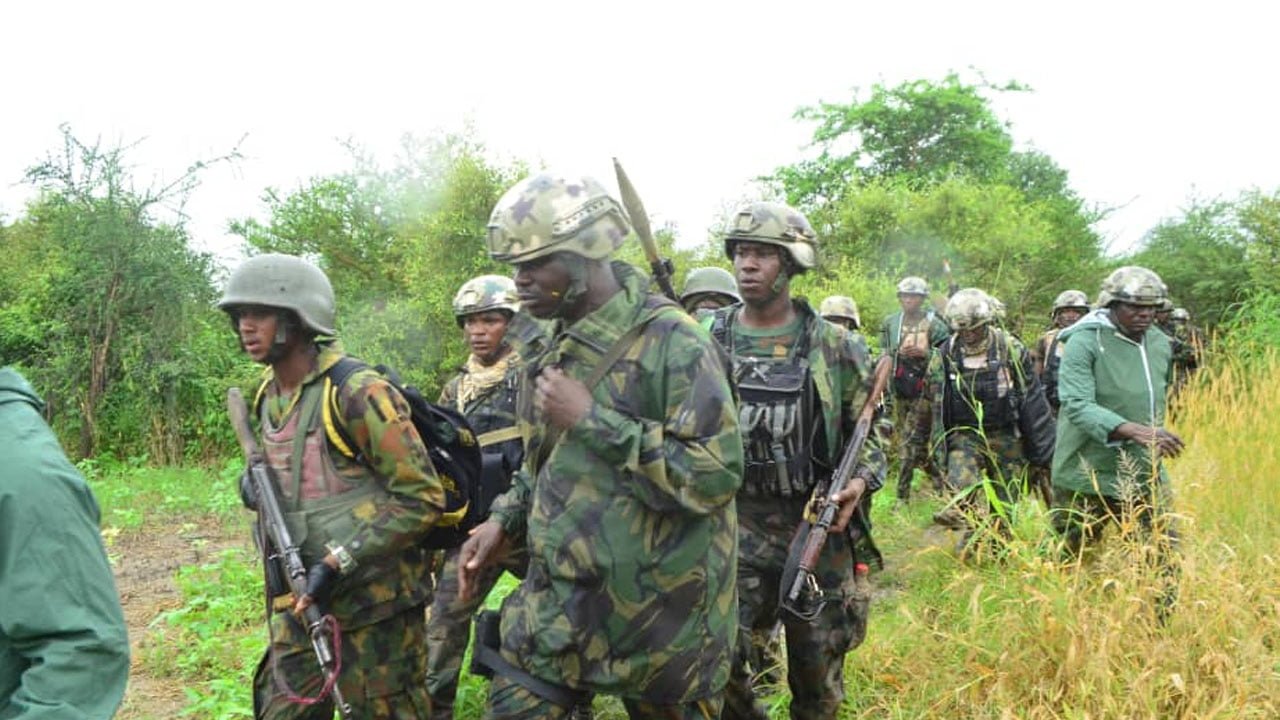
But he remains a very simple and unassuming man despite the strategic work he has been doing to change the face of Borno State and restore hope to a people traumatized by ceaseless attacks unleashed by the Boko Haram fighters. Zulum came to the scene when the morale of the people and their psyche had been battered by the evil elements who have continued to distract the polity. These terrorists still steal and destroy whatever is of good report and value to the citizenry.

If the governor had not been on the side of the people, he could have chosen to resign to fate and sit back to moan the atrocities being waged against the state and its people by Boko Haram. But he has refused to act and behave like a typical Nigerian politician who seeks self-gratification over the nation and people. Instead, Zulum has chosen to make a difference in the lives of his subjects and add value to them. The governor has chosen service over propaganda and quality and verifiable projects to add value to his people instead of propaganda which many of his contemporaries deploy as a survival strategy in governance.

The 50-year-old Agricultural engineer, who himself has tasted poverty and hardship, chose to embark on projects that directly impact the people’s lives. And the projects are many and widespread across the length and breadth of the state. They are verifiable and physical for even the blind to see, touch and feel their presence. The projects touch all aspects of development, with education topping the list apparently because the governor comes from the ivory tower, where he has made a mark as a professor of agricultural engineering.

The statistics speak for themselves: “On education, Professor Babagana Umara Zulum undertook 76 capital projects in one year. He created and built 21 primary, secondary and sub-tertiary schools in 13 local government areas. These include a new 60-classroom mega primary school at Njimtilo; 30-classroom mega school at Ajilari Cross, another at Abuja-Sheraton community; yet another in Askira.

“All of these were started and delivered within one year. Six additional new schools were delivered, while 11 are at various levels. Fifty-five existing schools were completed, reconstructed or rehabilitated and equipped across the state. Beyond infrastructure, Zulum regularly appears in schools unannounced. He takes teachers roll call to instil discipline and restore the glory of the public-school system in Borno State,” a report written about him captures boldly.

In health care delivery, the governor has also left an indelible mark within the short time he has spent in the state. “In his first year, Professor Babagana Zulum accorded greater priority to primary healthcare at the grassroots level. In that sector, Zulum undertook 46 projects, from which 37 new primary healthcare centres, PHCs, were established in 17 local government areas. Twelve of these new PHCs have been completed, while 25 are at various stages.

Zulum reconstructed two primary healthcare centres in Tungushe and Walama; and rehabilitated the state’s Psychiatric and Skin Disease hospitals. Zulum rehabilitated two hospitals in Rann and Lassa; and upgraded Biu General Hospital to a specialist level. The Umaru Shehu Specialist Hospital was also remodelled. Zulum also established and funded a Contributory Healthcare Scheme to increase access to quality and affordable healthcare services by the people of Borno State.”

The governor has also extended the area of security, agriculture, and infrastructure to alleviate the suffering of the people who have come under constant attacks by terrorists in the state. Governor Zulum has, through hard work, commitment and dedication to his people, emerged as a true servant/leader.

Abdullahi Adamu sent this article via nasabooyoyo@gmail.com.

APC Northern youths call for unity, drum support for Umahi

By Sumayyah Auwal Usman

Ahead of its national convention, youths of the All Progressives Congress (APC) from the 19 northern states under the auspices of Concerned Northern APC Youth Forum has called for unity among members of the party for a hitch-free convention. 

Addressing a press conference in Abuja, the Chairman, Concerned Northern APC Youth Forum (CNAYF), Hon. Suleiman Liba said, “the All Progressive Congress must stick to the plan and ensure we get it right through internal party democracy since true democratic tenets entail that a few may have their say, but the majority should have their way”.  

On the 2023 Presidential election, Hon. Liba said, “We must commend the readiness and resolved of the masses, especially within the Northern part of the country, to participate massively in the electioneering processes through to 2023”. 

According to the group, the Governor of Ebonyi State, David Umahi, stands as the worthy successor to President Muhammadu Buhari come 2023. They said, “the man’s antecedents of excellence speak volume, and his achievements in Ebonyi state are there for everyone to see”. 

“CNAYF further throws her weights behind the candidature of Engr David Nweze Umahi for President, as it reflects the wish of the people, especially from the North,” he said.

Tribute to the man I was born to be

By Umar Sani Yakubu

My parents or father, to be specific, see someone in me. Who is that person? I was not privileged to meet someone because he was called to glory years before I was born. This is a story I traced for myself, and I will share it with you. But wait, you must not tell anyone because it is my little secret. A secret nobody tells me, and until I discovered it for myself, I doubted if someone was even ready to tell me.

Well, my father might have kept it so dear to himself. Unknown to my father, if there is anyone’s gesture I understand so quickly, it is his. Thus, I know this among other gestures of his, and I will tell you how.

When I was first registered for my elementary school in 2001/2002, my father smartly registered me as ‘Umar Yakubu’, omitting his name ‘Sani’ as my surname. A development I fought even with my then little age. It happened that anytime my class teacher called me Umar Yakubu in the attendance register, I would keep mute. To the best of my belief, I had reasons to do that because I have repeatedly warned that that wasn’t my name. And correct it as Umar Sani.

Consequently, my struggle for self-defence grew to the level that the class teacher and the headteacher couldn’t tolerate any longer. Finally, the school invited my father, and they settled the case. I was eventually renamed “Umar Sani”.

However, growing up around stage 4 (primary 5), I began to think and reason with my dad’s earlier decision. It was clear that his love for the name Yakubu knew no bounds. And unfortunately, till then, I was his only son among my sisters. For that, I decided to put a smile on his face by adding Yakubu to my name, which I did, thereby making it Umar Sani Yakubu. I wrote that on all my notebooks. Although not the way he wanted it, I knew he was happy this time.

Now the secret: that man wanted to name me Yakubu. He has never told anyone, not even my mother, his wife. I think this is a secret only he and I share because I snatched it from his looks and maybe action just like the story above. But why did he name me Umar? I will tell you that too.

The combination above of ‘Umar Yakubu’ is two in one. Combination of a father’s name and his son’s. Umar is the last child of Yakubu. A younger brother who was so dear to my dad. After his death on April 22, 1995, followed by my birth on July 17, 1996, my father felt the joy of his life. It was the day he held on his hands his first child, who seemed to come with the confusion of his life.

This is because he wholeheartedly wanted to bring his father and his brother back to life. But, unfortunately, I am a twin to none. I am just me and one. So he had to choose between the two who to immortalise first. A confusing choice to make, he decided on Umar to console his mother for the immediate loss. Do you now see the reason for his combination of Umar and Yakubu? He wanted me to be two in one.

Enough for that story.

Now the question is: Am I even brave enough to bear the name Yakubu?

According to stories I gathered, Yakubu Danladi, as the name implies, was indeed the return of many bearers of the name before him, the likes of Prophet Yakub (may God be pleased with him) and in our recent past Yakubun Bauchi, Late Emir of Bauchi. He was brave, hardworking and kind-hearted.

However, from a decent background, Yakubu was born a farmer who turned out to be the best in the history of our locality through conversing his local experience with the civilised way he later acquired. Until his death, his love for agriculture and farming spoke for itself on the size of his farmland.

Taking about his service as a civil servant, he had gone around the country even before Bauchi was made a state. He wandered from Kano to Maiguduri to Mubi (where he gave birth to his first child Sani (my father)). He later went for an agricultural-related course in India and then back to Nigeria to Azare in Bauchi State.

He was once transferred to his local government (Dass) as Sole Administrator in 1987, a development that later led to his political participation. He contested and was voted for the office of local government chairman in December 1987 and till August 1989.

Obviously, Mr Chairman is my grandfather I never met. Still, as G.K. Chesterton once mentioned, “People who make history know nothing about history. You can see that in the sort of history they make.” I doubt my father knows many people that have offered me seats and told me about Mr Chairman. They tell me how it was sitting around him, being in his caravan of leadership, and even pointing to me things that make them remember him, which are their children they named after him.

According to them, he was a reformer who came and provided their basic needs at the right time. Mr Chairman constructed the first town bypass road, built feeder roads for villages, built all the village head houses, built numerous village dispensaries,  awarded to the youth the first football trophy, “Barde Laya Memorial Cup”. To date, he remains the only local government chairman to have a sitting president, Ibrahim Badamasi Babangida, to commission his project in Dass.

Sadly, as I write this, it is thirty years since he left the family, the community and the world, which occurred on January 30, 1992, and headed to heaven, in sha Allah.

Tellingly, I never had the privilege to meet him, but I used to have that mist-eye that he would have been a caring grandfather. May his soul continue to rest in peace, Amin Ya Rabbil’alamin.

Finally, father, I am not named after you. In fact, I now have a nephew who is so lucky to be. But, I believe, like you, I am strong. I am my kind of Umar. And be as it is, we feel your company in us. Your spirit is strong, and it follows everywhere we go. Also, I want to tell you that your family, even with eventual here and there, is still strong, and together we will go beyond a reasonable doubt to make sure that your generation lives till the end of time. Thus, the family miss you. So, continue to sleep well, father.

Sani writes from Dass, Bauchi and can be reached via saniumaryakubu@gmail.com.

Don’t stereotype people for their kinsmen’s ‘fault’

By Muhammad Isyaku Malumfashi 

People nowadays cease to understand that everything in this life is ‘do me, I do you’. Nonetheless, very few people have the discretion of paying good for the bad input. 

On several occasions, I have heard people complaining about why others don’t treat them as they had treated them or relate with them politely. But, unfortunately, even my humble self is not an escaped or sacred being to that temptation, to be honest. 

People want to be treated more kindly than they treat others. But we often forget that life is “reciprocal”. We don’t get in return more than what we do give. However, the clean-minded people would always do good even if otherwise was done to them and vice-versa. 

I recently witnessed fascinating neighbourly scenarios, which will be the foundation of this piece.

An elder brother from a distancing place narrated a heart-touching story between him and the community members in one of the states in the West. He lived there for a while as a civil servant. He left on transfer to another workplace.

That brother is a northerner who was lucky to have come from parents who nurtured good parental upbringing to their children so that they could live with others even when the parents are no more, and the children might still be young. 

His transfer announcement threw the entire mosque to sombre as if life was about to be lost. Now, come to think of it. This man was transferred from North to West for public service. Still, he understands that despite the seeming differences in culture and religion to some extent. We’re all humans and citizens of this beloved country, so we can still live in peace and harmony. And that was the secret behind his love by those people.

Similarly, a female Christian neighbour in our school’s postgraduate hostel was robbed on her way back home to  South-South from school for Christmas and New Year season. The news shocked us. We were all disturbed for not reaching out to her to sympathize because the phones were confiscated during the robbery, plus other valuables.

As a mature woman, she always takes precautions while interacting with us to maintain the opposite sex. You know North is very sensitive about religion. However, her friendly attitude made us so open to her. We once had a total blackout at the hostel for three weeks due to the theft of some expensive fuse from the transformer. This woman collected our laptops and phones down to the school’s clinic to charge. She still did that though their law didn’t allow anybody outside the clinic to charge there. Then, sometimes unknown to us, she would cook and take it to our rooms and plead with us to bless the food. 

Another case study was a female Christian corp member serving in our school. The corp member hails from West, but she’s that kind of person one could describe as snobbish. She stays in the PG hostel with us too, but you hardly see her talking or greeting people. Her case was not a familiarity issue as many females in the hostels socialize far better than many males.

Her fate came during Christmas and New Year seasons. I’m a living witness because I didn’t travel earlier for that break until I submitted my chapter three to my supervisor. One day, when coming from the town, I overheard her complaining to someone on the phone that she’s tired of this Katsina, adding that the people are not as hospitable and accommodating as being alleged. Nobody wished her Merry Christmas except those calling on the phone from distant places. She added that some people even frowned at her when they met as if they wanted to fight her. The submission came to me as a shock!

More so, a respected former corp member and brother from North Central who served in my local government area recently unfolded his ordeal on how some of our people maltreated him during his national service. Even though he deserved to be retained but nepotism didn’t allow it. 

Furthermore, I witness many such scenarios where in one way or the other, someone falls victim to “not being our tribe person or just for me been a Muslim and Hausa in the South”, but I never used that to stereotype the southerners. Because if some hurt me, I was accommodated and loved by others of the same tribe. Thus, every society has the good, the bad, and the ugly. 

May we be the reason why others will anticipate our race.

Muhammad Isyaku Malumfashi sent this via muhammadisyakumalumfashi@gmail.com.

A letter to my Fulani brothers and sisters

By Abdallah Jalo Abba

Dear Fulanis, I am writing this fully aware that this might never get to the Fulani herders journeying in forests. That is why I’m precisely writing in English instead of Fulfulde, hoping the educated amongst us will accept my message and join hands as we push to help our nomadic brothers.

Rest assured, I know we like to talk about nomadic cattle herding in glowing nostalgic terms. Still, over the years, this practice has only exposed our nomadic brothers and sisters to agony and a harsh lifestyle in their attempt to live an impossible 17th-century life in the 21st century. Sincerely, this isn’t bravery but naivety. 

Nomadism harms our Fulani cousins more than anyone. I won’t talk about the needless loss of lives this archaic practice has caused since almost everyone is aware of that. I will instead concentrate on the health and socio-economic dangers this primitive practice has brought to our brothers.

As I write this, more than two million of our tribespeople are illiterates and do not own a house due to their lifestyle. However, this isn’t surprising since a nomad cannot own a home or go to school if he’s always on a perpetual journey from Borno to Enugu.

Hitherto, our nomadic brothers die of snakebites, infectious diseases and fever. They live in the rain and under the scorching sun and naturally cannot vote during elections. They sleep out in open areas or in rare situations in thatched makeshift accommodation (for the lucky among them), both of which expose them to tsetse flies and mosquitoes. When they get sick, they lack access to medical care like you and I, thereby risking losing their lives because of their chosen lifestyle.

The nomads drink from polluted water sources contaminated with human faeces; the raw milk they drink carries dangerous bacteria, leading to food poisoning. In addition, they get respiratory diseases because of the dust they inhale while travelling in bushes and unfairly get extorted from security agencies.

Their children are born and raised under impoverished circumstances. They get driven from one place to another by fellow humans or natural forces. Often, this results in the loss of their lives or that of members of their family and/or their cattle.

Selfishly, sedentary Fulanis who live in cities and enjoy housing, electricity, decent water and healthcare like myself are the proponents of nomadic cattle-herding today. How convenient.

So, this same Town-Fulanis who send their kids to school want children of nomads as young as seven years old to continue chasing cows from Sokoto to Enugu and get paid N6000 every month. I know some of you may think this is mere exploitation, but I know slavery whenever I see it.

Obviously, nomadic cattle-herding in Nigeria is impossible. A country with a fast-growing population dependent on farm produce for sustenance cannot accommodate this practice because of the pressure on land and other resources.

A cattle route followed by a herd moving from Northern Nigeria to the South during the dry season is already filled with farmlands come rainy season, making it impossible for the same pack to return to the North via the same route. The problems are too many.

Indeed, it is northern states that have land for cattle grazing. So, it’s astonishing that our brothers choose to travel south where they’re desperately hated and where land is relatively scarce in search of greener pasture they already have in abundance in the North.

Undoubtedly, the land is the most precious of commodities, and land is what the North has and what the South lacks.

Borno state with a surface area of (70,898Km. Sq.) is 11 times the size of Abia state (6,320km. Sq). Niger state with a land area of (76,363km Sq) is 22 times the size of Lagos (3,345 km. Sq). 

The entirety of Ondo state and its forest reserves that Governor Akeredolu has been losing sleep over is only (15,500 Km. Sq), meaning you can remove four Ondo states and four Lagos states in one Niger state. In fact, the entire southeast boasts of only (41,440Km. Sq).

So, can anyone calmly explain to me why cattle herding is more viable in Ondo and not Niger or Borno states? 

This nomadic lifestyle has only brought hardship and suffering, turning our cousins into cheap and easily disposable labour, which has left them in extreme poverty of millennial dimensions and with no access to decent water, electricity, housing and healthcare.

Against this backdrop, the privileged and educated amongst us should advocate for the settlement of nomads, so they and their children can also attend school, watch TV, sleep in a conducive environment like ours and generally achieve economic emancipation. 

Doing that will improve literacy and reduce disease burden among our cousins, thereby freeing up more land to farmers and generally solving the problem of farmer-herder conflicts permanently.

When we do all that,  children of the retired nomads will become doctors in our Medical Centers, Engineers in our factories and lawyers that’ll represent us when people from other social groups seek to malign our loved ones or us.

Like it or not, we cannot disconnect ourselves from the advancement of the 21st century and peacefully coexist with people of this age. So, the earlier we abolish this archaic and primitive practice of chasing cows from pillar to post, the better for everyone – and more so for our landless tribe members.

Abdallah Jalo Abba is a Fulani and Engineer from Yola. He sent this article via hammedadam2@gmail.com.

Who will save our children?

By Lawi Auwal Yusuf

Any sympathetic person will surely ask himself these questions over the unfortunate fate of Almajiris: what wrong have they done to deserve such ruthless treatment? Are they not humans? Are they divinely condemned? Is it because we have heartless hearts? Or is it just because we have brainless brains? 

However, the Social Contract Theory extrapolates the relationship between the State, Citizens and Laws. Both the state and citizens have an overwhelming obligation to obey the law. These laws made it possible for leaders to assume the office and couples to marry and have legitimate children. Through these laws, leaders must cater to the needs of people and parents to take care of their children. Ultimately, justice is the philosophical underpinning and moral wisdom behind this idea. 

I wonder why leaders and parents breach the trust bestowed on them. Indeed, we need a professor in the law of trust to prove this before a jury so that the culprits will be locked up in prisons. 

Politicians have made these innocent children scapegoats of their misrule. They are severely castigated for offences committed by the government. Also, the lackadaisical and pitiless attitudes of parents worsen their plight. Even animals don’t dump offspring. On the contrary, they vigilantly look after them and guard them fiercely against any harm until they can take care of themselves.

Everyone abandons these children. They are left on their own to fend for themselves. Therefore, they scavenge through garbage, looking for food, wearing shabby clothes. They wander freely without a specific purpose or destination, with no shoes in the scorching heat. They equally have no one to attend to them when they fall sick. It seems like the ancient Indian caste system is gradually manifesting in 21st century Nigeria, and Almajiris form part of the Dalit (Untouchables) social group. 

When you ask them to define democracy, they will tell you that “it’s a government of the elites, for the elites and by the elites.” This is because it is purposely designed to cater to the needs of nobles only in their perception. It’s nothing to commoners but an inevitable woe. So they see it as subjugation, tyranny and distress. 

Almajiris have carried the cross for too long. They’re tired of this impudent desertion and have endured this problematic situation, and cannot withstand it any longer. Finally, they’ve been pinned down by the neck and are crying out for help with a thunderous scream, “we can’t breathe!” But, of course, this is cruelty in its cruellest form. 

These children are the future custodians of our society. Their desolation denotes that we undermine its continuity, progress and prosperity. We will bequeath to them a country that negligently failed to help them, forsake their welfare and future. They will take over a nation unable to develop humans, plagued by injustice and misery. Hence, it is unlikely that they will be patriotic to Nigeria. Is this what we are preparing for the next generation?

Indeed, they will remember us as imprudent forefathers that ruined their lives, put them in dismay and plotted the doom. The ones that disappointed them, those that couldn’t save them from grief. Those ancestors whose labour had been in vain. Indeed, they will utterly forget us, let alone pray for our eternal rest. 

We expect Tsangaya schools to consistently roll out erudite personalities, honourable scholars like late Dr Ahmad Bamba, Sheikh Ja’afar Mahmud Adam, Prof. Isa Ali Pantami or prof. Muhammad Sani R/Lemo. Unfortunately, we saw something entirely different. 

Nowadays, Almajiris are not purposely taken to Tsangaya for learning. Due to a lack of awareness concerning contraceptives, parents incessantly born children they can’t support. At long last, they discard them. How will a minor learn without provision for his necessities, vehement supervision of parents and also fend for himself far away from home? It can NEVER be possible.  

Let’s assume there are only one million Almajiris in the North, and only 5% ended up in criminality. Hence, there will be an additional 50,000 criminals to terrify the region, which is about 15% of the police workforce. So, how many more millions are there? 

Consequently, we are paying the price for our actions and inactions. We are suffering due to failure to resolve this criminogenic problem. We’ve undergone the agonies of Maitatsine dogmatism, and now we are in the bondage of Boko Haram, banditry, kidnappings, to mention a few. Have we learned lessons, or we will remain indifferent? Or are we now determined to dispel the injustice and save these downtrodden children? 

Lawi Auwal Yusuf wrote from Kano, Nigeria. He can be reached via laymaikanawa@gmail.com.