Northern Nigeria

When They Claim the North Never Criticised Buhari While in Office, is it Ignorance or Hypocrisy? Let the Facts Speak

By Mohammed Bello Doka 

History is a stubborn thing. It does not bend to the whims of revisionists, nor does it dissolve under the weight of repeated falsehoods. For some time now, a particular narrative has been carefully cultivated and spread across social media platforms and traditional dinner tables. This narrative suggests that during the eight years of Muhammadu Buhari’s presidency, the North maintained a conspiratorial silence, shielding itself while the country drifted. It paints an entire region as a monolith of blind loyalty. But as the saying goes, a lie can travel halfway around the world while the truth is still putting on its shoes. Today, the truth is fully dressed and ready to walk.

If the people making these claims are truly ignorant of the facts, this record will serve as a much-needed education. If they are speaking from a place of hypocrisy, then this record will serve as a mirror to their own intellectual dishonesty. To suggest the North was silent is to erase some of the most daring, scathing, and consequential political and intellectual battles fought against the Buhari administration from within its own base.

Let us begin with the most intimate of critics. On October 14, 2016, through the BBC Hausa Service, the First Lady of Nigeria, Aisha Buhari, stunned the world. She did not just offer a mild critique; she declared that her husband’s government had been hijacked by a few people who did not even know the party’s vision. She stated plainly that out of fifty people the President had appointed, he probably didn’t know forty-five of them. 

This was not a Southern critic or an opposition politician speaking; this was the President’s own wife. She followed up on December 4, 2018, as reported by Punch and Premium Times, during a leadership summit in Abuja, where she challenged Nigerian men to stand up to two or three people dominating the government. On May 25, 2019, as reported by Channels TV and Daily Trust, she attacked the administration’s Social Investment Programme, labelling it a failure in the North and questioning the procurement of mosquito nets. If the North was silent, was the First Lady’s voice not Northern enough?

The intellectual and traditional pushback was equally fierce. As the Emir of Kano, Sanusi Lamido Sanusi used his platform to deliver economic lectures that the presidency found deeply uncomfortable. On August 24, 2016, during the 15th meeting of the Joint Planning Board in Kano, as reported by Punch Newspapers, he warned that the Buhari administration was on the path of the Jonathan government if it did not end its flawed foreign exchange policies. Years later, as reported by Vanguard on August 20, 2023, he provided a post-mortem, stating that the administration had decimated the economy and left a thirty trillion naira debt through illegal central bank borrowing.

Then there is the Northern Elders Forum. For years, this group acted as a stern watchdog. On June 14, 2020, as reported by The Guardian and The Cable, the Chairman of the forum, Professor Ango Abdullahi, issued a statement titled Life has lost its value under Buhari. He described the administration as a total failure in the face of escalating banditry and insurgency. He noted that the North was completely at the mercy of armed gangs. 

This sentiment was echoed repeatedly by the forum’s spokesperson, Doctor Hakeem Baba Ahmed. In April 2022, following the Zabarmari massacre, Baba Ahmed appeared on Channels TV and was quoted in Daily Trust stating that in any civilised nation, a leader who failed so spectacularly to provide security would have resigned. He was one of the most consistent voices debunking the myth that the North was satisfied with the status quo.

Even the clergy did not stay silent. Sheikh Ahmad Gumi, once considered a supporter of the President’s integrity, became a vocal opponent. In an interview with Punch on July 7, 2018, Gumi stated that he knew Buhari would make Nigeria worse than it was when Jonathan left. He accused the administration of being worse than its predecessor and criticised what he called the deification of the President.

When we turn to the political theatre, the evidence of Northern opposition is even more undeniable. Consider Buba Galadima, one of the original signatories to the formation of the APC. On July 4, 2018, as reported by Punch and Premium Times, Galadima led a faction to form the Reformed APC. He held a press conference in Abuja where he described the party’s leadership as a charade and the government as a disappointment. In an exclusive interview with Premium Times on July 22, 2018, he accused Buhari of betraying the loyalists who built his political career to empower a clannish inner circle.

Rabiu Musa Kwankwaso, the former Governor of Kano, also broke ranks early. On July 24, 2018, he was among the senators whose defection was reported by Punch and Premium Times as part of a mass exodus from the APC to the PDP. Throughout 2018 and into the 2023 election cycle, Kwankwaso was a relentless critic. 

On August 27, 2018, as reported by Punch, he stated in Owerri that Buhari lacked the capacity to improve the economy. Later, on April 15, 2022, as reported by Channels TV, he expressed deep worry that a retired General could allow insecurity to reach such levels, calling the administration’s second term a missed opportunity.

The most dramatic phase of Northern criticism occurred in the build-up to the 2023 general elections. 

This was not just rhetoric; it was a legal and constitutional war. Nasir El-Rufai, the then Governor of Kaduna State, became the face of internal resistance. Long before the currency crisis, El-Rufai’s critical stance was documented in a 30-page memo dated September 22, 2016, which was eventually leaked by Sahara Reporters on March 16, 2017. In that memo, he warned the President that the APC was losing its supporters’ trust and that the government was adrift. 

By 2023, the tension culminated in a Supreme Court lawsuit. On February 3, 2023, as reported by Channels TV and The Punch, El-Rufai, along with Governors Yahaya Bello and Bello Matawalle, sued the Federal Government over the naira redesign policy. On February 16, 2023, after Buhari’s national broadcast, El-Rufai issued a counter-broadcast in Kaduna, which was transcribed by Vanguard and The Cable, where he told his citizens to continue using the old notes, effectively challenging the President’s authority in a way no Southern governor dared at the time.

Abdullahi Umar Ganduje, the then Governor of Kano, was equally confrontational. On January 28, 2023, as reported by The Niche and Daily Post, Ganduje officially asked the President to postpone a visit to Kano because the people were too angry over the currency policy to guarantee a peaceful reception. 

In early February 2023, a viral video reported by Daily Trust and Sahara Reporters showed Ganduje mocking the President’s political history, noting that Buhari only won after a merger was formed for him and was now trying to destroy the party on his way out. On February 14, 2023, as reported by The Cable, Ganduje threatened to demolish any bank in Kano that refused to accept the old notes, promising to replace such banks with schools.

How then can any honest person say the North was silent? We have the names, the dates, and the publications. From the First Lady’s BBC interview in 2016 to the Supreme Court case in 2023, from the intellectual rebukes of Sanusi Lamido Sanusi to the scathing memos of Nasir El-Rufai, and the open defiance of Abdullahi Ganduje, the North was a hotbed of criticism. Those who claim otherwise are either victims of a deep ignorance or are intentionally peddling a hypocritical double standard.

The North is not a monolithic political entity that blindly follows a leader. It is a region with a rich tradition of debate, dissent, and internal correction. When the Buhari administration faltered, it was the Northern elders who first called for his resignation. When the economy drifted, it was Northern intellectuals who provided the most data-driven critiques. When the currency policy threatened to trigger a social crisis, it was Northern governors who took the President to the Supreme Court.

To repeat the lie that the North never criticised Buhari is an insult to the courage of those who risked their political standing to speak truth to power. It is an attempt to rewrite history to fuel division and promote a false narrative of regional complicity. But the records are in the archives of Daily Trust, Punch, Vanguard, Premium Times, and Sahara Reporters. 

The records are in the transcripts of the BBC and Channels TV.

Let this be a final answer to those who peddle this falsehood. The facts do not just speak; they shout. The North did not just criticise Buhari; it provided some of the most formidable and effective opposition his administration ever faced. Whether it was on the pages of newspapers, in the chambers of the Supreme Court, or from the pulpits and palaces of its traditional leaders, the North spoke up. To ignore this is to choose a lie over the truth, and to repeat it after reading these facts is to move from the camp of the ignorant to the camp of the hypocritical. The truth has been told, the evidence has been presented, and the myth of Northern silence is hereby destroyed.

Mohammed Bello Doka can be reached via bellodoka82@gmail.com.

End of an Era: Prof. Abdalla Uba Adamu Bows Out at 70

By Muhsin Ibrahim

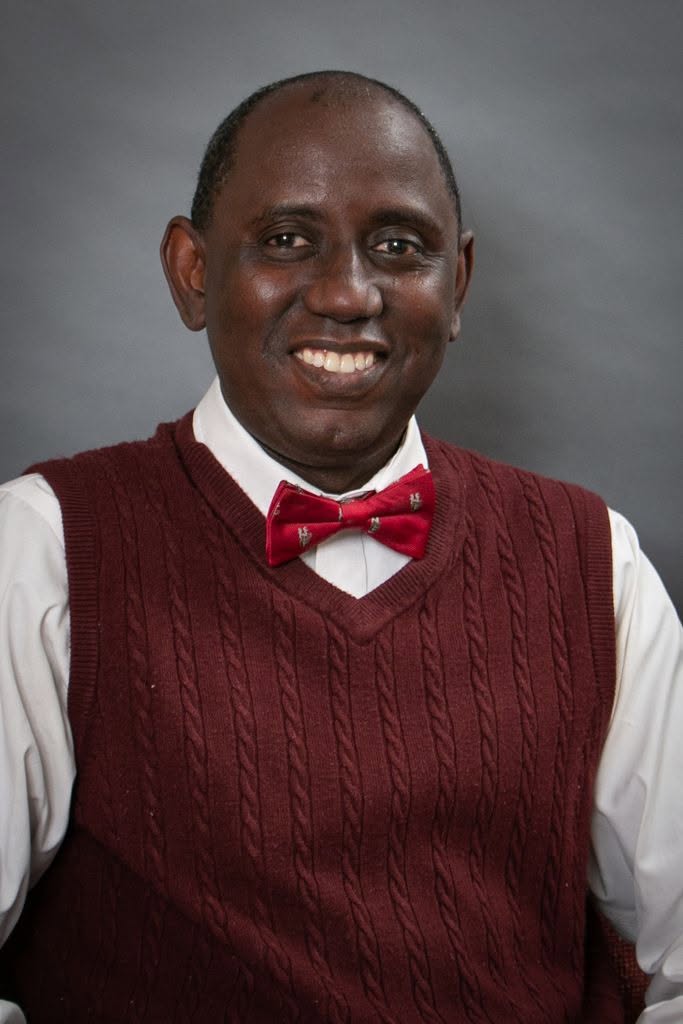
After nearly half a century of dedicated service, Professor Abdalla Uba Adamu has formally announced his retirement from Bayero University Kano, marking the end of an extraordinary academic journey defined by intellectual curiosity, resilience, and lasting impact. 

Born in Kano in 1956, Adamu began his studies in education sciences before shifting to media and communication, where he made his greatest impact. This change was key, forging a career linking pedagogy, culture, and media scholarship. Over time, he became a leading figure in Hausa media, popular culture, and communication with a unique interdisciplinary voice.

He joined the university system on 24 July 1980 as a young Graduate Assistant, rose through the ranks with distinction, and, in 2014, contributed to the conceptualisation of the Faculty of Communication. 

Prof. Adamu’s career, spanning forty-six uninterrupted years, reflects a rare blend of dedication and innovation. From the Department of Education to the Department of Information and Media Studies, his trajectory mirrors the evolution of media scholarship itself.

Beyond the classroom and research, Prof. Adamu has been a consistent voice in public discourse, including his longstanding contributions to The Daily Reality, a platform he has not only enriched intellectually but also supported materially. 

Prof. Adamu’s reflections on retirement, posted on Facebook, capture a life lived with purpose. Yet, true to form, he makes it clear that this is no final bow. With ongoing research and forthcoming book projects, the scholar remains as intellectually vibrant as ever.

Late Ibrahim Galadima, MFR: The Man

Jamilu Uba Adamu 

A man of strong character and unwavering principle, Ibrahim Galadima, MFR, traversed every level of football and sports administration in Nigeria. He served as Chairman of the Nigeria Football Association (NFA) for four transformative years.

His journey began as Chairman of the Kano State Football Association from 1977 to 1979, a period marked by the rapid development of football across the state.  

An accomplished community leader and administrator, Galadima served as Executive Chairman of the old Kano State Sports Council from 1981 to 1983. 

Honourable and diligent beyond compare, he was elected 1st Vice President of the Nigeria Olympic Committee in 1985, serving until 1987 before returning as Chairman of the Kano State Sports Council. He excelled once more, leading the Kano State Government to appoint him Commissioner for Social Welfare, Youth and Sports in 1989. By 1990, he became Commissioner for Works, Housing and Transport, with sports placed under the Governor’s Office.

In 1999, he chaired the Kano Sub-seat of the Nigeria team at the 1999 FIFA World Youth Championship. Under his leadership, Kano recorded the highest match attendances of the tournament.  

Three years later, with an unblemished reputation for honesty and accountability, he was elected Chairman of the Nigeria Football Association. During his tenure, the NFA proposed its working Statutes to FIFA. FIFA ratified them, and the 2006 Executive Committee elections were conducted under those Statutes, which still guide the Federation today.  

Ibrahim Galadima, MFR, also served as Member, Presidential Committee on Vision 2010 (Sports); Member, National Commission on Problems of Sports Development in Nigeria (2001); Vice Patron, Nigeria Olympic Committee; Member, Board of Trustees, Nigeria Sports Hall of Fame; Vice Chairman, Presidential Advisory Committee on Vision 20:2020; and Member, CAF Standing Committee on Legal Affairs and Players’ Status.  

In 2019, he chaired a special committee set up by the Kano State Government to guide Kano Pillars FC in their maiden CAF Champions League campaign. The debutants stunned Africa by eliminating Al-Ahly of Egypt, Africa’s Club of the Century, to reach the semi-finals.  

When the former Governor Abdullahi Umar Ganduje administration created the Kano State Sports Commission in 2016, he was appointed its pioneer Executive Chairman.

He was elevated to the position of Patron of the Nigeria Olympic Committee and served as Chairman of the Governing Council of the National Institute of Sports from 2018 to 2022.  

His most recent national assignments included serving as Chairman of the 10-Year Presidential Football Master Plan Committee and as Acting Chairman of Kano Pillars FC.  

The memory of the late Ibrahim Galadima will endure in the hearts of all who encountered him, especially for those of us who regarded him not only as a father figure but as a true role model. I remain deeply grateful for the encouragement he gave me when I approached him to write the introduction to my book, Takaitaccen Tarihin Asalin Wasan Kwallon Kafa a Kano.  

A stickler for rules, regulations, and transparency. His legacy of integrity, service, and excellence in Nigerian sports will never be forgotten. Allah ubangiji ya gafarta masa, amin.

Adamu wrote from Kano via jameelubaadamu@yahoo.com.

Decadence and Downfall: The Story of the Ultimate Party

By Saifullahi Attahir

History has repeatedly shown us that when rulers or elites indulge in throwing ultimate parties, they are usually sealing their fate. This universal rule is applied not only to dictators but also to empires, organisations, business leaders, athletes, celebrities, and even individuals who reach a climax in their trajectories without the ever-useful self-restraint.

Examples of these parables can be found even in the holy scriptures. Qarun is a brother of Prophet Moses, whom God blessed with so much worldly endowment that people living around him watch in awe. It was reported that many of his kinsmen were openly praying to be blessed as Qarun was. To them, Qarun was a role model, a success, and someone to emulate. 

Qarun’s story was a typical grass-to-grace story we often hear. At the beginning, a humble soul, spendthrift, calculative, hungry and ambitious for success. He left no stone unturned, had no time to even count his fortune, and was always on the lookout for more until he later ‘made it’.

He later started throwing lavish parties, erecting large buildings with so many rooms that he wouldn’t occupy, and amassing fleets of beautiful horses not for war, domestic use or trade. It was reported that the keys alone to Qarun’s treasury were so many that people couldn’t even carry them!

And what of the things inside those stores, of gold, ornaments, and precious metals? Qarun was admonished by his people to express gratitude for the benevolence through giving alms to the less privileged. He famously stated that it was his handiwork, his tactics, and his spendthrift ways (in today’s world, his financial intelligence) that helped him become wealthy. Qarun sealed his fatal fate with those words; he drowned!

Founders of any kingdom or empire usually begin as brave warriors or loyal servants who earn the respect and love of their masters, then become part of the empire and, within a few centuries, become kings themselves. Throughout these transformative years, you would find them humble, hardworking, disciplined, and considerate, until the hard-worn ancestors passed away and the bounty passed to their progeny, who were neither aware of nor shared in the initial struggles, thinking they deserved it. It was those later kings who would build extravagant palaces with magnificent walls, not as protection but for the sake of beauty and elegance.

The early pharaohs of Egypt were not as haughty and arrogant as the pharaoh whom the prophet Moses fought. The last pharaoh feels so high of himself that he declared himself the sovereign being worthy of worship in the land. The magnificent pyramids built in Egypt alone could signify the level of cruelty slaves were subjected to and the grand mania behind erecting them. That was their ultimate party.

The sixteenth-century Brits (Englishmen) were so brave, energetic, curious, prodigious, and ambitious that they set out to conquer almost half of the world, from Asia to Africa to India to the Americas. They spread their influence, civilisation, and language to every nook and cranny of the world. Astonishingly, several decades of the British Empire were led by women like Queen Elizabeth I and Queen Victoria. It was during the reign of Her Majesty Queen Victoria that Britain reached its peak.

At the beginning of their campaigns, they were just merchants, explorers, and missionaries. They were later partners before transforming into cruel colonial rulers, subjugating human beings into serfdom and slavery. It was during the early 19th century that Queen Victoria decided to host a lavish party in India, inviting delegates from every colony: Asians, Africans, Arabs, Indians, and Caucasians. The Durbar was so magnificent that only watching the video (on YouTube) could give you a sense of the congregation. Every culture was represented, and performances were made. 

What was wasted during these festivities was enough to ruin the economy of a continent. Those extravaganzas, the subjugation of people into labour, and unnecessary wars were later to seal the fate of the British Empire. The colonists were dismantled into sovereign nations, and finally, the sun set for Britain.

Before the 1979 Islamic revolution, Iran was under a monarchy led by Shah Reza Pahlavi, who inherited the throne from his father in the 1920s. Between those years, thanks to the discovery of oil and his alliance with Western countries, the Shah transformed himself into a world-class political figure and a strong voice in the Middle East. Although a Muslim, he became so delusional that he dreamt of converting Iran into its former Persian Empire with all its anti-Islamic elegance. 

This automatically put him in constant conflict with the religious establishment of Iran, especially the Islamic clerics led by the pious, ascetic, and reserved Ayatollah Ruhollah Khomeini.

The level of enmity was so high that neither side was willing to give way until, finally, Khomeini fled to France as an exile. Despite Khomeini’s absence, he continued to preach to the Iranians, especially the youth, university students, and the less privileged masses who became his adherents.

In the 1970s, the Shah decided to throw a grand party in Iran to commemorate not only his anniversary but also the 2000-year anniversary of the Persian Pagan Empire. He coronated himself as ‘Shah of Shahs’ (King of Kings). The party was attended by thousands, including kings, prime ministers, presidents, heads of state, mistresses, business moguls and technocrats. Later analysis shows how that singular event almost threw Iran into debt despite its oil endowment.

That sealed the fate of Shah Reza Pahlavi, for a few months later, Iranian youths staged an uprising, culminating in the Islamic Revolution that brought Ayatollah Khomeini (the very person Pahlavi had sent into exile) to power.

 Similar stories can be narrated of Adolf Hitler’s rise to power and his expansionist, megalomaniac agenda, seeing himself as the Führer and Saviour of the German Reich, until he sealed his fate by mistakenly invading Russia and Poland and at the same time fighting several forces of France and the United Kingdom. The allied forces were rescued by the rising superpower of that time, the United States of America.

General Yakubu Gowon was in power from 1966 to 1975, the longest-serving military head of state. His period witnessed a surge in oil income never seen before in Nigeria, and even the government doesn’t know what to do with the sweet oil money. The Federal Government undertakes unnecessary construction and white-elephant projects just to get rid of the irritating money. 

Workers get unnecessary pay rises (Udoji salary award) without additional productivity. The General Yakubu Gowon government decided to sponsor a FESTAC celebration event in 1975, which cost a huge sum of money, throwing Nigeria into debt despite oil income. We didn’t wisely invest and save for the rainy days.

That sealed the fate of innocent and peace-loving General Yakubu Gowon. He was overthrown in a palace coup led by young officers, introducing the no-nonsense, disciplinarian Murtala Ramat. The rest was history….So watch out when you are sealing your fate by throwing the ultimate party!

Saifullahi Attahir is the President of the National Association of Jigawa State Medical Students (NAJIMS) National Body. He wrote this piece from the Rasheed Shekoni Federal University Teaching Hospital, Dutse, via saifullahiattahir93@gmail.com.

Security Fears Stall ‘Uromi-16’ Screenings in Three Cities

By Hadiza Abdulkadir

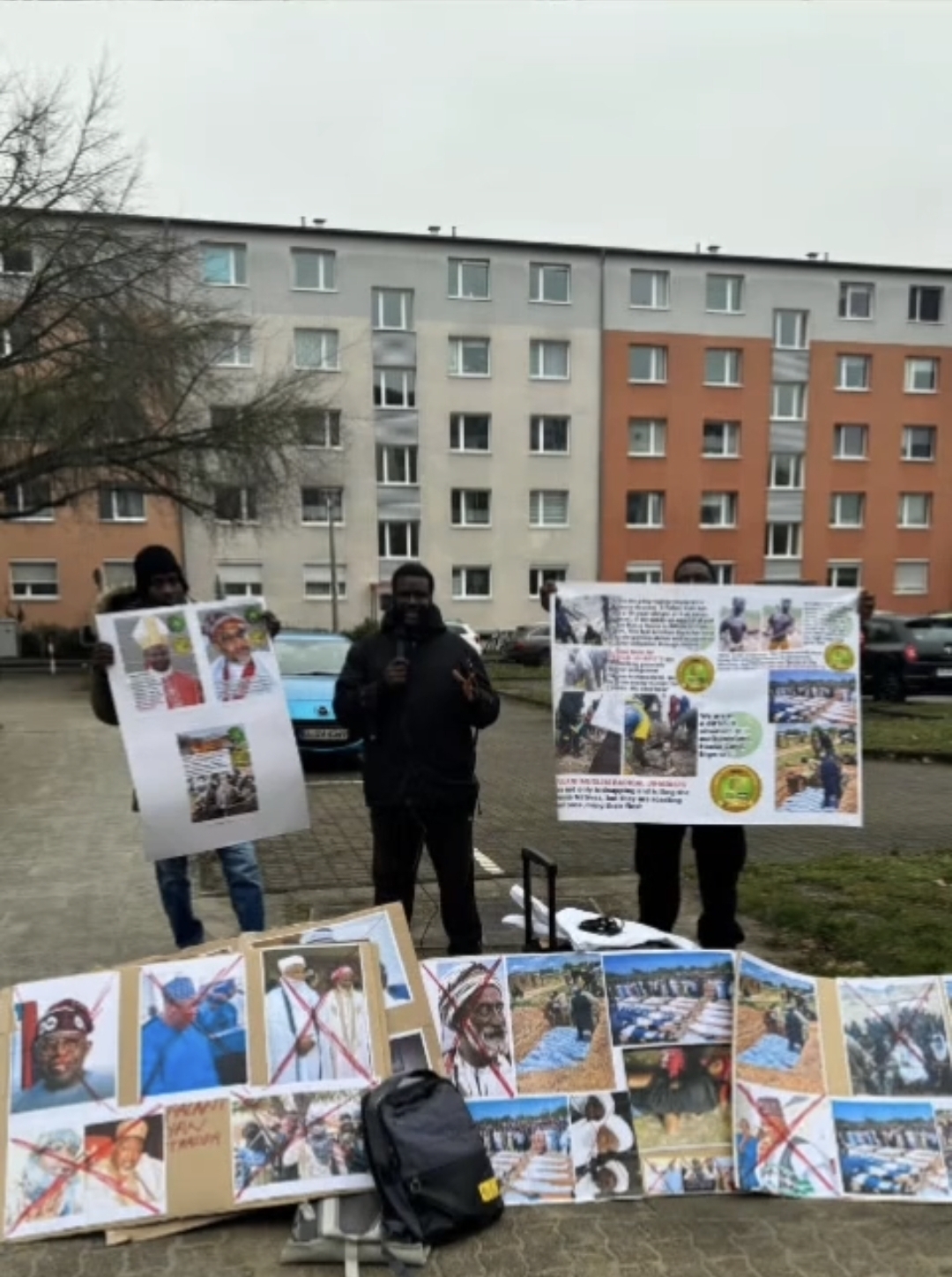
Screenings of the documentary Uromi-16: The Story, scheduled for Abuja, Kaduna, and Kano, have been postponed indefinitely due to what the producers described as “credible security concerns.”

In a statement dated April 22, 2026, legal representatives for the producer, A.A. Mustapha & Co., said the decision was taken after a reassessment of the immediate environment for the film’s release. “The safety of all stakeholders, particularly viewers, remains paramount,” the statement said.

The documentary by Sa’id Sa’ad Abubakar details the killing of 16 Kano travellers-hunters in Uromi, Edo State, seen as jungle justice. The victims, reportedly en route, were attacked and killed by a mob after suspicion and community outrage. It also seeks to correct what its makers call widespread misinformation while promoting accountability and justice.

The firm stressed that the postponement does not signal a withdrawal from the project but is a precautionary measure in the public interest. It added that consultations are ongoing with authorities and other stakeholders to address concerns around safety and rights.

Ticket holders will receive refunds within three weeks through the ticketing platform, the statement said, while new dates or alternative release plans will be announced later.

The producers also urged the public to remain calm and law-abiding as efforts continue to ensure the film’s safe rollout.

In Protest of Regional Politics

By Saifullahi Attahir

The desperation to fail President Bola Ahmed Tinubu by some politicians and their consistent attempt to recruit others into believing their rhetoric will always be an anticipated issue in the realm of politics, but whenever myopic outlooks like sectarianism, blame games, and regionalism are used, that’s what irritates my conscience into responding at the expense of whatever others may label me. What I believe is to stand for what I think is right, even if I have to stand alone.

The level of those campaigns was to the extent that you can’t say anything good about the Tinubu government without being portrayed as anti-North or even a heretic. This is preposterous!

Politics should not be built on emotions, and governance should not be like inheritance, where no matter who it is, if they’re not your kinsmen, all is not well. This is not the original personality of a typical Northerner. 

I’m not a party card-carrying member but an ordinary student, so I have the liberty to express my views based on my limited understanding. I would like to address the issue of labelling every project undertaken by President Tinubu as nepotistic, especially when it is situated in the South-West. 

Let me give an example with the recent trip President Tinubu led to the United Kingdom, where he secured a deal to revamp the Tin Can and Apapa ports in Lagos. Sealing a deal to revamp Tin Can and Apapa ports should be viewed with such an open mind as a national investment. Lagos would remain the economic bloodline of this country for the time being, hence supporting its economic growth. 

Among the notable achievements of even the most pro-Arewa leaders, like the late Gen. Murtala Ramat Muhammad, during his short stint, was the decongestion of the Lagos Apapa port led by the famous brig. Benjamin Adekunle (The Scorpion).  

I’m not promoting the idea of continuing channelling of funds to develop Lagos at the expense of other regions, but it would be absurd when overnight we heard the FG seal a deal to start importing goods through Niger-Maradi or the Lake Chad basin or create artificial ports in the North linking us to the transatlantic trade (it’s possible, but not overnight like in Libya or the UAE).

The North should have focused more on ensuring that fighting illiteracy included at least a mandatory universal secondary school education with skills. The ‘right education’ would solve 60% of all this menace. 

An enlightened self would not be used as a tool to create and perpetuate insecurity in the form of banditry and suicide bombings. An ignited mind wouldn’t be fertile ground for sectarian conflicts. You can’t woo an educated person into choosing a leader whose focus is to distribute spaghetti.

We should accept the fact that the North is a landlocked region. We are surrounded by Niger, Cameroon, and Chad. We have our own priorities that, if well executed, can boost the regional economy. Comparing ourselves to Lagos wouldn’t help matters. Lagos was an island inhabited by whites centuries ago. It was the former national capital for almost thirty years and home to almost all the country’s major industries. 

As to the second part of the rhetoric, which was also the ultimate agenda, to wrest power from President Tinubu and hand it over to another ‘Arewa politician’. Governance returning to Arewa would never be our solution. This was tried in 2015 by removing Jonathan through every possible means, only to regret a similar decision less than 4 years later.

A bitter truth to swallow was that, since our return to democracy in 1999, leaders from the South-West have proved to contribute more to issues of national development. Former President Olusegun Obasanjo’s 8 years would always be remembered for bringing a near-normal political stability to the country, improved national security, an improved economy, the cancellation of national debt, improved foreign relationships, the introduction of several empowerment programmes, the introduction/subsidisation of telecommunications, and a decisive leadership unparalleled when compared to late President Buhari’s 8 years of bewilderment.

It’s not about Tinubu prioritising Lagos and intentionally killing Arewa. The seed of sustainable national development was sown long ago, when Awolowo’s Action Group was fighting for universal education and ideological politics in their region, while our NPC was busy seeking alliances to dominate the Parliament. It’s better to hold our governors more responsible instead of the federal government.

Between 2007 and 2015, the Southwest Governors (Aregbesola, Fashola, Mimiko, Adams Oshiomhole, etc.) used their opposition to create massive developmental programmes for their region, consolidate power around the leading opposition figure, Tinubu, and enhance their regional security, while we were busy trying to wrest power from Jonathan.

To the question of ‘Arewa-2027′, who should be the candidate? The inconsistent Baba Atiku, or politicians renowned for vengeance politics, or those lacking an accommodating mind for others to win national elections, or politicians without international exposure? Tinubu is not the ideal for Nigeria, but the aforementioned politicians are no match for his governance track record as governor and, 2 years into the presidency, as president.

The current insecurity menace is a testament to how one man is incapable of addressing it. Many among the top security brass are from the North: the NSA, the Federal and State Ministers of Defence. In a region with the highest illiteracy rate, things worse than this could happen. Spaghetti and religious affiliation can woo the masses to vote for a candidate.

We should focus better on finding the RIGHT MAN rather than on which part of the country he came from.

Saifullahi Attahir is the President of the National Association of Jigawa State Medical Students (NAJIMS) National Body. He wrote this piece from the Rasheed Shekoni Federal University Teaching Hospital, Dutse, via saifullahiattahir93@gmail.com.

Bala Wunti: Bauchi’s Unifying Force

By Usman Abdullahi Koli

At a time when many are engulfed with fear of impending internal rancour that is probably capable of causing disunity and despair among key players, a time of reorganisation of the political landscape at both the national and subnational levels, comes a unifying figure who brings solutions to the upheaval experienced, particularly in the recent electoral outing.

The political atmosphere, particularly in Bauchi State, is known for turbulence and vested interests. As the state faces numerous challenges that demand more urgent structural readjustment, this is pertinent, and it raises the question of who can deliver these set goals. That is why Bala Wunti matters.

Among the political players who roll up their sleeves in aspiration to win elections, one critical issue is the unity of purpose. Unity against the monster of poverty, insecurity, hunger, unemployment, and others that are clogging the wheel of our development.

There are individuals whose presence answers questions that institutions struggle with and whose conduct reassures even the most cynical that character still matters in public life. Dr Bala Maijama’a Wunti belongs to that rare category. His story is not merely one of rise, but of formation. It is a journey shaped by early trials, sharpened by discipline, and guided by a clarity of purpose that has endured across decades.

Born into circumstances that offered little advantage, early life required resilience and self-reliance. Throughout his life, it has been punctuated by uncertainty. Yet, instead of breeding bitterness, these experiences shaped restraint, empathy, and a steady internal discipline that would later guide his every choice. Where others might have faltered, he remained composed. Where others might have hardened, he stayed measured.

Profile, professional and industry roles

His pursuit of education must be seen in that light. It was not a smooth path through institutions, but a determined journey through obstacles. From his studies in Chemistry at Ahmadu Bello University to advanced training in management at Abubakar Tafawa Balewa University and beyond, each step reflected commitment, not convenience. What emerged was not simply an educated man, but a prepared mind, one that understands complexity, respects structure, and values clarity over noise. In a world that often rewards speed, he chose depth. In a system that often tolerates shortcuts, he insisted on process.

When he joined the Nigerian National Petroleum Company Limited in 1994, he entered one of the most demanding environments in the country. He did not arrive at prominence; he earned it. From his early role as the Production Programming Officer to his eventual position as Chief Upstream Investment Officer, his trajectory shows a rare pattern in public service: steady progress built on competence rather than visibility. He learned the system from within, understood its contradictions, and positioned himself not as a spectator but as a contributor to its reform. While others chased recognition, he built relevance. While others pursued titles, he mastered responsibility.

His contributions to the oil and gas sector are best measured through results. He was part of efforts that strengthened investment frameworks, restored operational discipline, and brought structure to systems long plagued by inconsistency. Initiatives such as Operation White did more than fix technical inefficiencies. They proved that accountability was possible, even in the most complex spaces. In a sector where decisions carry national consequences, his approach has always been cautious, forward-thinking, and committed to long-term value over short-term applause. That distinction separates those who merely manage systems from those who shape them.

Yet reducing his life to professional milestones would miss the larger picture. What distinguishes Bala Wunti is not only what he has done within institutions, but what he has done beyond them. The memory of hardship has stayed with him, not as a weight, but as a compass. It informs his giving, shapes his interactions, and explains the consistency of his interventions in others’ lives. His philanthropy is not occasional; it is part of who he is. Students have been supported, communities uplifted, and individuals in distress assisted through actions that are rarely announced but widely felt. The recent support for students across tertiary institutions is not a single act; it is part of a pattern that reflects a deep conviction: opportunity should not be determined by circumstance alone. Many give when it is convenient. He gives because it is necessary.

There is also a discipline in his personal conduct that deserves attention. He does not champion causes he does not believe in. He does not bend for advantage. In a political and professional culture where flexibility is often mistaken for wisdom, this restraint is rare and powerful. It gives his actions credibility and his decisions weight. His faith, central to his life, reinforces this clarity. It is visible not only in words, but also in choices that remain steady under pressure.

When he stepped out of public service on May 30, 2025, he did so quietly. There was no spectacle, no fanfare. The moment felt calm but confident, the kind of confidence that comes from knowing your work speaks for itself. Influence does not depend on the office, and in his case, it had already moved beyond it. What he carries into the next phase is not a title, but a reservoir of experience, credibility, and trust. These qualities are far more valuable than any position could ever be.

The emerging political conversation around Bauchi State must be seen through this lens. The state is no longer at a point where familiar patterns can be recycled without consequence. The challenges are deeper, expectations sharper, and the margin for error thinner. This is not a time for comfort; it is a time for deliberate choice. What is required is not just political skill, but administrative depth, economic understanding, and the ability to translate intention into results.

Bala Wunti presents a compelling case, not because he seeks attention, but because his life commands consideration. He understands systems at a level that allows him to engage governance beyond slogans. He has managed scale and complexity in ways that meet the demands of statecraft. He carries a social awareness rooted in lived experience rather than abstract empathy. Most importantly, he stands outside the entrenched rivalries that have defined political competition in the state. That distance is not detachment; it is clarity. It allows him to be seen not as a continuation of old conflicts, but as a bridge beyond them.

The argument for his consideration is therefore not emotional, even though his story moves the heart. It is rational, grounded, and difficult to dismiss. It rests on capacity, consistency, and a record that proves he can think, act, and deliver. In a context where trust is scarce, his credibility becomes stabilising. In a climate where division is costly, his neutrality is strategic. At a time that demands both firmness and thoughtfulness, his temperament aligns perfectly with the responsibility ahead.

This is not to suggest perfection. Leadership is not shown by ambition; it is revealed by preparation. In his case, the evidence is alive. From a childhood shaped by absence to a career defined by impact, his path is intentional, tested, refined, and sustained.

Bauchi faces a choice deeper than personalities. It is a choice between repetition and recalibration, between what is familiar and what is necessary. If the state is to move toward a future defined by stability, competence, and inclusive progress, it must recognise preparation when it sees it.

In Bala Wunti, experience, character, and capacity converge in a rare combination. He does not need to declare his worth. It is evident in the systems he has strengthened, the lives he has impacted, and the consistency he has maintained. The question, therefore, is not whether he has something to offer. The question is whether Bauchi is ready to choose what it truly needs.

If so, the answer is already in front of it.

Usman Abdullahi Koli wrote via mernoukoli@gmail.com. 

Kano Honours Legendary Hajiya Mariya Galadanchi: Celebrating Six Decades of Impactful Broadcasting

By Khalid Imam 

Arguably, in Kano and beyond, if one is searching for one of the most consistent and dominant pioneering female Hausa Muslim broadcasters—whose eloquent voice has shaped and continues to shape generations through a myriad of captivating radio and TV programs—there is no doubt that such a singular, towering presence belongs to the revered and tireless Hajiya Mariya Galadanchi. She is an iconic, multi-talented veteran journalist who is retired but not tired. Hajiya Galadanchi, who spent six decades as a powerful influence and household name synonymous with Radio Kano, a station popularly known as Gidan Bello Dandago, is a popular figure known for her uncommon courage and unshakable faith in God.

An all-round journalist whose foray spans both print and broadcast media, the legendary Hajiya Mariya Galadanchi, popularly known as an anchor of Filin Zaɓi Son Ka, among other programs, began her career as a health worker. Out of a deep passion for the media, she metamorphosed into one of the most dedicated and accomplished radio and television personalities. A skilled radio dramatist, she began her journey into journalism by writing life-transformative articles, mostly addressing issues related to women and children, over half a dozen decades now in the pages of Gaskiya Ta Fi Kwabo. Hajiya Galadanchi ventured into public service in 1964 as a health worker at Marmara Hospital and was later posted to several other hospitals within the old Kano City, where she served with remarkable zeal and dedication.

After joining Radio Kano at the age of 35, initially not as a full-time staff member, she handled women’s programs on Thursdays and children’s programs on Fridays as her first assignments. Thereafter, she went on to anchor and contribute to several notable programs, including Ruguntsumin Salla. Through Zaɓen Sada Zumunci, she mentored many female broadcasters, including Mariya Ummakati. Hajiya Mariya Galadanchi is undoubtedly one of the pioneering Hausa Muslim female broadcasters and can rightly be described as a glass-ceiling breaker, having opened the floodgates for the rise and dominance of women in radio and TV broadcasting in Kano today, many of whom now occupy enviable positions as directors within the public and private media ecosystem in Kano and beyond.

No doubt, her persistent voice is a testimony to a living era, one well-defined by knowledge, brilliance, advocacy, and deep love for culture and the uniqueness of Kano’s traditional ways of life. She mentors the womenfolk on the complexities of managing the home: living with a husband and his relatives, navigating life with co-wives, and raising a successful family. She constantly discusses topics such as pregnancy, childcare, and parenting, while teaching women, especially the young, the best of Hausa traditional cookery, including dishes served during festive seasons and ceremonies.

Acknowledged for her honesty, courage, faith, patience, loyalty, dedication, and respect for time, she was also famously known as one of the first women to ride a bicycle and drive a car in Kano City, being among the few female pioneers to be educated in Western schools in the old Kano City. Hajiya Mariya was born at Kankarofi Ward 97 years ago, in Kano Municipal LGA.

Among the dignitaries who graced the special celebration of the life and times of Hajiya Mariya Galadanchi were the Honourable Commissioner of Information, Ibrahim Abdullahi Waiya; Prof. Abdalla Uba Adamu, former Vice-Chancellor of the National Open University of Nigeria; Prof. Abdulrashid Garba, Vice-Chancellor of Khalifa Isyaku Rabi’u University, Kano (KHAIRUN); and Malam Ibrahim Khalil, among other seasoned and distinguished media practitioners too numerous to mention.

During the event professionally curated by an erudite academic, seasoned broadcaster and popular columnist, Malam Bala Muhammad as a Master of the Ceremony, there was a special appeal to the Kano State Government to name the road between Diso and the junction of Hasiya Bayero—or any other notable monument in Kano—after the veteran broadcaster, Hajiya Mariya. Again, Prof. Abdalla Uba Adamu also called on the organisers to establish a fellowship in her name to promote young female journalists in Kano.

Alhaji Dr Aminu Ladan Abubakar (Alan Waƙa), Sarkin Adabin Harshen Hausa; Mudassir Ƙassim; and Hajiya Fati Nijer thrilled the audience with scintillating songs. Hajiya Rabi Tanko Yakasai, a close associate of the celebrant, also spoke on Hajiya Mariya Galadanchi’s political activism through Jam’iyyar Matan Arewa, urging young females from the North to emulate her.

The Commissioner of Information, Ibrahim Abdullahi Waiya, described Hajiya Mariya Galadanchi as a shining example of a female journalist of great substance and announced the Kano State Government’s donation of ₦10 million as a take-off fund for the proposed Hajiya Mariya Galadanchi Young Female Journalist Fellowship Fund.

The Kano community celebration of Hajiya Mariya Galadanchi at 97, which was attended in large numbers by media practitioners, academics, the ulama, the celebrant’s family and friends, and people from all walks of life, could best be described as a huge success. Dozens of goodwill messages were received, especially from notable female broadcasters in Kano, who expressed deep appreciation for the pioneering mentorship role Hajiya Mariya Galadanchi has tirelessly played.

Some of the major highlights among the series of fascinating activities that made the event memorably captivating were the keynote speech presented by Hajiya A’isha Sule; two separate audio and audiovisual documentaries were presented to the patient audience on the life and times of Hajiya Mariya Galadanchi; and special tributes from both senior and young female broadcasters by Hajiya Hafsah Iliyasu and Hajiya Zainab Sherif, respectively. 

There was also a stimulating panel discussion featuring Maryam Babayaro, Dr Fatima Damagun, A’isha Bello Mahmud, A’isha Sule, and A’isha Usman, moderated by Hajiya Mariya Bakori from Katsina State. To allow feedback from the massive audience, there was a Q&A session, the presentation of awards, and a plaque to the celebrant, led by Malam Sheikh Ibrahim Khalil and Malam Abubakar Darma. The event ended with an exhibition of Hajiya Mariya Galadanchi’s memorabilia, which included her photos, sound bites, broadcast archives, and merit awards.

Khalid Imam is a Kano-based writer, educator and President of Kano Literary Space. He can be reached via email: khalidimam2002@gmail.com.

Governor Badaru and Governor Namadi and the Dutse International Airport: A Misuse of N11.5 Billion of Jigawa State’s Public Funds

–A costly decision demanding accountability, public scrutiny, trust, leadership priorities, and responsibility

By Nura Jibo MRICS, MNIQS, PQS, RQS, UN-DCP

If Muhammad Badaru’s eight-year stewardship as Jigawa State’s governor could not provoke his conscience to reflect on the abandonment of the N11.5 billion Dutse International Airport, from which Jigawa State’s public money was taken and used by Governor Sule Lamido, nothing will! 

If Governor Umar Namadi’s one-year display of overt leadership anger, just to play to the gallery while inspecting projects at Dutse General Hospital and Rasheed Shekoni, is any indication of god-fearing, at this point, he should be seeking Allah’s repentance and forgiveness for neglecting the Dutse International Airport that Governor Sule Lamido spent N11.5 billion to construct.

The issue is: It is not just about campaigning and winning public office. It is not about aspiring to be a governor, senator, minister, or president while relegating public responsibility. Indeed, it is about taking a substantial amount of Jigawa State’s money to build an airport that its ordinary citizens (Talakawa) have never benefited from. It is about earning public trust, accountability, responsibility, and excellence by safeguarding public funds and ensuring that the people of Jigawa State receive value for their money.

Anything short of this, one would inevitably appear before Allah SWT and answer for all misdeeds, inactions, and karmic retribution.

It is very painful to witness a project one participated in constructing being abandoned by Governors Badaru and Namadi after an enormous sum of N11.5 billion was spent on it. And the governors who do this are sleeping with both eyes closed! They forget that a day of reckoning is coming when they must appear before their Creator and answer the most difficult questions of their lives. 

The engineers from Jigawa State’s Due Process involved in this airport project are also unhappy with the abandonment of the Dutse International Airport.

The person who hired this writer as a supervising consultant for Dutse International Airport in 2013, Mallam Rabi’u Shuaibu Kazaure, then director of building at Jigawa State’s Due Process and Project Monitoring Bureau, has passed away. He was a man of integrity, sincerity, and honesty who diligently discharged his duties. May Allah bless him with Jannah and continue to reward his efforts in the airport project. 

Therefore, the deliberate killing and systemic lack of foresight and vision by the two governors regarding the Dutse Airport is not only negligent but also significantly affects the weak, crushing the innocent’s opportunity cost and marginal propensity to invest their billions in agribusiness and other Jigawa State science and technology developments.

Indeed, airport construction and management are not for everyone! It is not merely a governor’s affair! It is not a long-standing academic practice in which a governor would recruit or “shop” lecturers from universities and give them “lucrative” positions in Jigawa State, expecting them to perform miracles, while their true expertise lies in marking students’ scripts for years. They know nothing about industry knowledge beyond their rules of engagement as academics and their involvement in academic staff unionism, which they spent decades pursuing with little success! 

Managing Jigawa State’s departments and agencies is certainly beyond a mere academic exercise. It requires industry knowledge, not academic learning. It does not require mastery of the English language, where certain DGs in Governor Namadi’s cabinet, for example, could deceive the governor with all sorts of English grammar or polemics in the name of “fetching” Jigawa State government investors from abroad.

This could be elaborated more succinctly in a subsequent discussion on the mismanagement of Jigawa State’s funds by Governor Namadi and his DGs on foreign trips under the pretext of seeking investors for Jigawa State. If time permits, photos and videos could be released to substantiate this point!

Now back to the wasteful venture of the Dutse International Airport.

Governor Sule Lamido’s efforts must be acknowledged and appreciated for the construction of the Dutse International Airport. He single-handedly started this project in February 2013 and completed it in 18 months! This is certainly commendable for a governor who is primarily an administrator and a lifelong politician rather than a technical expert.

However, even Governor Lamido’s vision and mission for the airport could be faulted for his limited understanding of how airports are managed globally, particularly when the client (owner) lacks the resources to manage it. This writer has repeatedly communicated with Governor Lamido about the importance of handing over the entire airport to a reputable airline to operate it on behalf of the Jigawa State government. This is akin to an agreement reached with Captain Edward Boyo, the CEO of Overland Airways, who scheduled a three-day flight connecting Abuja, Dutse, and Bauchi. Unfortunately, the memorandum of understanding agreed upon with Overland was not honoured by Governor Badaru and his entire cabinet. Neither was it honoured by Governor Namadi, courtesy of political disputes arising from party differences, which ultimately led to the waste of Jigawa State’s people’s money and resources in perpetuity.

Very recently, in a conversation with top political office-holders in the state, they recounted their ordeals over their inability to make the airport functional and useful.

An investigation revealed that a South African company interested in the Dutse International Airport came and went without arriving at a common standpoint. Ethiopian Airlines was also revealed to have an interest in turning it into a cargo airport, but Governor Badaru and Governor Namadi’s lack of interest has hindered this line of business.

It is, therefore, foolhardy to talk about or dream of good governance when these two governors came and found a functional airport and, provocatively, made it dysfunctional for political reasons and personal interests best known to them, which are diametrically opposed to public interests. With this kind of behaviour alone, Allah SWT will, insha’ Allah, never allow them to go scot-free, given their lack of responsibility and public trust in sustaining the airport for well over 10 years now! The airport could have at least covered its full construction cost by now! 

For instance, the Murtala Mohammed International Airport in Ikeja, Lagos, is a federal asset managed by the Federal Airports Authority of Nigeria (FAAN) and the Nigerian Customs Service (NCS). Its Customs revenue alone as of 2025 was reported at N202.9 billion! The airport’s FAAN revenue in 2024 was the highest in Nigeria, accounting for an average of 67% of its total revenue of N256 billion.

Malam Aminu Kano International Airport in Kano generated N20.2 billion in revenue, accounting for 5.3% of FAAN’s total revenue in 2024!

Therefore, the Dutse International Airport could have generated at least N50 billion in 10 years (2015-2025) if it had not been left idle or used solely for Hajj ceremonial shuttling by Governor Badaru and Governor Namadi.

Though the revenue from the Ikeja and Kano airports goes to the federal government of Nigeria, by comparison, Lagos State and Kano benefit from increased economic activity due to the presence of NAHCO and SAHCO, as well as from personal income taxes paid by workers and businesses operating in the airports’ vicinity.

This is what the people of Jigawa lost due to Governor Badaru and Namadi’s neglect of the Dutse International Airport for well over 10 years! 

Indeed, on a daily basis, Ikeja airport’s customs could generate an average of N555 million in import/customs duties if its reported 2024/2025 revenue of N256 billion is anything to go by. 

Governors Badaru and Namadi’s avoidance of this airport responsibility since 2015, by portraying it as a ceremonial airport for commuting Hajj pilgrims, is not only detrimental but also exposes the political leaders’ lack of foresight and mismanagement of public funds. 

The indecision regarding the Dutse International Airport by Governor Badaru and Governor Namadi contravenes FAAN’s three measurable KPIs, which include on-time operations, revenue growth, and passenger satisfaction.

Solutions 

Globally, airports are assessed against standards and quality. Dutse International Airport was built to standard. Its runway is 3 kilometres long, and the airport’s width is 60 metres. It is, by all standards, suitable for large aircraft such as the Boeing 747 to land on its runway, with an average concrete and asphalt thickness of seven meters! This does not fall short of the global requirements for the longest runways at the world’s biggest and top 10 airports, with an average length of three to five kilometres.

The financial and economic losses at Dutse International Airport are significant due to the Jigawa state government’s lack of leadership priorities, as evidenced by the management of international airports in Rwanda, Addis Ababa, Qatar, Gatwick, and Heathrow, among others. Taking time, for example, by Governor Namadi to go to the Qatari Embassy in Abuja with a very junior high school colleague to meet with the Qatari Ambassador or inviting him to see the airport, is not the way to woo partners or encourage Qatar Airways to partner with Dutse International Airport. The ambassador’s duty is certainly diplomatic, not technical; he is not in any way going to help the Jigawa state government, technically speaking, make its airport useful. The Qatari people are law-abiding individuals known worldwide for their uprightness and accountability. They mostly engage in charitable and educational programs for deprived communities, as witnessed in Gaza, Palestine, Syria, and in Dutse and Hadejia, Nigeria.

To make Dutse International Airport useful, one must look beyond the banal and quibbling issues of political sentiments and personal interests.

The airport could have been taken in partnership with Qatar Airways if the proper partnership channels had been communicated to Qatar Airways’ commercial department in Doha. It could have been salvaged if, for example, direct contact had been established with Rwandan Airlines rather than Ethiopian Airlines. It could have doubled its construction cost in revenue if the two governors had done their homework very well through Jigawa State’s international partnerships and linkages. This department could have liaised with Gatwick or London Heathrow Airports, for example, in the United Kingdom, or even with Frankfurt Airport in Germany, to take over the management of Dutse International Airport and enter an agreement, inter alia and ab initio, at a 50-50 business fee. 

Lufthansa, for example, offers extensive partnerships and connections linking East and North Africa. There is no harm whatsoever in giving the Dutse International Airport management to Frankfurt’s Lufthansa as an up-taker, or to Madrid Barajas Airport (MAD), which is currently interested in African partnerships by shuttling its flights to connect to various African geographical locations such as Chad, Niger Republic, Rwanda, Ghana, Cameroon, Kenya, Uganda, Senegal, and Mali, to mention but a few. 

Royal Air Maroc could also have been a strong partner to the Jigawa State government and to Dutse International Airport, beyond the Overland domestic partnership that was caught up in Badaru’s and Namadi’s political acrobatics. Indeed, Dutse International Airport, within this 10-12-year period of neglect by the two governors, could have been used to provide serious dollars to the Jigawa State government from abroad and a couple of billions of naira on domestic flight arrangements and agreements, because it would have certainly offered the highest frequency of flight influx and a “buffer” zone from Europe to the west and Sahelian Africa, allowing easy accessibility to passengers and cargo into major African airports like Cape Town, Casablanca, and Addis Ababa etc.

Unfortunately, the current governor is busy shuttling between China and India to invite investors to invest in Jigawa State, with minimal progress that is often overamplified by his new media aides.

Therefore, what is wrong, useless, and should be avoided is what an academic once described as hot-air jargon, popularly known as Dogon Turanci. The Jigawa State government should take the management of its international airport seriously by inviting up-takers to handle the airport for a couple of years, with its staff and technical personnel. No Nigerian or Jigawa indigene should be employed to work at the check-in and check-out counters or security points to avoid passengers begging for money (dollars), which is typical of Nigerian-trained and employed airport staff and has caused significant damage to Nigeria’s integrity and national image. 

Nura Jibo writes for the West African Research Association (WARA) and the African Studies Centre at Boston University, United States.

Rebuttals to this piece are welcome and healthy. They can be submitted to jibonura@yahoo.com.

Insecurity: we Need To Trace The Root Cause

By Ismail Bello Darazo 

Nigeria is a country known for its diverse ethnic groups, rich cultures, and traditions. There is also a strong history of peaceful coexistence among these groups. This harmony was more evident when traditional leaders were in control of societal affairs. All these things have faded away. Why?

Everything is better than before the marginalisation of the traditional leadership system, despite the democratic rule in various aspects of the sphere, but this particular issue of insecurity, especially the one between ethnicities, is not well addressed by the system. We still have time to make things better and manage.

The truth that we don’t want to say out has to be told in the sense that we would keep our eyes off the sad event masterminded by those we share the same tribe or religion with. This is what happens, and it is what fuels the escalating insecurity in the whole country. Political leadership was largely in the hands of traditional institutions, which formed a vital part of Nigeria’s governance structure before being marginalised by the modern democratic system.

The democratic system is centred on the separation of powers among the three arms of government—the Executive, the Legislature, and the Judiciary. This has become the dominant mode of governance today. However, decision-making and policy implementation under this system have largely replaced traditional methods, which once ensured a high level of compliance because people trusted their leaders.

The marginalisation of traditional leadership by the democratic system is one factor contributing to the escalation of insecurity. Traditional institutions have deeper access to the grassroots and better knowledge of the local environment than the current system. 

It is rare to find any group of people without a leadership structure in which leaders report to higher authorities when decisions exceed their authority. This applies to groups such as herders grazing livestock and farmers producing food for trade and national food security. The relationships between these groups were previously managed by traditional leadership, which ensured harmony and stability despite differences.

However, the alienation and undermining of traditional institutions have weakened this long-standing unity. The sense of shared humanity has diminished. Despite intermarriages and shared values, conflicts of interest have damaged relationships, turning once-peaceful communities into hostile groups.

Despite these challenges, it is not too late to act. The government can revitalise the traditional ruling system by integrating it into policy-making and implementation processes. Traditional leaders should be given a sense of belonging and held accountable for their responsibilities. Thomas Fuller once said, “A stitch in time saves nine.”

The effectiveness of this structure can often change the narrative, due to its deep grassroots penetration, significantly improving the current situation. 

By taking this step, insecurity can be drastically reduced, if not completely eliminated.

Ismail Bello Darazo writes from Bauchi wrote via Ismailbello054@gmail.com.