NLC

Salary Review: The insatiable quest

By Musa Abdullahi Kaga

As an employee, salary is one of the most, if not the most, important factors in applying for or staying in a job. It is, however, a known phenomenon that salaries, no matter how handsome, hardly cater to one’s wants and needs. Hence, the regular quest for the insatiable: salary review.

Salary review is often misunderstood or confused with annual assessment or appraisal. Salary review is mostly deeper than annual or biannual appraisals. It is a comprehensive analysis/evaluation of whether a specific pay package is a fair reflection of what an employee should earn in line with factors such as external market forces, experience, career progression, company culture, job performance, etc.

Reviews are an essential HR and management strategy/tool for attracting and retaining good hands in a company.

Several factors may necessitate reviews, ranging from competitors’ pay trends, employee opportunities, or employers’ fear of losing employees for whom they invested so much.

It is only fair that as your employee’s career progresses, so do their emoluments. This should, of course, depend on milestones, achievements, performances, etc. Should there be a positive progression, the salary should grow accordingly. Unfortunately, this is not obtainable in our clime, especially in the public sector.

According to data from ALLSTARTSIT – a tech company specializing in software development services and talent acquisition in CEE regions – there has been a massive median salary increase of 106% for software developers in the CEE regions over the last decade. For example, a system architect that earned $3000 a month in 2012 makes about $6200 in 2022. That is massive, even for an IT specialist.

Graph showing ten years salary trend of software developers

In Nigeria, however, the last time the federal government conducted an upward review of workers’ salaries was in 2009 – 13 years ago – with an increase of about 53%. The dwindling economic situation in the country has rendered the purchasing power of workers feeble. Different civil, trade and labour unions have tabled several demands to the government over the years on the review of salaries and other welfare packages; unfortunately, this is yet to achieve any positive outcome.

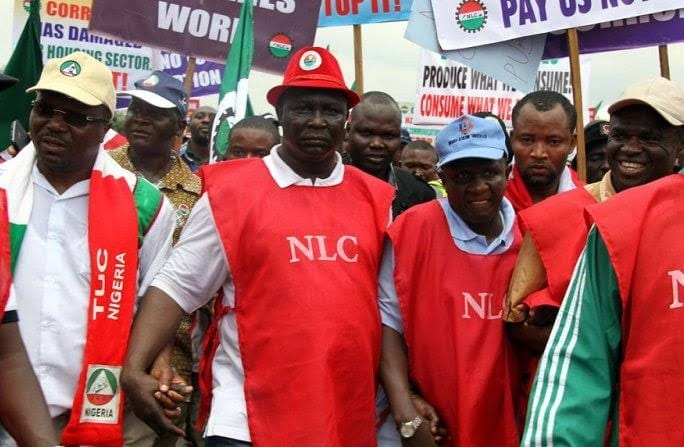
Recently, the Nigerian Labor Congress, through its President, Comrade Ayuba Waba, lamented the sorry state of Nigerian civil servants and reiterated their demands to the government.

According to Waba, economic challenges had eroded the purchasing power of ordinary workers so much that the minimum wage could no longer take a worker home and could barely serve as transport fare.

Speaking to NAN earlier this year, he said; “We want to make a formal demand on behalf of the Joint Service Negotiation Council for the review of wages in the entire public sector because it is due,’’

Looking inwards, it recently dawned on me the economic hardships endured by civil servants and other citizens; this is due to the rising cost of essential items and, of course, the occasion of the Eid celebrations. A friend who is an employee of a non-governmental organization has a compensation significantly higher than what his colleagues in the public sector receive, yet, he had to dig deep into his savings to afford a ram. It is nearly a miracle that he has the luxury of savings; public sector employees could only admire his status, even though he is still among the ‘masses.’

It is, therefore, a no-brainer for civil servants to work towards achieving an alternative source of income, especially in this digital era.

Unsurprisingly, it is not uncommon to see civil servants perpetually discussing issues like salary reviews and ‘welfarism’ in Nigeria. Even though successive governments in the past have not done enough to ensure a proper salary structure and compensation system among civil servants in various tiers of government, this is primarily because of the insatiable nature of salary.

The craving for more is intrinsically part of human nature, although some experts argue that insatiable desire is unhealthy (greed). Nonetheless, the motivation to work harder and earn a decent salary is our typical trait.

Musa Abdullahi Kaga sent this article via musaakaga@gmail.com.

NANS backs NLC protest over ASUU strike

By Muhammad Aminu

The National Association of Nigerian Students (NANS), South-West Zone, has said it would join the Nigeria Labour Congress (NLC) in protest to pressurise the federal government to end the Academic Staff Union of Universities (ASUU) strike.

In a statement issued by NANS Coordinator and Public Relations Officer Adegboye Olatunji and Awoyinfa Opeoluwa, which was made available to newsmen on Tuesday.

The NLC had earlier vowed to embark on a nationwide protest on July 26 and 27 in solidarity with the trade unions in the Nigerian public universities and others.

The NLC President, Ayuba Wabba, who made the disclosure in a circular jointly signed by Mr Emmanuel Ugboaja, General Secretary of the Congress, on Sunday, said the protest was in line with the decisions of the National Executive Council (NEC) meeting of the NLC on June 30.

ASUU and other trade unions in the education sector have been on strike for over five months over the alleged failure of the Federal Government to keep to the agreement entered with the unions.

The demands of the striking workers include issues bordering on funding of universities, salaries, and earned allowances of lecturers.

However, the NANS leadership in the South-West zone called on students across the country to join the NLC in the nationwide protest in solidarity with ASUU.

NANS added that it would “not keep silent and watch our future being ruined by the prolonged ASUU strike.”

It stated: “It is timely and urgent to issue this statement today with a view to putting an end to the lingering strike action by ASUU. We want a total reformation of the educational sector.

“The Leadership of NANS, Zone D, has taken it upon herself to categorically stand against the dilapidated state of the educational sector in Nigeria.

“We are at a time when Nigerian students have lost hope and do not know what’s next on the radar. ASUU strike has been on for over five months without any hope of resumption.

“We have also waited for so long to see if the Federal Government will dance to the music of Nigerian students who have been clamouring for an end to the ASUU strike, but the reverse is the case.

“We’ve had several press conferences, granted several interviews, held several meetings to plead with both ASUU and the Federal Government, and held several peaceful protests across the Federation.

“According to the commandment of solidarity, we’re on the last ‘Cs of Aluta,’ which is confrontation. This is the time to call on all Nigerian students across all zones to join the NLC in solidarity to end the ASUU strike on Tuesday, July 26, 2022, and Wednesday, July 27, 2022. Nigerian students are tired of the long overdue strike action.

“Consequently, all NANS cadres and stakeholders, zonal leadership, Campus Committee Chairmen, Student Union Government presidents, Nigerian students, and the general public are hereby put on high notice to mobilise, organise and get prepared to be part of the movement,” NANS said

ASUU Strike: NLC threatens nationwide protest on July 26

By Uzair Adam Imam

The National Labour Congress (NLC) has threatened to embark on a nationwide protest 26/7 of July in solidarity with the strike by the Academic Staff Union of Universities (ASUU).

The union has been on a strike since February 14th, 2022, over the government failure to meet their demands.

The Daily Reality recalls that the issues are bordering on funding universities, as well as on salaries and allowances of lecturers.

The NLC president, Comrade Ayuba Wabba, in a statement jointly signed with his secretary, Emmanuel Ugboaja, disclosed that the protest aimed at getting the university students back to school.

The statement read, “we bring you fraternal greetings from the national secretariat of the Nigeria Labour Congress (NLC),” the letter read.

“In line with the decisions of the National Executive Council (NEC) meeting of the Nigeria Labour Congress held on the 30th of June 2022, we have scheduled as follows the National Days of Protest to get our children back to school and support our unions in Nigeria’s public universities fighting for quality education.

“Dates: Tuesday, 26th July 2022 and Wednesday, 27th July 2022.

“Venue: All the State Capitals of the Federation and Abuja the Federal Capital Territory. Take off Point: NLC State Secretariats and the Labour House, Abuja

“You are requested to immediately convene the meetings of your SAC to disseminate this information and to fully mobilize workers in the states for this very important protest for good governance,” the statement added.

N10bn loan: NLC pleads with Ganduje to prioritise outstanding gratuities

By Muhammad Aminu 

The Nigerian Labour Congress (NLC) Kano State Chapter has pleaded with Kano State Governor Abdullahi Ganduje to prioritise payment of outstanding retirement benefits than installing CCTV in the State.

The Union described the recently-approved loan for security infrastructural development in Kano as a misplaced priority in the face of over N27 billion outstanding retirees’ benefits.

In a statement co-signed by NLC Kano Chairman, Comrade Kabiru Minjibir and Acting Secretary Hussaini Budah on Friday,  the Union urged the Governor to secure another loan to settle retirees’ benefits.

“We wish to appeal to His Excellency the Executive Governor to make a case to the State House of Assembly for their assent to secure another loan to settle the outstanding gratuity and other retirees’ benefits in the best interest of justice and humanitarian consideration. In fact, what is good for the goose is also good for the gander.”

“While the Congress is not in any way against improving the security of lives and properties or its Citizens, which is one of the sole responsibilities of the Government, we are of the opinion that, in the face of over 27BN outstanding retirees benefits, such a step amounts to robbing Peter to pay Paul.

“The congress acknowledges the giant strides by the Government in providing security to the citizens, we wish to argue that providing CCTV in the name of improving security is curative, while payment of gratuity and other retirees benefits is preventive, taking into consideration the multiplier effects.”

The Union acknowledged that the outstanding gratuity is cumulative from previous administrations, it, however, said it is time for the incumbent administration to do the right thing in order to make a difference in the spirit of its “change mantra”.

“We are hopeful and optimistic that His Excellency would consider this our ‘save our souls’ submission in view of the multiple advantages such a positive step by the Government will provide.”

It can be recalled that The Daily Reality reported that the Kano State House of Assembly had approved a loan request of 10 billion naira for Gov Ganduje’s security Infrastructure development in Kano.

NLC should join ASUU to end the lingering strike

By Muhammad Mahmud

I believe that Nigeria Labour Congress (NLC) should join the Academic Staff Union of Universities (ASUU) in solidarity. An injury to one is an injury to all.

I recall that an affiliate union embarked on industrial action during the military regime. I can’t remember exactly which, but the NLC joined in a solidarity move.

After some time, without a positive response from the government, the labour union directed all other affiliated unions to join. Thus, the PENGASSAN, NUPENG, NURTW etc., joined. Before you can say UTAS or PANTAMI, the nation was halted.

No flights were flying, no taxis or buses plying any road as fuel was absent, etc. This forced the government to give in to the demands of the workers.

I believe this is the only strategy that the politicians will understand. The NLC should initiate the process and start preparing for the mother of all strikes in solidarity with the ASUU.

Malam Muhammad writes from Kano. He can be reached via meinagge@gmail.com.

In Case You Missed It

THE KANO RENAISSANCE: HOW GOVERNOR ABBA KABIR YUSUF IS REWRITING THE STORY OF DEVELOPMENTBy Dr. Saifullahi Shehu ImamAs Kano State marks the third anniversary of Governor Abba Kabir Yusuf’s administration, the evidence of purposeful leadership is visible across every corner of the state from the bustling metropolitan center to the remotest rural communities. Today, the popular expression #ABBAISWORKING is no longer a mere political slogan; it has become a verified reality, supported by over 1,000 major achievements that have fundamentally reshaped the developmental trajectory of Nigeria’s most populous state.Perhaps no sector reflects Governor Yusuf’s vision for human capital development more than education. His administration has fundamentally transformed education in Kano by declaring a State of Emergency and allocating an unprecedented 30–31% of the annual budget, the highest in the nation. This historic fiscal commitment was sustained through the subsequent fiscal cycles, securing education as the primary pillar of governance. Across all 44 Local Government Areas, the administration has directed over ₦1.9 billion through the Community Re-orientation Committee (CRC) to renovate thousands of primary classrooms, plus an additional ₦2.9 billion to build new classroom complexes, decongesting urban schools and constructing modern administrative offices. Over 80,000 sets of three-seater desks have been supplied, rescuing more than 240,000 students from learning on bare floors. The government has hired and integrated over 14,000 permanent, pensionable teachers, including thousands of former BESDA volunteers. Financial barriers have been lowered by providing free textbooks and uniforms for primary students, slashing tertiary registration and tuition fees by 50% at state-owned institutions, and funding examination fees for hundreds of thousands of secondary candidates. The state’s strict targeted funding model has borne immediate fruit, propelling Kano to the top of the national performance chart in the 2025 NECO exams. Furthermore, the revival of the 1,001 Foreign and Domestic Postgraduate Scholarship Scheme has cleared multibillion-naira arrears for stranded medical and engineering scholars in Cyprus and sponsored new cohorts to India and across Nigeria. This holistic investment in infrastructure, teacher welfare, and global scholarships represents the largest commitment to public education in Kano’s recent history, ensuring today’s students become tomorrow’s leaders.In healthcare, the administration has achieved monumental, system-wide progress by matching robust institutional investment with deeply compassionate public policy. This vision is explicitly backed by an aggressive fiscal strategy; for the 2025 fiscal year, over ₦90 billion amounting to an impressive 16.5 percent of the state’s total budget has been earmarked for healthcare development. This substantial investment underscores the administration’s unwavering commitment to making healthcare a cornerstone of its governance, moving far beyond basic audits and surveys into real, well-funded structural transformation. A landmark triumph of this commitment is the recovery, comprehensive modernization, and recommissioning of the Hasiya Bayero Pediatric Hospital, a vital 86-bed facility that had been controversially sold, now restored to provide specialized care for Kano’s children. In tandem, the administration has completely remodeled and equipped the critical accident and emergency section of the Murtala Muhammad Specialist Hospital (MMSH) and extensively renovated the Bamalli Nuhu Maternity Hospital to drastically combat maternal and infant mortality rates. To institutionalize these health safeguards, the Governor signed the pioneering Kano State Centre for Disease Control and Prevention Law alongside a mandatory Premarital Health Screening Law to shield future generations from preventable illnesses. These structural transformations ensure that high-quality healthcare is no longer a luxury reserved for a privileged few, but an accessible, everyday right for all Kano citizens.In the realm of agricultural transformation and food security, the administration has shifted Kano from a reliance on subsistence farming to a powerhouse of agribusiness. Championing a multi-billion naira input initiative, Governor Yusuf flagged off the historic distribution of 79,200 bags (132 trucks) of highly subsidized fertilizers from the Al-Yuma Fertilizer plant in Madobi Local Government, slashing procurement costs by a massive 50% for local farmers across all 44 LGAs. This was bolstered by an additional ₦1 billion worth of free NPK fertilizers distributed via the Kano Agricultural Supply Company (KASCO) specifically targeting smallholder, female, and disabled farmers. To expand year-round farming capacity, the administration has expanded farmlands and successfully rehabilitated major irrigation schemes across 11 Local Governments, bringing over 1,250 hectares under active development. A crown jewel of this infrastructural strategy is the approval of ₦6.8 billion for the massive Dansoshiya Dam and Irrigation Infrastructure Project in Kiru LGA, designed with a projected storage capacity of 3.1 billion liters of water to empower up to 3,000 farmers in its initial phases alone. These deliberate investments have reduced cultivation overheads, multiplied crop yields, and fortified the regional food supply chain.Youth empowerment and self-reliance form another vibrant pillar of the Kano Renaissance. Rejecting the old paradigms of political exploitation, Governor Yusuf launched a comprehensive master plan to empower 50,000 young people. The administration began by systematically reviving eight specialized entrepreneurship and vocational institutes that had been abandoned by the previous administration. Highlighting this return to functional capacity, a single cohort of 2,260 graduates recently completed training across these institutes including the Informatics Institute, the Horticultural Institute, the Driving Institute, and the Poultry Institute. These youths left the Government House not just with certificates, but with critical operational assets ranging from laptops, tablets, and toolkits, to livestock and feed, alongside financial seed capital to seamlessly launch their commercial journeys.On the security front, proactive, intelligence-driven governance has kept Kano State remarkably peaceful and stable despite intense national security challenges. Governor Yusuf has aggressively reinforced the state’s security architecture by assenting to the law establishing the state’s independent Kano State Security Neighborhood Watch, bringing community policing directly to the grassroots. To maximize operational efficiency and response times, the administration recently boosted the Joint Task Force (JTF) operations by distributing dozens of new vehicles and motorcycles across frontline Local Government Areas. This sustained tranquility stands as an absolute testament to a leadership that deeply understands that the first, most non-negotiable duty of government is the absolute security and welfare of its people.As the people of Kano celebrate these remarkable achievements, there is a growing consensus that continuity will be essential to consolidate the gains already recorded. The transformation witnessed across the state has inspired renewed confidence in leadership and strengthened public optimism about the future. It is therefore understandable that many citizens, stakeholders, professionals, traditional institutions, and community leaders increasingly look toward 2027 with the hope that Governor Abba Kabir Yusuf will be granted another mandate to deepen ongoing reforms and complete the noble work he has begun.May Almighty Allah continue to grant His Excellency wisdom, strength, good health, and divine guidance in the service of Kano State. And may the overwhelming achievements of the past three years pave the way for a successful re-election in 2027, ensuring that the Kano Renaissance continues uninterrupted for the benefit of present and future generations.