Nigeria

Nigeria at 62: Bad governance, corruption, others drag Nigeria back – experts

By Uzair Adam Imam

On Saturday, October 1st, 2022, Nigeria celebrated its 62nd independence anniversary, but experts said that bad governance, corruption, poverty, and insecurity, are among the forces dragging the country back.

Every October 1st, Nigeria celebrates its Independence Day. On October 1st 1960, the country gained independence from Great Britain after colonial rule that lasted for decades.

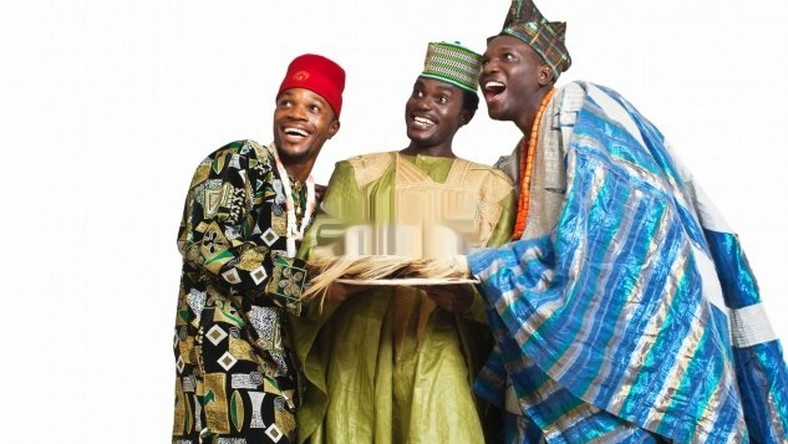
Independence Day in Nigeria is welcomed with a public holiday, and numerous activities are organized to mark the auspicious day. Youth dressed in green and white shirts and trousers, some march onto the streets singing the country’s national anthem and dancing to show their open support to their fatherland.

Several reports indicated that every year a considerable number of Nigerian youths who recklessly drive or ride bikes to celebrate the day sustain grave injuries, or worst, lose their lives.

Nigeria’s independence only in word

Despite the attention the day gets from the authority and Nigerians, some people still believe that the country’s independence exists only in words.

A lecturer at Bayero University, Kano, Dr Rukayya Yusuf Aliyu, argued that the country is still trying to define and understand itself at sixty-two years.

She said Nigeria is “an independent nation still trying to define and understand itself at 62.”

She said, “Certainly a developing nation with abundant wealth, very poor and clueless leadership, and a careless citizenry.

“Nigeria is an independent nation even though it should have done better. Nigeria is independent of colonial rule yet dependent on foreign nations for aides. She should ordinarily be provided to smaller, poorer nations at 62.”

Another lecturer, Dr Abba Ahmad Muazu, said the country is independent in reality but dependent because it hugely relies on other developed countries to survive.

He said, “In my perception, Nigeria is independent but dependent. The fact is that in terms of security, Nigeria can’t protect itself. So we rely on developed countries to provide us with arms and support.

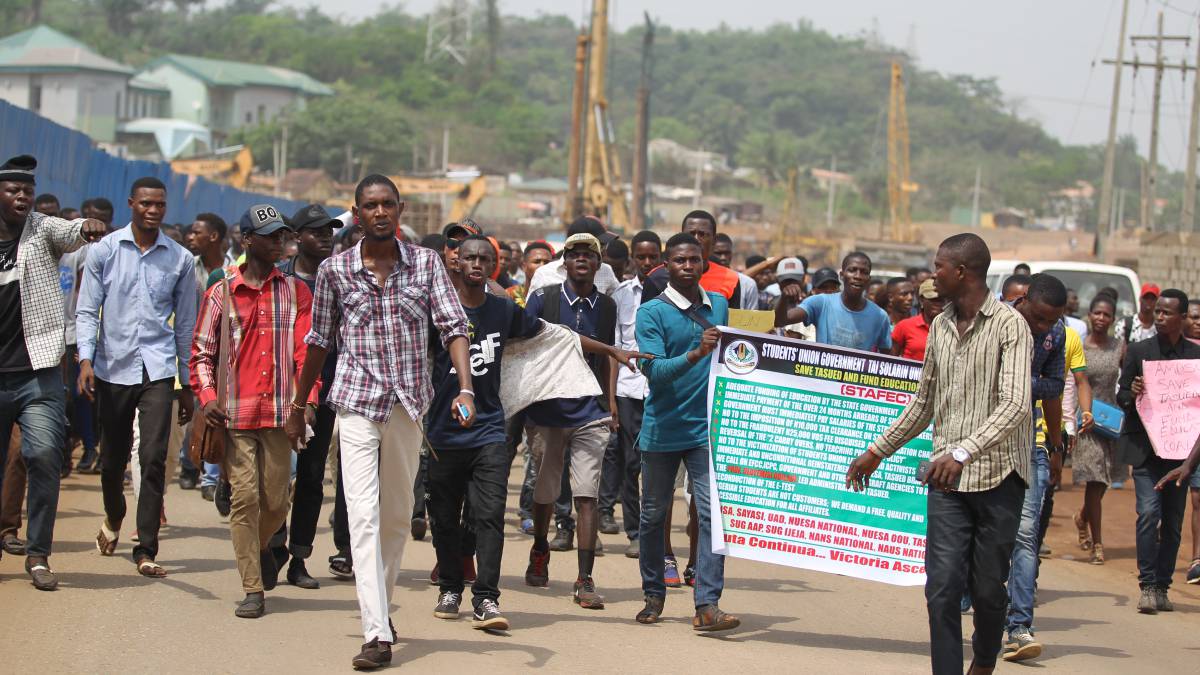
“In education, Nigeria can’t invest in its educational systems to attract foreign students. Moreover, if you look at the current lingering ASUU Strike in Nigeria, the issue is yet to be resolved.”

At 62, Nigeria is still toddling

A classroom teacher, Yusuf Shu’aibu Yusuf, decried the present situation in the country, saying the poor in Nigeria are yet to secure their Independence.

He stated, “Freed from the white domination only to be subjected to the worse form of domination by our fellow countrymen. In my opinion, the ruling class and their capitalist cronies are the ones whom this Independence is for. The poor are not yet free. The masses are yet to secure their independence.”

A Kano-based businessman, Hassan Ibrahim, said Nigerians were more independent during the colonial administration than now.

He said, “In those days, kids were taken to school for studies free of charge. All the necessary things, including school tokens, were provided for them. But today, things have fallen apart. Nigerians are in a mess.”

Bad governance drags Nigeria to its knees

A renowned political scientist and analyst, Professor Kamilu Sani Fagge, said bad governance has brought about the current situation in Nigeria.

He stated, “There are numerous factors involved that resulted in the current situation of Nigeria. But the major one is bad leadership, which contributed to many political crises in the country.

“And the issue of bad leadership has brought about corruption in Nigeria. When we have good governance, corruption will give way to a developed Nigeria.

“In addition, it will also boost the country’s economic growth.”

Nigeria needs to diversify to grow

Professor Fagge added that for Nigeria’s economy to grow, the country needs to diversify.

He said, “Nigeria has depended hugely on oil since 1970, after the second world war. Nigeria has been blessed with many resources, including farmlands. So we need to diversify.

“Nigeria also needs to bring back to work our closing industries and also provide good electricity to revive these companies.”

The living condition should be improved

Professor Kamilu Sani Fagge added, “The citizen’s life should also be improved. Citizens are the backbone of every country’s development.

“Quality education should be provided to all. But, sadly, our government concentrates more on infrastructure. Countries like India, Brazil and China have attained recorded success by improving the lives of their citizens,” the professor added.

Kannywood Movie Review: Mutuwar Aure

By Franziskus Kazimierz (Casmil)

The Al-Mubarak International Film Production LTD movie Mutuwar Aure (Hausa: Death of the Marriage), produced in 2018, tells a story set in a modern-day Hausa community by and large dealing with the common, or perhaps a rather notorious topic of divorce in the Hausa cultural context. Thus, set exclusively within a family context, the film’s plot tells a narrative between a family drama – or what it may be for “Hausa eyes” – and a love-triangle story. It also heavily proselytizes Islam and defends its values and proscriptions – especially prayer – and against sorcery – a generally well-pronounced motive within Northern Nigeria’s Kannywood. It is, arguably, also against the oppression of women being pronounced by critics outside and within the community. 

But beyond the mentioned main themes in the film, Mutuwar Aure develops a pretty interesting plot structure on its own, awaiting the spectators with unexpected turnarounds and slightly mixing genres, thereby making the plot’s twist even more curious.

To give an overview of the film’s plot – which primarily involves but a few characters only, making the film more understandable but maybe giving it too much “soberness”. It will certainly not be a spoiler to cheat about its beginning, when Abbas hands over a divorce letter to his wife, Rahma, containing the emotionally charged words “Náà-sàkee-ki” – I divorce you. By that, Abbas, a young man maybe in his early thirties, cuts one of the three possible ropes (igiyoyi) – with three cut ropes making reunification of the couple almost impossible. The twist of gloom on Abbas’ face makes the story’s plot seem predetermined, making him the “bloody antagonist” within the film – and Rahma, his victim, to be defended.

It is in this pattern the plot seems to be starting, but it is also precisely from this moment on that the story takes the unconventional twists mentioned above. In defence of Rahma, her family – in whose house Abbas is living – with a strong accent on its women seems to be ready to do everything for her – pronouncing it in a very hostile manner. By avoiding showing the strength of reconciliation, Mutuwar Aure heavily resembles Fuska Biyu (dir. Yaseen Auwal, 2018), a well-known Hausa movie containing similar features of adult women’s aggressiveness in order to fight for the interest of their own family. Throwing Abbas’ possessions out of the house, he also has to leave – having tried himself to send Rahma and their children away before. What is unknown to the spectators at this time is that the house where Abbas and Rahma had lived was granted to him by Rahma’s dad out of generosity. Therefore, by working heavily with fading-in back plots and visualized daydreams, the viewers may get the impression of Abbas being more than an antagonist while also being shameless and ungrateful.

Still, the movie contains more secrets to reveal. The more Abbas comes to Rahma, her dad and her family, the more it also becomes clear that there is something more to the divorce. Rahma was rude to him when she suspected that Abbas was having an affair with his secretary, Zainab – in this regard, we can observe a reversed love triangle.  

Thus, shortly before Abbas can marry his secretary, Zainab, they can reunite by the strength of Rahma’s prayers – while Zainab is being rejected for using sorcerers to conquer Abbas’ heart – finally, the superiority of prayer over magic is demonstratively portrayed.

It can, therefore – also looking at the whole film – not be underlined enough in what grade the film proselytizes the traditional Islamic way of life. Rahma and her family, whom some might surely cheer in their fight for women’s rights initially, drop to be full of naivety and false morals, constantly humiliating a righteous man asking for their forgiveness. Rahma’s father finally admits that he had called him names for nothing.

Abbas, on the other side, a poor teacher at primary school who seems to be doing nothing but exploiting Rahma and her family until they don’t seem to be profitable anymore and moralistically reciting the Qur’an, changes to a mistakenly humiliated, righteous character. Rahma, herself, finally asks for his forgiveness.

While dealing with a fascinating plot, the way of making it a film probably could be better. The setting resembles Risala (dir. Abubakar S. Shehu, 2015) – as it is set in a different time – than other films being set in the modern day  – by being quite sterile. There are hardly any scenes beside the Abbas’ house, making it appear like filmed theatre – the exact production environment for many, especially early, Kannywood movies. Though constantly in the background, music doesn’t play any role like in vocal numbers. By the combination of these circumstances, the film looks pretty puristic. It might be, therefore – although there are significant differences, why not (?) – a counterpart of Risala set in modern times portraying Abbas to be an innocent man being persecuted. Interestingly, though – of course – the place where Mutuwar Aure is set in – does contain modern equipment, the modernity is not really to feel, probably by missing liveliness.   Also, in the end – and somehow similarly to Risala – the happiness is again relativized by new – though unreasonable – suspicions of Rahma.

Still, the plot is full of exciting and probably unconventional twists opening a broad horizon for this kind of movie. Though it could have been livelier and more trenchant in its actions, it still has a powerful message and is, by that, fitting to be talked about, if not purely for entertainment.

Casmil wrote from Cologne, Germany, via kafrakize@aol.com.

Nigeria at 62: Which way forward?

By Habibu Maaruf Abdu

Nigeria gained independence from Britain in 1960. That’s 62 years ago. Unfortunately, however, the country has made no significant advances since then. In my opinion, it takes the collective efforts of all Nigerians to change the story. Nigeria’s ethnically diverse people must agree to unite and develop a sense of working together to move the country forward. In other words, Nigeria must first be united to reach its destined greatness.

To achieve a united Nigeria, the government of the federation must endeavour to command a ‘national loyalty.’ That is, to get support from the people of every part of the country. The government could get this if it gives members of all the parts an equal opportunity in the government and its agencies. This will send a sense of belonging and satisfaction to them. The government should also treat all Nigerians equally, regardless of their regions, religions, tribes, and political affiliations.

Another thing that can bring Nigeria together is leadership rotation across the six geo-political zones. This should be regarded considering the reality in the southeast today. There are grumblings, and even mass agitations, from the southeasterners, mainly because they have never produced a president since the second republic. This fact makes them feel as though they are treated as outcasts in the country and therefore agitate. When leadership rotation is implemented correctly, such agitations will unlikely arise again. Also, the federal government should ensure that no region is envious of the other by making fair zoning of capital projects and equal distribution of resources across every part of the country.

For the peaceful coexistence of ethnically and religiously diverse Nigerians, all ethnic and religious groups must reject their prejudices against one another. They must also understand their differences genuinely. This is necessary for them to have a common ground for respecting and tolerating their differences (cultural, ethnic and religious). It will also help them to live in harmony and build a society with strong human potential and economic progress.

‘Discipline’ and ‘patriotism’ are also areas of emphasis. No nation can be great without these values instilled in the psyche of its citizens. This is why many countries, like china, have a whole ministry for national orientation. Nigeria should copy these countries and launch a massive and consistent campaign for the ethos of civic behaviours and responsibilities in Nigeria. This will help to build discipline, respect and love of the country, as well as national pride, in the society. When these values are present in society, the people will uphold discipline and patriotism. They will reject corruption and all other harmful habits that could cripple their dreams and inhibit their country’s development.

On another side, economic diversification should be considered to put Nigeria on the right track. The country’s economy is, at present, heavily reliant on the revenue derived from the export of crude oil. This leads to low economic growth, which, in turn, favours poverty as there is no room for massive job creation. But the diversification of the economy will certainly change the story. Therefore, Nigeria should diversify into areas like agriculture and industrialization. The agricultural sector, which was the mainstay of the country’s economy before the discovery of oil, has a long value chain. And a firm industrialization policy can create thousands of manufacturing jobs for people.

Nigeria should also make policies that will attract more foreign investors, especially those who produce different kinds of products and machines. This, together with reasonable provisions for private enterprises, will go a long way in reducing unemployment and alleviating poverty in the country.

Notwithstanding the above, Nigeria should do better for the education sector. The saying, “No country can really develop unless its citizens are educated,” cannot be more correct. Unfortunately, Nigeria spends very little on education (less than 8% of its total GDP). The number of out-of-school children is high, and universities remain closed for over seven months due to an indefinite strike by the Academic Staff Union of Universities (ASUU). To save education from this mess, Nigeria should increase its expenditure on the education sector; map out a plan for revamping it, and see the plan through with maximum commitment.

At this juncture, I want my fellow Nigerians to remember that; all the developed countries we currently admire have, at some point, been where Nigeria is today. It’s therefore valid to believe that Nigeria can equally develop. Fortunately, the country is blessed with both material and human resources to facilitate the process. However, it is rightly said that Rome wasn’t built in a day. Progress is made with sustained effort over time. Therefore, we need to unite, do our patriotic duties, uphold discipline and get professional and morally upright leaders to drive the country.

I will conclude by quoting Chinua Achebe in his book The Trouble with Nigeria, published in 1983, where he opined that “Nigeria can change today if she discovers leaders who have the will, the ability and the vision. Such people are rare in any time or place. But it’s the duty of enlightened citizens to lead the way to their discovery and to create an atmosphere conducive to their emergence. If this conscious effort is not made, good leaders, like good money, will be driven out by bad.”

It takes our collective efforts to move Nigeria forward.

Habibu Maaruf Abdu wrote from Kano, Nigeria, via habibumaaruf11@gmail.com.

At 62: Nigeria’s independence and the future we desire

By Babatunde Qodri

It can be argued that ever since Nigeria got her independence in 1960, the country hasn’t gotten worse like it’s today. Every year is filled with insurmountable challenges beyond the control of both leaders and citizens. It appears, sincerely, as if the country has been cursed. Every opportunity to believe in Nigeria’s prosperity is dashed by a litany of crises ranging from insecurity, poor education and health systems and economic downturn. The country seems to have been brought to her knees.

The occasion of independence does not move people from different corners of the country. On the contrary, the convention of this remarkable celebration is a history remembered with joy and happiness. Many other African countries celebrate their independence with scores of impressive feats, despite avoidable crises. Unfortunately, the case isn’t the same here in Nigeria, where leaders expected to make people proud resort to disappointing charades to the country’s detriment.

The ongoing industrial action by university lecturers says a lot about how blighted Nigeria has been. Students have been away from classrooms for months. One would expect that a 62-year-old country should have grown past deleterious distractions capable of creating barricades in the way of her education system. It hurts that a sector as eminently necessary as education can be allowed to suffer while the Government continues to fund frivolities. The question is, which country develops or has developed without serious attention to education? 

In other words, education in Nigeria is now in a comatose state. It’s hard to believe that this is Nigeria where Sir Ahmadu Bello, Obafemi Awolowo, and others once lived and governed. Nigeria’s present predicament, evident in her leaders’ shameless willingness and obsession with greed, has ruined those past years of free education packaged to liberate Nigerians for genuine patriotism. What used to be, in terms of quality, transformative education now constitutes a culture of abandonment, taking a heavy toll on the survival and growth of the country.

Insecurity is another problem. Severalerians have been in captivity for years. We are now the headquarters of banditry and kidnapping for ransom. Non-state actors have taken advantage of the country’s vulnerability to unleash horrors daily. And the complete loss of strength by people constitutionally paid and expected to protect lives and property heightens fears. Because of this unwholesome reality, the country has become a no-go area for foreign investors who should have helped her economically. The fact that people are becoming strangers in their homeland explains the mass migration of Nigerians out of the country in search of averagely better and more peaceful climes. Internal unrest, sadly, continues to drag the country backwards.

This reality is worsened by intractable corruption. Despite being an oil-producing country, it’s still disgusting to hear that Nigeria cannot refine her oil, which makes the country hugely indebted. While other OPEC countries leverage the international market amid restrictions posed by the ongoing Russia-Ukraine crisis, Nigeria is wallowing in a financial crisis resulting from endless oil theft. Isn’t it funny that the country has to borrow to service her debt? This is indicative of the depth of mess in which Nigeria is in.

Unarguably, Nigeria needs urgent solutions through the diversification of its economy. We must take advantage of modern agriculture to produce what we consume and vice versa. The country should stop wasting funds meant for critical goods on exotic cars for politicians. Our Government must invest in the education sector, health care system, and others.

Plus, effective legislation is paramount. Nigeria is in dire need of a fresh set of leaders with brand new ideas, leaders who are committed to viable plans and collective change. The issue of climate change must also be given urgent attention. Climate change and poverty have the exact root cause, and their impact contributes to the national underdevelopment the country is witnessing.

As we move into 2023, Nigerians should understand that our country deserves a befitting future. So we must be interested in candidates who will focus on doing the right thing at the right time. We must go for candidates with clear readiness and vision to transform our education system and uphold justice and transparency. We must do away with activities capable of fueling the embers of disunity in the country. 2023 should be about these.

Babatunde Qodri can be reached at babatundelaitan@gmail.com.

Academics, politicians, traditional rulers converge in Kano to discuss Nigeria’s economy

By Uzair Adam Imam

A 2022 and the 63rd annual national conference of the Nigerian Economic Society (NES) ended successfully Thursday, September 29, 2022.

The conference, which started Tuesday, was aimed at providing possible ways to enhance fiscal sustainability in Nigeria as the country ranks fifth on the list of ten countries with the highest debt exposure.

The event hosted academics, politicians and traditional rulers from all parts of the country to grace the event held in Maryam Abacha American University of Nigeria, Kano.

Speaking at the closing ceremony, Prof. Umma Ahmad Jalingo, the second woman president of NES and the first one from the north in 63 years, commended the successful completion of the event.

She said the past three days had been very impactful, adding, “Today, September 29, has marked the culmination of this program with yet an important component.”

His royal highness, the Emir of Kano, Alhaji Aminu Ado Bayero, commended the organisers for holding the conference in Kano.

The emir said the conference was relevant, looking at Nigeria’s current economic situation. He also commended all the papers presented.

Some of the papers presented included “Impact of Fiscal Policy on Financial Inclusion and Development in Nigeria” by Taiwo A. Segun, “Fiscal Policy Options and Poverty Reduction in Nigeria” by Muhammad B. Ado and “Public Debt and Poverty in Nigeria: The Role of Governance Quality” by Omowuwi O. Idowu, among others.

NES was founded in 1957, three years before Nigeria’s independence, and aims to provide intellectual leadership in understanding and to manage economic, social and political changes in Nigeria.

High debt will burden future generations – Dr Hassan Mahmud

By Uzair Adam Imam

The Director, Monetary Policy Development, Central Bank of Nigeria, Dr Hassan Mahmud, said the high debt would be a burden on future generations in the country.

Dr Hassan Mahmud disclosed this on Wednesday at the 63rd National Conference of the Nigerian Economic Society (NES). 

The 3-day conference, which started on Tuesday at the Maryam Abacha American University of Nigeria, Kano, was themed “Fiscal Sustainability and Policy Response for Economic Recovery in Nigeria”.

It was gathered that the country’s public debt in the first quarter of 2022 had risen to N41.6 trillion from N39.56 trillion recorded in December 2021.

However, the debt by the Federal Government has continued to throw a big threat to future generations as it may impinge on the country’s economic growth.

He said, “When debt is high, it becomes a burden on future generations as it leaves no room for borrowing when there is a shock.

“High debt can increase the cost of private sector borrowing, crowding out viable private sector investment and high servicing requirements.” 

Mahmud said despite the challenges, the public debt is an important instrument for the economy, adding that the country’s borrowing plan is guided by debt sustainability.

He added, “Nigerian borrowing plan is guided by the debt sustainability threshold to ensure debt carrying capacity does not impinge on growth.”

The event hosted many academicians and politicians from all over the country, many of whom also commended the conference and its organisers.

Again, Nigeria ineligible to submit film for 2023 Oscars

By Muhammadu Sabiu

The Academy of Motion Pictures, Arts and Sciences’ Nigerian Official Selection Committee (NOSC) stated that no film would be forwarded for the 2023 Oscars.

Nigeria will not be submitting a film to the International Feature Film category of the Oscars for the second consecutive year.

The committee’s chair, Mrs Chineze Anyaene-Abonyi, apologized to the Academy of Motion Picture Arts and Sciences (AMPAS) for not being able to locate a film that satisfied the requirements for the International Feature Film category.

“Although the committee received three epic films following its call for submissions in August, it turned out that none of them will advance to the next stage owing to the voting patterns of members,” she said.

The voting, which took place on the 3rd of September 2022, amongst the 15 members of the committee, had a voting chart of 8, 5, 1, 1, with “No Film is Eligible” taking the lead.

The 15 members of the committee voted on September 3rd, 2022, and the voting chart was 8, 5, 1, 1, with “No Film is Eligible” receiving the most votes.

“Nigerian films had, no doubt, improved significantly as the awareness of the requirements has since grown among filmmakers, and potentially soon, we just might be bringing this award home in succession,” Anyaene-Abonyi also said.

To gain the necessary international exposure and position our films in its acknowledged level of creative debate, she advised filmmakers to become more familiar with Oscar-nominated movies in the International Feature Film (IFF) category.

The movie “The Milkmaid” was submitted in 2020. However, after passing the eligibility test for the first time, the Desmond Ovbiagele-produced film was disqualified because it did not make the category’s initial selection.

The Oscars disqualified Genevieve Nnaji’s “Lionheart” in 2019 for failing to meet the non-English conversation requirement.

TETFund charges institutions to comply with BPP processes

By Muhammad Aminu

The Tertiary Education Trust Fund (TETFund) has charged higher education institutions that benefit from its interventions to ensure strict compliance with the public procurement process to prevent corruption.

TETFund Executive Secretary, Architect Sonny Echono, disclosed this while opening a three-day capacity-building workshop on the public procurement process for TETFund beneficiary institutions organized by TETFund in collaboration with the public procurement Bureau (BPP) in Kano.

He said the training was for the institutions from the Northwest and Northeast subregions of the country to get equipped with the procurement processes to curtail corrupt practices in the agency’s projects.

He noted that the training would serve as a refresher training for desk officers of TETFund in the 246 enlisted beneficiary tertiary institutions across Nigeria.

Echono further called on the participants to utilise the opportunity and enhance their knowledge in public procurement law to achieve the desired objectives.

In his presentation, the Director General of the BPP, Mamman Ahmadu, said the workshop that intends to ensure attaining the provision of the public procurement Act came at the right moment.

”We are here today to build the capacity of accounting officers, principal officers, public officers and other key players in the procurement value chain.”

He said BPP would ensure that all provisions of the procurement act are strictly adhered in procurement in the Nigeria’s tertiary institutions.

Nigeria: Understanding flood and the outbreak of infectious diseases

By Adam Mustapha, PhD

Floods are natural disasters that occur globally, destroying lives and property, especially in developing countries like ours. As a natural disaster, it is caused by climate changes and human activities which distort the balance of environment, hosts and pathogens. Factors such as high sea level rise, urbanization, destruction of river banks, and deforestation increase the risk of flood disasters.

Flood results in the disturbance of the epidemiological triangle; environment, host and infectious agent, and as such, it could result in the emergence of new agents or re-emergence of infectious agents that previously existed. Therefore, the potential outbreak of infectious diseases is a matter of great concern, and urgent intervention is needed to break the chains of transmission.

Flood is known to increase the global burden of various infectious diseases, mortality, social and economic disruptions and displacement of people, which can result in both physical and psychological trauma. Of great concern is how flood causes the outbreaks of infectious diseases, as germs can easily be transported and contaminate drinking water sources, which will provide a conducive environment for the completion of the vector life cycle.

Like other developing countries, flooding has become an annual event in Nigeria, and many towns and cities are vulnerable and susceptible to it. This year, the Nigerian meteorological agency (NiMet) warned some states that they were at high risk of flooding in its yearly prediction of rainfall. Therefore, it was unsurprising that flooding hit many such states, states like Jigawa and Yobe have significantly been hit. In contrast, others such as Borno, Adamawa, Gombe, Kebbi, Kano, Kaduna, Lagos, Kogi, Niger, Delta, Rivers, Zamfara, Taraba, Ogun, Osun, Ondo, some parts of Ekiti, Edo and FCT are affected from moderately to low levels.

Flooding can cause waterborne diseases such as cholera, non-specific diarrhoea, typhoid and viral diarrhoea caused by Rotavirus. These diseases are known to peak after flooding as the pathogens such as bacteria, viruses, and parasites can be transported. In addition, the crowded nature of displacement camps can potentially result in and aggravate the outbreak of respiratory diseases.

The crowded nature of displacement camps can potentially result in the outbreak of respiratory diseases of different etiological agents. Wastewater is a breeding ground and carrier of infectious diseases. For instance, wastewater has the potential of spreading viruses, as they are known to be good-chance takers of a flood, which take days after flooding to meet their incubation cycle. Viral diarrheal diseases, such as hepatitis A and E, vector-borne viral diseases such as Yellow fever, and many others are also some diseases that could potentially spread after the flood.

The genome of some viruses, such as SARS-CoV-2, are known to be detected in community wastewater and this call for concern as it can be disseminated during a flood. Another agent to worry about due to flood is Naegleria fowleri, a brain-eating amoeba causing primary amoebic meningoencephalitis (PAM). As water level and temperature rise, such a situation could fuel the growth of the agent. Environmental contribution to the development of infectious diseases is a significant public health concern that should not be ignored. Antibiotic-resistant bacteria and antibiotic-resistant genes are quickly disseminated in environmental wastewater, which could be further transported into the water system, which calls for concern.

Furthermore, the vector-borne disease can occur as a result of a flood because the development cycles of vectors are provided. For instance, mosquito-borne diseases such as malaria and West-Nile fever tend to increase after floods. Rodent-borne diseases also expand during flooding because the flood increases contact between rodents and humans, resulting in outbreaks of such diseases. Common rodent-borne infectious agents due to flooding include Leptospirosis, Hantavirus pulmonary syndrome, Hemorrhagic fever with renal syndrome etc.

Health interventions

 First, public health measures are essential in preventing infectious diseases due to floods. Therefore, preventive measures should be taken before, during and after the flooding.

Second, the provision of crucial intervention. The critical intervention is an active early warning system that can alert governments to prepare for possible outbreaks and send signals for evacuation of people at risk.

Third, the activation of rapid emergency response is also a necessity. This includes the provision of basic materials and health care services.

Fourth, after the flood, the activation of an effective surveillance method is mandatory for the early detection of an outbreak.

The key intervention is active early warning systems which can alert governments to prepare for possible outbreaks and send signals for evacuation of people at risk. At this stage, all stakeholders and the public must act on time. However, compliance is low due to a lack of an alert system or people refusing to abide by the warning system. Furthermore, risk assessment is needed to ensure that no basic amenities are disrupted due to floods.

Moreover, there is a need for vector control after the flood to break the chains of transmission. There is a need for collaboration among all public health stakeholders. Public enlightenment and outreaches are equally essential intervention measures.

Finally, provisions of clean water, sanitation and hygiene after the flooding to prevent infectious disease outbreaks are also very significant.

Adam Mustapha, PhD, is a clinical and medical microbiologist. He wrote from the Department of Microbiology, University of Maiduguri, via adadmustapha@unimaid.edu.ng.

Nigeria’s economy in chain since the start of Ukraine war – Minister

By Uzair Adam Imam

The Federal Government has said that the adverse effects of the war in Ukraine and the ongoing security challenge in Nigeria have contributed to the aggravation of the fragile economic situation in the country.

At the start of the war, the Organisation for Economic Cooperation and Development (OECD) warned that the world economy would pay a “hefty price” for the war in Ukraine, encompassing weaker growth, stronger inflation and potentially long-lasting damage to supply chains.

In Nigeria, inflation is already hitting living standards and reducing consumer spending as business owners become less optimistic about production.

The Minister of State, Budget and National Planning, Prince Clem Ikande Agba, disclosed this Tuesday at the 63rd National Conference of Nigerian Economic Society. 

The 3-day conference, which started Tuesday at the Maryam Abacha American University of Nigeria, Kano, was themed “Fiscal Sustainability and Policy Response for Economic Recovery in Nigeria”.

The Minister, represented by the Director Macro Economic, Mr Felix Okonkwo, said fiscal discipline is what Nigeria needs to build a stable and inclusive economy.

Agba stated that the Federal Government is focused on addressing the revenue issues, which it considers essential to the economic and financial health of the country.

He added that insufficient revenue was why Nigeria could not contain its fiscal deficit after the recession, meaning that the country’s capacity to continue to support and raise capital expenditure has not been improved.

He said, “The adverse effect of the War in Ukraine, insecurity, global food crisis, oil theft in the Niger Delta, rising energy prices, massive depreciation of the naira exchange rate, high fuel subsidy and increasing inflation as well as insufficient fiscal buffer aggravated the fragile economic situation in the country.”

The chairman of the occasion, Shamsuddeen Usman, said the conference aimed at providing possible ways to restore the country’s economic stability through enhancing fiscal policies.

The President of the Nigerian Economic Society, Prof. Umma Jalingo, who organized the event, said the association was founded three years before Nigeria’s independence and was aimed at enhancing the country’s economy.