Nigeria

Salary Review: The insatiable quest

By Musa Abdullahi Kaga

As an employee, salary is one of the most, if not the most, important factors in applying for or staying in a job. It is, however, a known phenomenon that salaries, no matter how handsome, hardly cater to one’s wants and needs. Hence, the regular quest for the insatiable: salary review.

Salary review is often misunderstood or confused with annual assessment or appraisal. Salary review is mostly deeper than annual or biannual appraisals. It is a comprehensive analysis/evaluation of whether a specific pay package is a fair reflection of what an employee should earn in line with factors such as external market forces, experience, career progression, company culture, job performance, etc.

Reviews are an essential HR and management strategy/tool for attracting and retaining good hands in a company.

Several factors may necessitate reviews, ranging from competitors’ pay trends, employee opportunities, or employers’ fear of losing employees for whom they invested so much.

It is only fair that as your employee’s career progresses, so do their emoluments. This should, of course, depend on milestones, achievements, performances, etc. Should there be a positive progression, the salary should grow accordingly. Unfortunately, this is not obtainable in our clime, especially in the public sector.

According to data from ALLSTARTSIT – a tech company specializing in software development services and talent acquisition in CEE regions – there has been a massive median salary increase of 106% for software developers in the CEE regions over the last decade. For example, a system architect that earned $3000 a month in 2012 makes about $6200 in 2022. That is massive, even for an IT specialist.

Graph showing ten years salary trend of software developers

In Nigeria, however, the last time the federal government conducted an upward review of workers’ salaries was in 2009 – 13 years ago – with an increase of about 53%. The dwindling economic situation in the country has rendered the purchasing power of workers feeble. Different civil, trade and labour unions have tabled several demands to the government over the years on the review of salaries and other welfare packages; unfortunately, this is yet to achieve any positive outcome.

Recently, the Nigerian Labor Congress, through its President, Comrade Ayuba Waba, lamented the sorry state of Nigerian civil servants and reiterated their demands to the government.

According to Waba, economic challenges had eroded the purchasing power of ordinary workers so much that the minimum wage could no longer take a worker home and could barely serve as transport fare.

Speaking to NAN earlier this year, he said; “We want to make a formal demand on behalf of the Joint Service Negotiation Council for the review of wages in the entire public sector because it is due,’’

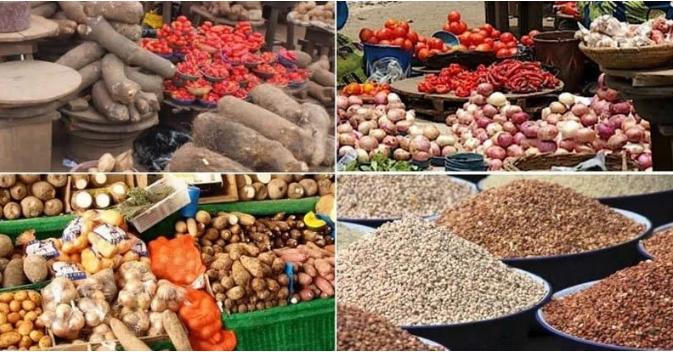
Looking inwards, it recently dawned on me the economic hardships endured by civil servants and other citizens; this is due to the rising cost of essential items and, of course, the occasion of the Eid celebrations. A friend who is an employee of a non-governmental organization has a compensation significantly higher than what his colleagues in the public sector receive, yet, he had to dig deep into his savings to afford a ram. It is nearly a miracle that he has the luxury of savings; public sector employees could only admire his status, even though he is still among the ‘masses.’

It is, therefore, a no-brainer for civil servants to work towards achieving an alternative source of income, especially in this digital era.

Unsurprisingly, it is not uncommon to see civil servants perpetually discussing issues like salary reviews and ‘welfarism’ in Nigeria. Even though successive governments in the past have not done enough to ensure a proper salary structure and compensation system among civil servants in various tiers of government, this is primarily because of the insatiable nature of salary.

The craving for more is intrinsically part of human nature, although some experts argue that insatiable desire is unhealthy (greed). Nonetheless, the motivation to work harder and earn a decent salary is our typical trait.

Musa Abdullahi Kaga sent this article via musaakaga@gmail.com.

Lady beats child to death, dumps corpse in Anambra bush

By Ahmad Deedat Zakari

A yet-to-be-identified lady has beaten a child believed to be her maid’s to death in Anambra State.

In a video that went viral on social media on Thursday, the lady confessed to the murder of the deceased, whose identity has not yet been disclosed. 

Information at our disposal reveals that the deceased was brutally assaulted and died before she could get medical attention. 

 “I beat her, and she started convulsing, so I took her to Kings (hospital). Getting there, she died, so I threw her body here.” The suspect said in Igbo

After her arrest by the Anambra Command of the National Agency for Trafficking in Persons, NAPTIP, she led security personnel to the bush, where she dumped the body of the deceased.

The body was reported to be decomposing at the time of writing this report.

Jigawa flooding and its forgotten victims

By Muhammad Abubakar

The news of the severe flooding in Jigawa State is depressing and alarming. I initially thought the report had reached every nook and cranny of the country. But the reverse is, unfortunately, the case. I was amazed to realize that the news has not gone very far in the country. Worse still, it is said that the state governor himself is currently out of the state.

I recently checked a couple of our local media sites to know more about the ongoing flooding, only to find out that; most of the news updates there have nothing to do with this deplorable disaster currently ravaging the state. It’s heartbreaking how many on-and off-line news outlets pay only lukewarm attention to this issue, although it should be discussed more than any other.

Jigawa State has never experienced such an alluvial disaster in its history. Many houses and villages collapsed; properties submerged; roads, bridges and farmlands were washed away, and crops ruined. Some have become orphans all due to this flooding!

The situation has reached the extent that the people of the affected areas can no longer move into their towns or travel out of the villages because their roads are not motorable. Also, thousands of people in the affected communities have been displaced. Canoes capsized. Lives were lost. Almost anywhere in the state has been negatively affected.

The most affected areas include Gumel, Mallam Madori, Auyo, Kaugama and Kafin Hausa local government areas. The flood has not only stopped here, but it also touched almost every part of the state. But yet, no tangible action has been taken on that by the government.

The federal government should therefore join hands with the state government to do the needful; deliver food, clothes, drugs and other useful items to the victims. May God, the omnipotent and omnipresent, end all the hardships we are going through in this country and the world.

Muhammad Abubakar wrote from Jos, Plateau State, via muhammadabubakar01002@gmail.com.

Train attack: Nigeria and the truth about the released victims

By Aliyu Nuhu

While congratulating the families of train victims for the safe return of their relatives, something very sad came to mind about the whole tragedy.

1- The ultimate winners are the terrorists. They achieved all their objectives without retribution. They have all their inmates released, collected hefty amounts of money in billions of Naira and foreign currencies and went away without losing a soul. Meanwhile they inflicted damages on Nigeria. They killed passengers, destroyed a train and stopped it from operation for seven months and instilled fear in the minds of Nigerians.

2- The biggest tragedy is that all the captives were released through payment of ransoms which impoverished family economies, some might never recover. The last victims were released by military committee which means more money were paid and the military might have also cornered part of the ransom money. In the whole saga there was no shooting, no arrest, not even declaring some people wanted. What kind of country do we have for God’s sake? Time will tell the kind of arrangement reached for the release of the victims.

3- We just have a paper military. What is there in a military that cannot use force on terrorists. There is nothing impressive about military that abandoned its trade and go to terrorists and pay ransoms. It is really a shame on NIGERIAN government.

4- As long as people benefit from train attacks and kidnapping there will be no end to this kind of tragedy. The terrorists have made a good, safe and profitable venture and have probably gone to plan another attack. Security agencies that benefit from it will be too willing to be part of the next attack. The Mamus that made billions from ransom negotiation will be waiting to make ransom harvest. A kidnapping Industry has been created by government’s inability to deal ruthlessly with criminals.

‘ASUU’s requests meet deaf ears’ – Atiku Abubakar

By Uzair Adam Imam

The presidential candidate of the Peoples’ Democratic Party (PDP), Alhaji Atiku Abubakar, consoles with the Academic Staff Union of Universities (ASUU), saying their genuine requests had met with deaf ears in Nigeria.

Atiku Abubakar stated this in a statement he issued and signed on Wednesday in celebration of the United Nations’ World Teacher’s Day.

Abubakar’s impassioned statement decried about the incessant strike which has been eight months now since lecturers shut down public universities to press their demands home.

He stated, “I wish to observe this all-important day by identifying with Nigerian teachers. I wish to identify with them in their moment of grief occasioned by poor working conditions over the years.

“Specifically, I use this medium to console Nigerian university lecturers whose genuine requests have met with deaf ears, and who have now stayed for over seven months without salary.

“Teachers are the backbone of a nation. They are the bedrock on which national development rests. Indeed, many educators have opined that, no nation can rise higher than the quality of its education system, and no education system can rise higher than the quality of its teachers.

“This means that no nation can make any meaningful progress in any sector without having well-trained, experienced, happy and well-remunerated teachers. A situation where some states are owing teachers’ salaries of up to five months, or even more, is unacceptable,” he stated.

ASUU strike and the disorientation at the presidency

Abdelghaffar Amoka Abdelmalik, PhD.

The major newspapers published the speech delivered by the president at the “Fourth National Summit on Diminishing Corruption in the Public Sector” on the 4th of October 2022. In the speech, the president said, “corruption in the education system from basic level to the tertiary level has been undermining our investment in the sector, and those who go on prolonged strikes on flimsy reasons are no less complicit.” The Academic Staff Union of Universities, ASUU, is the union on strike, so the newspapers reported it with headlines that “Buhari accuses ASUU of corruption”.

The president definitely does not have a thorough understanding of the issues that led to the strike else he won’t call the struggle for the proper funding of the universities, better conditions of service for lecturers, the release of the white paper on the visitation panel reports, among other important demands as “flimsy reasons”. It is sad and most unpardonable that the president has got no proper information on the structure and workings of the university. Otherwise, he would have queried that ridiculous and false statement when the speechwriter presented the speech to him for presentation. So unbelievable that our president is not aware that ASUU is not the same as the university management.

To correct this unfortunate misinformation from the president, in the university, there are heads of departments who are academics who receive N50,000 every 3 months for operational expenses. We have the Deans and Directors who are also academics which is the next level of leadership in the university. The Directorates receive N60,000 every 3 months for operational expenses. Is the misappropriation of these N20,000 per month, which comes irregularly that is corruption by ASUU members?

Then, we have the principal officers, which include the Vice-Chancellor (an academic), the Registrar (a non-academic), and the Bursar (a non-academic). There is also the Council chaired by an appointee of the government. You can’t appoint politicians looking for jobs as University Council chairs and blame ASUU for corruption. ASUU is just a union and does not manage the affairs of the university. Then, there is the Presidential visitation panel that is meant to visit the university every 5 years to check the management of the resources of the university.

It’s true that the management of the university could be corrupt. There is no doubt about it. But since the administration of President Buhari took over in 2015, the “corruption fighting” president seems to have found accommodation with corruption in the university that it failed to send a visitation panel to any federal university. ASUU was worried about that, and part of the demands of the 2020 ASUU strike was the constitution of the visitation panel to all federal universities. Paradoxically, it took the strike by the union of supposed “corrupt lecturers” for the anti-corruption FG to send visitation panels to the federal universities in 2021 to check “corruption”.

However, a year after the panels submitted their reports, the same FG that is accusing ASUU of corruption has refused to release the White Paper on the panels’ reports for implementation. Part of the demands of this strike is for FG to release the White Papers. The “corrupt ASUU” is pushing the anti-corrupt government to fight corruption in the university. Isn’t that amazing? It goes without saying by its inaction, indifference, and condemnable refusal to set up visitation panels and release the White Papers after ASUU forced it to set up visitation panels to all federal universities, the FG under President Buhari is aiding corruption in our universities.

Meanwhile, you can’t be complaining of corruption but rewarding alleged corrupt people. The former VC of the Michael Okpara University of Agriculture, that was accused of academic fraud, financial embezzlement, and administrative impunity by the ASUU branch of the university, made the list of the people to be awarded a national honour by the president. Same with the former Council Chairman of the Lagos State University, who, with the VC, deployed the pension of Staff for the purchase of luxurious cars.

Does it make sense to accuse the university managers of corruption and then nominate university managers that were accused of corruption for national honours without taking steps to investigate these allegations? That’s a joke. By the way, what is the correlation between the poverty wages of Nigerian academics with corruption in the universities? Does that explain why Nigerian lecturers are one of the poorest paid in the world?

The president further said that he task our academics to attract endowments, research, and other grants to universities, polytechnics, and colleges of education similar to what obtains in other countries. It has been rightly said that “if wishes are horses, beggars too will ride”. It does not take rocket science to know how those universities referenced achieved that. An endowment is not attracted by academics but by the university council and management. President Buhari should stop his trademark and uninspiring blame game and should be talking to the people he appointed as Council chairmen for our public universities.

The truth is, research grants are not attractive using an empty room as a lab. No international donor will fund empty space. Only the existence of avalanches and modern facilities are used to attract grants. When I got a PhD grant in 2008, I took the grant to a university in the UK because they have the required facilities for the research. For the 3 years, the UK university got thousands of pounds through me. That’s a return on investment. What have we put in place to attract such? That’s what we should be worried about. That’s why ASUU is asking for the required funds to be injected into the system to make our universities attractive for grants, as it’s obtained in other countries.

Despite the horrible condition of service of academics in the country, Nigerian academics are winning research grants. An Associate professor at Bayero University Kano recently received a research grant of £969,680 from Wellcome. A senior lecturer at Ahmadu Bello University Zaria recently won a research grant of about 48,000 USD from Geophysics Without Borders. Other researchers from the Federal University Dutse won a grant of $59,930 from The World Academy of Science (TWAS) and €220,801 from the African Academy of Science on renewable energy. These are just a few of the grants won by academics within the strike period.

The president’s speech was focused on ASUU, and the speechwriter chose his words with the utmost malice and mischief. There are sex scandals in every sector of the country. The rehash and blackmail of sex stories in the universities have become much like an expired drug with no potency. The stories of sex for jobs and contracts and sorting jobs and contracts in Abuja are in public space. Every sector has got the good, the bad, and the ugly. So, academia can’t be immune to the ills in our society.

But then, universities are still much better. They have rules and regulations that guide their operations, and they are enforced. Several lecturers have lost their jobs due to sex scandals or other similar offences. But we have a minister in this government that was accused of sexual harassment in 2020. If a student is a victim of such an act on campus and he or she refuses to report for appropriate actions to be taken, then you can’t blame ASUU for it.

Our Union frowns on sexual harassment in all its ramifications in our universities and is up in arms combating this evil. Hence, this speech which is similar to the words of their filthy-mouthed attack dog and other government agents at the presidency at this time, is an indication that it is either the people around the president are not telling him the truth about the strike or the depth of the poverty of sincerity is underestimated.

It is equally indicative that the administration has run out of ideas and initiatives to resolve a simple issue like the ongoing strike action. The Speaker of the House of Representatives, in an effort to bring an end to the 7-month-old crisis, has met with the president. Let’s hope that those agents of destruction around the president will allow him to think.

What baffled me is the fact that the Visitor to the university is publicly lamenting when he has not taken any action for 7 years to address all his allegations against the University. You are the president, sir. Please use your executive powers to solve problems, not passing bucks. Dear sir, you lament everything from the economy to insecurity to education, but lamentations won’t solve our problems. You need to be proactive, sir. You are the president; time is almost running out. Better late than never.

Finally, despite the way that academics in Nigerian public universities are handled, our research outputs are visible in the global research database. If political office holders should make one-tenth of the efforts and sacrifices made by academics in our public universities, they will be celebrated as heroes in office.

Professor Abdelghaffar Amoka Abdelmalik wrote from Ahmadu Bello University, Zaria.

Political Campaign: The dos and don’ts

By Abdulrazak Iliyasu Sansani 

Ahead of the 2023 elections, the Independent National Electoral Commission, INEC, has set 28th September 2022 as the date of the kick-off of the campaign for Presidential and National Assembly elections, while that of Governorship and State Assembly is on 12th October 2022.  

You may be confused about one thing or two, especially when I said the political campaign’s dos and don’ts. Some people may not have understood it. This is highly likely. But, of course, there are limits, and there is a red line that shouldn’t be crossed. There are things that politicians shouldn’t do in the name of electioneering. 

Now that you know, there are things politicians should not do to sell their candidature to the electorate. You will like to know what those things are. Relax. In the course of this piece, I will attempt to treat it. As Nigerians, we are fully aware of what an average political campaign season looks like. It goes with so many things that some of us might have thought are normal everywhere. But it isn’t. Once again, what are they? Political thuggery, mudslinging, killings, hate speech, etc.

While electioneering isn’t a tea party, it doesn’t have to be as nasty as it is in this part of the world. It takes all of us to reduce the toxic messages: from our places of worship, markets, schools, offices, parks, halls, farms, etc. This is everyone’s business. We must be involved. We have to work collectively to help our dear states and the nation.  We can only build this country under this dispensation by encouraging democratic conventions and not unacceptable practices to win or rig the election. 

Rig the election? I think this horrible phenomenon continues to rear its ugly head because many of our institutions are so weak, especially the critical ones that can put a stop to it. Unfortunately, in so many instances, they abet it, leading to many terrible results over the years. 

You will be increasingly sought-after during the electoral campaign to hatch out different plans. This is the time when there will be a multitude of recruitment. No, not in the civil service. But the thriving political industries need the strength and pep of youth to propel them. It is saddening to note that many youths will be required not on the dignified and visionary side but at the disdainable and thuggish position, where their youthful energy will be wrongly channelled to the despicable social oddity of thuggery. This trend has led to the horrible end of countless youth over the years. 

It is discernible that politics is much maligned and detested owing to the celebration of thuggery, cultism, and immorality in many quarters. All these have discouraged many  Nigerians from joining politics or exercising their franchise without necessarily being card-carrying party members. This has, over the years, aided in robbing Nigeria of some of its best brains in politics, a large swathe of its patriotic citizens, and a considerable number of Nigerians who believe in this country. My compatriots, we must change the narrative. We have to stand up and fight against any negative energy that permeates the polity: for the sake of our country. 

Am I advocating against joining politics? Definitely, no. But join politics as a decent, respectable, and patriotic participator, no matter how ‘insignificant’ your position is. In this way, your wit and vigour will be put into effect. Draw a line once your only place is a thug or any role that diminishes you or any other person. 

Value yourself and do only what is legal and aids your personal growth and collective development of society. Do not allow yourself to be used as a tool to destroy your future for a meal ticket. Be wise. You are as good as anyone else when you work hard sufficiently. 

The campaign season has been known to be a tense moment worldwide. This is not peculiar to Taraba or even Nigeria. However, political campaigns are usually anxious for the right reasons in saner climes, with each candidate coming up with competing ideas and plans forming the fulcrum of their manifesto. Therefore, it is anticipated that heated discussion will be a standard feature. But in most instances, the issues take centre stage. Therefore, there will be no need to recruit an array of youth to be engaged in thuggery to win elections. 

Over the years, we have seen how the tone of the candidates’ political campaigns has played a significant role in the level of violence witnessed before or after elections. Therefore, we must be deliberate in deciding our fate by categorically saying no to election violence, whether as candidates or electorate.  

We need to suffocate the polity from getting the stimulus of violence from the youth that has kept it going. We are sure of sanitizing the system. As more people are interested in politics, much more good and patriotic Nigerians will line up. It is a win-win situation for Nigeria. This will give us a better opportunity to choose good leaders to build the Nigeria of our dreams. 

Abdulrazak Iliyasu Sansani wrote from Turaki B, Jalingo, Taraba State. He can be reached via abdulrazaksansani93@gmail.com.

Nigeria of my dreams

By Abdulhalim Ishaq Ringim

The giant of Africa and emerging global giant in all ramifications; the story of Nigeria’s journey to greatness has become a subject for intellectual and academic delineation, for it eludes the projections of even the most reputable global think tanks.

Nigeria solidified its position as the largest economy in Africa and became the fastest growing economy in the world. The nation achieved such a feat by restructuring its economy. Successive governments have over the years focused on structural economic transformation for long term economic growth with commensurate development. The economy became diversified not only in terms of output, but also in terms of productivity and revenue generation.

Today, Nigeria no longer depends on oil revenues courtesy of our booming value-added manufacturing-led industrialization and knowledge-based economy. This positive economic trend was further crystallized by the diversification and expansion of the tax net through an efficient and leakage-free tax regime. The expansion of our export basket with processed agricultural commodities and mineral resources produced by our manufacturing sector have ensured steady inflow of foreign exchange and that has stabilized our currency’s exchange rate. We are now a global power in trade.

We are witnessing massive capital influx in form of Foreign Direct Investments(FDIs) due to our favorable business environment, abundance of material resources and a skilled labor population. This has guaranteed an upward trend in our employment rate and a resultant free fall in our unemployment and poverty rates. The skills and technology transfer initiatives that accompanied the massive FDI influx has increased the employability of our working age population and our productivity.

Additionally, the huge tax receipts and social responsibility commitments from our large private sector formed a gargantuan financial resource base that funds our human capital development endeavors. Basic and Post-basic education is now free and compulsory. We have increased the penetration of healthcare institutions across the country and have driven down maternal and child mortality and morbidity rates. We have invested hugely on tertiary education, research and development and such have greatly contributed to our transition to a knowledge-based economy. We also have developed a robust social protection system that adequately caters for our vulnerable geriatric and pediatric population.

Gratifyingly, the number of out-of-school children we have is very insignificant today. Thanks to a proper diagnosis of the problem and the deployment of a robust solution. We understood that we had over 10 million out-of-children and we realized that the almajiri population in Northern Nigeria was the major source. So we restructured our education system in such a manner that it will be able to accommodate and admit a significant percentage of the out-of-children. We also deployed variable policy actions based on the individual peculiarities of Nigeria’s states and regions.

In the North, which contributed the highest number of out-of-school children, we revitalized more than 150 Tsangaya Model Schools and operationalized a standard curriculum for these schools which included modern education, Islamic education and technical/vocational education.

We then systematically engaged all stakeholders involved and secured their support to absorb all the Almajiri population into these schools in batches. The Almajiri teachers continued to offer lessons in Islamic studies while other teachers complemented their efforts with modern and entrepreneurial education.

We then banned the Almajiri system and imposed stringent penalties in case of violation. We trained all the absorbed Almajiri students in batches and the moment we were done with that, we converted all Tsangaya Schools to conventional primary schools. At that point, we had no Almajiri roaming on the streets. So these conventional schools became an addition to the pool of primary schools we have. And we now hardly have a child that is out of school.

In our bid to improve the productivity and employability of our working age population, we effected broad changes in the upper levels of the education sector in a manner that created extra routes to employment. We created a skill-based educational system that complemented the university education system. This new system assured the creation of what we call “new-collar jobs” or skill-based jobs. To achieve this, we constituted a broad apprenticeship program that trained and acquainted students with high demand industrial and technology skills. We then created a certification system for these students which was used to confirm their competencies by industries and organizations that require their services.

With this, many youths who were not able to pass through the university and could not get jobs in the previous system we operated were now suitable for the “new-collar” industry we created. This was how we reduced our unemployment rate and improved the productivity and employability of our working age population. A lot of industries of both local and international origins found Nigeria as a suitable investment destination because of our highly skilled, productive, employable and easily trainable working age population. Resultantly, our national productivity and output increased greatly. And millions of families were brought out of poverty because of the resultant increase in employment and income.

We witnessed a massive reorientation of the entire Nigerian population. The Nigerian people even with huge diversities in ethnicity and religion have been peacefully living together. This stems from the national reorientation exercise that prioritized the understanding of our differences and learning to tolerantly adjust and accommodate one another. The political terrain was sanitized in a way that disincentivized ethno-religious manipulation. We had series of constitutional amendments that reshaped the country towards true federalism where every federating unit is autonomous and productive.

The characteristic recurrent political crises that usually ensued from ethno-religious causations was put to an end by a political settlement arrangement backed by constitutional provisions that mandates the rotation of political powers among the 6 geopolitical zones of the country. This arrangement was conditional and was to be abolished after all geopolitical zones have had their share of political power. The underlying principle was that the frequency of political crises would be reduced. This resulted in smooth political transitions and Nigeria was no longer in a state of constant crisis management. Ultimately, this served as an enabler for the new political coalition that have ruled Nigeria over the years to be visionary and to focus on consolidating on successive efforts to achieve long-term structural transformation.

The rotational system has today been abolished having accomplished its ultimate objective and Nigeria’s political terrain is now completely meritocratic and significantly devoid of ethno-religious divisive undertones. Elections have also become very credible and peaceful. The structural and functional capacities of agencies of government responsible for enforcement of electoral laws and punishing election-related crimes were enhanced. The government also improved the country’s financial intelligence network for effective monitoring of financial flows during election seasons by responsible agencies and resultantly ensured enhanced compliance to financial regulations during election periods by political actors(individuals and parties). These among other measures improved Nigeria’s political climate and sanitized the country’s election processes.

Corruption which was once a major challenge we faced is now alien in this country. Few years back when Nigeria was still in a troubled state, we consistently ranked lower than average in most indexes that measure countries’ transparency, accountability and Integrity. However, the fact that most of the ranking organizations were mostly overseas made it easy for Nigerians and the government to fault the validity and accuracy of the data and methodologies employed.

Resultantly, home-grown transparency, accountability and integrity indexes were designed to assess the compliance of governmental institutions and organizations to national and global anti-corruption and good governance standards, regulations, guidelines and statutes. The indexes ranks these governmental organizations based on their respective compliance levels.

The ranking system exposed a lot of cases of lack of compliance to national and global commitments to anti-corruption and best governance practices. Some of the local statutes that were not being complied to included Freedom of Information Act, 2011; Executive Order No. 001, 2017; Fiscal Responsibility Act, 2007; Federal Character Principle; Framework and Guidelines for the Use of Social Media Platforms in Public Institutions, 2019; and Discrimination Against Persons with Disabilities (Prohibition) Act, 2018.

United Nations Convention Against Corruption (UNCAC), 2004; Nigeria’s Open Government Partnership (OGP) Action Plan II; Sustainable Development Goal (SDG) 10 and 16; African Union Convention on Preventing and Combating Corruption, 2006; Convention on the Elimination of All Forms of Discrimination Against Women; and Convention on the Rights of Persons with Disabilities and many others were on the other hand part of the international commitments that a lot of the government institutions contravened even while Nigeria was a signatory to them all.

Based on the discouraging results obtained from the assessment and ranking exercise, Nigeria embarked on a massive public service and institutional reform exercise. Government organizations were restructured and the capacity of public and civil servants was improved through a robust capacity building exercise. Those among them who could not withstand the rigor of the retraining exercise were retrenched in accordance with labour laws and were replaced by young, capable hands.

Accessibility and Functionality of Institutional Websites; Fiscal Transparency and Accountability; Transparency in Procurement; Citizens Engagement, Responsiveness and Effective Feedback Mechanisms; and Effective Human Resources Management were assured by the reformed public and civil service. The combination of these public service reforms and reforms in anti-corruption administration largely alienated the magnitude of corruption in Nigeria. Long-term stability in government, judicial independence and improved citizen consciousness contributed to the establishment and sustenance of this resilient anti-corruption regime.

The insecurity that characterized Nigeria was approached from a holistic perspective. With de-escalated ethno-religious tensions resulting from massive citizen reorientation and improved political settlement, marked improvement in all human development and economic indices and a rejuvenated armed forces; Nigeria applied a hybrid of kinetic and non-kinetic interventions to solve her insecurity problems.

We restructured our security architecture holistically, amended our constitution to legalize state and community policing and rebranded our Federal Ministry Of Interior to Federal Ministry Of Internal Security And Home Affairs. The rebranded Ministry housed new security bodies that were responsible for border and forestland security. We developed and employed efficient technology-based methodologies in the surveillance of our borders and other spaces of concern. We also leveraged spaces that were formerly ungoverned for real estate, recreation, tourism, agriculture, modern livestock management and other industrial endeavors.

Our media sector also restructured itself to conform with the vision of a new Nigeria. While we were still in troubling times, the media adopted a role that was defined by a balance between freedom of press, social responsibility, fact-seeking and healthy media-government relationship. As a guiding philosophy, the media assumed a role that discouraged the glorification of terrorism/Insurgency and encouraged the operationalization of selective censorship or measured reportage of terrorist activities in favor of counterterrorism efforts. This was of course adopted without losing cognizance of the imperative of protecting freedom of expression.

The media continued to consistently condemn acts of terrorism and adopted editorial policies that embodied patriotism while denying the terrorists the notoriety they so much desired. The media and government worked closely towards disincentivizing the lack of balance between patriotic and unpatriotic reportages by discouraging the receipt of funding specifically meant for reporting terrorist incidences from both local and international organizations. This process was driven by pure patriotism. Due to the influence of national reorientation, the love for our country was the only incentive that drove this media restructuring process.

Resultantly, the stability of our economy and security and our status as a global power in trade and commerce guaranteed us improved recognition in the international community. And as we continued to consolidate on our renewed patriotic consciousness, Nigeria defied all odds and rose to take her proper place in the comity of nations. We joined important global power associations including the BRICS(now BRINCS), G-20 and G-8. We also got nominated into the United Nations Security Council as a permanent member.

Deep sigh! How I wish the above exposition was our reality. Sadly, it is just a compilation of many of my dreams which I have overtime documented in a collection I call the “Nigeria of my Dreams”. But the fact that I was able to dream of a prosperous Nigeria(including the details of the road to prosperity) means it could indeed become reality.

Abdulhaleem Ishaq Ringim writes, being an entry submitted for Sana’a da Ilimi Foundation’s Independence Anniversary Essay Competition.

Pi mining – the way I see it

By Bilyamin Abdulmumin

314,159 dollars a Pi

One of the grand sagas that have been taking public attention is the issue of the Pi network. This project is said to be launched early in 2019. All potential subscribers need to come on board is a smartphone and data.

It depends on when one starts and how often they mine. But some pioneers (those who register for the crypto) have mined as much as 10000 Pis. However, the contentious saga that has been drawing attention was the Pi (cryptocurrency) relative value.

The value floating across as said to be the Global Consensus Value agreed by the world pioneers was a staggering 314,159 dollars. And already, many pioneers have as many as 10000 Pis. So, at this consensus, an average pioneer with 1000 Pis, the equivalent of 314,159,000 dollars, will need the services of similar camels that transported Alhaji Alhassan Dantata’s coins as the first person in 1929 to open an account with the First Bank. While a regular pioneer with as much as 10000 Pis, the equivalent of 3,141,590,000 dollars, will need the services of the Mansa Musa’s entourage like that accompanied him in 1324 for his first mecca pilgrimage.

The pioneers are determined and looking forward to this gargantuan windfall. Whether jokingly or not, some have already begun to imagine how to spend such jackpots. Many have embarked on the dream of climbing up the top social ladder by building exotic houses, expensive cars, or circumnavigating the globe for those who fancy the adventure.

Like many jackpot winners, these potential overnight billionaires continue to promise family and friends some bounties, including marrying them off, buying them houses in Asokoro, the latest iPhone, or sponsoring their pilgrimages.

While these pioneers continue to sail in their realm, their critics consider their aspirations at best as a mirage and, at worst, question their mental well being

When the President of the Association of Psychiatrists in Nigeria (APN), Taiwo Obindo, says that more than 60 million Nigerians are suffering from mental illnesses, the Pi critics say no wonder.

But one posing point the Pi critics raised is that instead of the pioneers assuming mining, it is actually them who are being mined. In other words, they are the cash cows, referring to the advert pool fee that the Pi initiators are generating from about 40 million users. Very plausible because in this era of social media, subscribers are gold.

On the other hand, the pioneers’ reason, too, is not a pushover. Instead, they point to the traction the Pi is getting, the global state of transition from the fiat currency, and the success of some previous cryptocurrencies such as Bitcoin. According to them, history is repeating itself. When Bitcoin started in 2008, everything was against its subscribers. They were seen as shadow chasers and laughed at. But when success stories began to come in, the doubting Thomas was nowhere to be found.

For those who don’t know how the current Pi value of 314159 came about, Pi is a useful mathematical constant with infinite values ranging from 3.14, 3.14, 3.141, 3.1415, 3.14159… to infinity. But, disregarding the point behind the decimal and in the ascending order, the pioneers arrived at 314159. In addition, to commemorate this mathematical constant, the official Pi lunch was on March 14, which is 3.14, the Pi first value mentioned.

In my opinion (everything considered), the expectations of the pioneers on the Pi network have reached a fever pitch, but the cryptocurrency hitting the market is on the horizon.

Bilyamin Abdulmumin is a PhD candidate in Chemical Engineering at ABU Zaria. He is also an activist for a better, informed society. He can be reached via bilal4riid13@gmail.com.