Killings

Over 1,100 Nigerians killed, 276 abducted in June — Security Report

By Muhammad Abubakar

At least 1,111 Nigerians were killed and 276 abducted by gunmen and other non-state actors across the country in June 2025, according to a new report by Beacon Security and Intelligence Limited.

The chilling figures are contained in the company’s monthly security dossier, which tracks violence and criminal activity nationwide. Despite the high numbers, the report notes that June witnessed a “notable de-escalation” in security breaches compared to May, suggesting a slight dip in the frequency or intensity of attacks.

While the report did not provide a full regional breakdown, sources familiar with the data say many of the killings occurred in the North West and North Central zones, where banditry and communal violence remain rampant. Parts of the South East also continue to grapple with targeted killings and kidnappings by separatist-linked armed groups.

The 276 abductions show the persistent threat of kidnapping-for-ransom, which has plagued Nigeria for years, affecting schoolchildren, commuters, and rural dwellers alike.

Security analysts say the figures, though slightly improved from previous months, still reflect a deepening crisis. They have called for more coordinated action by federal and state authorities to strengthen local intelligence, improve response times, and hold perpetrators accountable.

The government has yet to respond to the latest statistics, but critics argue that repeated assurances of improved security have not translated into meaningful safety for the average Nigerian.

Benue: The noise, the blood, and the silence that matter

By Oladoja M.O

Benue bleeds again. A recent massacre in Yelewata village, where at least 100 to 150 lives were claimed, cast a shadow over headlines, but smothered the deeper truth of decades-long sorrow. As images flash across social media in real time, outrage erupts. But near-instant outrage often substitutes for understanding. And in Benue, where tragedy is almost normalised, such performative empathy does more harm than good.

A Land on Fire, not for the First Time. This is not a one-off disaster. The roots go deep:

The 2001 Zaki‑Biam, where Nigerian soldiers massacred hundreds of Tiv civilians, razing villages in a brutal military reprisal, the 2016 Agatu Massacre, where more than 300, possibly up to 500, villagers were slaughtered during herders‑farmers clashes, leaving thousands displaced, the Odugbeho 2021, where suspected Fulani herders killed at least 40 residents in Agatu LGA, part of a continued wave of violence. In April 2022, over 25 were murdered in coordinated herder attacks on farming communities in Goma, up till this latest carnage, where victims were shot and burned in their homes, echoing a tragic pattern.

Between 2015 and March 2023 alone, 5,138 lives were lost across Benue in herder‑farmer attacks. Under President Buhari’s term, Benue became a killing field; 6,000 killed, 2 million displaced. The Humanitarian Crisis has been ongoing under the surface of fleeting headline moments.

The tragedy is not fodder for political stunts. The moment a video goes online, hashtags spiral: blaming the President, vilifying the government, and stirring political gain. But very few pause to ask: who suffers most in these cycles of condemnation? The dead do not return. The displaced families do not reclaim their farms. The real loss is in our silence, our unwillingness to grasp the whole before pointing fingers. Yes, government leaders, state and federal, bear responsibility.

The 2017 anti‑open grazing law in Benue was well-meaning. However, it remains a paper tiger: characterised by uneven enforcement, a lack of ranches, and feeble federal support. President Tinubu’s speeches and increased defence budgets amount to little on the ground when arms still flow, and security forces remain under-resourced. And when political opponents oversimplify the conflict as mere religious persecution or ethnic cleansing, nuance is lost.

At the heart of all these disputes is a struggle over scarce resources, including land, water, and natural resources, as well as grazing routes, which is exacerbated by climate change. Historically, grazing corridors existed. However, escalating population growth, farmland encroachment, and desertification have reduced these spaces. Compounding this: centuries-old migration, religious and ethnic tensions, cattle rustling, and political exclusion of Fulani groups. Each side bears accumulated grievances; farmers over burnt crops, herders over stolen cattle.

This is fundamentally communal, not merely political. Solutions must be rooted in non‑kinetic, non‑violent engagement. Dialogue tables must sit Fulani herders alongside Tiv farmers and local officials. Traditional leaders, ranchers, security services, and federal authorities must all negotiate a win-win framework, including grazing reserves, clear land-use maps, property rights enforcement, and swift justice for perpetrators. Yes, bring the perpetrators to book. Those profiting from killing, whether herders or cartels supplying arms, must face speedy consequences. However, we cannot rely solely on force. We need intelligence systems, community policing, and legal reform. We need peaceful co-management of land and water.

It’s time for Nigerians to shift from hashtag empathy to hard-won solidarity. Unleashing threads of blame on social media while clicking “share” does little for grieving widows or orphaned children. 

Recording a burn-out home instead of rescuing a trapped neighbor is the hallmark of a self‑absorbed age. 

Public discourse must evolve from political opportunism to intellectual empathy. From performance to purpose. When presidents speak, let’s demand substance: “Where are the ranches? Where is land‑use reform? Who funds security at the village level?”

We demand action, but not at the cost of conscience. We must hold leaders accountable while still listening. Civil society must stop yelling into empty rooms, and start negotiating into full ones.

A practical roadmap might include;

Reviving grazing reserves with clear boundaries, monitored jointly by local farmers and herders, enforcement of anti-grazing laws, backed with ranching incentives and federal support, swift prosecution of killers, with community courts supported by federal justice, strengthening local security, with trained village vigilantes under lawful guidelines. Climate adaptation, planting trees, building dams, restoring soil to reduce migration pressure, and, more importantly, promoting inter‑communal peace‑building through youth exchanges, shared markets, and local councils.

If Nigeria continues to allow Benue’s blood to stain its conscience, we’ll face another generation hardened by loss, distrust, and rage. A country that waits for television headlines before honouring its fallen has already forgotten them. Benue’s suffering needs more than outrage; it needs us: grounded, knowledgeable, purposeful. We must reject hollow political theatre and demand real solutions. Because beneath the noise and the blood, lies an entire community crying for justice, and silence is not an option.

Oladoja M.O writes from Abuja and can be reached at: mayokunmark@gmail.com.
31 Muslim passengers lynched in Plateau: ABU Muslim Forum demands justice

By Muhammad Sulaiman Abdullahi

The Muslim Forum of Ahmadu Bello University (ABU), Zaria, has condemned the brutal lynching of 31 Muslim passengers in Mangu Local Government Area of Plateau State, describing the attack as a “horrific act of savagery and barbarism.”

According to the Forum’s statement, signed by its Secretary-General, Dr. Munir Sani Ari, the victims—travelling in an 18-seater bus marked “ABU-Zaria”—were ambushed on Friday, June 20, 2025, while seeking directions in Mangu. Twelve passengers were reportedly killed and burned on the spot, while 18 others sustained serious injuries and are currently receiving medical care following military intervention.

Among the deceased was a staff member of ABU’s Department of Physics, who was reportedly transporting women and children to a wedding. The Forum emphasised that this was not an isolated incident but part of a “disturbing pattern of impunity-driven violence” against Muslims in Plateau State.

Criticising the response by Mangu LGA Chairman, Mr. Emmanuel Bala, who attributed the massacre to a “case of mistaken identity”, the Forum labelled the remark as “futile and insulting,” citing social media posts glorifying the attack as evidence of premeditated hate.

The Forum issued a set of urgent demands, including a full and independent investigation, public prosecution of those responsible, prompt compensation for victims, and immediate government intervention to prevent future attacks. It also called on the Kaduna State Government to support the victims’ families and cover medical expenses.

The Forum warned that continuing to fail to act decisively would only deepen national tensions, urging authorities to pursue justice beyond “mere rhetoric.”

Workers demand action on killings, wages at May Day rally

By Uzair Adam 

At this year’s Workers’ Day celebration in Abuja, organised labour unions issued a strong 20-point demand to the Federal Government, calling for urgent measures to address Nigeria’s deepening socio-economic crisis, including rising insecurity and wage stagnation.

In a joint address, leaders of the Nigeria Labour Congress (NLC) and the Trade Union Congress (TUC) urged the government to end the widespread killings across the country and implement economic reforms that prioritise the well-being of citizens. 

They also advocated for justice, respect for democratic principles, and transparency in governance.

Themed “Reclaiming the Civic Space in the Midst of Economic Hardship,” the event saw the labour centres decry what they described as unconstitutional actions, particularly the suspension of the elected government of Rivers State through a declaration of emergency, which they argued lacked a legal basis.

Other demands included an immediate salary review aligned with the economic situation, clarity on the Pay-As-You-Earn (PAYE) taxation system, and the withdrawal of controversial tax bills before the National Assembly. 

Labour also called for more inclusive policymaking, emphasising that workers must have a seat at the table when critical decisions affecting their welfare are being made.

Details to follow…

NAF to investigate the killing of Sokoto villagers in airstrike

By Anwar Usman

The Nigerian Air Force (NAF) says it will conduct a thorough investigation into the raining of airstrikes on two villages in Sokoto on Wednesday.

According to the community members, the incident, which happened around 7am at Gidan Sama and Rumtuwa communities in Silame Local Government Area (LGA), resulted in the loss of 10 civilians and left many other people injured.

Animals were also reportedly killed, with the communities saying some of their houses were destroyed by the impact of the airstrikes.

The residents said the fighter jet was targeting Lakurawa terrorists in the areas, but in the process, dropped explosives on some innocent people.

However, in a statement, the joint media coordinator for the operation, Abubakar Abdullahi, said the airstrikes targeted locations confirmed to be the base of the Lakurawa terrorist group.

He said that, all military operations are based on “thorough intelligence and reconnaissance missions” to ensure precision and protect civilian lives.

On the other hand the NAF spokesperson, Air Vice Marshal Olusola Akinboyewa, while reacting on the issue insisted that the airstrikes were carried out based on credible intelligence from multiple sources and confirmatory aerial surveillance.

He, however, assured that reports of civilian casualties would be thoroughly investigated.

Married or marred?

By Abubakar Aliyu

I discussed with a friend about the woman that stabbed her husband to death, and this part of her opinion makes me ponder deeply about our society; “Living with the identity, “the woman that stabbed her husband” when she was just a woman who did not want to be in the marriage to start with.”

I can never trust the sanity of a man who forces himself on a woman that made it clear in the first place that she does not want to be with him. I think only delusional and toxic men—purported alpha men—will find it normal to subdue a woman into marriage despite being vivid that she is not into it.

And you wonder why the same woman you forced into a marriage lets loose of her survival instinct, ignoring all rational and objective views, therefore, prepared to perpetrate unbelievable atrocities to “escape”. At this juncture, nobody cares to come to her aid until what could have been averted—by peacefully ending the marriage—has happened, a society that incited it will be pointing fingers at her.

I understand that no amount of pressure can justify the action of a woman who stabbed her husband to death. But the fundamental driving forces of this preventable menace largely boil down to societal pressure. Society coerces women to accept that being in a marriage—no matter how abusive and toxic it gets—is the best thing that could ever happen to her as a woman.

Islamically, marriage affords a man to marry as many women as he is allowed—not beyond four. To a woman, marriage is a world she is allowed to live in for the rest of her life with one man only. So imagine living the rest of your life with someone you do not love or whom you once loved but turned out to be toxic and abusive! To have a simulation of a woman living in a toxic or forced marriage, picture yourself stuck in a pit latrine for the rest of your life.

Marriage is supposed to be a willing union of mutual love, tolerance, and respect between a man and a woman. Whenever any party insists on separating, it suggests that some or all of these three ingredients are short-changed beyond repair. That is why when couples are in crisis, one thing society needs to do is hear the concerns of both parties and intervene with no intention to subdue anyone to the detriment of the other.

Even when they do not reciprocate, chivalry toward women is a virtue of a gentleman. But it is good you know when a woman runs out of love for you and makes it clear that she wants to leave. Acknowledge and respect her feelings and yourself and let her go—unless you are not a gentleman. Humans fall in and out of love for several reasons, and it is normal because many of these reasons do not necessarily have to do with you in the first place—it is not your fault.

As a woman entangled in a forced or toxic marriage, know that you are faced with two evils—resorting to violence which you will live to regret, or leaving the marriage against all odds. Always choose the lesser evil, which is to, by any means, end the marriage. It is always better they describe you as a woman who refused to stay married than as a murderer.

To put it briefly, as long as the willingness to form a marriage union is not mutual, or the couple does not see any reason to stay in the marriage, the society—this includes parents, guardians, and religious and traditional leaders—has to respect their decision and let them go their separate way without trying to judge or bully any one of them into staying for the sake of their children. It is easier for children to live with the trauma of a broken home than with the unsettling fact that their mother killed their father.

Dear gentlemen and others (self-acclaimed alpha men), ask yourselves, do you want to get married or marred? A word is enough for the wise!

Abubakar Aliyu wrote via abubakaraliyu599@gmail.com.

Court sentences man to death for killing his stepmother in Kano

By Uzair Adam Imam

A young man who murdered his stepmother in Kano, Sagiru Wada, was sentenced to death by hanging by the Kano State High Court on Thursday.

The man was arrested some eight years back after killing his stepmother, Zainab Dan-Azumi, and subsequently cut her into pieces with a sword.

Justice Aisha Mahmud, who presided the judge, said the court was satisfied with all the evidence presented before the court.

She added that the court convicted Wada under Section 221 of the Kano State Penal Code, adding that the prosecution counsel had proven their case beyond reasonable doubt.

However, Barrister Rabi’u Abubakar, who was the defence counsel, argued that the suspect was mentally ill.

However, the court rejected his claim reiterating that the evidences presented before the court were enough to convict Wada of murder.

NiDCOM laments killing of students in Northern Cyprus, warns Nigerians

By Ahmad Deedat Zakari

The Nigerians in Diaspora Commission (NiDCOM ) has warned Nigerian students against travelling to Northern Cyprus for education.

NIDCOM’s Chairperson, Abike Dabiri-Erewa, said this at a ministerial briefing in Abuja on Thursday, August 25, 2022.

According to Dabiri-Erewa, Northern Cyprus is not recognised by the UN and a lot of Nigerian students have been murdered in the country.

“There have been a lot of problems in Northern Cyprus; we have youths come to tell us, please tell everybody to stop going to Northern Cyprus.

“We did that sometime ago and we were challenged at what rights we had to tell people not to go to Northern Cyprus.

“I say it again; if you have to go to Northern Cyprus, think twice about it; no fewer than 20 students have been killed over the years and nothing has happened to the assailants.

“Students who had gone there earlier came to tell us that they had to embark on an awareness campaign. Don’t go to these places; Northern Cyprus is recognised only by Turkey,’ she lamented.

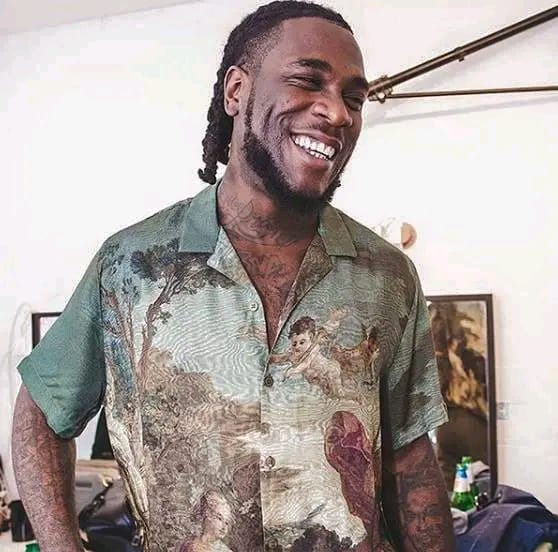
Burna Boy decries killings in Nigeria

By Ahmad Deedat Zakari

Nigerian award-winning artist, Damini Ebunoluwa Ogulu, popularly known as Burna Boy, has expressed sadness and delivered condolence over the terrorist attacks happening across Nigeria. 

Burna Boy took to his verified Facebook account on Monday, June 6, 2022, to express sorrow, condolence and solidarity with the victims of the incessant attacks ravaging the country.

“Nothing is sacred anymore!? Mother’s, fathers, children and babies getting killed. 💔My heartfelt condolences to all those who have lost family or friends from terrorists strikes across our country 🇳🇬 these past few months. I stand with you.” He posted 

In recent times, notorious terrorists have been hitting many places in Nigeria, which has caused the loss of lives and property.

Plateau Killings: ‘No place for this sort of violence’ – Buhari

By Uzair Adam Imam


President Muhammadu Buhari expressed deep grief over the recent atrocious killings in Bassa Local Government Area of Plateau State.


The incident has claimed the souls of not fewer than eighteen people, The Daily Reality discovered.


Buhari’s lamentation was in a press statement by his spokesman, Malam Garba Shehu.


The president has lamented that the incident was not in keeping with the principles of the peace agreements reached between the two ethnic groups, Irigwe and the Fulani, in the area.


“My thoughts are with the families of the victims in this time of grief. May their souls rest in peace,” the president said.


Buhari warned that “Every group taking the law into their hands claims to be retaliating. As a society, there is no place for this sort of violence. This is unacceptable.”