Kano State

Garba Diso and the Rising Dr Shu’aibu Abdul

By Abbas Datti

Effective representation in the House of Representatives is measured not by a lackadaisical approach and empty promises, but by tangible results delivered to the people. 

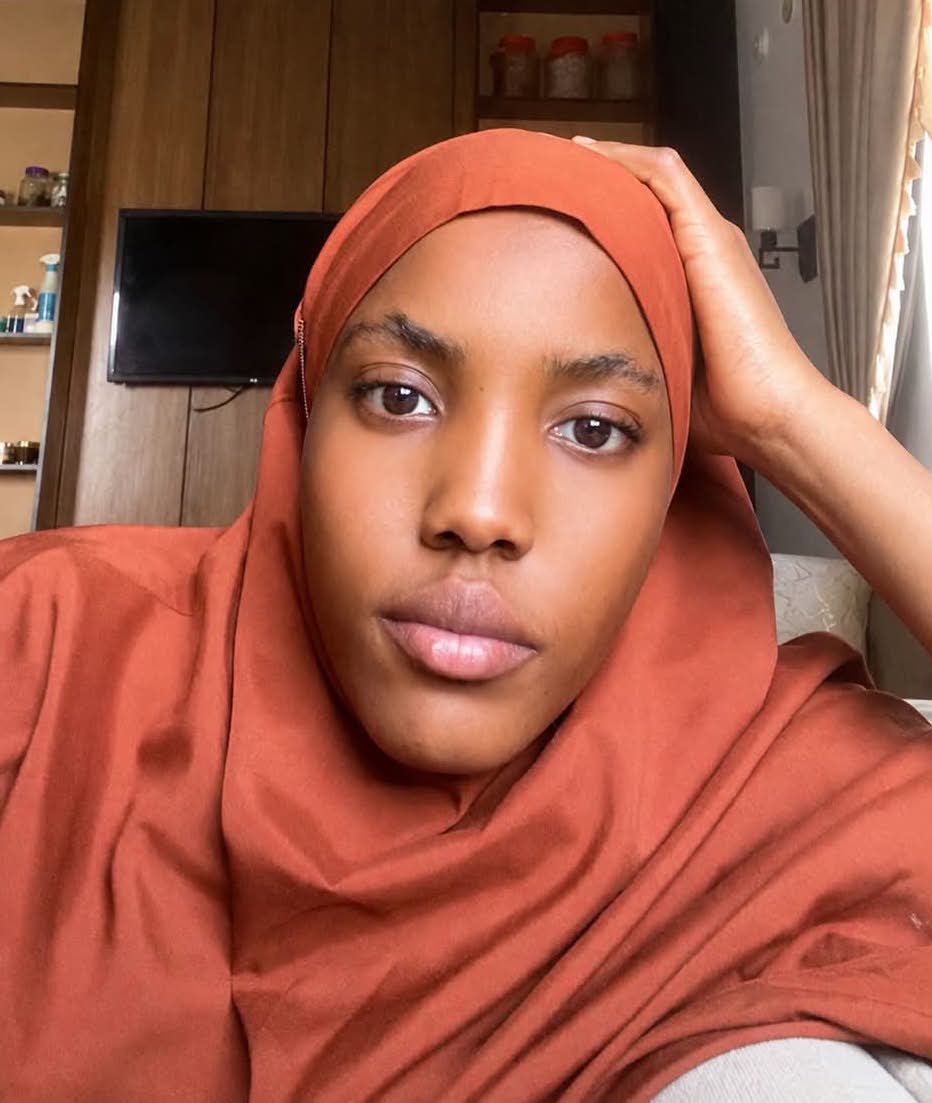
Unfortunately, Hon. Garba Diso, the current Gwale Member of the House of Representatives, has fallen short of expectations, particularly in the critical areas of sponsoring bills, raising motions, and youth development, educational support, and economic empowerment. That’s why Gwale youths rally for a vibrant young Dr Shu’aibu Abdul, urging him to contest for the Gwale House of Representatives in the National Assembly during the forthcoming 2027 general elections. 

Over the years, Gwale constituents have witnessed limited investment in the future of young people. There have been few visible scholarship opportunities, job opportunities, and inadequate empowerment initiatives for both young men and women. Unemployment and lack of access to higher education remain pressing challenges; this absence of proactive representation has left many youths without direction or meaningful support.

In contrast, Dr Shu’aibu, the aspirant currently vying for the seat, represents a refreshing shift toward people-centred leadership. Known for sponsoring youth to pursue tertiary education, he has demonstrated a clear commitment to education as a pathway to development.

 Dr Shu’aibu Abdul, a senior lecturer at Maryam Abacha American University and President of the Nigerian Youth Progressive Movement (NYPM), has been recognised in community circles for initiatives supporting young people, including sponsorship programs that help students pursue tertiary education. 

Beyond education, Dr Shu’aibu has also prioritised empowerment programs that benefit both men and women. Through skills acquisition initiatives, small business support, and mentorship opportunities, youths are being equipped with the tools needed to achieve financial independence and community growth.

Abbas Datti writes from Gwale L. G. A of Kano State, via comradeabbasdatti@gmail.com.

Kano Hisbah to Screen 3,000 Prospective Couples Ahead of Mass Wedding


By Uzair Adam

The Kano State Hisbah Board has announced that medical screening for 3,000 prospective couples participating in the state-sponsored mass wedding programme will begin on Monday.

The Deputy Commander General of the Board, Mujahideen Aminuddeen, disclosed this on Sunday, directing all prospective couples from 24 local government areas to report to their respective Hisbah offices for the exercise.

The affected local government areas are Rogo, Wudil, Tudun Wada, Warawa, Kibiya, Dawakin Tofa, Garun Malam, Kura, Dambatta, Karaye, Tsanyawa, Minjibir, Rimin Gado, Shanono, Kabo, Tofa, Rano, Bebeji, Ajingi, Gwarzo, Sumaila, Kiru, Takai and Madobi.

Aminuddeen said the screening would include tests for HIV/AIDS, hepatitis, genotype compatibility, drug abuse and pregnancy for female applicants.

He explained that only applicants who successfully pass the medical screening would be eligible to participate in the mass wedding programme.

Governor Abba Kabir Yusuf had earlier announced plans to sponsor the marriage of 1,500 men and 1,500 women, mainly widows, divorcees, orphans and other low-income residents across the state.

Under the initiative, each groom will receive N100,000 as dowry support, while the couples will be provided with household items, including beds, mattresses, wardrobes and food supplies.

Beneficiaries will also receive grants of N100,000 each to support small-scale businesses and improve their economic well-being.

The mass wedding programme, organised by the Hisbah Board, is designed to strengthen family values, promote social stability and ease economic challenges facing vulnerable residents in the state.

Although the initiative has received widespread support, some stakeholders have expressed concerns about its long-term sustainability.

However, the state government maintains that participation in the programme remains voluntary and based on mutual consent.

Kano Mourns Veteran Broadcaster Adamu Ibrahim Getso

By Hadiza Abdulkadir

Kano State is mourning the death of veteran broadcaster and seasoned administrator, Alhaji Adamu Ibrahim Getso, who passed away on Saturday evening after a brief illness.

Governor Abba Kabir Yusuf expressed deep sorrow over the loss, describing the late Getso as a distinguished broadcaster, seasoned administrator, and respected public servant. 

In a statement issued by his spokesperson, Sanusi Bature Dawakin-Tofa, the governor said that Getso devoted his life to advancing professional journalism, public enlightenment, and promoting societal values across Northern Nigeria.

Getso enjoyed a remarkable career spanning several decades in the media industry. He served as Managing Director of CTV 67, now Abubakar Rimi Television (ARTV), between 2000 and 2003, where he played a key role in strengthening regional television broadcasting. 

Getso later served as Managing Director of Radio Kano from 2011 to 2015, introducing reforms that enhanced the station’s position as one of the region’s leading public broadcasters.

Tributes have continued to pour in from colleagues, media professionals, and government officials, who remembered him for his integrity, professionalism, and unwavering commitment to public service.

Governor Yusuf extended his condolences to the family of the deceased and the media community, praying for the peaceful repose of his soul.

Aminu Kano’s Ideology and Emancipation of Talakawa: From Theory to Reality Through Kwankwasiyya and Emergence of OK Movement

By Mansur Hassan, PhD.

Introduction

The political history of Nigeria cannot be adequately discussed without recognizing the contributions of Malam Aminu Kano, one of the greatest advocates of social justice and popular democracy in Africa. Throughout his political career, he dedicated himself to the emancipation of the Talakawa—the ordinary people whose voices were often ignored by the ruling elite.

Malam Aminu Kano believed that government should serve the masses, protect the vulnerable, and create opportunities for all citizens regardless of family background, social status, or ethnicity. His philosophy inspired generations of politicians and activists who continue to advocate for a more just and equitable society.

The Talakawa Philosophy of Malam Aminu Kano

The cornerstone of Malam Aminu Kano’s ideology was the belief that political power should be used to uplift the common people. Through the Northern Elements Progressive Union (NEPU), he challenged feudal structures and elite domination, advocating education, political participation, economic empowerment, and social justice.

His vision was revolutionary for its time. He sought a society where every citizen could maximize his or her potential and where leadership was measured by service to the people rather than privilege.

Although Malam Aminu Kano became one of the most influential political figures in Nigeria’s history, circumstances and political realities denied him the opportunity to fully implement his vision through sustained executive power. Nevertheless, he succeeded in laying the ideological foundation for future generations committed to the cause of the Talakawa.

Kwankwasiyya: Reviving the Aminu Kano Legacy

Decades after Malam Aminu Kano’s struggle, Senator  emerged as one of the strongest political heirs to the Talakawa philosophy.

Through the Kwankwasiyya Movement, Kwankwaso revived and adapted many of Aminu Kano’s principles to contemporary realities. His administration placed significant emphasis on education, infrastructure development, healthcare, youth empowerment, and social inclusion.

The slogan “Making the son of nobody become somebody” became a practical expression of the Talakawa philosophy. Thousands of young Nigerians from disadvantaged backgrounds benefited from educational opportunities, scholarships, skills acquisition programmes, and public service opportunities.

For many observers and supporters, Kwankwaso transformed what was once an ideological aspiration into a practical governance model, demonstrating that political power can be used as a tool for mass empowerment.

Historical Alliance Between the Core North and the South-East

One of the most important but often overlooked aspects of Nigeria’s political history is the strategic alliance between the Core North and the South-East. Long before contemporary politics, leaders from both regions recognized that national unity and political stability could only be achieved through cooperation and mutual respect.

During the struggle for independence, the partnership between  and Northern political leaders helped shape the emerging Nigerian state. Despite differences in geography, culture, and religion, they shared a common vision of a united and prosperous Nigeria.

The First Republic witnessed significant collaboration between political forces from Northern Nigeria and the Eastern Region, demonstrating that national leadership could transcend ethnic and regional boundaries. These alliances contributed to nation-building efforts and reinforced the principle that Nigeria’s strength lies in its diversity.

The Second Republic and subsequent democratic transitions also witnessed important bridges between Northern and South-Eastern political actors. One of the most remarkable examples was the statesmanship of , whose commitment to national unity earned him respect across all regions of the country, particularly in Northern Nigeria.

Throughout Nigeria’s democratic evolution, many respected leaders from both regions continued to advocate collaboration rather than division. They understood that neither the North nor the South-East could achieve its aspirations in isolation. Progress was most attainable when both regions worked together in pursuit of common national objectives.

This tradition of cooperation demonstrates a historical reality: whenever the Core North and the South-East found common political ground, they contributed significantly to national development, political stability, and democratic advancement.

The Rise of Two Organic Political Movements

In contemporary Nigerian politics, two grassroots movements have emerged as powerful expressions of popular political participation.

The first is the Kwankwasiyya Movement, rooted in the ideals of social justice, education, empowerment, and the upliftment of ordinary citizens.

The second is the Obidient Movement, inspired by the leadership and political message of , emphasizing accountability, transparency, productivity, and national renewal.

Both movements derive their strength largely from ordinary citizens, especially young people who desire a more inclusive and responsive political system.

The Emergence of the OK Movement

In recent years, discussions surrounding cooperation between supporters of Peter Obi and Senator Rabiu Musa Kwankwaso have generated considerable interest across Nigeria.

Many supporters view such cooperation as a natural continuation of the historic partnership that has often existed between the Core North and the South-East. They argue that combining the organizational strength of the Kwankwasiyya Movement with the grassroots enthusiasm of the Obidient Movement could create a formidable force for democratic transformation.

This aspiration has inspired the concept of the “OK Movement” (Obi-Kwankwaso Movement), symbolizing unity, inclusion, social justice, youth empowerment, and national development.

Supporters believe that such a movement could revive the spirit of historical North-East political cooperation while providing a platform capable of addressing contemporary national challenges.

Conclusion

The ideological struggle initiated by Malam Aminu Kano remains one of the most significant contributions to Nigeria’s democratic development. His commitment to the emancipation of the Talakawa established a political philosophy centered on justice, equality, and opportunity.

Although he was unable to fully implement his vision during his lifetime, many believe that Senator Rabiu Musa Kwankwaso has carried forward that legacy through the Kwankwasiyya Movement, transforming many of Aminu Kano’s ideals into practical programmes that empower ordinary citizens.

At the same time, Nigeria’s political history demonstrates the enduring importance of cooperation between the Core North and the South-East. From the era of Nnamdi Azikiwe to the statesmanship of Alex Ekwueme and beyond, such partnerships have repeatedly strengthened national unity and democratic progress.

For supporters of contemporary political realignments, the idea of an Obi-Kwankwaso partnership represents not merely an electoral arrangement but the continuation of a historic tradition of cooperation between two regions whose collaboration has often helped shape the destiny of Nigeria.

The ultimate lesson of Malam Aminu Kano’s philosophy remains timeless: political power achieves its noblest purpose when it empowers the ordinary citizen, protects the vulnerable, and creates opportunities for every Nigerian—regardless of origin—to become somebody in society.

Mansur Hassan, PhD is the President of KSA.
05/06/2026.

“Kwankwaso Was Also My Political Boy”, Ganduje Fires Back

By Uzair Adam 

Former National Chairman of the All Progressives Congress (APC), Abdullahi Umar Ganduje, has responded to recent remarks by Rabiu Musa Kwankwaso, saying the former Kano governor was also once under his political mentorship.

Ganduje, who is currently in Saudi Arabia performing the Hajj pilgrimage, made the response in a statement released on Friday through his Chief of Staff, Comrade Muhammad Garba.

The statement followed comments credited to Kwankwaso in which he reportedly said, “Even Ganduje was once my boy.”

Reacting to the remark, Ganduje said politics thrives on mentorship, sacrifice, support and long-standing relationships, noting that no politician attains prominence without assistance from others along the way.

According to the statement, Ganduje recalled playing a significant role in Kwankwaso’s early political journey, especially during the National Assembly election that led to his emergence as Deputy Speaker of the House of Representatives.

“At that period, Ganduje could comfortably have described Kwankwaso as his political boy, considering the moral and financial support he offered him,” the statement read.

The former APC chairman further recalled that during his time as a senior civil servant in the Federal Capital Territory and later as Kano State Commissioner for Works, Housing and Transport, Kwankwaso frequently visited him in both Abuja and Kano.

Ganduje said reviving “boy-master” narratives in present-day politics was unnecessary at a time citizens expect leaders to focus on governance, peace and development.

He also revisited the 1998 Kano governorship primaries, claiming that many party stakeholders believed he won the contest but that senior political figures persuaded him to accept the deputy governorship position alongside Kwankwaso in the interest of party unity.

Despite their political disagreements over the years, Ganduje noted that he and Kwankwaso worked together successfully as governor and deputy governor between 1999 and 2003, and again from 2011 to 2015.

He added that political relationships naturally evolve, citing the example of Kano State Governor Abba Kabir Yusuf, who once served as Kwankwaso’s Personal Assistant but later rose to become governor of the state.

“Politics should not be reduced to who is superior to the other. A father can nurture a child who eventually surpasses him in influence and status,” Ganduje stated.

He urged political leaders and supporters in Kano State to avoid divisive comments and instead concentrate on promoting unity, peace and development across the state.

Kano Police Arrest Suspects in Coordinated Drug Raids, Recover Tramadol and Cannabis

By Ibrahim Abubakar Diso 

The Kano State Police Command has arrested several suspects in a series of intelligence-led operations targeting illicit drug distribution across the state.

In one of the operations carried out at Nasarawa GRA, operatives of the Special Intervention Squad intercepted two men allegedly in possession of a sack containing 23 rolls of Tramadol, each made up of multiple sachets. 

The suspects, identified as Abdulsalam Muhammad, 30, and Murtala Sani, 34, reportedly admitted involvement in the illegal trade, while police say efforts are ongoing to track down additional suspects linked to the supply chain.

In a separate operation in Gezawa Local Government Area, officers raided a known black spot in Dangari Village, where they arrested a 40-year-old suspect allegedly selling Cannabis Sativa. 

Police recovered 130 wraps and a half-block of suspected cannabis from him. In another arrest in Gezawa Misanda, a 25-year-old suspect was found with 10 wraps of suspected cannabis and bottles of rubber solution, believed to be used as inhalants.

The Commissioner of Police, Ibrahim Adamu Bakori, commended the operatives for their professionalism and praised residents for providing timely intelligence that aided the operations. He reiterated the Command’s commitment to intensifying the crackdown on drug-related crime in the state.

The police said all suspects will be charged to court upon completion of investigations.

Eid-el-Kabir: Kano Gov’t Announces N20,000 Sallah Bonus for Civil Servants

By Hadiza Abdulkadir

The Governor of Abba Kabir Yusuf has approved a special Eid-el-Kabir goodwill package of N20,000 for civil servants in the state and across the 44 local government areas.

The gesture, announced in a statement issued on Sunday by the Press Secretary to the Office of the SSG, Musa Tanko Muhammad, is intended to support workers ahead of the Sallah celebration. Beneficiaries include civil servants on Grade Levels 01 to 14 in state ministries and local government councils.

According to the statement, the intervention comes shortly after the payment of May 2026 salaries and reflects the administration’s commitment to workers’ welfare amid current economic challenges. The governor said the package is intended to ease financial pressure during the festive period and enable workers to celebrate with their families in comfort.

Governor Yusuf also reaffirmed his administration’s dedication to improving workers’ welfare and maintaining a productive public service, while extending Eid-el-Kabir greetings to the people of Kano State.

Kano Govt Inaugurates 13-Member Committee for Gov. Yusuf’s Third Anniversary Celebration

By Uzair Adam

The Kano State Government has constituted a 13-member committee to coordinate activities marking the third anniversary of the administration of Governor Abba Kabir Yusuf.

This was disclosed in a statement issued on Friday by the Director General of Media and Publicity, Sunusi Bature Dawakin Tofa, who said the committee was approved by the governor to organise programmes that will highlight the achievements of the “Gida Gida” administration.

According to the statement, the Secretary to the State Government, Alhaji Umar Farouk Ibrahim, will head the committee as chairman, while key members include commissioners and top government officials drawn from different ministries and agencies.

Those appointed include the Commissioner for Works, Engr. Marwan Ahmad; Commissioner for Health, Dr. Abubakar Labaran Yusuf; Commissioner for Environment and Climate Change, Dr. Dahir Muhammad Jashim; Commissioner for Agriculture and Natural Resources, Dr. Danjuma Mahmoud; and Commissioner for Education, Dr. Gwani Ali Haruna Abubakar Makoda.

Others are the Commissioner for Land and Physical Planning, Abduljabbar Umar Garko; Commissioner for Rural and Community Development, Abdulkadir Abdussalam; Special Adviser, Cabinet Office, Adda’u Lawan Kutama; Director General, Media and Publicity, Sunusi Bature Dawakin Tofa; Director General, Protocol, Abdullahi Ibrahim Rogo; and Director General, Research and Documentation, Hajiya Nana Asma’u Jibrin.

The Permanent Secretary, Research, Evaluation and Political Affairs (REPA), Alhaji Muhammad Jalo, will serve as secretary of the committee.

The statement noted that the committee has been tasked with organising a “befitting programme” to commemorate the anniversary and showcase what it described as key achievements of the current administration.

Governor Yusuf is expected to formally inaugurate the committee at 3:00 p.m. on Friday at the Cabinet Office conference hall in Kano.

Gov. Yusuf Warns Ex-Mentor Kwankwaso Against Further Attacks, Says ‘Silence Isn’t a Sign of Fear’


By Sabiu Abdullahi

Kano State Governor, Abba Kabir Yusuf, has issued a strong warning to his former political ally and mentor, Rabiu Musa Kwankwaso, over what he described as repeated attacks against him.

The governor spoke on Monday in Rano during the official affirmation of Sulaiman Kawu Sumaila as the All Progressives Congress (APC) senatorial candidate for Kano South.

Yusuf said his decision to remain silent should not be seen as weakness, adding that he could respond publicly if the situation continues.

He said, “For us, Kano peace is our priority, but if we are pushed to the wall, we will open our mouths and talk. Silence is not a sign of fear.

“To even keep quiet is an act of worship, not because we are afraid, not because we are kids. How could a 69-year-old call a 63-year-old a kid? It is just a personal respect that you are slightly elder than me.

“However, if an old man does not respect himself and keeps quiet, the younger one will have what to say. So, we are pleading with them in the name of Almighty and His Messenger to keep their mouths shut. Else, you will hear a lot of revelations.”

The remarks marked one of the governor’s strongest public responses to the leader of the Kwankwasiyya movement since both politicians fell apart earlier this year.

Yusuf’s comments followed a recent interview granted by Kwankwaso to Trust TV, where the former Kano governor criticised Yusuf’s decision to leave the Kwankwasiyya movement.

Kwankwaso, who is also a chieftain of the Nigeria Democratic Coalition (NDC), reportedly stated that the movement played a major role in Yusuf’s emergence as governor after serving as his personal assistant.

This is Captain Hamza Ibrahim from Kano State

By Misbahu El-Hamza

A few weeks ago, the HQ Nigerian Army announced the recovery of the remains of two officers, Master Warrant Officer Linus Musa Audu and Private Gloria Mathew, who were “brutally abducted and murdered by IPOB/ESN terrorists in May 2022 while travelling for their traditional wedding.”

I felt some relief for their families. At least they can now properly bury their loved ones and finally let go of the painful uncertainty of whether they were still alive.

But the report also reopened my grief for our lost friend, Hamza Ibrahim.

Hamza was my university coursemate and a very close friend. He and I often confided in each other. After university, he joined the Nigerian Army and later rose to the rank of Lieutenant. He was serving with a unit in Ogoja, Cross River State.

On July 2, 2023, Hamza disappeared while travelling from Abia to Anambra State.

Since then, we have not heard from him. Not by the Nigerian Army. Not by his grieving wife. Not by his father, who died last year, carrying the pain of not knowing what happened to his son. And not by any of us, his friends.

A few months after Hamza went missing, I led a group of our classmates to visit his wife at her family home in Kano. At the time, she was nursing their second child, just a few months old.

Her last memory of Hamza was a phone call on the day he disappeared.

He told her he suspected he was being followed. During the call, he asked whether their daughters were awake and told her to pray for him. She said he sounded unusually tense. That was the last time she heard his voice.

Then, on March 22, 2025, she was invited to his unit in Cross River State and handed a condolence letter and a death certificate.

“That was the worst day of my life,” she recalled.

Yet she still does not believe her husband is dead.

“I have spoken to many of his friends in the Army, and no one can clearly say what happened to Hamza,” she told me.

I once asked whether she or anyone around the family suspected IPOB/ESN involvement. She replied that if such groups had killed him, at least there would have been a body.

She referenced the killing of their family doctor, an Igbo military officer whose body, according to her, was left behind after IPOB/ESN shot him dead.

But in Hamza’s case, she said there was no trace. No confirmed scene. Nobody. Nothing.

To this day, she said many of his military friends still describe his disappearance as a mystery.

It has now been more than two years since we lost Captain Hamza Ibrahim. Ten days after he disappeared, he was promoted in absentia.

And although his wife officially received his death certificate nearly 20 months after that final phone call, she still hopes that one day she and her two daughters will wake up and see their husband and father return home. 

“Allah Ya bayyana mana gaskiya, Ya tona asirin duk wanda yake da hannu a cikin ɓatan shi,” (May Allah reveal the truth and expose whoever had a hand in his disappearance), she said in a broken voice as we were about to leave their house.

For me, it is painful to finally write about Hamza.

One thing I will always remember about him was his compassion toward me. Whenever I ran out of food at the university, Hamza would take me to his room and cook for us. I still remember when he handed me a crisp ₦500 note to buy food and kerosene. That kindness is something I can never forget.

I wanted to write about him shortly after he disappeared, but his wife asked me not to because she had been instructed not to speak to the media, and I respected that. But after reading the Nigerian Army’s report on the recovery of two missing officers, I could no longer keep this painful story to myself.