Islam

MURIC’s Sallah Message: Get your voters’ cards

News Desk

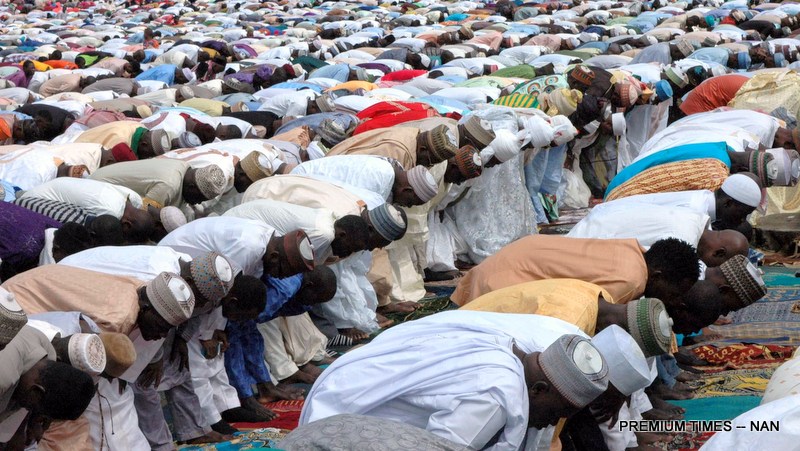
Nigerian Muslims have been advised to get their voters’ cards in readiness for the 2023 general elections. The advice was given by an Islamic human rights organization, the Muslim Rights Concern (MURIC), in a Salah message issued on Sunday, 1st May 2022 by the chairman of the group in Sokoto State, Barrister Muhammad Mansur Aliyu.

The statement reads:

“Nigerian Muslims will join billions of their brethren in celebrating the end of the 1443 (2022) Ramadan season on Monday, 2nd May 2022. We felicitate with President Muhammadu Buhari, Senate President Ahmed Lawan and the Speaker of the House of Representatives, Femi Gbajabiamila.

Barrister Muhammad Mansur Aliyu also paid homage to the leader of all Nigerian Muslims, the Sultan of Sokoto.

He said, “We also congratulate the leader of all Nigerian Muslims, the Sultan of Sokoto and President-General, Nigerian Supreme Council for Islamic Affairs (NSCIA), Alhaji (Dr.) Muhammad Sa’ad Abubakar, on the occasion of this year’s Id al-Fitr.

“MURIC reminds Nigerian Muslims of their civic responsibility of participating in all aspects of political activities in the country particularly as we prepare for the 2023 general elections. We lay emphasis on the need for every Muslim to collect his or her voter’s card in order to be eligible for voting. No amount of sacrifice is too much for this important civic duty.

“Muslims must not shun politics if they want to be liberated from the current spate of stigmatization, marginalization and impoverishment. We warn that Muslims who fail to obtain their voters’ cards have voted for bad rulers and Muslim haters whose main preoccupation is to persecute and oppress Muslims.

“Apart from obtaining their voters’ cards, Muslims must ensure that they participate in all political activities which will take place between now and the election period, including waiting patiently to cast their votes on election day.

Barrister Muhammad Mansur Aliyu had a word for South West Muslims: “Our brothers in the South who are facing persecution on a daily basis must allow their number to count by ensuring that they obtain their voters’ cards. Muslims constitute the majority in a place like the South West but unfortunately, they are still facing oppression today because they have not been leveraging on their majority status.

“The opportunity has now come. Go all out and get your voter’s card. Your voters’ card is your weapon of liberation. A majority population that fails to vote is, technically speaking, a minority. We, therefore, urge you to spare no efforts in getting your voters’ cards in readiness for the 2023 general election.

“We are looking forward to an election that will reveal the true picture in the region. A majority of people that has been turned into a minority due to their apathy for politics must wake up from their deep slumber. We must stop the stereotyping, the segregation, the religious apartheid and the hijab paranoia.

“We must stop the practice of denying jobs to qualified Muslims and their political marginalization. The time to do it is now. Political power will change the narrative and the popular vote is the only legitimate tool for obtaining political power in a true democracy. Your vote shall make you free.”

Transition of Tashe

By Sumayya I. Ja’eh

Chorus/children: ‘Ka yi rawa kai mallam ka yi rawa.’

You’ve danced, oh! Mallam, you’ve danced

Mallam: ‘Ban yi ba’,

I didn’t

Chorus: ‘tsoho mai gemun banza.’

Old man with a useless beard

The call-and-response dialogue, accompanied by the beating of a drum, propped open my six-year-old eyes in my grandfather’s compound in a village in Katsina. It was one of those fuzzy moments when you wake up and don’t know where you are for a minute. I had slept off in the car, only to find myself in a dim room lit by a kerosene lamp. There was no electricity, and the young moon illuminated the compound. The young boys that woke me were beating a locally made drum from tins, nylon, and sticks. They looked like characters from the famous tale by moonlight series produced and aired by the national television station NTA, which I was obsessed with then. The main character, Mallam, had a costume: a babban riga, an old cap placed haphazardly, a white beard, attained by putting white cotton on a boy’s face, and his mimicry of an old Mallam thrilled me. It made me and their audience laugh. That was my first conscious experience of Tashe and one of the reasons I look forward to spending my fasting period with my grandparents in Katsina or Kaduna.

Tashe is an old-age traditional mimetic performance performed by children between 6 to 14. It is an annual cultural performance that takes place in the 9th month of the Islamic calendar and is performed in the early hours of the morning or the evening before the pre-dawn meal or after the break of the fast. Tashe is a short play that challenges a social issue, accompanied by songs, dance, and mimicry.

Tashe can be traced as far back as the contact of the Hausawa with Islam. The word is derived from ‘tashi’, a Hausa word for wake up. Muslims are expected during the month of Ramadan (9th) of the Islamic calendar to fast, and they are highly recommended to take the pre-dawn meal. So, some people feel the need to wake others up for Sahur, to replenish their empty stomachs and energy to see them through the rigours of the day’s work without much difficulty. So, a few community members took it upon themselves to wake people, to prepare and eat just before dawn. To lighten the frustration of struggling to keep awake with no alarms, these volunteers enact the games named wasannin Tashe. While the adults prepare the meals, children with nothing to do occupy themselves with games to help while away time. Another factor is the essence of Tashe, which is aimed at luring people away from un-Islamic leisure pastimes since the beginning of Ramadan.

Tashe is performed mainly by young children, who imitate adults. It is often satirical and full of humour but laden with moral lessons and socio-religious ethics of the Hausa community. Tashe is usually passed down orally from generation to generation. The characters fill the roles with costumes, makeup, and dialogues in call-and-response songs. It is social criticism and a mirror/lens to view the socio-religious ways of life in most Hausa communities.

The Almajirai also are volunteers that perform Tashe. The Almajiri’s source for their food, move from house to house, seeking food or alms. During Ramadan, the Almajiri sing a dirge in the late night hours, songs calling out to anyone with an extra plate to give them. Some musicians and drummers, along with young children, also began to imitate the activities engaged in by the adults. In time, these plays shifted to the early hours of the night. They sing, dance, dialogue, improvise and wear costumes. It is a comedy, but like all comedy, it is the presentation of serious matters in unserious ways.

One striking characteristic of Tashe is its didacticism; it doesn’t only entertain but emphasizes the Hausa cultural belief and tradition—Tashe projects social ethics. Therefore, many performances aim to ridicule those who deviate from correct social norms merrily.

One well-known Tashe passed down from generation to generation is that of naci na kasa tashi, meaning‘I’m so full, I can’t stand.” One of the young boys dressed as an older man puts cotton on his chin that looks like a beard and puts on some clothes to show his protruding stomach. When they are ready, they go from house to house. The lead character sings, and the other children chorus/reply.

Baba: na ci na kasa tashi!

Children: Baba zare gareka!

Baba: Tuwon da dadi yake!

Children: Baba zare gare ka!

Baba: kuma har da nama!

The above can be roughly translated as ‘I’m so full, I can’t stand’, and the children reply with ‘Baba, you’re greedy,’ while the Baba tries to justify his gluttony by saying the tuwo is sweet and there is meat.

For instance, Ga Mariama Ga Daudu, another Tashe, gives us a socio-historic glimpse of the Hausa laden with humour. It is a mimetic performance of the communal responsibilities/expectation of husband and wife, the type of staple food eaten by Hausas. Although a comic, the play is social criticism of the institute of marriage, which several people from both genders are desecrating. Girls stage the play. One of the girls puts on a costume, a long kaftan and a beard and tries to deepen her voice to sound like a man. It is a telltale that enlightens young women about what society expects from a married woman.

Due to the Hausa tradition that does not allow the two genders to mix freely, the girls and boys don’t mix to perform Tashe. Instead, each gender play switches roles with its unique performance type.

A very well-known Tashe is of Gwauro. It is a mime that consists of 5/6 boys. One of them is dressed in nothing but bante (a short nicker) Hausa traditional pants, a rope tied to his waist, a bundle of clothes with kitchen utensils like used tins, old, discarded radio, an old dirty kettle can be found in the bundle carried by the main character. The others hold on to the rope while the lead character tries to run and is being pulled by the rope, while they sing ‘gwauro gwaurogwauro nuna mana yadda kake tsanawa’? Gwauro can be translated to as Divorcee or an old bachelor. ‘Show us how you cook?’ He goes on to put a tin can, wedged it between two stones, and mimics blowing air into the woods.

This is aimed at ridiculing the bachelor, and lessons deducted from this drama border on the irresponsible nature of the bachelor for trying to play the role of a woman, who in most Hausa communities is the one who cooks. Tying the rope around the waist of the lead actor is symbolic. The rope restraining the bachelor also portrays the image of someone in bondage. This shows that in Hausa society, marriage is given such importance that the bachelor/divorcee is considered a lesser being than the other community members.

One Tashe that has gone viral and is available on YouTube is the 2021 Ramadan Tashe ridiculing the state governor of Kano, who asked for 15 billion naira to tackle the issue of Covid 19, as well as a scandal video of him collecting kickback. The short clip shows a boy lying on the floor with a babban riga (an overflowing gown), a red cap, and a white beard. His friends, the crew call out, ‘Ganduje tashi,’ ‘Ganduje stand up,’ to which he replies, ‘sai an ba ni dollar Corona’ ‘not until I am giving dollars to fight Corona.’ The clip is a short comedy skit that not only cracks people up but also has an undertone that challenges corruption by government officials.

Though Tashe is basically performed to provide merriment, the reverse may occur. Sometimes, Tashe meant to ridicule certain personalities, which may not be acceptable to the person concerned. Here the object of ridicule will not find the performance funny, and it is pretty common to see the performers running helter-skelter, being chased by the target of the performance. At other times, the performance itself may be acceptable, but the attitude of the performers may be irritating to the target audience. To cap it up, these performers would taunt any house owner who refused to donate anything. Upon exiting, the actor would often sing, “mun taka tutu, maigidan nan ya yi shi.” “We have stepped on a heap of shit; the owner of this house must have excreted it”.  

Tashe emphasizes communal performance. My grandparents or parents always give out some loose change to the performers. This is the norm that the adults expected to give alms to the performers. These donations can be money or food items, primarily grains like millet and sorghum, the staple foods in any Hausa community. There is no fixed amount for alms, but donation largely depends on the social and financial status of the audience, as well as the extent of enjoyment of a performance.

The audience, primarily adults, also participates by correcting any misrepresentation in the texts, disguise, or dramatization. With globalization and urbanization happening worldwide, Tashe, as I used to know it, is fast becoming a relic of the past. The face of Tashe has evolved in urban cities. Few children or Almajirai go from house to house, entertaining people while seeking alms.

This long-old tradition of performance entertains and highlights the life of the Hausa folks and brings the fore societal expectation of a man/woman in Hausa society. Although it is a series of plays that comes only once a year as entertainment, it is full of dramatic content that reflects contemporary events. This mimetic performance encompasses most characteristics of a drama; costume, dialogue, improvisation, storyline, and purpose. These earliest Tashe performances are the precursor of modern Hausa drama.

Tashe tries to divert the community’s attention from the economic and political predicament. Tashe, like Macukule, which explores the Hausa stereotype of the Gwari man, is still dominant in contemporary Hausa movies. A renowned character Dan Gwari is not new to anyone familiar with Hausa movies.

Today, if you google Tashe on YouTube, a few children and young adults pop up on your white screen. The TV channel, Arewa24, created a short series of Tashe that they stream. While this is another means of preserving this long tradition, the thrill and euphoria experienced by the audience are reduced by the limited screen. Unfortunately, my children would most likely never experience this long communal tradition of Tashe as I did.

Sumayya I. Ja’eh wrote from Abuja via sumyjaeh@gmail.com.

Why the Almajiri debate will never end

By Shafi’i Sheikh Jr.

Reading through posts, articles, and comments, I think I now know why our debates on almajiri/bara will never end in Northern Nigeria. And as long as it remains a debate, it will continue to ravage every fabric of our society. 

Despite being the very foundation of today’s society, a debate is no longer a discourse among people with contrasting arguments using facts, logic, and evidence to exchange views and/or ideas. 

I have realised that once a debate revolves around  Almajiri and begging, people of certain sects see it as an opportunity to bash another sect. In defence, the others also find a way to come back. In doing so, the purpose of debate suffers the consequences, and debating parties end up being more determined and confused than they were before it began.

Until debating parties start arming themselves with facts, figures, logic, and most importantly, open minds to accept or exchange ideas, the problem will always win. Parties will always return confused, and the solution to the menace of “Bara” will never be found. 

At this juncture, I will like to point out that there is a fine distinction between Almajiri, which has its roots in the Arabic word “Al-Muhajirun” and loosely translates to “Migrators”, and “Bara”, which means begging for alms from people (often done as a means of sustenance). And until our people can differentiate between the two, ours will be a confused and misguided society. 

Perhaps, further clarification will disabuse the minds of debaters on the wrong usage of the two concepts. 

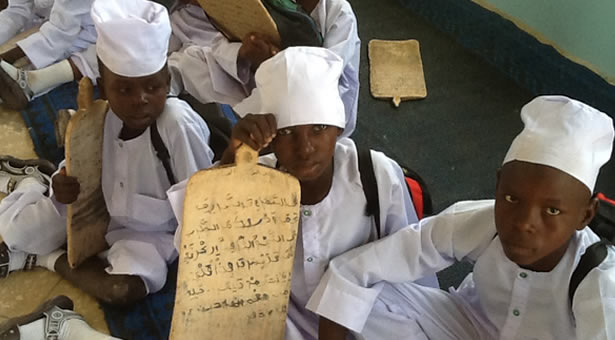
The former is a term that was first used in Islamic history to refer to those who migrated with the Prophet (S.A.W) from Makkah to Medina (Ogunkan and David Victor, 2011). The term was later ‘Hausanized’ to Almajirai, which today refers to seekers of knowledge who migrate from their comfort zones to concentrate only on acquiring Islamic knowledge. 

Now, some greedy Mallams (Islamic teachers) laid a fertile ground for this misconception to thrive by taking away small children who can not shoulder the bulk of their responsibilities to major towns and cities to acquire Islamic knowledge. And because neither the mallams nor the children can shoulder their responsibilities, especially in cities where life itself is expensive, the children engage in begging and other menial jobs, the proceeds of which the mallams extort from them hence, ditching the primary reason they left home. 

This gave birth to “Bara” (begging), which many non-Muslims and even some Muslims alike erroneously ascribe to Islam. To people with such minds, they believe Islam is associated with begging and encourages its practice by declaring almsgiving (Zakat) to be so weighty that it is a pillar of the religion. Also, it is believed that the five pillars of Islam are dependent on each other. Therefore, neglecting the pillar of Zakat (almsgiving) will render the others fall and ruin a person’s faith. 

This they justify by quoting, among other things, chapter 76, verse 9 of the Holy Qur’an, which says:

“And who give food – however great be their own want of it – unto the needy; and the orphan, and the captive (saying in their hearts) “We feed you for the sake of God alone: we desire no recompense from you, nor thanks.”

Yes, Islam encourages the giving of alms. There is no doubt about that. However, it also frowns on taking begging (Bara) to be a means of livelihood. Qabisah ibn Mukhariq reported: I was under debt, so I came to the Messenger of Allah, peace, and blessings be upon him, and I asked him about it. The Prophet said, 

“Wait until we receive charity, then we will order it to be given to you.” Then the Prophet said, “O Qabisah, begging is not lawful except for one of three cases: a man who is in heavy debt, so asking others is permissible for him until he pays it, after which he must stop; a man whose property is destroyed by a calamity, so asking is permissible for him until he can support himself; and a man who is afflicted by poverty attested to by three astute members of his people, so asking is permissible for him until he can support himself. O Qabisah, besides these three, begging is forbidden, and the beggar consumes what is forbidden.” (Sahih Muslim 1044)

Hakim Ibn Hizam, a poor companion of the Prophet, also went to beg the Prophet three times. The Prophet on each occasion granted his request, but on a subsequent occasion, the Prophet discouraged him from begging, telling him that “the upper hand is better than the lower hand”. The Prophet admonished his followers, saying:

“I swear by Allah that it is better for one of you to take his rope and gather firewood on his back than to come to a man and beg him whether he gives or refuses to give.”

To sum it all up, one may be right to opine that “Almajiranci” in its truest form is a system of Islamic education that should be practised and encouraged while “Bara is not only unIslamic but also a menace that should be eradicated.

The above suggests that no relationship exists between Islam and begging. Therefore, the menace can only be attributed to socio-cultural and socio-economic realities in the region and, to a larger extent, the country. Consequently, it is now left to Islamic scholars, religious leaders, and stakeholders to embark on an enlightenment campaign to raise awareness and educate the general populace on the difference between the two practices. 

May Allah guide us, amin.

Shafi’i Sheikh Jr. writes from Jos and can reach via talk2sheikh.esq@gmail.com.

Islamiyya System: A perfect replacement for the archaic Almajiri system

By Muhammad Dattijo Kabir

Islamiyya system has been proven to be an alternative to the Almajiri system. In the Islamiyya system, it is easier to commit the Qur’an to memory within the shortest period with decency. And it also allows the children to seek other knowledge that will aid them in confronting the present challenges. Almajiri system can only be insisted to be reformed when it is proven that that is the only way to learn the Qur’an. The system poses a lot of danger to the children, such as health challenges, inferiority and, of course, most of them become morally debased in the end.

Reforming this system alternatively means rewarding irresponsible parents for their irresponsibility, creating unsustainable programs which cannot see the light of the day. Instead, the government should ban and criminalise the system and absorb all the already enrolled Almajiri into formal schools. Then any other parent that wants his child to learn the Qur’an by traditional means must first provide shelter, food, and health facilities for the welfare of the child and must ensure that the child goes to school to at least get primary education.

No one is saying karatun allo should be banned. Karatun allo differs in content and operation from the Almajiri system. While the former entails learning Qur’an by the traditional design by all and sundry, the latter entails recruiting young persons to learn Qur’an by traditional means without provision for food, shelter and medical facility for children recruited. The said recruited army of children relies only on begging leftover food and tattered clothes for subsistence.

It requires no second thought to believe that this system of taking young children away from their parents at the ages they need their parents the most should be stopped and criminalised. No child under the age of 12 should be taken away from his parents’ house in whatever guise. There is nothing good in the Almajiri system as practised today. The system has served and outlived its usefulness. It became archaic and, to some extent, barbaric considering the conditions of the children involved in the system.

There are more decent systems which are alternatives to the already abused system. The system indirectly supports irresponsible parents to breed bundles of children they know they cannot cater for. The parents use the system to abdicate their parental responsibility of feeding, clothing, educating and sheltering their children.

Also, the half-baked Malllams use the system as a means of income. The activists are using it to get themselves employment from international NGOs. The nagging question is, can Qur’an be learned through a more decent system than this child molesting system? The answer is yes. Thousands of children have committed the entire Qur’an to memory through the modern Islamiyya system.

Let’s move on; the system is not viable in the present era. The era of dogma has passed. Let every child be supported by his father and take Quranic education before his parents while attending school. Any system that encourages parents to take their children to the street is barbaric and should not be encouraged.

Muhammad Dattijo Kabir. Muhammad is a lawyer, a human rights activist and a public affairs commentator. He lives in Kaduna and can be reached via jibrilmuhammad27@gmail.com.

Almajiri and the road to Armageddon: Nafisa Abdullahi is right

By Aminu Mohammed

I have observed the raging debate over the Almajiri debacle in the last few days, especially the antagonism against a Kannywood actress Nafisa Abdullahi. The actress voiced out against parents who send their children to urban centres to memorise the Quran under the guise of an Almajiri system.

This issue resonates with me because I was once an “Almajiri”, though in a modernised form of learning. I was a product of Arabic and Islamic education. I am still grateful to my late father for seeing the wisdom in sending me to the College of Islamic Studies Afikpo, a boarding secondary school in Southeastern Nigeria funded by a Saudi Arabia-based International Islamic organisation Rabita Alamul Islam (the Muslim World League). Unlike some of my schoolmates who later studied Islamic studies at Islamic University Madina and Azhar University Cairo, Egypt, I decided to study International Studies at the Ahmadu Bello University, Zaria, against my father’s wish, whose dream was for me to be an Islamic scholar.

I am still at a loss wondering why the actress is being pilloried for telling the truth. If you ask these intellectual lilliputians and Nafisa’s traducers whether they will be comfortable sending their children out to beg on the streets under the guise of Quranic education, they will never say yes.

Before you call me “Karen farautar yahudawa”, an agent of Jews, which our people are fond of calling those who seek societal change and are in tune with modern realities, let me clarify that I did not attend a conventional secondary school. I advocate an integrated education system involving the acquisition of both western and Islamic education. 

I will never advocate against memorising the Quran or acquiring Islamic knowledge because I was a beneficiary of that. At the boarding secondary school in Afikpo, Ebonyi state, we were taught Hadith, Fiqh, Balaga, Tafsir, Tajwid, Saqafa, Sirat, Ulumul Falsaf, Sarf and Nahw, among other subjects, by some Islamic scholars mainly from Pakistan, Egypt and India. I was able to speak Arabic with confidence on completing my secondary education. I even took some Arabic courses as an elective throughout my studies in Zaria. Even here in Germany, I still communicate with my neighbours from the Middle East in Arabic.

I am not worried that this article will generate antagonism in some quarters or be pilloried for triggering anger in some folks. But the truth of the matter is that we cannot continue on this trajectory. This system can no longer continue the way it is; otherwise, we may be heading towards the precipice. 

The word Almajiri is derived from the Arabic word “Almuhajirun”, meaning a person who migrates from his locality to other places in the quest for Islamic knowledge. During the colonial era and a few years after that, the schools were maintained by the state, communities, the parents, ‘Zakkah’, ‘Waqf’ and augmented by the teachers and students through farming.  “Bara”, begging as it is known today, was completely unheard of. 

Mallams and their pupils, in return, provide the community with Islamic education, reading and writing of the Qur’an, in addition, to the development of Ajami, i.e. writing and reading of the Hausa language using Arabic Alphabets.  Based on this system, which is founded upon the teachings of the Qur’an and Hadith, the then Northern Nigeria was broadly educated with a whole way of life, governance, customs, traditional craft, trade and even the mode of dressing.

However, the system was corrupted in the past few decades, with teachers sending the children to beg for food on the streets. Similarly, many irresponsible parents were unwilling to cater to their children. Thus, they send them away to cities to purportedly acquire quranic education.

The current Almajiri system is not only archaic but atavistic. We must tell ourselves the truth that society is drifting. What we are facing today regarding security challenges in the North will be child’s play if our people refuse to change their ways. There is no gainsaying that the future is bleak if what we can boast of is an armada of malnourished and unkempt children who are roaming the streets under the guise of Islamic education. Eventually, the children may not acquire any meaningful skills to become useful members of society. 

I am not a prophet of doom and derive no joy in pessimism. But, I do not see a bright future for a region struggling with a depleted human resource, coupled with millions of underage children clad in tattered clothes with bowls roaming the streets begging for food. I do not foresee any meaningful progress and development in such a society.

I still recall, in 2012, when former President Goodluck Jonathan visited Sokoto to inaugurate the Almajiri Integrated Model School in the Gagi area of the Sokoto metropolis. This boarding school was equipped with modern facilities. As a journalist working with THISDAY Newspaper then, I was there at the commissioning and even interviewed the school’s principal Malam Ubaidullah, a few months after the inauguration. I was excited that there would be a gradual process of taking Almajiris off the streets, as was promised by former Sokoto governor Senator Aliyu Magatakarda Wamakko. However, the euphoria was short-lived as governments in the region neglected the programme while the school buildings rotted away.

I wonder why our people antagonise those who want the system to be reformed or outrightly banned in the North. Are we comfortable seeing underage children roaming the streets under such dehumanising conditions? Have we pondered over the looming famine in the Sahel as forecasted by global development organisations, of which Northern Nigeria is part due to climate change worsened by overpopulation? Are we not witnessing the level of insecurity pervading the region because of societal neglect and marginalisation caused by a rapacious elite?. Do we sit down and pray and wait for a miracle to happen while expecting that our problems will go away?

Already we are battling with banditry in the Northwest due to societal neglect of a segment of the society that we use to mock because of their ignorance. And things will even get worse in future unless drastic action is taken to reform the system to enable children to memorise Quran in a friendly atmosphere devoid of hunger and deprivation. The current Almajiri system is a pathway to perdition.

Parents should stop sending children to cities if they are not ready to cater for them. These children should stay in their localities and learn under a school system presided by their Islamic teacher or Malam. The state governments must engage those Quranic teachers and pay them a stipend. I know this is doable because the government has the means to do that.

Unfortunately, much resource has been wasted on frivolities instead of channelling it towards revitalising the Almajiri system. We must wake up from our slumber and direct our energies toward finding a way to tackle problems in our society. Taking action is the key, and I believe that is the only way we can expect to have stability and peace in the polity.

Aminu Mohammed is at the school of Sustainability, Christian- Albrechts- Universität zu Kiel, Schleswig Holstein, Germany. He can be reached via gravity23n@gmail.com or stu219013@mail.uni-kiel.de.

Kaduna: Young man reportedly dies in sujuud while leading Tahajjud

By Ahmad Deedat Zakari

A young ustadh identified as Muhammad Sani Lawal passed away on the night of Saturday, April 23, 2022.

Abdull-azeez Ahmed Kadir, a Nigerian journalist and the General Manager of Liberty TV and Radio, reported the incident on his Facebook timeline. 

Kadir described the young man’s death as how many Muslims would want their end to be like, calling it the “Best Death”.

Kadir posted thus:

Muhammad Sani Lawal, a young Islamic scholar, died last night in Samaru Zaria in a manner many Muslims beseech Allah to take their lives. He died not just in the Holy Month of Ramadhan, not just in the last ten days that hosts the Night of Majesty, not just in prayers, but Ta’ajud, in sujud while also leading the prayer at night.”

Kadir prayed to Allah to rest the soul of the deceased. The post has garnered many positive reactions while the story goes viral on mostly northern Nigerian social media space.

Should Muslims go dialoguing? The roadmap to understanding ‘interfaith’ in Nigeria

By Sadiya Abubakar Isa, PhD

It appals me to see the Muslim North divided on a trivial yet substantial religious issue like ‘interfaith’. I have for long heard Muslim clerics discrediting the whole idea of interfaith since the establishment of its centre in Bayero University Kano – one of North’s prestigious universities, something which was otherwise not their business. Still, thanks to this institution, interfaith is now localized enough to get such stimulating clerical attention in Northern Nigeria.

Having had the opportunity to study Islamophobia exploringly, I would say interfaith is significantly relevant where the identity of Islam is greatly contested. By definition, interfaith, whether as a dialogue in research or academic discourse, revolves around the peaceful, complaisant, and constructive interaction between people of different faiths for mutual benefit. It involves striking balance, a tolerable understanding of such interrelationships and beneficial engagements through dialogues, academic events, and activities aimed at peaceful coexistence. To say all these aren’t relevant for a Muslim community is a dismal misunderstanding of the whole concept and reasoning of interfaith.

The world witnessed an unprecedented rise in Islamophobia shortly after 9/11; statistics show that Islamophobia reached its peak in 2016. If you reside in the Western world in the decade after 9/11, you will understand the intricacy of the threat Islamophobia puts Muslims into. Especially for Muslim women who are more obviously identified than their male counterparts. Muslim women were subjected to hate speech, discrimination, and abuse, thanks to the incessant misrepresentation of Islam and Muslims in the Western media. Since the Muslims are a minority in such Western countries, their religious identity was at stake. As such, the results were provocative political discourses, foreign policies and the whole activities of the Islamophobia industry vigorously tarnished the image of Islam beyond doubt.

Islam was always portrayed as an intolerant and backward religion that advocates terrorism. Muslim men are seen as utter misogynists, violent, barbaric, and bloodthirsty fanatics, while Muslim women are said to be oppressed, voiceless, helpless, and subordinate in dire need of immediate liberation. Now, this has been the case centuries before 9/11, but the Orientalism surged after 9/11 because there was an agenda to create fear of Muslims and control the world using that purported fear—New World Order?

Consequently, 9/11, subjugation of women in Afghanistan, terrorist activities by ISIS, Boko Haram etc., were leveraged as justifications for those claims. The average Westerner believes every accusation about Islam and has little or no interest in discerning the images. One may ask, so what if they believed?

The consequences are bigotry against Muslims, vandalism of religious places, hate speeches, discrimination, loss of jobs (or other vital opportunities), rejection in the community they ought to belong to, and the worst is loss of lives. We have seen so many Islamophobic attacks on the Muslims, the New Zealand mosque shootings, for example. This misconception renders the Muslim communities in the West vulnerable. It puts them in constant fear of perceived danger and, consequently, loss of faith. Yes, look at it from the perspective of younger generations struggling to fit in.

Among many other factors, I acknowledge the efforts of Yaqeen Institute by Sheikh Omar Suleiman, a Palestinian American scholar. He has taken the lead in fighting Islamophobia through interfaith dialogues, among other methods. Why shouldn’t the Muslims engage in interfaith dialogue when it has been an avenue for discussing the Muslims’ predicaments? It has given Muslims a platform to talk about their real lives and share their religious practices contrary to the media’s narrative.

Interfaith dialogue has helped quell the flame of hate. It has given Muslims the room to openly operate as an inclusive religion – with lots of global moves to ascertain cultural harmony. It has opened laypeople’s minds about Islam which they would otherwise have remained unaware of. It has opened the door for discussion of religious differences politely and positively, which pushed many non-Muslims toward studying Islam.

Do you know the result of this increased curiosity about Islam? Acceptance of Islam, the Christian West has seen rapid growth in conversion to Islam. So, where is that extreme hate of Islam/Muslims today? Alhamdulillah, there is a significant improvement in the situation, thanks to interfaith dialogue, among other efforts taken by anti-Islamophobes.


So is interfaith precarious to Muslims in Nigeria? Why all the debates?

Would Nigerians understand the need for an interfaith dialogue without foreknowledge of Islamophobia, global diplomacy and religious inclusiveness? It’s a fact that Muslims aren’t a minority in Nigeria, but ethno-religious crises are still ravaging, in the North especially; crises in Jos and Kaduna would have been addressed amicably if the interfaith dialogue was well embraced. It is utterly disconcerting to say that, in this age, people are having religious disputes.

Similarly, Boko haram has been synonymous with Islam in Nigeria in that it is always referred to as an ‘Islamic terrorist group’. Don’t we need to dispel the myth of Islam advocating terror in Nigeria? Are Muslims too big to have a peaceful inter-religious conversation in Nigeria? Are we blind to the fact that Islam is under attack in Nigeria? When professor Farooq Kperogi wrote on Islamophobia in Yorubaland, I was bemused because I never expected that of all the tribes in Nigeria, Yorubas would discriminate against their tribespeople based on religion. The rapidity at which Islamophobia is manifesting in Nigeria is quite alarming. Nigerian Christain’s support for Donald Trump in the last election spells out their desperation for Muslims’ continued exclusion.

Religious harmony is still farfetched in most regions of Nigeria. We are just pretending to be harmonious and tolerant. Little wonder how minuscule events easily trigger provocation. We need to talk about our differences positively and engage in healthy interactions to progress as a nation. Colonialists already bond us together, so unity in diversity becomes a necessity. Or do we wait until our children begin to ask us questions before we get to talk about our differences nicely? If not for anything, interfaith in Nigeria will allow non-Muslims to learn about your faith – Islam. Isn’t that a form of da’awa?

My research acknowledges how interfaith dialogue in the US, Europe and other parts of the world contributed to the curbing of Islamophobia by promoting peaceful coexistence. So to use religion to relegate the whole idea is quite imprudent. To quote Shafiq, Muhammad, and Mohammed Abu-Nimer, the authors of Interfaith Dialogue: A Guide for Muslims, “although a relatively modern term, interfaith dialogue has, in fact, had a long and enduring history for Muslims, underscored by a spirit of genuine inquiry and respectful exchange. The primary role of interfaith dialogue is to remove misunderstanding and accept difference….”

Some Ulamas in Nigeria have taken a critical stance on this matter. I listened to one yesterday opening that interfaith is an extension of secularism. While I appreciate his disposition, I beg to disagree that ‘we don’t need interfaith’ due to his stated reasons. It should be at the participant’s discretion to know the aim of every dialogue before engaging in one. My focal point is that whoever participates in interfaith dialogue should be cognizant of their religious jurisdiction and wary of their intentions. I kindly advise our Ulama to focus on ways to religiously liberate the Northerners from the abject poverty that has infested this region instead of the debates surrounding the appropriateness of interfaith – which is long overdue.

Dr Sadiya Abubakar Isa is interested in research related to Islamophobia. She can be contacted via sadeeyaa@yahoo.com.

Attack on al-Aqsa Mosque in Jerusalem leaves many injured

By Ahmad Deedat Zakari.

Israel Occupation Forces have attacked the grand al-Aqsa mosque in Jerusalem. 

The attack, which took place at the time of fajr prayer on Friday, April 14, 2022, left many injured. 

As reported by TRT World, Israel troops fired tear gas and stun grenades at worshipers inside the grand mosque. 

TRT World also reported that the Palestinian Red Crescent emergency service evacuated 67 injured people to the hospital early Friday morning.

According to the local news sources, about 200 worshipers were injured, and parts of the mosque and some properties were destroyed. 

The unfortunate attack on Palestinian Muslims, which is coming this time in the holy month of Ramadhan, has earned condemnation and backlash from many Muslims around the globe. 

A human rights activist, Zainab Chaudry, condemned the act on her verified Facebook account while posting the video of the assault. 

“This was a short while ago. Every Ramadhan [is] like clockwork. The assault on our beloved Al-Aqsa. On our brothers and sisters. The audacity. There will be justice; we know this iA [in sha Allah],” she wrote.

Letter to Nigerian Muslims

By Muhammad Rabiu Jibrin (Mr J)

I write this letter to you as a Muslim brother and a citizen who is deeply concerned about the gory happenings in this country and who prays for its betterment. It is undeniable that the trying time Nigerians live is uncalled-for. It is not what the citizens prayed for when voting for their leaders. Thus, it indicts the leadership system of all the three arms of government in the country, unfortunately

Should the government have worked holistically towards curbing the menace, the situation couldn’t have been worst like this. But, would the inferno ignite due to our leaders’ carefree attitudes, which seem to have been politicising virtually everything, be left consuming the spirit and the fabrics of our dear nation?

Truth be told, even a responsible and serious government can’t fight a politically created conflagration of multiple fronts alone, let alone a government with a lackadaisical attitude. Therefore, as Muslims of the ravaging county, we all have a role to play individually or collectively.

As we observe this blessed month of Ramadan, which has the best nights therein and in which the glorious Qur’an was revealed, we need to cry hard for God, the Almighty, to come to the rescue of our nation.

We must look inward and outward and return to God, the Most Merciful, the Most Powerful, the Compassionate and the Absolute Compeller. We should desist from committing sins and repent from our misdeeds. We should give to charities, recite the glorious Qur’an, supplicate and intensify prayers to God to see to the end of this mess.

Religious scholars should use their influence during tafsir, and Imams during their Juma’a sermons should pray immensely on this matter. Let Him choose for us the rightful leaders of all cadres. Let God the Almighty leave us not with our wisdom and selfish wishes and choices.

We can’t fold our hands, legs crossed, witnessing the downfall of this country under the watch of our leaders whom we entrusted but failed us. So let us all wake up from our slumbers and do the needful at the right time.

May we be governed by leaders who love us more than how we love them, leaders who prioritise our societies’ interests over their interests, leaders who think about giving their leadership account on the Day of Reckoning, amin.

Muhammad Rabiu Jibrin (Mr J) wrote from Gombe via muhammadrabiujibrin@gmail.com.

Interfaith in Northern Nigeria: A non-romantic view

By Ismail Hashim Abubakar

A few days ago, while at our university campus here in Rabat, I heard shouts outside the premises resembling a public demonstration – something quite unusual and often carried out orderly in Morocco, without the slightest chance of being hijacked by hoodlums. I could not understand what people were saying because they spoke in Darija, the local, broken Arabic dialect spoken colloquially in Morocco. I tend to pick some sentences in normal circumstances, especially when spoken to me directly.

So, I asked my Moroccan friend what was going on, and he answered that people were chanting pro-Palestinian songs and shouting anti-Israeli slogans. I found that interesting given the special place of Jews in Morocco, who, according to Aomar Boum, the author of Memories of Absence:  How Muslims Remember Jews in Morocco (and translated into Arabic as “Yahud al-Maghrib wa Hadith al-Dhakirah” by Khalid Saghir) used to number more than 200, 000 before the creation of Israel and up tp around 1950s, but in post-independence Morocco, their number slashed to less than 5000, as they engaged in gradual exodus to their newfound state. But I noticed that the small protest was officially unwelcome when suddenly security guards of the university closed its gates and prevented the intrusion of protesters, who were mostly, if not entirely,  students of the university. I would only come to know the exact cause of the protest a few minutes later when, together with my Moroccan friend, we were encouraged and directed by some officials of the university to follow a way that led us to one beautified public lecture hall to participate in a conference, about which we were neither aware nor essentially prepared to attend.

I went straight to the front row in the hall and found a seat where I could watch and listen with much attention, while my friend preferred to sit at the back.  It quickly dawned on me that the conference themed “al-Diyanat al-Samawiyah Hamilat Risalat al-Salam” (Heavenly Religions Carrying the Message of Peace) was, besides, a few delegates from a Moroccan council of Islamic knowledge, hosting the Archbishop of Rabat, Cardinal Cristobal Lopez Romero and a Jewish Rabbi, Rabbin Mardekhai Chriqui, coming all the way from Jerusalem.

I started enjoying the proceeding when the MC made her introduction in Arabic and coalesced it with the famous verse of Surat al-Hujurat upholding the spirit of humanity and emphasizing racial and ethnic diversity as a distinct human property. And I did not bother much when she switched to French, which I assumed was the translation of what she said in Arabic, though I do not understand. When I looked at my phone, as the audience awaited the Jewish speaker to take over the stage, I just clicked on my WhatsApp and saw my friend’s message, telling me that he had gone out and we might meet in the mosque. I would have also gone out, but I was lured to stay to listen to the heavily bearded Israeli Rabbi, perhaps because that was my first time to see a real, self-identifying Jew physically and, in fact, a religious authority for that matter. When the man took over the podium, he spoke briefly in Darija, which I luckily understood as he minced his words slowly as if lamenting that he had to do that before switching to French. In the Darija, the Rabbi just excused that although he spent about 40 years in Morocco, he was not good at Arabic, so he informed his audience that he would prefer to switch to French, which he then did without any ado. At this juncture, I also decided to exit, without knowing if his speech would be interpreted in Arabic or not, and without bothering if too many speakers would speak in Arabic later. (A link to the conference is https://m.youtube.com/watch?v=fY6eoZ6RObA&t=703s).

The most relevant part of this story is that there are indeed initiatives of interfaith dialogue worldwide, and this seems to have come to define interreligious relations among members of heavenly religions. But it is also a fact, as this anecdote demonstrates, that some actors in the interfaith program may be unwelcome, detested or rejected. This is precisely what reminds me to offer my humble thoughts on the current brouhaha about the interfaith issue, which has just become a topic of discussion, at least in northern Nigeria.

Perhaps a few people will disagree that the matter was dragged to the public domain by the removal of Shaykh Nuru Khalid, the chief Imam of the Friday mosque at Apo Legislators’ Quarters, less than two weeks ago. That happened over a sermon he delivered on the collapsing security situation in Nigeria. The Imam would have been hailed as a hero and a  champion that deserved accolades by the entire northern Muslims, but for his flirtation with the controversial phenomenon of interfaith. After all, distinguished scholars who have become a sort of religious canons in Nigeria like the late Shaykh Ja’far Mahmud Adam, the late Shaykh Muhammad Auwal Albani Zaria and the few ones alive like Shaykh Bello Yabo, Shaykh Murtala Asada Sokoto, Shaykh Idris Abdulaziz Bauchi and a few others are known to be showing impatience toward any untoward development that affects (affected) the poor Nigerian masses. These scholars have uttered bitter homilies and persistent tirades against governments over neglect of their primary responsibilities, particularly protecting lives and properties. Their prominence and public acceptance are partly glued to their decision to maintain a frugal life, remote from the corridors of power, hence capable of speaking truth to power, no matter whose ox is gored.

Naturally, by siding with the masses, Imam Nuru Khalid, who was psychologically martyred when fired from his job, should have been catapulted to such a prestigious clerical position. But in his case, this was impeded by his affiliation to interfaith organizations, often seen with Christian groups who, it seems, trust him as one of the symbols of moderation and tolerance, which may not be entirely untrue. The attention of the Muslim public was recently attracted by his unpopular view when in the aftermath of Abduljabbar Nasiru Kabara’s blasphemy saga and the ensuing arguments, Nuru Khalid voiced views that did not go well with the majority of enthusiasts, particularly on the shortlived misunderstanding between Prof Ibrahim Maqary and Dr Abdallah Gadon Kaya, two rising scholars in northern Nigeria.

At that time, Nuru Khalid was exposed as an advocate of interfaith, which in Hausa people wrongly render as wahdatul adyan (unification of religions), thanks to the widely circulated clips of Shaykh Albani, which popularized this view and mentioned Nuru Khalid as one of its agents. Hence, when Nuru Khalid was removed from his imam position, many commentators in the North merely clung to his affiliation to the interfaith group to further endorse, celebrate or justify his removal. But the mosque did not cite that as a cause for his sack or regard it as a fundamental problem of the Imam. However, Nuru Khalid’s sudden transformation as a hero in the milieu of Nigerian Christians, some of who might not have known him before, his public revelation about some international groups proposing to finance a mosque project for him and his more open hobnobbing with Christians have further thrown him into disrepute among Muslims, who still sense that this interfaith phenomenon is nothing but attempts to eclipse the teachings of Islam and collapse all religions into one new faith.

Another figure, also seen as a vital organ in the interfaith dialogue program, coincidentally also bearing the name Shaykh Nuru Lemu. Although sounding calm and soft-spoken unlike his namesake, Nura Lemu has taken it up to himself to clear what he thought are misconceptions being circulated about the interfaith dialogue initiative. In an audio clip shared via social media, Nuru Lemu claimed that interfaith is never a new invention nor devoid of a rudimentary religious basis, tracing it to the time of Prophet Muhammad when he designed a pact of peaceful coexistence with Jews as citizens of Madinah, and when he entered into a truce with Quraysh polytheists in the famous treaty that would be known as Hudabiyyah. Nuru could have cited the pre-Islamic treaty known as Hilf al-Fudul, which the Prophet participated in, and pledged to partake in a similar one if a need for that would arise. In fact, Nuru would have cited numerous Quranic verses upholding peaceful coexistence and dialogue between Muslims and members of other faiths, as can be discerned in chapters like Surat Ali-Imran, Surat al-Ma’idah, Surat al-Mumtahanah, etc. Since the second biggest religion after Islam in Nigeria is Christianity, it is interesting to make a case with the verse that says: 

“You shall certainly find the Jews and those who associate partners with Allah the most vehement of the people in enmity against those who believe, and you shall certainly find those who say, `We are Christians,’ the nearest in friendship towards those who believe. That is so because there are savants and monks amongst them and because they are not haughty ” [Surat al-Ma’idah verse 82].

Nuru Lemu, who is one of the heads of a mega religious and educational centre in Niger State, a neighbour to Abuja, where his sacked namesake is based, added that the dialogue would also concentrate on intra-Muslim relations. Thus, it will work out ways to dent and lessen the growing discords and animosities among Muslims occasioned by ideological rivalry and sectarian division. 

From this viewpoint, it is not hard to convince Muslims that the interfaith issue is a healthy, innocuous mission that Muslims would warmly welcome as a process of living up to the expectation of their scripture and broader Islamic vision.

However, it must be clarified that interfaith dialogue may have a  unique interpretation for Christians different from what Muslims may be ready to accept. Muslims do not appear prepared to assimilate the neo-liberal interpretation of Islam in such a way that they would compromise established Islamic values and fundamental teachings. Muslims may fail to implement specific injunctions of Islam based on human weakness, but they will hardly portray them as outmoded, irrelevant and unsuitable for the modern situation.

Christians, for instance, as evinced by the obsession of Mathew Kukah in his anti-Islam columns and public discourses, may conjure that interfaith dialogue would henceforth guarantee them an institutional legitimacy of marrying a Muslim woman, or it may make Muslims feel reluctant in missionary work while they (Christians) continue to win converts either directly by luring pockets of northern animists or through the new atheism phenomenon that trend mainly in the virtual world and cyberspace. Christians may conjecture that Muslim females, especially in Yorubaland, where the controversy keeps erupting, will relinquish their fundamental right of wearing hijab. In fact, many Christians would wrongly assume that interfaith dialogue, when successfully embraced, will encourage Muslims to keep mute on tragic instances befalling their fellows, such as the series of ethno-religious crises that broke out in places like Jos, Tafawa Balewa, Southern Kaduna, Lagos Sagamu, etc. 

In retrospect, to what extent are Nigerian Christians ready to accept Prophet Muhammad as God’s apostle just as Muslims uphold Jesus as Prophet as a fundamental condition of being a Muslim, without which one will be outside the fold of Islam? Or at least, are Nigerian Christians ready to reserve some respect for Prophet Muhammad so that they will shun all utterances and actions that may be considered blasphemous, which, needless to say, fuels religious crisis and further strains relations between Muslims and Christians? 

Nigerian Muslims would be very willing to uphold peace initiatives. Still, they will be very unlikely to accept any interfaith interpretation that warrants silence and reprisals in situations where their fellows are innocently attacked and persecuted anywhere on Nigerian soil. Muslims will invoke the same scripture which warns them not to ally with their enemies –  whoever they might be, which enjoins them not to give in to treachery, which cautions them on prospects of being bamboozled and hoodwinked by their enemies and which reminds them to be prepared for self-defence. Therefore, the interfaith initiative appears to be a neutral concept that can be applied positively or negatively and can be abused or misinterpreted disproportionately.  But, clearly, its application goes hand in hand with contexts and real-life experiences.

Ismail wrote from Rabat and can be reached via ismailiiit18@gmail.com.