Hausa

Towards achieving unity in Nigeria

By Lawi Auwal Yusuf

The amalgamation of the protectorates in 1914 predetermined a united state for multiple precolonial chiefdoms. Highly diverse Nigeria featured by a rainbow of cultures is deeply fractioned along ethnic and religious lines.

Imperial misrule left a bad legacy for national unity. Regional devolution caused intense tussles among regional forces over the powerful central authority, which was the basis for post-independence sectarian disputes.

Thus, six-year-old Nigeria witnessed a catastrophic separatist war that took the lives of many heroes. Since the aftermath of the bloodletting, the country has been bedevilled with lingering ethno-nationalisms coupled with regular fatal brawls between the tribes. This was due to extreme polarization and segregation of the heterogeneous groups with no sense of togetherness, community cohesion and dovishness. 

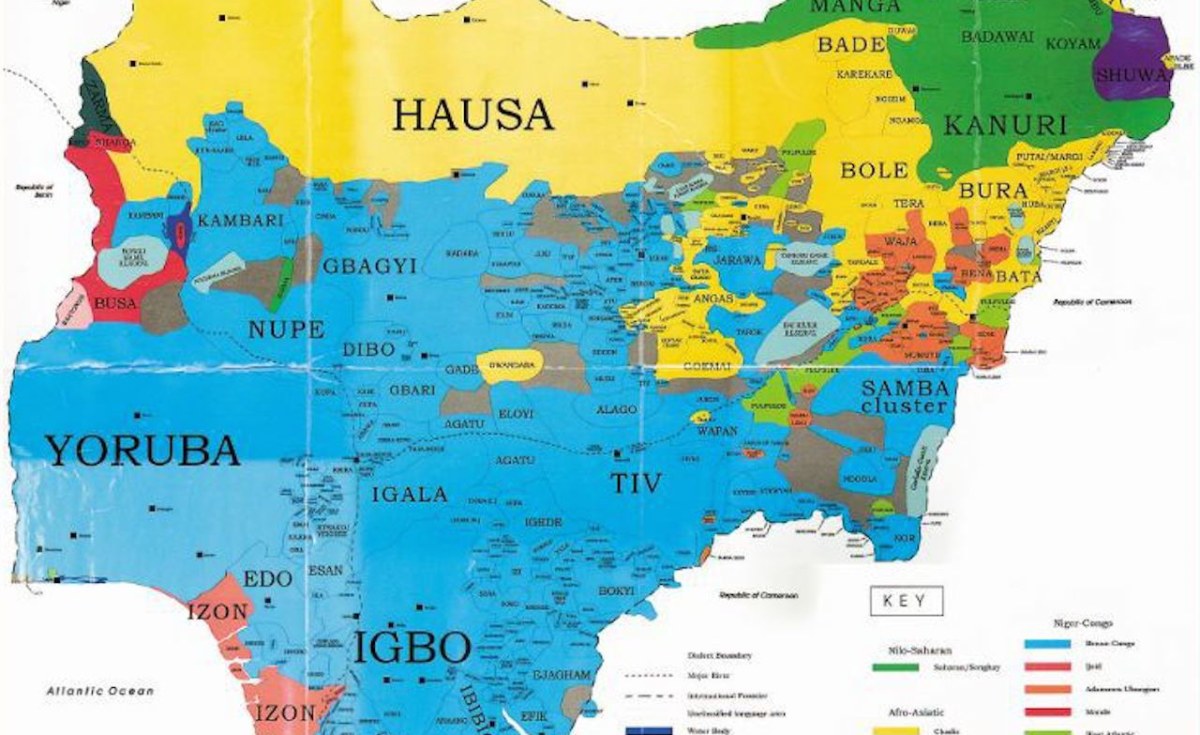
Deeply ingrained tensions have been the order of the day. Igbos accuse Northerners of their grief and impeding their chances of realising the apex power. The Northerners equally see the Igbos as power maniacs. Yorubas feel discontented with the status quo, while minorities have the impression of a roughshod ride over them.

Tribal and religious absolutism are awful threats as multiculturalism has failed, and communities have become ever more fragmented. Patriotism has eroded, and Nigerians are less tied by the bond of nationality. They are no longer one united people and do not regard themselves as national brothers with a sense of shared identity. Hence, there is an absence of the desired unity in diversity, tolerance and integration.

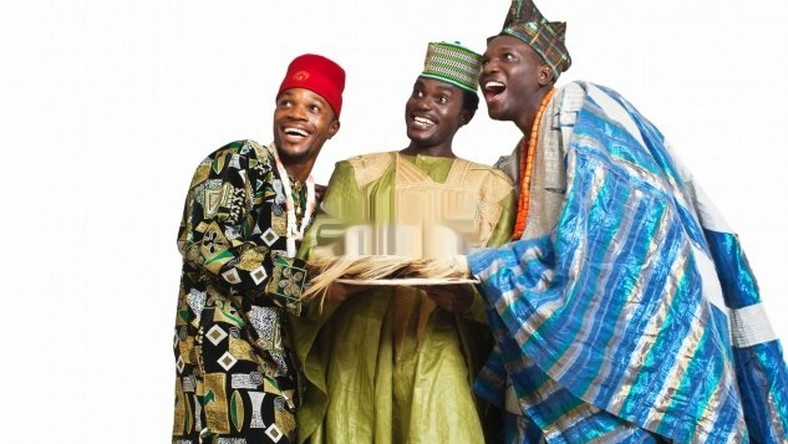
Politicians must develop the impulse and genuine commitment to national unity. They must believe that this is a dire task that transcends beyond cultural exhibitions, festivities or even wearing traditional attires of host communities during political rallies. Instead, it requires solid whims, sacrifice and effective policies.

Technocrats are required to accomplish this task efficiently. They must design policies that ensure equitable treatment of the ethnocultural groups alongside the creation of space for all the divergent voices to be heard. Everybody must have a say in society. Moreover, they must devise ways to live together harmoniously, without prejudice or malice.

Integration is so effective in ensuring peaceful coexistence between fractious groups. Therefore, increased contact across the nation should be emphasised, and Nigerians should increasingly intermingle with one another. This will allow people to live closer to one another, work amicably, and ensure that relations remain peaceful. Therefore, disputes will vanish obstinately.

This can only be realised if there is an honour for individual cultural preferences in public life. All institutions must make special provisions for all Nigerians’ choices and cultural needs. So, everybody will develop a worthy stake in the social order. Policies must be put in place to accommodate the values, diet, dressing, spiritual convictions, and practices respectably.

We need to facilitate multilingualism by encouraging people to learn several native languages. Speaking one another’s languages diminishes suspicion, tensions and conflict. This will also build trust, honour and understanding across all cultures.

Social exclusion creates deficient opportunities for disadvantaged/minority groups suggesting that they don’t have equal rights. As a result, they are treated as second class citizens, hindering cohesion and egalitarianism featured by social inclusion and pluralism. Moreover, it leads to distress to the abandoned groups, which poses a persistent threat of disharmony. However, institutions must make efforts to meet the needs of all communities and not tilt towards the needs of a particular section.

Regrettably, the tribes have distorted perceptions of each other. Malevolence aggravates because of misleading histories and myths falsifying the reality and typically portraying others as diabolic. They hold malicious convictions and stereotype each other based on their previously treated beliefs. Any trivial provocation warrants the impression and becomes a basis for vengeance. The exasperation of hostilities by IPOB, ESN, Afenifere and others are clear examples.

It is needful to enact a statute outlawing attitudes of these tribes calling one another with derogatory or slur names that denigrate or demonise others. Ethnicities hardly unite if they are abusing one another.

The present mass idleness must be evaded alongside the creation of decent jobs. Graduates happen to be jobless long after they have left school. Similarly, numerous unknowledgeable youths remain redundant. Ethnic and religious skirmishes intensify every day due to hardships encountered by youths in their efforts to have a lawful means of subsistence. Many of them have the requisite skills and qualifications but found them not helpful in securing employment. They have fallen victim to anxieties, delays, and disparagement and developed a strong feeling of despair, oppression, and unfairness. Hence, they engage in crimes or sectional clashes to counter the injustice and avoid the distress of poverty.

With such dissimilarities in all parts of society, tolerance is indispensable if Nigerians want to live in peace. The capacity to live in a plural society will secure a harmonious future for multiethnic Nigeria. However, Martin Luther King Jr. once said to Americans at the peak of racial segregation that “we must learn to live together as brothers or perish together as fools.”

Lawi Auwal Yusuf wrote from Kano, Nigeria. He can be reached via laymaikanawa@gmail.com.

On exploitations at marriages

By Alkasim Harisu Alkasim

The challenges of marriage are common knowledge within and outside Nigeria. To sensible people, marriage is a keystone of luxury life. Yet, although marriage sometimes falls short of happiness and peace, personal uprightness and esteem still accompany and embellish those in the industry.

The marriage industry is chaotic. It is now commonplace to see overaged women competing for the love of a single male person alongside younger ladies. This explains how choked the industry is. Marriage, as an institution, demands a lot from us. To excel in this business, one has to school himself in patience, courage and determination. Otherwise, one will do a lousy job, and things will go south. 

In today’s materialistic world, what we call true love is lacking. Money buys love. A person can date a highborn woman even if he is lowborn. What allows him to do so is bucks. In cultures such as Indian, there is what they call a “caste system” that stratifies the society whereby one marries from within one’s caste. Interclass marriage is an abomination and, thus, a bad omen. Excessive expenses usher marriage.

In northern Nigeria today, to marry means a lot. One has to break the bank to afford marriage and multitask to afford to run a family. The trousseau he will gather robs him of too much money. If not loaded, one will feel like breathing his last while readying himself for this Sisyphean task.

Many a great family pressure prospective male spouses a lot to the extent they feel compelled to compensate their colossal expenditure by undertreating the girls they wed. The sight of the girls bores them; as a result, they start to mistreat them. This also purges them of the hate they hold for these exploitative families.

Poverty is raging, and the employment industry is becoming more competitive. Degree holders swarm places looking for well-paying jobs. As a result, some graduates are now resorting to low jobs that discredit scholarship and the status they are beginning to build. Some, willy nilly, accept works that break the back and pay low, thanks to the devastating nature of Nigeria’s economy.

Telling a greedy girlfriend that your wages or salary is not handsome implies losing her.  It once happened to my friend whose name I won’t mention here, for I feel that should be private. This happened when his family went to the girlfriend’s place. His father honestly told them about the level of income of his son. This bitter truth opened for my friend Pandora’s box. The relationship had since then staggered. In short, the two lovebirds have parted ways.

What hardens the issue of marriage in the North is our belittling the effort of even the hardworking people. We neither accept what our sons-in-law present nor study the situation on the ground. We need to wise up on this. But, unfortunately, some circumstances press people to do only those things that top their priorities.

It is worrisome that many families capitalise on their children’s beauty to milk boys of all their money. Such homes allow their daughters to tryst (zance) with more than a person at a time. In some houses, queues are made every day for a single girl. Boys take turns. Sometimes, some inpatient boyfriends cut in on the conversations of their co-suitors. What a world! The girl is seen as a moneymaking machine. Likely, after cashing in on her suitors, the girl will go out of fashion. Her beauty and charisma will decrease. As she puts on age, her boyfriends vanish, and the likelihood to marry a dream husband reduces. Now it is her younger sisters’ time. When it salaams at their home, the sendee will mention the name of her younger sisters instead. It will take time before she gets dated by somebody. Indeed life is a roller coaster. 

The social commerce between a girl and a boy worsens when the girl’s family pressure the boy for money. As he feels absolutely tired of lifting the girl’s responsibilities, he looks for a way to benefit from the dealing. The social intercourse between a girl and a boy does not stop at the former’s house as the duo rendezvous at their chosen spots. Now, the love glue between them starts to grow stronger. He will undeniably feel the urge to do the unlawful with her to the level he begins bedding her.

The groom has to pay dowry that a time costs him much. There is an amount which, if he pays below, he will have his money returned or hotly debated right at the place where the thing of the knot is occurring. In some instances, such disagreement plants in the groom’s family some disregard for the bride’s home. A bride needs to be lodged and fed. And if the groom doesn’t have his own house, he will have to find a place to sleep with his wife. Today’s brides come with vast furniture; the groom has to look for a house that sleeps like five people to contain his wife’s belongings. 

Believe it or not, the complexion of our societies has changed; we are not aiming at uprightness. We are after money and money-related things. If you are monied, you are everything. You can marry who you want. One can be immoral and still have a choice wife. That is why the deep-pocketed hire people to fake it as their parents/relatives. A bastard, in the world of today, betters a son borne in wedlock. Therefore, to be virtuous is to be well-endowed.

Allah Ka gyara ma na. Amin.

Alkasim Harisu Alkasim wrote from Kano. He can be reached via alkasabba10@gmail.com.

The polyethnic-state-policy we need

By Lawi Auwal Yusuf

Several innovatory constitutional devices, administrative and technical solutions were tried to resolve the sectional tensions that, minimally in writing, attempted to enhance tolerance and political affinity between the heterogeneous regions of our dear country, Nigeria. These supposed solutions failed because they were unfounded paperwork, if not lip service.

The dispositions of politicians denote that they have no true intentions of dissipating all forms of religious and tribal harassment that undermine Nigeria’s progress as a diverse but cohesive society. They exploit the divisions for political deceit and their malicious divide and rule tactics. Politicians misuse the distinctions to garner more support, increase popularity and gain votes. But the effect is that it augments people’s consciousness of the differences and raise the importance they affix to them.

Hence, there exist mutual antipathy among the ethnicities. They strongly hold ethnic prejudices and stereotypical views against each other and counter-blaming themselves for the country’s woes. Frequent destructive fracases, secessionism and bloodshed depict Nigeria.

We need a poly-ethnic policy that will help us forge a pluralist democracy that fully respects tribal and religious dissimilarities. A country that truly recognizes and values such pluralism in society. This worthwhile project must establish mutual veneration among Nigerians which is essential for a peaceful future of multiethnic Nigeria. It should socialize Nigerians to enfold cultural diversity, support multiculturalism and believe that the tribes can harmoniously cohabitate through respecting each other’s cultures.

For this dream to become reality, the policy must be accompanied by genuine efforts to eradicate poverty and inequality. Research confirmed that lack of cohesion results mainly from inequality.

This policy must emphasize universalistic moralities like supremacy and rule of law, transparency in governance, economic development and nationalist sentiments to combat the particularistic moralities of the individual tribes. This will make Nigerians united by a common purpose rather than individualistic purposes.

Also, there is an immense need of maintaining a distinct Nigerian identity to replace particularistic cultural identities. People will develop a sense of common identity. Nationalism is a powerful ideology that unites perversely fractious and ethnocentric cultures effectively. It leads to a sense of sameness, uniformity and also bring people into closer fraternities. This will help them understand their differences and how to live with them. Therefore, tolerance will manifest and subsequently love will flourish among them. Diversity will be a source of strength, unity and progress.

Good leadership must be the leading force in this trip. Ethnic favouritism and turning public office an instrument of creating wealth for acquaintances and tribal brethren must utterly vanish. Justice, transparency and equal treatment of all irrespective of closeness or ethnic background must prevail.

Furthermore, Nigeria should adopt the integration approach to ethnic relations. Ethnic relations exist where individuals show allegiance to different groups that conflict exists among them. When disputes and competition divide tribes, then integration brings them together. Conflict wither away and there will be no ethnic consciousness and therefore less potential for dispute. Integration is a permanent cure for the ailments generated by ethnic relations. This model involves a continuous process by which individuals learn one another’s language, acquire modes of behaviour, characteristic attitudes and habits. At the macro level, the process also involves the gradual incorporation of smaller groups into the mainstream culture.

Increased contact and intermingling ought to be facilitated through ensuring inter-regional trading, sports competitions and encouraging people to travel widely because contact between members of divergent tribes reduces tensions, suspicion and dispute. This will turn Nigerians into cosmopolites. Those are individuals who travelled extensively and lived in different communities. Thus, they tend to be familiar with different cultures, communities and languages. Instead of exhibiting an overwhelming loyalty to their tribes, they have intricate repertoires of loyalty and identity. Therefore, they hardly become bigots.

Institutional ethnic stratification has to be dispelled from society. Political, social and economic institutions must be crafted to help manage the differences and all indigenous people need to have equal rights whatever their social background. Policies should be devised to deal with such diversity and prevent forms of social exclusion both at the national and community levels. Equal opportunities must be given to all and these institutions must be reformed so that they no more exclude and discriminate against minorities or disadvantaged groups.

Minority cultures must be protected because resistance intensifies where the dominant groups arbitrarily oppress the interests and aspirations of the feeble minorities. The conflict may manifest either violently or through political processes. Moreover, fundamentalist convictions emerge among minorities as they become apprehensive that their cultural distinctiveness will perish as the elements of dominant cultures become integrated into their own. They retaliate to defend their cultures in malevolent ways to people from the major cultures.

Finally, it is of paramount importance to establish an agency with broader powers and scope to enhance tribal equality in Nigeria. It should have the responsibility of implementation of the new policy. Yet, it can be assigned with the tasks of promoting peaceful co-existence and provision of legal aid to victims of harassment. In the same vein, statutes should be enacted making it obligatory for government agencies and private enterprises to vigorously exterminate all forms of discrimination and ensure equal opportunities for all.

Lawi Auwal Yusuf wrote from Kano, Nigeria.

Please, let there be peace in Ethiopia

By Muhsin Ibrahim

A former Ethiopian minister, a Humboldt scholar at our institute, delivered a lecture a couple of weeks ago. The topic was on Ometo, a minority language and culture in Ethiopia. However, her talk covered other cultures (and languages) such as Amhara, Tigray and Oromo. There I learned that the famous Maitama Sule Dan Masanin Kano-led Hausa school of thought that links the origin of Hausa people and Ethiopians had more plausible points than I knew.
 
The Professor explained that their women avoid mentioning their husbands’ names. Instead, they use euphemisms such as “master of the house”, “so-so’s father”, etc. Further, the Ometo language doesn’t have gender distinction in the plural, etc. These are the same cases in Hausa.
 
Christians or Muslims, the traditional Ethiopian apparels resemble that of the Hausa people. Moreover, some Amharic words and that of Hausa sound similar and mean virtually the same. These include “demena” & “damina“, “ābiduga” & “auduga“, among others.
 
For years, before the above discovery, I liked and read about Ethiopia. I fly their airliner more than any international flight for my love of the country, my convenience as it operates in Kano State, among other reasons. It’s, indeed, the pride of Africa.
 
When Prime Minister Abiy Ahmed won the Peace Nobel Prize in 2019, I heartily celebrated it. Like many people globally, I was optimistic that the country would progress further and become an example for other African countries to emulate. But, unfortunately, Ethiopia is heading to an all-our-war with itself. When will we ever make it in Africa, please?
 
Dear Ethiopians, don’t ruin the rich history, culture and beauty your country is known for. Your resilience used to be against foreign invaders and intruders since centuries ago. Even the fascist Mussolini had to give up. Rethink and let go of all these ethno-regional and political differences and put down your arms.
 
May peace reign in Nigeria, Ethiopia and other crisis-ridden places, amin.

Muhsin Ibrahim is a Nigerian. He works and studies at the Institute of African Studies and Egyptology, University of Cologne.

Igbonomics in Northern Nigeria

By Ahmadu Shehu, PhD.

My previous article titled If there was Biafra generated debates around Biafra’s disadvantages (and advantages) to the Igbo people. Many of these comments were very insightful, and in line with the thoughts I presented. While I cannot respond to all the commentators, I will briefly address the most salient rejoinders. But, once again, let me quickly state that this conversation does not target the Igbo as an ethnic group. Instead, I aim to provide an outsider view to these pressing issues of national unity on which all Nigerians share equal rights and responsibilities to tell ourselves the home truth.

Some commentators say that the article was biased as I only focused on the disadvantages and neglected the “obvious” advantages the Igbo will gain from Biafra. However, I do not see a single demographic, economic, geographical or even political advantage the Igbo will gain by simply seceding from Nigeria. That is the thesis of the previous article. In fact, the post-exile writings of Odumegwu Ojukwu, the architect of Biafra himself, buttress this point.

The most critical observations from many prominent Igbo elites and friends claim that as much as the Igbo people enjoy Nigeria’s unity from both economic and political perspectives, we should equally be thankful to the southeasterners for the jobs they create for other Nigerians. In other words, the Nigerian market saturated by Igbo traders is also lucky to have the Igbo money as capital for the employment of other Nigerians.

Well, this claim might seem valid at face value. Still, it may not be entirely accurate when Igbonomics – a term I use here to refer to the economic strategy of the Igbo people – is subjected to a critical view. In the said article, I noted that one of the weaknesses of the southeastern economic model is that it is closed to other Nigerians. The resentment the Igbo folks have against the majority of Nigerians do not allow “strangers” from any region of the country to freely establish or run businesses in Igboland. That is why most Igbo billionaires today were made one hundred per cent in and by other regions of this country, but not the other way round. There is hardly a non-Igbo billionaire made by or in the southeast.

This xenophobia is not only applied against the Hausa-Fulani northerners or the Yoruba south-westerns but also their closest cousins, the Niger-Deltans. This approach is based on three exclusionist strategies of Igbonomics: First, the market and product, and indeed the value-chain must strictly remain an Igbo affair. Second, other regions’ markets, their products and value-chains must be proportionately shared with the Igbos. Third, to drift public attention from this ongoing reality, maintain the victim card by crying louder than the bereaved – the real victims of marginalization. While the first two tenets are lawful but greedy, the third is a clear case of hypocrisy. Here is a simple example to foreground this scenario.

The Igbo form the largest group of Nigerians in the diaspora. Since Nigeria is an import economy, the Igbo people in diaspora serve as business agents for their brethren in Nigeria. Therefore, the import business is basically an Igbo – Igbo transaction. Here in Nigeria, these goods are transported mainly to the southeastern markets, such as Abba and Onitsha. Instead of Lagos or Port Harcourt, most Igbo traders, who are widely dispersed across the nooks and crannies of this country, buy their goods mostly from Igbo distributors in the southeast. Another Igbo – Igbo transaction.

Up here in the north and other parts of the country, the Igbo employ strictly Igbo artisans, mostly from their own villages or communities in the east, and in some cases, the so-called northern Igbos. From sales girls and boys to messengers, marketers and suppliers, the Igbos domiciled in the north only trust their own ethnic brothers regardless of the opportunities employing locals might portend to their businesses.

For instance, you find a single Igbo shop owner in a village. By the following year, s/he has brought two, three or four Igbo artisans, thereby growing in population, manipulating the resources and seizing the business opportunities further away from the local people.

In most cases, the deal is that a separate business in the same line is established for the younger artisan, expanding further the grip of the Igbos in that line of business in the communities they are domiciled. Thus, the profits, gains and resources of the business in any of these communities become an Igbo affair entirely. Therefore, in this arrangement, the Igbo create jobs primarily for themselves while other sections of Nigeria serve as their consumers.

While the Igbos living in the north own properties and investments in the region, they return their proceeds to their homelands. Thus, I can bet my last penny that Igboland has more properties and investments built from profits and wealth acquired outside the Igboland than those made from the businesses run within the Igboland. Moreover, I had said earlier that businesses domiciled in the southeast largely depend on the larger Nigerian market to thrive.

Therefore, it should be clear from the foregoing that Igbonomics in the north is an Igbo economic affair that largely – if not only – benefits the Igbos. The brutal truth is that the Igbo are NOT marginalized in Nigeria. Instead, they are playing a victim card to maintain the economic status quo. While the various sections of this great country have a lot to thank one another for, none of these sections should claim any superiority. Neither should any of these play a gimmick of marginalization. We are equals in the hands of God and our country.

Dr Ahmadu Shehu is a nomad cum herdsman, an Assistant Professor at the American University of Nigeria, Yola, and is passionate about the Nigerian project. You can reach him via ahmadsheehu@yahoo.com.

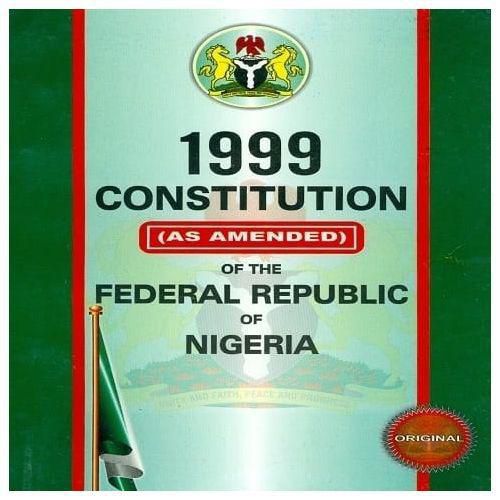
Nigeria’s constitution translated into 3 major languages

By Muhammad Sabiu


All is set for the launch of the copy of the Nigerian constitution (1999), which was translated into Hausa, Igbo and Yoruba by Prince Ade Ajayi Foundation Centre for Constitutional Literacy and Civic Education.


President of the foundation, Mr Ajayi, made the disclosure to journalists in Lagos on Friday.


He said that the translation work into the three languages, whose launch is scheduled to be held on the 25th day of November, took them six years.


According to him, the task aims to promote unity, national orientation.


He added that a book titled ‘I Love Nigeria, My Country’, would also be launched in the hope that national cohesion would be enhanced.


The News Agency of Nigeria (NAN) quoted him as saying: “Of 4,000 Nigerians randomly sampled in urban areas, over 80 per cent had never seen or read in whole or part, a soft or hard copy of the 1999 constitution.


“Of those who had, more than half could not recall what they had read. The statistics in rural areas are abysmal, largely due to literacy levels.


“We believe that the first step in national orientation is adequate civic education. This cannot take place where citizens do not have access to the one document that can most wholesomely, inform them.”

The danger of ‘otherization’

By Mukhtar Garba Maigamo


The trending video that surfaced after President Buhari attended the UNGA in New York, showing an unprovoked assault on some people that are considered “Hausa-Fulani” or “Northern Muslims” by their provocateurs on account of their facial countenance and, or the apparels in them, is a perfect example of the deep-rooted hatred, obsessions and insecurities bedevilling many people in some parts of this country which translated into this dismissive ‘othering’.


It is even very possible that these two or three people in the video who are being verbally assaulted with a barrage of racist abuses and the most opprobrious language, share no cultural or ethnolinguistic affinities with Fulani, but because of the fact the racialization of the Buhari/APC government has taken a firm root, the entire people of the North are lumped together as either Fulani or Hausa-Fulani (whatever that means) and demonized by many people in the South, including even the most educated ones. What a profoundly ignorant mischaracterization!


This sort of ignorance has historically also manifested in the ‘Aboki’ and ‘Gambari’ ethnic slurs these people used with profound contempt.


But the striking irony is that there are many people here in the North or even residents of Daura (hometown of Mr President) who might have felt disillusioned with the Buhari’s administration, who could also share cultural, ethnic and religious affiliations with him. Still, they are worst-off today, and there are those also who do not share these features with the president. Still, by their circumstances or by way of geography, they are lumped together and mischaracterized as Fulani or Hausa Fulani.


But the danger of this otherization and the racialization of APC is that it could provoke ethnic and religious sentiments during elections and make people rally around a maligned candidate- whether he is the right choice or not, in terms of capacity and ability to deliver.


When, because of your pathological hatred of a single person, his party or associations, you pigeonhole an entire stock of his ethnic nationality and derogate as dregs of the country, you are invoking his people’s consciousness to rise against you whether or not they love him.


This same thing happened during GEJ when some clannish zealots otherized the entire country, but south-south. Under GEJ watchful eyes, Edwin Clerk and his passengers went about with rhetorics and threatened fire and brimstone against anyone who raised eyebrows against their posturing.


His wife also went about demonizing the North as the habitat of almajiri (the almajiri that are menacing the North too, and whom many people in the North were campaigning against).


Her infamous diatribe, “our people no dey born shildren wey dem no dey count. Our men no dey born shildren throway for street. We no dey like the people from that side” was the final straw that galvanized the anger of people to rise and rally around ethnic solidarities to defeat GEJ.


The victory of APC in 2015 and 2019 was, therefore, a combination of many factors, including the idealization and evocation of sentiments for candidates put forward by the party.


And this will continue to play out if the antipathy like the one we’ve seen in this video continues.


Mukhtar Maigamo writes from Kaduna. He can be reached via mgmaigamo@gmail.com.

Kano markets (I)

By Hussaina Sufyan Ahmed

Kano is the centre of commerce. Kano is the state where you find the complete structure of Nigerian cultures coexisting. The state gives potentialities of what Nigerians should envisage in peaceful coexistence. That includes interrelationship between marketers of different ethnic backgrounds to the various categories of people in the market system and beyond.

The Kano market system remains one of the most organised in Nigeria. The market structure sees room for you to decide your scale of preference as a buyer or seller. In addition, there are distinctions as to where and what you can obtain from a particular place in a specific setting.

These markets range in various products. Kano is known to harbour the sales of everything saleable, and this is why this essay intends to highlight to you a Kano resident or someone new to Kano the focus of some of the major markets.

Sabon Gari is the largest market in Kano state. In this market, you can get anything you wish to, irrespective of your preference. Though the market has sections of varieties from kitchen wares, shoe wares, body wares, home appliances, and many more, the most common segment exemplified as the rowdiest remains the perishable foods section (Yan Kura). You find fresh from farm tomatoes, veggies of various types, seafood, and many more in this part of the market. This market section has different Nigerian tribes. However, the most prominent remains the Igbos and the Edos. The sweet ambience that comes out of this market section is when you hear every tribe speaking in Hausa to form a unification.

Another prominent produce you can get in Yan Kura is raw food. You get rice, beans and even Garri at cheaper rates. This is because, in this market, the packaging of produce is not a celebrated thing. Therefore, lower-class, average and high-class people can access this market and find the prices very affordable.

Kasuwar Rimi is a market located around Kofar Nassarawa. It focuses on the sales of kitchen utensils. In this market, you get to be thrilled by the number of people that can hoard the same business and yet live on common grounds. Kasuwar Rimi is also a big market that can harbour newcomers asking about the routes if they do not know the ways of the markets; this is because the market is also very large.

 In this market, there are Kano indigenes, and the ambience that comes with the native speakers is so beautiful. However, you find out that those not from Kano find joy in communicating using the tone of the native speakers.

Kasuwan Wambai is more of a farther affiliation to the route of Sabon Gari market. To go to this market from Yan Kura, you get to board a specially organised tricycle generally known as “Keke Napep” that is different from the common yellow ones. In this market, you get to see the actual definition of runners and plastics with a preference for quality. You get to have wholesales in this market for almost every seller of the rubbers, plastics, jerry cans, and gallons sell in dozens or more. In this market, you hear a name like “Yan rubber”, and you know there are other boundaries to help you understand the market more according to the categorisation.

A sequel to this article will give you hindsight on navigating the various major markets in Kano state. This is to help you map out the way to go and the way not to go. This will also help curb if insecurity, as sometimes an unknown route becomes a danger zone.

Dear Nigeria: Don’t fall prey to the false promises of war

Like the mid-1960s, the early 2020s has been heated and filled with war rhetoric. This rhetoric has been well oiled by claims of nepotism, corruption and everything that has been proverbial fertilisers for conflict in post-independence Africa. From Freetown to Kinshasa, the story has always been the same. And intriguingly, the results have also been similar. Deaths and more deaths, reconciliation, then business as usual. Hardly any lessons learnt!

Let’s retake this: the science of war in Africa is essentially a story of frustration, then misinformation, then delusion, then deception, then destruction, then reconciliation and finally rehabilitation. But, except maybe for places like Rwanda, the root causes never get addressed, the warlords never die, the corrupt politicians/soldiers mostly come back wealthier and more confident to assume the mantle of leadership. And the masses who fought and killed one another are further plunged into disillusion and poverty.  

Why then does this story keep repeating itself if data tells us that the investment always ends in red and that the returns are always intertwined with regrets? Here are a few observations, supported by both learning and experience:

Violence is a Political Statement

The old saying that where gentility fails, brutality prevails holds true today as it did in Nigeria’s 1960s, Liberia and Sierra Leone’s 1980s, and Rwanda’s 1990s. Politicians have basically two tools: debate and violence. In climes where one ceases to be effective, the other is automatically activated. And because both do not really take much from politicians by way of casualties, both have been greatly valued assets in their political estates. To change this, the citizens must be enlightened enough to see beyond the rhetoric. And usually, this mass education has to be ultimately championed by concerned and more enlightened citizens outside the political class.

The War Mongers Mostly Have a Contingency Plan

Suppose the chances of death for both leaders and masses in a civil conflict are equal. In that case, the apparent possibility is that wars will hardly be fought, and misinformation will get as little funding as possible. Unfortunately, the truth is that leaders usually have collaborators outside the borders of their countries and these collaborators typically stop at nothing to rescue their friends when things get worse. So, with this in mind, leaders at both ends of the divide beguile their cannon fodders to get the job done while they await the desired if ominous outcomes.

War Promises Freedom and other “Sweet” Things

History is replete with people taking the path of violence and war to regain their freedom. And beyond freedom, war promises access to places, bodies, resources and positions that were otherwise inaccessible. In a strange turn of things, Foday Sankoh of Sierra Leone rose to a position almost as powerful as the President after his rebellion that led to the loss of reportedly 50,000 lives, including hundreds of Nigerian and other ECOMOG/UN Peacekeeping forces.  He committed the crimes, then, for the sake of peace, got rewarded with laurels! Who is going to bring back all those lives, especially those of his loyal foot soldiers? Most of these people willingly took arms because they dreamt of enjoying what only Sankoh could enjoy, while their ultimate lot was destruction. War promises a lot of prosperity, ironically, but delivers a lot of destruction in reality.

The Crux of the Matter: it’s Difficult to Find a Suitable Alternative to War

Not that people want to lose routine or the calm of home. Not that they like to see the hacked body parts of loved ones or wade through the blood of a beheaded or gunned down neighbour in search of safety, not that they like to be refugees and be treated as slaves in strange lands, just that in the heat of the burning issues, with the accusations and counter-accusations and the mutual acrimony that ensues, it’s “difficult” to find a suitable alternative. Or better put, the other options have been abused and exhausted. Elections and coup d’état are the usual alternatives to war in our postcolonial political dispensation, but the two have hardly ever provided the desired outcomes. Therefore, it is safe to say the fault is not in our enemies; the fault, rather, lies in us. People are willing to change evil until they become beneficiaries of such evils. And how quickly do their fans often forget this fact!

In the final analysis, people plan for wars, heat the polity, sponsor misinformation, make promises of victory, but then war is so creative that it hardly subjects itself to anybody’s plans. And when the gruesome scenes of death and destruction start being plastered all over the media, and mercenaries and warlords start gaining unfettered access to national resources and the treasury, when hunger subdues the strongest amongst us and ruins the future that is so dear to us, when ammunitions are in short supply, and the enemy forces are about to be in total control, that’s usually when it becomes clear that it is not really the war we wanted, but the promises it offered from a distance. Too late!

AF Sesay is a writer based in Lagos. He can be reached via amarasesay.amir@gmail.com.

We are herders, not terrorists

Ahmadu Shehu, PhD.

Once upon a time, the Fulani were the aristocrats of West Africa – the wealthiest, most intellectual hegemony in the West African sub-region. They were and still are the traditional rulers, Islamic scholars, leaders of the black civilisation, a melting point of the Arabian and Western cultures assimilated into the river of African traditions. These are the most physically appealing, Caucasian-like Africans; skinny, silky-haired, relatively light-skinned and tall. These were the kings of Africa, founders of the Sokoto, Futa Jalo and the Masina empires.

Back in history, the Fulani conquered kingdoms, took over cities and established polities across the region, for those were the days of war and conquests. But, they have also found cities that are capitals of states and nations, which have become business enclaves of all kinds, and for all Nigerians, nay Africans. From a barracks, they founded Sokoto; from a valley, they created Gombe, and from a hill, they established Yola. They went across mountains, and on the rocks, they found Jalingo. In the deserts, they founded many other cities, talk of Niamey, the capital of Niger, Maroua, Garoua, Ngaundere, etc., in the southern end of the Fombina empire. In these urban centres lie the fortress of fortunes for the Igbo, employment for the Yoruba and civilisation for the Hausa. From these cities comes the livelihood of all Africans, education for everyone and sustenance for all folks. The Fulani provided beef, the manure on which most of the Nigerian crop production relies. These are the employers of millions of people, teachers for many and mentors for others.

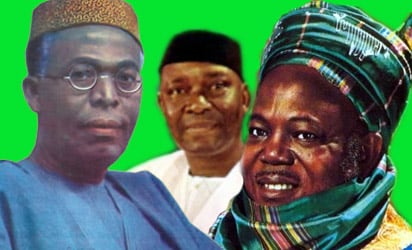
The triumvirates and their disciples, such as Nana Asma’u, bequeath West Africans the richest traditions of scholarship, the most valued native literature and a civilisation that has been resilient for centuries. This academic scholarship bequeaths northern Nigeria a space on the world map, drawing global scholarly attention, indigenous metalanguage, indelible history and a proud place in the comity of nations. At inception, the Fulani were the key and lock of the sub-Saharan economy, providing, subsidising, protecting and developing Nigeria with all that was needed. Like other ethnic groups, the Fulani gave their lives for Nigeria – Premier Ahmadu Bello, who inspired Prime Minister Sir Abubakar Tafawa Balewa, Murtala Muhammed, the Yar’adu’as and Shehu Shagari, to mention a few of the Fulɓe folks who served this country with distinction.

They served as the first line of defence for cities, the defenders of our religions and traditions. Even today, they are the leaders of most local security outfits that lay their lives to protect Nigerians against Boko Haram, kidnappers, armed bobbers and other terrorists bred by the failed Nigerian justice system. They are found at most gates of the elites, protecting the lives and property of Nigerians from Sokoto to Port Harcourt and from Maiduguri to Lagos. They are trusted with arms and ammunition to defend their Christian Igbo, Hausa or Yoruba bosses and are brave enough to lay their lives for the unknown passersby. 

But where are these people today? How did they become the villains in the lands, cultures, civilisations, nations and economies they helped build and sustain? The answers to these questions lie in the historical injustice, failure of leadership and sustained discrimination and demonisation of the most essential, most conservative section of the Fulani population. The travail of the herding Fulani began right at the peak of the Fulani empires. First, the hegemony created centuries ago recognised this category of its population for being good at military matters. Then, subsequent traditional administrations continued on the same lane, deploying the same people for warfare and nothing more. The results? They continued in the traditional ways of life and became even more sophisticated at combat.

The colonial rulers neglected this population, focusing only on the taxes, which they significantly contribute more than anyone else. Instead of the native authorities to reinvest these taxes in the integration, education and socioeconomic emancipation of this population, they squandered the resources. So, for our grandparents and parents, and indeed our brothers and sisters still on the cattle routes, nothing has changed in their lives since the 1900s. For us, no change has happened!

Then came the natural discord between herders and farmers, regardless of ethnicities. Then population explosion; sixty million people became two hundred million in sixty years, cohabiting the same 923768 Km2, sharing the same forests, water and other natural resources.

Again, climate change and environmental degradation took over most parts of the Sahel. Major grazing fields and waters, such as Lake Chad, have dried up, and herding folks have multiplied by dozens. Ethnoreligious crises have overtaken much of the Lake Chad region, pushing herding populations down south, searching for water and green pasture. Over there, farms have encroached all lands, including major highways, food insufficiency, joblessness, and economic degradation have forced families into the deeper forests in search of livelihood. Resource control sets in, and crises become inevitable.

Unfortunately, no one came to our rescue on time, as our sedentary brothers moved to modernity, leaving us at the mercy of the forests. Although we are one ethnic group, bound together by language and traditions, the socioeconomic and modern (dis)advantages have created a strong barrier; distinct kinship emerged, often leading to animosities and hostilities. They got the power, wealth, knowledge and resources. But, they have disassociated from us, laughed and called us Mbororo, “the unenlightened”, as stories of our perceived naiveté go viral in cities and communities.

Our closest friends – the farmers – with whom we enjoyed cordial relationships due to mutual economic interests have become enemies of necessity. Just as our lives depend on our herds, their own lives depend on their farms. Call it the clash of economic interests! With this, crises set in; lives lost, and livestock diminished. The large, vast country becomes a small spot, as we were chased away wherever we went. Our cattle were rustled both by our own impoverished, unemployed youth and neighbours. For any slight provocation or disagreement, our means of livelihood – the livestock – are targeted and killed, often leading to reprisals.

But, this situation has been stage-managed until governments in some northwestern states began ceding ancestral grazing lands to farmers and urban development. When herds diminish, herders settle down to crop farming. Thousands of people came out of this economic depression but woke up to landlessness without notice. Add this to the historical aspects, social deprivation and economic dislocation, you find that criminality is the natural turn of events. As usual, the Nigerian governments are ad-hoc, simplistic, never interested in long-lasting solutions and even scared of reality. Instead of addressing these issues head-on, criminals were made political thugs, monies and weapons provided, all for political greed.  

The natural promise land for such a criminally profitable business is more membership, innovations, and recruitments. Similarly, the natural candidates are those with similar backgrounds, social and cultural affiliations and mental dispositions. In this way, the Fulani folks are made the majority in the ongoing banditry and kidnapping. Therefore, the old circle is repeated.

Evidently, the fire-power in the hands of these bandits is far beyond their reach. The economic strength, resources and sophistication are not the kinds obtained by mere herders in the bush. That says a lot about their masters in cities, higher places and strong networks from other ethnic and social backgrounds. So, like they were deployed as foot soldiers for warfare centuries ago, and then as a conduit for taxations and money-making in cooperate Nigeria, they are today deployed as the bush soldiers, arm-bearing, front-raw men in the terrible enterprise that is kidnapping and banditry in northern Nigeria.

Look at it this way. If the billions made in this wicked trade were to be traced, they indeed wouldn’t be found in a ruga or a Fulani settlement. They might, instead, be found in dollar, pounds and naira accounts held by the very ethnic groups that are so quick to demonise millions of the herders’ kinsmen.

When it is elections circle, politicians would turn to the criminals, deploy them and win elections, and promise afterwards, to end them. When the security agencies arrest them, their bosses and other beneficiaries pay huge monies to get them released, damning the justice system and the nation’s well-being. Therefore, the truth is that just like Boko Haram are not Kanuri, Maitatsine not Hausa, IPOB and drug pushers not Igbo, Yahoo-Yahoo not Yoruba, these criminals are NOT Fulani. They are Nigerians and must be treated as such. Because we, the Fulani herders, are not terrorists. We are victims of socioeconomic circumstances. 

Dr Ahmadu Shehu is a nomad cum herdsman, an Assistant Professor at the American University of Nigeria, Yola, and is passionate about the Nigerian project. You can reach him at ahmadsheehu@yahoo.com.