Hausa

Kukah Tells Nigerians To Stop Addressing Him As Hausa Man

By Sabiu Abdullahi

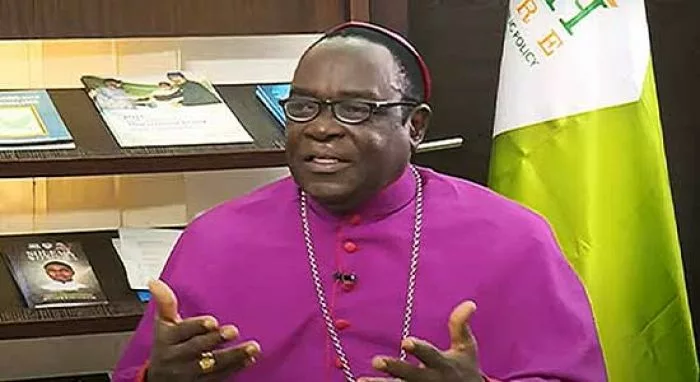
The Catholic Bishop of Sokoto Diocese and Chancellor of Chukwuemeka Odumegwu Ojukwu University, Igbariam, Anambra State, Most Rev. Dr Matthew Kukah, has called on Nigerians to stop describing him as a Hausa man.

Kukah clarified that although he is often labelled that way, his identity does not align with such a description. He made the statement during the 16th convocation ceremony of the university, held at its auditorium on Saturday.

He urged graduating students to maintain good character in their dealings with their parents, the university community, Anambra State, the South-East, and Nigeria at large.

He also commended the Anambra State Government for its investment in education, noting that the state continues to perform strongly in the sector when compared with other parts of the country.

Kukah said:

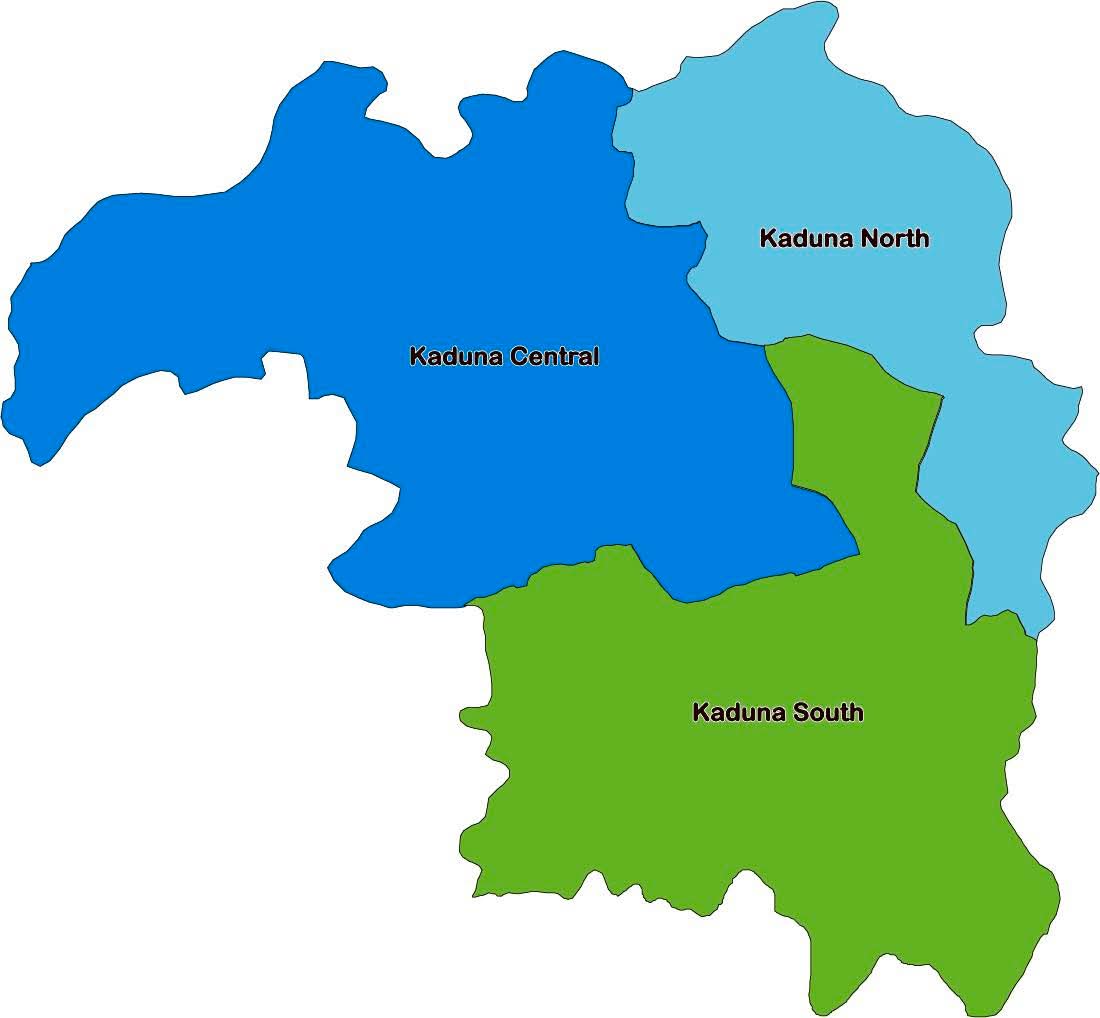
“I am a typical Nigerian from Anchuna, Ikulu Chiefdom in Zangon Kataf Local Government Area of Kaduna State, but not a Hausa man by origin. Nigerians should stop addressing me as a Hausa person.

“As the new Chancellor of this institution, we will not only strive to achieve the university’s goals, but surpass them.”

He expressed appreciation to Governor Chukwuma Soludo for his appointment as Chancellor of the institution. The governor formally installed him during the ceremony.

Governor Soludo, in his remarks, expressed satisfaction while decorating Kukah as Chancellor. He said he believed the cleric’s experience and moral standing would strengthen the university.

Soludo said:

“It was a great honour to be present at the 16th Convocation Ceremony of Chukwuemeka Odumegwu Ojukwu University as a visitor to this great institution.

“The ceremony was a celebration of excellence, hard work, and the power of quality education. It was also a reminder of the critical role universities play in training skilled manpower, shaping character, advancing knowledge, and preparing young people to contribute meaningfully to society.

“I was particularly delighted to decorate the Catholic Bishop of Sokoto Diocese, Most Rev. Dr. Matthew Hassan Kukah, as the new Chancellor of Chukwuemeka Odumegwu Ojukwu University.

“I am confident that his wisdom, experience, and moral leadership will further strengthen the vision and standing of the university.

“In recognition of exceptional academic achievement, I announced a ₦4 million cash gift to Somtochukwu Augustus Ume of the Economics Department, who emerged as the overall best graduating student at COOU’s 16th Convocation with an outstanding CGPA of 4.85 out of 5.0.

“I also offered scholarships to 37 first-class graduates of the university’s 16th Convocation to support their postgraduate studies up to the highest level at any public university of their choice.”

He further charged the institution to focus on producing solution-driven graduates rather than mere certificate holders.

“Our institutions of higher learning must go beyond awarding certificates; they must raise innovative, solution-driven, and globally competitive graduates who can respond to the challenges of our time.

“To the graduands, I urged them to seize the moment and emerge as beacons of hope, disruptive thinkers, and agents of change in society. The future belongs to those who are prepared to lead with courage, creativity, and purpose,” he added.

Kano Honours Legendary Hajiya Mariya Galadanchi: Celebrating Six Decades of Impactful Broadcasting

By Khalid Imam 

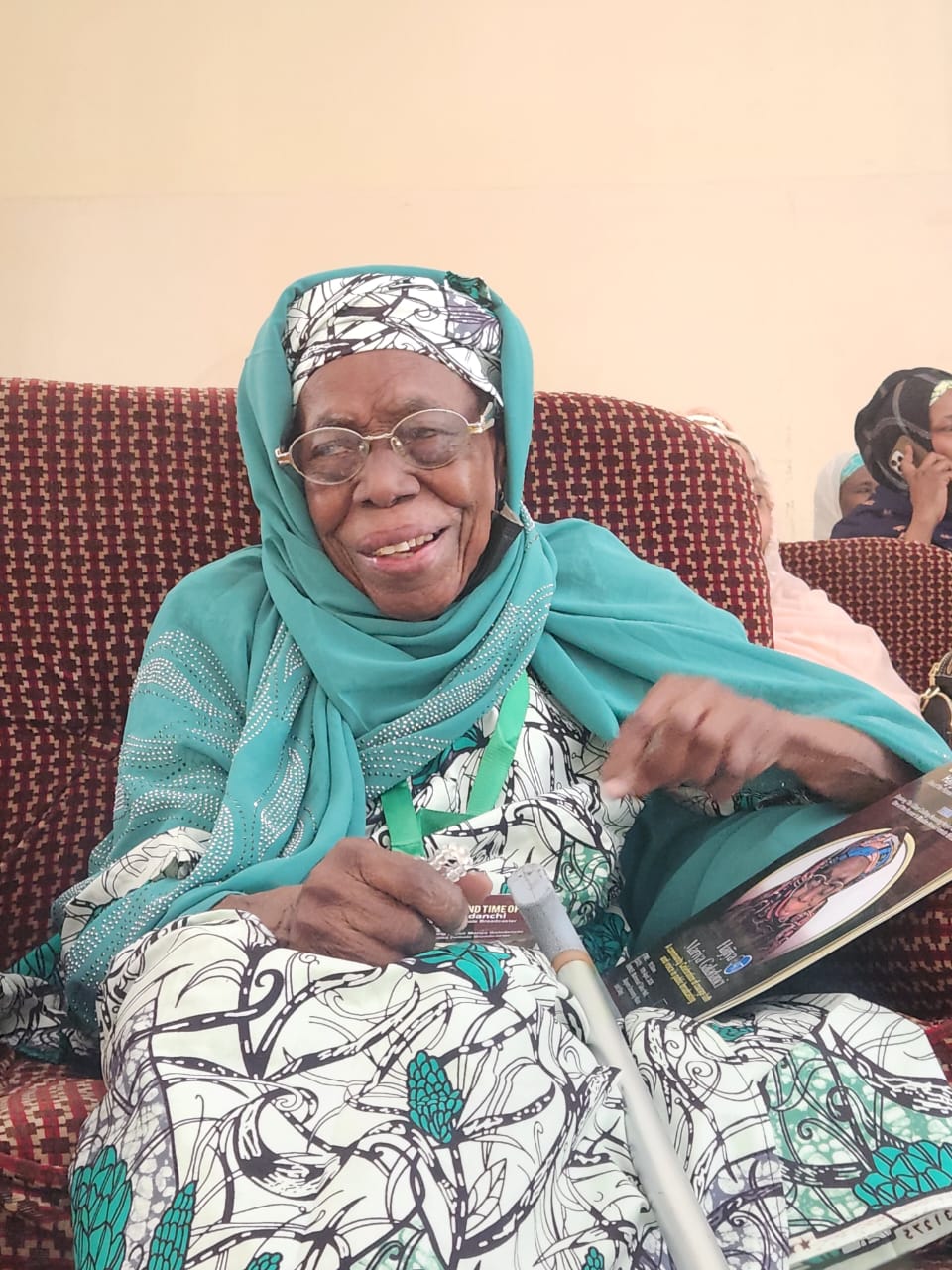
Arguably, in Kano and beyond, if one is searching for one of the most consistent and dominant pioneering female Hausa Muslim broadcasters—whose eloquent voice has shaped and continues to shape generations through a myriad of captivating radio and TV programs—there is no doubt that such a singular, towering presence belongs to the revered and tireless Hajiya Mariya Galadanchi. She is an iconic, multi-talented veteran journalist who is retired but not tired. Hajiya Galadanchi, who spent six decades as a powerful influence and household name synonymous with Radio Kano, a station popularly known as Gidan Bello Dandago, is a popular figure known for her uncommon courage and unshakable faith in God.

An all-round journalist whose foray spans both print and broadcast media, the legendary Hajiya Mariya Galadanchi, popularly known as an anchor of Filin Zaɓi Son Ka, among other programs, began her career as a health worker. Out of a deep passion for the media, she metamorphosed into one of the most dedicated and accomplished radio and television personalities. A skilled radio dramatist, she began her journey into journalism by writing life-transformative articles, mostly addressing issues related to women and children, over half a dozen decades now in the pages of Gaskiya Ta Fi Kwabo. Hajiya Galadanchi ventured into public service in 1964 as a health worker at Marmara Hospital and was later posted to several other hospitals within the old Kano City, where she served with remarkable zeal and dedication.

After joining Radio Kano at the age of 35, initially not as a full-time staff member, she handled women’s programs on Thursdays and children’s programs on Fridays as her first assignments. Thereafter, she went on to anchor and contribute to several notable programs, including Ruguntsumin Salla. Through Zaɓen Sada Zumunci, she mentored many female broadcasters, including Mariya Ummakati. Hajiya Mariya Galadanchi is undoubtedly one of the pioneering Hausa Muslim female broadcasters and can rightly be described as a glass-ceiling breaker, having opened the floodgates for the rise and dominance of women in radio and TV broadcasting in Kano today, many of whom now occupy enviable positions as directors within the public and private media ecosystem in Kano and beyond.

No doubt, her persistent voice is a testimony to a living era, one well-defined by knowledge, brilliance, advocacy, and deep love for culture and the uniqueness of Kano’s traditional ways of life. She mentors the womenfolk on the complexities of managing the home: living with a husband and his relatives, navigating life with co-wives, and raising a successful family. She constantly discusses topics such as pregnancy, childcare, and parenting, while teaching women, especially the young, the best of Hausa traditional cookery, including dishes served during festive seasons and ceremonies.

Acknowledged for her honesty, courage, faith, patience, loyalty, dedication, and respect for time, she was also famously known as one of the first women to ride a bicycle and drive a car in Kano City, being among the few female pioneers to be educated in Western schools in the old Kano City. Hajiya Mariya was born at Kankarofi Ward 97 years ago, in Kano Municipal LGA.

Among the dignitaries who graced the special celebration of the life and times of Hajiya Mariya Galadanchi were the Honourable Commissioner of Information, Ibrahim Abdullahi Waiya; Prof. Abdalla Uba Adamu, former Vice-Chancellor of the National Open University of Nigeria; Prof. Abdulrashid Garba, Vice-Chancellor of Khalifa Isyaku Rabi’u University, Kano (KHAIRUN); and Malam Ibrahim Khalil, among other seasoned and distinguished media practitioners too numerous to mention.

During the event professionally curated by an erudite academic, seasoned broadcaster and popular columnist, Malam Bala Muhammad as a Master of the Ceremony, there was a special appeal to the Kano State Government to name the road between Diso and the junction of Hasiya Bayero—or any other notable monument in Kano—after the veteran broadcaster, Hajiya Mariya. Again, Prof. Abdalla Uba Adamu also called on the organisers to establish a fellowship in her name to promote young female journalists in Kano.

Alhaji Dr Aminu Ladan Abubakar (Alan Waƙa), Sarkin Adabin Harshen Hausa; Mudassir Ƙassim; and Hajiya Fati Nijer thrilled the audience with scintillating songs. Hajiya Rabi Tanko Yakasai, a close associate of the celebrant, also spoke on Hajiya Mariya Galadanchi’s political activism through Jam’iyyar Matan Arewa, urging young females from the North to emulate her.

The Commissioner of Information, Ibrahim Abdullahi Waiya, described Hajiya Mariya Galadanchi as a shining example of a female journalist of great substance and announced the Kano State Government’s donation of ₦10 million as a take-off fund for the proposed Hajiya Mariya Galadanchi Young Female Journalist Fellowship Fund.

The Kano community celebration of Hajiya Mariya Galadanchi at 97, which was attended in large numbers by media practitioners, academics, the ulama, the celebrant’s family and friends, and people from all walks of life, could best be described as a huge success. Dozens of goodwill messages were received, especially from notable female broadcasters in Kano, who expressed deep appreciation for the pioneering mentorship role Hajiya Mariya Galadanchi has tirelessly played.

Some of the major highlights among the series of fascinating activities that made the event memorably captivating were the keynote speech presented by Hajiya A’isha Sule; two separate audio and audiovisual documentaries were presented to the patient audience on the life and times of Hajiya Mariya Galadanchi; and special tributes from both senior and young female broadcasters by Hajiya Hafsah Iliyasu and Hajiya Zainab Sherif, respectively. 

There was also a stimulating panel discussion featuring Maryam Babayaro, Dr Fatima Damagun, A’isha Bello Mahmud, A’isha Sule, and A’isha Usman, moderated by Hajiya Mariya Bakori from Katsina State. To allow feedback from the massive audience, there was a Q&A session, the presentation of awards, and a plaque to the celebrant, led by Malam Sheikh Ibrahim Khalil and Malam Abubakar Darma. The event ended with an exhibition of Hajiya Mariya Galadanchi’s memorabilia, which included her photos, sound bites, broadcast archives, and merit awards.

Khalid Imam is a Kano-based writer, educator and President of Kano Literary Space. He can be reached via email: khalidimam2002@gmail.com.


Jürgen Habermas | A Tribute

By Prof. Abdalla Uba Adamu 

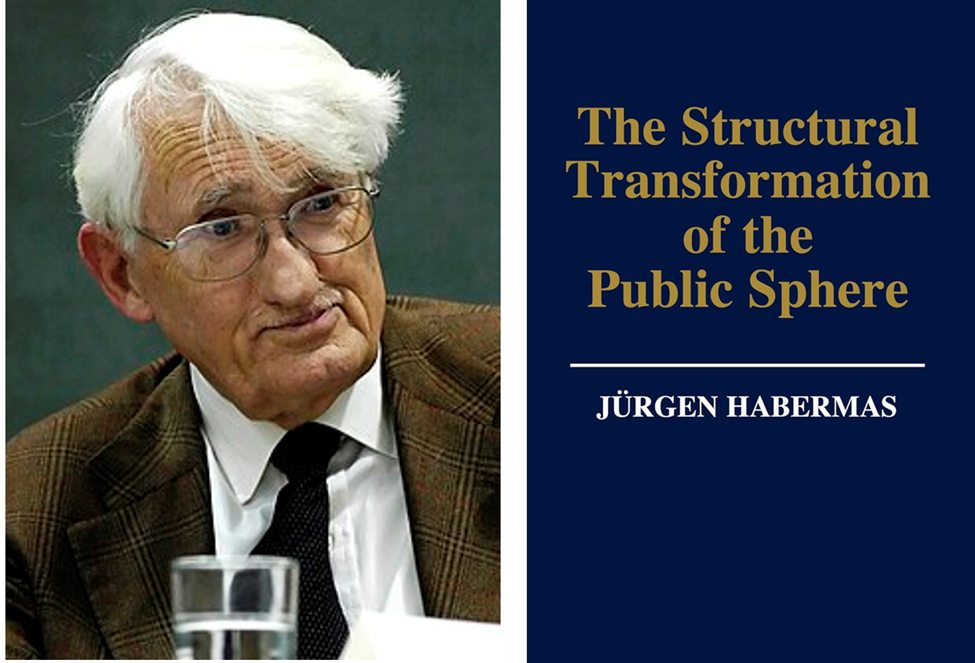
On Saturday, March 14, 2026, Dr Muhsin Ibrahim shared a newspaper report with me announcing the passing of Jürgen Habermas. The German philosopher died at the age of ninety-six in Starnberg, an affluent town in Upper Bavaria. Muhsin was well aware of how deeply I had drawn on Habermas’s theory of the structural transformation of the public sphere in my research on Muslim Hausa media cultures. 

His passing marks the end of an era in critical social theory. Habermas’s work on communication, rationality, and society made him one of the most influential philosophers of the late twentieth and early twenty-first centuries, as well as a major intellectual figure in postwar Germany.

Many Africanists did not initially read Habermas directly. Rather, they encountered his ideas through mediated theoretical engagements in the writings of scholars such as Brian Larkin. I myself first became aware of the public–private sphere debate as part of the broader Frankfurt School theoretical repertoire in Larkin’s studies of media culture in northern Nigeria. His work contributed significantly to later “post-public sphere” discussions by demonstrating how Habermasian insights could be adapted to different social, cultural, and technological environments.

Of Habermas’s many publications, the one that proved most decisive for me was The Structural Transformation of the Public Sphere: An Inquiry into a Category of Bourgeois Society. Originally published in German in 1962 and translated into English by Thomas Burger (with the assistance of Frederick Lawrence) in 1989, it is an extraordinarily dense text. One often needs the guidance of someone already conversant with its arguments to appreciate its analytical elegance. 

I was fortunate to own a copy—purchased for me in the pre-digital era by Gillian Belben, then Director of the British Council in Kano. I read it several times before fully grasping how powerfully it provided a framework for understanding public reactions to Hausa films and the emergence of censorship debates.

Habermas’s study retraces the historical emergence of the bourgeois public sphere as a communicative domain distinct from the state, in which private individuals could assemble to discuss matters of common concern. By analysing the transformations of this sphere, he recovered a concept of enduring importance for social and political theory. In simplified terms, the argument draws attention to differentiated social spaces—those of the home and those of the wider public—and to the ways in which each structures particular forms of discussion and social interaction.

I relied heavily on this analytical distinction when I presented my first international seminar at the Institut für Afrikanistik, University of Cologne, on November 15, 2004. Titled “Enter the Dragon: Shari’a, Popular Culture and Film Censorship in Northern Nigeria,” the seminar explored how Hausa films often rendered visible aspects of domestic life traditionally regarded as private, thereby provoking moral anxieties and regulatory responses. By destabilising the boundary between the two spheres, Hausa cinema helped produce new forms of mediated public debate. A dramatic illustration of this dynamic emerged in the widely discussed Hiyana scandal of 2007, in which a private act became publicly circulated, with far-reaching cultural consequences.

The communicative arena that Habermas conceptualised as the bourgeois public sphere appears today in a historically transformed guise within the networked environments of social media. In Muslim societies such as those of northern Nigeria, digital platforms have intensified the long-standing negotiation between domestic moral order and public cultural expression. 

Conversations once confined to living rooms, mosque courtyards, or informal viewing gatherings now unfold in algorithmically structured yet widely accessible communicative spaces. These interactions do not reproduce Habermas’s ideal of rational-critical debate in any straightforward manner. Rather, they reveal plural, affective, and technologically mediated publics in which questions of religious legitimacy, gendered visibility, and cultural authority are continually contested. Social media, therefore, represent not the revival of the bourgeois public sphere but a new phase in its structural transformation — what might tentatively be described as a “third space.”

The world of critical social theory will undoubtedly feel the loss of Jürgen Habermas. Yet his conceptualisation of the public–private divide will continue to shape scholarly reflections on media, communication, and cultural change for years to come.

Readers interested in further discussions of the public–private debate in Islamic contexts may consult:

Kadivar, Mohsen. 2003. An Introduction to the Public and Private Debate in Islam. Social Research 70 (3): 659–680.

Gidan Badamasi (Season 7) – A Short Review

To Kannywood audiences, the TV series Gidan Badamasi needs no introduction. It is arguably the most successful comedy series since the industry’s migration to YouTube/TV series production. There have been other popular comedy series, such as Zafin Nema and Jikokin Maigari. However, none has matched the reach and longevity of Gidan Badamasi.

After six successful seasons, Gidan Badamasi now returned with Season 7. Only two episodes have been released so far, yet the new season already shows the potential to surpass its predecessors. This is due to its thematic preoccupation, which tackles the issue of insecurity in Northern Nigeria and the problematic framing of the Fulani ethnic group as terrorists without distinction. The new season rightly reinforces a crucial truth: that terrorism has no religion or ethnicity.

The first episode opens with Alhaji Badamasi (Magaji Mijinyawa) and his aide, Taska (Falalu Dorayi), being abducted by kidnappers. The kidnappers’ kingpin, Dan Tsito, is portrayed as Fulani.  However, the narrative shows that Dan Tsito’s criminal path begins within his own community (Rugga), before extending into the forest, where he operates alongside criminals from other ethnic groups. 

The series obviously avoids ethnic reductionism and offers a more balanced portrayal of terrorists and terrorism in Nigeria. It also dismantles the notion of selective victimhood by presenting Alhaji Badamasi, a Hausa Muslim, and his aide as victims. This challenges how the international community often wrongly assumes that terrorism in Nigeria targets only Christians, and how films like The Herd (2025) subtly reinforce that misleading narrative.

The director, Falalu Dorayi and the creative team deserve commendation for addressing this sensitive issue with courage and clarity. This is the kind of storytelling Northern filmmakers must prioritise – telling their own stories truthfully rather than allowing outsiders to define their realities.

The series is also technically solid. Both picture quality and sound design are commendable. However, based on the two episodes released so far, the makers need to be more restrained with unnecessary comic scenes. A more disciplined approach would allow the series to do full justice to the seriousness of its subject matter.

In conclusion, Gidan Badamasi Season 7 shows strong promise. It remains as entertaining as previous seasons while effectively blending important social issues into its narrative. I highly recommend it.

Reviewed by

Habibu Maaruf Abdu

Habibumaaruf11@gmail.com

Kannywood Best Performances of 2025

In 2025, the Hausa film industry, popularly known as Kannywood, witnessed a clear shift, with series films completely overshadowing feature-length productions. Apart from Mansura Isa’s Faliha and Falisha, no major Kannywood movie was released in cinemas throughout the year. This is, of course, troubling, as series films alone do not define the strength and global reach of any serious film industry.

However, series films attract more audience commitment, offering extended runtimes, deeper character development, and closer engagement with social realities. They also give filmmakers and actors the room to explore complexity in ways feature-length films often cannot.

After following several Kannywood series throughout the year, six clearly stood out for viewership, audience engagement, and the level of conversation they generated. They are as follows:

  1. Labarina (Season 14), 
  2. Wata Shida
  3. Garwashi
  4. Jamilun Jidda
  5. Zabi Biyu, and 
  6. Taskar Kannywood (Da Na Sani)

The above series were considered for the year’s best performances. Nominees were first identified within each series, after which an overall winner was selected for each category based on consistency, depth of performance, narrative impact, and contribution to the series as a whole.

  1. Best Actor of the Year 

Top Nominees:

  1. Adam Garba (Abba Galadima in Labarina [season 14], and Sameer/Dahiru in Wata Shida)
  2. Abubakar Waziri [Bado] (Malam Sani in Garwashi)
  3. Ali Nuhu (Professor Nuri in Jamilun Jidda)
  4. Yakubu Muhammad (Mudan in Garwashi)

Winner: Adam Garba (Abba Galadima in Labarina [S14], and Sameer/Dahiru in Wata Shida)

Adam Garba’s contributions to two of the top series clearly set him apart from other nominees. In Labarina (season 14), he delivers a calm, grounded performance as Prince Abba Galadima. However, his portrayal of Sameer/Dahiru in Wata Shida demands duality and emotional balance, all of which he handles with impressive control.

  • Best Actress of the Year 

Top Nominees:

  1. Fatima Abdulahi Washa (Sumayya in Labarina [Season 14])
  2. Fatima Hussaini (Zahrah in Wata Shida, and Ruth/Fatima in Jamilun Jidda)
  3. Fiddausi Yahaya (Ma’u in Garwashi, and Jidda in Jamilun Jidda)

Winner: Fatima Hussaini (Zahrah in Wata Shida, and Ruth/Fatima in Jamilun Jidda)

Although Fiddausi Yahaya left a strong impression as Ma’u in Garwashi and the title character in Jamilun Jidda, Fatima Hussaini maintains a stronger performance quality across different projects. The confidence she showed as Zahrah in Wata Shida, and her dual role in Jamilun Jidda prove her versatility, as she navigates contrasting identities effectively.

  • Best Supporting Actor 

Top Nominees:

  1. Rabi’u Rikadawa (Baba Dan Audu in Labarina [Season 14])
  2. Kabiru Sani (Gaddafi in Garwashi)
  3. Isah Feroz Khan (Kasim in Garwashi)

Winner: Kabiru Sani (Gaddafi in Garwashi)

Each of these actors delivered memorable supporting performances, but Kabiru Sani, alias International, stands out for the complexity and freshness he brought to the role of Gaddafi in Garwashi. The character is a blend of thuggery and humour. This combination could easily have messed up in less capable hands. However, Kabiru International plays it naturally. His performance felt confident and fully formed.

  • Best Supporting Actress

Top Nominees:

  1. Faiza Abdullahi (Lawisa in Garwashi)
  2. Bikisu Safana (Shatty in Wata Shida)
  3. Aisha Humaira (Samira in Garwashi)

Winner: Faiza Abdullahi (Lawisa in Garwashi)

The reason why Fa’iza Abdullahi wins is the way she adjusted her physicality, voice, and mannerisms to fit in the thuggish character of Lawisa in Garwashi. Her performance reminds you of Alia Bhatt’s finest performance in Gangubai Kathiawadi, which earned her the prestigious Indian National Film Award.

  • Best Villain of the Year

Top Nominees:

  1. Hauwa Farar Lema (Kilishi, Labarina [Season 14]) 
  2. Balaraba Abdullahi (Baba Lami, Garwashi)
  3. Magaji Mijinyawa (Kawu Nakowa, Wata Shida)

Winner: Hauwa Farar Lema (Kilishi, Labarina [S14])

Hauwa Farar Lema’s portrayal of Kilishi in Labarina (Season 14) stands out for her deep understanding of the character’s motivations and emotions. Her performance feels realistic. She looks fearsome and conveys the essence of her malicious character through threatening glances and expressions.

  • Star of the Year

Winner: Fiddausi Yahaya (Ma’u in Garwashi and Jidda in Jamilun Jidda)

While some critics question her acting prowess, Fiddausi Yahaya is undoubtedly the star of the year. As a relatively new actress, she suddenly became a household name, gained a massive fan following, trended widely on social media, and began appearing in multiple big-budget projects such as Garwashi and Jamilun Jidda, among others. She is a subtle performer and has shown steady improvement in acting quality with every new role.

  • Best Breakthrough Performance of the year

Winner: Amina Shehu [Lulu] (Samira in Da Na Sani)

A breakthrough performance is a role that elevates an actor’s visibility and reputation. This happens to Amina Shehu after delivering an intense and emotionally layered role of Samira, nicknamed Kwaila, in “Da Na Sani”, the seventh film from Taskar Kannywood collection. Da Na Sani became the most-reviewed film, and her performance in it was probably the most widely acclaimed of the year. 

  • Most Promising Actor of the Year

Winner: Murtala Yahaya Musa Sarauta (Bello in Zabi Biyu)

Judging by how convincingly he handled the role of Bello in Zabi Biyu, only a few roles would truly challenge him. He may appear too mature and lack the conventional swagger of Kannywood heroes, but his acting skills are too solid to be overlooked. With the right story that suits his personality, Murtala is really an actor to watch.

  • Most Promising Actress of the year

Winner: Hassana Ibrahim (Safiyya, Zabi Biyu)

The debutante Hassana Ibrahim demonstrates exceptional potential in her powerful lead performance in Zabi Biyu. She portrays emotional depth and control, particularly in scenes that require vulnerability and internal struggle. She has a commanding screen presence, delivers her dialogue effectively, and complements it with appropriate gestures

  1.  Best Comic Performance

Winner: Isiyaka Jalingo (Zabi Biyu,and Garwashi)

Isiyaka Jalingo is not merely funny; he generates humour through behaviour and mannerisms while still serving the story. His roles are not designed solely for comic relief; instead, the humour emerges organically from the way he speaks and acts in every scene he features. His roles in Garwashi and Zabi Biyu, though small, leave a huge impact.

Written By

Habibu Maaruf Abdu

habibumaaruf11@gmail.com

Hausa butchers attacked at Enugu market following price dispute

By Muhammad Sulaiman

Tensions erupted at the Bariki Market in Enugu State when a group of Igbo butchers reportedly confronted and attacked their Hausa counterparts over a disagreement tied to meat prices.

According to eyewitnesses, the incident began when Hausa butchers allegedly sold their meat at lower prices, a move that some Igbo traders viewed as undercutting the market. The disagreement escalated into a physical altercation, resulting in injuries and disruption of business activities in the area.

Observers have noted that Igbo traders operate freely across markets in Kano and other parts of northern Nigeria, with no reports of similar incidents. Some commentators expressed concern that the Enugu clash had not received widespread media attention, suggesting that the coverage might have been more prominent had the situation been reversed. However, a video clip of the clashes has been widely shared on social media in Northern Nigeria.

There are also concerns that, in other contexts, such disputes risk being misrepresented as ethnic or communal violence, further heightening tensions.

Market authorities and local security agencies are yet to issue an official statement on the incident.

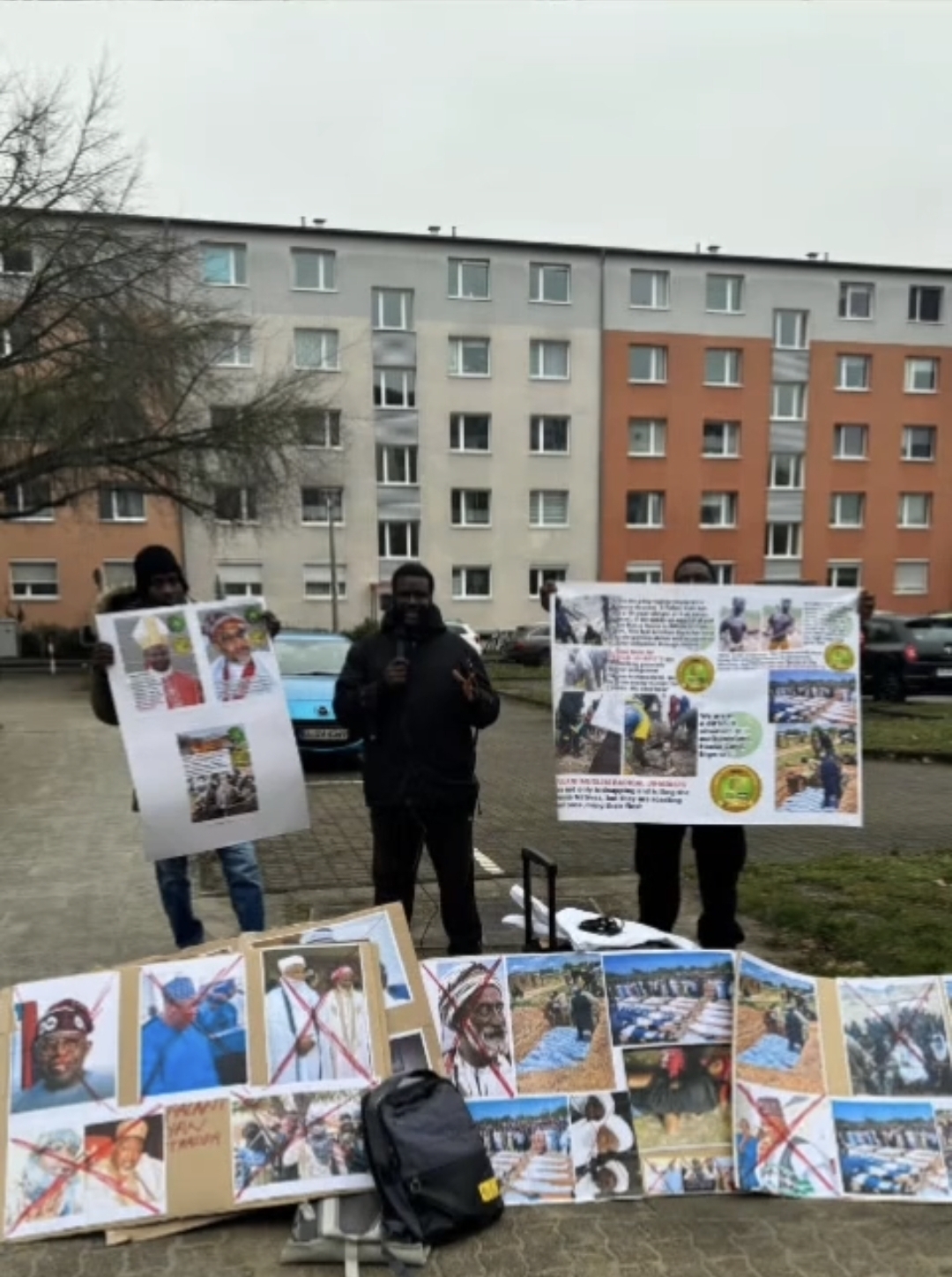
Arewa Community Germany disowns Berlin “Hausa International Protest,” warns against divisive messaging

By Muhammad Sulaiman

The Arewa Community Germany has formally disassociated itself from a video circulating online about a so-called “Hausa International Protest” organised by Hausa Tsantsa Development Association, staged in Berlin.

In a letter addressed to Nigeria’s Consul General in Frankfurt, Ambassador Yakubu A. Dadu, the group said it had no role in organising or endorsing the demonstration and warned that the protest’s message conflicts with its core values.

The association, represented by Alhaji Tijani Garba, Dr. Ummah Aliyu Musa and Buhari Abubakar, stressed that it was founded on the principle of unity among all northern Nigerian peoples. It noted that Hausa, Fulani, Kanuri, Tiv, Nupe and other groups share a common heritage, adding that the organisation “does not draw lines” between northerners and will not support any activity that promotes ethnic profiling or elevates one group above another.

According to the statement, the Berlin protest risks fueling division and misunderstanding among Arewa communities in the diaspora, where the group says cohesion is especially important. The association reaffirmed its focus on cooperation, peaceful engagement and presenting a positive image of Northerners living in Germany.

The Arewa Community Germany also cautioned the public against linking its name to the protest, emphasising that any event involving the association will be announced through its official channels.

The group concluded by reaffirming its stance on harmony, mutual respect and a united Arewa identity.

BUK’s Pride: Aisha Musa Auyo defends PhD, extends family legacy of scholarship

By Muhammad Sulaiman

A regular contributor to The Daily Reality’s opinion section, Aisha Musa Auyo, has successfully defended her PhD dissertation in Educational Psychology at Bayero University, Kano (BUK).

Dr Auyo’s doctoral research, titled “Influence of Achievement Motivation, Academic Self-Concept, Emotional Regulation and Locus of Control on the Academic Achievement of Public Secondary School Students in Kano and Jigawa States of Nigeria,” marks a significant contribution to the study of learning behaviour and student performance in northern Nigeria.

Her achievement comes after six years of rigorous academic work and dedication. Described by her husband, Dr AC Abdullahi Maiwada, as “an authentic product of BUK,” Dr Auyo was born, raised, educated, and married within the university community, where she obtained all her degrees.

Academia also runs deep in her family. Her parents, Prof. Musa Auyo and Dr Hadiza Umar, both serve in BUK’s Department of Library and Information Science, while her husband, Dr Maiwada, holds a PhD in Mass Communication. Her parents-in-law are also accomplished academics, making the Auyo-Maiwada family one deeply rooted in scholarship.

The Daily Reality congratulates Dr Auyo on her outstanding achievement and wishes her continued success in her academic and professional pursuits.

Language is a tool; it’s not the destination | A look at Kano’s Hausa-only school policy

By Prof. Abdalla Uba Adamu

I rarely discuss politics, policy, or religion at any level on social media. These three are totally beyond my modest capabilities. However, the Educationist in me stirred when it became news in November 2025 that a bill was being proposed in the Kano State House of Assembly, titled the Kano State Mother Tongue (Hausa Language) Education Enforcement Bill. It was introduced by Musa Kachako, a member representing Takai under the New Nigeria Peoples Party (NNPP). 

The Bill seeks to ensure that all instruction in primary and secondary schools in Kano (presumably those under Local Education Authorities) is conducted in the Hausa language. According to online reports, when presenting the bill during plenary, Kachako stated that the initiative followed global best practices in education, citing countries such as China, Japan, and India, which he noted had made significant strides in science and technology by teaching children in their native languages from an early age. Kano State can do this because Education, being on the Concurrent Legislature, gives room for any policy variation of Education from that of the Federal Government’s Exclusive list. 

Certainly, the idea of teaching all subjects in Hausa springs from a noble intention — to enable children to learn in the language they understand best, and to reaffirm local identity against the long shadow of colonial linguistic domination. I witnessed this during my tenure as a Teaching Practice Supervisor in various schools in Kano. Students tended to understand language lessons more fluidly than those in other languages. And we are talking about over 40 years ago. Along the line, I even came up with how to use Hausa proverbs to teach science, based on over 30 curated Hausa proverbs with scientific content (e.g. gravity in “komai nisan jifa, ƙasa zai dawo”) and trained dozens of teachers in Jigawa (ironically enough, Kano was not interested at the time!) on this much later.   

Yet, the success of such a language policy depends on its contextual intelligence — its ability to strike a balance between local comprehension, national unity, and global relevance. In all cases of such debates, the examples of China, Japan, and India are the most commonly cited as best practices that have worked. With its virtual monolingual Hausa population (perhaps the only State in the Federation with this attribute), elevating Kano as “Little China” certainly sound, albeit contradictorily, post-colonially romantic. This all sounds inspiring. But, without taking the shine off it, how realistic is it?

There is a certain merit to the idea, but only to a certain extent. Research everywhere agrees: children learn faster and think better when taught in their native language. Even UNESCO and Nigeria’s own education policy support this approach for the first few years of primary schooling, where community languages are encouraged, rather than metropolitan languages. Let’s look at some cases.

Ethiopia is perhaps the only country in Africa with a continuous mother-tongue education system. The country did not suffer the horrors of colonisation on the same scale as the rest of Sahelian African countries, as it was only briefly occupied by Italians between 1936 and 1941. It uses regional languages (Amharic, Tigrinya, Oromo, Somali, etc.) as the medium of instruction in primary and secondary education. In universities and higher education, Amharic or English is used depending on the region and field. Thus, Ethiopia’s system is perhaps the closest to continuous mother-tongue instruction, although English dominates technical and postgraduate studies.

In Tanzania, Swahili is the dominant language in primary schools, but English is introduced from secondary schools up to universities, especially in fields such as science, medicine, and law. In Rwanda, the medium of instruction in schools was switched from French to English in 2008, while Kinyarwanda remains the mother tongue in early primary education. In Mozambique, Portuguese dominates in secondary and tertiary education, and local languages such as Makhuwa, Sena, and Tsonga are used in early primary school. 

This pattern is repeated in other African countries, such as Ghana (Twi/Ewe in early schooling, English later), Senegal (local languages in the early years, French later), and Kenya (Kikuyu, Luhya, Dholuo in early schooling, English later). Thus, no colonised African country has fully implemented mother tongue instruction from primary through university, rejecting colonial languages entirely.

In Kano, where everyone speaks Hausa, the policy could genuinely improve comprehension and reduce dropout rates. Pupils won’t have to struggle with English before grasping basic concepts in classrooms. That’s a win. However, there is a catch, and it lies in the regular comparison with China, Japan, and India, as if Kano is a nation, rather than a State within a nation that has 400 languages. Let us look at the language policies of these countries closely.

China has between 281 to 305 languages and dialects. However, it took decades — from the early 1900s to the 1950s — to standardise Mandarin (Putonghua), reform writing, and establish a comprehensive teacher-training and translation system, enabling everyone to be educated in one language. 

Japan is relatively homogeneous, but still has dialect diversity with 16 living languages. Although Japanese is the dominant language of instruction, there is no law declaring it the official language of the country. In fact, a school could use other languages. There are now a few schools that use English to teach science and mathematics classes. Japan created a national standard (based on the Tokyo speech) during the Meiji era (late 1800s) — alongside massive investment in textbooks, printing, and teacher training. India, on the other hand, is multilingual by law — it has 22 official languages and hundreds more in daily use. Each state uses its local language for early schooling, but keeps English for higher education and technology. 

So, what worked for these three was not language alone, but long-term state planning, standardisation, and bilingual balance. Each of these countries went through a long, continuously sustainable process of deliberate policy strategies that ensured the success of their language policies in Education, backed by political stability. In Kano, policies are routinely changed with new regime changes, regardless of their merit. Let us look at the obstacles. 

English remains the principal language of science, technology, and international communication. A policy that sidelines it completely in early and middle education could restrict students’ ability to compete globally and to access higher education resources. Unless a bilingual model is adopted, the system may produce students with strong local literacy but limited global mobility.

Nigeria’s labour market — in public service, academia, commerce, and technology — operates primarily in English. Graduates from a Hausa-only system would face difficulty transitioning into these environments without adequate English proficiency. This could widen inequality rather than close it. Unless there are expectations that students from Kano, who will be the products of this policy, will never work in any Federal government agency in the country. 

Nigeria’s educational bureaucracy is highly centralised. Curriculum design, examination systems (NECO, WAEC), and tertiary entry assessments (JAMB) all operate in English. Switching Hausa to the medium of instruction at primary and secondary levels, without corresponding policy alignment at higher levels, would isolate Hausa-medium students from tertiary education pathways. Thus, despite Education being on the concurrent list, centralised examinations are under the Federal Exclusive list. Kano cannot create its own WAEC, NECO, and JAMB examination boards; it must use Federal agencies for this purpose. These agencies are in Nigeria’s official language, which is English.  

Next would be concerns about teachers. Currently, and without being aware of the timeline for implementing the Bill, if it is passed successfully, there are not enough trained teachers in Kano with adequate linguistic competence to teach science, mathematics, or social studies effectively in Hausa. 

Moreover, curricular materials, textbooks, and terminologies for specialised subjects (such as chemistry, ICT, or physics) are largely underdeveloped in Hausa — except for some pioneering efforts by the Northern Nigerian Publishing Company and NTI Kaduna in the 1980s–1990s, and more recently by a few authors. For instance, the Centre for Research in Nigerian Languages, Translation, and Folklore at Bayero University, Kano, has produced eight Science textbooks in Hausa for students of primary, junior, and senior secondary schools in northern Nigeria. 

Written by Mika’ila Maigari Kashimbila of the Department of Physics, Bayero University, these are Kimiyya Da Fasaha Don Makarantun Firamare Books One to Three, Lissafi Don Kananan Makarantun Sakandare Books One to Three, Kyamistare Don Manyan Makarantun Sakandare, and Fizis (Physics) Don Manyan Makarantun Sakandare. He had earlier written Lissafin Makaratun Sakandare Na 1. 

I was even part of the committee set up by Bayero University Kano to “launch” these books, although things faltered, and I don’t think the launch ever took place. Wonderful as these books and efforts are, I believe they would serve as supplementary readers to the core textbooks, where they help to deconstruct the more esoteric prose of the English textbooks. 

Other concerns are sociological. For instance, making Hausa the exclusive medium in primary and secondary education in Kano risks political backlash from non-Hausa-speaking communities. In a multilingual federation, such a policy could be perceived as linguistic imperialism, deepening ethnic tensions and further alienating minorities. It may also entrench regionalisation rather than national integration — the very problem English was meant to solve.

Additionally, if Hausa becomes the sole instructional language, students from Kano may face difficulties participating in the global economy, digital platforms, and higher education, which remain English-dominated. True, the increasing use of Artificial Intelligence might alleviate some of these fears – but that is not the same as captive learning. A purely Hausa-medium system would require parallel translation of scientific and technological vocabulary to prevent intellectual isolation — a task that even developed monolingual nations struggle with.

On the positive side, a well-planned Hausa-medium system could revive indigenous literacy traditions, encourage the translation of modern science into local epistemologies, and restore pride in local knowledge systems. It could also expand Hausa publishing, radio, and digital content industries — thereby democratizing access to learning for those currently excluded by the dominance of English.

But the devil is in the details. Policy flip-flops reflecting a lack of consistency are the biggest danger. As antecedents have shown, this particular political climate might favour this move, complete with a law backing it. The next political class might very well destroy it simply because it was not its idea. This has always been the central characteristic of Kano politics. 

The persecution of Hausa people in Nigeria must stop

By Salisu Uba Kofar Wambai

The safety and dignity of Hausa people in Nigeria are increasingly under threat. The recent spate of brutal killings targeting innocent Hausa travellers across various regions of the country is both alarming and unacceptable. 

Disturbingly, the North Central and Southern parts of Nigeria, in particular, are turning into graveyards for members of the Hausa community, despite the hospitality and freedom non-indigenes continue to enjoy in Hausa land—where people from across the country have settled peacefully, enjoying all rights guaranteed under the Nigerian Constitution, including freedom of movement and residence.

The recent killing of two Hausa tanker drivers in the South-East came as a shock. They were attacked and butchered while trying to repair their broken-down vehicle. Similarly, the horrific massacre of Hausa hunters in an incident that sent shockwaves across Nigeria and beyond speaks volumes about the rising hostility against the Hausa community.

Equally tragic was the killing of Hausa travellers in Plateau State who were on their way to honour a wedding invitation. Their brutal slaughter reflects the growing dehumanisation of Hausa people, treated like cockroaches in a country they call home. In Benue State, two sons of renowned Islamic scholar, Malam Ibrahim Khalil, were also gruesomely murdered, as though their lives meant nothing.

These atrocities raise serious questions: Are we to fold our arms while our people are slaughtered day after day? Where are our political leaders? Where are the Hausa individuals within the security and intelligence networks? Is silence the best they can offer? Or is the Hausa community being pushed to a point where it might be forced to retaliate?

This alarming trend must not be ignored. The examples highlighted are only a fraction of the broader pattern of persecution being endured by Hausa people across the country. Despite being one of the most accommodating and detribalized ethnic groups in Nigeria, the Hausa are being pushed to the wall—and if this continues, the unity of the Nigerian federation could be at serious risk.

Urgent action is required. These barbaric attacks must stop, and those responsible must be brought to justice. The time to act is now.