FCT

FCT Teachers Protest Rising Insecurity, Demand Safer Learning Environment

By Anwar Usman

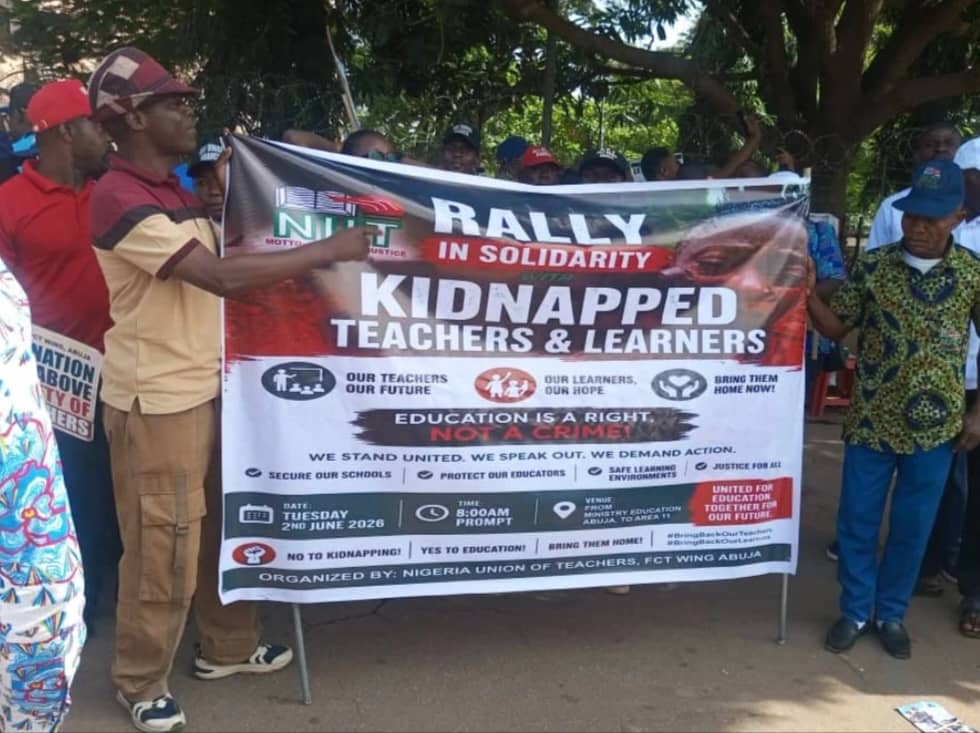
The Nigeria Union of Teachers, FCT chapter, on Tuesday staged a massive solidarity rally in Abuja to demand greater protection for educators and learners and to call for the safe return of kidnapped victims across the country.

The rally, which began at the headquarters of the Federal Ministry of Education and proceeded to Area 11, comprises teachers, union leaders, ed stakeholders in the education sector and supporters carrying placards with inscription “End The Reign of Fear in Our Schools” “Teachers Deserve Security, not Fear” “Kidnapping Has no Place in Education,” among others.

The rally,  themed “United for Education, Together for Our Future,” is aimed at drawing attention to the growing insecurity bedevilling schools and educational institutions nationwide.

Not less than 82 pupils were abducted between May 13 and 15 during separate attacks in Oyo and Borno states.

42 pupils were kidnapped in Borno State after armed groups attacked schools in Askira Uba and Chibok Local Government Areas on May 13 and 14.

Another 40 pupils were abducted in Oyo State on May 15 during coordinated attacks on Baptist Nursery and Primary School, Yawota, Community Grammar School and L.A. Primary School, Esiele, in Oriire Local Government Area of the state.

The Oyo attack also claimed the lives of a mathematics teacher, Michael Oyedokun, a motorcyclist and some security operatives during rescue efforts.

The Chairman of NUT FCT, Abdullahi Shafa, while addressing participants during the rally,  said the protest in line with a directive from the union’s national headquarters.

“We are acting on the directives of the National Headquarters of this union. They instructed us, in every state of the federation, to embark on a solidarity rally in protest against what has happened to our teachers and students in parts of the country,” the state chairman said.

Shafa lamented the killing of the teacher and the continued attacks on educators and students, describing the situation as disturbing and detrimental to the nation’s educational development.

“Teachers do not deserve this kind of treatment. Even those who engage in kidnapping should understand that targeting teachers is unacceptable, he added.

The protest ended with participants marching peacefully to deliver a letter to the Minister of FCT, Nyesom Wike, calling for urgent measures to secure schools, protect teachers and learners, and bring perpetrators of attacks on educational institutions to justice.

FCT election low voter turnout: The need for a post-mortem analysis

By Zayyad I. Muhammad

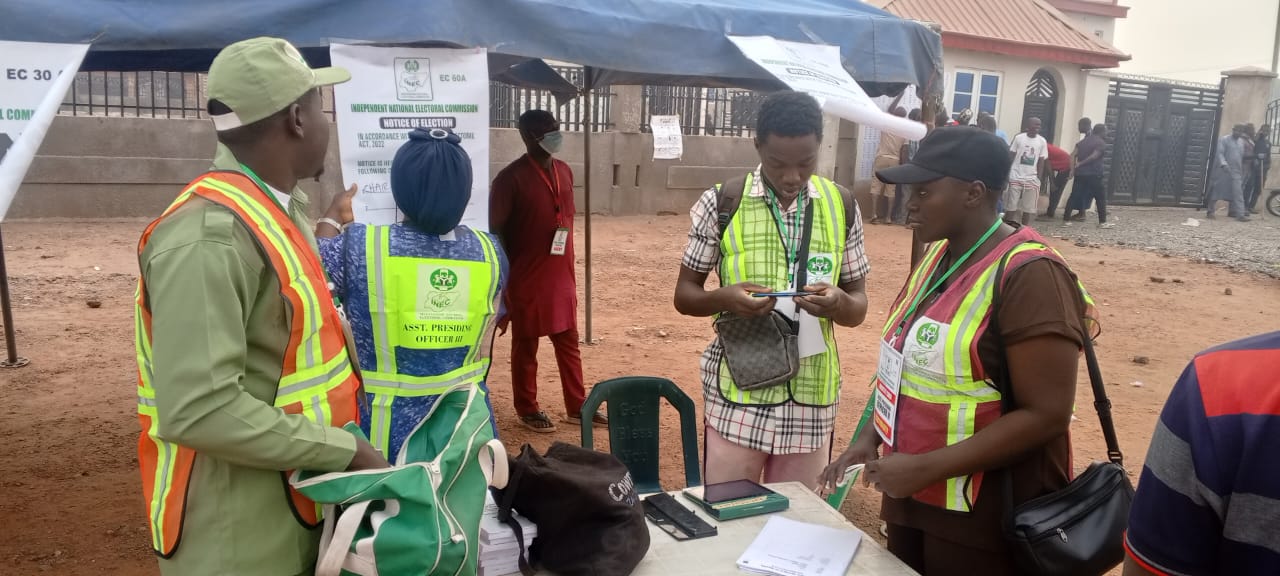
Out of the estimated 1.68 million registered voters in the Federal Capital Territory (FCT), only about 239,210 turned out to vote, representing roughly 14–15% voter participation. This figure is not only worrisome but also indicative of a deeper democratic challenge that cannot be ignored.

The 2026 FCT Area Councils elections, therefore, require a thorough post-mortem, an autopsy, so to speak, to uncover the root causes of this low turnout. Was it voter fatigue, dissatisfaction with political actors, lack of awareness, logistical shortcomings, security concerns, or a general loss of confidence in the electoral process? These questions must be carefully examined through data-driven analysis and stakeholder engagement.

Some observers believed the imposed restriction on movement contributed significantly to the low turnout, as it may have discouraged or inconvenienced many eligible voters. Others pointed to what they described as the ruling APC’s overwhelming posture, which some voters perceived as so dominant that their participation would not alter the outcome. In their view, even if they turned out to vote, the APC was certain to win, and their individual votes would not make a meaningful difference.

Addressing this level of voter apathy is critical, especially with the 2027 general elections approaching. The Independent National Electoral Commission (INEC), political parties, civil society organisations, and other relevant authorities, including students of politics, must take proactive steps to rebuild public trust, strengthen voter education, review election-day policies such as movement restrictions, improve logistics, and enhance transparency, as well as conduct an academic analysis of ‘Why’.

A democracy thrives on active citizen participation. If such low turnout persists, it risks weakening the legitimacy of elected officials and undermining public confidence in the democratic system. The lessons from the FCT elections should therefore serve as an urgent call to action to ensure broader voter mobilisation and participation in future electoral cycles.

Zayyad I. Muhammad writes from Abuja via zaymohd@yahoo.com.

Ramadan: ADC urges INEC to shift FCT council polls

By Uzair Adam

The African Democratic Congress (ADC) has called on the Independent National Electoral Commission (INEC) to reschedule the Federal Capital Territory (FCT) area council elections slated for February 21, citing the Ramadan fasting period.

The party made the appeal in a letter dated January 22 and signed by its National Chairman, Senator David Mark, and National Secretary, Rauf Aregbesola.

The letter, which was made available to journalists in Abuja on Saturday, noted that the proposed election date coincides with Ramadan, a period observed by a significant number of voters in the FCT.

ADC argued that holding the elections during the fasting period could affect voter participation, given the cultural and religious importance of Ramadan.

The party said a shift in date would better serve the interest of inclusion and ensure wider participation in the democratic process.

“It is necessary to request a reconsideration of the election date to safeguard inclusion, participation and fairness for voters across the territory during the Ramadan period,” the party stated.

The ADC, therefore, urged INEC to move the polls to a date after Ramadan, stressing that the request was guided by the need to protect inclusivity and enable citizens to fully exercise their constitutional rights.

While describing its engagement with the electoral body as institutional, the party reaffirmed its readiness to follow due process and sought guidance on the appropriate procedures for submitting such applications.

It added that electoral credibility is strengthened when processes encourage broad participation, promote diversity and boost public confidence in democratic institutions.

Customs, NIPR FCT chapter partner to promote professionalism, excellence in PR

By Sabiu Abdullahi

The Nigeria Customs Service (NCS) and the Federal Capital Territory (FCT) Chapter of the Nigerian Institute of Public Relations (NIPR) have pledged to work together to advance ethical standards, professionalism, and effective communication in the field of public relations.

This commitment followed a courtesy visit by the National Public Relations Officer of the NCS, Assistant Comptroller Abdullahi Maiwada, to the NIPR FCT Secretariat in Abuja on May 16, 2025.

Maiwada, who was accompanied by a team from the Public Relations Unit of the NCS, stated that the engagement was intended to build stronger institutional relationships and encourage the exchange of knowledge between the Service and the professional body.

“We believe that excellence and professionalism should be the hallmark of our practice of Public Relations in the Nigeria Customs Service and beyond,” he said.

He also noted that the unit he leads is powered by youthful determination and the consistent support of the Comptroller-General of Customs, Adewale Adeniyi.

In his response, the NIPR FCT Chapter Chairman, Stanley Ogadigo, applauded the NCS for its efforts in public communication, especially under the current leadership.

“We’re glad that the Comptroller-General of Customs has not disappointed us. He’s doing a great job and remains a shining example,” Ogadigo said.

He also gave assurance of the NIPR’s commitment to supporting projects aimed at raising standards in public sector public relations.

According to him, areas of cooperation would include capacity building, joint advocacy, and corporate social responsibility.During the meeting, participants explored opportunities for training, professional development, and ways to respond to the fast-changing media environment with improved public communication strategies.

Both organizations restated their commitment to continuous learning and to boosting the trustworthiness of public institutions through responsible and strategic public relations practices.

The engagement concluded with mutual assurance from both the NCS and NIPR FCT Chapter to explore beneficial partnerships that would enhance communication across the public sector.