Economy

Nigeria of my dreams

By Abdulhalim Ishaq Ringim

The giant of Africa and emerging global giant in all ramifications; the story of Nigeria’s journey to greatness has become a subject for intellectual and academic delineation, for it eludes the projections of even the most reputable global think tanks.

Nigeria solidified its position as the largest economy in Africa and became the fastest growing economy in the world. The nation achieved such a feat by restructuring its economy. Successive governments have over the years focused on structural economic transformation for long term economic growth with commensurate development. The economy became diversified not only in terms of output, but also in terms of productivity and revenue generation.

Today, Nigeria no longer depends on oil revenues courtesy of our booming value-added manufacturing-led industrialization and knowledge-based economy. This positive economic trend was further crystallized by the diversification and expansion of the tax net through an efficient and leakage-free tax regime. The expansion of our export basket with processed agricultural commodities and mineral resources produced by our manufacturing sector have ensured steady inflow of foreign exchange and that has stabilized our currency’s exchange rate. We are now a global power in trade.

We are witnessing massive capital influx in form of Foreign Direct Investments(FDIs) due to our favorable business environment, abundance of material resources and a skilled labor population. This has guaranteed an upward trend in our employment rate and a resultant free fall in our unemployment and poverty rates. The skills and technology transfer initiatives that accompanied the massive FDI influx has increased the employability of our working age population and our productivity.

Additionally, the huge tax receipts and social responsibility commitments from our large private sector formed a gargantuan financial resource base that funds our human capital development endeavors. Basic and Post-basic education is now free and compulsory. We have increased the penetration of healthcare institutions across the country and have driven down maternal and child mortality and morbidity rates. We have invested hugely on tertiary education, research and development and such have greatly contributed to our transition to a knowledge-based economy. We also have developed a robust social protection system that adequately caters for our vulnerable geriatric and pediatric population.

Gratifyingly, the number of out-of-school children we have is very insignificant today. Thanks to a proper diagnosis of the problem and the deployment of a robust solution. We understood that we had over 10 million out-of-children and we realized that the almajiri population in Northern Nigeria was the major source. So we restructured our education system in such a manner that it will be able to accommodate and admit a significant percentage of the out-of-children. We also deployed variable policy actions based on the individual peculiarities of Nigeria’s states and regions.

In the North, which contributed the highest number of out-of-school children, we revitalized more than 150 Tsangaya Model Schools and operationalized a standard curriculum for these schools which included modern education, Islamic education and technical/vocational education.

We then systematically engaged all stakeholders involved and secured their support to absorb all the Almajiri population into these schools in batches. The Almajiri teachers continued to offer lessons in Islamic studies while other teachers complemented their efforts with modern and entrepreneurial education.

We then banned the Almajiri system and imposed stringent penalties in case of violation. We trained all the absorbed Almajiri students in batches and the moment we were done with that, we converted all Tsangaya Schools to conventional primary schools. At that point, we had no Almajiri roaming on the streets. So these conventional schools became an addition to the pool of primary schools we have. And we now hardly have a child that is out of school.

In our bid to improve the productivity and employability of our working age population, we effected broad changes in the upper levels of the education sector in a manner that created extra routes to employment. We created a skill-based educational system that complemented the university education system. This new system assured the creation of what we call “new-collar jobs” or skill-based jobs. To achieve this, we constituted a broad apprenticeship program that trained and acquainted students with high demand industrial and technology skills. We then created a certification system for these students which was used to confirm their competencies by industries and organizations that require their services.

With this, many youths who were not able to pass through the university and could not get jobs in the previous system we operated were now suitable for the “new-collar” industry we created. This was how we reduced our unemployment rate and improved the productivity and employability of our working age population. A lot of industries of both local and international origins found Nigeria as a suitable investment destination because of our highly skilled, productive, employable and easily trainable working age population. Resultantly, our national productivity and output increased greatly. And millions of families were brought out of poverty because of the resultant increase in employment and income.

We witnessed a massive reorientation of the entire Nigerian population. The Nigerian people even with huge diversities in ethnicity and religion have been peacefully living together. This stems from the national reorientation exercise that prioritized the understanding of our differences and learning to tolerantly adjust and accommodate one another. The political terrain was sanitized in a way that disincentivized ethno-religious manipulation. We had series of constitutional amendments that reshaped the country towards true federalism where every federating unit is autonomous and productive.

The characteristic recurrent political crises that usually ensued from ethno-religious causations was put to an end by a political settlement arrangement backed by constitutional provisions that mandates the rotation of political powers among the 6 geopolitical zones of the country. This arrangement was conditional and was to be abolished after all geopolitical zones have had their share of political power. The underlying principle was that the frequency of political crises would be reduced. This resulted in smooth political transitions and Nigeria was no longer in a state of constant crisis management. Ultimately, this served as an enabler for the new political coalition that have ruled Nigeria over the years to be visionary and to focus on consolidating on successive efforts to achieve long-term structural transformation.

The rotational system has today been abolished having accomplished its ultimate objective and Nigeria’s political terrain is now completely meritocratic and significantly devoid of ethno-religious divisive undertones. Elections have also become very credible and peaceful. The structural and functional capacities of agencies of government responsible for enforcement of electoral laws and punishing election-related crimes were enhanced. The government also improved the country’s financial intelligence network for effective monitoring of financial flows during election seasons by responsible agencies and resultantly ensured enhanced compliance to financial regulations during election periods by political actors(individuals and parties). These among other measures improved Nigeria’s political climate and sanitized the country’s election processes.

Corruption which was once a major challenge we faced is now alien in this country. Few years back when Nigeria was still in a troubled state, we consistently ranked lower than average in most indexes that measure countries’ transparency, accountability and Integrity. However, the fact that most of the ranking organizations were mostly overseas made it easy for Nigerians and the government to fault the validity and accuracy of the data and methodologies employed.

Resultantly, home-grown transparency, accountability and integrity indexes were designed to assess the compliance of governmental institutions and organizations to national and global anti-corruption and good governance standards, regulations, guidelines and statutes. The indexes ranks these governmental organizations based on their respective compliance levels.

The ranking system exposed a lot of cases of lack of compliance to national and global commitments to anti-corruption and best governance practices. Some of the local statutes that were not being complied to included Freedom of Information Act, 2011; Executive Order No. 001, 2017; Fiscal Responsibility Act, 2007; Federal Character Principle; Framework and Guidelines for the Use of Social Media Platforms in Public Institutions, 2019; and Discrimination Against Persons with Disabilities (Prohibition) Act, 2018.

United Nations Convention Against Corruption (UNCAC), 2004; Nigeria’s Open Government Partnership (OGP) Action Plan II; Sustainable Development Goal (SDG) 10 and 16; African Union Convention on Preventing and Combating Corruption, 2006; Convention on the Elimination of All Forms of Discrimination Against Women; and Convention on the Rights of Persons with Disabilities and many others were on the other hand part of the international commitments that a lot of the government institutions contravened even while Nigeria was a signatory to them all.

Based on the discouraging results obtained from the assessment and ranking exercise, Nigeria embarked on a massive public service and institutional reform exercise. Government organizations were restructured and the capacity of public and civil servants was improved through a robust capacity building exercise. Those among them who could not withstand the rigor of the retraining exercise were retrenched in accordance with labour laws and were replaced by young, capable hands.

Accessibility and Functionality of Institutional Websites; Fiscal Transparency and Accountability; Transparency in Procurement; Citizens Engagement, Responsiveness and Effective Feedback Mechanisms; and Effective Human Resources Management were assured by the reformed public and civil service. The combination of these public service reforms and reforms in anti-corruption administration largely alienated the magnitude of corruption in Nigeria. Long-term stability in government, judicial independence and improved citizen consciousness contributed to the establishment and sustenance of this resilient anti-corruption regime.

The insecurity that characterized Nigeria was approached from a holistic perspective. With de-escalated ethno-religious tensions resulting from massive citizen reorientation and improved political settlement, marked improvement in all human development and economic indices and a rejuvenated armed forces; Nigeria applied a hybrid of kinetic and non-kinetic interventions to solve her insecurity problems.

We restructured our security architecture holistically, amended our constitution to legalize state and community policing and rebranded our Federal Ministry Of Interior to Federal Ministry Of Internal Security And Home Affairs. The rebranded Ministry housed new security bodies that were responsible for border and forestland security. We developed and employed efficient technology-based methodologies in the surveillance of our borders and other spaces of concern. We also leveraged spaces that were formerly ungoverned for real estate, recreation, tourism, agriculture, modern livestock management and other industrial endeavors.

Our media sector also restructured itself to conform with the vision of a new Nigeria. While we were still in troubling times, the media adopted a role that was defined by a balance between freedom of press, social responsibility, fact-seeking and healthy media-government relationship. As a guiding philosophy, the media assumed a role that discouraged the glorification of terrorism/Insurgency and encouraged the operationalization of selective censorship or measured reportage of terrorist activities in favor of counterterrorism efforts. This was of course adopted without losing cognizance of the imperative of protecting freedom of expression.

The media continued to consistently condemn acts of terrorism and adopted editorial policies that embodied patriotism while denying the terrorists the notoriety they so much desired. The media and government worked closely towards disincentivizing the lack of balance between patriotic and unpatriotic reportages by discouraging the receipt of funding specifically meant for reporting terrorist incidences from both local and international organizations. This process was driven by pure patriotism. Due to the influence of national reorientation, the love for our country was the only incentive that drove this media restructuring process.

Resultantly, the stability of our economy and security and our status as a global power in trade and commerce guaranteed us improved recognition in the international community. And as we continued to consolidate on our renewed patriotic consciousness, Nigeria defied all odds and rose to take her proper place in the comity of nations. We joined important global power associations including the BRICS(now BRINCS), G-20 and G-8. We also got nominated into the United Nations Security Council as a permanent member.

Deep sigh! How I wish the above exposition was our reality. Sadly, it is just a compilation of many of my dreams which I have overtime documented in a collection I call the “Nigeria of my Dreams”. But the fact that I was able to dream of a prosperous Nigeria(including the details of the road to prosperity) means it could indeed become reality.

Abdulhaleem Ishaq Ringim writes, being an entry submitted for Sana’a da Ilimi Foundation’s Independence Anniversary Essay Competition.
Nigeria’s economy in chain since the start of Ukraine war – Minister

By Uzair Adam Imam

The Federal Government has said that the adverse effects of the war in Ukraine and the ongoing security challenge in Nigeria have contributed to the aggravation of the fragile economic situation in the country.

At the start of the war, the Organisation for Economic Cooperation and Development (OECD) warned that the world economy would pay a “hefty price” for the war in Ukraine, encompassing weaker growth, stronger inflation and potentially long-lasting damage to supply chains.

In Nigeria, inflation is already hitting living standards and reducing consumer spending as business owners become less optimistic about production.

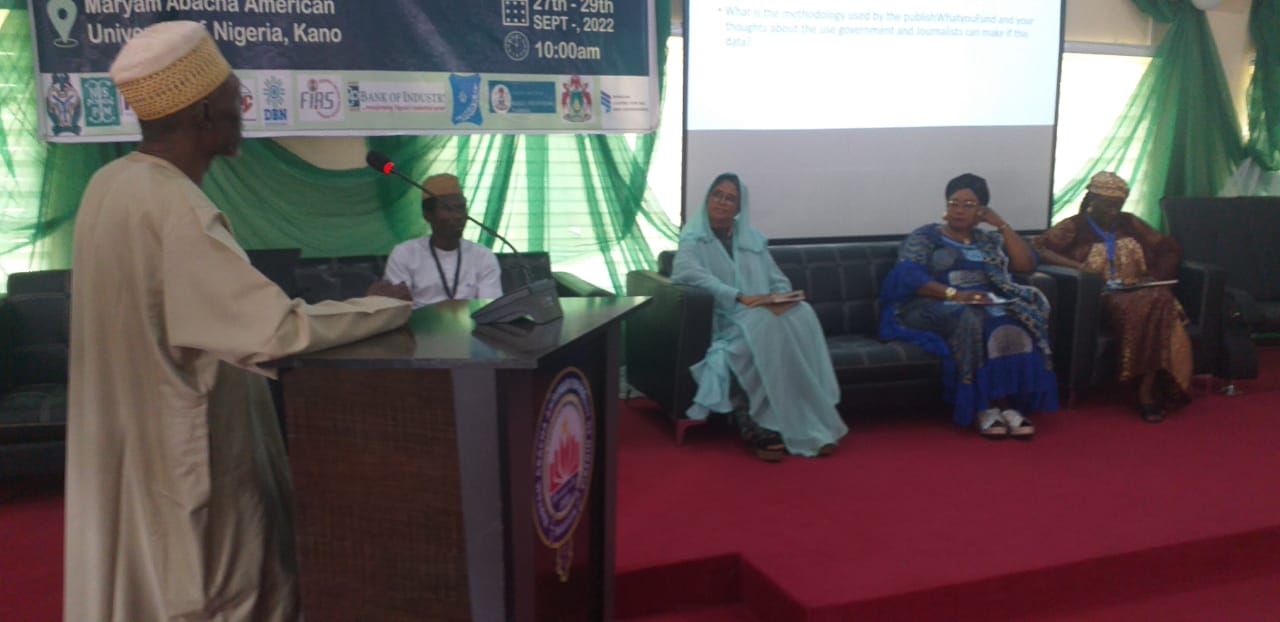
The Minister of State, Budget and National Planning, Prince Clem Ikande Agba, disclosed this Tuesday at the 63rd National Conference of Nigerian Economic Society. 

The 3-day conference, which started Tuesday at the Maryam Abacha American University of Nigeria, Kano, was themed “Fiscal Sustainability and Policy Response for Economic Recovery in Nigeria”.

The Minister, represented by the Director Macro Economic, Mr Felix Okonkwo, said fiscal discipline is what Nigeria needs to build a stable and inclusive economy.

Agba stated that the Federal Government is focused on addressing the revenue issues, which it considers essential to the economic and financial health of the country.

He added that insufficient revenue was why Nigeria could not contain its fiscal deficit after the recession, meaning that the country’s capacity to continue to support and raise capital expenditure has not been improved.

He said, “The adverse effect of the War in Ukraine, insecurity, global food crisis, oil theft in the Niger Delta, rising energy prices, massive depreciation of the naira exchange rate, high fuel subsidy and increasing inflation as well as insufficient fiscal buffer aggravated the fragile economic situation in the country.”

The chairman of the occasion, Shamsuddeen Usman, said the conference aimed at providing possible ways to restore the country’s economic stability through enhancing fiscal policies.

The President of the Nigerian Economic Society, Prof. Umma Jalingo, who organized the event, said the association was founded three years before Nigeria’s independence and was aimed at enhancing the country’s economy.

Intellectuals

By MA Iliasu

More than seventy years ago, the American or rather the undeniably global economist for all that he has influenced with his precise textbook, Paul A. Samuelson, wrote an article titled “Intellectuals”. He uncovered the fallacies of the established Intellectuals of the American society. To him, how they author books that only their friends and students can read, venture discourses only they can engage in, and prescribe policies that have zero respect for emotions, feelings, cultural intelligence and any mortal touch that may agree with common decency epitomises their names: “The Intellectuals”.

In Nigeria, we’re not short of them. Currently, we’re in an international political menace in which Russia put efforts to decimate Ukraine. The moral, ethical, physical, metaphysical, philosophical, epistemological, and even the economic motives and justifications flow freely on the internet. I will not tell you my own, but I’m relaxed knowing about others’. However, “The Intellectuals” are only interested in prescribing books and journal articles, publishing eccentric articles with dense grammar to vividly show they’re not for public consumption but only produced to satisfy the demand of their inner circle. Meanwhile, they bastardise, thus urging the public to take every piece of information on the conflict they may get from the BBC, VOA or CNN with a pinch of salt like the tyrannical antisocials they’re, despite not giving the public any alternative. That’s “an intellectual” for you.

To be precise, this is not a musing on Russia and Ukraine. It’s about the nerve-racking fuel scarcity that has bamboozled the Nigerian federation over the previous month and current. The one started with the speculation of the economically controversial subsidy removal that triggered the ever wicked economic class into succumbing to their Animal Spirit through hoarding. After all, which non-God-fearing mogul would allow the chance to double his revenue off the oppressed lower class without any effort? There’s none!

Discussions on the Nigerian political economy, especially outside university classrooms, are more dominated by the fake, impractical ideal of national consciousness and patriotism. And it takes place even though at no point does the term “Nigeria” ever mean the same to everybody; the poor wanderers, the profit makers, capitalist exploiters and the political hoodwinkers. And still, the Intellectuals want to build our economic skeleton upon that nonexistent psychological pillar. Is it possible?

Nigerians are the brilliant species who have gained relevance by declaring “Economics nothing short of common sense”. And that’s why they despise efficiency and efficacy despite their horrible love for eccentricity. But, if that’s not the case, how do you justify persuading people to buy what’s expensive when what’s cheap and of superior quality is available?

Through patriotism, they say. After all, people should use their hard-earned money to fund the ego of the anti-logic system of governance. For in the future, they say, there’ll be wonders. Meanwhile, the only wonders we’ll ever see is the one that reflects on the ironic, unethical, inefficient and anti-liberal, unreasonably orthodox, the often mix of the two, logic of the Nigerian Intellectuals that I’ll disclose below:

“Let’s stop importing fuel till we achieve self-sufficiency. That should be our way. A country with the mineral muscles of Nigeria should not be importing fuel. Let that be our moral standard. Let’s endure all the suffering for now. Let’s be patriotic. We’ll be alright shortly afterwards.” – isn’t this a lovely musing?

Do you disagree? Yes, I know you do. You’re an economist! What I want to ask is, why do you agree with the same pattern of thinking and logic when it’s used on Rice? – One reason:

Fuel scarcity & inflation is pressing every aspect of my society, up to the bottom, thus the outrage. And mostly the rich, who have limousines and Corollas to drive home from work and to the wedding evenings at the city parks, to power gigantic generators for their freezers and air-conditioners, and to calm their nerves from the so-called working stress. Then the industrialists who power their workshops and trade zones. And the artisans who harness all the profits. And that’s why nobody wants to hear anything long English Language, solution or no!

But rice scarcity & inflation, that one only press the poor, the bottom tier. That’s why every time we speak, they quote the models of David Ricardo & Keynes. That’s the only time they remember Ricardo and his comparative advantage or Keynes and his misunderstood, poorly-implemented government intervention. That’s the only time they want to disagree with Audu Ogbeh. So maybe Economics is more than common sense, after all. Thus they even go deeper into the mathematical models of Euler and Nash.

Everybody is acknowledging the need for government to take off its hands from fuel because it’s unfriendly for the lords at the top and the intellectuals at the middle, which is a policy prescription that sanity has advocated forever. But nobody wants to acknowledge the need for government to take its hands off the food industry, perhaps because the top dogs eat what they want from wherever they want, while it’s the bottom tier servants of God that are dying of hunger and historical inflation.

But why the lack of consistency?

Confusion is the reason, which can also disclose the lack of coherence along with discussions of such relevance. In Nigeria today, you’ll see an acclaimed intellectual who’ll die for his liberal romanticism supporting the economics of border closure. It makes me curious how possible it’s for Friedrich Hayek and Paul Samuelson to eat at the same table without arguing? Well, I think that’s the probability of the logic being consistent & cogent. Likewise, the essential orthodox wondering around the idea of ‘unpolice-able’ modern technology despite every magnum opus of their scholarly background suggesting otherwise.

The problem of the American society we love to imitate when it suits us (to quote Chinua Achebe) is that they believe in economics too much. But, interestingly, in Nigeria, they don’t believe in economics at all. And that’s why both are paying the price of extremism while hiding behind Keynesianism. In their experience, greed has taken over everything. But in our own, the economy has become a prison. And the wardens holding the keys are the intellectuals who will rationalise anything.

MA Iliasu wrote from Kano via muhada102@gmail.com.

Kwankwaso’s knowledge economy model: A dream shortened by greed

By Tijjani Ahmad

As a state that accommodates one out of every ten people living in the country, Kano has many competitive advantages over other states regarding development at the sub-national level. Looking at how economies worldwide are competing to finance development, mainly using domestic resources mobilisation, the easiest for the state is to leverage on its abundance of human resources.

As a governor of the state for the second time from 2011 to 2015, Rabi’u Musa Kwankwaso wanted to make Kano a knowledge-based economy by providing necessary education and skills, thereby making a large portion of the state’s economic growth and employment from knowledge-intensive activities. The governor understood how knowledge spurs more rapid growth than any other resources; therefore, he projected the potential of the state to use its population of teeming youth as a comparative advantage.

His revolution started with efforts to bridge the workforce gap in tertiary institutions by sponsoring more than 2,500 postgraduates and undergraduates to study abroad. In addition, he sponsored hundreds of undergraduates in private universities across the country. These beneficiaries were expected to come back and support the education sector of the state and beyond. 

These people were selected based on merit, and most of them occupied positions at various tertiary institutions in Kano state and Northern Nigeria in general. Recently, two of the beneficiaries were listed among the most cited scientists in the world.

The governor further created 47 technical colleges to revive technical and vocational education. These colleges were strategically located across 44 local governments to provide secondary school students in rural and urban areas with skills in various trades. 

Looking at how Kano businesspeople import textile and garments materials, the governor also established skills acquisition centres in more than 20 local governments in the state to serve as incubation centres for modern garment production. However, these centres were about to be launched when the present government truncated the effort. Only God knows the reason. 

I heard the governor on air saying that when these centres are launched, they would compete favourably and capture a significant share of the undergarments market in Nigeria and across the sub-region. This is because the centres have been equipped with the most modern techniques and technology in garment making industry.

Kwankwaso didn’t stop there. He introduced over 20 specialised training institutions to provide in-demand skills in agriculture, ICT, sports, tourism and hospitality, among others. One of them is the poultry training institute located at Tukui village of Makoda local government in the northern part of the state.

The institute is designed to offer formal and informal training in poultry production and management. Immediately after its establishment in 2012, the institute trained 4,400 women in basic requirements for poultry production and management practice.

These centres were meant to bridge the skills gap, provide employment to our teeming youth and reduce insecurity and over-dependency on grants by improving internally generated revenue of the state. Had there been continuity in the models employed by the former governor, Kano would have been on its way to reclaiming the past glory it is known for in terms of knowledge and commerce.

The hope of everyone who wishes good for the state is to consolidate this model by whoever would emerge as the state’s number one citizen in 2023. But, of course, this can only be possible if his priority is development.

Tijjani Ahmad wrote from Kano via ahmatee123@gmail.com.

Beyond the lines of “Devaluation”

By Mohammed Baba Goro

The issue of foreign exchange has been on the front burner in Nigeria’s media space for a while now. Unfortunately, the debate has been so over-flogged that one could hardly know who to cue behind for economic sense and/or who to blame about the helpless fall of Nigerian naira.  Recently, the vice president of Nigeria, Professor Yemi  Osibanjo, who by every sense could be categorised amongst personalities with intellectual power, also frankly spoke that the Central Bank should devalue the country’s currency, naira. But, that is not the only strongest weapon that could kill the werewolf.

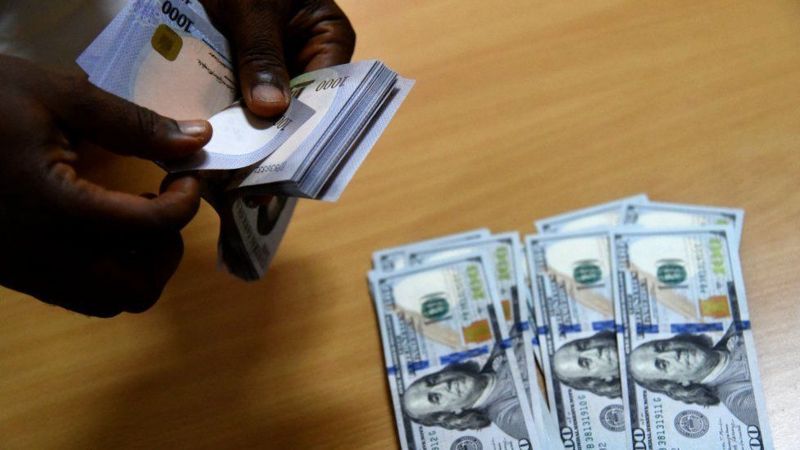
As an economic policy, Devaluation is simply referred to as the official reduction in the value of a country’s currency in relation to another or other countries’ currencies: say, Nigeria’s “Naira” with the United States “dollar”. Assuming the current exchange rate is thus:  N410 against  $1 and the CBN decides to devalue the naira by, say, 25 per cent, the naira value will decline, and the new rate will be around N512 to 513 against $1 and against the initial rate of N410. This would make the export of goods and services cheaper and importation dearer. As easy as it sounds, it is easy, but CBN will have high inflation to grapple with.

Ordinarily, that should be a path to take, but the question on the lips of every rational Nigerian is that what massive goods do Nigeria produce? This is a million-dollar question on the lips of every Nigerian for a country that, 60 years after her political independence, still struggles for her economic Independence – Nigeria still imports everything it needs, including essential food items like maise, rice beans and unfortunately, recently, even egg.

Nigeria had to lift a ban last year to import maize for poultry farmers. According to a statistic, the national average for Nigeria’s maize need is about 15million metric tonnes but can only produce 10million, going about with a huge deficit that could have been an opportunity for a source of forex. Even though rice production has increased, the country can still not satisfy its teeming and growing population of over 200 million. This is on the one hand. On the other hand, about 30 per cent of the country’s foreign exchange earnings go to the importation of petroleum products.

The National Bureau of Statistics (NBS) released another mind-boggling stats that the importation of agricultural products has increased by over 140 per cent year-on-year. Devaluation is primarily an “Expenditure-switching policy” that basically switches spending from imported goods to domestically produced goods and for exports.

But judging from the above facts and figures, one would deduce that local production that should drive export and reduce pressure on meagre forex is practically not there. So, “Beyond the lines of Devaluation” is productivity! Productivity!! And productivity!!!

Significantly, production of not only primary products but adding value to raw products so as to create more jobs, generate more revenues, build the needed infrastructures and consequently transform the economy. Brazil in 2011 devalued its currency to spur export without tackling the underlined structural problems and ended up worse off.

So let’s go back to the theory, and the economic argument should be, what determines the exchange rate?

Gustav Cassel, in the ’20s, propounded the purchasing power parity theory, which explains that the determination of two inconvertible paper currencies is determined by the equality of their purchasing power. What this means is that the exchange rate between two countries is determined by the level of their relative prices of goods and services.

A look at Nigeria’s inflation rate, coming from above 18 per cent, would tell you why we are at an exchange rate crisis and why we need to look inwardly and produce more locally. Though the Mint-gold parity theory is no longer in tune with the modern economic practices, but even the Balance of payment parity theory has its link with a country’s productivity level. Therefore, the government should deal with the fundamental and structural rigidities in productivity, trade, security, and infrastructure. Watch naira take her good position and fair value and stop forcing the monetary authority to over-stretch its instruments.

Mohammed Baba Goro can be contacted via babs9770@gmail.com.

Nigeria e-Naira: Why the rush?

By Hamid Al-Hassan Hamid

To be honest, the poor reviews against the eNaira app are all valid negative reviews. As usual, policymakers must have rushed software engineers into developing the app in haste, obviously with poor analyses, and the software engineers do not have the balls to stand their ground and point out facts.

For example, how do you create an app that requires email tied to BVN while email was not a required field in BVN registration? This means that those working on the app did not consult other sectors related to the app, and just imagined the app to work in a certain way, developed the app, and now people are complaining.

I was called in by the Federal Ministry of Health on Wednesday to develop a mobile app that would be used to facilitate disease monitoring and control. They wanted to deploy the app on Thursday. I developed the app with the minimum requirements given, but I strongly advised them against putting the app into production without at least testing for a week. Policymakers were not happy about my stance, but I held my ground, and they are complying unwillingly and willingly. They have seen the app, I spent the whole night hacking it out, created the mobile, server backend, and desktop monitoring, then warned them against deploying.

Not everything has to do with rushing to the market to score points and make names. You must be brutally honest with yourself. If you must deploy such an app that serves such serious responsibility as the national currency, you should at least start developing a year ago, AT LEAST!.

ALWAYS TEST, TEST AND TEST!!!!

WRITE AUTOMATED TESTS, THEN RUN MANUAL TESTS, OVER AND OVER AGAIN UNTIL YOU MEMORISE ALMOST ALL THE CODE!!

IT SHOULD NOT ALWAYS BE ABOUT HITTING THE MARKET. ALWAYS ASSIGN GREAT ENERGY TO ENSURE THAT YOUR PRODUCT IS ACTUALLY READY FOR THE MARKET!!!


Hamid Al-Hassan Hamid is a social analyst and expert in software development.

Nigeria’s Development: The Daunting Doom

By Lawi Auwal Yusuf

Leaders are preoccupied with self-centred political hustles, party meetings, extravagant banquets and flying their private or chartered jets over the country attending various lavish occasions. On the contrary, Nigerians turned wistful and sad about the terrible fate of the country and the gloomy future. As they get more concerned, their hope becomes less.

The country is endowed with efficacious potentials for its development to become a global power. It has a strategic location, sizable landmass, enormous young population, highly educated elites and abundant natural resources. In addition, favourable climate, fertile farmlands, and the shores that give it access to the Atlantic Ocean in the South are all added advantages.

In the last sixty-one years, Nigeria has reaped hundreds of billions of petrodollars in total revenues as one of the major producers and exporters of oil to the global market. It is the 12th largest producer of oil in the global ranking, 8th largest exporter and the 10th largest proven reserves. According to the Department of Petroleum Resources, it has about 159 oil fields and 1481 wells in production.

Apart from petroleum resources, Nigeria has multiple precious mineral resources in massive deposits. Moreover, cocoa is the largest foreign exchange earner to Nigeria besides oil and rubber, the second largest.

Similarly, as the most populous state in Africa and the 7th in the world with over 211 million people, Nigeria is a vast market. Its mixed economy is the largest on the continent. It is the 27th largest economy in the world by nominal GDP as of 2021 estimate. By GDP per capita, it is the 137th in the global ranking and the 25th largest by PPP.

However, these unique and extraordinary endowments are rare for a country to possess. These are the best opportunities and possibilities for its advancement. Unfortunately, poor leadership, endemic corruption and mismanagement have been the greatest obstacles in realising the potential. These precious endowments were not genuinely and diligently used. Hence, it has not made appreciable progress in those years. Had they been utilised at the best and maximum capacity, the sky would have been the limit.

More than 40% of Nigerians are living below the poverty benchmark in May 2020 estimates. They are destitute and cannot afford the three daily meals. Today, pervasive poverty depicts the lives of most Nigerians. The life expectancy is as low as 54.7 years on average. Infant mortality reached 74.2 deaths per 1,000 live births in 2019, and maternal mortality was 814 per 100,000 live births in 2015.

Moreover, the stagnant economy, inflation and the perpetual falling value of the naira have aggravated the plight of the masses, making life worse, more challenging and more miserable for ordinary Nigerians. There has been a swift rise in the cost of living and a concurrent decline in the living standard. Therefore, poverty, inequality, mass idleness, underemployment and wretchedness are at the highest pinnacle. This made Nigeria always emerge winner of the global rankings of the poorest nations.

It is appalling that the masses are becoming poorer while the nobles are getting more affluent. There has been a persistent widening inequality between the rich and the poor. Transparency International ranked Nigeria 136th out of 182 in the 2014 Corruption Perceptions Index. It was estimated that more than $400 billion were embezzled by corrupt leaders from independence to 1999. Nonetheless, President Muhammadu Buhari in 2015 said that corrupt officials had squandered more than $150 billion in the last decade. As a result, the country is synonymous with corruption. And the most astonishing is that it is among the wealthiest countries and also the poorest simultaneously. This is because the state wealth is enjoyed only by the aristocrats while the commoners are destitute.

Rule by theft known as ‘kleptocracy’ has deteriorated into kleptomania. They are strongly obsessed with stealing to the level that they don’t even have a material need for it. It degenerated into highly competitive accumulation syndrome. The monies that are ideal for the development of Nigeria are stashed at its detriment in Western countries and therefore become beneficial to their contented economies.

On the other hand, in the early 1960s, Nigeria was self-sufficient in food. But after the Civil War in 1970, the government failed to reinvigorate agriculture, resulting in failure to meet the acute population growth. It had to depend primarily on importation to fill up the supply gap. Sadly, in the 21st-century world, farmers are still tilling the ground with simple implements like hoes and cutlasses to feed a population of over 200 million. As of 2010, almost 30% of Nigerians are employed in agriculture and still have not met up the national demand.

The leaders had failed to provide the basic necessities of life to the citizens. As a result, after more than six decades of self-governance, there is no stable electricity supply, safe drinking water, standard healthcare, adequate and affordable food, qualitative education, social housing estates, infrastructures and social amenities. Nonetheless, the problems of the country in the1960s are yet to be resolved. Poverty, corruption, rule by theft, secessionism, tribal and religious antagonisms are lingering today. Regrettably, terrorism, kidnappings, cattle rustling, banditry and other current collective problems have deepened the crises.

Not being able to diversify the monocultural economy that largely depends on oil plays a significant role in the economy, accounting for 40% of GDP and 80% of the government earnings. Moreover, Nigeria does not adequately exploit the vast array of mineral resources in colossal deposits while the mining industry is still in its early stage of development. Moreover, other sectors of the economy that will help tremendously grow the economy and raise revenues are also underdeveloped. Contrarily, it has remained a perennial borrower of funds in the global capital market. Recently it emerged as the 5th most debt-ridden country in the world. The World Bank in August 2021 said that it had accumulated $11.7 billion in debt.

There has been deficient human development, especially the youths folk. In 2019, it ranked 161st in the world in the Human Development Index with a 0.539 score, which was very low. Millions of school-age children are out of school while some wander the streets freely with torn-out clothes and scavenging through rubbish looking for food. These miserable children are left on their own to live their entire unwholesome lives on the streets in search of a living. They have no qualifications or skills to make them employable in the labour market. Similarly, graduates searching for employment happened also to be idle many years after they had left school. Therefore, almost half of Nigerians are unemployed.

Furthermore, the emigration by professional Nigerian doctors to the diaspora known as the “brain drain” due to adverse working conditions in the country led to shortages of doctors in the healthcare system. It was estimated in 1995 that roughly 21,000 indigenous doctors were working in America alone, which was almost equal to those in the public health service then.

When you make a comparative analysis between Nigeria and its peers to assess its performance, you will realise that it had performed poorly. For example, look at the High Performing East Asian Economies (HPEAEs) that include Malaysia, Taiwan, Thailand, Singapore, Indonesia, South Korea and Japan. They are the fastest-growing economies in the world after the first world countries. Some had launched rockets into space. They manufacture aircraft, ships, automobiles, computers and smartphones while Nigeria still imports razor blades, pencils, toothpicks, including its most abundant petroleum products. Singapore and Japan developed from the less developed countries and joined the first world nations.

Look at other countries like UAE, India, Brazil and South Africa that recently established a consociational democracy in 1994. Nigeria played a significant role in fighting the apartheid regime and helped in establishing the multiracial democracy in the country. South Africa is now regarded as a highly developed state and has become a better haven for Nigerian youths who emigrated there in search of greener pasture.

Finally, Nigeria still has the chance to do better and start developing once more to realise its long-lost potential.

Lawi Auwal Yusuf wrote from Kano. He can be reached via laymaikanawa@gmail.com.