Economy

CIPS approves new membership fee structure for Nigeria, allowing payments in Naira

By Dr Salisu Uba FCIPS

The Chartered Institute of Procurement and Supply (CIPS) has approved a new membership fee structure for Nigeria, allowing procurement professionals to pay in Naira from 1 December 2025. The decision includes a reduction in fees, marking a significant shift for one of the largest professional communities within the institute.

The change follows years of rising financial pressure linked to foreign currency payments, which many practitioners said had limited access to professional qualifications and continuous development.

Local Currency Move Seen as Major Relief

Nigerian members have long argued that payment in foreign currency placed an unnecessary strain on practitioners working in an economy affected by inflation and exchange rate volatility. The shift to Naira is expected to broaden access to certification and support career progression for early and mid-level professionals.

The announcement was delivered by the CIPS Nigeria Country Director, Chukwudi Uche, at the institute’s Port Harcourt symposium in late November. The event brought together industry leaders to discuss supply chain collaboration and tax policy.

A Step with Wider Professional Consequences

CIPS, regarded as the global benchmark for procurement standards, plays a central role in shaping skills, ethics, and governance across the profession. Its qualifications are commonly required for senior roles across the public and private sectors, and its code of conduct is widely used to guide responsible practice.

In Nigeria, CIPS has been instrumental in supporting capacity building, improving transparency, and raising the overall standard of procurement governance. The institute has worked with government agencies, private sector organisations, and development partners to improve processes and strengthen accountability.

Industry experts say the latest decision could encourage greater participation in formal training programmes and increase the number of qualified professionals available to organisations that rely on strong procurement governance.

Procurement’s Role in National Development

Procurement plays a direct role in national development by shaping how public funds are spent and how essential goods and services are delivered. Poor procurement decisions can delay infrastructure, inflate project costs, and weaken accountability. Strong procurement systems support industrial growth, improve public services, and help build competitive local supply chains.

A more accessible professional pathway through CIPS is expected to expand the pool of trained experts who can support national development goals. This includes improved contract management, better risk control, and more effective engagement with local suppliers.

Integrity and Expertise Seen as Priorities

With the revised fee structure now in place, I hope to see more organisations and individual practitioners in Nigeria work closely with qualified experts to protect the integrity of procurement systems. Both public and private sector projects rely heavily on competent professionals who understand governance, ethics, and value-for-money. Strengthening professional capability is essential if Nigeria is to reduce waste, improve transparency, and support long-term development.

A Community Achievement

The fee revision is the result of extensive engagement across the Nigerian membership base. The leadership of Ben Farrell and Sam Achampong has been widely acknowledged, along with the contributions of members who have advocated for reform through various channels. The CIPS Nigeria Country Office has also played a central role in pushing for the change.

More information on the revised fees is expected to be released by CIPS in the coming days.

Dr Salisu Uba is a Fellow of the Chartered Institute of Procurement and Supply and the Chief Executive Officer of NatQuest, a leading technology-enabled supply chain company.

Halal economy in Nigeria: Today’s opportunity, tomorrow’s prosperity 

By Abdullahi Abubakar Lamido 

When Nigeria first introduced Islamic banking more than a decade ago, a section of the public, especially some Christian leaders, cried foul. They labelled it an attempt to Islamise the nation. The word Islamic became synonymous with suspicion. Yet, history has since given its verdict. The same Islamic banking and finance that was once denounced as a tool for religious expansion has now become one of the most credible components of Nigeria’s financial system. Today, the government of Nigeria, regardless of faith or political party, routinely issues Sukuk (Islamic bonds) to finance national infrastructure, build roads, and other developmental projects. 

If Islamic banking did not Islamise Nigeria, how on earth will the halal economy, a trade-based development initiative, suddenly do so?

Unfortunately, some commentators continue to see through the fog of prejudice rather than the lens of global economics. The recently developed Nigerian National Halal Economy Strategy is not a religious project. It is an economic vision. It seeks to position Nigeria within a rapidly expanding global market that respects ethics, transparency, environmental responsibility, and product integrity; values shared by all civilisations, not by Muslims alone.

Globally, the halal economy is estimated at USD 2.3 trillion, excluding Islamic finance. It is growing at an annual rate of around 20 per cent, making it one of the fastest-expanding consumer markets in the world, valued at about USD 560 billion each year. The halal industry, initially rooted in food and beverages, has long transcended its traditional boundaries. It now spans pharmaceuticals, cosmetics, health products, toiletries, medical devices, and even service sectors such as logistics, marketing, media, packaging, branding, and finance. With rising affluence and awareness among global consumers, it has further extended to halal tourism, hospitality, fashion, and lifestyle services.

This development is not driven by Muslims alone. Indeed, the modern halal market is non-exclusive. Increasingly, non-Muslim consumers associate halal with ethical consumerism, animal welfare, environmental stewardship, and quality assurance. The label “halal” has evolved into a global mark of trust, symbolising cleanliness, safety, and ethical production.

Countries far removed from Islam, such as the United States, the Netherlands, Russia, China, and South Africa, are already major players in the halal economy. In the United States, the halal market is worth USD 12 billion annually, with halal food sales growing by more than 70 per cent since 1995. Over 90 per cent of U.S. dry dairy ingredient manufacturers now produce halal products, primarily for export.

In the Netherlands, where Muslims are barely a tenth of the population, non-Muslim Dutch consumers spend approximately USD 3 billion annually on halal food. In the United Kingdom, six million people consume halal meat, three times the Muslim population. These figures prove one thing: halal has gone mainstream. Even Russia is experiencing explosive growth in its halal sector, with domestic demand rising by 30-40 per cent annually. The country now produces around 65,000 tonnes of halal meat each year and hosts major expos such as the Moscow Halal Expo and KazanHalal.

China, with its 23 million Muslims, records 10 per cent annual growth in its halal industry, with trade worth USD 2.1 billion and export products valued at USD 10 million annually from the Ningxia region alone.

Africa, too, is awakening to this opportunity. South Africa—with only two per cent of its population being Muslim—is now one of the five largest producers of halal products globally, thanks to a robust certification infrastructure. Kenya, with a fast-growing halal certification regime, already has more than 150 certified companies serving local and regional markets.

Nigeria, with its vast agricultural resources, strategic location, and large Muslim population, stands at the crossroads of opportunity. The halal economy offers three immediate advantages:

1. Export Expansion: By developing credible halal certification and production infrastructure, Nigeria can unlock access to markets worth over USD 2 trillion, exporting beef, poultry, processed foods, cosmetics, pharmaceuticals, and other halal-compliant goods. Nigerian products can enter Middle Eastern and Asian markets that strictly demand halal certification.

2. Job Creation and SME Growth: The halal economy stimulates employment across value chains—from farm to factory, logistics, certification, branding, and export marketing. It empowers micro and small enterprises while ensuring compliance with ethical standards that appeal to both local and international consumers.

3. National Image and Ethical Standards: Halal certification ensures higher hygiene, traceability, and environmental protection. It is compatible with international standards like ISO and HACCP, thereby enhancing Nigeria’s global competitiveness. In essence, promoting halal is promoting quality, sustainability, and integrity—values that no religion should reject.

The critics who fear the halal roadmap as a step toward Islamisation fail to recognise that halal is an economic term before it is a theological one in this context. It stands for what is wholesome, safe, clean, traceable, and socially responsible. These values are not confined to Islam. They are embedded in Christianity, Judaism, and secular ethics alike.

The halal economy represents a fusion of faith and fairness, ethics and enterprise. It provides a model for a more responsible economic system—precisely the kind of moral economy the world craves in the aftermath of global financial and environmental crises.

When the debate over Islamic banking first arose, the same fear-mongering dominated the headlines. Yet, today, Islamic finance has built roads, schools, and hospitals across Nigeria through Sukuk and other Shari’ah-compliant financing. Christian engineers, contractors, and civil servants have benefitted immensely. The country’s Christian-majority states have received as much as the Muslim ones. No mosque was built, no church destroyed, and no constitution rewritten.

If Islamic banking did not Islamise Nigeria, how will halal exports do so? On the contrary, the halal economy promises to diversify Nigeria’s trade, create jobs, enhance foreign exchange earnings, and promote industrial standards that protect all consumers, Muslims and non-Muslims alike.

Nigeria cannot afford to watch from the sidelines while other nations—Christian, secular, and atheist alike—harvest the fruits of the halal economy. The world is shifting toward ethical consumption, sustainability, and traceable production. The halal brand, far from being divisive, is a passport to global markets.

The Nigeria National Halal Economy Strategy is not about religion; it is about relevance. It is about integrating Nigeria into the trillion-dollar value chain that prizes quality, fairness, and responsibility. Those who see crisis where there is opportunity risk being on the wrong side of history, just as those who once opposed Islamic banking and finance, now benefit from Sukuk-financed roads.

The celebration of the halal economy is not the planting of tomorrow’s crisis; it is the harvest of tomorrow’s prosperity for every Nigerian, regardless of faith. It is time we remove the caps of emotion and prejudice and wear the lenses of reason, tolerance, and progress. Nigeria must embrace every opportunity that promises shared prosperity, job creation, and national development. The halal economy is not about division—it is about direction. It is about placing our nation on the map of global relevance, productivity, and ethical growth. So help us God. 

Amir Lamido wrote from Abuja via lamidomabudi@gmail.com.
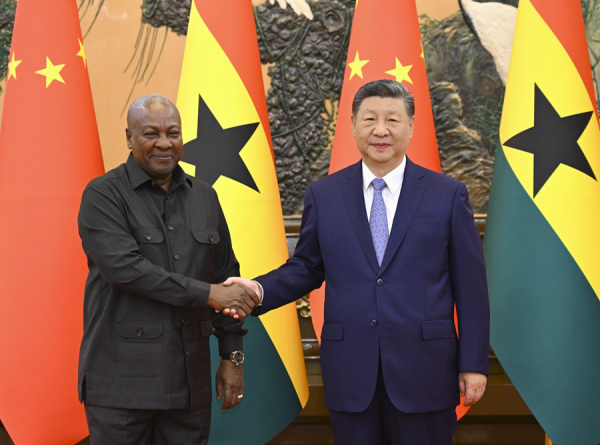
Tinubu: Reforms are working, Nigeria is on path to stability and growth

By Hadiza Abdulkadir

President Bola Ahmed Tinubu marked the second anniversary of his administration on Wednesday with an optimistic national address highlighting the government’s achievements and reaffirming commitment to economic reform, national security, and human capital development.

Speaking from the Aso Rock Presidential Villa, President Tinubu declared that his administration had made “undeniable progress” despite the sacrifices demanded of citizens, especially following the removal of fuel subsidies and the unification of foreign exchange rates.

“We are halfway through the journey that began 24 months ago. Today, I proudly affirm that our economic reforms are working,” he said, citing improvements such as easing inflation, increased foreign reserves, and higher state revenues.

According to the President, the federal government recorded over ₦6 trillion in revenue in Q1 2025 and successfully reduced the fiscal deficit from 5.4% of GDP in 2023 to 3.0% in 2024. Additionally, the country’s net external reserves rose sharply to over $23 billion by the end of 2024, a fivefold increase from the previous year.

In the energy sector, Tinubu noted a 400% increase in oil rig activity since 2021 and over $8 billion in new investments. “We have stabilised our economy and are now better positioned for growth and global shocks,” he added.

The President also highlighted reforms in taxation, infrastructure development, and the health sector. He announced the expansion of primary healthcare centres, the establishment of new cancer treatment centres, and a tax policy overhaul aimed at supporting low-income households and small businesses.

“Together, we are creating a system where prosperity is shared, and no one is left behind,” he said.

Tinubu celebrates economic resilience, sets sights on inclusive growth

By Muhammad Sulaiman

President Bola Ahmed Tinubu has reiterated his administration’s commitment to inclusive economic growth, declaring that the country’s economic resilience is beginning to yield tangible benefits for citizens across sectors.

Addressing the nation on the second anniversary of his government, President Tinubu described 2025 as a year of fiscal turnaround and recovery, driven by bold reforms under the Renewed Hope Agenda.

“Despite the bump in the cost of living, we have made undeniable progress,” he stated, noting improvements in inflation, food prices, and investor confidence.

A key highlight of the President’s remarks was the government’s aggressive tax reform agenda, which pushed the tax-to-GDP ratio from 10% to over 13.5% within a year. Tinubu explained that this success was made possible by simplifying tax policies and offering relief for low-income households and small businesses.

“We are eliminating the burden of multiple taxation and introducing a fairer tax system. Essential services like food, healthcare, and education will attract 0% VAT,” he announced.

President Tinubu also underscored the importance of sustainable national finances, stating that wasteful and opaque tax waivers had been abolished in favour of targeted incentives supporting high-impact sectors such as manufacturing, agriculture, and technology.

The administration is establishing an independent Tax Ombudsman to ensure accountability. The President says this move will protect small businesses and vulnerable taxpayers.

“We are creating an economy where investment is welcome, businesses can thrive, and every Nigerian can benefit from shared prosperity,” he added.

The President noted that subnational governments had also reaped the benefits of the reforms, with an increase of over ₦6 trillion in state revenues in 2024. This has enabled them to meet debt obligations and invest more in critical infrastructure.

“Our reforms are not just fiscal adjustments. They are about restoring confidence, strengthening institutions, and building a foundation for future generations,” Tinubu concluded.

Local chicken farmers express worries about low sales ahead of Sallah festival

By Anas Abbas

As the joyful Sallah festival approaches, local chicken, broiler chicken, and a unique breed known as “merger” producers are expressing concerns over a significant drop in patronage, which raises worries about the future of their businesses.

Traditionally, this festive season witnesses a surge in demand for chicken as families prepare to celebrate with delicious meals. However, this year, many farmers are facing an unprecedented challenge, including the high cost of chicken feed, losses of the chickens due to hot weather conditions, and low patronage.

In an interview with The Daily Reality, Mallam Shuaibu Ismail, a seasoned chicken seller and rearer, expressed his disappointment. “In previous years, we would have sold out most of our stock by now,” he said. “This time, however, the orders have been minimal, and it’s worrying. We rely on this season to sustain our families and businesses throughout the year.”

“Due to economic hardship, people are not supporting the local chicken businesses, and the chickens have been affected by an unexpected disease,” he added.

Jamila Sulaiman, a broiler rearer, expressed, “Sallah is usually a time of joy for us. We prepare for months in advance, but this year, many customers seem hesitant to buy. We hope that as the festival gets closer, people will start to purchase more, as the chickens are dying because of the sunny weather. Yesterday morning, I found three dead,” she stated.

“If people don’t buy, we will be at great risk as the price of broiler feed approaches 26000, compared to last year N8000,” she added.

The reasons for the low patronage are varied. Some producers attribute it to the rising cost of living and inflation, which have made it difficult for families to budget for festive meals. Others believe that changing consumer preferences and increased competition from larger poultry suppliers may also be contributing factors.

Despite these challenges, local rearers remain hopeful that demand will increase as Sallah approaches. “We are optimistic that people will remember the significance of Sallah meat for their families,” said Isuhu Wada.

“Purchasing the chicken benefits us and also boosts our economy, as we will spend the money on something else.”

As the festival approaches, local chicken farmers are urging consumers to support their businesses and keep the spirit of Sallah alive through communal meals and community support.

Nigeria is one of toughest environments for business – Salkida

By Hadiza Abdulkadir

Ahmad Salkida, founder and CEO of HumAngle Media, laments the daunting challenges entrepreneurs face in Nigeria. With several years of experience and travels across 25 countries, he describes Nigeria as one of the most challenging environments for independent businesses.

Salkida points to excessive taxation and a lack of basic amenities, arguing that the legal framework fails to distinguish between social enterprises and traditional businesses. 

“The legal and regulatory framework fails to differentiate between social enterprises and traditional businesses, with the Federal Inland Revenue Service (FIRS) focused solely on meeting unrealistic revenue targets at the expense of struggling businesses.

Success relies solely on relentless hard work and prayers,” Salkida stated, lamenting the physical and mental exhaustion that often comes with achieving success in such a challenging landscape. 

Salkida emphasizes the urgent necessity for systemic reforms to assist small and medium-sized enterprises in Nigeria.

Tinubu promises better days for Nigerians in 2025

By Uzair Adam 

President Bola Ahmed Tinubu expressed optimism about brighter prospects for Nigerians in 2025 in his New Year message. 

He highlighted economic improvements, such as reduced fuel prices, strengthened foreign reserves, and increased foreign investments, and attributed them to his administration’s efforts.  

Tinubu acknowledged challenges like high food and drug costs and pledged to tackle inflation, aiming to lower it from 34.6% to 15%. 

He announced plans to expand credit access by establishing a National Credit Guarantee Company to begin operations by mid-2025 to boost economic growth and support underserved groups.  

The president called for unity, urging Nigerians to avoid divisive tendencies and remain focused on building a prosperous nation. 

He reaffirmed his commitment to reforms, emphasising his goal of achieving a one trillion-dollar economy.

A work template for the new minister of livestock development

By Zayyad I. Muhammad

Nigeria boasts one of the largest cattle populations in Africa, ranking among the top on the continent. Over 20 million cattle are primarily concentrated in the northern regions, including states such as Adamawa, Borno, Kaduna, and Kano. 

The new Minister of Livestock Development, Idi Mukhtar Maiha, faces a complex and tasking job in three key ways.

First, the newly established Ministry of Livestock Development has high expectations from Nigerians. The ministry oversees and develops livestock policies, manages animal health and disease, improves breeds and genetic resources, enhances farming and production systems, supports rural livelihoods, and modernises livestock marketing and trade.

From an informal perspective, expectations will focus on how the minister will transform the lives of nomadic cattle herders from uneducated and nomadic to more settled, everyday lives while also addressing the farmer-herder conflict and the notorious practices of cattle rustling, banditry, and kidnapping for ransom, which are prevalent among some cattle herders.

Mukhtar’s second challenge lies in his background; he has spent most of his career as a technocrat at NNPC. Whether he knows it or not, he will inevitably experience the bittersweet realities of politics. Once appointed as a minister, one automatically assumes a political role. Mukhtar must navigate this transition, deciding whether to embrace full-time politics or attempt to balance his technocratic expertise with his political responsibilities. 

Furthermore, few people in Adamawa know him despite his former role as Managing Director of the Kaduna Refinery, a Petrochemical Company (KPRC). As a result, many may perceive him as elitist and aloof, particularly in an inherently people-centred position.

Mukhtar’s third challenge stems from the performances of his two predecessors from Adamawa, Mohammed Musa Bello and Prof Mamman Tahir, which many Adamawa people view as less than stellar. Their tenures have left a mixed legacy, leading to scepticism about Mukhtar’s ability to bring about something new and different. 

To distinguish himself, Mukhtar must work diligently to establish his identity and a positive track record. This task is particularly crucial, as he shares several traits with both former ministers, which could lead to assumptions about his capabilities and approach. By demonstrating effective leadership and addressing the needs of the people, Mukhtar can overcome this challenge and build a reputation that sets him apart.

With an impressive CV as a technocrat and practical knowledge of livestock management, Mukhtar’s Zaidi Farm stands out as a well-integrated enterprise that applies world-class best practices in animal husbandry. Given this background, we expect him to introduce innovative approaches to livestock management by benchmarking against countries renowned for their success in this field, such as New Zealand, Australia, the Netherlands, Denmark, Brazil, Ireland, and the United States. These nations have excelled in implementing efficient and sustainable livestock practices, utilising advanced genetic research and technology to enhance productivity. However, Mukhtar’s journey will be sweet and bitter, mainlydepending on his approach to leadership, public relationships and policy implementation. By embracing collaboration and leveraging global best practices, he has the potential to make significant strides in transforming the livestock sector.

Zayyad I. Muhammad writes from Abuja, zaymohd@yahoo.com

President Tinubu assures of a robust economy

By Abdullahi Mukhtar Algasgaini

President Bola Tinubu has welcomed the National Bureau of Statistics (NBS) ‘s new report on the country’s trade balance.

According to the report, Nigeria recorded another trade surplus in the second quarter of 2024, hitting N6.95 trillion.

The current surplus is 6.60% higher than the N6.52 trillion surplus recorded in the first quarter.

Just days after the country recorded almost 100 percent oversubscription of its first $500 million domestic bond and half-year revenue of N9.1 trillion, the latest report underscores the increasing positive shifts in the economy over the last year.

President Tinubu expresses confidence in the reforms his administration is pursuing and believes they will create a more robust economy that will usher in a new era of prosperity for Nigerians.

The NBS report reflects the country’s strong export performance in the second quarter.

Although total merchandise trade in Q2 2024 stood at N31.89 trillion, a 3.76% decline compared to the preceding quarter (Q1 2024), it marked a 150.39% rise from the corresponding period in 2023.

The NBS reported that the Q2 surplus was essentially driven by exports to Europe, the United States and Asia.

Total exports stood at N19.42 trillion, accounting for 60.89% of the country’s total trade. This represents a 1.31% increase from N19.17 trillion in the first quarter and a 201.76% surge from N6.44 trillion recorded in Q2 2023.

The dominance of crude oil exports remains a key factor in this performance, contributing N14.56 trillion, or 74.98% of total exports.

Non-crude oil exports, valued at N4.86 trillion, comprised 25.02% of the total export value, with non-oil products contributing N1.94 trillion.

The strong export performance, particularly in crude oil, ensured Nigeria maintained a favourable trade balance.

In Q2 2024, European and American countries dominated Nigeria’s top export destinations. Spain emerged as the largest export partner, receiving goods valued at N2.01 trillion, accounting for 10.34% of Nigeria’s total exports.

The United States followed closely with N1.86 trillion (9.56%), while France imported N1.82 trillion of Nigerian goods, representing 9.37% of total exports.Nigeria’s other major export partners include India (N1.65 trillion or 8.50%) and the Netherlands (N1.38 trillion).

Generally, the economic indicators, which were very low when President Tinubu assumed office last year, are turning positive.

The government will continue to consolidate on the gains of the reforms as more fiscal and tax policy reforms already embarked upon by the administration come to fruition.

President Tinubu is determined to confront the inhibitions that have stunted the growth and development necessary to unlock the country’s full potential.

Capitalism in Northern Nigeria: A radical historical perspective

By Abba Sadauki

Introduction

There comes a time when the world’s weight seems unbearable, making each breath a struggle. Like a midlife crisis, this pivotal moment is when one confronts the reality of their material existence. It’s a stark realisation that all the goals and aspirations pursued were essentially economic activities aimed at providing for oneself and loved ones. 

Another revelation compounds the gravity of this understanding – the fact that these efforts have primarily served to enrich others. Despite all the hard work, one finds themselves barely making ends meet, with the prospect of accumulating enough wealth for a comfortable life or pursuing truly fulfilling endeavours seeming increasingly elusive. 

The weight of economic struggle is a universal experience shared by countless individuals across the globe. This article aims to shed light on the historical journey that has shaped this experience, particularly within the context of Northern Nigeria. 

We will explore, starting from the feudal reigns of the Sarkis (Kings) and Amirs (Emirs), delving into the transformative impact of British imperialism. Our journey will culminate in an analysis of post-colonial governance and the pervasive influence of global capitalism, painting a picture of our present reality. 

Through this, we will uncover the roots of the stark wealth inequality that pervades our society, understand the purpose and implications of debt, and confront the enduring reality of class struggle. 

As we navigate through the complexities of these issues, we will question the viability of our current system in the face of 21st-century challenges. The 2008 economic crisis is a stark reminder of these challenges, prompting us to reevaluate and rethink our economic structures. 

The Emergence of Capitalism in Northern Nigeria: Pre-capitalist Economic Systems

The Emergence of Market Societies

As in the bible, we will start at Genesis, to the very inception of our economic systems. In the beginning, there were no economies, only markets. But what exactly are markets? They are places where a willing buyer and a willing seller meet to exchange goods or services. Here, we encounter the first myth that capitalism propagates – the notion that markets did not exist before its advent. However, markets existed long before capitalism emerged as a system during the Industrial Revolution in Britain in the 18th century.

You might wonder, what do I mean by “there was no economy”? The answer lies in a simple yet crucial condition for markets to evolve into an economy – the existence of a “surplus”. A surplus refers to the excess resources that can be accumulated and utilised.

When our ancestors first tilled the land and initiated the process we now know as agriculture, they created resources that exceeded immediate needs. This surplus transformed markets into an economy – a complex network of relationships that emerges in societies with a surplus.

This economy enabled us to produce food and, more importantly for this discussion, tools and instruments that wouldn’t exist with labour alone. The first instrument of this system was likely writing, used to account for the units of agricultural produce stored by an individual in the communal granary. These units were probably represented by engravings on shells, signifying the value of the stored produce.

These shells could be exchanged between individuals for goods or services. If this concept sounds familiar, it’s the precursor to what we know as money today. Instead of shells, we now use pieces of paper or digital representations.You could also borrow these shells or promise a specific amount in the future in exchange for immediate service. This is the concept we now understand as debt.

Someone had to ensure the value of these shells was guaranteed, often through force. In today’s terms, this individual might be known as a king, whose domain of influence is a state. The king would have people managing the accounting and others enforcing his guarantee, akin to modern-day police.

As we can see, a “surplus” led to a radical societal transformation. However, this transformation was not without its adverse side effects. One of these was that the king and his bureaucracy accumulated a surplus, leading to an overconcentration of power and wealth in the hands of a few. This process, which we now call inequality, is still a pressing issue in our modern society.

Now, let’s dive into the heart of our economic systems, armed with conceptual toolboxes that will guide us through its intricate workings. Our first concept is a ‘commodity’. Simply put, commodities are goods produced to be sold. Each of these goods has a market price reflecting its exchange value.

Next, we explore ‘production’, the transformative process that turns raw materials into components or finished goods. This production journey begins with the first factor, the raw materials and the infrastructure used to extract them, such as tools and machines. These are what we refer to as ‘capital goods’.

To carry out this process, we need a location—land or space—our second factor of production. Lastly, we require human labour to transform these raw materials into finished goods. This production process forms the bedrock of an economy, making it tick and thrive. 

The Hausa Feudal Society

The early days of the Hausa kingdoms are shrouded in various myths used to legitimise their existence; the most plausible scenario of how they came to be is that diverse ethnic groups cohabited in the same area, known as Kasar Hausa. These groups were often embroiled in relentless resource conflicts, leading to chiefdoms composed of dominant families.

As time unfolded, the chiefdoms with superior military prowess and organisational structures absorbed the weaker ones, giving rise to kingdoms. The less powerful chiefdoms gradually became vassals, paying tribute to a king or Sarki.

The kingdom’s population began to stratify. The most influential family head ascended to the position of Sarki, distributing offices among his followers from other families. The lineages of these followers evolved into Sarakuna, the aristocracy. These Sarakuna integrated into Sarki’s military organisation, acting as vanguards in establishing dominance over weaker groups and compelling them to pay tribute.

Over time, the Sarki and Sarakuna transformed into the leisure class, while the rest of society, forming the base of economic production, became subordinate to them. Within the broader Hausa society, another stratification layer emerged based on the economic services offered. Free peasants, serfs, and enslaved people emerged as the new classifications of the labour class.

Each kingdom mentioned earlier was divided into administrative units (fiefs) by its ruling class, with a titled lord or his representative serving as its overseer. The kingdom’s capital depended on the resources sent from the labour class in the fiefs and political power in the form of laws, and their enforcers came from the capital to enforce them in the kingdom’s territory.

Society was broadly divided into two distinct classes. The’ Isarakim’ ruling class comprised the king and his officials. On the other hand, the ‘Talakawa’, or the ruled class, consisted of peasants, serfs, and enslaved people.

As we’ve observed, the ruled class formed the backbone of the economy. The ruling class appropriated their labour and the fruits of their production through tribute, taxes, special levies, and forced labour. This arrangement, where the ruling class expropriated labour at the expense of the commoner, is a characteristic feature of all feudal societies

Rise of Merchant Class and Beginnings of Capitalist Spirit

Trade in the Hausa states was determined by the basic facts of geography and communication, the primary routes linking the area to the rest of the world being the trans-Saharan caravan routes. The main imports from Europe and North Africa were cotton and calicoes from Lancashire, cotton and sugar loaves from France, red cloth from Saxony, beads from Venice, needles, mirrors, and paper from Nuremberg, sword-blades from Solingen, razors from Styria, fine silks from Lyons, coarse silks from Trieste and Tripoli, red fezzes from Leghorn, and all kinds of Arab dress from North Africa. In contrast, the main commodities the Hausa exported to balance its trade with the outside world were cotton, goatskins, leather goods, and slaves.

The acquisition of wealth from these ventures eventually led to new values within the ruling class and new members of that class—the merchants. These emerging values played a crucial role in shaping modern social stratification and the formation of nation-states.

The merchants and their heirs, often referred to as the “nouveaux riches,” found themselves beyond the control of the aristocracy. With the support of imperialists, they absorbed ancient traditional kingdoms, uniting them into regional and national entities under their control. In the following discussion, we’ll explore the process by which this transformation occurred.

The Creation and Evolution of Capitalism and Its Effects in Colonial Northern Nigeria

1. The Birth of Capitalism

In the earlier societies we explored, none of the factors of production were treated as commodities. For instance, consider labour: throughout history, people worked, but during feudal times, this labour was not sold or rented to the aristocrats. Instead, a portion of the talakawa’s harvests was forcibly taken. The tools of production—such as hoes and cutlasses—were often crafted by the talakawa themselves or by craftsmen from the same fief. In exchange for these tools, the talakawa provided food to the craftsmen. Land, too, was never treated as a commodity. The sarakuna never sold it; such an idea would have been unthinkable. Land ownership was either inherited or forever out of reach.

The process by which these factors became commodities began with the development of shipbuilding in Europe and advancements in sea navigation. European merchants traded vast distances, shipping wool from England to places like Shanghai in exchange for silk and other Asian goods. Upon returning to England, they exchanged these acquired goods for even more wool than they had initially started with. The traded products gained international value through these exchanges, and those involved in their production or sale amassed significant wealth.

By observing these nouveau riche individuals—whom they considered social inferiors—amassing fortunes that threatened to overshadow their own, English aristocrats adopted a classic strategy: “If you can’t beat them, join them.” They disrupted the existing system built by their ancestors. They uprooted perishable crops that lacked international value and fenced off their land. Peasants who had lived on that land for generations were evicted and replaced with sheep, whose wool could fetch a healthy price in international markets. It is estimated that around 70 per cent of the peasants were displaced during this transformation. Ultimately, this process turned Britain from a society with markets into a market society, effectively commodifying land and labour.

Indeed, the commodification of labour emerged from the basic human need to survive. As the newly evicted peasants wandered from village to village, desperate for sustenance and shelter, they knocked on countless doors, willing to do anything in exchange for those necessities. In this process, they unwittingly auctioned their labour, transforming themselves into the precursors of modern workers—the very traders of their own toil.

The land was commodified when aristocrats decided to lease it rather than directly oversee wool production. They set rental prices based on international market conditions. Some former serfs accepted these offers, as it was a choice between that or poverty. They signed leases hoping that selling wool in the market would cover rent and wages for other serfs working under them, with any leftover funds going toward their families’ sustenance. These transformations, coupled with the invention of the steam engine, eventually gave rise to what we now refer to as industrial society. This development reinforced the Great Contradiction: the simultaneous existence of unimaginable new wealth and unspeakable suffering. As a result, the inequalities that originated during the agricultural revolution, which we encountered previously, increased dramatically.

New creations also came about due to the birth of this new system, and the concept of debt has existed throughout human history. In simpler times, it might manifest as a neighbour helping another in need, with the recipient expressing gratitude by saying, “I owe you one.” No formal contract was necessary; both parties understood that the favour would eventually be repaid, settling their moral debt. However, with the advent of capitalism, this moral obligation became legal. Debt now comes with terms—precisely, exchange values. When a debtor borrows money, they agree to repay the original sum plus a little extra to compensate the creditor for granting the loan. This additional amount is known as interest.

Another new creation was the subversion of production by distribution; in the feudal system, the production process followed a specific order: serfs worked the land (production), feudal lords dispatched agents to collect rents (distribution), and any surplus from rent collection was converted into money. This allowed the lords to purchase, offer loans, and pay for services (credit-debit).

 However, under the new capitalist system, distribution began before production. Former serfs, now renting land from landowners, supervised the production of wool and crops for profit. But they needed capital upfront—for wages, seeds, and rent—before producing any goods. To acquire this capital, they turned to debt. Those who lent them money naturally expected interest as profit. Since all the production processes (wage payments, rent to the landowner, procurement of raw materials and tools) occurred before actual production commenced, distribution now preceded production, and debt became the primary lubricant driving the capitalist machine.

2. Capitalism and Imperialism in Northern Nigeria 

We previously touched upon the collaboration between imperialists and the nouveau riche, which is pivotal in shaping today’s social stratification and nation-states. The process unfolded through a series of significant events.

Firstly, colonial assaults weakened the power and economic position of the feudal aristocracy. Territorial fiefdoms were abolished, along with the economic foundations of feudalism—such as tribute, taxes, levies, tolls, and forced labour. The military hierarchy was dismantled, and the judicial powers of the feudal class were curtailed. These measures effectively stripped the feudal class of its political influence.

Subsequently, during independence movements, the imperialists lost ground to the merchant class. As political power shifted, so did economic power. The traditional elites—the former ruling class—also experienced this loss.

The new elites, primarily merchants, leveraged the state’s economic structure to accumulate wealth. They secured loans from state banks and participated in emerging enterprises. However, they didn’t entirely abandon the traditional aristocracy. Instead, they strategically married into feudal families, accepting honorific titles from kings. This move allowed them to invoke an ethnocentric ideology reminiscent of feudalism, defending the unity of the now-defunct feudal kingdoms and their values.

For instance, the Northern People’s Congress (NPC) was entangled with the emirs—a metamorphosis of feudal society in a new guise. Yet, the forces of modern capitalism compelled this new ruling class to target vital vantage points of feudal state power, which they perceived as impediments to the evolution of capitalism.

“All these forces transformed the merchant class into the new bourgeoisie in modern capitalist Northern Nigeria. This class spans both the public and large-scale, foreign-controlled capitalist sectors. Its dominant elements include administrative, managerial, and supervisory roles alongside local private capital and professional groups.

The arrival of oil revenue further strengthened the federal drive at the centre, led by the federal bureaucracy. This allowed the state to play a crucial role in creating a national base for capital accumulation. The state achieved this through infrastructure expansion, the development of a local financial system, the growth of state capital in industry and agriculture, and measures to increase local ownership and control.

Conclusion

The Nature of Capitalism

Throughout this journey, I have aimed to demonstrate that capitalism is not a natural system, as some claim, but rather a created system that evolved and transformed through historical conditions and forces. While capable of generating immense wealth and development, capitalism also bears the responsibility of allowing a select few to accumulate wealth at the expense of the majority, pushing the system to its limits.

Capitalism has historically experienced periods of crisis, but the current crisis extends beyond mere stagnation in productive forces. It encompasses a broader cultural, moral, political, and religious turmoil. The 2008 financial crisis marked a significant turning point. World capitalism has never fully recovered from that shock; massive government interventions were necessary to prevent total catastrophe. However, these measures led to uncontrolled inflation and substantial public, corporate, and private debt. 

Now, the entire process must reverse. The world hurtles toward an uncertain future marked by perpetual cycles of war, economic collapse, and increasing suffering. Even in the wealthiest nations, rising prices erode wages, while cuts to public services like healthcare and education exacerbate social inequalities. In poorer countries, millions face slow starvation, trapped by the grip of imperialist moneylenders.

The comforting myth of equal opportunity for every citizen has shattered. Obscene wealth flaunted alongside poverty, unemployment, and homelessness highlights the stark contrast. Capital increasingly concentrates in the hands of a few billionaires, giant banks, and corporations. We must seek a new system that acknowledges the unsustainable status quo and upholds the sanctity of life. The era of the sarakuna has ended, and the time has come for a new bourgeoisie to emerge. The shifting sands of the North must transform into an oasis of new ideas and a system dedicated to uplifting all.