Dauda Kahutu Rarara

Kannywood vs Nollywood: A Tale of Two Industries

By Prince Daniel Aboki

Every Nigerian has the constitutional right to support any political party or candidate of their choice. That right is guaranteed by the Constitution and should always be respected.

However, an industry cannot thrive when, every election cycle, a few individuals position themselves as speaking on behalf of everyone, mobilising groups to endorse politicians and, in the process, reducing the industry’s engagement with government to the pursuit of personal benefits.

When this becomes the dominant culture, the industry risks not being taken seriously. Government and development partners are beginning to see the industry not as a strategic economic sector but as a collection of individuals seeking patronage every four years. More often than not, the distribution of cash gifts, vehicles, and other favours also creates avoidable divisions within the industry, as practitioners become aligned with competing political interests. Instead of fostering unity around the collective growth of Kannywood, election seasons too often leave the industry fragmented long after the campaigns have ended.

Politicians understand the influence that Kannywood celebrities command, particularly in Kano and across Northern Nigeria. They know these personalities can shape public opinion, mobilise supporters, and amplify campaign messages during elections. That influence is valuable, but it should be used as a bargaining tool to secure lasting benefits for the entire industry—not for personal aggrandisement. Our collective influence should translate into meaningful negotiations for better policies, sustainable funding, stronger institutions, improved infrastructure, and greater opportunities for everyone in Kannywood, rather than short-term personal gains for a few individuals.

Kannywood is far bigger than election campaigns. It is one of Northern Nigeria’s greatest cultural and economic assets. It has the capacity to create thousands of jobs, preserve and promote our culture, strengthen social values, attract tourism, earn foreign exchange, stimulate investment, and project Northern Nigeria to the world.

What makes this even more compelling is that Kannywood has already demonstrated its commercial strength. Some of its producers operate some of the biggest and most successful YouTube channels in Nigeria, attracting millions of views and building significant audiences worldwide. That success should not remain the achievement of a few individuals. It should be consolidated into an industry-wide strategy that creates opportunities for younger filmmakers, actors, writers, directors, editors, cinematographers, musicians, and other creative professionals.

This is the conversation we should be having with those in office and those seeking public office.

Rather than seeking cash gifts, vehicles, or personal favours, we should be demanding policies that strengthen the entire industry: film villages, production funds, affordable financing, stronger copyright protection, modern cinema infrastructure, professional training, international partnerships, tax incentives, and support for participation in global film markets and festivals. That is how enduring creative industries are built.

Over the years, Nollywood has increasingly engaged government and development partners on issues that strengthen the industry’s ecosystem. The conversation has largely centred on policy, investment, institutional support, skills development, financing, and international collaboration. Individual practitioners may support political candidates—as they are entitled to—but the industry’s long-term development has remained a central focus.

This does not mean Nollywood is a perfect congregation. There have also been individuals within Nollywood who have pursued personal interests above the collective interest of the industry. However, when the two industries are compared, Nollywood has, on balance, positioned itself more effectively as a strategic partner in industry development, policy engagement, and institutional growth. Kannywood can do the same.

We must stop approaching politicians with a cap in hand every election season. An industry with this much talent, influence, and economic potential should not present itself as a sector waiting for handouts. It should present itself as a partner in development—one capable of creating jobs, generating revenue, attracting investment, promoting tourism, preserving culture, and contributing meaningfully to the economy of Northern Nigeria.

Politicians will respect Kannywood when Kannywood first respects its own value. This is not a criticism of anyone’s constitutional right to participate in politics or support a candidate. Rather, it is a call for Kannywood to recognise its collective economic power and organise itself as an industry worthy of sustained investment, strategic partnerships, and long-term development.

The question should no longer be, “Who is giving us what?” The question should be, “What policies, investments, and partnerships will transform Kannywood into one of Africa’s most competitive creative industries?”

The future of Kannywood will not be determined by what a handful of individuals receive during an election season. It will be determined by what the entire industry builds together for generations to come.

The choice before us is simple: we can continue chasing political patronage every four years, or we can build an industry that creates wealth, creates jobs, attracts investment, shapes culture, and becomes impossible for governments and the rest of the world to ignore.

Prince Daniel is “A Concerned Citizen” and a filmmaker. He can be reached via blackvillemedia@gmail.com.

Triple “R” Kannywood Renewed Hope Initiative Holds Special Prayers for Peace and National Security

By Khalid Imam 

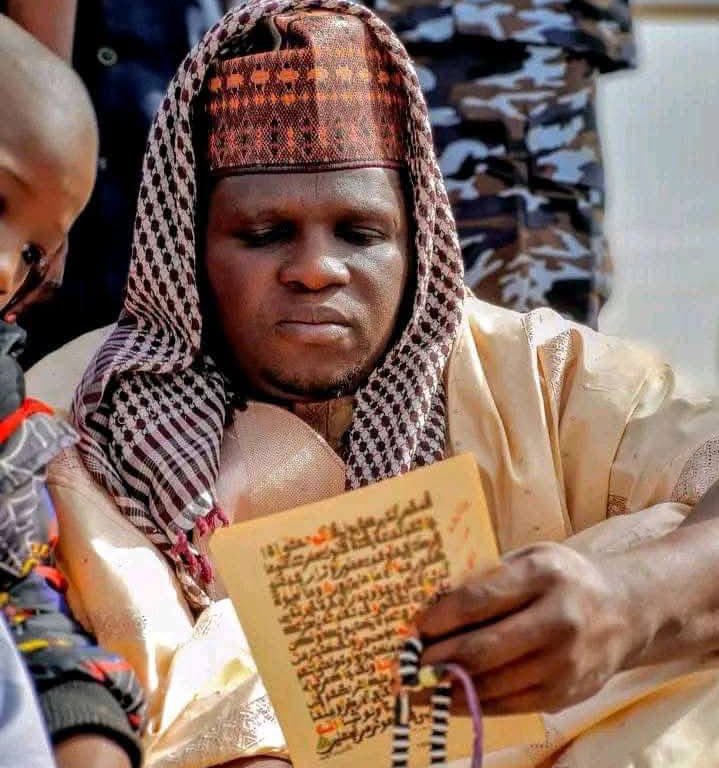
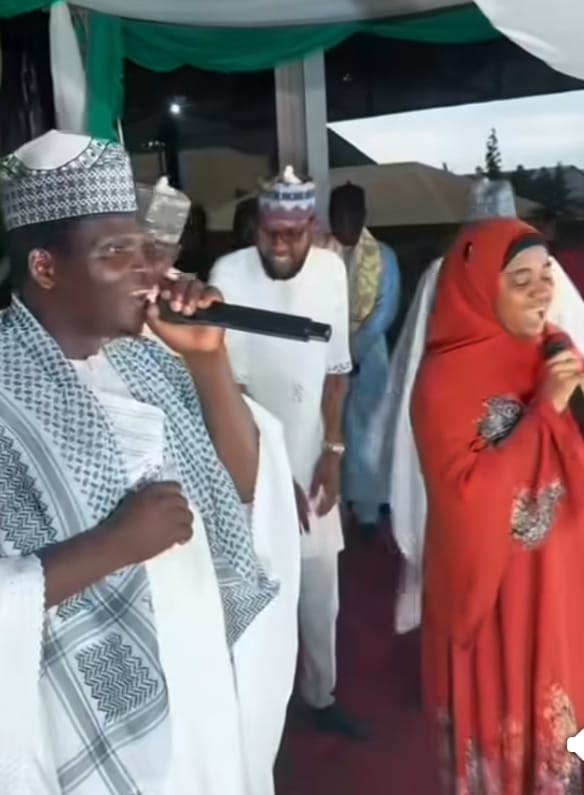
The Triple R Kannywood Renewed Hope Initiative, the highest body of elite Kannywood actors and other influential Arewa creatives, led by Alhaji Dauda Adamu Abdullahi Kahutu Rarara, organised a special prayer session to pray for peace, unity, and security in Nigeria on 22nd June 2026 at the Aminu Dantata Trade Fair Complex in Kano City.

Conceived by a high-powered 5-Man Committee of Special Prayer chaired by Nura Hussaini, a famous Hausa film actor, the session drew a massive turnout of notable Hausa film actors, directors, singers, scriptwriters, authors, and other creatives in the arts industry. TikTok influencers and dozens of group members were also in attendance, and all were united by their concern over Nigeria’s security situation.

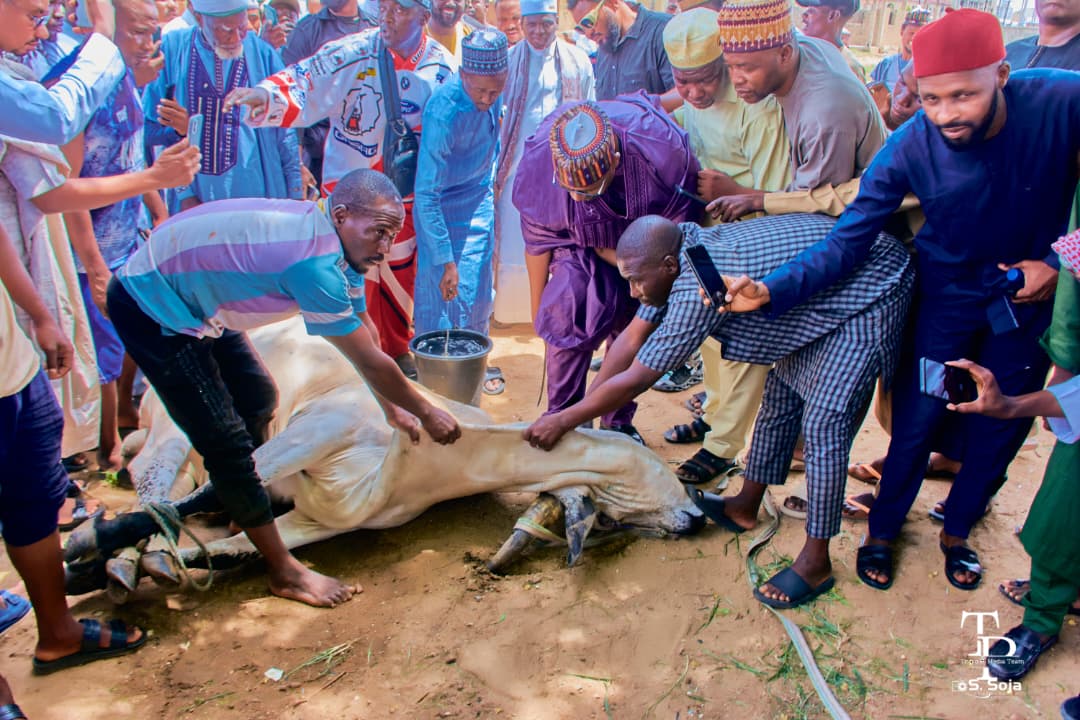
The special prayers attracted enthusiastic attendees from the film and arts industry in Kano, Kaduna, Gombe, Niger, Sokoto, Borno, and other Northern regions. Starting around 11 am, members recited the Holy Qur’an. A big cow and a large ram were slaughtered, and the meat was shared among the public. The act sought Allah’s intervention for lasting peace and security, especially in troubled areas. 

Prayers were also faithfully offered for Almighty Allah to completely crush all those directly or indirectly profiting from the killing of innocent lives, especially bandits and other troublemakers. Members also prayed, asking God to bring a permanent end to terrorism, armed robbery, kidnapping, and every form of insecurity plaguing Nigeria, particularly the North.

To ensure a well-coordinated and sustained approach, the initiative is committed to establishing the said powerful standing committee under the chairmanship of Nura Hussaini, with Sharu Nagudu serving as Vice Chairman. All members of the Triple R Kannywood for Renewed Hope Initiative are automatic and committed members, working collectively to hold continuous prayers for peace, unity, security, and Nigeria’s overall development.

At the heart of the prayers was a collective plea for Allah’s immediate intervention in ending the violence still disrupting communities across Nigeria. The group also prayed for lasting peace, security, and stability across Nigeria, for unity, love, and mutual understanding among all citizens, and for wisdom and sound guidance for the country’s political leadership at the national and state levels as they strive harder to steer the nation toward achieving peace and socioeconomic transformation.

Speaking to journalists at the venue of the special prayers and sacrifices, Rarara, a preeminent Hausa song artist and leader of the converged creative minds under the Triple R Kannywood Renewed Hope Initiative, said, “The initiative recognises the daunting challenges security agents face daily in tackling insecurity across the country. This prayer session was organised to complement their efforts by seeking Allah’s intervention and urging the general public to join in praying for the success of the government and security personnel in combating this persistent menace.”

Khalid Imam, a multiple award-winning bilingual author based in Kano, attended the special prayer session and crafted this report.

“Dr” Prefix: The Federal Government Has More Orders to Issue

By Bilyamin Abdulmumin, PhD

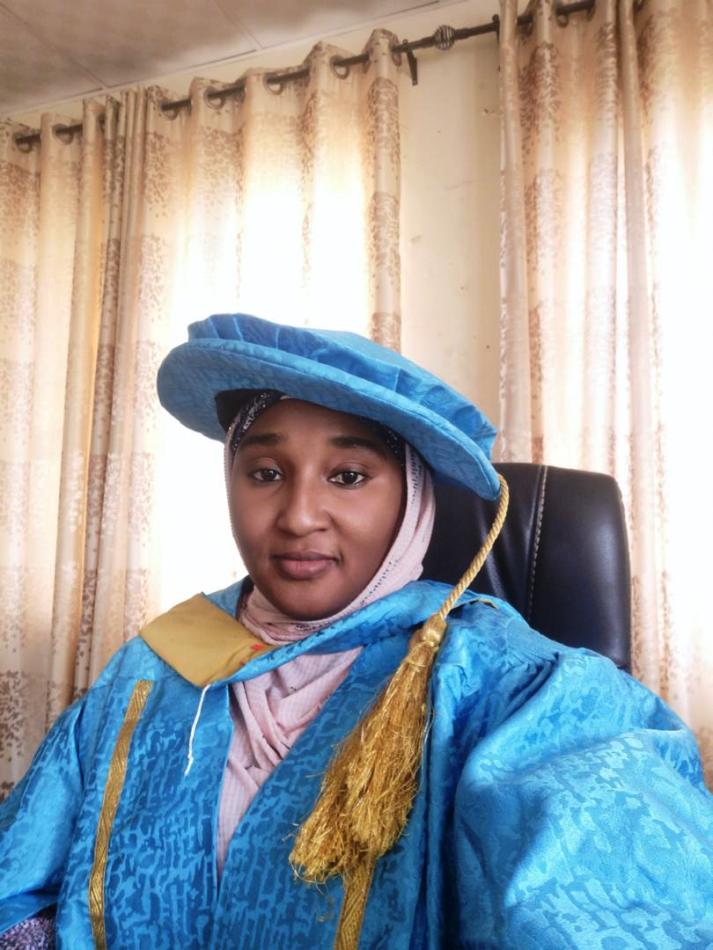
No one takes up the title of Dr for head like the famous praise singer Dauda Kahutu Rarara. His predicament began when a university under the aegis of the European-American University conferred on him an honorary doctorate. When the university was later discovered to be a mushroom, given how he had initially taken the title with glamour and pageantry, Rarara received ridicule for his life. 

Perhaps Rarara’s fanfare and grandeur in celebrating the honour stem from mockery over his lack of formal education; as a result, mockers say he doesn’t understand English. Rarara, floating the Dr title would have been a slap to the face of these mockers.

The award of an honorary doctorate was initially given to figures who excel in their field of endeavour and thus render landmark service to their community.  For example, honorary doctorates for Mamman Shata, Ibrahim Babangida, and Aliko Dangote. However, some universities are now believed to resort to awarding the honorary title quid pro quo. Therefore, the recent Federal government order to bar the indiscriminate use of the Dr title is seen as long overdue. 

A doctor is simply referring to someone qualified to teach at the highest level. But a blurred line existed between doctors of medicine and a doctor of philosophy.  Because when “doctor” is mentioned, given our culture of genericising brand names, we subconsciously think of medicine. This is why every toothpaste is a Close-Up, every milk is a Peak, chocolate Milo, seasoning cubes Maggi, instant noodles Indomie, washing detergent Omo or Clean, bleach Hypo, and every antiseptic liquid Dettol. Therefore, after the federal government succeeded to stop abusing Dr title, they had many more disputes to settle. Including clearing this genericization ambiguity. 

Another order that Professor Suwaiba Ahmad has to issue concerns herbal practitioners. The herbalists called themselves doctors, and society also addressed them as such. As traditionalists, perhaps the federal government should order them to stick with the traditional names they are known by:  Mallam (Hausa), Oníṣègùn (Yoruba), Ọnyọ́gwọ́ (Igbo), Oma-oyi (Idoma), Vingir (Tiv), Oboh (Igala), Amawato (Ijaw), Malam (Hausa & Kanuri), and Gandoowo (Fulfulde).

There is also abuse of the title Dr. among Nigerian students. A year-one medical student or a PhD calls themselves a doctor. When do these under-breastfeeding qualify to train others?  The minister needs to issue a warning order.

The most hilarious part is when remedial or matric students are addressed as doctors. Students in this category who intend to study MBBS address themselves as “Dr.” As a matter of urgency, the Honourable Minister should issue a stern warning against this misuse of the professional title “Doctor.”

Titles are held with high regard in Africa. It appears that the longer the titles, the more important the person. In this regard, the former presidents of Gambia and Uganda stand out. Yahya Jameh is addressed as Sheikh Professor Alhaji Dr Yahya Jammeh, Babili Mansa (Conqueror of Rivers” in Mandinka), His Excellency, Master of the River Gambia, Lord of the Animals and Birds of the River Gambia, President of the Republic of the Gambia, Commander-in-Chief of the Armed Forces. 

Idi Amin’s title is much more glamorous: His Excellency, President for Life, Field Marshal Al Hadji Doctor Idi Amin Dada, VC, DSO, MC, Lord of All the Beasts of the Earth and Fishes of the Seas and Conqueror of the British Empire in Africa in General and Uganda in Particular. 

Rarara’s honorary doctorate controversy: A call for Nigerian universities to recognise cultural icons

By Dr Abubakar Bello

The recent controversy over an alleged honorary doctorate awarded to musician Alhaji Dauda Kahutu Rarara has sparked debate across northern Nigeria. Initially, reports indicated that the European-American University conferred an honorary doctorate on him in Abuja. However, days later, the institution publicly denied endorsing such an award, describing the event as fraudulent.

This is not the first time Rarara’s name has been caught in institutional back-and-forth. At one point, the Federal University Dutsin-Ma (FUDMA) was said to be planning a conference to celebrate his contributions to music and politics. Yet the university later backtracked, insisting the information was fake. The recurring pattern suggests not a lack of merit on Rarara’s part, but rather institutional hesitation in dealing with a figure whose art, political songs, and social influence are both celebrated and contested.

There is clear precedent for cultural icons receiving academic recognition. The late Mamman Shata, perhaps the most revered Hausa musician of the 20th century, was formally honoured by Ahmadu Bello University, Zaria. That recognition secured his place not only in the cultural memory of the Hausa people but also in academic history. By that measure, Rarara too will, sooner or later, be recognised by universities both within Nigeria and abroad for his cultural and political contributions. The real question is: which university will take the initiative?

Across Nigeria, universities have rightly celebrated industrialists, politicians, and philanthropists with honorary degrees, sometimes even surprising their own local institutions, as happened when other universities honoured Katsina’s business mogul, Alhaji Dahiru Mangal, taking Umaru Musa Yar’adua University, his home-state university, by surprise. Yet cultural figures, especially musicians whose work captures the pulse of society, are too often overlooked until history forces recognition.

This is an opportunity for Nigerian universities to redefine what they celebrate. Honorary degrees are not just ceremonial gestures. They are statements of value, affirmations that music, political commentary, and popular culture are as vital to society as commerce and politics.

Whether in Katsina or beyond, Nigerian universities have the opportunity to lead by recognising Rarara. Doing so would not only honour one man but also promote the significance of indigenous music and political expression in our collective intellectual and cultural heritage. The controversy over fake awards should not overshadow this larger truth: Rarara’s contributions are genuine, and he deserves formal recognition.

 Dr Abubakar Bello wrote from the Department of Biological Sciences, Umaru Musa Yar’adua University, Katsina. He can be reached via bello.abubakar@umyu.edu.ng.

European-American University offers “genuine” degrees to victims of fake ceremony

By Abdullahi Mukhtar Algasgaini

In a significant gesture of goodwill, the European-American University (EAU) has formally extended an offer to award genuine honorary degrees to Nigerian celebrities, including popular Hausa singer Dauda Kahutu Rarara, who were recently victimised by fraudsters.

This development follows a widely publicised incident in Abuja, where impostors falsely claiming to represent the university organised a sham ceremony and presented fake honorary degrees.

In an official statement, the university confirmed it has reported the fraudulent event to the Nigerian Police for investigation. The EAU stated it believes the recipients, who also include Alhaji Ahmed Saleh jnr, Mustapha Abdullahi Bujawa, and Tarela Boroh, were “innocent victims” who acted in good faith.

The university has now invited the individuals to contact its Nigerian representative, Professor Luke Okojie, to begin a proper validation process. Subject to their consent and a review of their credentials by the university’s Honorary Degrees Committee, they will be awarded legitimate degrees at the EAU’s official Nigerian convocation this November.

The university explicitly stated that no fees will be required throughout the process, a point emphasised to distance its legitimate operations from the actions of the scammers.

European-American University disowns Rarara, calling his degree fake

By Uzair Adam

The European-American University (EAU) has distanced itself from reports claiming it awarded an honorary doctorate to popular Hausa political singer Dauda Kahutu Rarara during a ceremony in Abuja.

In a disclaimer published on its official website, the University described the alleged event at NICON Luxury Hotel, Abuja, as fraudulent, stressing that it was organized without its knowledge or approval.

The institution clarified that neither Rarara nor the other individuals mentioned — Alhaji Ahmed Saleh Jnr., Prof. Mustapha Abdullahi Bujawa, and Prof. Tarela Boroh — had received any honorary recognition from EAU. 

“These individuals are not honorands of the University and have no legitimate connection with us,” the statement read.

EAU further disowned Musari Audu Isyaku, who was presented as its representative in Northern Nigeria, stating that he has no authority to act on behalf of the institution. 

It also denied that Idris Aliyu was part of its governing body, noting that the university has no such council. 

Aliyu’s fellowship with EAU was revoked immediately over his alleged role in the fraudulent ceremony.

The University reminded the public that its former Vice Chancellor, Dr Mrs. Josephine Egbuta, had been dismissed earlier this year and no longer represents the institution. 

It affirmed that Professor Luca Scotto di Tella de’ Douglas di Castel di Ripa is the current Vice Chancellor.

On its legal standing, EAU explained that it is a nonprofit private university established in France, with a Royal Charter of Incorporation from the Kingdom of Bunyoro-Kitara in Uganda. 

It dismissed references to Dominica and Panama as “outdated and false.”

The statement added that the University would work with Nigerian authorities to curb the circulation of fake certificates issued in its name and prosecute those behind the act.

EAU also disclosed that its next legitimate convocation in Nigeria is slated for November 15, 2025, while another awards ceremony will take place in Malaysia in December.

Rarara honoured with doctorate in music, humanitarian service

By Uzair Adam 

Renowned Hausa political singer, Dauda Kahutu Rarara, has received an honorary doctorate degree from the European-American University, Commonwealth of Dominican Republic of Panama.

The award was conferred on him during the university’s 23rd convocation ceremony held at the NICON Luxury Hotel in Abuja on Saturday. 

Rarara was honoured with the Doctor of Science in Humanitarian Service, Music and Entertainment.

Speaking at the event, Professor Idris Aliyu of the Governing Council, who represented the Vice Chancellor, described the honour as a recognition of Rarara’s commitment to both music and community service.

In his remarks, the institution’s Northern Nigeria representative, Dr Musari Audu Isyaku, said Rarara and three others—Alhaji Ahmed Saleh Jnr., Prof. Mustapha Abdullahi Bujawa, and Prof. Tarela Boroh—were selected for their outstanding contributions to humanity.

“This award is a testament to their dedication to excellence and development of the community,” Dr Isyaku stated.

Reacting to the honour, Rarara expressed joy over the recognition, noting that it would inspire him to expand his humanitarian services in Katsina and other parts of Nigeria. 

He also urged young people to be patient and dedicated, saying purposeful living brings wisdom and reward.

Governor of Katsina State, Dr Umaru Dikko Radda, who attended the event, described Rarara as “a phenomenon and unifier” who has delivered humanitarian projects across Nigeria while also promoting unity through music.

Other dignitaries present included the National Chairman of the All Progressives Congress (APC), Prof. Nentawe Goshwe Yilwatda; Minister of Transportation, Senator Sa’idu Ahmad Alkali; and members of the House of Representatives, Abubakar Kabir Bichi, Nasiru Sani Danlami, and Abdulmumini Zannah Bungudu.

The August protest has changed nothing!

By Musa Kalim Gambo

Whether you like it or not, populism is the giant stallion politicians ride to victory in every race. They strike at the cords of the utmost desires of the public, exaggerate the failures of the existing structure, and swear by the deities they worship that they possess the magical cure. They have the staff that can open up the Nigerian Red Sea of trouble to ‘let my people go.’

So, this upcoming August protest in Nigeria is another populist stage—dramatic personas will sing the chorus of what everyone already knows, what everyone already endures, and what everyone already believes is no longer humanly possible for the current crop of Nigerian politicians to address. 

#ENDSARS was a huge success (?), to a relative extent. Youths expressed their rage at an overtly abusive agent of the government, a special unit of the Nigerian police force, the Special Anti-Robbery Squad, or SARS, as it became notoriously known in 2020.

The protest was beyond police brutality and high-handedness. This was when the country was amid the coronavirus pandemic, economic recession, and poverty –you could perceive the pungent odor of poverty in the air. Life was becoming unaffordable and unpalatable. So if poverty provides the ground for hunger, then hunger was close relative to anger and frustration,  then it was clear that #ENDARS was bigger than the demand for an end to police brutality. 

It could be concluded that the frustration, hunger, and anger that hung in the air were the oxygen in the protesters’ blood. It was the crucial component of the energy that drove the protesters to the streets—although the activation energy came from the said ‘police brutality’ through the SARS.

Four years later, these youths moved on, and the country’s situation did not seem to display any sign of positive change. The only visible changes, obviously, must be said—there’s a proactive approach to leadership. Even if some government areas prove difficult and impossible, the leadership is resilient. 

It is now widely seen that the federal government has hastily increased the national minimum wage, granted autonomy to local government, launched a student loan scheme, and is vigorously engaging with stakeholders on the eve of this August protest.

The government is already taking important measures to prevent a protest from escalating into an ugly situation.

Here in the North, the Ulama have strong control over the youth, and they are already calling on youths to avoid violence or any action that could potentially undermine the nation’s fragile state. So, if the protest eventually occurs in parts of the North, it is expected to be peaceful. 

The Northerner respects leadership – good or bad, as long as such leadership does not directly conflict with his religious belief, especially the unity of God. But this calm doesn’t suggest silence! Neither does it imply agreement with the prevailing hardship. There will always be strong condemnation and damnation against the extravagant and ostentatious lifestyle of the political elite amidst hardship among the talakwa. This is sometimes expressed in rhetorics – with Allah ya isa.

This weekend, the Hausa political praise singer Dauda Kahutu Rarara, had his Facebook page deleted after users reported him over a song. In Rarara’s usual style, the song in question seeks to indicate that the life of talakawa has improved under the current Nigerian government. It can essentially be said that the song trivializes the grievances of the public against the government. 

Rarara is known to reduce the opposition to his benefactors to nothing, sometimes even mocking them using his rhythm and lyrics. So, this was undoubtedly one of those instances met with the appetizer of the upcoming protest.

Back to the protest—one thing is certain in this part of the world:  no matter how hard the poor fight, the elitist lifestyle that serves as a precursor to their pathetic condition cannot be changed. Protests do not improve the quality of life in this part of the world; they rather push the poor from frying pan to fire, leaving behind ashes of instability and unrest that go on long after the protest is over.

So it’s best to be wise and think twice – peaceful dialogue and engagement with the authorities. 

Musa Kalim Gambo writes from Kaduna via gmkalim.ng@gmail.com.

Rarara: Loyalty for sale

By Bilyamin Abdulmumin

When the former president Muhammadu Buhari’s praise singer Dauda Adamu Abdullahi Kahutu (Rarara), held a media conference some time ago, he stirred up the hornet’s nest. A press conference that initially appeared to lament about being sidelined in the current government ‘that they work hard to enthrone’ took an unexpected turn. Rarara would veer off the course to make damning allegations about the administration of his former boss. 

One of these damages, which sent shockwaves in social media, was that President Buhari did not leave the office until he brought every part of the country to a grinding halt, stating, ‘sai da ya yi dama-dama da kasar nan’. A journalist immediately posed the question that many Nigerians would be wondering: You were in the administration for eight years but haven’t raised a finger until now. Why? Rarara’s response was typical; he claimed he had been hopeful that something positive would happen, so he remained aloof during the eight-year tenure. 

However, sceptics, who don’t take things at face value, could argue that the president had an eight-year mandate. Within those years, how long would have been enough time for Rarara to raise the alarm? This was not to mention the apparent romance Rarara had had with the government during those years. This reminds me of one scandal that occurred during the Goodluck Ebele Jonathan (GEJ) government, and upon the pressure from the public, GEJ appeared determined to leave no stone unturned, so he gave two two-week ultimatum to the committee he set up to finish the investigation to bring the culprit to book.

However, to the most awe and shock, the person indicted for corruption would join the then-presidential foreign tour immediately after the order. A typical case of saying something, but body language says another. When considering the complete picture of the scenarios, the questionable timing and an unconvincing response led almost everyone to dismiss Rarara’s claims with a wave of the hand.

Rarara also launched another salvo, asserting that the 100 days of Bola Ahmed Tinubu were better than the entire eight years of Muhammadu Buhari. While the general view is that Buhari didn’t meet the messianic expectations set for him, drawing a parallel between eight years and 100 days for two different governments is like judging a sprinter’s performance in the first few meters of a marathon. For Rarara to make this shallow comparison, he must be among the Nigerians who thought 100 days was enough for the government to make substantial development. Ever since the United States president, Franklin D. Roosevelt, coined “first 100 days”, the gesture kept going wild; Nigerians have since imported and made it a ritual.

Because the mainstream media has amplified it and become embraced by the public, the newly elected Nigerian officials have become desperate to show that they could lift Zuma rock in the first 100 days in office. Assuming the new government has no serious court litigations to contend with, and the previous administration has little influence on their government, when did the busybody officials finish digesting the thousands of pages of the transition document handed over to them to decide on the administration trajectory? It is even the previous government budget that is already running. When they started to make their own, when were the projects conceived and implemented and matured for the public’s admiration? The speed at which a project is untimely executed to impress the public would go down the heel with double the speed.

In another arsenal that Rarara unleashed, he claimed to have contributed more to Buhari’s success than Buhari did himself. Following the historic dethronement of the incumbent in 2015, people pondered on the key figures that played the most significant role in paving the way for this landmark event: Rarara, President Buhari, and the Card Reader. Including Rarara in this list is a testament to his significant contribution to President Buhari’s success. However, that is not the complete story. All successful people have a tale to share; one crucial factor that defines them is consistency. They persistently push forward until circumstances align for success. So, in that moment of triumph, who rightfully claims the bragging rights?

Two theories were put forward to explain Rarara’s controversial media conference. One theory suggested that Rarara was acting based on the consent of the current administration, an indirect way of informing the public about the status quo of the country they inherited. Masses were already a block of ice waiting for an opportunity to rupture, no thanks to the ever-increasing prices of goods and services. This gave the ruling APC a conundrum: Should they give themselves excuses by condemning the previous administrations, or should they avoid self-sabotage and keep quiet? Therefore, Rarara, lacking a political appointment but commanding a Northern audience, became a strategic mouthpiece. This theory is plausible enough because, beyond the surface, the government could employ several manoeuvres to shift the public’s focus during hard times to avoid citizens’ wrath. 

The second theory shared by many, including Prof. Abdallah Uba Adamu, was that Rarara is a typical gold digger; his loyalty is not through thin and thick. He has consistently known to forsake one boss at a time of scarceness and identify with another where the abundance is emerging. From praise songs to invective ones; from Saraki Sai Allah for Shekarau to Malam yayi rawa da alkyabba, from dawa ta bare for Kwankwaso to Tsula tsilla tsilla, from uban Abba for Ganduje to hankaka.  But despite that, the nation was surprised to wake up with Rarara’s latest bombshell.  Because Rarara seems to have gone aboard when it comes to Buhari and his government, he goes all out against the critics of Buhari not only in his songs but also in several interviews he offered. 

As Rarara now courts new relationships with incumbents like Nasir Yusuf Gawuna, Dikko Umar Radda, or Bola Ahmed Tinubu, caution is advised. His track record of shifting loyalty raises questions about the depth of his commitment. These figures and their supporters should be wary of potential shifts and assess the sincerity of the newfound alliances.

Bilyamin Abdulmumin wrote via bilal4riid13@gmail.com.

Rarara security guards dismissed by Nigerian Police for unlawful act

By Ahmad Deedat Zakari

The Nigerian Police Force, NPF, has dismissed three officers on the ground of infamous conduct.

NPF Spokesperson, CSP Olumuyiwa Adejobi, disclosed this in a statement he signed and made available to journalists on Thursday.

According to the statement, the dismissal is sequel to complaints received against the erring officers.

He wrote, ” Subsequent to complaints and findings on video evidence widely circulated on Friday 7th April, 2023, on social media of high-handedness, unprofessional conduct, and misuse of firearms against some policemen from Special Protection Unit (SPU) Base 1, Kano, and a follow-up orderly room trial of the affected policemen by the Force Provost Marshal, three officers from the SPU Base 1 Kano have been dismissed for the offences of discreditable conduct to wit misuse of firearms, abuse of power, gross indiscipline, and wastage of live ammunition.”

The affected policemen are Inspector Dahiru Shuaibu, Sgt. Abdullahi Badamasi and Sgt. Isah Danladi.

The said officers were attached to a musician in Kano on escort duties and were seen in videos shooting indiscriminately into the air.

Consequent of the development, the NPF warned officers to be law abiding ‘to avoid running foul of its provisions and attracting attendant sanctions’