China

The Daily Reality editor joins Beijing Foreign Language University to teach Hausa

By Sabiu Abdullahi 

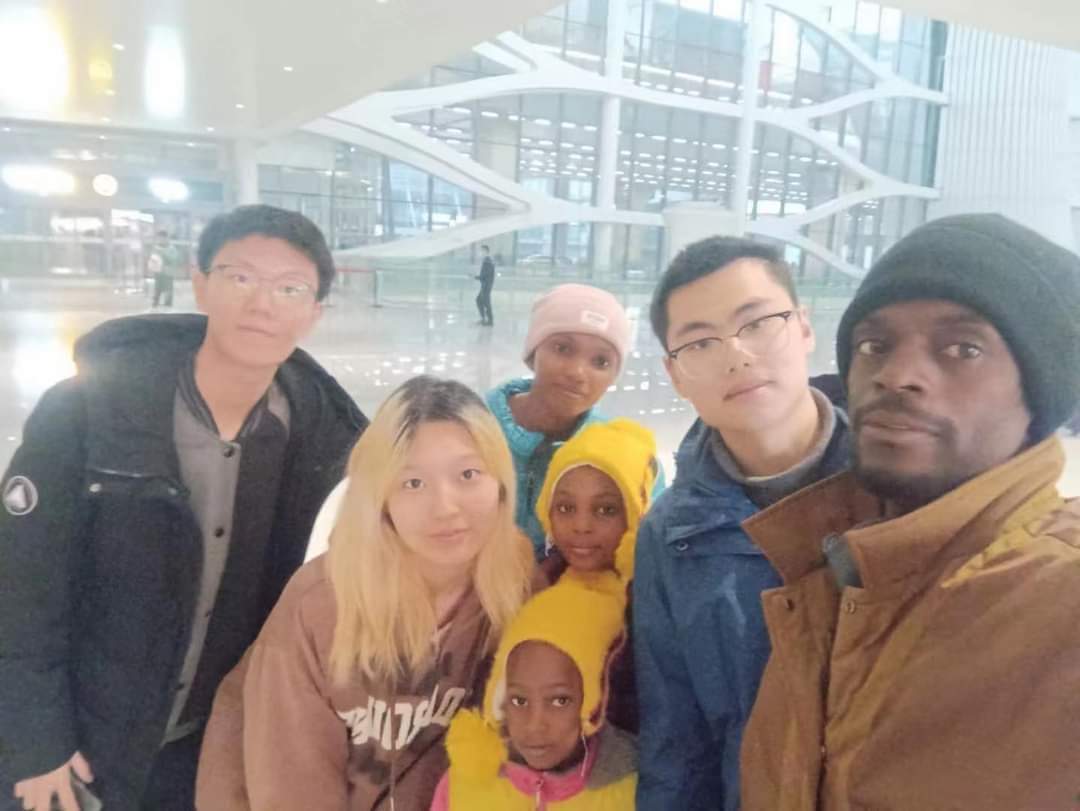
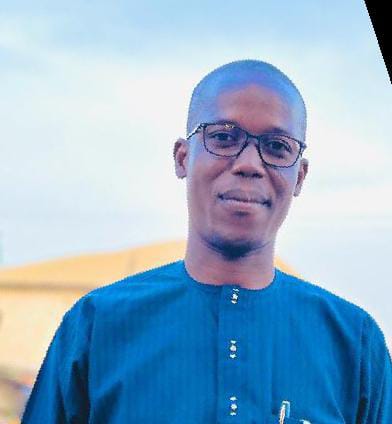
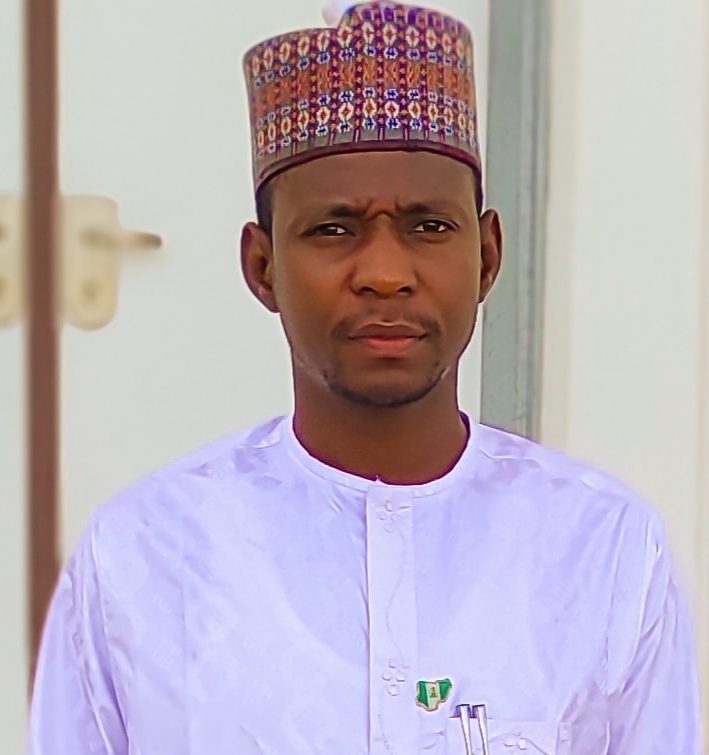
Dr. Muhammad Sulaiman Abdullahi, a lecturer in the Department of Nigerian Languages and Linguistics at Bayero University Kano, has arrived in Beijing with his family, his close associate, Dr. Muhsin Ibrahim, posted on his Facebook handle.

Dr. Abdullahi is set to contribute to the global academic landscape by teaching Hausa to Chinese students at Beijing Foreign Language University (BFSU). 

This collaboration marks a unique opportunity for cultural immersion and linguistic exchange between Nigeria and China. 

Dr. Abdullahi’s expertise in Nigerian languages, particularly Hausa, is expected to enrich the linguistic diversity at BFSU, one of China’s premier institutions for language studies. 

The initiative is part of BFSU’s ongoing efforts to broaden its language curriculum, offering students exposure to languages beyond the traditional offerings. 

Dr. Abdullahi’s presence is anticipated to foster a deeper understanding of Nigerian culture and language among Chinese students, promoting cross-cultural dialogue.

As the academic semester commences, Dr. Muhammad Sulaiman Abdullahi is poised to become a cultural ambassador, bridging the gap between Nigeria and China through the universal language of education.

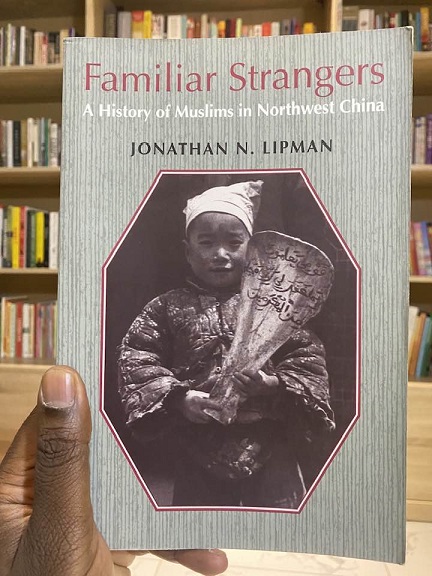
BOOK REVIEW: Familiar Strangers: The History of Muslims in Northwest China

By Dr Shamsuddeen Sani

It is easy for the narrative about Uyghur Muslims of China to draw your attention due to the fierce East-West political drama about them. Before now, I had no clue of the profound complexity inherent in the history of Islam in Muslim northwest China.

Jonathan N. Lipman skilfully avoids the more sensitive politico-religious aspects, as he aptly puts it, making it not a book about the history of the Muslims in northwest China but a comprehensive account of the history of Muslims living in northwest China.

This book offers a critical analysis of the origins of Islam in northwest China, the evolution of Muslim identity and culture in the region, and their intricate connections within the broader context of greater China. This examination spans six comprehensive chapters and incorporates both pre and postmodern contextual perspectives.

Following an elaborate introduction that combines geography and ethnography in northwest China, Lipman offers an extensive overview that spans nearly a millennium, encompassing the entire cultural landscape of China. He achieves this by positioning Muslims as unique elements within the familiar historical context of China from the Tang dynasty through the Ming dynasty.

After the Qing conquest of the 1640s, he investigated specific solidarities among Chinese Muslims and their leaders. Additionally, he examines the development of Sufism in northwestern China and the integral role played by the Shuyuks and Tariqa in the region’s social fabric. By the mid-18th century, as the book highlights, Sufi orders had already ignited a significant drive towards political activism, community cohesion, and horizontal competition.

Coming to the early 19th century, Lipman looks into the era marked by the transition from the Qing Empire to the Chinese nation-state. He explores the intricate processes of change, driven by internal factors and influences originating from Europe, America, and the Muslim world, which swept across the outskirts of China. These forces compelled individuals to make decisions under unfamiliar and challenging circumstances. The book took a tangent to meticulously analyse four key Sino-Muslim figures who embarked on distinct yet equally complex journeys towards finding common ground with a modernised China.

This book is not an easy read, given the unfamiliar names one must remember, but it is worth every minute of your time.

Dr Shamsuddeen Sani wrote from Kano, Nigeria.

ABU wins Huawei ICT Competition in China

By Ahmad Deedat Zakari

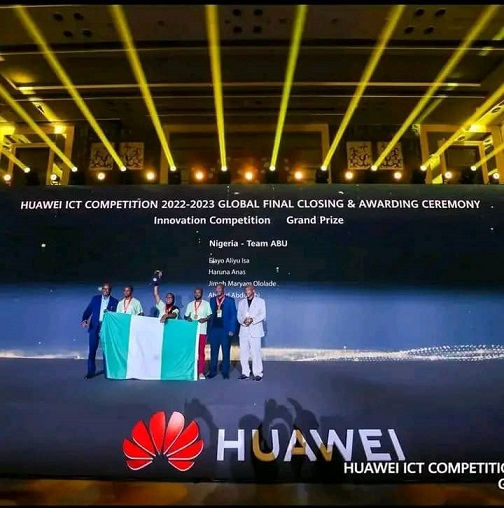
The Ahmadu Bello University (ABU), Zaria, has emerged winner at the Huawei ICT Competition for the 2022-2023 Global Final held in Shenzhen, China.  

The management of Huawei disclosed on their website that the competition was the first to be held physically since 2019, and about 80 universities worldwide participated.

“Today, the Huawei ICT Competition 2022-2023 Global Final concluded in Shenzhen, drawing to a close the seventh instalment of this competition. The first to be held in person since 2019, the event’s culmination was a competition between finalists in 146 teams from 36 countries. Before the Final, more than 120,000 students from more than 2000 universities in 74 countries and regions around the world took part in the ICT Competition,” the statement reads.

Maryam Jimoh Olalade, Haruna Anas, Ahmad Abdullahi and Elayo Aliyu Isah represented the institution that won the prize.

India will soon surpass China in population – UN

By Muhammadu Sabiu 

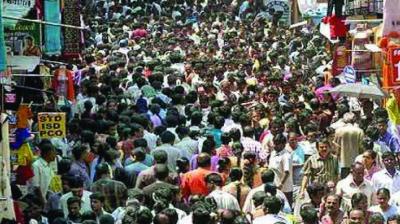
India is soon to overtake China as the world’s most populated country, according to the United Nations Population Division.

John Wilmoth, the director of the UN Population Division, stated this at a press conference held on Monday at the UN’s New York headquarters.

Wilmoth asserted that the fertility rates in the two countries were the primary cause of this trend, stating that China and India together made up more than one-third of the world’s eight billion people.

Wilmoth was quoted as saying, “By the end of April, India’s population is expected to reach 1,425,775,850 people, with projections indicating further growth for several decades more.

“That’s slightly higher than China’s global record of 1.4 billion in 2022.

“China’s population reached its peak size in 2022 and has begun to decline.

“Projections indicate that the size of the Chinese population could drop below one billion before the end of the century.”

China’s poverty eradication campaign: lesson for Nigeria

By Muhammad Muzdaleefa

Being a student of diplomatic history, I have been following the poverty eradication campaign in China for years. It is a shame that Western media have decided to bash it as Chinese propaganda instead of looking at the take away lessons that can be applied globally with necessary adjustments for sustainable growth and development.

The way China has been going through this issue is very methodical and practical. They have a clear standard of living which they are working hard to ensure it is universally achieved. In other words, they create a world where everyone has a smooth path to realize their dreams and ensure no one is left behind. This is very different from the competitive capitalist system practiced in the West where everyone is obsessed with being ahead of the other.

The Chinese have used very simple ideas. These include the following;

  1. Housing – The Chinese model is ensuring everyone has adequate and decent housing. Those with poor housing have had their houses reconstructed or relocated to new houses.
  2. Income – The Chinese have ensured everyone has a sustained income source that elevates them above the poverty line. This has been through implementation of various income generating projects based on local needs and environment.

In one example, some farmlands where farming was ecologically harmful were turned into a forest. The former farmers were then employed as forest guards. Another example is where some villages were helped to establish solar power plants from which they earn incomes.

  1. Education – The Chinese model states that education is the best way to stop transmission of generational poverty. As a result they have implemented a system which has resulted in zero school dropout cases. Some 8 million youths who had dropped out of school at various levels have been taken through vocational training.
  2. Health – Unhealthy people can’t fight poverty. They are people who are consigned to poverty due to treatable health issues. China has worked to ensure affordable healthcare in order to ensure that no person falls back to poverty dues to illness. The response of the Chinese government sequel to the outbreak of Coronavirus pandemic was admired throughout the world.

To achieve the above the following foundational issues are critical;

  1. Household targeted poverty eradication – a census of poor people was conducted which identified every household defined as poor. This bottom up approach is key because you cannot eradicate poverty until every household has been lifted from poverty. The household is the epicentre of poverty.
  2. Planning and involving people – after the poor are identified, detailed planning is undertaken and the people are involved in coming up with solutions to eradicate poverty.
  3. Clear goals – the officials are expected to come up with practical goals and realistic timelines. In one case where officials had set lofty and unrealistic targets President Xi Jinping emphasized that for the battle against poverty to be won there should be no procrastination or impatience.
  4. Measurement and independent evaluation – countries that claim to have eradicated poverty have to apply for removal from a list of countries that still have people living in poverty. Such an application is followed by independent verification. Evaluators are sent to verify the claims and they are supposed to visit each household without being accompanied by the village officials. Countries that fail to pass the evaluation have to continue with poverty eradication work.

In conclusion, eradicating poverty is not rocket science. Simple, practical and realistic steps are needed. Most importantly, a visionary, selfless and committed leadership must be in place for this to work effectively. 2023 is a good opportunity for Nigerians to elect capable, dependable and reliable leaders that will not only address the critical needs of Nigerians but will put the country on the path of sustainable growth and development for the contemporary generation and posterity.

Chinese woman converts to Islam in Nigeria 

By Ibrahim Mukhtar 

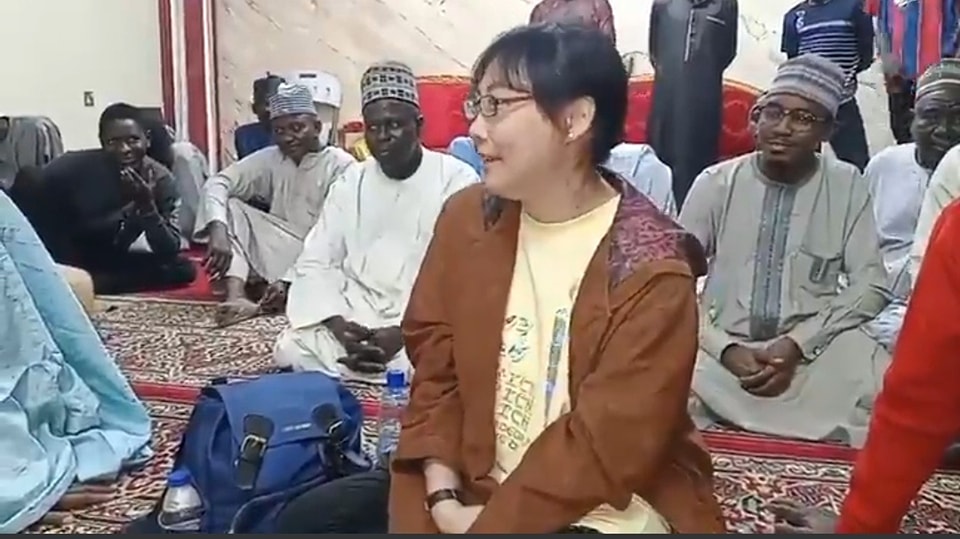
A Nigeria-based Chinese woman accepted the religion of Islam at the palace of the Emir of Machina in Yobe State. 

The woman who was at the palace with her fiancé explained that no one forced her to accept the religion—she wanted Islam on her own conviction. 

After she took the Kalimatu al-Shahada from His Highness, the Emir of Machina, she was asked to choose the name she wanted.

The Daily Reality learned that she chose “Fatima” based on the advice given to her by her fiancé. 

Fatima was observed to have been happy and relaxed alongside all those with her in the Emir’s palace.

Kano: Chinese Business Community condemns murder of Ummita

By Ahmad Deedat Zakari

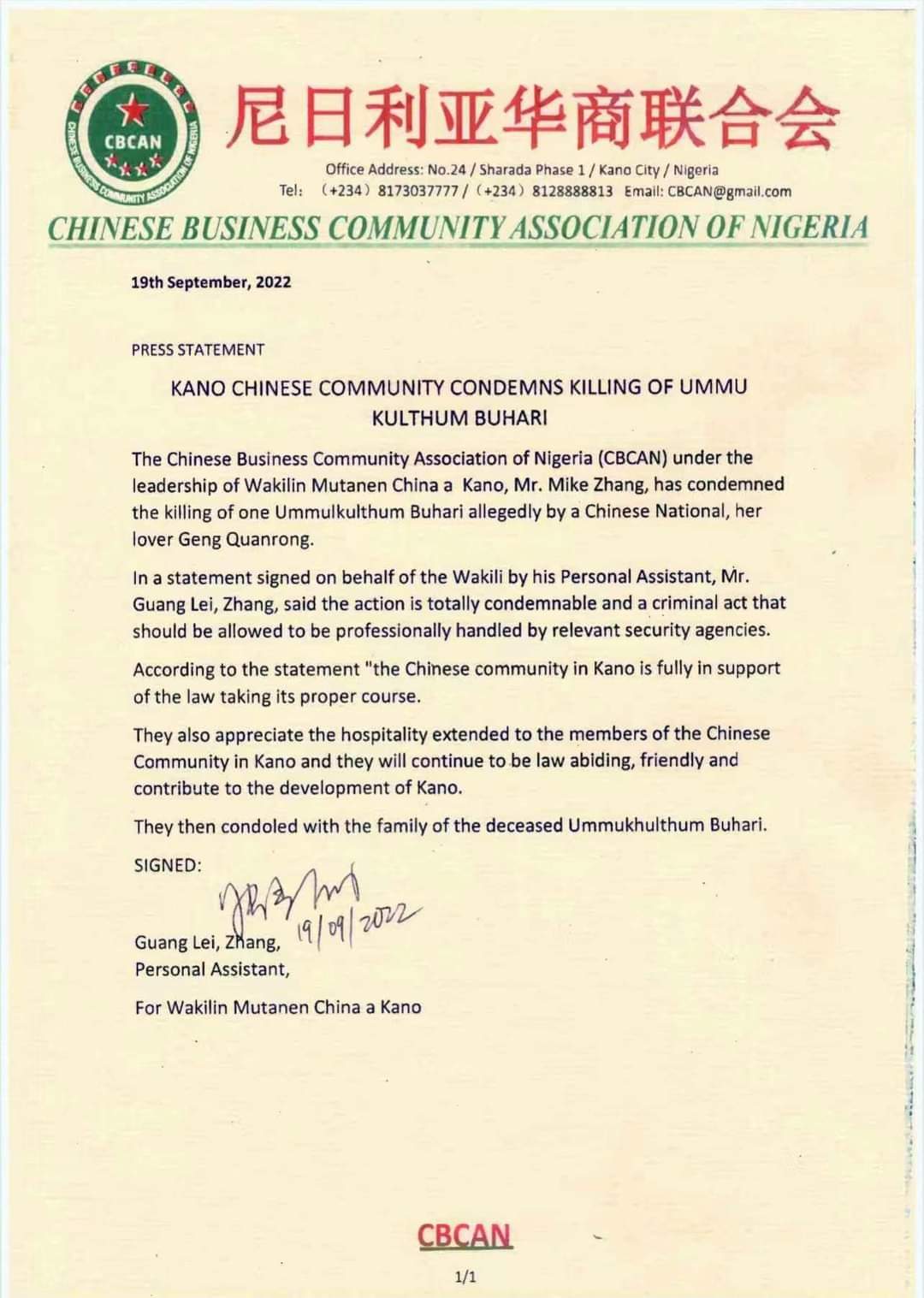
The Chinese Business Community Association of Nigeria, CBCAN, has condemned the murder of Ummu Khulthum Buhari, alias Ummita, in Kano.

This was made known through a statement released on behalf of the Wakilin Mutanen China a Kano by his personal assistant, Ghuan Lei Zhan on Monday.

“The Chinese Business Community Association of Nigeria (CBCAN) under the leadership of Wakilin Mutanen China a Kano, Mr Zike Zhang, has condemned the Killing of Ummukuthum Buhari allegedly by a Chinese National, her lover Geng Quarong” Part of the statement reads.

The Chinese Business Community also said it supports law to take its proper course.

Ummukuthum was allegedly murdered by her Chinese lover on Friday night. Her murder has generated outrage on social media. Many people expressed concern over crimes allegedly committed by Chinese nationals working in Nigeria.

Sadiq Baba Abubakar: A victorious political warrior

By Mukhtar Jarmajo 

Mao Zedong, the founder of the Peoples Republic of China, once said, “Politics is war without bloodshed while war is politics with bloodshed.” By inference, thus, there is so much correlation between politics and war, the only difference being that the former isn’t bloody while the latter is. Therefore, the art of politics is the same as that of war, where two or more opposing parties contest for supremacy either in terms of votes for political power as with politics or territorial control as with war. Additionally, politics and war involve strategies to subdue the opponent through deceptive techniques. 

Perhaps this is why Sun Tzu, the great Chinese writer, philosopher and war strategist, noted that while differentiating victorious warriors from defeated ones, “Victorious warriors win first and then go to war, while defeated warriors go to war first and then seek to win.” Aside from that, Sun Tzu emphasised the importance of strategy in war. He also meant that only warriors who adopt strategies in defining the means to conquer the enemy are victorious. The third import of Tzu’s quote is that strategists conquer their opponents well before the offensive is launched. 

So just as wars can be won and lost before the first Salvo is released, elections too can be won and lost even before any vote is cast. Meanwhile, it bears no repeating that only strategic politicians achieve such excellence. They study the prevailing political circumstance, analyse it based on the ambitions of the time, and then meticulously plan the best strategy to be used in conquering the opponents. Politicians such as the Bauchi state APC governorship standard bearer, Sadiq Baba Abubakar, are victorious political warriors simply because they understand the art of political warfare. 

During the governorship primary election in Bauchi state, the erstwhile Air Chief turned political czar and let his fellow contenders believe they were more political than him. Therefore only they knew what the road to winning the party’s ticket looked like. After the contest, Sadiq Abubakar won the day, with the runner-up placed at a distant 92 votes away. While they were reluctant that he was not a factor to count, Sadiq Abubakar campaigned vigorously and reached out to stakeholders and delegates to convince them of the substance and import of his ambition. 

In the end, they were convinced that aside from experience he would bring to the table, the erstwhile diplomat is one politician capable of giving the ruling PDP in Bauchi state a run for its money. Thus, he won the primary election before the first ballot was cast. And by Sun Tzu’s standard, Sadiq Baba Abubakar is a victorious political warrior. It raises no eyebrows that as a graduate of political science who also holds a master’s in strategic studies, the Bauchi APC governorship standard bearer can do even more than this. 

Jarmajo can be reached via dattuwamanga@gmail.com.

Drug abuse and illicit trafficking

By Tajuddeen Ahmad Tijjani

Every 26th day of June is the International Day against Drug Abuse and Illicit Trafficking as identified by the United Nations. This year is not unprecedented due to the menace that keeps rising, which sadly causes untold hardship to our communities and the world in general.

The date is to commemorate Lin Zexu’s dismantling of the opium trade in Humen, Guangdong, ending on June 25, 1839, just before the First Opium War in China. The observance was instituted by General Assembly Resolution 42/112 of 7th December 1987. The global observance of the day aims to raise awareness of the major dilemma that illicit drugs represent to society. Indeed, the aim is an expression of the United Nations’ determination to strengthen action and cooperation to achieve the goal of an international society free of drug abuse.

Justice and health are two sides of the same coin when it comes to addressing drug problems. The pertinent question is: what have we done in our immediate communities to address this situation that is posing a danger to our survival as a society and a nation? Are we to maintain silence while the future of our children and that of unborn children is on the brink? No! Most of the crimes committed were done after the criminals took drugs and illicit trafficking caused, according to sociological trumpets.

In Nigeria, the Boko Haram in the Northeast, ungodly bandits and kidnapping in the North West, and the IPOB terrorists in the southeast have something in common, which is criminality, havoc and destruction. However, the acts were mostly committed after taking unprescribed drugs, which are injurious to the health and well-being of the people.

Perhaps, those taking illicit drugs don’t know the dangers and injuries they create for their lives and, at the same time, for society. It’s the drug that impels them to commit crimes against humanity, which, of course, triggers instability in the world. However, there has never been a better time to convert this serious threat into a human cooperative existence than now. But, to achieve this, we must destabilise the sources of illicit drugs.

For one thing, you can’t discourage and combat illegal drugs and trafficking without addressing irresponsible parenting; how could God bless you with juveniles and then neglect their proper upbringing? In our society, you see someone with ten youngsters or more without taking care of their full responsibility. We must take the bold step and tell ourselves the truth. Never produce what you can’t take care of. Their moral upbringing is a primary responsibility of every parent. The association of pair groups in such a way trains your wards to be good ambassadors to society. for them to be productive citizens of the country and the world. 

The Nigerian drug law enforcement agencies must take their obligations with all seriousness. Indeed, perpetrators must be punished according to the law of the land. This is the only way that will serve as a deterrent to all with similar horrible intentions, and of course, at the same time, our justice system must be overhauled.

It’s clear in the northern part of the country, some hawkers go round selling illicit drugs, expired and villagers are taken with their hard-earned resources without doctors’ prescriptions, which post hazards to the health care system. This and similar illegal actions should be properly checked. Indeed, health is wealth. We should all play our part in spreading awareness to make our environment clean and live in a prosperous world.

Tajuddeen Ahmad Tijjani wrote from Galadima Mahmoud Street, kasuwar Kaji Azare, Bauchi State.

Why Kwankwaso deserves more accolades

By Najib Ahmad, PhD

We often hear people saying that ‘he [Sen. Rabiu Musa Kwankwaso] did it with the government funds.’ And so? Oh, you expect him to do it with his money; then, you will ponder whether he’s worthy of their gratitude. But, this is not how things have been done right from the inception.

If you read over the history of the previous great Muslim rulers like Umar Ibn Abdulaziz (61-101 AH), may Allah have mercy on him, you will realize the incredible impressions he left on people despite being a caliphate for a short period. But, it is known that all he had achieved and built weren’t from his funds. Still, he’s remembered and admired.

People often appreciate the history of how other nations developed, which primarily transpired through human development. But, for example, how do you think today’s China and Singapore got it right? Do you think they only wake up to all this in the morning? No, it was because some leaders decided to do it right and went on to create policies that enabled them to reach where they are today.

For instance, if you take China, they unconditionally relish Deng Xiaoping – the architect of modern China. While Singapore’s Lee Kuan Yew is also highly recognized as the founder of modern Singapore, they constantly appropriate him for its development. During their time as leaders of developing nations, all they have accomplished weren’t with their funds but with the government funds.

Those leaders’ priorities then were primarily policies on education and the industrial revolution transformation. Sending students, including the peasant farmers’ children, to universities worldwide via scholarships was part of Mr Xiaoping’s most significant policies that China benefited from. His initiatives have matured into a whole system, i.e., the China Scholarship Council (CSC) and China Postdoctoral Science Fund. This remarkable initiative alone helps them strengthen their universities and vocational colleges with a quality workforce and, in turn, enables them to become the world’s industrial powerhouse.

Today, check all your household belongings to verify the above. Those two leaders are still relevant in China’s and Singapore’s present days. You can’t underestimate their significance no matter how you try due to the enormous opportunities and equal advantages they created for their people.

I understand your frustrations, which is why one person out of more than 12 million people of Kano is receiving too many accolades. First of all, it is their choice to appreciate him, mind you. This is because he means so much to them. The good thing is, you can’t deny them this satisfaction even if you try. So, why the resentment? Allow those that prefer to do what suits them to continue thanking and re-thanking him till the end of time, if that is their wish. What’s your problem with their choice, fisabilillahi?

Above all, the main thing to look at is that appreciating Kwankwaso’s effort doesn’t physically hurt you or anyone else or destroy any of our fundamental values. In fact, it is teaching people to learn to recognize good deeds and be thankful to whoever is responsible or part of their progress in life. Isn’t this a harmless mannerism to learn, emulate, and propagate?

Dr Najib Ahmad is a Postdoctoral Researcher at Shandong University, China. He can be contacted via namuhammad03@gmail.com.