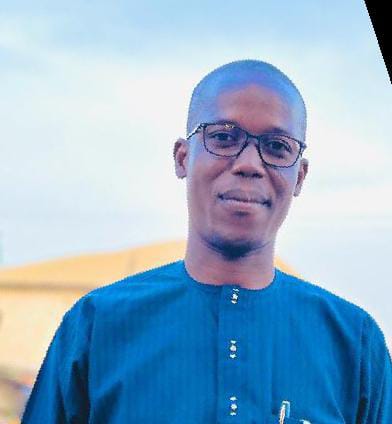
By Muhammad Muzdaleefa

Being a student of diplomatic history, I have been following the poverty eradication campaign in China for years. It is a shame that Western media have decided to bash it as Chinese propaganda instead of looking at the take away lessons that can be applied globally with necessary adjustments for sustainable growth and development.

The way China has been going through this issue is very methodical and practical. They have a clear standard of living which they are working hard to ensure it is universally achieved. In other words, they create a world where everyone has a smooth path to realize their dreams and ensure no one is left behind. This is very different from the competitive capitalist system practiced in the West where everyone is obsessed with being ahead of the other.

The Chinese have used very simple ideas. These include the following;

  1. Housing – The Chinese model is ensuring everyone has adequate and decent housing. Those with poor housing have had their houses reconstructed or relocated to new houses.
  2. Income – The Chinese have ensured everyone has a sustained income source that elevates them above the poverty line. This has been through implementation of various income generating projects based on local needs and environment.

In one example, some farmlands where farming was ecologically harmful were turned into a forest. The former farmers were then employed as forest guards. Another example is where some villages were helped to establish solar power plants from which they earn incomes.

  1. Education – The Chinese model states that education is the best way to stop transmission of generational poverty. As a result they have implemented a system which has resulted in zero school dropout cases. Some 8 million youths who had dropped out of school at various levels have been taken through vocational training.
  2. Health – Unhealthy people can’t fight poverty. They are people who are consigned to poverty due to treatable health issues. China has worked to ensure affordable healthcare in order to ensure that no person falls back to poverty dues to illness. The response of the Chinese government sequel to the outbreak of Coronavirus pandemic was admired throughout the world.

To achieve the above the following foundational issues are critical;

  1. Household targeted poverty eradication – a census of poor people was conducted which identified every household defined as poor. This bottom up approach is key because you cannot eradicate poverty until every household has been lifted from poverty. The household is the epicentre of poverty.
  2. Planning and involving people – after the poor are identified, detailed planning is undertaken and the people are involved in coming up with solutions to eradicate poverty.
  3. Clear goals – the officials are expected to come up with practical goals and realistic timelines. In one case where officials had set lofty and unrealistic targets President Xi Jinping emphasized that for the battle against poverty to be won there should be no procrastination or impatience.
  4. Measurement and independent evaluation – countries that claim to have eradicated poverty have to apply for removal from a list of countries that still have people living in poverty. Such an application is followed by independent verification. Evaluators are sent to verify the claims and they are supposed to visit each household without being accompanied by the village officials. Countries that fail to pass the evaluation have to continue with poverty eradication work.

In conclusion, eradicating poverty is not rocket science. Simple, practical and realistic steps are needed. Most importantly, a visionary, selfless and committed leadership must be in place for this to work effectively. 2023 is a good opportunity for Nigerians to elect capable, dependable and reliable leaders that will not only address the critical needs of Nigerians but will put the country on the path of sustainable growth and development for the contemporary generation and posterity.

ByAdmin

Leave a Reply

Your email address will not be published. Required fields are marked *

In Case You Missed It

THE KANO RENAISSANCE: HOW GOVERNOR ABBA KABIR YUSUF IS REWRITING THE STORY OF DEVELOPMENTBy Dr. Saifullahi Shehu ImamAs Kano State marks the third anniversary of Governor Abba Kabir Yusuf’s administration, the evidence of purposeful leadership is visible across every corner of the state from the bustling metropolitan center to the remotest rural communities. Today, the popular expression #ABBAISWORKING is no longer a mere political slogan; it has become a verified reality, supported by over 1,000 major achievements that have fundamentally reshaped the developmental trajectory of Nigeria’s most populous state.Perhaps no sector reflects Governor Yusuf’s vision for human capital development more than education. His administration has fundamentally transformed education in Kano by declaring a State of Emergency and allocating an unprecedented 30–31% of the annual budget, the highest in the nation. This historic fiscal commitment was sustained through the subsequent fiscal cycles, securing education as the primary pillar of governance. Across all 44 Local Government Areas, the administration has directed over ₦1.9 billion through the Community Re-orientation Committee (CRC) to renovate thousands of primary classrooms, plus an additional ₦2.9 billion to build new classroom complexes, decongesting urban schools and constructing modern administrative offices. Over 80,000 sets of three-seater desks have been supplied, rescuing more than 240,000 students from learning on bare floors. The government has hired and integrated over 14,000 permanent, pensionable teachers, including thousands of former BESDA volunteers. Financial barriers have been lowered by providing free textbooks and uniforms for primary students, slashing tertiary registration and tuition fees by 50% at state-owned institutions, and funding examination fees for hundreds of thousands of secondary candidates. The state’s strict targeted funding model has borne immediate fruit, propelling Kano to the top of the national performance chart in the 2025 NECO exams. Furthermore, the revival of the 1,001 Foreign and Domestic Postgraduate Scholarship Scheme has cleared multibillion-naira arrears for stranded medical and engineering scholars in Cyprus and sponsored new cohorts to India and across Nigeria. This holistic investment in infrastructure, teacher welfare, and global scholarships represents the largest commitment to public education in Kano’s recent history, ensuring today’s students become tomorrow’s leaders.In healthcare, the administration has achieved monumental, system-wide progress by matching robust institutional investment with deeply compassionate public policy. This vision is explicitly backed by an aggressive fiscal strategy; for the 2025 fiscal year, over ₦90 billion amounting to an impressive 16.5 percent of the state’s total budget has been earmarked for healthcare development. This substantial investment underscores the administration’s unwavering commitment to making healthcare a cornerstone of its governance, moving far beyond basic audits and surveys into real, well-funded structural transformation. A landmark triumph of this commitment is the recovery, comprehensive modernization, and recommissioning of the Hasiya Bayero Pediatric Hospital, a vital 86-bed facility that had been controversially sold, now restored to provide specialized care for Kano’s children. In tandem, the administration has completely remodeled and equipped the critical accident and emergency section of the Murtala Muhammad Specialist Hospital (MMSH) and extensively renovated the Bamalli Nuhu Maternity Hospital to drastically combat maternal and infant mortality rates. To institutionalize these health safeguards, the Governor signed the pioneering Kano State Centre for Disease Control and Prevention Law alongside a mandatory Premarital Health Screening Law to shield future generations from preventable illnesses. These structural transformations ensure that high-quality healthcare is no longer a luxury reserved for a privileged few, but an accessible, everyday right for all Kano citizens.In the realm of agricultural transformation and food security, the administration has shifted Kano from a reliance on subsistence farming to a powerhouse of agribusiness. Championing a multi-billion naira input initiative, Governor Yusuf flagged off the historic distribution of 79,200 bags (132 trucks) of highly subsidized fertilizers from the Al-Yuma Fertilizer plant in Madobi Local Government, slashing procurement costs by a massive 50% for local farmers across all 44 LGAs. This was bolstered by an additional ₦1 billion worth of free NPK fertilizers distributed via the Kano Agricultural Supply Company (KASCO) specifically targeting smallholder, female, and disabled farmers. To expand year-round farming capacity, the administration has expanded farmlands and successfully rehabilitated major irrigation schemes across 11 Local Governments, bringing over 1,250 hectares under active development. A crown jewel of this infrastructural strategy is the approval of ₦6.8 billion for the massive Dansoshiya Dam and Irrigation Infrastructure Project in Kiru LGA, designed with a projected storage capacity of 3.1 billion liters of water to empower up to 3,000 farmers in its initial phases alone. These deliberate investments have reduced cultivation overheads, multiplied crop yields, and fortified the regional food supply chain.Youth empowerment and self-reliance form another vibrant pillar of the Kano Renaissance. Rejecting the old paradigms of political exploitation, Governor Yusuf launched a comprehensive master plan to empower 50,000 young people. The administration began by systematically reviving eight specialized entrepreneurship and vocational institutes that had been abandoned by the previous administration. Highlighting this return to functional capacity, a single cohort of 2,260 graduates recently completed training across these institutes including the Informatics Institute, the Horticultural Institute, the Driving Institute, and the Poultry Institute. These youths left the Government House not just with certificates, but with critical operational assets ranging from laptops, tablets, and toolkits, to livestock and feed, alongside financial seed capital to seamlessly launch their commercial journeys.On the security front, proactive, intelligence-driven governance has kept Kano State remarkably peaceful and stable despite intense national security challenges. Governor Yusuf has aggressively reinforced the state’s security architecture by assenting to the law establishing the state’s independent Kano State Security Neighborhood Watch, bringing community policing directly to the grassroots. To maximize operational efficiency and response times, the administration recently boosted the Joint Task Force (JTF) operations by distributing dozens of new vehicles and motorcycles across frontline Local Government Areas. This sustained tranquility stands as an absolute testament to a leadership that deeply understands that the first, most non-negotiable duty of government is the absolute security and welfare of its people.As the people of Kano celebrate these remarkable achievements, there is a growing consensus that continuity will be essential to consolidate the gains already recorded. The transformation witnessed across the state has inspired renewed confidence in leadership and strengthened public optimism about the future. It is therefore understandable that many citizens, stakeholders, professionals, traditional institutions, and community leaders increasingly look toward 2027 with the hope that Governor Abba Kabir Yusuf will be granted another mandate to deepen ongoing reforms and complete the noble work he has begun.May Almighty Allah continue to grant His Excellency wisdom, strength, good health, and divine guidance in the service of Kano State. And may the overwhelming achievements of the past three years pave the way for a successful re-election in 2027, ensuring that the Kano Renaissance continues uninterrupted for the benefit of present and future generations.