CBN

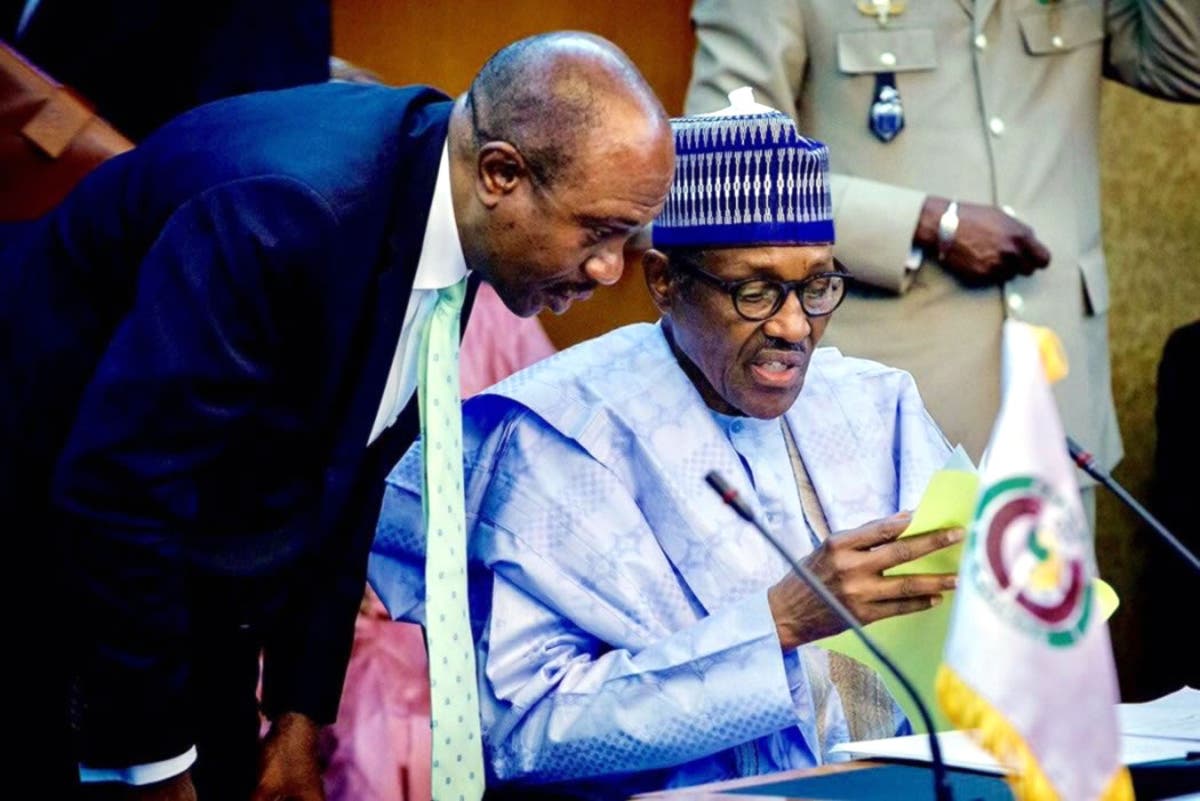
Naira Redesign: CBN, Minister of Finance trade words 

By Uzair Adam Imam

There have been up and downs concerning the re-design of the Naira note in Nigeria as the Central Bank of Nigeria (CBN) and Ministry of Finance, Budget and National Planning continue to trade words over the development. 

The minister of Finance, Budget, and National Planning, Zainab Ahmed argued that the CBN’s proposal to redesign the Naira might not yield any good result. Ahmed stated that the redesign would have serious negative effects on the country’s crippling economic growth. 

However, the Spokesman of the CBN, Osita Nwanisobi, challenged Ahmed, who said her ministry was not carried along.

Nwanisobi reiterated that CBN duly sought for the approval of President Muhammadu Buhari which he granted immediately. 

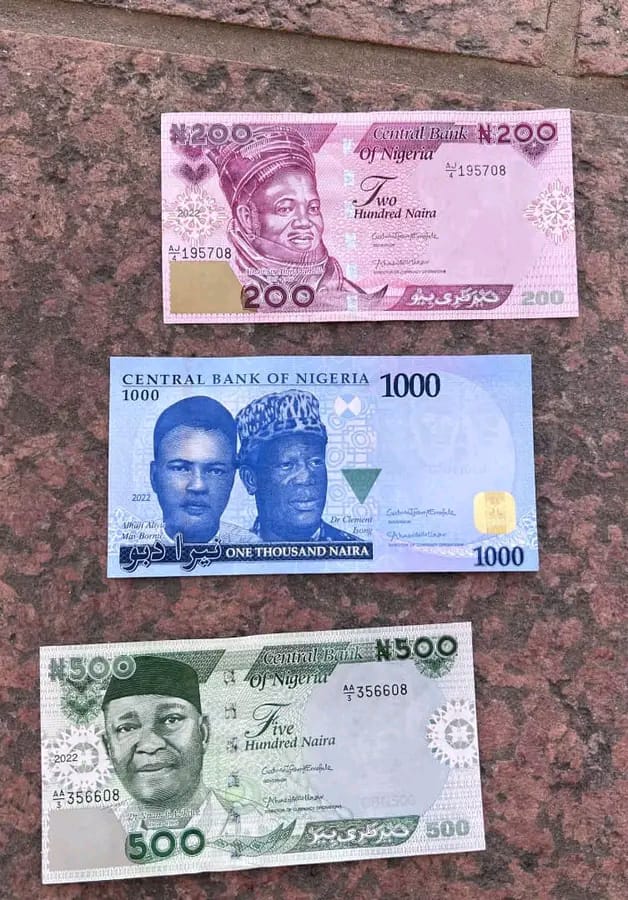
The Daily Reality recalls that the CBN Governor, Godwin Emefiele announced the intention of the CBN to redesign, produce, release and circulate new series of N200, N500, and N1,000 banknotes.

Re-designation of Naira portends serious consequences – Ahmed

“Distinguished senators, we were not consulted at the Ministry of Finance by CBN on the planned Naira redesigning and cannot comment on it as regards merits or otherwise.

“However as a Nigerian privileged to be at the top of Nigeria’s fiscal management, the policy as rolled out at this time portends serious consequences on [the] value of Naira to other foreign currencies.

“I will however appeal to this committee to invite the CBN governor for required explanations as regards merits of the planned policy and rightness or otherwise of its implementation now,” she stated. 

CBN was surprised by what Ahmed said 

However, the CBN spokesperson,  Nwanisobi expressed surprise at the minister’s claim, stressing that the CBN remains a very thorough institution.

He said the decision of the CBN management is in line with provisions of section 2(b), section 18(a), and section 19(a)(b) of the CBN Act 2007.

He also urged Nigerians to support the currency redesign project.

2023: Will Emefiele Declare?

By Zayyad I. Muhammad

Godwin Emefiele, 60-year-old Governor of the Central Bank of Nigeria, is one of the presidential hopefuls whose ‘aspiration’ has become a surprise to some people, and admiration to some other people.

Some people were surprised when Emefiele’s name popped up among the presidential hopefuls. This class of people thought that as an experienced economist heading Nigeria’s apex bank, Emefiele should concentrate on his job of formulating monetary policies, controlling inflation, and managing other economic fluctuations, while championing innovation to ensure the nation’s economic and financial stability.

On the other hand, the people who see Emefiele as a strong candidate believe that with the remarkable successes of the programs and schemes initiated or being implemented by Emefiele; if as president of Nigeria he will not only expand them but will also apply his wealth of experience as a development finance expert to stimulate the economy via other economic programs that will reflect on local needs in line with global trends. This group of people always cite schemes like the anchor borrower program- which has successfully created economic linkages between smallholder farmers and reputable companies involved in the production and processing of key agricultural commodities and the COVID-19 intervention that has cushioned the adverse effects of COVID-19 on households and MSMEs.

In the last five years, the CBN under Emefiele has disbursed over N114.09 billion to support the fertilizer industry- Nigeria had seven Fertilizer blending plants in 2016, and only four were operational. As of today, there were 62 functioning blending plants. These and many economic policies and progress are the ladders these people stand on to cheer Emefiele on, as a strong aspirant. There are reports that many farmers in the north, especially rice farmers have termed their successes as ‘Emefiele’.

Furthermore, political pundits are of the view that Emefiele’s candidature can be a very important political balancer for the APC ahead of the 2023 presidency game. Firstly, no camp in the Southwest will feel cheated with the Emefiele candidature since he directly doesn’t belong to any of them; but can be incorporated into any camp seamlessly.

Secondly, Emefiele from Ika South, Agbor region of Delta State, SouthSouth Nigeria, can also be linked to the cousins of the Igbos in the Southeast. This will to some extent calm the nerves of the advocates of the Igbo presidency and achieve geopolitical equity. For example. Goodluck Jonathan’s presidency was a stabilizing force in the southeast’s politics and social order.  Some political pundits believe that Emefiele, as president can also play that role, now that the Southeast is in agitation for the presidential seat. 

The time has come for Emefiele to officially declare whether he will contest or not. This is very important to clear the air- politics or CBN Governor.  If Emefiele will not contest- let him continue with his task as the driver of Nigeria’s monetary policies and other important roles of the CBN. However, if he decides to contest – this will be a big one in the field of the 2023 presidency game in the APC- already groups like the Emefiele Support Group and Arewa Alliance for the Presidency of Godwin Emefiele (AAPGE) have reached out to many quarters in the country campaigning for Emefiele.

So, what remains for Emefiele is political alliances, negotiation, and courting- this will be easy for him because of his privileged position. However, he also needs to understand that politics is not Development Finance. It is a game where a primary school dropout can teach or even ‘scold’ a Central Bank Governor!

Zayyad I. Muhammad writes from Abuja via zaymohd@yahoo.com.

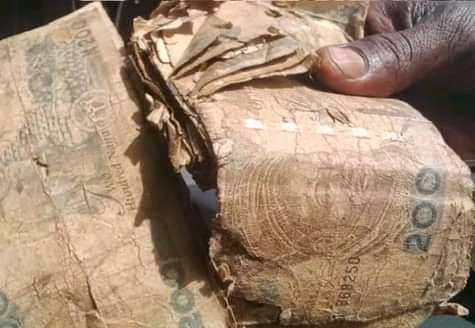
CBN vows to punish banks over deposit of mutilated naira notes

By Ahmad Deedat Zakari

The Central Bank of Nigeria, CBN, has announced a plan to punish banks for depositing mutilated naira notes. 

This was made known to the public in Abuja through a circular signed by CBN’s Director of Currency Operations, Mr Ahmed Umar, over the weekend.

According to Mr Umar, the warning to the banks to stop depositing mutilated and composed banknotes will take effect from Friday, April 1, 2022.

“The management of the CBN observed with concern the increase in the number of composed banknotes deposited by DMBs and request for replacement of such banknotes by members of the public.

“The existence of composed banknotes in the economy falsifies the true value of currency in circulation, and can also be avenue for fraudulent activities.

Consequently, any composed banknote discovered in the deposit of DMBs shall attract penalty of 400 per cent of the value,” The circular reads.

Composed banknotes or mutilated Naira notes usually comprise several parts of different banknotes of the same denomination.

CBN set to enlighten Kano business owners about its policies and programmes

By Muhammad Sabiu

The Kano branch of the Central Bank of Nigeria (CBN) has set to educate business owners in December on its policies and how they can venture into various programmes initiated by the apex bank.

This is contained in a letter dated November 25, 2021, and signed by H.S. Mohammed on behalf of the Branch Controller, CBN Kano.

The letter was addressed to the Students’ Union Government president of Bayero University Kano, requesting the student leader to mobilise 50 of his union members at the sensitisation event.

The letter partly reads: “The Central Bank of Nigeria intends to sensitise manufacturers, traders, farmers, banks, artisans, cooperatives and the general public on the various policies and programmes of the Bank which they can key into.

“Consequently, the Bank is cordially inviting you and your members to in-depth presentations from 9:00 a.m daily on Wednesday, 1” and Thursday, 24 December 2021 at Afficent Event Centre, No. 4 Magajin Rumfa Road, Opposite DTSV Office Nassarawa, Kano.”

Explaining what the event is all about, the Bank wrote, “The ‘CBN Fair’ is a harmonised sensitisation program on all the Central Bank of Nigeria’s initiatives (Real Sector Financing and Interventions, Payment Systems Initiatives, Consumer Protection, Clean Naira Note Policy, Financial Inclusion and Consumer Rights) with a focus on the recent e-Naira initiative.”

Beyond the lines of “Devaluation”

By Mohammed Baba Goro

The issue of foreign exchange has been on the front burner in Nigeria’s media space for a while now. Unfortunately, the debate has been so over-flogged that one could hardly know who to cue behind for economic sense and/or who to blame about the helpless fall of Nigerian naira.  Recently, the vice president of Nigeria, Professor Yemi  Osibanjo, who by every sense could be categorised amongst personalities with intellectual power, also frankly spoke that the Central Bank should devalue the country’s currency, naira. But, that is not the only strongest weapon that could kill the werewolf.

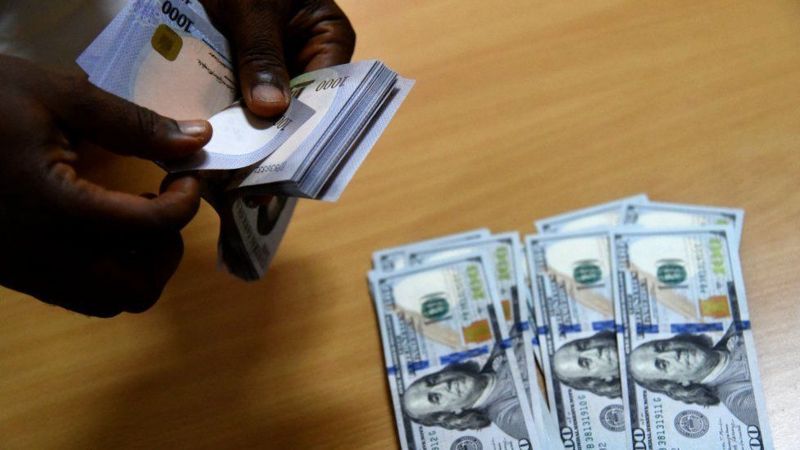
As an economic policy, Devaluation is simply referred to as the official reduction in the value of a country’s currency in relation to another or other countries’ currencies: say, Nigeria’s “Naira” with the United States “dollar”. Assuming the current exchange rate is thus:  N410 against  $1 and the CBN decides to devalue the naira by, say, 25 per cent, the naira value will decline, and the new rate will be around N512 to 513 against $1 and against the initial rate of N410. This would make the export of goods and services cheaper and importation dearer. As easy as it sounds, it is easy, but CBN will have high inflation to grapple with.

Ordinarily, that should be a path to take, but the question on the lips of every rational Nigerian is that what massive goods do Nigeria produce? This is a million-dollar question on the lips of every Nigerian for a country that, 60 years after her political independence, still struggles for her economic Independence – Nigeria still imports everything it needs, including essential food items like maise, rice beans and unfortunately, recently, even egg.

Nigeria had to lift a ban last year to import maize for poultry farmers. According to a statistic, the national average for Nigeria’s maize need is about 15million metric tonnes but can only produce 10million, going about with a huge deficit that could have been an opportunity for a source of forex. Even though rice production has increased, the country can still not satisfy its teeming and growing population of over 200 million. This is on the one hand. On the other hand, about 30 per cent of the country’s foreign exchange earnings go to the importation of petroleum products.

The National Bureau of Statistics (NBS) released another mind-boggling stats that the importation of agricultural products has increased by over 140 per cent year-on-year. Devaluation is primarily an “Expenditure-switching policy” that basically switches spending from imported goods to domestically produced goods and for exports.

But judging from the above facts and figures, one would deduce that local production that should drive export and reduce pressure on meagre forex is practically not there. So, “Beyond the lines of Devaluation” is productivity! Productivity!! And productivity!!!

Significantly, production of not only primary products but adding value to raw products so as to create more jobs, generate more revenues, build the needed infrastructures and consequently transform the economy. Brazil in 2011 devalued its currency to spur export without tackling the underlined structural problems and ended up worse off.

So let’s go back to the theory, and the economic argument should be, what determines the exchange rate?

Gustav Cassel, in the ’20s, propounded the purchasing power parity theory, which explains that the determination of two inconvertible paper currencies is determined by the equality of their purchasing power. What this means is that the exchange rate between two countries is determined by the level of their relative prices of goods and services.

A look at Nigeria’s inflation rate, coming from above 18 per cent, would tell you why we are at an exchange rate crisis and why we need to look inwardly and produce more locally. Though the Mint-gold parity theory is no longer in tune with the modern economic practices, but even the Balance of payment parity theory has its link with a country’s productivity level. Therefore, the government should deal with the fundamental and structural rigidities in productivity, trade, security, and infrastructure. Watch naira take her good position and fair value and stop forcing the monetary authority to over-stretch its instruments.

Mohammed Baba Goro can be contacted via babs9770@gmail.com.

Nigeria e-Naira: Why the rush?

By Hamid Al-Hassan Hamid

To be honest, the poor reviews against the eNaira app are all valid negative reviews. As usual, policymakers must have rushed software engineers into developing the app in haste, obviously with poor analyses, and the software engineers do not have the balls to stand their ground and point out facts.

For example, how do you create an app that requires email tied to BVN while email was not a required field in BVN registration? This means that those working on the app did not consult other sectors related to the app, and just imagined the app to work in a certain way, developed the app, and now people are complaining.

I was called in by the Federal Ministry of Health on Wednesday to develop a mobile app that would be used to facilitate disease monitoring and control. They wanted to deploy the app on Thursday. I developed the app with the minimum requirements given, but I strongly advised them against putting the app into production without at least testing for a week. Policymakers were not happy about my stance, but I held my ground, and they are complying unwillingly and willingly. They have seen the app, I spent the whole night hacking it out, created the mobile, server backend, and desktop monitoring, then warned them against deploying.

Not everything has to do with rushing to the market to score points and make names. You must be brutally honest with yourself. If you must deploy such an app that serves such serious responsibility as the national currency, you should at least start developing a year ago, AT LEAST!.

ALWAYS TEST, TEST AND TEST!!!!

WRITE AUTOMATED TESTS, THEN RUN MANUAL TESTS, OVER AND OVER AGAIN UNTIL YOU MEMORISE ALMOST ALL THE CODE!!

IT SHOULD NOT ALWAYS BE ABOUT HITTING THE MARKET. ALWAYS ASSIGN GREAT ENERGY TO ENSURE THAT YOUR PRODUCT IS ACTUALLY READY FOR THE MARKET!!!


Hamid Al-Hassan Hamid is a social analyst and expert in software development.

CBN’s eNaira and the common man

By Zayyad I. Muhammad

On October 25, 2021, President Muhammadu Buhari officially launched the much-awaited Central Bank of Nigeria (CBN) digital currency, the eNaira. The launch of the eNaira is a good and commendable initiative. The CBN said, “As technology evolves and advances, it is critical that Central Banks also evolve to continue to play their roles and the Central Bank Money adapts to take advantage of these opportunities provided by new technologies. Today is one of those moments where new technology offers the Central Bank an enormous opportunity to play its role even better, thereby improving the society and economy of the nation.”

The CBN is right in taking advantage of new technologies. However, there is a problem – many ordinary Nigerians are not aware of the eNaira and its benefits. The CBN has done well in enlightening the already-informed segment of the society on the advantages of the eNaira. The CBN boasts that the eNaira is secured, tamper-proof, processes verifiable transactions, simple and reduces the cost of transactions. But the majority of the common people are not aware of the eNaira and its advantages. So the big question is: What are the innovative approaches through which the CBN can enhance the acceptance and usage of the eNaira and e-transactions, generally among common people in Nigeria?

First, the radio. Radio plays a vital role in enlightening people, especially in rural and peri-urban areas. It is a significant source of information and news. The CBN can take advantage of the radio to create awareness on the benefits of the eNaira. Secondly, telecommunication service providers, with over 80 million users in Nigeria, the GSM creates a platform for the CBN to reach nearly half of Nigeria’s population on the advantages of the eNaira.

The CBN can collaborate with the Ministry of Humanitarian Affairs, Disaster Management and Social Development (FMHDSD) to create an e-wallet for all Federal Government social investment programme beneficiaries. Most of the beneficiaries are poor with prior low financial inclusion. The FMHDSD have ensured these people have bank accounts. Recently, through the Ministry, the Federal Government announced the launch of the Mobile Money Agent Programme and the commencement of training for 1,850 beneficiaries in Nigeria. These are viable means for the CBN to disseminate the advantages of the eNaira.

The CBN may collaborate with businesses that have daily interactions with common people. For example, collaboration with filling stations, market associations and transport unions to use eNaira in their transactions will help integrate more common people on the eNaira platform, as the people can use it with phones that are not internet-enabled. The eNaira should also be enhanced to allow banks to transfer it into a regular bank account automatically.

Bringing ordinary people on board will undoubtedly assist the CBN, and the government boosts the use and acceptance of the e-Naira. A columnist, Gimba Kakanda, wrote, “CBN needs to offer a layman’s explanation of the eNaira and break it down in various local languages to justify its usefulness, difference from cryptocurrency and what sets it apart from the electronic transactions Nigerians are used to.”

To bring millions of common Nigerians on the platform of the eNaira, the CBN should seek the help of experts in media, communication and public relations (PR) to develop programmes and models that will promote the acceptance of the eNaira.

Zayyad I. Muhammad writes from Abuja. He can be reached via zaymohd@yahoo.com.

Buhari unveils eNaira Monday

By Muhammad Sabiu

President Muhammadu will tomorrow Monday unveil the Central Bank Digital Currency (CBD), also known as eNaira, at the State House in Abuja.

Nigeria’s apex bank, in a statement by its spokesperson, Osita Nwasinobi, said this is part of the efforts to ease financial transactions among Nigerians

“The launch of the eNaira is a culmination of several years of research work by the Central Bank of Nigeria in advancing the boundaries of [the] payments system in order to make financial transactions easier and seamless for every strata of the society.

“Following a series of engagements with relevant stakeholders including the banking community, fintech operators, merchants, and indeed, a cross-section of Nigerians, the CBN designed the digital currency, which shall be activated on Monday, October 25, 2021.

“The eNaira, therefore, marks a major step forward in the evolution of money and the CBN is committed to ensuring that the eNaira, like the physical Naira, is accessible by everyone.

“Given that the eNaira is a journey, the unveiling marks the first step in that journey, which will continue with a series of further modifications, capabilities, and enhancements to the platforms,” Mr Nwasinobi said in the statement.

Recall that the launch of the eNaira was early on announced to be held on October 1, but the bank later rescheduled it, citing events to be observed in the celebration of the country’s independence as the reason.

Tertiary institutions students to be supported as CBN donates N500 grant


By Uzair Adam Imam

The Central Bank of Nigeria (CBN) has earmarked N500 million grant to the universities and polytechnics in Nigeria.

CBN said that the effort is to help the teeming youths in tertiary institutions to promote entrepreneurship and also reduce unemployment.

In the report titled: “Guidelines for the implementation of tertiary institutions entrepreneurship scheme”, CBN made this known on Wednesday

“Five top Nigerian polytechnics and universities with the best entrepreneurial pitches/ideas shall be awarded as follows: first place – N150m; second place – N120m; third place – N100m; fourth place – N80m; and fifth place – N50m,” it said.

According to the guideline, the aim of the scheme is to promote access to finance by undergraduates and graduates of universities and polytechnics in Nigeria.

Students will be help with innovative Entrepreneurial and technological ideas to enable them build their future.

The guidline added that Individuals will be entitled to a loan limit of N5.0 million to be paid within the maximum period of 5 years at an interest rate of 5 percent for each year.

Re: Cornflakes for Jihad: The Origin of Boko Haram Story

By Barrister Nura Sunusi

For some misguided individuals and those who consume everything online hook, line and sinker, David Hundeyin’s ‘Cornflakes for Jihad: The Origin of Boko Haram Story’, which he and his cohorts call ‘investigation’, would have been left to die a natural death like many before it. However, if allowed unchallenged, lies may be sold as truth, and the world will be blind. And those who know will not allow this. Besides, Hundeyin’s story is packed with journalistic chicanery of epic proportion.

Hundeyin’s sole aim was to push the lies he concocted down the throat of his readers/audiences. This is my concern. It is for this, I believe, such intellectual dishonesty has to be stamped out completely.

One cannot give what they do not have. Before I go far, Hundeyin deserves some quick bath; then let me stripe him naked first.

An Annang Christian ‘journalist’ from Akwa Ibom State in the South-South, Hundeyin is utterly ignorant of the vast northern region and its intentional predicates: background, history, language, culture, religion, etc. At this point, it is instructive to note that Hundeyin is not a lone walker in the use of this pure sophistry. There are some people in our midst toeing this path.

Izala, particularly Alhaji Shahru, Sheikh Yakubu Musa, Isa Pantami and other personalities belonging to the religious body, have been a target of a sustained campaign of calumny for its ability to bestride the earthly and heavenly with such ease. Of particular is a Nigerian ‘historian’, mind the quotation marks, who teaches at an American University.

This confused dude like Hundeyin has been at the forefront of this campaign for some time. Had he been allowed, he would have formed an empire, which modus operandi is to silence and blackmail the most peaceful, 40-year-old registered religious organization in Nigeria. About two years ago, perhaps long before that, the said ‘historian’ raised a finger in this corridor, and some intelligently educated youths called his bluff. He left mentally wounded.

I have learnt that Hundeyin’s hit-and-run piece has struck the ‘historian’, who has been mum all this while like a spent horse, as an energizer.

My perception of this saga is this: since those folks had test-flied this campaign severally and woefully failed, now Hundeyin is hired to try his luck and dead is his attempt on arrival.

That notwithstanding, to set the record straight, Hundeyin‘s piece deserves some response, which I give below, stitching facts and figures. Then let us take it one at a time.

Nomenclature of terrorism

First, the blurry line demarcating what terrorism is and what it is not, who is a terrorist and who is not is, is one of the factors breathing life into liars like David Hundeyin.

Although I intend to restrict this piece to Alhaji Shahru Haruna’s side of the argument, I will touch on some of the issues Hundeyin raised in his article to unravel the intricacies involved.

Hundeyin is overzealously blind in the sense that every passing picture of Islam or a Muslim forms in his mind a mental image of what he calls terrorism or terrorist. No wonder! Nigeria is full of academically certified but ignorant people. We will see this in the subsequent paragraphs.

Nigeria is not an opponent of GSPC

GSPC stands for “Groupe Salafiste pour la Prédication et le Combat” (Salafist Group for Preaching and Combat). According to Wikipedia, GSPC was an armed Islamic group UNTIL 2004!

The group had only one opponent, which was not Nigeria, but Algeria. Therefore, how did Alhaji Shahru Haruna or Sheikh Yakubu Musa become the GSPC’s agents?

Politics of origin

The moment he tried to conjecture up a triangular of Izala, terrorism, which he barely understands, and finance, Hundeyin shot himself in the foot. His is a weak argument full of lacunas, fabricated evidence, and disjointed analogies. Is there anything hatred cannot drive one to do?

From Sheikh Abubakar Gumi to Alhaji Shahru Haruna, Sheikh Yakubu Musa to Isa Aliyu Pantami, the current minister of Communications and digital economy and others, Hundeyin has failed to come up with even a single irrefutable proof linking any of them with terrorism. Instead, his submission heavily relied on hearsay, including social media posts.

First, Izala’s deeply established manifestoes/objectives to non-politically strive and promote the pure teaching of Islam and proselytizing, which is acknowledged even by non-Muslims in the West, is for anyone to see.

Second, Izala’s leading figure, Sheihk Abubakar Gumi, the Grand Khadi of the Northern region of Nigeria between 1962 and 1967, was a champion of democracy. He encouraged Islamic and Western educations; and associated with upright political figures like Aminu Kano, Sa’adu Zungur and Sardauna of Sokoto.

Moreover, Izala is a progressive organization. It has established schools, libraries, hospitals, Islamic centres, and satellite TV stations, and now Assalam Global University in Jigawa is in the pipeline. Unlike its nemesis, its members participate in political activities, and they vote and are voted for into political offices. In addition, they are into academia and civil service.

In contrast, Boko Haram, which is the opposite, is an insurgent group engaged in continued rebellion against the constituted authority. The insurgent group ideology is rooted in a gross misinterpretation of Sunni and Salafi Islam, and it primarily attracts poorly educated and overzealous youths that lack even basic Islamic knowledge.

Where is the link?

Consequently, that in 2011 bombs went up at St. Theresa Catholic Church, Madalla, a fringe of Abuja and Gadaka in Damaturu; and during the trial of one Kabiru Sokoto, a ‘masked’ witness testified that an Islamist group in Algeria provided funding and support worth N40,000,000 ($250,000 at the time) to carry out the attacks, is not enough reason to inculpate either Sheikh Abubakar Gumi, Shahru Haruna, Yakubu Musa or other Izala personalities, is it?

Let’s try this formula to see if it works this way: on October 1, 2010, bombs went off, killing 15 people during Nigeria’s fiftieth anniversary. An ex-MEND leader, Henry Okah and one Nwabueze were convicted of terrorism.

If Kabiru Sokoto or attacks by Boko Haram insurgents were to be linked to Izala and Alhaji Shahru for a simple reason that Izala is an Islamic organization and Shahru is a Muslim and a member, as Hundeyin would have us believe, who sponsored Henry Okah and his accomplice?  Hundeyin, who is also an overzealous Christian and a southerner?

From the inception of Boko Haram to date, Izala, as against other violent religious movements, has never been on the same wavelength with any insurgent group.

Facts speak for themselves, they say. Had Izala clerics been complicit in the activities of the insurgents, Boko Haram leadership would never have called for the heads of Pantami, Sheikh Jaafar Mahmud Adam or Sheikh Muhammad Auwal Adam Albaniy Zaria.

It seems those who planted the piece have not briefed Hundeyin of the fate of the two fiercest critics of Boko Haram in the Izala cycle: Albaniy Zaria and Ja’afar. Boko Haram murdered both in an attempt to silence the persistent voice that had been voicing the irreligiosity of Boko Haram and insurgency of any type.

One does not need to strain himself. Videos showing Izala Ulama in a heated debate with the Boko Haram founder, Muhammad Yusuf, are on YouTube. An example is that of Sheikh Pantami.

Journalist or religious bigot

Nigeria’s media space is saturated with ethnic and religious bigots, and David Hundeyin happens to be one of them.

He quickly cited that ‘the scholar(s) states that Muslims should never accept a non-Muslim as ruler, which can be interpreted as a call for insurrection against a Christian Nigerian President’. However, he could not tell his readers how pastors ascended the pulpit of churches and made similar calls, which can also be interpreted as another call for insurrection against a Muslim Nigerian President as we see today?

Ideology of Finance

Who deceives who? If there is anything Hundeyin succeeded in linking Alhaji Shahru Haruna to is his tie with Izala and his being an owner of legitimate businesses – nothing more.

Citing CBN Governor Godwin Emefiele’s argument that BDC operators sell dollars to some people ‘to go and buy arms and ammunitions to come back to hurt us’ is no clear-cut evidence to implicate Alhaji Haruna.

A call to CBN

It is high time for CBN to furnish the public with the reason for its instruction to banks to block bank accounts of some entities such as Zahraddeen Shahru Haruna’s (Alhaji Shahru Haruna’s son).

I believe that the failure of the apex bank to provide the information is one of the chief reasons behind Hundeyin’s evil pen attempt to link the Zaharaddin’s account blockage to terrorism.

Shahru’s media trial

Shahru Haruna’s media trial began sometime in 2004. And to understand this better, I will refer the reader to a defunct Weekly Trust newspaper front cover story in 2004 titled ‘Detention Without Trial’.

The paper narrated a sympathetic story of how Alhaji Shahru Haruna was arrested and detained by DSS without trial for six consecutive months.

However, the interesting part of the story is how the secret police discharged him unconditionally. Since then, there has been no re-arrest by the DSS or any other relevant security agency. What does that imply?

My conclusive argument is that Hundeyin of Akwa Ibom’s piece is yet another failed smear campaign against Alhaji Shahru Haruna, Sheikh Yakubu Musa, Izala and some of its personalities. It is another mischief that has its sponsors.

Barrister Nura Sunusi writes from Kano. He can be reached via nurasunusi6@gmail.com.