CBN

Re: Cornflakes for Jihad: The Origin of Boko Haram Story

By Barrister Nura Sunusi

For some misguided individuals and those who consume everything online hook, line and sinker, David Hundeyin’s ‘Cornflakes for Jihad: The Origin of Boko Haram Story’, which he and his cohorts call ‘investigation’, would have been left to die a natural death like many before it. However, if allowed unchallenged, lies may be sold as truth, and the world will be blind. And those who know will not allow this. Besides, Hundeyin’s story is packed with journalistic chicanery of epic proportion.

Hundeyin’s sole aim was to push the lies he concocted down the throat of his readers/audiences. This is my concern. It is for this, I believe, such intellectual dishonesty has to be stamped out completely.

One cannot give what they do not have. Before I go far, Hundeyin deserves some quick bath; then let me stripe him naked first.

An Annang Christian ‘journalist’ from Akwa Ibom State in the South-South, Hundeyin is utterly ignorant of the vast northern region and its intentional predicates: background, history, language, culture, religion, etc. At this point, it is instructive to note that Hundeyin is not a lone walker in the use of this pure sophistry. There are some people in our midst toeing this path.

Izala, particularly Alhaji Shahru, Sheikh Yakubu Musa, Isa Pantami and other personalities belonging to the religious body, have been a target of a sustained campaign of calumny for its ability to bestride the earthly and heavenly with such ease. Of particular is a Nigerian ‘historian’, mind the quotation marks, who teaches at an American University.

This confused dude like Hundeyin has been at the forefront of this campaign for some time. Had he been allowed, he would have formed an empire, which modus operandi is to silence and blackmail the most peaceful, 40-year-old registered religious organization in Nigeria. About two years ago, perhaps long before that, the said ‘historian’ raised a finger in this corridor, and some intelligently educated youths called his bluff. He left mentally wounded.

I have learnt that Hundeyin’s hit-and-run piece has struck the ‘historian’, who has been mum all this while like a spent horse, as an energizer.

My perception of this saga is this: since those folks had test-flied this campaign severally and woefully failed, now Hundeyin is hired to try his luck and dead is his attempt on arrival.

That notwithstanding, to set the record straight, Hundeyin‘s piece deserves some response, which I give below, stitching facts and figures. Then let us take it one at a time.

Nomenclature of terrorism

First, the blurry line demarcating what terrorism is and what it is not, who is a terrorist and who is not is, is one of the factors breathing life into liars like David Hundeyin.

Although I intend to restrict this piece to Alhaji Shahru Haruna’s side of the argument, I will touch on some of the issues Hundeyin raised in his article to unravel the intricacies involved.

Hundeyin is overzealously blind in the sense that every passing picture of Islam or a Muslim forms in his mind a mental image of what he calls terrorism or terrorist. No wonder! Nigeria is full of academically certified but ignorant people. We will see this in the subsequent paragraphs.

Nigeria is not an opponent of GSPC

GSPC stands for “Groupe Salafiste pour la Prédication et le Combat” (Salafist Group for Preaching and Combat). According to Wikipedia, GSPC was an armed Islamic group UNTIL 2004!

The group had only one opponent, which was not Nigeria, but Algeria. Therefore, how did Alhaji Shahru Haruna or Sheikh Yakubu Musa become the GSPC’s agents?

Politics of origin

The moment he tried to conjecture up a triangular of Izala, terrorism, which he barely understands, and finance, Hundeyin shot himself in the foot. His is a weak argument full of lacunas, fabricated evidence, and disjointed analogies. Is there anything hatred cannot drive one to do?

From Sheikh Abubakar Gumi to Alhaji Shahru Haruna, Sheikh Yakubu Musa to Isa Aliyu Pantami, the current minister of Communications and digital economy and others, Hundeyin has failed to come up with even a single irrefutable proof linking any of them with terrorism. Instead, his submission heavily relied on hearsay, including social media posts.

First, Izala’s deeply established manifestoes/objectives to non-politically strive and promote the pure teaching of Islam and proselytizing, which is acknowledged even by non-Muslims in the West, is for anyone to see.

Second, Izala’s leading figure, Sheihk Abubakar Gumi, the Grand Khadi of the Northern region of Nigeria between 1962 and 1967, was a champion of democracy. He encouraged Islamic and Western educations; and associated with upright political figures like Aminu Kano, Sa’adu Zungur and Sardauna of Sokoto.

Moreover, Izala is a progressive organization. It has established schools, libraries, hospitals, Islamic centres, and satellite TV stations, and now Assalam Global University in Jigawa is in the pipeline. Unlike its nemesis, its members participate in political activities, and they vote and are voted for into political offices. In addition, they are into academia and civil service.

In contrast, Boko Haram, which is the opposite, is an insurgent group engaged in continued rebellion against the constituted authority. The insurgent group ideology is rooted in a gross misinterpretation of Sunni and Salafi Islam, and it primarily attracts poorly educated and overzealous youths that lack even basic Islamic knowledge.

Where is the link?

Consequently, that in 2011 bombs went up at St. Theresa Catholic Church, Madalla, a fringe of Abuja and Gadaka in Damaturu; and during the trial of one Kabiru Sokoto, a ‘masked’ witness testified that an Islamist group in Algeria provided funding and support worth N40,000,000 ($250,000 at the time) to carry out the attacks, is not enough reason to inculpate either Sheikh Abubakar Gumi, Shahru Haruna, Yakubu Musa or other Izala personalities, is it?

Let’s try this formula to see if it works this way: on October 1, 2010, bombs went off, killing 15 people during Nigeria’s fiftieth anniversary. An ex-MEND leader, Henry Okah and one Nwabueze were convicted of terrorism.

If Kabiru Sokoto or attacks by Boko Haram insurgents were to be linked to Izala and Alhaji Shahru for a simple reason that Izala is an Islamic organization and Shahru is a Muslim and a member, as Hundeyin would have us believe, who sponsored Henry Okah and his accomplice?  Hundeyin, who is also an overzealous Christian and a southerner?

From the inception of Boko Haram to date, Izala, as against other violent religious movements, has never been on the same wavelength with any insurgent group.

Facts speak for themselves, they say. Had Izala clerics been complicit in the activities of the insurgents, Boko Haram leadership would never have called for the heads of Pantami, Sheikh Jaafar Mahmud Adam or Sheikh Muhammad Auwal Adam Albaniy Zaria.

It seems those who planted the piece have not briefed Hundeyin of the fate of the two fiercest critics of Boko Haram in the Izala cycle: Albaniy Zaria and Ja’afar. Boko Haram murdered both in an attempt to silence the persistent voice that had been voicing the irreligiosity of Boko Haram and insurgency of any type.

One does not need to strain himself. Videos showing Izala Ulama in a heated debate with the Boko Haram founder, Muhammad Yusuf, are on YouTube. An example is that of Sheikh Pantami.

Journalist or religious bigot

Nigeria’s media space is saturated with ethnic and religious bigots, and David Hundeyin happens to be one of them.

He quickly cited that ‘the scholar(s) states that Muslims should never accept a non-Muslim as ruler, which can be interpreted as a call for insurrection against a Christian Nigerian President’. However, he could not tell his readers how pastors ascended the pulpit of churches and made similar calls, which can also be interpreted as another call for insurrection against a Muslim Nigerian President as we see today?

Ideology of Finance

Who deceives who? If there is anything Hundeyin succeeded in linking Alhaji Shahru Haruna to is his tie with Izala and his being an owner of legitimate businesses – nothing more.

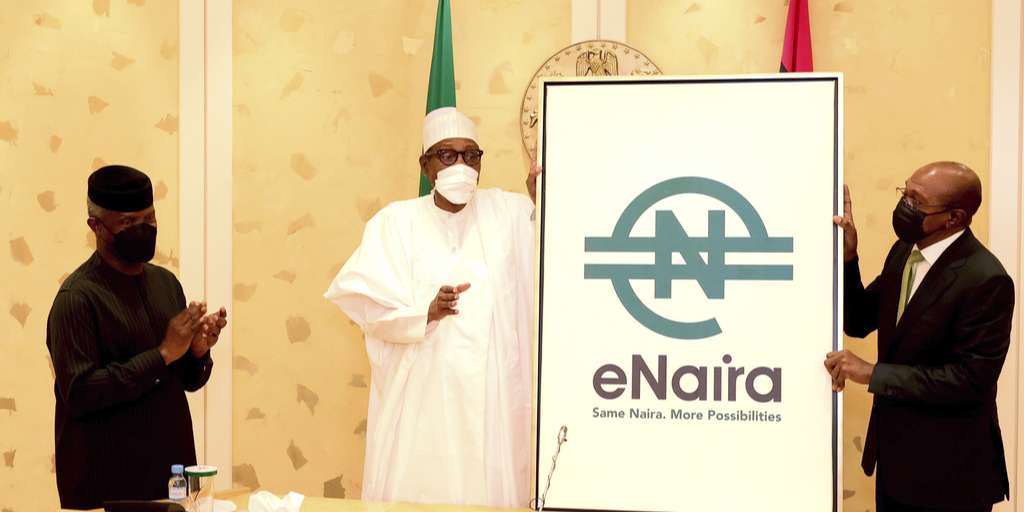
Citing CBN Governor Godwin Emefiele’s argument that BDC operators sell dollars to some people ‘to go and buy arms and ammunitions to come back to hurt us’ is no clear-cut evidence to implicate Alhaji Haruna.

A call to CBN

It is high time for CBN to furnish the public with the reason for its instruction to banks to block bank accounts of some entities such as Zahraddeen Shahru Haruna’s (Alhaji Shahru Haruna’s son).

I believe that the failure of the apex bank to provide the information is one of the chief reasons behind Hundeyin’s evil pen attempt to link the Zaharaddin’s account blockage to terrorism.

Shahru’s media trial

Shahru Haruna’s media trial began sometime in 2004. And to understand this better, I will refer the reader to a defunct Weekly Trust newspaper front cover story in 2004 titled ‘Detention Without Trial’.

The paper narrated a sympathetic story of how Alhaji Shahru Haruna was arrested and detained by DSS without trial for six consecutive months.

However, the interesting part of the story is how the secret police discharged him unconditionally. Since then, there has been no re-arrest by the DSS or any other relevant security agency. What does that imply?

My conclusive argument is that Hundeyin of Akwa Ibom’s piece is yet another failed smear campaign against Alhaji Shahru Haruna, Sheikh Yakubu Musa, Izala and some of its personalities. It is another mischief that has its sponsors.

Barrister Nura Sunusi writes from Kano. He can be reached via nurasunusi6@gmail.com.
CBN/Aboki FX Saga: Currency Play and Lessons from Billions TV Show

By Abdulhaleem Ishaq Ringim


While explaining the reason behind the Central Bank of Nigeria’s clampdown on the parallel market exchange rate aggregation and publication website, AbokiFx, the CBN Governor submitted that the CBN’s preliminary findings suggested that AbokiFX was used for foreign exchange “manipulation and speculation”.

“They get Naira notes, use it to purchase dollars, take a position, change the rate over a given period, sell the dollars they purchase and make a profit. This is completely illegal and unacceptable and we will pursue them”, he said.

This remark sparked rage in the minds of many Nigerians, most of whom are oblivious of the technicalities of foreign exchange market operations. They outrightly dismissed the move by the CBN on AbokiFX as a mere attempt to shift the blame on the consistent crash of the Naira against the Dollar to AbokiFX. They considered it somewhat impossible that AbokiFX’s operations could have any impact on the exchange rates.
But currency play or currency manipulation is real, and even while it might indeed be an attempt by CBN to shift blame, the possibility of currency manipulation cannot be discounted. And to understand how it works, one needs to be conversant with some basic FOREX trading operations; the “long” and “short” positions.

A “long” position in FOREX trading signifies buying a particular currency at a certain rate by selling another currency while expecting the bought currency to appreciate against the sold currency. Let’s take NGN and USD for example, going long on this currency pair means buying Naira at a lower rate(by selling US Dollars) and selling it at a higher rate as it appreciates to buy back the Dollar sold initially. For example, one goes long if he buys NGN at the rate of let’s say N100(by selling $1) and sells the Naira as it appreciates perhaps to N50(for $1) to buy back $2 now instead of $1 thereby making a $1 profit. Meaning he bought N100 by selling $1 and now 1$ is N50, so N100 will now be worth $2 since N50 represents $1 now.

A “short” or “short-sell” position signifies borrowing a particular currency at a certain rate to sell and acquire another currency while expecting the borrowed currency to depreciate against the acquired currency so that you can buy it back at a lower rate. Let’s use the same example of NGN and USD, a short-sell would mean borrowing let’s say N50 and selling it to acquire $1, then wait until the Naira depreciates to N100 per $1, then sell your $1 dollar to buy back N100 now instead of the N50 it was before thereby realizing a profit of N50. Meaning one borrowed N50, sold it for $1, then waited until $1 equals N100, then sells his $1 which now represents N100.
Now, recall the CBN Governor’s statement of suspicion about how AbokiFX is being used for currency manipulation and compare it with the explanation of the “short-sell” above, you’d definitely find a correlation. But how does the manipulation happen?

I was able to find an answer to this question while watching “Billions” which is a TV show about the financial markets and their many intrigues. An episode titled “Currency”, which is the 5th episode in season 2 of the TV show was majorly about how Nigeria’s currency could be manipulated.

In the episode, a certain financial markets trader claimed that Nigeria’s CBN Governor told him that the Naira was going to be devalued due to the increasing weakness of the country’s oil industry and overvaluation of the country’s currency. However, the timing was ambiguous as nobody knew when the devaluation would happen.

However, he suggested that there was a way the timing could be determined and controlled, and that is if somebody takes a massive “Short” position against the Naira so as to pressurize the CBN to devalue immediately. The “short” he said would have to be massive. He was unveiling this to a hedge fund manager.

The hedge fund manager saw it as an opportunity to prop up his profits but knows clearly that a “short” position from only him would not do the work. So he sought the advice of a renowned banker and economist and he was counselled to assemble some other hedge fund managers(his competitors), pitch the idea to them so that they could work together to achieve a massive “short” against the Naira. And this he did.

He assembled them and offered them the glad tidings. Some of them raised concerns regarding the risks attached to this form of “currency play” because one has to enter the position at the right time for one can go too late and find nothing or enter too early and get wiped out due to increased interest rates. He convinced them that they could control the timing by taking monster “short” positions against the Naira. They all bought the idea and collectively agreed to “short” the Naira with a $5 Billion worth “short” position. And so they did.

Unfortunately, one of them had personal grievances with the hedge fund manager that brought the idea and he saw this as an opportunity to get back at him. So he leaked the information and CBN was alerted and they started raising interest rates which could bleed the hedge fund managers who took this massive “short” out of their trade positions.

Only one option remained for them to prevent losing their positions, and that was to get a renowned economist and banker to talk in a renowned international business television station about the Nigerian situation and conclude that the only option left for the country was devaluing their currency. So he reverted back to the economist that initially advised him about the situation and they finished the work together by granting an interview to a renowned international business television station concluding that Nigeria’s only remaining option was devaluing their currency. And so it happened and they profited massively from their “short” positions.

Even though this American TV Show is a work of fiction, it describes clearly and perfectly how a country’s currency can be manipulated by speculators hoping to benefit from the manipulation. And this is exactly what AbokiFX might have been doing with their platform as the value of a currency to a large extent is determined by people’s perception of and confidence in the currency. Hence, the CBN Governor’s alarm and subsequent measure. This is only but a possibility though, as the CBN has not yet offered substantial evidence to back this, the measure is still a product of “preliminary findings”.

Another possibility, however, is as described by the first-generation model of currency crisis as presented by Paul Krugman (and adapted from Stephen Salant and Dale Henderson’s model of speculative attacks in the gold market). Krugman explains that fixed exchange rate regimes are usually prone to attack by speculators especially when stakeholders perceive that the fixed regime is coming to an end due to certain fiscal and monetary signals.

And to tackle this,  I must end by concurring with Tope Fasua’s suggestion as presented in his article titled “As Nigerians joyfully gather to kill the naira”. He said, “The CBN must be very nuanced and professional in its pronouncements around the naira. Ignore the black market. Face your market. Know that there are speculators reading your lips and gauging your resolve. Most financial market players are shorting the naira already, constantly on the lookout for dollars. Shock them without saying a word. Be unpredictable. Ensure your information does not leak to the market until you take action. Subtly put out the word through proxies sometimes, but act independently.  Check your ranks. It is filled with non-believers in the Naira or even in the Nigerian project. What is going on presently is a speculative attack on the naira, through the black market.”

Abdulhaleem Ishaq Ringim is a political and public affairs analyst, he writes from Zaria and can be reached through haleemabdul1999@gmail.com.

CBN abandons non-interest loan facility for Nigerian Muslims

By Muhammad Abdurrahman

Despite millions of applications by Nigerian Muslims for the Central Bank of Nigeria’s interest-free interventions, the apex bank decides to discard this critical project.

A year ago, on July 24, 2020, the Central Bank of Nigeria (CBN) unveiled series of guidelines for the non-interest financial interventions under its Agri-Business, Small and Medium Enterprise Investment Scheme (AGSMEIS), Micro, Small and Medium Enterprises Development Fund (MSMEDF), the Accelerated Agricultural Development Scheme (AADS) and host of others. Millions of Nigerians, especially Muslims guided by the sermons of prominent clerics and the assistance of many Muslim IT specialists and academics, applied for these CBN’s interventions.

Nevertheless, more than a year later, there has not been any information or explanation from the CBN regarding these crucial programmes. As a result, Nigerians are now left only with speculations, which are gradually gaining ground.

Many people alleged that some interests within the bank and the country’s financial architecture sabotage the interventions, with all the consequences on the Federal Government’s acclaimed concern for integrated development.

In a statement signed by the National Secretary-General of the Da’awah Coordination Council of Nigeria (DCCN), Engr Ahmad M.Y. Jumba said, “It will be a great disservice for the Federal Government, which has been widely applauded for this milestone, to allow this intervention to end up in the dustbin of calculatingly sabotaged policies and programmes. If the CBN is serious, why then the delay in implementation even as it continues to implement other programmes?

“The Da’awah council calls on the authorities concerned to expedite action and make those interventions immediately available, accessible and affordable. At a time when many Nigerians are suffering from extreme poverty and hunger, when small businesses are crumbling due to lack of capital, when millions of youth are roaming the streets with no jobs and no access to start-ups; at this time of hyperinflation amidst dwindling incomes, we find it suicidal for the CBN to remain conspicuously silent about a programme that has all it takes to support Nigerians get out of poverty and put our dear nation on the path of inclusive growth and sustainable development,” Jumba lamented.

Some applicants contacted by The Daily Reality cried out that as is the norm for Muslim faithful, they had resorted to prayers and anticipation for God’s intervention. On this note, Jumba also added that:

“It is our hope that the Federal Government will fulfil its promise by directing the CBN to immediately release the modalities for accessing those interventions in the shortest possible time.

“We will call on all religious leaders, Imams, in particular, to use their pulpits and deliver QUNUT against any person who is deliberately engaged in sabotaging the interventions,” Jumba concluded.

In Case You Missed It

THE KANO RENAISSANCE: HOW GOVERNOR ABBA KABIR YUSUF IS REWRITING THE STORY OF DEVELOPMENTBy Dr. Saifullahi Shehu ImamAs Kano State marks the third anniversary of Governor Abba Kabir Yusuf’s administration, the evidence of purposeful leadership is visible across every corner of the state from the bustling metropolitan center to the remotest rural communities. Today, the popular expression #ABBAISWORKING is no longer a mere political slogan; it has become a verified reality, supported by over 1,000 major achievements that have fundamentally reshaped the developmental trajectory of Nigeria’s most populous state.Perhaps no sector reflects Governor Yusuf’s vision for human capital development more than education. His administration has fundamentally transformed education in Kano by declaring a State of Emergency and allocating an unprecedented 30–31% of the annual budget, the highest in the nation. This historic fiscal commitment was sustained through the subsequent fiscal cycles, securing education as the primary pillar of governance. Across all 44 Local Government Areas, the administration has directed over ₦1.9 billion through the Community Re-orientation Committee (CRC) to renovate thousands of primary classrooms, plus an additional ₦2.9 billion to build new classroom complexes, decongesting urban schools and constructing modern administrative offices. Over 80,000 sets of three-seater desks have been supplied, rescuing more than 240,000 students from learning on bare floors. The government has hired and integrated over 14,000 permanent, pensionable teachers, including thousands of former BESDA volunteers. Financial barriers have been lowered by providing free textbooks and uniforms for primary students, slashing tertiary registration and tuition fees by 50% at state-owned institutions, and funding examination fees for hundreds of thousands of secondary candidates. The state’s strict targeted funding model has borne immediate fruit, propelling Kano to the top of the national performance chart in the 2025 NECO exams. Furthermore, the revival of the 1,001 Foreign and Domestic Postgraduate Scholarship Scheme has cleared multibillion-naira arrears for stranded medical and engineering scholars in Cyprus and sponsored new cohorts to India and across Nigeria. This holistic investment in infrastructure, teacher welfare, and global scholarships represents the largest commitment to public education in Kano’s recent history, ensuring today’s students become tomorrow’s leaders.In healthcare, the administration has achieved monumental, system-wide progress by matching robust institutional investment with deeply compassionate public policy. This vision is explicitly backed by an aggressive fiscal strategy; for the 2025 fiscal year, over ₦90 billion amounting to an impressive 16.5 percent of the state’s total budget has been earmarked for healthcare development. This substantial investment underscores the administration’s unwavering commitment to making healthcare a cornerstone of its governance, moving far beyond basic audits and surveys into real, well-funded structural transformation. A landmark triumph of this commitment is the recovery, comprehensive modernization, and recommissioning of the Hasiya Bayero Pediatric Hospital, a vital 86-bed facility that had been controversially sold, now restored to provide specialized care for Kano’s children. In tandem, the administration has completely remodeled and equipped the critical accident and emergency section of the Murtala Muhammad Specialist Hospital (MMSH) and extensively renovated the Bamalli Nuhu Maternity Hospital to drastically combat maternal and infant mortality rates. To institutionalize these health safeguards, the Governor signed the pioneering Kano State Centre for Disease Control and Prevention Law alongside a mandatory Premarital Health Screening Law to shield future generations from preventable illnesses. These structural transformations ensure that high-quality healthcare is no longer a luxury reserved for a privileged few, but an accessible, everyday right for all Kano citizens.In the realm of agricultural transformation and food security, the administration has shifted Kano from a reliance on subsistence farming to a powerhouse of agribusiness. Championing a multi-billion naira input initiative, Governor Yusuf flagged off the historic distribution of 79,200 bags (132 trucks) of highly subsidized fertilizers from the Al-Yuma Fertilizer plant in Madobi Local Government, slashing procurement costs by a massive 50% for local farmers across all 44 LGAs. This was bolstered by an additional ₦1 billion worth of free NPK fertilizers distributed via the Kano Agricultural Supply Company (KASCO) specifically targeting smallholder, female, and disabled farmers. To expand year-round farming capacity, the administration has expanded farmlands and successfully rehabilitated major irrigation schemes across 11 Local Governments, bringing over 1,250 hectares under active development. A crown jewel of this infrastructural strategy is the approval of ₦6.8 billion for the massive Dansoshiya Dam and Irrigation Infrastructure Project in Kiru LGA, designed with a projected storage capacity of 3.1 billion liters of water to empower up to 3,000 farmers in its initial phases alone. These deliberate investments have reduced cultivation overheads, multiplied crop yields, and fortified the regional food supply chain.Youth empowerment and self-reliance form another vibrant pillar of the Kano Renaissance. Rejecting the old paradigms of political exploitation, Governor Yusuf launched a comprehensive master plan to empower 50,000 young people. The administration began by systematically reviving eight specialized entrepreneurship and vocational institutes that had been abandoned by the previous administration. Highlighting this return to functional capacity, a single cohort of 2,260 graduates recently completed training across these institutes including the Informatics Institute, the Horticultural Institute, the Driving Institute, and the Poultry Institute. These youths left the Government House not just with certificates, but with critical operational assets ranging from laptops, tablets, and toolkits, to livestock and feed, alongside financial seed capital to seamlessly launch their commercial journeys.On the security front, proactive, intelligence-driven governance has kept Kano State remarkably peaceful and stable despite intense national security challenges. Governor Yusuf has aggressively reinforced the state’s security architecture by assenting to the law establishing the state’s independent Kano State Security Neighborhood Watch, bringing community policing directly to the grassroots. To maximize operational efficiency and response times, the administration recently boosted the Joint Task Force (JTF) operations by distributing dozens of new vehicles and motorcycles across frontline Local Government Areas. This sustained tranquility stands as an absolute testament to a leadership that deeply understands that the first, most non-negotiable duty of government is the absolute security and welfare of its people.As the people of Kano celebrate these remarkable achievements, there is a growing consensus that continuity will be essential to consolidate the gains already recorded. The transformation witnessed across the state has inspired renewed confidence in leadership and strengthened public optimism about the future. It is therefore understandable that many citizens, stakeholders, professionals, traditional institutions, and community leaders increasingly look toward 2027 with the hope that Governor Abba Kabir Yusuf will be granted another mandate to deepen ongoing reforms and complete the noble work he has begun.May Almighty Allah continue to grant His Excellency wisdom, strength, good health, and divine guidance in the service of Kano State. And may the overwhelming achievements of the past three years pave the way for a successful re-election in 2027, ensuring that the Kano Renaissance continues uninterrupted for the benefit of present and future generations.