Boko Haram

Boko Haram will be defeated before 2023 – Zulum

By Ahmad Deedat Zakari

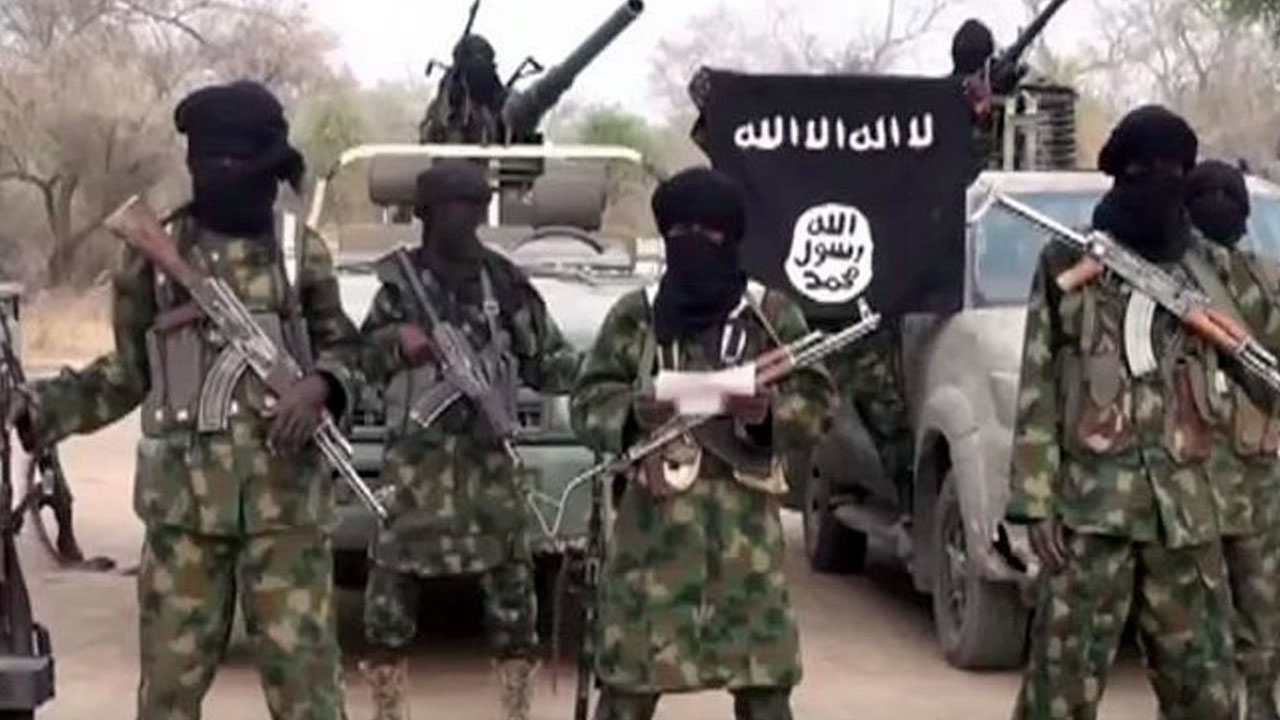
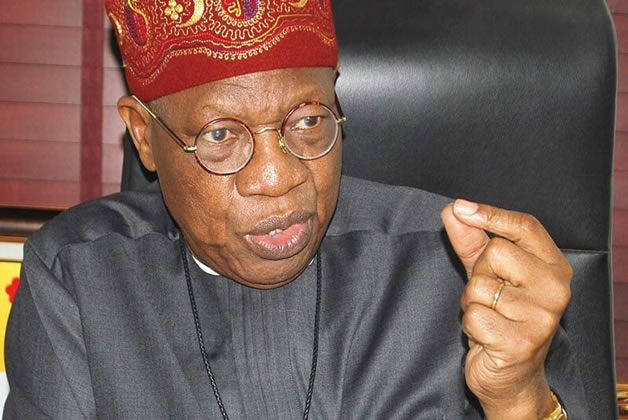
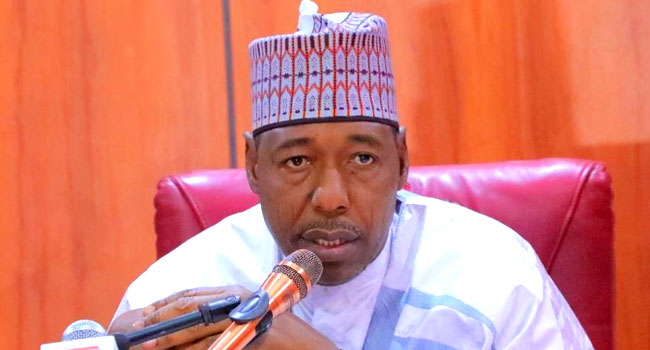
Borno State Governor, Babagana Zulum, had expressed confidence that Boko Haram would end before the end of Buhari’s administration.

He said this on Thursday, February 10, while responding to questions from reporters in Abuja after meeting with President Muhammadu Buhari at the Presidential Villa.

When asked whether it would happen in his administration, he said: “Inshaa Allah. Even now in Borno State, we are doing very well, extremely well.”

He was pressed further if he meant Boko Haram activities would end before 2023. He said: “Inshaa Allah. You know what I mean by Insha Allah, God willing.”

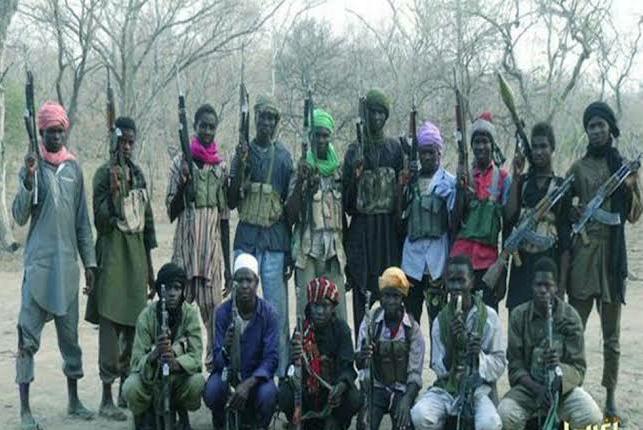
Governor Zulum added that about 30,000 repentant terrorists from Boko Haram and Islamic State’s West African Province (ISWAP) have also surrendered without any incentive from the government.

Kashim Shettima: Principles, courage, conviction cannot kill a man

By Lawan Bukar Maigana

“Cowards die many times before their deaths; the valiant never taste death but once.”

When arguably the all-time world’s greatest playwright, Williams Shakespeare, penned the above immortal lines in Act 2 Scene 2 of Julius Caesar, he must have had a long peep into the future of one of his country’s colonies. Moreover, he must have envisioned a special kind of man who exudes rare courage and sound, consistent principles in all he does and at all times.

He is a man who abandons the bandwagon and chooses to remain on the side of truth, fairness and justice even if that stance is unpopular and can cost him his safety and freedom.

Why do some people have sleeplessness over the courage and audacity of Senator Kashim Shettima, a former Governor of Borno State, over his recent opinions on democracy, politics and good governance in Nigeria? Surprisingly, subtle threats are being expressed to warn him to thread softly in some quarters and platforms.

Kashim Shettima is not your kind of everyday politician. His inspirational life story has been that of courage, conviction and consistency and remaining on the right path, on the side of the oppressed and the vulnerable, through thick and thin.

Charismatic, sound, brilliant and masses-oriented, the qualified agricultural economist has dedicated the better part of his adult life to the service of his beloved people of Borno state.

The above outstanding qualities earned him the highest office in the state in 2011 after he served with distinction in at least four different ministries as Commissioner.

After a brilliant career as a first-rate banker, he was Commissioner for Local Government and Chieftaincy Affairs (2008), Education (2009), Agriculture and Natural Resources, and finally, Health. He then contested the Governorship election in 2011 and defeated Muhammad Goni of the PDP.

His first term in office endeared him to the hearts of the people. He further proved himself to be a compassionate, responsible and responsive leader who was always there to meet Borno people at the point of their need. His emphasis was on youth and women empowerment and infrastructural upliftment of the state.

In one of his most quoted quotes, American civil rights icon, Martin Luther King Jr said: “The ultimate measure of a man is not where he stands in moments of comfort and convenience, but where he stands at times of challenge and controversy.”

The Boko Haram menace brought the rare leadership skills out of Shettima. He stood his ground to protect his people; he never ran away from the battle. Instead, he put his life on the line and confronted the monsters. He mobilized the police, rallied soldiers and established the Civilian JTF, which helped to stem the tide of the insurgency.

In September 2014, Maiduguri, the seat of government, became very vulnerable to being attacked and overran by insurgents. The fear was so intense that notable residents relocated their families to Abuja. However, Governor Shettima, who was out of the country for an official assignment, abandoned everything and returned to Maiduguri in a show of courage and patriotism. On his return, he mobilized residents towards rising in defence of their ancestry, and they succeeded in pushing the enemies back.

Based on the sleepless nights he endured in the latter part of his first tenure – moving from one shooting or bombing scene  to the other with countless bodies and a river flowing with blood and all the back and forth he did with Presidential Villa actors over whose responsibility it was to protect Borno people – most observers thought he would chicken out and not bother to seek the second term in office

He sought and won reelection in 2015 under the All Progressives Congress, APC, and was unanimously chosen as Chairman of the Northern States Governors’ Forum, an umbrella body of Governors in the 19 States in northern Nigeria.

Alongside sincere peacebuilding, Governor Shettima championed the Reconstruction, Rehabilitation and Resettlement of victims of insurgency. He focused so much attention on the expansion and remodelling of existing schools and building new boarding primary and junior secondary schools to cater for over 50000 unaccompanied orphans whose parents were killed by insurgents across the 27 local government areas of the state.

Shettima also identified and supported a fine, fantastic gentleman as successor so that the journey of good governance he started would not perish on the way. Since coming to power, Professor Babagana Zulum has elevated good governance to world-class. Zulum’s excellence is a massive credit to Shettima. Unlike others, the two great men complement each other a lot and have not been involved in any fight.

In February 2019, Shettima’s glittering political career entered a new chapter when he won the election to represent the people of Borno Central at the Senate. Since then, his voice has been one of the most audible and laudable in the fight for justice and rights for all Nigerians in the Senate.

Speaking truth to power is part of Shettima’s DNA, and no level of elite conspiracy or underhand, high-wire, discreet manipulations, schemings or threats would take that away.

A popular adage in street parlance says: “Something must kill a man.” It is often said to justify some risk-taking that could end a man’s life. But the good people of Borno and other Nigerians of good conscience will not sit by and watch any harm come to Shettima on account of his principled stand on justice, equity and fairness as we move towards 2023.

His political choices and comments are his entitlements. However, if some powerful, vested interests are so uncomfortable with the truth that they want to unleash ‘undesirable elements’ on him, the people are watching with keen eyes and vigilance.

The people of Borno and their allies outside the state will employ all legally permissible and legitimate means to protect Shettima from any form of harassment and intimidation. They will continue to support and protect him till he accomplishes his mission of doing what is just and fair to all and sundry in the polity, not only in Borno, North-East but Nigeria at large.

Lawan Bukar Maigana wrote from Wuye District Abuja and sent the article via Lawanbukarmaigana@gmail.com.

I don’t have ties to Boko Haram — ex-Borno governor Modu Sherrif

By Muhammad Sabiu

Ali-Modu Sheriff, the former governor of Borno State, has refuted charges that he has ties to Boko Haram terrorists, claiming that security services have been probing him since leaving office in 2011.

In an interview with the News Agency of Nigeria (NAN) on Sunday in Abuja, Victor Lar, the Ali-Modu Sheriff Campaign Organisation director, refuted the charges.

Mr Sheriff, a frontline All Progressives Congress (APC) national chairmanship aspirant, a two-term former governor of Borno, and a former senator had no ties to Boko Haram, according to him.

“Sheriff’s name is not on the list of sponsors of Boko Haram released by the United Arab Emirates (UAE). Security agencies have been investigating him since he left office in 2011 and had not found him guilty of the allegations.

“If he was involved, he would have been arrested, or his involvement made public. In any case, I challenge anyone with information proving his involvement to come forth with such,” he added.

Who will save our children?

By Lawi Auwal Yusuf

Any sympathetic person will surely ask himself these questions over the unfortunate fate of Almajiris: what wrong have they done to deserve such ruthless treatment? Are they not humans? Are they divinely condemned? Is it because we have heartless hearts? Or is it just because we have brainless brains? 

However, the Social Contract Theory extrapolates the relationship between the State, Citizens and Laws. Both the state and citizens have an overwhelming obligation to obey the law. These laws made it possible for leaders to assume the office and couples to marry and have legitimate children. Through these laws, leaders must cater to the needs of people and parents to take care of their children. Ultimately, justice is the philosophical underpinning and moral wisdom behind this idea. 

I wonder why leaders and parents breach the trust bestowed on them. Indeed, we need a professor in the law of trust to prove this before a jury so that the culprits will be locked up in prisons. 

Politicians have made these innocent children scapegoats of their misrule. They are severely castigated for offences committed by the government. Also, the lackadaisical and pitiless attitudes of parents worsen their plight. Even animals don’t dump offspring. On the contrary, they vigilantly look after them and guard them fiercely against any harm until they can take care of themselves.

Everyone abandons these children. They are left on their own to fend for themselves. Therefore, they scavenge through garbage, looking for food, wearing shabby clothes. They wander freely without a specific purpose or destination, with no shoes in the scorching heat. They equally have no one to attend to them when they fall sick. It seems like the ancient Indian caste system is gradually manifesting in 21st century Nigeria, and Almajiris form part of the Dalit (Untouchables) social group. 

When you ask them to define democracy, they will tell you that “it’s a government of the elites, for the elites and by the elites.” This is because it is purposely designed to cater to the needs of nobles only in their perception. It’s nothing to commoners but an inevitable woe. So they see it as subjugation, tyranny and distress. 

Almajiris have carried the cross for too long. They’re tired of this impudent desertion and have endured this problematic situation, and cannot withstand it any longer. Finally, they’ve been pinned down by the neck and are crying out for help with a thunderous scream, “we can’t breathe!” But, of course, this is cruelty in its cruellest form. 

These children are the future custodians of our society. Their desolation denotes that we undermine its continuity, progress and prosperity. We will bequeath to them a country that negligently failed to help them, forsake their welfare and future. They will take over a nation unable to develop humans, plagued by injustice and misery. Hence, it is unlikely that they will be patriotic to Nigeria. Is this what we are preparing for the next generation?

Indeed, they will remember us as imprudent forefathers that ruined their lives, put them in dismay and plotted the doom. The ones that disappointed them, those that couldn’t save them from grief. Those ancestors whose labour had been in vain. Indeed, they will utterly forget us, let alone pray for our eternal rest. 

We expect Tsangaya schools to consistently roll out erudite personalities, honourable scholars like late Dr Ahmad Bamba, Sheikh Ja’afar Mahmud Adam, Prof. Isa Ali Pantami or prof. Muhammad Sani R/Lemo. Unfortunately, we saw something entirely different. 

Nowadays, Almajiris are not purposely taken to Tsangaya for learning. Due to a lack of awareness concerning contraceptives, parents incessantly born children they can’t support. At long last, they discard them. How will a minor learn without provision for his necessities, vehement supervision of parents and also fend for himself far away from home? It can NEVER be possible.  

Let’s assume there are only one million Almajiris in the North, and only 5% ended up in criminality. Hence, there will be an additional 50,000 criminals to terrify the region, which is about 15% of the police workforce. So, how many more millions are there? 

Consequently, we are paying the price for our actions and inactions. We are suffering due to failure to resolve this criminogenic problem. We’ve undergone the agonies of Maitatsine dogmatism, and now we are in the bondage of Boko Haram, banditry, kidnappings, to mention a few. Have we learned lessons, or we will remain indifferent? Or are we now determined to dispel the injustice and save these downtrodden children? 

Lawi Auwal Yusuf wrote from Kano, Nigeria. He can be reached via laymaikanawa@gmail.com. 

Of criminality, economic stability, birth control and northern Nigeria

By Zakari Abubakar

It is evident that whenever there is an upsurge in criminal activities in parts of northern Nigeria, a perennial debate usually rears its head among those interested in the root causes of the problem. This is understandable. Without identifying the cause of a problem, its solution may not be in the offing. Like virtually every year, this debate is also gaining traction in this early part of 2022.

Admittedly, this view adds to the existing number of discussions on this topic. Those who are following the debates are not unaware that there are a group of people who link the rise in criminal activities in the north and the rate of excruciating poverty among its people, mainly to the large number of children born in virtually every family in the region. This group of people base their argument SOLELY on the superficial and generalised assumption that people with a large number of children, more often, engage in irresponsible parenting.

Another reason why this group of people see an individual with a large number of children as a potential source of criminality and economic stagnation is that Nigerian authorities have for long been finding it difficult to provide social services such as education, electricity and other life essentials to these growing number of citizens which leads to more people becoming poor. This is where I find their argument too simplistic. Because the same authorities are providing these services to themselves, their families or their cronies.

Going back to their first argument, it is glaringly verifiable that for every individual with many children who fail to cater for them, hundreds, if not thousands, bore many children and saw to their responsible upbringing. This example is on the level of individuals. There are many more such examples on the societal level. For instance, several countries and regions of the world have nearly the same population as northern Nigeria or are more populous but are not facing the same challenges.

Those societies have considered such a phenomenon as a gift and therefore utilise it positively. To buttress this point, the five most populous countries in 2021, according to sources, are China, India, the United States, Indonesia, and Pakistan. Although these countries may be facing their security and economic challenges, the standard of living in those societies is by far more robust than what is obtainable in northern Nigeria.

To cite a specific example: about 90% of China’s population is Han Chinese. They are over a billion people, yet, there is no accusation from the rest of the population in that country or the Hans themselves that the Hans are a potential source of poverty or criminality. Similarly, the most populous state in India is Uttar Pradesh, with over 200 million inhabitants. But go to India. How does Uttar Pradesh fare compared to the rest of Indian territories in terms of economic prosperity?

No one is disputing that northern Nigeria is recently replete with a high rate of criminality occasioned by poverty among its growing population. But to solely link this problem with the region’s birth rate is to accord the topic attention that is less than it badly desires. For example, what about the other seemingly systemic problems that have to do with governance and political leadership?

One may say, why do people resort to adding problems for themselves by producing more children since the government failed to sustain their needs? Then I would say, instead of blaming those who fail to provide those essentials (though they are providing them for themselves and their families), we resort to blaming the poor, despite his effort to always get himself out of the effects of poor/bad political leadership?

Elsewhere, other regions of the world are complaining of a decline in their population. Thus, they outsource other remedies for their problems, like encouraging men and women to engage in economic activities. Therefore, no matter how small, we should demand accountability from our political leaders and seek other possible options that are more viable than resorting to birth control, which has its implication on man’s overall health.

Zakari Abubakar is with the Department of Physical and Health Education, Aminu Saleh College of Education, Azare. He can be contacted via zakariabubakarnng@gmail.com.

Zulum is an exceptional political player

By Abdulrahman Yunusa

Borno State Governor Prof. Babagana Umara Zulum’s dealings with the power are enough to prove that he is an exceptional political player. He is extra cautious when sensitive issues are involved regarding the people he leads. He stood for his armless people during the tough days of Boko Haram activities and succeeded.

Unlike any other politician, Zulum neither puts his personal interest above his people’s nor allows his sentiment to overshadow his rationality. On the contrary, he often puts his people first before anything else. Thus, this aptly depicts how he resembles a statesman rather than a politician.

To attest to this, look at how he confronted several tragedies in the past. He does everything to get his people out of the cave of fear. Meanwhile, his recent assertion that says, “I’m not a politician, it’s my destiny that made me governor”, is another point of contention.

Either he said this wittingly to make an endpoint for his political voyage because he figured out something despicable attached to his govt, and he can’t withstand it. Perhaps he gets compromised as other politicians do, or he isn’t satisfied with his performance as a leader. That’s what we anticipated from President Buhari and his cohorts. But, instead, they end up disappointing us.

However, I do not support Zulum quitting politics so soon because he is the only man I have utmost conviction and respect for. And with people of his likes out of this dirty game, I can say we will be at a loss till God knows when.

Though I don’t know what the future holds for us, I’m terrified of losing such a rare gem among Nigerian politicians, for they always stand unique and prove to be the best among the rest.

I pray to have a lot of people of his personality amidst these useless politicians of ours because no matter how awful things go, they will surely change the narratives.

May Allah protect our Zulum, amin.

Abdulrahman Yunusa is a political and public affairs analyst. He writes from Bauchi and can be reached via abdulrahmanyunusa10@gmail.com.

Four abducted Chibok girls regain freedom

By Muhammad Sabiu


Residents of Chibok town claimed on Sunday that four girls abducted in Kautikari village in Chibok Local Government Area of Borno State in northeast Nigeria regained their freedom over the weekend.


The girls were among the 24 people kidnapped on January 14, 2022 in Chibok’s villages and adjacent villages, where the rebels also took food and other necessities from the inhabitants.


Chibok is around 150 kilometers from Maiduguri, the capital of Borno State, and has continued to be targeted by Boko Haram and ISWAP, prompting residents to speak out recently, accusing the government of abandoning them.


It should be remembered that nine residents of Kautikari village were abducted during the episode that led to the kidnapping, before the militants later freed two older ladies and some youngsters.


In addition, the insurgents took the four young ladies to Dille. Dille is a community in Borno State’s Askira Uba Local Government Area that has a boundary with the Sambisa forest. The community is also reported to be a hotspot for rebels in the area.


Kautikari lies roughly 15 kilometers east of Chibok town and is primarily populated by Christians.

According to locals, the attack on Kautikari village has occurred more than 20 times since the kidnapping of 276 Chibok girls in 2014, which brought the area to national attention.

Between 2014 and 2022 and the race for Nigeria’spresidency

By Ahmad Mubarak Tanimu

It’s 2022. The twilight of Buhari’s administration is here, and the political permutations that will produce his successor are about to come bare. “Change” was the mantra in 2014. The Giwa barrack attack in March by Boko Haram, the Kibaku school girls abduction in April, the capture of Gwoza in August, the occupation of Bama in September and the ransacking of Baga in December by the terrorist group together with the over ten thousand lives lost during the year made 2014 an unforgettable year.

Goodluck Jonathan carried so many political accruals that outweighed his political assets, giving him an unfavourable political balance sheet that led to his well-anticipated defeat at the polls in 2015, becoming the first-ever one-term president in Nigeria. It’s an unusual political crash that the former presidential spokesman, Segun Adeniyi, calls ‘Against The Run of Play’.

Jonathan’s political misfortune didn’t start in 2014. He promised Nigerians a breath of fresh air after winning the 2011 elections. His major decision after the victory was fuel subsidy removal. He sent the then CBN Governor, Sanusi Lamido Sanusi and the then Finance and Coordinating Minister of the Economy, Ngozi Okonjo-Iweala, to beg and convince Nigerians to accept subsidy removal.

The first nail on the political coffin of Jonathan was hit on January 1, 2012, with the announcement of fuel subsidy removal, which birthed a national outrage and mass protest known today in our history books as Occupy Nigeria. After that, Boko haram insurgency, the slump of oil prices in the global market, and the PDP crisis he poorly managed sent him to an early political abyss.

Whilst all these were happening, one man positioned himself suitably and leveraged on every misstep of the President, often described as clueless. The man is Muhammadu Buhari. When the commoner was not happy, as late political siege J.S Tarka would say, Buhari offered himself as the hope, the happiness and the long-awaited missing piece of the jigsaw. Buhari moulded all Nigeria’s problems into just one thing that he kept saying repeatedly; ‘corruption, corruption, corruption’. He then placed himself as the one and only man with an incorruptible toga in the political arena that could solve Nigerian security challenges and economic turmoil.

He became president in 2015, Nigeria’s economic crisis soared, and like the sunshine, insecurity moved from east to west in the North. But unlike 2014, in 2022, no one is leveraging Buhari’s ineptitude. Though to be fair to Buhari, with Nigeria’s over-reliance on oil for export revenue and foreign consumer goods, an economic crisis will always be inevitable in the situation of a fall in the global prices of oil.

The polity in Nigeria still looks primordial. No one is ready for issue-based conversation. Even the pundits often put in more sentiment than logic in their analysis. The reaction of Buhari’s detractors shortly after Tinubu’s declaration to run for the presidency in 2023 says it all. They want him to surrender a platform he built with his sweat over some decades of enduring and surviving political persecution under Abacha, Obasanjo and Jonathan.

One doesn’t need to be a seer or bookmaker to predict that Nigerians will face Tinubu and Atiku’s choices in 2023. This could be a run that will not dig and damage the image of Buhari. Atiku may keep things ethical as he did in 2019, whilst Tinubu will primarily defend the Buhari administration throughout the campaign and make promises of improvements.

In 2014, there was an exodus from the ruling party to the opposition. Governors Kwankwaso of Kano, Wammako of Sokoto, Amaechi of Rivers, Ahmed of Kwara and Nyako of Adamawa all defected to the APC and other party chieftains like Atiku, Saraki and Baraje. The defection made the ruling party’s defeat imminent even before the elections.

On the contrary, the ruling party is taking governors to its fold this time. Governors Umuahi of Ebonyi, Matawalle of Zamfara and Ayade of Crossriver defected to the ruling APC last year. While the long-awaited APC national convention can make or mar the party’s fortune in the next general elections, the current atmosphere spells gloom for the opposition again come 2023.

Going by the non-negotiability of Nigeria’s unity as enshrined in the constitution and the unwritten political arrangement of political parties in Nigeria, the next president should be ethnically and culturally Igbo. Still, the ethnic group can only claim that stake in the PDP, a party they supported wholeheartedly since 1999. They rejected the APC, and I don’t think the party will pamper the same region with a presidential ticket in 2023. I am harbouring a feeling that an Igbo presidency is all Nigeria needs to turn its fortune around as a country. It will bring integration and a sense of belonging for all, which may translate into socioeconomic success. But that’s a conversation for another day.

Ahmad Mubarak Tanimu wrote via ahmadmubarak.tanimu243@gmail.com.

Road to 2023: A race to inherit a weak system

By Nusaiba Ibrahim Na’abba

As Northern Nigeria continues to be engulfed by violent activities of terrorists by the day, the thoughts of dreadful terror acts of the famous Sunni Ali of Songhai who conquered the old, widely acknowledged historic city of Timbuktu keeps reappearing on my mind. The likes of late Muhammad Yusuf, late Abubakar Shekau and most recently Bello Turji and Dogo Gide, including some of the ‘unknown’ alleged sponsors of these activities, are no different than Sunni Ali – ‘tyrannical, cruel and merciless’.

The only probable difference is that the miniature Sunni Ali’s of our time live under the protection of a democratically elected government that vowed to protect our lives. This system we all thought would salvage us from the brink of destruction. With all the high hopes for this salvation purposely adopted to elect President Buhari into office, it is under his watch that in 2018, the Nigerian army gave an order to halt the near-arrest of late Abubakar Shekau in the depths of Sambisa Forest.

While at secondary school, it used to be quite fascinating to read and learn about the legends of some of the most powerful kings in Africa. Timbuktu’s Mensah Musa, Usmanu Bin Fodio of Sokoto, the rulers of Ghana’s Asante Kingdom and their powers on their followers, especially their strength, have always remained interesting references for their followers, especially history scholars and political leaders around the world. From leadership structure, means of sustenance, warfare and particularly military strength devoid of politicking have remained exemplary and worthy of emulation as legends have primarily documented.

Inherent in today’s Nigeria, a ravaging systemic corruption, unambitious leadership, lack of education prospects contributing to a staggering number of unemployed youths (some even throwing their hats in the ring and retiring from the state of being called youths), poor security apparatuses and myopic economic vision that continues to increase our foreign debt figures without pans of paying back. Not even the vibrancy of our historic leadership structure is being inculcated in the ‘democratic system’ we (African countries) borrowed from our colonial bosses.

Nigerians are already hopeless as the nation races towards the 2023 general elections. About two months back, I went shopping in Abubakar Rimi market (alias Sabon Gari market). All I could hear filling up the sky were words of hopelessness about the state of our dear Nigeria. “I would rather lose my voter’s card than to elect anyone in 2023”, “Our leaders will not make heaven, I tell you,” and “I’m just hoping to make it to next year alive; we are not celebrating anything” among many unending agonies. 

It is no coincidence that the President himself vindicated these agonies in an interview NTA aired on January 8, 2022. He warned his political party that “the opposition Peoples Democratic Party (PDP) could win the 2023 presidential election and return to power, if the All Progressives Congress (APC), does not settle crises that have stymied the party”. Of course, a speech of such nature and coming from the President is subject to multiple interpretations from analysts, experts, particularly politicians and lay-Nigerians. However, the President has undoubtedly depicted a lack of confidence in his party to exacerbate an already hopeless situation. His first thought is PDP winning elections to continue from where they stopped – over a decade of misrule.

Indeed, it is pretty late that Nigerians realize that both APC and PDP are birds of a feather that flock together. During an interview with Talk to Aljazeera on February 15 2015, then-presidential candidate General Buhari highlighted the weakness of PDP’s 16-year-misrule. He, specifically, lamented on the rising insecurity and the deteriorating economy as oil prices dropped significantly. A year later, when he had a similar discussion with the same Aljazeera on his visit to Qatar in early 2016, he tried to admit that he hasn’t failed Nigerians – as Boko Haram held some strategic places in the outskirts of Maiduguri. Over the years of his administration, we now fully understand who has failed Nigerians the most.

Like every race to a general election in Nigeria, we all scale through hurdles and hitches. However, what is particular about the 2023 general elections is that it showcases the real wielders of the entire Nigerian system – the elites. Indeed aspiring candidates are fully aware of problems they will undoubtedly inherit from their predecessors. They also know that they may worsen existing situations in most cases. Thus, they shall race through rising insecurity than ever before, calls for secession from the Eastern part of the country, deteriorating economy, a staggering number of unemployed youths and out of school children, dilapidated schools, bloodshed, brain drain of medical personnel, weak security apparatuses, widely acknowledged electoral violence and, to cap it all, systemic corruption.

Since Nigeria’s return to democracy in 1999, every political aspirant has been fully aware of the problems ahead of them, but they always divert followers’ attention by being optimistic. This is why it was pretty easy for most Nigerians to succumb to President Buhari’s change agenda.

Be it as it may and with almost nothing to redeem ourselves, expectations are meagre as the race to 2023 heats up. It’s no longer news that the country’s entire political economy continues to suffer in the hands of the few ‘powerful’. The masses do not wield enormous influence in the system that steers the affairs of Nigeria. So, we absolutely cannot change the country’s political structure without owning the system. Therefore, there is no confidence or trust in the election processes with ‘inconclusive elections’ that have come to stay with us since they favour the wielders of the system. 

Nonetheless, we will remain optimistic that Nigeria will prosper as a united and incorruptible country no matter what it takes. This storm shall pass. Borrowing from the words of South Africa’s Apartheid icon Nelson Mandela, “I am fundamentally an optimist. Whether that comes from nature or nurture, I cannot say. Part of being optimistic is keeping one’s head pointed towards the sun, one’s feet moving forward. There were many dark moments when my faith in humanity was sorely tested, but I could not give myself up to despair. That way lays defeat and death”.

Nusaiba Ibrahim Na’abba is a master’s student from the Department of Mass Communication, BUK. She is a freelance writer and researcher. She can be reached via nusaibaibrahim66@gmail.com.                                     

Addressing the menace of insecurity for a better Nigeria

By Yaseera Muhammad Bello 

Given the indisputable fact that Nigeria is currently trekking on the part of degeneration due to the menace of insecurity that grows daily, some questions have been scalding my tongue, seeking honest answers. What perpetuates insecurity in Nigeria? What machinery drives the brutal car of insecurity that has been killing innocent people in my fatherland? Who is to blame?

An undeniable, albeit unfortunate, fact about Nigeria today is that we read news of devastation on our national dailies for over seven years. The reports we hear on our radio stations and televisions revolve around the menace of terrorism. And it’s an inevitable fact that until we unearth the indices that hamper insecurity in Nigeria, we cannot live a life full of happiness and serenity. That being said, what are the factors that ignited the flame of insecurity in Nigeria?

Despite our portions of blame, our leaders are to be counted as the bedrock of igniting insecurity in the country. This is because we have long been electing incompetent leaders who cannot render their services effectively for the nation’s good. And this is because of the affinity we share with them when they are put into the offices. And at the end, when things fall apart, we’ll be barking like dogs seeking a peaceful society.

On the other hand, unemployment is another worrisome factor that vigorously plays a role in watering Nigeria’s black tree of insecurity. Most of our youths today in Nigeria have nothing to do but join groups that commit despicable acts. And this is mainly due to their state of unemployment perpetuated by the virulent animosity among our tribes. This is strictly said, having seen how tribalism has been hindering youths from getting job opportunities in the count. And at the end of the day, the youths have no choice but to join the horrific menace of insecurity that bedevilled our nation.

Furthermore, corruption in Nigeria, like all the other potent factors dittoed responsible for Nigeria’s insecurity, has its portions of blame. It’s now becoming rampant and our daily meal in the country. Corruption ignites numerous perplexities impeding us, including the threatening menace of insecurity. When leaders become corrupt, they fail to give security personnel adequate arms and support to fight terrorist groups and other factors that might threaten the safety of the citizens. 

Undoubtedly, until we put competent leaders into the offices irrespective of one’s tribe, religion or any affiliation, alleviate unemployment and stamp out corruption in the country, we will still wallow in the muddy water of insecurity. 

Yaseera Muhammad Bello writes from Gombe state is a student of Science Laboratory Technology (SLT), Gombe State University (GSU). She can be reached via misseerahbello@gmail.com.