Arewa

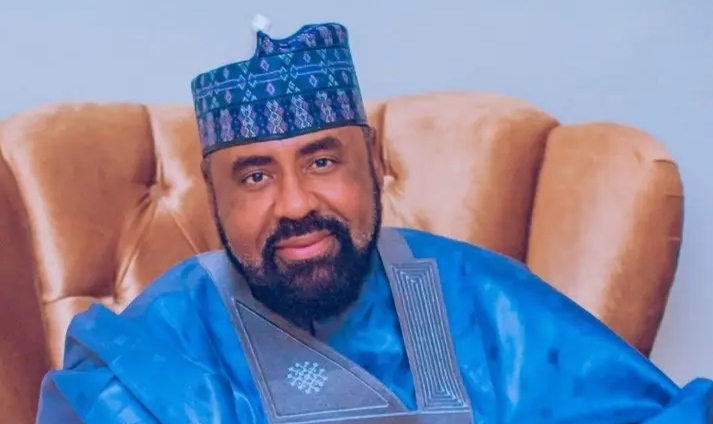
A serious humour: Bello Galadanchi’s comedy skit for social commentary

By Sa’id Sa’ad

Earlier this year – when Bello Galadanci’s videos were becoming popular on digital platforms – a colleague posted a video of his skit on his WhatsApp status. From what might be a simple curiosity, I asked him if he knew who the person was – of course, expecting him to at least know a bit – but he replied that he did not know him beyond his not-so-much-funny recent “comedy skits.”

That was weeks after the publication of my recent essay, A Crack on Hadiza Gabon’s Wall: Humanizing Northern Nigeria Storytelling, where I described what the show meant to storytelling in Northern Nigeria and the impact of what I called “hypocritical denial and intentional lack of acknowledgement” from the northern community. As it has always been, I bumped into a tweet where a young person from “northern” Nigeria condemned the entire comedy skits made by Bello Galadanci. If I weren’t from the North, I would have wondered why Northern consumers always find a way to devalue Northern content creators in whatever discipline. But I didn’t, because I understood the game. So. Well. It is nothing to raise a brow at, mainly because, as creatives, criticism as such is often expected, “Thanks for the PR” was the short response Galadanchi gave him.

Even with the recent trooping of young creators into the skit-making industry in Nigeria, majorly due to its financial and digital-popularity lakes tunnelled by TikTok, Instagram and YouTube, one could guess accurately – as most other useful or even useless “developmental” growth – that adoption of content creation as a business by young people in Northern Nigeria, came very late, as well. It is difficult to mention by name – the northern skit creators who began early – and still maintain the same consistency as one would mention Taoma or Aproko Doctor or Mr. Macaroni from the South. Only Galadanchi and a few others still retain their craft consistently.

Many young people in northern Nigeria continue to comment, criticise, or label Bello Galadanchi and his skits in multiple ways.

Aside from the unpopular northern Nigeria population that perceives his skit as the “working-for-the-white” theory (or the painting north black belief), and the many who – due to educational standards and exposure – fail to comprehend the satirical nature of his contents, most of those who do not find him funny do so due to Broda-Shaggying or Sabinufying Galadanchi’s skit.

Unlike most skit makers in Nigeria, whose focus is majorly only on sowing laughter and entertainment into the market and reaping their golds, built on creative juice – Galadanchi’s contents are meant for social and political commentary using humour and satire. Backed by journalism, creative, and educationalist careers, it might seem almost impossible for Galadanchi – even by himself – to create non-questionable or fluid content only meant for laughter because creatives are muscled with the hunger to correct and change using their art. His could be simplified as addressing serious problems without being too serious.

Therefore, this makes it difficult for those Broda-Shaggying and Sabinufying him to comprehend the content as, thus, they expect a consciously endowed full-length comedy. I don’t mean to belittle content created by skit makers whose conscious aim is to create a hundred-percent comedy piece. However, expecting an all-comedy-induced piece from a skit maker whose purpose is challenging social and political ills using humour could be as good as expecting something from nothing.

While writing this essay, I shared on WhatsApp status a short clip from an interview Bello Galadanchi granted CGTN where he sat on stairs with three other Chinese, in a swagger-spirited looks with polished accent and blonde hair. Most GenZ’s (respectfully) responded to have known him only through his comedy and never “expected” him to be this “polished”, so far away from what they expected Dan Bello (his character) to be.

That means most of those who denigrate his content would have been from their “expected lens” through which they measure him to be. As argued in my previous essay above – could this also be what I called “hypocritical denial and intentional lack of acknowledgement” of the northern population for contents and creators coming from the north? Because, of course, what Bello Galandanchi is doing for northern Nigeria-specific social and political issues is what Aproko Doctor is exactly doing for Nigeria’s health sector and health-related issues.

Though satire could emerge in professional, amateur, elitist, and popular forms, those who do not comprehend his satire might also be due to their level of comprehension rather than the perceived educational standard or exposure. However, I believe both play a role here. Of course, satire is meant to use humour and irony to criticise, as in the case of the Nigerian writer Elnathan John with his famous book, Be(com)ing Nigerian. However, because Galadanci focuses on the “North”, he is quickly labelled with the “working-for-the-white theory”.

Perhaps if Elnathan’s book was a digital piece as Galadanci’s – and produced in the same form and language – the same label could have been blanketed for him, too. Sometimes, the theory sounds a lot like a comedy skit as well because even a deported northerner fighting the cause of his people – in any way different from the (usual) northern norms – would be considered brainwashed to work for the whites.

More so, those who do not comprehend the satire in the contents are often blindfolded from seeing the patriotism in these pieces. If not for a deep love for a people, I wonder how one would continue to create these provocative contents that question deep political ills in the region. While also soaking insults from young people in the same region who barely understood the depth of what his craft was uprooting.

However, looking at his pieces of art critically (beyond Broda-Shaggying them), how they are deeply immersed in satire and sheer creativity, one could vividly tell how varying it is from the contents created by other skit makers. If other skit makers called theirs “contents”, a creative could easily describe Galadanchi’s as a “piece of art”. The beauty in the work is so immense that one could smell creative fragrances all over the place.

Imagine if the digital youths in the north focus on – if not creating – promoting creators from the region rather than policing social media in the holy name of the north. Imagine if we all question the system in the individual creative juices deposited in us. Imagine if we learn to place a market value on the creators and contents from the north rather than wasting our time watching these wayward girls crowd-chasing nonsense on TikTok in Hausa and serving them to your screen back-to-back. Imagine if we focus on the problems rather than those who help us understand the problem. Imagine if we don’t call for the heads of those who create alphabets to remind us of where we are.

Galadanchi didn’t just find questioning the ill social and political system for Nigerians in Nigeria. He has lived with the system, experienced the system and carried dozens of scars from the system to wherever the world took him.

If these pieces of art are what come out from creatives whom the ill Nigerian system has wounded, then very soon, the Bello Galadanchi in all of us will prevail.

Sa’id Sa’ad is a Nigerian writer, poet, and playwright from Maiduguri. He won the Peace Panel Short Story Prize 2018 and the NFC Essay Prize 2018. He tweets @saidsaadwrites and can be reached directly via saidsaadabubakar@gmail.com.

A truly blessed son of the North and a proud Nigerian

By Usman Muhammad Salihu

As a genuinely blessed son of the North and a proud Nigerian, I am honoured to be part of a rich and diverse culture that has contributed significantly to the growth and development of Nigeria. From our unique customs and traditions to our rich history, the North is a region that has stood the test of time and remains a force to be reckoned with in the country.

Growing up in the North, I was exposed to a different way of life from other parts of Nigeria. I was taught to respect my elders, to honour my ancestors, and to always put family first. These values have stayed with me throughout my life and have helped shape the person I am today.

One of the things I am most proud of as a Nigerian is our ability to come together as a people, regardless of our differences. We may speak different languages, have different beliefs, and come from other parts of the country, but when it comes to matters of national importance, we stand united as one.

As a truly blessed son of the North, I have witnessed firsthand the resilience and determination of the Nigerian people. We have faced our fair share of challenges over the years but have always come out stronger on the other side. This is a testament to the spirit and resilience of our people, and it is something that makes me incredibly proud to be a Nigerian.

Overall, being a truly blessed son of the North is a great privilege I do not take for granted. I am honoured to be part of a rich and diverse culture that has contributed so much to the growth and development of our great nation. May we continue to work together towards a better future for ourselves and future generations.

Usman Muhammad Salihu can be reached via muhammadu5363@gmail.com.

Is Tinubu’s gov’t behind the fear-monger of occultic women in Arewa?

By Aminah M. Abubakar 

The crackdown on women begging for alms or food in Arewa communities has raised questions and fears of human rights violations. Attacks on innocent women, based on fear-mongering claims of a group of women trained as cultists to carry out nefarious missions, are becoming increasingly alarming.

Several audio clips circulating on social media alleged that about 100 women were trained by a secret society group to infiltrate Arewa communities, posing as beggars or impoverished individuals needing financial assistance. It is claimed that if you allow them into your home and offer any assistance, whether money or food, you will instantly collapse or die.

How was this baseless and manipulative statement conceived?

Who is responsible for perpetuating the fear-mongering that endangers women’s lives in Northern Nigeria?

Why do many, including the educated class, believe such a narrative paves the way for the blatant abuse of vulnerable women?

Why haven’t religious scholars and traditional leaders investigated to uncover the truth behind this notorious fear-mongering, which poses a threat to innocent women struggling with poverty and hunger?

At times of every new power shift in Nigeria, there has been different tribulation and tension. Hence, rumourmongers have a role to play in creating chaos and instability.

Islam condemns rumour-mongering. It is well known that Islam enjoins its followers to act cautiously and verify any story or news that comes to them according to Shari’ah because Allah says in the noble Qur’an:

“Believers, when a dishonest  person brings you a piece of news, carefully ascertain its truth, lest you should hurt a people in ignorance and afterwards you become regretful for what you have done.” ~ Surah Al-Hujuraat 49:6.

While I may be mistaken, my instincts compel me to question the authenticity of the initial stories that struck fear into the hearts of people, creating tension and distrust towards women seeking financial assistance at a time when most families struggle to afford decent food.

I wonder if the fabricated fear-mongering was aimed at silencing people and preventing them from voicing their grievances toward government policies that exacerbated the existing economic breakdown caused by the previous administration. It’s always difficult to discern the extent to which those in power will go to manipulate and conceal their shortcomings.

Just two days ago, I witnessed a disturbing video on Facebook where two destitute women were mercilessly beaten by a group of teenage boys for no apparent reason other than their quest for food or to visit another community. Similar incidents can be found on WhatsApp groups, where women have been stripped almost naked and beaten by groups of youths over flimsy allegations, such as causing the collapse of someone merely through conversation. Treating vulnerable women is unjust and unwarranted, as any form of human rights violation is profoundly concerning and illegal.

Those who pushed the fabricated narrative that 100 or 1000 occultic women were capable of killing people by simply greeting or begging have now created the violent “monsters” that are now taking advantage of the situation to attack or even kill poor women – widows & mothers whose means of survival depend only on going out to beg for food or financial support.

We are all aware that the harsh economic situation created by the new government has increased the number of people seeking food and financial assistance. This group includes mentally ill and poverty-stricken citizens. Millions of Nigerian families have been enduring significant hardships due to the new government’s policies and are unsurprised.

It has always been the usual norm in Nigeria: the politicians and elites live in luxury, indulging in the finest pleasures – lavishly eating the best whenever they desire, living in luxurious homes they build, while the ordinary citizens who entrusted politicians with their votes suffer from poverty and the consequences of self-serving decisions made by the elites.

I hope this brief piece sheds light on the fabricated fear-mongering prevailing in Arewa communities, emphasising the gravity of human rights violations. It also underscores how impoverished and hungry women have been made scapegoats by a nonsensical false alarm intended to divert attention from the harsh economic realities that adversely affect people’s health and well-being.

Aminah M. Abubakar sent the article via mbubakar.minah@gmail.com. She can also be contacted via her X handle (formally known as Twitter): @MinahMbubakar11.

Industrialisation of the North: The future

By Muhammad Sani Usman

Somebody was shocked that the revenue of Zenith Bank as of 2022, which is N945 billion, is greater than the internally generated revenue of northern states combined. Literally, Zenith Bank alone is more financially buoyant than northern Nigeria. And he was lamenting about the poor inclusion of northerners in such investments in their states.

Kaduna is taking the lead in investments in the North, but her (Kaduna) IGR is not up to one hundred billion Naira; it is half of that. Even the profit after tax of Zenith is bigger than the economic cities of Kano and Kaduna. These two states are not up to N100 billion altogether.

I told him, “Investing in banking is highly industrious. But our northern billionaires have no business with anything “Knowledge-based economy”. What they know is to hoard dollars, buy shares, and run over a baby company/factory, as in acquisition.

Prof Murtala Sagagi of the Economics Department of Bayero University, Kano, told us, “While conducting a survey about the percentage of non-inclusion of Kano people to most of the fine-investments in food and beverages, logistics, and Banking Industries, one manager of one famous company told him, “When they try to recruit graduates for trainee positions; they expect them to be meticulous in training before they think of absorbing them fully as staff.

But you’ll employ someone as an assistant quality control officer or sales personnel, but his/her performance index will shock you unless you change your mindset seriously. Industries require expertise to run; you can’t employ someone you can’t fire or are lazy.”

There was another testimony last week. I was discussing with an auditor of one of the best companies in Northern Nigeria. The guy told me they had recruited a new customer care representative, and he was deployed to that branch, but all the time, the guy was not working; even the invoice that he was supposed to do, he couldn’t.

Unknown to the guy, a letter was sent from the headquarter for monitoring and evaluation of his performance by the senior staff of that organisation. My guy is among the people to vouch for him, i.e., whether he would be retained as permanent staff.

However, this is not limited to banking or the mentioned industries; this is about the lackadaisical attitude of our politicians about not creating factors that will favour industrialisation in the North. The A-K-K gas project is among the hope we have for the future of the North. Let’s wait and see!

Muhammad Sani Usman an industrial chemist who advocates good governance and Sustainable development goals. He writes from Zaria via Muhdusman1999@gmail.com.

Please, hide my identity

By Abubakar Suleiman

If you are conversant with the Arewa cyberspace, it will be surprising if you are unaware of the cliché, “Please, hide my identity.” It has gained so much currency (or notoriety) on Instagram, Facebook and Twitter. And it is mainly followed up with bad news, especially related to relationships and marriages – cases of incest, infidelity, marriage battery, heartbreaks and others.

People usually send their relationship or marital problems to popular social media pages or handles managed by self-styled marriage counsellors. These counsellors or opinion shapers then subject the problems to the public for solutions while hiding the identity of the sender of these problems.

Surprisingly, these people who found themselves in a toxic relationship or abusive marriage have parents or guardians who married them off to their spouses. Still, they many times seem to bypass them for advice or counselling.

They also rarely approach certified marriage counsellors or therapists for solutions. Therefore, the problem is thrown to the public, and with too many disjointed ideas or solutions, sieving the best solution to the peculiar problem becomes complicated.

Not so fast; how are we even sure these stories or problems are true? What if someone sits in the comfort of their room or basement and concocts these unfounded narratives to make the stories trend? Many people don’t check the logical validity or fallacy of these stories.

Social media gave everyone a platform to air or voice out their views. The problem with the advent of these platforms is not the access to information but rather the processing of information. Many people find it uneasy to check the authenticity of stories or the validity of statistics.

The blowback or unintended consequence of this ‘hide my identity’ trend is that it has made many young people consume many negative stories, thereby fuelling suspicion between both genders. Moreover, stories of successful and happy marriages have been in short supply. Therefore, some young people no longer see marriage as a worthwhile endeavour wherein you invest your patience, energy and prayers.

On the one hand, love movies from Nollywood, Bollywood or Kannywood made young people see marriage or relationship as a perfect bed of roses or land of Eldorado instead of the cocktail of happiness, sadness, compromises and sacrifices that it is.

On the other hand, ‘hide my identity’ stories have increasingly made partners or lovers dine with each other with a very long spoon. Each sees the other as a veiled threat or a potentially dangerous person. These trends have created overnight feminists and misogynists.

The above backdrop does not downplay the effects of abusive or toxic marriages or relationships that appropriate authorities could reasonably address – parents, guardians, certified counsellors or the court. However, young people must be guided on what marriage entails, its prospects and its challenges. They need a direction or triangulation amidst a plethora of negative information and scary marital or relationship stories.

They should also be fed with successful marital examples or stories and the possibility of a happy marriage. And this makes parenting a more difficult task in our contemporary world.

The last time I checked around, we still had more good homes than broken ones. But, unfortunately, the familiar stories of abusive marriages or relationships are just the case of bad news flying more than the good ones.

Check out families around you, your pairs, neighbours, colleagues at the workplace or married classmates. You’ll understand that except for the usual day-to-day challenges in marriage, they are relatively not bad as it is being portrayed. However, we can canvass for improvements, coping mechanisms or detailed exit plans for worst scenarios. Therefore, ‘hide my identity’ stories are many times fabricated stories or isolated cases than the whole.

Abubakar Suleiman wrote from Kaduna and can be contacted via abusuleiman06@gmail.com.

Arewa digital literacy centre, Engausa, commences classes next week

By Muhammadu Sabiu

A Northern Nigerian digital skills learning centre, Engausa Global Tech Hub, will admit students and commence its September classes next week Monday.

This is contained in a short announcement posted on its official Facebook page Sunday.

“New Engausa Global Tech Hub classes will begin on Monday 12th November 2022 Insha Allah,” the post reads.

The classes, largely delivered in the Hausa language, focus on teaching skills like video editing, blogging, graphics design, web design and Android dev., social media literacy, and digital marketing.

Others are installations (CCTV, solar panels, electric fencing, and Intercom) and smartphone repair skills.

The training costs twenty-five thousand naira (N25,000) and lasts for a period of five weeks.

In order to register, interested applicants are advised to click www.EngausaHub.com or call any their phone numbers.

Nigerian lady, Halima Shuwa, awarded Student of the Year at University of Manchester

By Ahmad Deedat Zakari

A Nigerian lady, Halima Ali Shuwa, has been recognised by the reputable University of Manchester and awarded with Student of the Year Award.

Ruth Macarthy, a doctoral researcher at Salford University, announced this on LinkedIn on Wednesday. 

“Sitting in Whitworth Hall today, at the prestigious University of Manchester, was one of my proudest moments as a Nigerian. It was the moment Halima Ali Shuwa was called up [to] the podium to receive the “Student of the Year” award from the President of the university.” Ms Macarthy wrote.

While presenting the award, the President of the university stated that Halima was chosen because of her dedication and selfless commitment to research excellence.

Halima’s Student of the Year Award

The President added that Halima dedicated a huge amount of time to researching the immune response in the blood of hospitalised COVID-19 patients – and predicting which patients will further develop long-term covid complications.

She was the first to publish on the associated long-term changes with fatigue and breathlessness in patients who would subsequently develop long covid.

Halima, a recipient of the prestigious Petroleum Technology Development Fund (PTDF) scholarship, hails from Shuwa town of Madagali Local Government Area of Adamawa State. She was born, brought up and schooled in Maiduguri, Borno State.

Halima studied Bachelor of Medical Laboratory Science at the University of Maiduguri, MSc Immunology at Usmanu Danfodiyo University, Sokoto, and then got a PTDF scholarship to the University of Manchester, where she did her PhD in Immunology. 

Halima has published seven papers in high-impact journals during her studies and has four more papers under review. 

Towards the end of her PhD, Halima managed to secure multiple job offers from the University of Manchester and several pharmaceutical companies. Finally, she accepted the job offer from GSK (GlaxoSmithKline), where she’ll continue her cutting-edge research to discover an alternative cancer treatment targeting B cells in Immuno-Oncology settings.

Arewa Media Problem: Three major fundamentals

By Tijjani Muhammad Musa

Our primary problems in Northern Nigeria (Arewa) as far as the media landscape is concerned are a lack of support and patronage for our own media outlets, shallow-mindedness of our Arewa celebrities and self-centeredness of our social media influencers. Let me briefly explain these.

When a media outlet is floated, whether physically or online, many of our intelligentsia would choose to ignore it and refuse to contribute to its development, survival or sustenance. Some even find it offensive to see their writings featured on such platforms. So how can you imagine them making any effort towards reaching more people via such channels with their brilliant ideas?

This lack of encouragement by the intellectual elites of the Arewa region eventually quashes the zeal of the owners of the medium. So they end up laying their medium to rest, and nobody bothers to ask them why.

Next, our Arewa celebrities are primarily uneducated, digitally unsophisticated or advanced in thinking enough to realize the importance of their newfound status.

Instead of leveraging their popularity to drive home the concerns and aspirations of their people, their region and religion across the country or even globally, most of them just let the star status get into their heads. Thus, they end up as an ill wind that blows nobody good.

Finally, our Social Media influencers, most of them except for a minute few, are more or less acting like local champions, without any focus on using their influence to change the mindset of their followers.

These so-called influencers are constantly striving to create and upload content that only keeps the fire of attention from their followers burning, thereby getting them more and more Likes, comments, and emotes.

Very few among the influencers bother to target being a voice of the masses they represent. In contrast, their voices could be heard echoing the primary issues that concern their embattled region on a national and global scale so that something is done about it.

And they also would refuse to echo and make a trend of burning matters that affect their people, region and religion. A typical example is the acquisition of PVC for the 2023 elections. Have you seen any Arewa Social Media influencers making it a topic of importance? Almost none!

That attitude is unlike that of their counterparts across the divide and globe, who would each lend their support and credence to any trending topic of local, state, regional, national and global concern. Create and add their voices to any other SMI’s effort, so it assumes a loudness nobody can ignore.

Ours would instead choose to write or talk about what will keep their fans entertained, no matter how mundane that is.

Tijjani Muhammad Musa, alias Poetic Tee, is the Chairman of the Association of Nigerian Authors (ANA) Kano Chapter. He can be reached via mmtijjani@gmail.com.

SPECIAL REPORT: Arewa women and cyberbullying

By Uzair Adam Imam 

Cyberbullying against women is one of the lingering issues women face across social media spaces over time.

The menacing issue, however, has now escalated to become a global problem affecting women emotionally and chasing them away from online spaces.

The Daily Reality interviewed some women about the hazard. They recounted that the kind of messages they received from men were disgusting. 

The women decried that most of these disgusting messages often demand nude pictures or videos and propose love, irrespective of one’s marital status. 

This issue is most common on Twitter, Facebook, Instagram and WhatsApp, among other social media platforms. 

Zahra Madaki, one of the women interviewed, complained that social media is never an exciting place for women to go as cyberbullying exacerbates daily.

She stated, “Social media platforms such as Facebook and Instagram are very annoying nowadays. That’s why I decided to stop using them.

“Everyone is after love affairs. So, anyone will keep proposing for love as they see you online. It’s so annoying,” Madaki complained. 

On request for sex, pornography

According to Aisha Jibril, not her real name, women are victims of all naughty things on social media platforms today. 

She complained that some men request sex, and nude pictures or videos, as you begin to chat with them. The development, she said, distresses many women.

She stated, “there was a time someone on Facebook asked me if I ever watched pornography. I was shocked because, at that time, I didn’t know the meaning of the word. 

“I had to ask my elder sister what the meaning of the word was. Before I could respond to his earlier message, this man sent me a porn movie. 

“I shivered with fear that my phone nearly fell on the floor. I was terrified. I had never before that time had such an experience. I hardly slept that night,” Aisha said. 

Another source, Khadijat Muhammad Bah, also decried the menace, blaming men for being irresponsible in their relations with girls.

Bah said, “we ladies are seeing and reading all kinds of rubbish. Some men out there send nude pictures and always request nude photos.

“Some would insult and curse because you refuse to give them your contact. Some of them just want sex. 

“One day, I posted my picture on my story, and one guy said, ‘wow, those lips are for me’. And that was one reason that always stopped me from putting my picture on my story,” she lamented. 

According to a source who preferred not to be named, her sister once met someone on Facebook. Their relationship started as a friendship before the guy finally asked for sex, which later led to their breakup.

She said, “the guy kept pleading with her to come to his apartment. But she refused. We were surprised at how shameless this guy was.”

Someone keeps on disturbing me – Housewife

A housewife who spoke to The Daily Reality complained that someone kept disturbing her on social media.

The woman said she told the guy to stop chatting with her because she was married, but the guy turned a blind eye. 

She said, “This man started adding me to some irresponsible dating groups on WhatsApp. But, I thank God that through the help of my brother, we solved the issue and blocked the son of bitch afterwards.”

Another housewife complained that some men that chatted her up used to send her some porn photos, but she deleted them instantly.

She added, “these guys chat and comment on our posts anyhow. They tend to forget about our marital status. They forget that our spouses and relatives also see our online activity and would be sad to see such naughty and irresponsible comments under our posts. 

Cyberbullying: An unfortunate reality in dear need of mitigation

Dr Rukayya Aliyu, a senior lecturer at Bayero University, Kano, urged the technology firms that build these sites to act and make online spaces safe for women. 

Aliyu described the menace of cyberbullying as an “unfortunate incidence” in dire need of mitigation.

She stated, “Cyberbullying is an unfortunate incidence, but unfortunately, it is challenging to overcome because it happens on social media platforms, which are free and uncensored. 

“However, it can be managed to some extent with measures from the sites themselves, which can only be minimal.  The reality is regulation by the government might not be effective considering the lapses in regulating traditional media, to which the government has better control and access. 

Women ought to be responsible and mindful of their online activity 

Dr Rukayya also urged women to be mindful of what they post on social media platforms to avoid insults and indecent comments. 

She said, “on my take as a woman, it’s displeasing, but then fellow women should understand that most abuses come as reactions to our post and engagement with the platforms. Therefore, we should be responsible in our dealings and always be conscious that whatever goes on on any internet-connected platform is no longer personal. People have a right to their opinions. 

“If we don’t want to be abused or bullied, we ought to be responsible and mindful of our digital or cyber identities. However, we shouldn’t rule out that no matter how ‘decent’ or responsible our social engagements are, there are people who will still castigate, blackmail, abuse and bully us. 

“So before engaging, we ought to be conscious of the implications and be ready to surmount them through confidence and steadfastness in what we do,” Dr Rukayya added.

TikTok and selling immorality to consumers on the internet

By Yahuza Abdulkadir

A source culled from Wikipedia says that TikTok, known in China as Douyin, is a video-focused social networking service owned by Chinese company ByteDance Ltd. It hosts a variety of short-form user videos, from genres like pranks, stunts, tricks, jokes, dance, and entertainment with durations from 15 seconds to three minutes. TikTok is an international version of Douyin, released initially in the Chinese market in September 2016.

However, I was not a user of TikTok until a few weeks back when a friend gave me the hint to start using the app to promote my art by creating short videos of spoken word poetry. And then, I came to learn young people use the platform to showcase their talents in comedy, singing, dancing and other forms of entertainment through creating short videos and sharing them across a community of users.

However, after launching my account, I felt it was boring for people like me to find comfort there. The only person I was able to follow was Alhan Islam because I am interested in what she does. After a few days, I could no longer log in to the app again.

As of January 2022, out of the 4.8 billion social media users globally, TikTok has 1 billion active users, earning a spot in the six most famous social media platforms. Cloudfare’s 2021 Year In Review puts TikTok as the most famous website in 2021, surpassing even Google. Tiktok net worth is $50 billion in 2020 and now nearly $75 billion in 2022. Despite the nature of content promoted on the platform, one may want to know that so many individuals earn huge amounts of money through their videos’ engagements.

According to Forbes Magazine, a 17-year-old American social media personality and dancer, Charli D’Amelio, the most followed video-creator on the platform, earned $17.5 million in 2021, making her the highest-paid TikToker of the year.

I read many articles on Facebook and other blogs where people lament the platform to be a weapon for killing the young women in this generation. They said most of the videos created by users promote indecency and immorality. But recently, I found out that it’s not only in Nigeria that such content is being promoted; it’s almost everywhere globally. This made some countries take legal action on the matter. Countries like Pakistan has imposed and lifted four bans on TikTok, tagging the platform to be responsible for promoting immoral, obscene and vulgar content.

Bangladesh government also involved itself in the war against pornography to save children and adults from moral and social degradation by blocking the platform’s internet access. TikTok was also temporarily banned in Indonesia in the year 2018. The Indonesian government said the platform has a lot of harmful content to children.

In 2020, the platform was also banned by the Indian government to protect the data and privacy of its citizens from threats that have to do with national security, and they tagged the platform responsible for promoting inappropriate content. As a result, the platform lost 167 million users in the country. What would surprise you is that even China has banned the use of this platform.

This shows that the Nigerian government can also ban TikTok if it wants to. Do you think it’s not possible? I think it’s possible if we look at the “Twitter ban saga.” Unless the government thinks the use of this platform has no consequence on their side. If that’s the case, we need to go back to our homes and solve the problem. As people would say, “Charity begins at home.”

We shall all know that social media platforms are there to serve a purpose, and if it turns out that we tend to lose our good morals and forget where we came from by joining the trends and “feel among syndrome” – showing the world how indecent we are, then we have deceived nobody but us. So I think good characters matters the most.

Furthermore, it’s disheartening to see the young women in the Arewa community selling their body parts on cyberspace, not only on TikTok. This occurs almost on every social media platform. It’s a massive disappointment to our cultures and values. Whatever one might engage in, they should know “the internet never forgets.”

Yahuza Abdulkadir wrote from yahuzaabdulkadir50@gmail.com.