


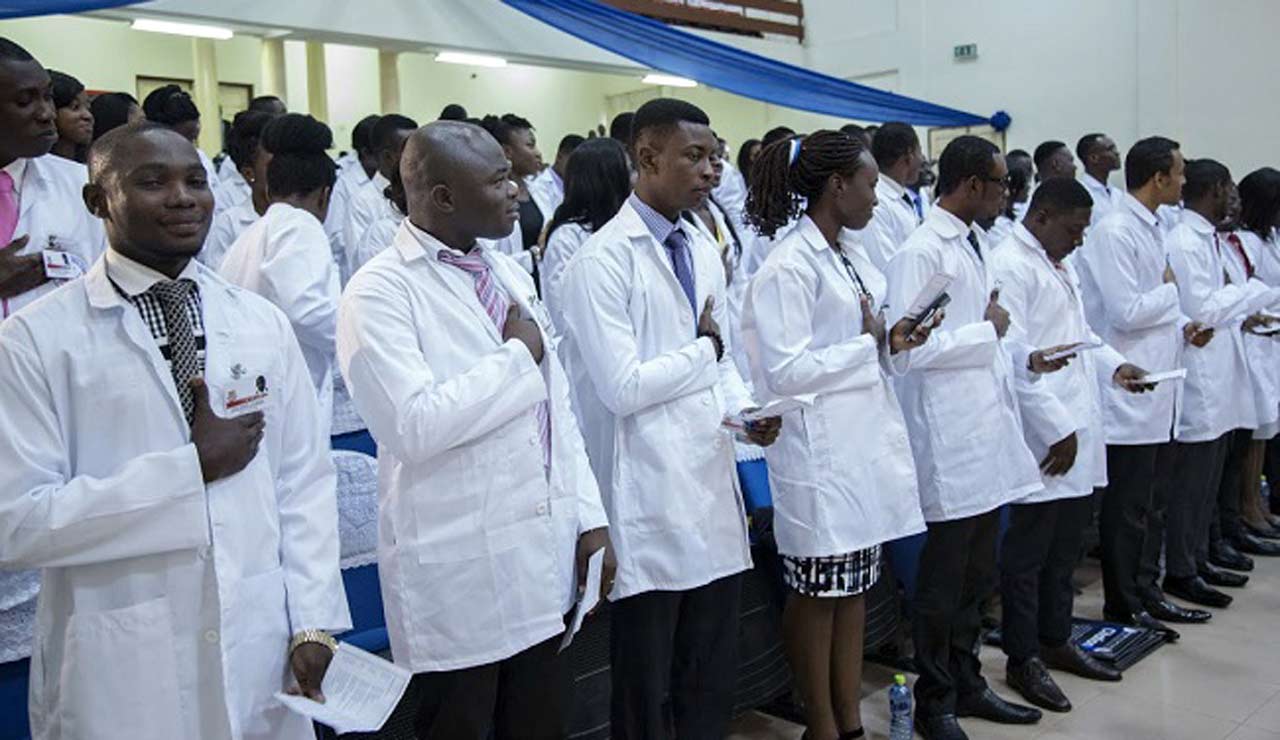
Nigerian doctors in diaspora: Brain drain or money drain?
By Khadijah Tijani
I have read many reactions to the recent trend of young and vibrant Nigerian doctors leaving the country for greener pastures. I also saw the interview with the minister who said the doctors are free to go because “we already have too many of them”. Some people even blamed these “selfish” doctors for refusing to stay after benefitting from “ridiculously cheap” medical education, blah, blah.
Oh well… Maybe I missed it, but I don’t know if anyone has talked about what these doctors are paying in exchange for their right to leave. Where these funds are going is another question begging for clear answers.
For you to get a new passport or renew an old one, you need to pay something between 35k and 70k depending on the number of pages and the validity period. But you also need to tip some officers so that your passport can be issued on time.
Some universities do not issue your final certificate until years after graduation. Transcripts are not available online. You need to travel down from wherever you are and go to your university to make a request. If you are lucky, you will get it after several weeks. And yes, they will also charge you a not-so-little administrative fee for that.
Suppose you are asked to send a source-verified copy of your credentials to a regulatory body, for example, Saudi Council for Health Specialties. In that case, you need to pay up to 30k for each document to be verified and additional fees for courier services. Moreover, since many universities still don’t have functional emails or reachable phone numbers, you still have to travel down to get it done or pay someone to do it for you.
Talking of regulatory bodies, they also want to be sure that you are a good doctor and have never been in trouble while practising in Nigeria. So, they will ask you to submit a certificate of good standing, which goes for 66k. Some will also ask for detailed medical checks and police clearance certificates – more expenses. You have to pay for the medicals even if it’s where you currently work.
When you are done with all that, and you finally move out of the country, you will still get yearly reminders to pay your dues to remain a licenced doctor in Nigeria. Of course, some people stop paying, but I know many doctors who still send their 10 to 20k annually. They even mandated us to pay 40k contributions towards the new NMA building last year.
Every university and medical college have their respective association of alumni in the diaspora. They contribute millions of naira to their alma mater each year. In addition, they send expensive machines to help in-patient care and loads of materials to aid in medical teaching. Unfortunately, some of these supplies might become sabotaged by the killjoys within the institutions if there is no direct supervision and maintenance.
I have not even mentioned the off-record funds you have to send to family and friends back home every month. Or the huge amount of money that doctors have invested in small to large businesses in the country. Or the free medical and surgical services many have provided to the people whenever they come home on vacations. Or the big hospitals many have established to create employment for the people, among other things.
I am worried about the brain drain, but I am also concerned about the people who do not understand the pain of an average doctor who wants to leave. They think it is easy to wake up one morning and jump on the next flight. And oh! Flight ticket and all the hurdles you need to pass through before you cross the border… Phew!
Since they think we are too many and can be exported like cash crops, we also need to ask them where the money from the foreign exchange is going. Are they building more hospitals or renovating the old ones? Are they providing enough medical supplies to work with? Are they paying the salaries of the few or “just enough” doctors left behind?
We need answers, please.
Khadijah Tijani is a medical doctor, she writes from Ibadan, and she can be reached be through Askodoctorkt@gmail.com or @AskDoctorKT.

Prof. Maqari disrespects DSS’ reconciliation – lawyer
By Muhammad Abdurrahman
On July 23, 2021, Dr Abdallah Uthman Gadon-Kaya delivered a Friday sermon in one of the mosques he leads prayers in Kano State. That sermon did not go down well with Prof. Ibrahim Maqari. Thus, he appeared in a video threatening Dr Abdallah to withdraw parts of the statement, or they would meet in court. On July 26, Dr Abdallah received a letter from Prof. Maqari’s lawyers, giving him a 7-day ultimatum to withdraw those “remarks” or face legal action.
Many media organisations, including online newspapers, reported the recent development. But no media reported Dr Abdallah’s side of the story. So the Daily Reality (TDR) spoke with one of his lawyers, Ibrahim Umar Abere.
Barrister Abere told TDR that “We initially received a letter from Prof. Maqari stating that his lawyers were charging Dr Abdallah for defamation. And he was given seven days to withdraw his utterances against Prof. Maqari. If not, he must appear before the court to stand a trial.
“In the letter he sent, his lawyer said that he knew Dr Abdallah had not mentioned Prof. Maqari’s name, but it was clear to them that the things said were directly referring to Prof. Maqari. [This means they were the ones who said that to their client]. We wanted to reply to them instantly. All of a sudden, the Department of State Service (DSS) from Abuja intervened, asking the two parties to sheath their sword and that both parties should report to the DSS office in Kano for reconciliation.”
“We went to the DSS office. I was there; Dr Abdallah was there, and Prof. Maqari, represented by his lawyer, was there. They said that Dr Abdallah must go and withdraw his utterances publicly on his pulpit. We said this is impossible because what happened was that Prof. Maqari spoke, and Dr Abdallah also spoke in their sermons about the things happening. Though some clerics already asked Dr Abdallah to withdraw those remarks that some people felt were harsh. He did so and apologised to all and sundry.
“The DSS stated that they were aware Dr Abdallah had apologised to anybody who misunderstood his sermon or felt any pain. We were satisfied with that. For this, there’s no reason for Abdallah to go and apologise for the second time.
By Allah, this was what happened. The DSS personnel also reminded us that both Abdallah and Maqari have followers; therefore, unless handled cautiously, the issue might become a grave conflict. That was why we did not respond to their letter. Because we take what authority said seriously, that was how our sitting ended,” said Abere.
On August 24, a copy of a summons showing that Prof. Maqari sued Dr Abdallah in an Upper Sharia Court at Rijiyar Lemo, Kano State, trended on social media.
In reaction to that, Abere told TDR that “We have seen that. It means they disagreed with the reconciliation made by the DSS a few weeks ago. That was why they went to court. On hearing that, we had to call the DSS and told them that these people took the case to court despite the fact the dispute had been resolved. For this reason, we had replied to their letter for them to know our stand. We told them that we were also charging Maqari with defamation and other things.
“In our reply on July 30 to Prof. Maqari’s lawyers, Dr Abdallah unreservedly denied all the allegations forwarded by Prof. Maqari. We also gave the lawyers a 7-day ultimatum to withdraw some defamatory remarks in their demand letter. They call Dr Abdallah derogatory names such as liar, lawless, mischievous, reckless, heartless, penchant for hate speech, high-handed and threat to public peace. Otherwise, he [Prof. Maqari] too will face a legal battle,” he lamented.
Surprisingly, Prof. Maqari appeared in yet another video on Saturday, August 28 2021, telling the public that some prominent personalities in the country had intervened on the matter. Therefore he left the case in their hands. This means there would be no court case against Dr Abdallah.
“We have thoroughly prepared to appear before the court on September 6, 2021. All our defences and counter-charges or claims are ready. Then we suddenly saw Prof. Maqari again on social media in another video saying that some people talked to him and now the case is with them.
Does that mean he had withdrawn his charges against Dr Abdallah? If that is the case, that is now how it is done. For Prof. Maqari to withdraw his charges against Dr Abdallah, it should be in a written form. Until now, we have not received any official letter. We just heard about it on social media. People should not seriously regard what has been said on social media or in a video,” concluded barrister Abere.
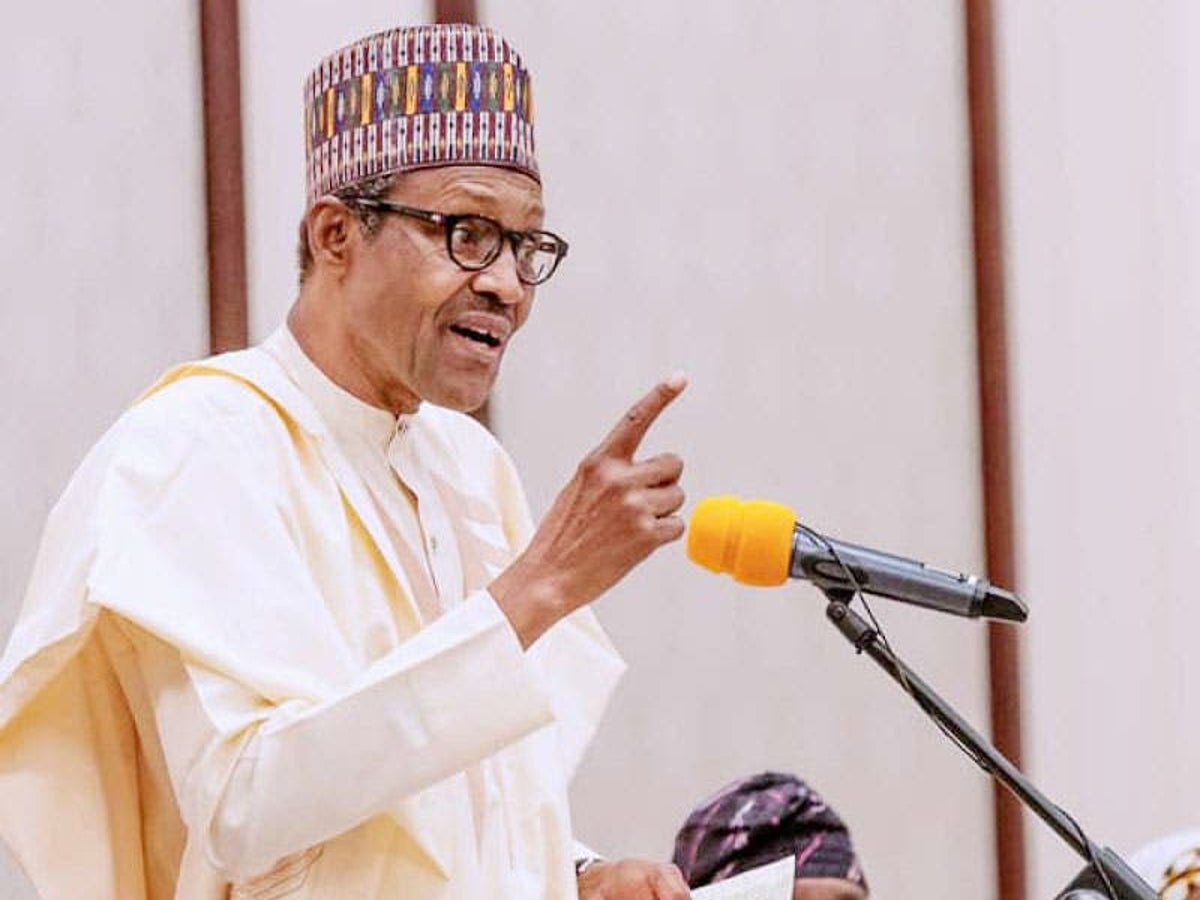
Buhari relieves agriculture and power ministers of posts
President Muhammadu Buhari has fired the Ministers of Agriculture, Mohammed Sabo Nanono, and his counterpart of Power, Mamman Saleh.
Ministers of Environment, Mohammed Mahmoud Abubakar and State, Works and Housing, Abubakar Aliyu were asked to temporarily take charge of ministries of Agriculture and Power, respectively.
Their substantive replacements will be announced later.
Details later.
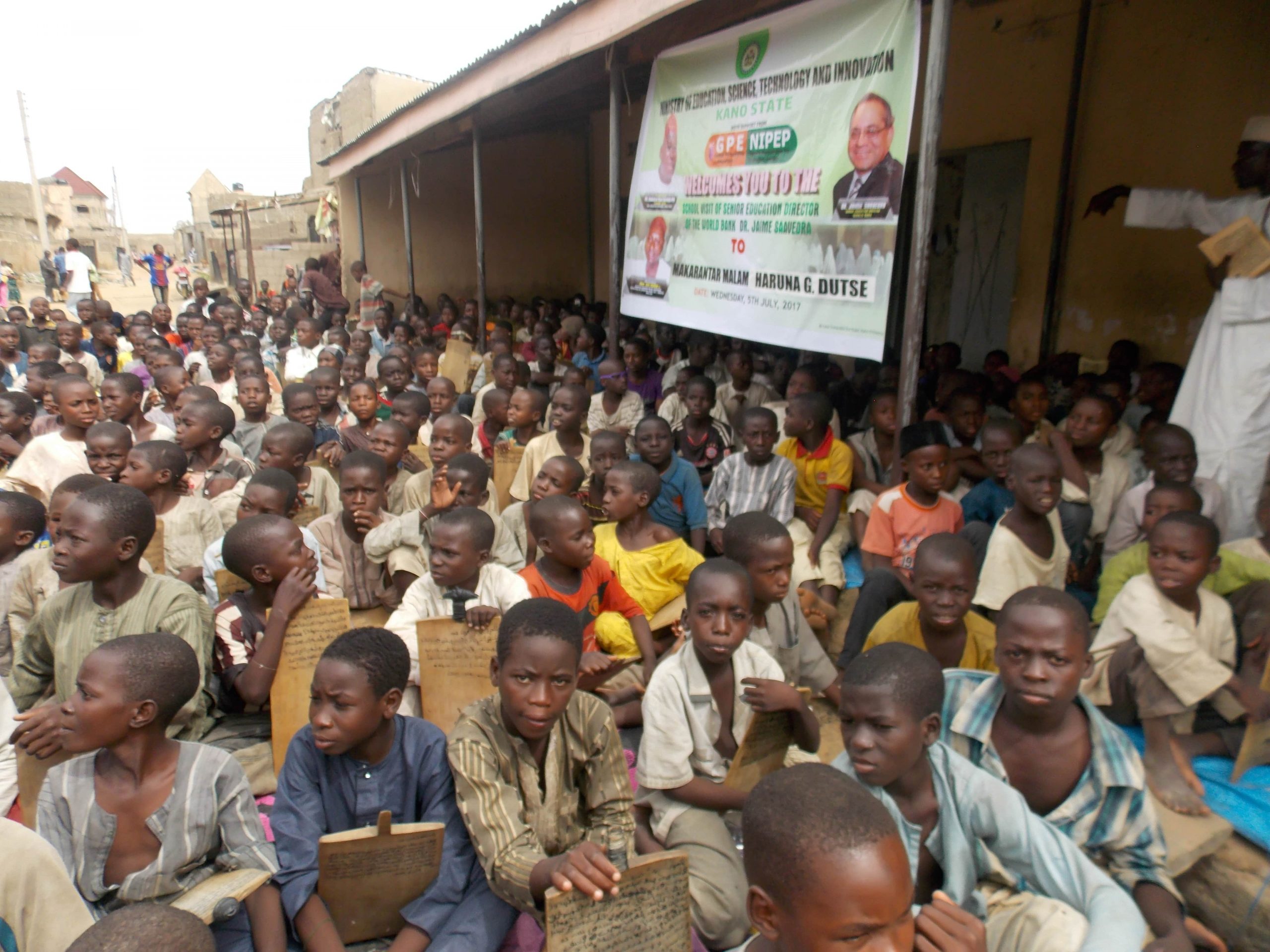
The misfortune of Tsangaya students in Nigeria
By Lawi Auwal Yusuf
The Tsangaya system in northern Nigeria started more than a century ago. It is a traditional and informal system of Islamic education where male children are taken to a far place from home to memorise the Qur’an and study other religious books. This will help them to concentrate more on their studies than in the comfort of their homes. They can be seen in every part of the region, and they mostly come from rural areas and are predominantly taken to the cities, while some come from neighbouring countries.
It has taken a parallel dimension in the last decades as there has been a massive influx of these young children into the urban areas.
This rural-urban migration is exacerbated by rising poverty in the countryside, dilapidated infrastructures, unemployment, rising cost of living and a corresponding decline in the standard of living. Moreover, monetisation of the rural economy, desertification, effects of climate change and lack of social amenities worsen the situation.
Similarly, this mass movement has its repercussions on the metropolitan areas such as overcrowding, squalor housing and homelessness, poverty, the spread of diseases, starvation, poor sanitation, joblessness, criminal activities and fanaticism.
The pitiful and awful plight of these vulnerable children, including minors of about five, is very sorrowful, disheartening, and sympathetic. These oppressed kids below the legal age of responsibility and accountability roam in nooks and crannies of cities hungrily begging for food wearing tattered, shabby and ragged clothes without shoes in the scorching heat. They wander from house to house, in marketplaces, on the streets, motor parks/stations, mosques, traffic intersections and social gatherings in search of livelihood. They scavenge through refuse and garbage, looking for food and other valuable materials. These miserable children sleep on the roadsides, under bridges, marketplaces, uncompleted buildings and other unfortunate places under intense bites of mosquitoes and other insects.
Moreover, they defecate in the open as there are no toilets to use. They equally lack access to safe drinking water, prophylaxes, vaccines and immunisations that can help to prevent them against dangerous diseases.
Some of them are not much acquainted with their parents, siblings and other extended family members. They know little about their hometowns. They depart home when they are too young and are rarely visited or go home to reunite with their families, while others never return. Some years ago, I overheard one of them narrating his ordeal that there were only two rooms in their mud house. One was for the parents and the other for the children. The father wanted to marry a second wife while there was no vacant room to accommodate the bride. So he enrolled them in Tsangaya school and arranged the children’s room for her. This is why tribal and political bigots revile and vilify the Northerners on this savage and barbaric behaviour.
These filthy children are left to fend for themselves as no one cares about them. Everyone abandons them. They do not get the psychological support, love and affection of their parents and the bond of kinship ties. They live their entire unwholesome lives away from home. In addition, they also fall victim to child labour, exploitation and abuse. Hence, the teachers and other older co-students ruthlessly maltreat the younger ones and confiscate the food and money they get.
They have equal rights to benefit from the state resources and the public treasury like every citizen. They have equal rights with the children of the so-called prominent personalities, the President, governors, ministers, lawmakers and traditional rulers whose kids are taken to Europe and America to study. They also have the rights to normal life, adequate healthcare, decent shelter, and qualitative education with the requisite skills to make them marketable in the labour market and equal opportunities. Unfortunately, they have been deprived of these constitutional rights and are treated in their fatherland as sub-humans.
In their teenage, they spend much of their time on the course of their subsistence than their studies. Therefore, only a few of them receive the desired education. The unfortunate ones grow up without adequate knowledge, socialisation, professional training, and skills that necessitate them to wander the street and do menial jobs. Appallingly, some end up in theft, mugging, thuggery, drug dealing/addiction, sexual and other street offences.
It is very irritating that these vibrant, vigorous and exuberant youths are not made very productive to our nation. It vexes me to see them idle, redundant and wandering freely without a specific purpose or destination. Had they been adequately trained and made more productive to the society, they would have become professionals in different fields and therefore facilitate its development. It would have been more advanced than it is now. Sadly, all the intelligence, talent and youthful exuberance are being squandered negligently and not made helpful for their benefit and the whole society. This is why Nigeria still lags behind its peers.
This mindlessness of the Nigerian authorities resulted in the December 1980 fracas in Kano. Maitatsine took advantage of this and brainwashed thousands of his students into extremism and fundamentalism. The conflict, which lasted for almost three weeks, put the city at an impasse and led to the loss of nearly 5,000 lives, including Maitatsine himself and enormous property worth millions were destroyed. The survived students initiated another tumultuous disturbance in the subsequent years, whereas in Bulumkuttu, Maiduguri and Kaduna in October 1982, over 3,000 lives were lost. Other riots broke out in Yola in 1984, where over 1,000 people were killed, and more than 60,000 people were displaced. And it also took place in Gombe in 1985.
Furthermore, Boko Haram is more destructive, disastrous, and catastrophic that analysts see as an offshoot of the Maitatsine sect re-emerged with similar ideologies, putting the country in a war for more than a decade. Maiduguri has the largest concentration of these students, where you can find a Tsangaya school with thousands of students. Since the beginning of their offensive attacks in 2009, tens of thousands of lives were lost, and more than 2.3 million people were displaced, and roughly 250,000 fled to the neighbouring countries. The Global Terrorism Index declared it the world’s deadliest terror organisation in 2010. They have engaged in mass kidnappings of innocent civilians, including schoolgirls in Dapchi and Chibok and aggravated famines and food insecurity.
The government should reinvigorate the Nigerian educational system to meet international standards. Similarly, there is a need to introduce an integrated educational system that will completely uproot the dichotomy between Islamic and Western education that will correspond with our religion and culture. A system that will give room for the memorisation of the Qur’an, Islamic subjects alongside the other conventional subjects to be acceptable to all. This was what Muslim countries like Sudan, Libya, Malaysia, Pakistan, Saudi Arabia, Egypt and many others have done. A similar provision should be put in place for Christians to be fair and just to all. In addition, primary education should be entirely free, compulsory and accessible to all.
The governments at all levels should make genuine efforts to eradicate poverty in the villages, combat desert encroachment and revamp agriculture which will help tremendously improve the income of the rural dwellers. And also provide adequate and effective infrastructures and social amenities to make their lives better and easier.
Apart from all these, the government should urgently evacuate and return them all to their homes and enact a statute that will be strictly and rigorously enforced outlawing this incessant desertion. The legislation should also oblige the parents to be responsible for their children’s custody, supervision, and safekeeping.
There is a difference between a man and a father. The latter is a title of birth and guard. So, it is natural to take up the mandate; it is unnatural not to.
Lawi Auwal Yusuf writes from Kano, Nigeria. He can be reached via laymaikanawa@gmail.com.
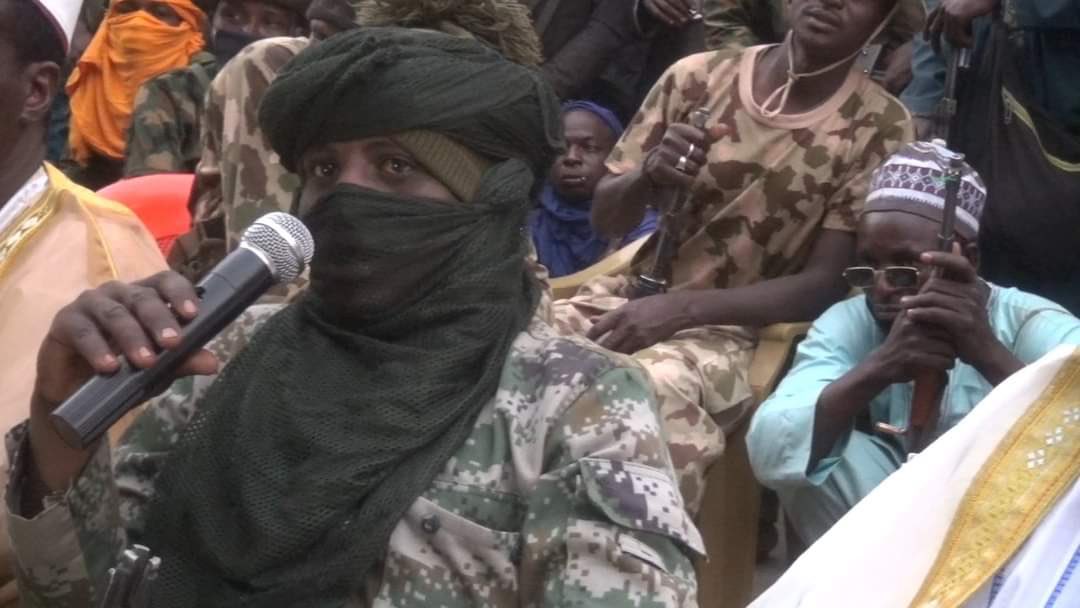
Kidnap gang leader, members killed in Niger
By Muhammad Sabiu
The Nigeria Police Force, in conjunction with local vigilantes, has on Monday succeeded in killing an infamous bandits’ leader in Niger State.
According to some media reports, the bandits’ leader, identified as Jauro Daji, was killed alongside other members loyal to him in the Kontagora axis of the State.
“It was the combined team of policemen and local vigilantes that killed Jauro Daji and score of his bandits who were on a mission to abduct innocent persons at a village.
“The notorious Jauro Daji who is suspected to be involved in attacks on villages and schools led other armed bandits in large numbers on motorcycles.
“The operation was successfully executed on Monday between Gulbin Boka to Dogon Fadama area under Kontagora Local Government Area. We also recovered ten motorcycles.
“We have recruited the services of local divers to retrieve the weapons some bandits who escaped with their corpses threw into the river,” an intelligence source told PRNigeria.
Niger State has also recently been badly hit by bandits’ incessant attacks, which saw many people killed and students in their hundred kidnapped.
Waiting for repentant bandits
By Ibrahim Mustapha
The war against Boko Haram is nearing an end. The news emerging daily that many members of the deadly group are surrendering is cheering. However, mixed reactions have continued to trail their repentance. Since the group appeared to wage war against Nigeria, Boko Haram is reported to have killed over 100,000 Nigerians in addition to displacing millions of others. However, our committed and gallant soldiers deserve a pat on their back for ensuring they sustained the onslaught against the insurgents.
At least, the northeastern states, especially Borno, which is ravaged by the group’s activities, are heaving a sigh of relief after many years of horrible experiences. For the group members believed to have a strong link with ISIS to backtrack, repented and embraced amnesty, this is an indication of victory over them. Also, in a country overwhelmed by many security problems, the news of their repentance is a welcome development.
Ironically, while many Boko Haram members are surrendering and the government is rolling out programs to rehabilitate them, bandits in the northwestern states inflict more harm on the helpless, poor communities. In Kaduna, Katsina, Zamfara and Niger states, bandits have become kings. They impose taxes and only allow local farmers to harvest their crops if certain levies are paid.
In the last three months, there have been increasing cases of students’ abduction for ransom. The continued abduction of students has forced governments to close schools with dire consequences to the education development of the region. Sadly, these daredevil bandits have continued to rake billions of naira from the victims’ low-income families. Disturbed by the continued killings of his people, Governor Aminu Bello Masari of Katsina State recently directed his people to arm and protect themselves against the rapacious bandits. However, Governor Masari’s self-defence statement indicates the government’s failure or inability to protect the lives and property of Nigerians as guaranteed by the constitution.
The last straw that broke the camel’s back was the recent shameful invasion of the Nigerian Defence Academy (NDA) by bandits. Whether it was a security breach as alleged by the military or not, the audacity of those bandits proved the poor security network in our military formations. The unfortunate attack should serve as a wake-up call to the government that, like Boko Haram, the bandits are not only attacking soft targets but also highly secured places.
Ibrahim Mustapha writes from Pambegua, Kaduna State. He can be reached via imustapha650@gmail.com.
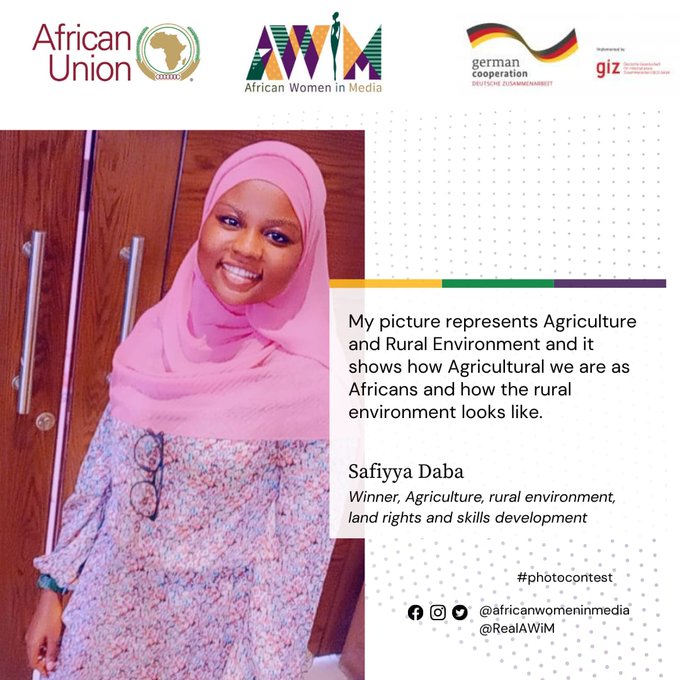
Nigerian photographer, Safiyya Daba, wins Agenda 2063 Photojournalism Award
By Muhammad Auwal Ibrahim
A Kano based Nigerian writer and photographer, Safiyya Muhammad Daba, has been announced as the winner of the Agenda 2063 women photojournalism award organised by African Women In Media (AWiM) in collaboration with the African Union and German Agency for International Cooperation (GIZ).
This announcement was made by African Women in Media (AWiM) during the Agenda 2063 Women’s Photojournalism Awards virtual award ceremony held on July 28, 2021.
According to the organisers, the award was organised to “recognise and celebrate outstanding female photojournalists whose submission of African images will be defined by categories defined by the Goals and Aspirations of Agenda 2063.” All of the winners in each category will get the sum of $2000 each.
The amateur photographer won the award for her photo under the agriculture and rural environment, land rights and skills development category.
The hijab-wearing Muslimah took her time to travel around Kano State documenting the beauty of Africa through photography. She revealed that the award-winning photo was taken during her tour to Takai in 2019 after having intensive training by Equal Access International and National Geographic Photographers.
Nigeria’s Daba is the only Nigerian who won the award alongside three winners from Africa: Vanessa Chebet from Kenya; Fardosa Hussein from Somalia; and Arlette Bashizi from DRC under the various categories of the competition.
Reacting to winning the award during the ceremony, Mrs Daba said “my picture represents agriculture and rural environment and it shows how agricultural we are in Africa and how the rural environment looks like”
Similarly, while speaking with the newspaper on the award, she expressed her excitement for winning the award.
“When I got the email from them, telling me to get prepared and set up my Microsoft Teams app, that It’ll be required to speak should I win the competition in the category I entered to compete in, I was so happy and I couldn’t believe my eyes and ears on the day of the award ceremony. It is really a great pleasure competing alongside professional photographers and photojournalists, and I am really humbled”
Commenting on how the award has impacted her journalism career, she stated that “the award is really a great achievement for me. It has inspired me to take pictures, especially those that will bring positive change to my society. Also want to encourage more women from the north to break this barrier of not having women in the so-called ‘men’s profession'”
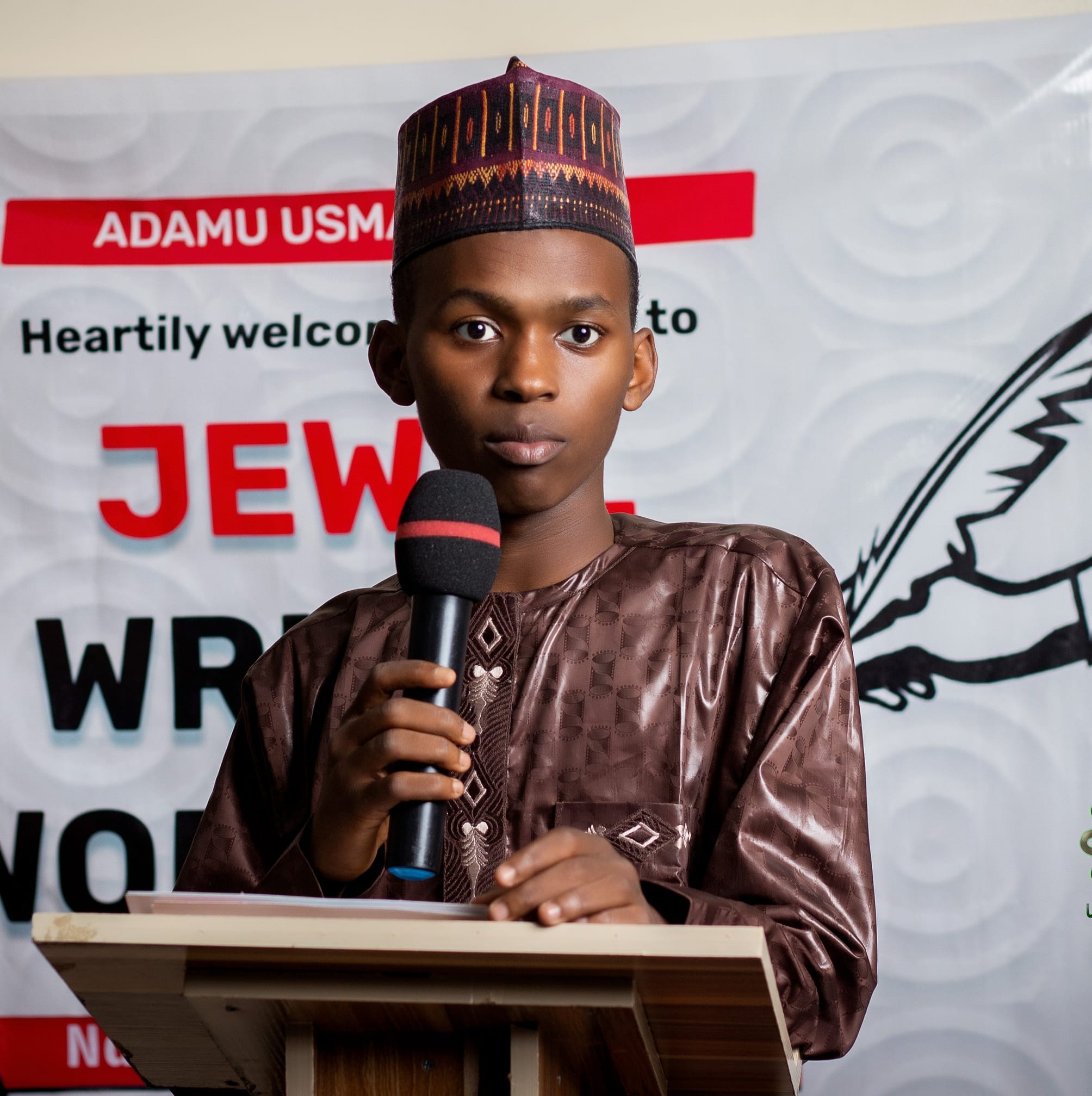
The 61-year-old Nigeria I want
By Adamu Usman Garko
The 61-year celebration of independence by Nigeria in 2021 will be a celebration of faux independence as Nigeria has yet to emancipate herself from the shackles of slavery fully. This slavery, however, isn’t covert but overt; it isn’t manifest but subliminal. Before the independence in 1960, that slavery was manifest. However, the contemporary form of slavery is reflective in the abysmal display of patriotism on all fronts and regards.
If, in 61 years of existence as an independent nation, Nigeria has yet to boast of policies that favour her citizens confidently and can only boast of policies copied from her colonialists hook, line and sinker, then what independence is there to celebrate? If we have yet to absolve plagues like ethnic rivalry, corruption, the proliferation of theft, among other issues, then these calls for recourse in our actions. These are calls for a pictorial representation of the kind of Nigeria we want and deserve. Maybe that way, we would be able to plan towards the actualisation of our dream Nigeria.
As a millennial, the first archetype I nurse is a Nigeria that appreciates creativity and innovation; there is no gainsaying that we are people blessed with talents, innovative and creative abilities, clarity of vision, resilience, and other virtues. Yet, the sickening reality is that these virtues are not duly apportioned the appreciation and support they deserve. Because of this, hordes of talents have been silenced and/or lost to countries where they are well appreciated. But, if schemes geared towards supporting and motivating the innovative abilities of young minds are instituted by the Federal Government of Nigeria, I believe that this subtle form of intellectual slavery will be absolved.
Second, a Nigeria controlled by leaders who nurse a burning desire for recourse and restitution is what I desire. Young minds like myself have, over the years, witnessed so many transitions in government, but these transitions influence nothing; there is a continuum of hunger and pain despite the transitions.
Leaders elected into public offices are elected on the grounds of financial strength, not on the grounds of shown community service, not on displayed prestige and honour, not on the grounds of brilliance and zeal for change.
During election periods, contestants for public offices litter our streets with faux promises only to be elected and trail the path of their predecessors. So, I want a Nigeria controlled by patriotic, sane, brave leaders who are not afraid to take the bulls of change by the horn.
Also, a peaceful Nigeria is everything; a Nigeria devoid of violence, one where the insurgency is a word found in the pages of history, not on the daily newspapers, one where the safety of lives and properties is guaranteed. I am honestly tired of embodying fear in the crevices of my body, fear of being kidnapped, fear of leaving home whole and getting back unwhole, fear of losing all I’ve gathered as properties to the hands of thieves or the hands of ruins because this fear cripples the creativity of young minds like myself and this conversely affects our individual contribution to the development of the country.
A peaceful Nigeria is not the only key to development but also key to the solidification of whatever changes occur. So I want a Nigeria devoid of favouritism, one other cankerworm that has eaten deep into the sinews of all fronts, even the healthcare system, even the judiciary.
I want a Nigeria I can call home, and a home is a place of respite. I want a Nigeria that is kind. A Nigeria brimmed with people who are open and ready to embrace diversity in culture and language, choked with humane, open-minded people who see life as a commonplace for collaboration and not one for unhealthy competition.
I want a Nigeria that can boast of being a giant, a Nigeria that isn’t a phoney or paperish giant but one that is living up to the giant tag by being the cheerleader of progress and development on the continent. A Nigeria that is clever in her use of raw materials, one that wouldn’t be exporting crude oil to other countries and rebuy.
Until the Nigeria I described above is actuated, we would continue celebrating decades of independence without knowing that we are still enslaved in regards stated above; intellectual slavery, financial slavery, mental slavery and even developmental crippling.
Until we have a structured model out in place to actualize the kind of Nigeria stated above, I am afraid we shouldn’t be celebrating independence. And, we need not wait any further, for the future is now.
Adamu Usman Garko writes from Gombe. He can be reached through poetadamu@gmail.com.

Kano Drug Agency trains 80 students on quality control
Aishatu Aliyu
The Kano state Drugs and Medical Consumable Supply Agency has trained 80 students on mandatory industrial practical training at its office.
Presenting certificates at the graduation ceremony of the training, the Director-General of the Agency, Pharmacist Husham Imamiddeen, tasked the students to utilise their skills.
He said, “Amongst the responsibilities of the Drugs Medical Consumable Supply Agency is the production of qualitative and Affordable Drugs to the people of Kano State.”
The DG also stated that the Agency has a quality control unit, whereby tests were conducted before the release of drugs.
Pharmacist Imamudeen added that the students conducted their mandatory six months training on quality control, after which they were certified.
The trainees then commended the Agency for equipping them with the acquired skills and support during the training period.
Injustice in Jigawa State scholarship scheme
By Garba Sidi
It’s well-known that the Jigawa State government paid half of the registration fee to its indigenes each year. That’s how any governor in this state inherited it and continued it. Still, unfortunately, the present governor, Muhammad Badaru Abubakar, came with some injustice in this matter of scholarship. For three years, the money has not been paid.
The government conducted a screening exercise on 28/01/2021. However, after five months, they selected only three schools within the state and disbursed the money to some students, not all and stop till now. Then, they went on to the media and announced that they gave scholarships to all Jigawa state students. It is an injustice.
Sadly all these injustices that happened, neither the Jigawa state assembly nor the commissioner of education uttered a word about the matter. While students are suffering from poverty, and some even dropped their studies because of registration fees. Those House of Assembly members and commissioner of education are busy taking their children abroad to study in expensive schools.
Unfortunately, it looks like there is no Students Union Government in this state. This is because the Union has failed to discharge its responsibility to fight for students’ welfare. Unfortunately, the acting president of this Union is busy travelling from Kano to Katsina, and others state fulfilling the mission of another group he joined some time ago.
Days ago, leaders of Jigawa state schools’ chapters visited the state capital, Dutse. They met with Special Advisor on students matter on this issue of scholarship. His reaction was, if students protest, the government will not ever give scholarships to any indigenes of Jigawa state. That typically showed students have no freedom to struggle for their rights as the constitution of Nigeria gives to anybody.
May Allah bless us with good leaders.
Garba Sidi wrote from Jagawa State. He can be reached via sidihadejia@gmail.com.