By Maji Bappa Maina
The development of a state presents a fundamental policy question: how can government concentrate the infrastructure required by its capital while ensuring that other towns, rural communities and local economies also receive meaningful attention? The answer requires more than the construction of prominent projects.
It calls for a development approach that recognises differences in local needs, connects communities to economic opportunities and distributes public investment across the state’s geographical space.
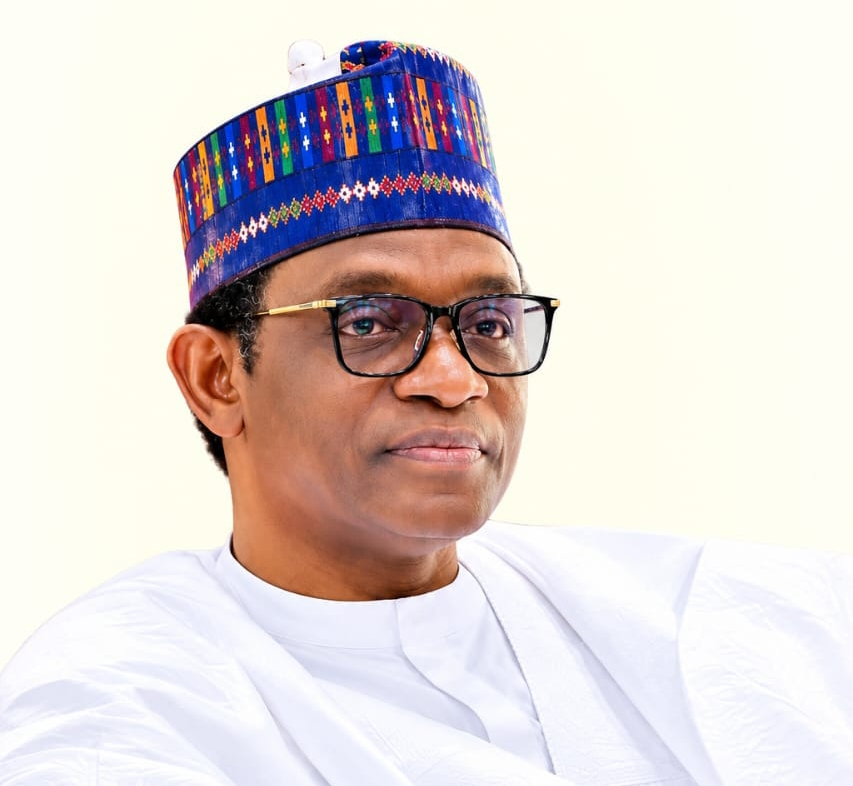
This question is particularly relevant to Yobe State under Governor Mai Mala Buni.
While Damaturu continues to receive major infrastructure investments, projects across other parts of the state provide an opportunity to examine a broader development approach involving roads, markets, transport facilities, sports infrastructure and local-government work plans.
Viewed collectively, these interventions suggest a development agenda that extends beyond the state capital.
Their significance lies in the different functions they serve and the ways they can contribute to the economic and social life of communities across Yobe’s 17 Local Government Areas.
Damaturu and the Wider Geography of Development
A state capital naturally attracts substantial public investment. As the administrative centre, Damaturu accommodates government institutions, businesses, public services and a growing population.
Its infrastructure must respond to traffic, commercial activity, public-sector operations and the demands of urban expansion.
The flyover and underpass project reflects the need to address urban mobility and improve the movement of people and vehicles.
Investment in major urban infrastructure can support commercial activity, improve access and prepare the capital for future demands.
Damaturu’s sports infrastructure also forms part of this picture.
The stadium in the capital is an important sporting facility in Yobe and is regarded locally as one of the notable stadiums in the Northeast. Alongside the reported 5,000-square-metre stadium project in Buni Yadi, it illustrates the place of sports facilities in the state’s wider infrastructure landscape.
However, the development of the capital raises an important policy consideration: the extent to which investment in the urban centre is complemented by infrastructure in other communities.
The relevant question is not whether Damaturu should receive major projects.
It is whether the development of Damaturu can proceed alongside improvements in the towns and rural settlements whose residents also depend on government investment.
The examples emerging from other parts of Yobe suggest that this broader geographical perspective deserves attention.
Roads as Instruments of Economic Connection
Road infrastructure is often discussed in terms of kilometres constructed, project costs or the physical appearance of a completed route.
From a development-policy perspective, however, its wider importance lies in the connections it establishes between people, productive activities and markets.
In a report published on 14 January 2026, Vanguard reported that the Buni administration had constructed more than 100 roads connecting towns and villages across Yobe’s 17 LGAs over the preceding six years.
The report also identified other infrastructure projects at different stages of implementation.
Among the additional examples provided for this analysis are the 59-kilometre Kariyari–Dapchi–Bayamari road link, the 18-kilometre Bukarti–Toshia road in Yunusari and the 10-kilometre Chusbosko–Tagali road in Bade Local Government Area.
These routes illustrate why geographical connectivity matters to development outside major urban centres.
A road linking settlements can influence the cost of transporting agricultural produce, the time required to reach markets and the accessibility of healthcare and other services.
It can also strengthen commercial relationships between communities that depend on one another for goods, labour and trade.
For agricultural households, the ability to move produce to buyers is an important part of the income-generating process. Production alone does not guarantee economic benefit if transportation is expensive or access to markets is difficult.
Improved connectivity can help reduce these barriers, although the actual effect depends on road quality, maintenance, traffic and the availability of functioning markets.
The same principle applies to social services. Where roads improve access between settlements and service centres, residents may find it easier to reach hospitals, schools and administrative offices.
The scale of that benefit will vary from one community to another, but the underlying relationship between connectivity and access remains an important consideration in development planning.
The reported construction of more than 100 roads therefore offers a useful basis for examining how infrastructure investment can extend beyond Damaturu and connect communities across the state.
Markets and the Geography of Local Economic Growth
Roads become more economically useful when they connect people to places where goods and services are exchanged.
This makes market infrastructure an important complement to the development of transport networks.
The 16 modern markets reported in the wider project inventory, including those at foundation stage, provide another example of investment beyond the capital.
Their development raises a broader question about how commercial activity can be supported across different local-government areas rather than becoming increasingly concentrated in one urban centre.
Markets are not simply physical structures. They are meeting points for producers, traders, transport operators, artisans and consumers.
Their contribution to local development depends on whether they offer accessible and functional spaces for commercial activity and whether surrounding communities can reach them without excessive difficulty.
For farmers, a functioning market can provide an outlet for agricultural produce. For traders, it can create a more organised environment in which to conduct business.
For consumers, it can improve access to goods and services.
For local authorities, well-managed markets may also provide opportunities to improve the organisation of commercial activities.
The distribution of market facilities across different LGAs can therefore be understood as part of a wider effort to support economic activity in multiple locations.
The distinction between completed markets and those still at foundation stage remains important.
A project under construction has not yet delivered the same benefits as an operational facility.
The eventual contribution of the 16 markets will depend on their completion, accessibility, management, maintenance and ability to attract sustained commercial use.
Nevertheless, their inclusion in the wider development picture demonstrates the importance of examining economic infrastructure beyond the state capital.
Transport Facilities and the Movement of Goods and People
The motor park in Buni Yadi and the trailer park in Potiskum provide further examples of infrastructure serving communities outside Damaturu.
Transport facilities occupy an important position between road construction and economic activity.
Roads provide routes for movement, while motor parks and freight facilities help organise the movement of passengers, vehicles and goods.
A motor park can provide a designated location for passenger transport, vehicle operations and related commercial activities.
Its effectiveness depends on its accessibility, management, safety and integration with transport routes.
A trailer park serves a different purpose. Facilities for heavy-goods vehicles can help accommodate freight operations, including parking and loading activities, where these are properly planned and managed.
Such infrastructure can be relevant to commercial centres that receive or dispatch substantial volumes of goods.
The significance of these projects is not limited to their physical presence.
They represent different ways in which government infrastructure can support the movement that connects local production, commerce and consumption.
For Potiskum and other commercial centres, the relationship between transport infrastructure and trading activity is particularly relevant.
For Buni Yadi, a motor park can serve local mobility needs while providing a more organised setting for passenger transport.
The wider policy consideration is that development involves more than constructing roads.
It also requires attention to the facilities that make transportation and commercial activity function effectively.
Buni Yadi: Connecting Commercial, Social and Community Infrastructure
The examples from Buni Yadi offer an opportunity to examine how development can address several dimensions of community life.
The motor park, Buni Gari Mini Market and reported 5,000-square-metre stadium project represent different categories of infrastructure: transport, commerce and sports.
Each has a distinct purpose. The motor park can support passenger movement; the mini market can provide a setting for local trading; and the stadium can offer space for sporting activities, youth participation and community events.
Considering these projects together helps illustrate why local development should not be assessed through a single category of infrastructure. Communities have interconnected economic and social needs.
Transport facilities support movement, markets support exchange, and sports facilities provide opportunities for recreation and organised activities.
A stadium’s value, for example, depends not merely on its construction but also on its accessibility, maintenance, management and availability for regular use.
Where these conditions are met, sports infrastructure can contribute to youth engagement and community life.
The same principle applies to markets and transport facilities.
Their contribution to development depends on whether residents can use them effectively and whether they continue to serve their intended purposes.
Buni Yadi therefore provides one example of how the development agenda outside Damaturu encompasses different types of public infrastructure rather than focusing exclusively on roads or conventional public buildings.
Sports Infrastructure in Damaturu and Other Communities
The inclusion of sports facilities in both Damaturu and Buni Yadi also broadens the meaning of development.
The stadium in Damaturu represents the capital’s sporting infrastructure, while the proposed or reported 5,000-square-metre facility in Buni Yadi points to sports development beyond the state capital.
Together, they raise questions about access to recreation, opportunities for young people and the distribution of facilities that support community participation.
Sports infrastructure does not replace investment in healthcare, education, water or other essential services. Its contribution is different.
Properly maintained sporting facilities can provide spaces for physical activity, organised competition, talent development and social interaction.
The extent of their impact depends on the programmes and opportunities built around them.
A facility that remains accessible and actively used can serve a wider purpose than one that is constructed but poorly maintained or underutilised.
From a development-policy perspective, the presence of sports infrastructure in different locations is therefore worth considering as part of the wider distribution of public facilities across the state.
Local-Government Work Plans and Development Priorities
The geographical distribution of infrastructure is only one dimension of the development process.
Another concerns the institutional arrangements through which local needs are identified, projects are selected and public funds are allocated.
In May 2023, the News Agency of Nigeria reported that Governor Buni approved the release of approximately ₦765.9 million as the final 40 per cent payment for work-plan projects across the 17 LGAs. The projects had a reported total cost of approximately ₦1.7 billion, with 60 per cent previously paid.
The reported areas of intervention included water supply, sanitation and hygiene, agriculture and healthcare.
The report also described a process involving the scrutiny and prioritisation of projects through a local-government budget committee, alongside monitoring and supervision by the Ministry for Local Government and Chieftaincy Affairs.
This arrangement is relevant because the needs of local-government areas are not necessarily identical.
Communities differ in their infrastructure gaps, economic activities, population patterns and access to public services.
A structured work-plan process provides a mechanism through which different priorities can be considered within the public expenditure system.
However, the geographical distribution of projects should not automatically be equated with complete decentralisation.
Establishing the extent of local decision-making would require further evidence about how priorities are proposed, who approves them, how allocations are calculated and what authority local councils exercise.
Even with that distinction, the reported work-plan funding demonstrates an institutional channel for financing development interventions across the 17 LGAs. It provides a useful basis for examining how local needs are incorporated into a wider state development process.
Beyond the Number of Projects: Questions of Impact
The range of projects discussed here provides a useful picture of development across different geographical locations and sectors.
But a serious assessment must go beyond counting roads, markets, parks and stadiums.
Three considerations are particularly important.
First, geographical reach concerns which communities benefit from public investment and whether areas with different needs are being considered.
Second, functional value concerns whether projects address identifiable problems.
A road should improve connectivity; a market should support commercial activity; and a transport facility should serve movement and logistics needs.
Third, sustainability concerns whether completed projects are maintained, managed and used over time.
Public infrastructure produces lasting benefits only when it remains functional and accessible to the people for whom it was intended.
These considerations do not diminish the importance of constructing projects.
Rather, they provide a framework for understanding how public investment can translate into practical improvements in people’s lives.
They also explain why transparent project information, completion records, maintenance plans and evidence of usage are valuable to both government and citizens.
A development strategy becomes more meaningful when its achievements can be examined not only through expenditure and construction figures but also through the services and opportunities that the resulting infrastructure provides.
One State, Multiple Centres of Opportunity
The development of Yobe cannot be understood solely through the transformation taking place in Damaturu.
The wider picture includes the roads connecting towns and villages, modern markets at different stages of development, transport facilities in Buni Yadi and Potiskum, community infrastructure and local-government work-plan projects.
The flyover and underpass in Damaturu, the stadium in the capital, the road links in Yunusari and Bade, the modern markets, the Buni Yadi motor park, Buni Gari Mini Market and the trailer park in Potiskum serve different purposes.
Their common relevance lies in how they contribute to the infrastructure available across different parts of the state.
This is the central policy question raised by the administration’s geographically distributed projects: how can investment in the state capital be combined with improvements in the accessibility, commercial capacity and public facilities of other communities?
The examples discussed in this article provide a basis for exploring that question.
They suggest that development beyond Damaturu is an important part of the state’s wider infrastructure programme, although the degree of equity and the precise effects of individual projects must be assessed through project-level evidence.
Ultimately, the success of a state’s development effort depends not only on the visibility of its capital but also on the extent to which other communities are connected to public services and economic opportunities.
Damaturu can continue to develop as Yobe’s administrative and urban centre while other towns strengthen their commercial activities, improve transport connections and expand access to community facilities.
The broader objective is a state in which development is not confined to a single urban centre, but is pursued across different locations in ways that respond to local needs and support wider economic and social progress.
Maji Bappa Maina Voice of Development, Leadership and public Insight Agent.
[OPINION]: Understanding Buni’s Strategy for Distributing Development Across Yobe

ByAdmin
20 October 2026