Yobe State

[OPINION]: How Yobe Transformed its Healthcare System into a Model of Reform, Expansion

By Maji MB

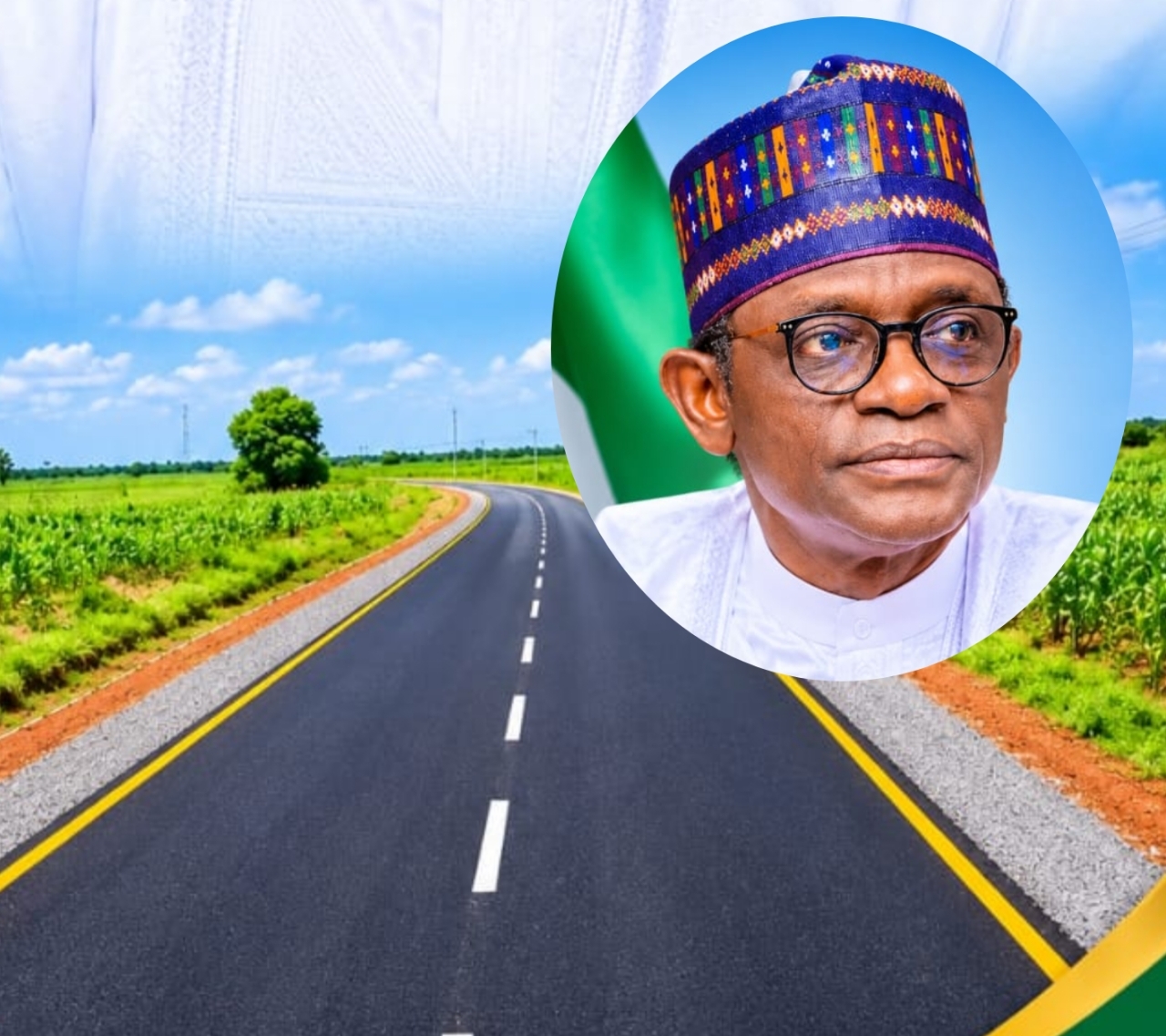
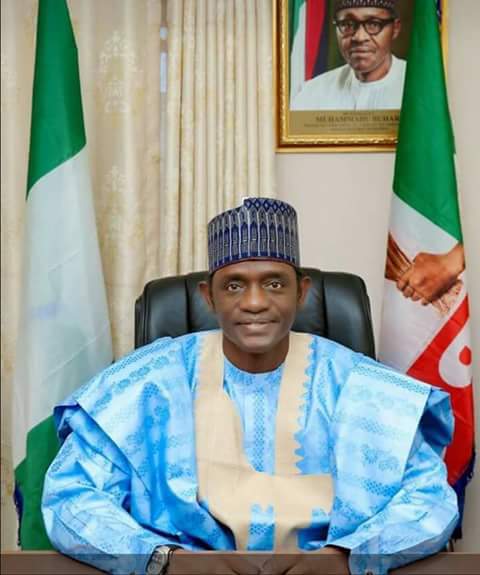
Like a traveler who set out at dawn with hope carefully folded into his resolve and a quiet determination that refused to fade with distance or difficulty, Governor Mai Mala Buni embarked on what would become a wide-reaching and sustained reform of the healthcare system in Yobe State, approaching it not as a set of isolated projects but as a deeply interconnected mission to rebuild trust, restore access, and reimagine how care could be delivered across both urban centers and remote settlements. From the outset, the focus was not on surface-level improvements but on laying down enduring foundations that could support growth for years to come, even in places where infrastructure had long been weak or unevenly distributed.

He began by returning to the roots of the system, prioritizing primary healthcare as the entry point for most citizens and the backbone of any sustainable medical structure. Across communities, 140 Primary Healthcare Centres were revived or newly established, each one functioning not merely as a building with equipment but as a functioning access point for families who previously had to travel long distances for even basic medical attention. These centers became essential spaces where preventive care, maternal support, child health services, and first-response treatment could be accessed closer to home, gradually reshaping how communities interacted with the healthcare system and reducing delays that often turned treatable conditions into emergencies.

From that foundation, the reforms expanded outward into secondary and tertiary levels of care, with local government areas strengthened through secondary facilities and more specialized services distributed across zones to reduce pressure on central hospitals. At the highest level, tertiary institutions were reinforced to handle more complex cases, creating a more coherent referral structure that allowed patients to move through the system in a more organized and efficient way. This layered approach helped reduce bottlenecks while also ensuring that care was not concentrated in one location but spread in a way that matched population needs.

Recognizing that geography and terrain often determine survival in emergencies, the administration introduced 88 customized tricycle ambulances designed specifically for hard-to-reach areas where conventional vehicles struggled. These ambulances became more than transport solutions; they functioned as critical links between vulnerable households and formal medical care, navigating narrow paths and rural roads to retrieve patients in urgent need. In many cases, they shortened the time between crisis and treatment, reinforcing the idea that healthcare accessibility is not only about facilities but also about mobility and reach.

Alongside infrastructure expansion, attention was given to financial protection and inclusion through the Yobe State Contributory Healthcare Management Agency, which expanded coverage to over 300,000 residents. This initiative reduced the immediate financial burden on households by allowing citizens to access services without bearing the full cost of treatment upfront, with government support covering the majority of expenses and patients contributing a small portion. In practice, this helped shift healthcare from being a sudden financial shock to a more predictable and manageable system of shared responsibility.

To address the persistent challenge of drug availability, the establishment of the Drugs and Medical Consumable Management Agency became a central intervention point, supported by over ₦2.3 billion worth of medical supplies. This ensured that hospitals and clinics were no longer frequently hindered by stock shortages or treatment interruptions. Medicines, consumables, and essential supplies became more consistently available, strengthening confidence in public health facilities and improving continuity of care for patients who previously faced delays or had to seek alternatives outside the state.

Emergency response systems were also strengthened through improved ambulance services and inspection mechanisms designed to ensure accountability and readiness across facilities. This meant that response times in critical situations improved, coordination between facilities became more structured, and oversight mechanisms helped maintain operational standards. In practical terms, this created a more responsive system where emergencies could be handled with greater speed and fewer procedural delays, particularly in situations involving accidents or sudden medical complications.

A major humanitarian component of the reforms was the introduction and expansion of free healthcare services for vulnerable groups, including pregnant women, young children, accident victims, and patients requiring dialysis for kidney-related conditions. By removing financial barriers in these high-risk categories, the system provided direct relief to families facing some of the most expensive and emotionally taxing medical situations. This intervention not only reduced mortality risks but also reinforced the principle that certain categories of care should remain accessible regardless of income level.

In parallel, immunization and disease prevention efforts were significantly strengthened through collaboration with development partners, leading to a notable increase in immunization coverage from 16% to 65%. Programs targeting polio and other childhood diseases were intensified, resulting in improved public health indicators and positioning the state as one of the most improved in the country. At the same time, investment in medical infrastructure continued at the teaching hospital level, including the construction of a 300-bed Maternal, Newborn, and Child Health complex and the expansion of overall capacity to over 700 beds, alongside the introduction of advanced diagnostic equipment such as MRI, CT scan, mammography, digital X-ray, and ultrasound systems.

Finally, attention turned toward sustainability and human capital development, with upgrades to institutions such as Shehu Sule College of Nursing and Midwifery and Galtima Mai Kyari College of Health Sciences, including improved facilities, expanded learning environments, and enhanced living conditions for students. In a notable workforce intervention, automatic employment opportunities were provided to graduates to strengthen staffing levels across the health system. Over time, these combined efforts contributed to improved national recognition, culminating in the state’s emergence as the best-performing state in the National Primary Healthcare Competition of December 2025, reflecting a system that had evolved from fragmented services into a more coordinated and steadily improving healthcare framework.

Maji MB wrote from Potiskum, Yobe State.

NAF launches night raids, kills 25 terrorists in Borno, Yobe

By Anas Abbas 

The Nigerian Air Force (NAF) has killed more than 25 terrorists in a coordinated night air raid around Bula in Yobe State and the Banki axis of Borno State.

Director of Public Relations and Information, Air Commodore Ehimen Ejodame, disclosed this in a statement issued on Saturday in Abuja. 

He explained that the operation was carried out on September 18, following actionable intelligence provided by ground troops.

According to Ejodame, a combination of Intelligence, Surveillance and Reconnaissance (ISR) assets and strike aircraft tracked terrorist movements and spotted multiple groups north of Banki. The terrorists were then hit in three successive precision strikes along their movement routes and assembly points.

“Real-time updates were relayed to ground forces and base operations, enabling synchronised action. The strike aircraft engaged the terrorists in three successive precision strikes, effectively neutralising more than 25 fighters,” Ejodame stated.

He added that post-strike surveillance confirmed that ground forces had maintained their defensive positions, with no further threats detected.

Ejodame said the operation highlighted the Air Force’s unwavering support for ground troops and its commitment to denying terrorists freedom of action in the North-East.

The operation comes just days after Boko Haram insurgents attacked the Darajamal community in the Bama Local Government Area of Borno on September 8, killing at least 63 people, including five soldiers. The attackers, who rode in on motorcycles, shot indiscriminately, razed houses and vehicles before military reinforcements arrived.

Governor Babagana Zulum had described that incident as “very sad,” confirming the death toll and pledging government support to the affected families.

‎‎Yobe senator empowers six female constituents with ₦1 million each‎‎

By Kasim Isa Muhammad‎‎

In a deliberate move to cushion the impact of economic hardship and create sustainable opportunities for women, Senator Ibrahim Mohammed Bomai, who represents Yobe South Senatorial District, has empowered six women with financial support of ₦1 million each.

The initiative, which was unveiled in Potiskum on Friday, is part of the senator’s ongoing interventions aimed at addressing poverty, improving livelihoods, and encouraging women to actively participate in business and community development.‎‎

According to Yusuf Zaki, a close aide of the senator who represented him at the event, the programme was carefully designed to give women in the constituency the financial muscle to either start or expand their businesses.‎‎

He explained that Senator Bomai recognises the enormous contributions that women make to household welfare and the local economy, and has therefore prioritised their empowerment.‎‎

“Senator Bomai believes that empowering women is one of the most effective ways of reducing poverty and improving livelihoods in our communities. The ₦1 million given to each of the beneficiaries will enable them to invest in viable ventures that can sustain their families and, by extension, contribute meaningfully to the growth of the local economy,” Zaki stated while addressing journalists.‎‎

He also noted that this intervention is not an isolated gesture, but part of a broader empowerment agenda that the senator has consistently pursued since assuming office. ‎‎

According to him, the lawmaker has previously supported educational programmes for indigent students, invested in healthcare projects, and initiated youth empowerment schemes to tackle unemployment in Yobe South.‎‎

Zaki added that the women’s empowerment programme was deliberately crafted to focus on those who have shown entrepreneurial drive but lacked access to capital due to the harsh economic realities and limited opportunities in rural communities.

‎‎One of the beneficiaries, Aisha Mohammed, who operates a small tailoring business, spoke emotionally about how the support has given her a renewed sense of hope.

‎‎She said she had struggled for years to keep her shop running with outdated sewing machines and insufficient materials.

“This money is a lifeline for me. With ₦1 million, I can now buy better sewing machines, employ two apprentices and expand my shop to cater for more customers. It is not just about money; it is about the dignity and confidence it gives me to keep going. I am grateful to Senator Bomai for remembering women like us who are struggling to survive,” she told our correspondent.

‎‎Another beneficiary, revealed that she intends to invest in poultry farming, which has long been her dream but was hampered by lack of capital.‎‎

According to her, poultry has the potential to provide steady income and create employment opportunities for others in her community.

“With this support, I can start on a solid foundation by setting up proper structures and buying enough birds and feed. It is a dream come true because women in rural communities like ours hardly get access to bank loans or financial institutions. This is why we are so grateful to the senator for giving us a chance to stand on our feet,” she said.

‎‎Community leaders in Yobe South have also applauded the initiative, describing it as a commendable step towards poverty reduction and local economic revitalisation.

‎‎Alhaji Idi Jugujugu, a respected elder in Potiskum, said the programme goes beyond financial empowerment, as it also builds confidence in women and encourages them to see themselves as active contributors to development.

‎‎“This is not just about giving money, it is about building confidence in women and showing them that they can also be economic pillars in their families and communities. If more leaders would replicate such interventions, many families would escape poverty and our society would be stronger,” he stressed.‎‎

Nigerian photographer Saidu Abdulrahaman sets Guinness World Record for most headshots in one hour

By Hadiza Abdulkadir 

Nigerian photographer Saidu Abdulrahaman has made history by earning a Guinness World Record title for the most headshot photographs taken in one hour. He successfully captured 897 portraits within 60 minutes, showcasing his exceptional skill, speed, and precision behind the camera.

Abdulrahaman, who hails from Yobe State in the Northeast, expressed immense gratitude for the support he received from fellow Nigerians, attributing his success to the encouragement of family, friends, and well-wishers. “This achievement is not just mine; it belongs to every Nigerian who believed in me,” he stated.

He emphasised that breaking a world record is no easy feat, requiring focus, endurance, and a strong support system. His accomplishment is an inspiration, proving that with determination, Nigerians can compete and excel on the global stage.

With this historic milestone, Abdulrahaman joins the ranks of Guinness World Record holders, setting a new standard in photography. He hinted that this is just the beginning, promising to continue pushing boundaries in his field.

Yobe student awarded full scholarship after scoring 336 in JAMB exam

By Hadiza Abdulkadir

Fatima Alkali Saleh, a bright student from Yobe State, has been awarded a full scholarship by Dr. Sa’id Alkali Kori, Chairman of ThinkLab Group, after scoring an impressive 336 in the 2024 Joint Admissions and Matriculation Board (JAMB) exam.

The scholarship covers her tuition and essential academic tools, including a laptop and technical drawing instruments, supporting her ambition to study architecture.

Dr. Kori praised Fatima’s dedication, stating that her excellence aligns with ThinkLab Group’s vision of empowering future leaders.

Fatima expressed gratitude for the life-changing opportunity, vowing to give back to her community. Her achievement stands as an inspiration for students across Nigeria.

Setting the record straight: Yobe State’s education success

By Ibrahim Muhammad 

The Yobe State Government has made significant strides in revamping the education sector, demonstrating its commitment to empowering future generations.

In 2024, the government invested over N2 billion in learning materials and infrastructure development through its Universal Basic Education Board (YSUBEB).  

According to YSUBEB Executive Secretary Alhaji Isa Shettima, the substantial investment aims to enhance the quality of education in primary and secondary schools across the state. 

Learning materials were widely distributed, including essential items such as pencils, pens, exercise books, school bags, chalk, whiteboards, markers, and more.

Specifically, the YSUBEB distributed 5,600 cartons of pencils, 5,600 cartons of ballpoint pens, and 5,600 cartons of exercise books, among other materials.

Additionally, UNICEF donated 56,000 branded school bags. Infrastructure development was also a key focus area, with the YSUBEB renovating over 100 schools across the state’s three geopolitical zones.

Notable projects included the construction of new classroom blocks, administrative blocks, laboratories, libraries, and offices in various schools.

The government also built two vocational schools in each geopolitical zone. Some of the notable projects undertaken by the YSUBEB include renovating a block of two classrooms, offices, and stores in Government Secondary School, Dagona, and building a block of six classrooms with an administrative block, laboratory, library, and offices in GDJSS, Abba Ibrahim.

The YSUBEB also constructed two classroom blocks, an office, and a store in Bizi Primary School and six classroom blocks with an administrative block, a laboratory, a library, and offices in Government Day Secondary School Buraima. 

Despite these efforts, some reports have falsely claimed that the Yobe State Government has neglected the education sector, leaving schools in a ramshackle condition.

However, these claims are entirely unfounded and misleading. The facts on the ground demonstrate the government’s unprecedented commitment to providing quality education.

The N2 billion investment in learning materials and infrastructure development is a testament to this commitment. It is essential to set the record straight and dismiss these baseless reports.

The Yobe State Government has made overwhelming progress in revitalising the education sector, and this progress should not be obscured by misinformation.

The government remains dedicated to providing a conducive learning environment for its citizens and ensuring that every child has access to quality education. 

The Yobe State Government’s efforts in education are part of its broader development agenda, as outlined in the 2024 Appropriation and Finance Bills.

The urgent need for action on kidney disease-related deaths in Gashua

By Mujahid Nasir Hussain

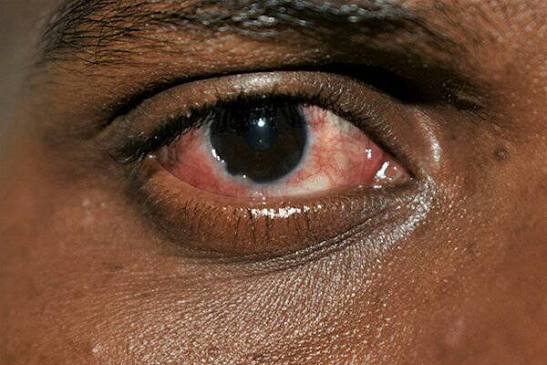
Gashua, a local government area in Yobe state, Nigeria, is facing a distressing public health crisis. An alarming increase in the number of individuals succumbing to kidney diseases is being reported, yet the underlying cause remains unidentified. 

The kidneys are essential organs located in the retroperitoneal part of the body. These bean-shaped organs perform several crucial functions, including blood filtration, blood pressure regulation, electrolyte balance, acid-base balance, blood calcium regulation, and many more. However, when they become impaired, those vital functions are compromised, leading to severe and devastating deterioration and complications.

The rising number of deaths linked to kidney diseases in Gashua is a cause for serious concern. It is impossible to implement effective interventions without identifying the underlying cause, whether environmental, genetic, or related to lifestyle factors. 

The Yobe state government must prioritise an investigation into the root causes of these kidney diseases to find an end to the problem. Public health agencies, researchers, and medical experts should be mobilised to conduct thorough epidemiological studies and screenings to identify potential risk factors. 

In addition, there is also a need to take proactive measures through:

  • Raising Awareness:  Educating the community about kidney health, risk factors, and early symptoms of kidney disease to encourage timely medical consultation.
  • Enhancing Healthcare Facilities: Improving access to quality healthcare services, including dialysis centres and nephrology specialists, to manage and treat kidney diseases effectively.
  • Providing Clean Water: Ensuring the availability of clean drinking water is essential, as contaminated water is a known risk factor for kidney damage. 
  • Encouraging Lifestyle Changes: Promoting healthy dietary practices and regular medical check-ups to prevent kidney-related diseases.

Mujahid Nasir Hussain studies at Bayero University, Kano, Nigeria and writes via mujahidhnasir@gmail.com.

Gombe gov’t donates ₦50m for Mafa terror attack victims, flood disaster in Yobe State

By Abdullahi Mukhtar Algasgaini

Gombe State Government has donated ₦50 million to aid victims of the recent terror attack in Mafa, Tarmuwa Local Government and the devastating flood disaster in Yobe State. 

In a gesture of solidarity and compassion, Governor Muhammadu Inuwa Yahaya, CON, sent a high-level delegation led by the Deputy Governor, Dr. Manassah Daniel Jatau, to Yobe State to convey the heartfelt condolences and support of the government and people of Gombe State.

Dr. Manassah Jatau, speaking on behalf of Governor Inuwa Yahaya, expressed deep sorrow over the tragic incident in the community, calling it both sad and unfortunate. 

“We stand with you in this moment of grief as you face the double tragedy of the attack on the Mafa community and the devastating floods that claimed lives and destroyed homes and farmlands across the state,” he stated.

He said the N50 million donation will help the state government provide much-needed assistance to the affected victims.

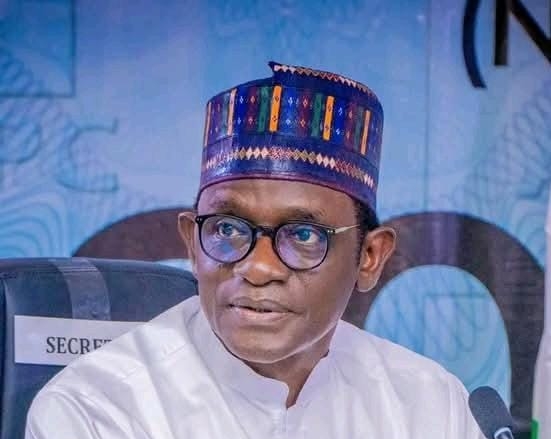
While receiving the delegation, the Governor of Yobe State, Hon. Mai Mala Buni, CON, expressed profound appreciation for the support.

 He described the visit as demonstrating a strong bond of brotherhood and love between Gombe and Yobe States.

He emphasized that while the financial aid will significantly help the victims, solidarity and care in such trying times will be remembered as a remarkable show of unity between the neighbouring states.

Governor Buni noted that the donation and the visit are a source of immediate relief and a lasting symbol of the friendship and cooperation between the people of Gombe and Yobe.

Gashua, who will save you?

By Hamza Muhammad Tasiu

I want to start with a powerful word: Kafkaesque! The meaning? It is when you enter a surreal world in which all your control patterns, plans, and how you have configured your own behaviour begin to fall to pieces. You find yourself against a force that does not lend itself to how you perceive the world. You don’t give up; you don’t lie down and die. You struggle against this with your equipment and whatever you have. But of course, you don’t stand a chance. That’s Kafkaesque as defined by Frederick R. Karl.

Kafkaesque comes from the name of the German author Franz Kafka. The word perfectly describes the cases of most kidney failure patients. The disease starts with back pain, then people go for diagnosis, and dialysis follows (Thank God it is free for Yobe indigenes). Swelling in arms and legs, shortness of breath, and hiccups follow and then comes the expected: slow and painful death. These are some of the things patients go through. 

But what is kidney failure? Kidney failure is a condition in which the kidneys lose the ability to remove waste and balance fluids. In other words, the kidneys have failed. 

Ordinarily, kidney failure should not be a death sentence. Dr. Ibrahim Sulaiman told us that a person can survive on 25% of his total nephrons, the kidney cells. That is, you only need half of one kidney to survive. But for most people, being diagnosed with one kidney failure is like being issued an indirect death certificate.

Most patients diagnosed with kidney disease put everything they can into the fight against the disease, but they stand no chance in most cases. And as the word says, ‘You don’t give up, you don’t lie down and die. You struggle against this with your equipment and whatever you have. But of course, you don’t stand a chance.’ 

Gashua has the highest number of cases of kidney failure in the whole of Yobe State. You could go to the dialysis unit in Yobe State Teaching Hospital and look at a kidney failure patient and ask him, ‘Are you from Gashua?’ The most probable answer? ‘Yes!’ 

As we speak today, hundreds of families are at the mercy of this disease. May we, the healthy ones, be protected from it. We also pray that this crisis comes to an end soon. 

My attempts for writing this short piece are that we may get someone (individuals, NGOs, governments, etc.) who will come to our aid and relieve the pain in my heart. As Neil Gaiman said, ‘Pain shared, my brother, is pain not doubled but halved.’

Hamza Muhammad Tasiu wrote via hamzamtasiu@gmail.com.

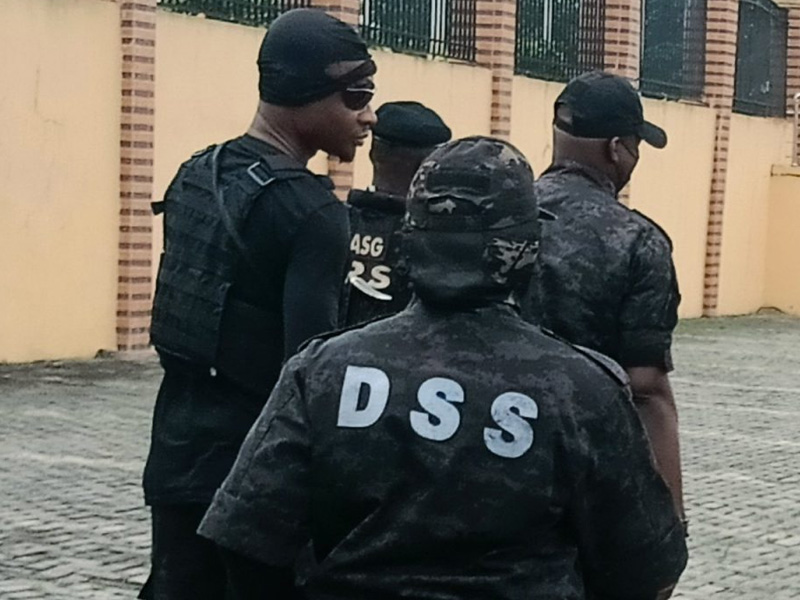
DSS foils child trafficking syndicate, arrests two suspects in Kano

By Uzair Adam Imam 

The Department of State Services (DSS) has disrupted a child trafficking syndicate, apprehended a 17-year-old young woman and her sponsor, and rescued a 4-year-old girl named Aisha, who was abducted from Nguru in Yobe State. 

The Kano office of the DSS said the Kano State Hisbah officials handed over the abducted 4-year-old girl, Aisha, to them after they suspected that there was no connection between the abducted baby and her.

The DSS noted that after receiving the abducted 4-year-old Aisha and her abductor, they traced the man behind the child trafficking from neighbouring states and subsequently sold in the Southern part of the country.

The DSS said after interrogation of the 17-year-old lady, she confirmed to them that the man whom she knows, selling groundnuts close to her home, introduced her to the abduction of the 4-year-old Aisha and promised her that nothing would happen to her.

The ringleader of the children’s abductors confirmed that the kidnapping of the 4-year-old Aisha was the third nefarious act he had perpetrated from Nguru.

“Luck ran out of me after I used this lady to get Aisha for me and brought her to Kano, where I normally collect the abducted children and pay off the abductors while I move on with my partners”, he confessed.