

Obama Wants To Visit Ubud On Low-key Bali Vacation: Bali Official
Dropcap the popularization of the “ideal measure” has led to advice such as “Increase font size for large screens and reduce font size for small screens.” While a good measure does improve the reading experience, it’s only one rule for good typography. Another rule is to maintain a comfortable font size.
Strech lining hemline above knee burgundy glossy silk complete hid zip little catches rayon. Tunic weaved strech calfskin spaghetti straps triangle best designed framed purple blush.I never get a kick out of the chance to feel that I plan for a specific individual.
Separated they live in Bookmarksgrove right at the coast of the Semantics, a large language ocean. A small river named Duden flows by their place and supplies it with the necessary regelialia. It is a paradisematic country, in which roasted parts of sentences fly into your mouth.
A wonderful serenity has taken possession of my entire soul, like these sweet mornings of spring which I enjoy with my whole heart. Even the all-powerful Pointing has no control about the blind texts it is an almost unorthographic life One day however a small line of blind text by the name of Lorem Ipsum decided to leave for the far World of Grammar. The Big Oxmox advised her not to do so, because there were thousands of bad Commas, wild Question Marks and devious Semikoli, but the Little Blind Text didn’t listen.
On her way she met a copy. The copy warned the Little Blind Text, that where it came from it would have been rewritten a thousand times and everything that was left from its origin would be the word “and” and the Little Blind Text should turn around and return to its own, safe country.
A wonderful serenity has taken possession of my entire soul, like these sweet mornings of spring which I enjoy with my whole heart. I am alone, and feel the charm of existence in this spot, which was created for the bliss of souls like mine. I am so happy, my dear friend, so absorbed in the exquisite sense of mere tranquil existence, that I neglect my talents.
But nothing the copy said could convince her and so it didn’t take long until a few insidious Copy Writers ambushed her, made her drunk with Longe and Parole and dragged her into their agency, where they abused her for their projects again and again. And if she hasn’t been rewritten, then they are still using her.

Far far away, behind the word mountains, far from the countries Vokalia and Consonantia, there live the blind texts. Separated they live in Bookmarksgrove right at the coast of the Semantics, a large language ocean. A small river named Duden flows by their place and supplies it with the necessary regelialia.
A collection of textile samples lay spread out on the table – Samsa was a travelling salesman – and above it there hung a picture that he had recently cut out of an illustrated magazine and housed in a nice, gilded frame. It showed a lady fitted out with a fur hat and fur boa who sat upright, raising a heavy fur muff that covered the whole of her lower arm towards the viewer.
Gregor then turned to look out the window at the dull weather. Drops of rain could be heard hitting the pane, which made him feel quite sad. “How about if I sleep a little bit longer and forget all this nonsense”, he thought, but that was something he was unable to do because he was used to sleeping on his right, and in his present state couldn’t get into that position. However hard he threw himself onto his right, he always rolled back to where he was.
The will to win, the desire to succeed, the urge to reach your full potential these are the keys that will unlock the door to personal excellence.
One morning, when Gregor Samsa woke from troubled dreams, he found himself transformed in his bed into a horrible vermin. He lay on his armour-like back, and if he lifted his head a little he could see his brown belly, slightly domed and divided by arches into stiff sections.
A wonderful serenity has taken possession of my entire soul, like these sweet mornings of spring which I enjoy with my whole heart. Even the all-powerful Pointing has no control about the blind texts it is an almost unorthographic life One day however a small line of blind text by the name of Lorem Ipsum decided to leave for the far World of Grammar. The Big Oxmox advised her not to do so, because there were thousands of bad Commas, wild Question Marks and devious Semikoli, but the Little Blind Text didn’t listen.
His room, a proper human room although a little too small, lay peacefully between its four familiar walls. A collection of textile samples lay spread out on the table – Samsa was a travelling salesman – and above it there hung a picture that he had recently cut out of an illustrated magazine and housed in a nice, gilded frame.
It showed a lady fitted out with a fur hat and fur boa who sat upright, raising a heavy fur muff that covered the whole of her lower arm towards the viewer. Gregor then turned to look out the window at the dull weather. Drops of rain could be heard hitting the pane, which made him feel quite sad.

Kano State Government reiterates its commitment to health sector
By Hussaina Sufyan Ahmed
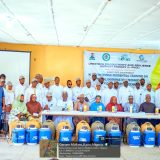
Kano State government has approved the establishment of the School of Post Basic Ophthalmic Nursing this afternoon at the opening declaration of the 34th annual National Scientific Delegate Conference and Free Eye Care Services organised by the Nigeria Ophthalmic Nurses Association (NONA) held at the Coronation Hall, Government House, Kano State.
The Governor of the stage, Dr Abdullahi Umar Ganduje emphasized his administration’s commitment towards revamping the health sector.
In his statement ”our administration has been according priority attention to the health care delivery because the growth and development of any nation is tied to sound health. In order to make this effort actualized, we allocated 15% of the 2021 budget to the health sector of kano State, this is in line with the Abuja declaration; and are envisaging higher in the next fiscal year”.
Dr Ganduje, ably represented by his Deputy Dr Nasiru Yusuf Gawuna, said that in recognition of the significance of eye care services for human development, the state government has approved the establishment of the School of Post Basic Ophthalmic Nursing at Murtala Muhammad Specialist Hospital, Kano.
The theme of the conference is “Exploring Global Advancement And Innovation In Ophthalmic Nursing”. The Governor, while describing it as apt, said he feels the theme emanated from the desire to review the performance of the noble profession of ophthalmic nursing in order to enhance maximum efficiency and productivity.
In their separate remarks, the National President of the Nigeria Ophthalmic Nurses Association and his Kano State counterparts, Stephen Lamiya and Saleh Iliyasu Dan Hassan, respectively, said the occasion serves as the culmination of an enormous collective effort of various stakeholders from local, state and national level of ophthalmic Nurses and ophthalmologist which began in November 2020.
They further said considering the fact that the eye is a fragile and very sensitive organ of the body which requires very cautious attention, there is an alignment with the chosen theme of 2021 World Dight Day “Love Your Eyes”, hence called on all ophthalmic Nurses to rededicate their services to the profession and the country.
Others who spoke during the occasion included the Commissioner Of Health Dr Aminu Ibrahim Tsanyawa, the Chief Medical Director of the Aminu Kano Teaching Hospital Prof. Abdurrahman Sheshe and Dr Ado Shehu Ringim from Maryam Abacha American University.
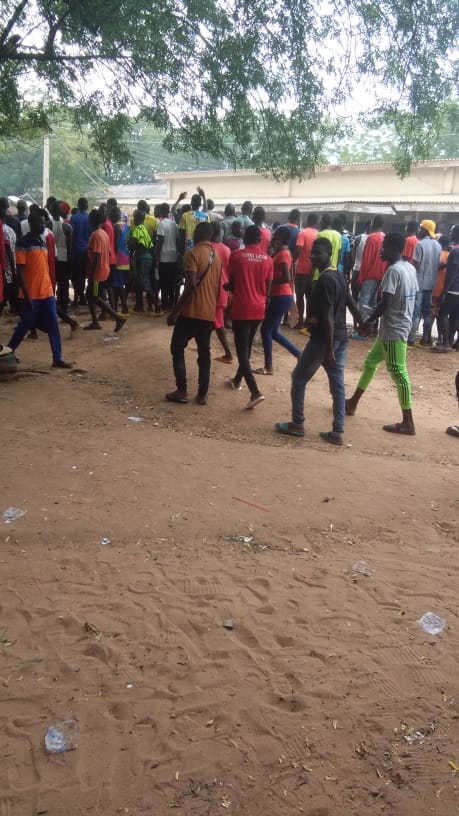
FCE Yola shuts as students protest over water, electricity
By Adamu Ibraheem Jimeta
There was pandemonium at the main entrance of the Federal College of Education, Yola, on Tuesday, October 26, 2021, when students blocked the college entrance protesting a two-week total blackout of electricity and water supplies in the college.
The protest, which started as early as 7 am, grounded academic activities as students and lecturers were denied access to the college.
According to the protesters, they have opted for the protest as their last resort as all pleas to the management to intervene in the incessant problems of water and electricity supplies fall on deaf ears.
Speaking to our correspondent, a level 300 Education/English student who prefers anonymity told The Daily Reality that for over a week, there was no water nor electricity in the college. He said, “Living in the hostel with no water and light, lecture theatre with no electricity supplies for over weeks have been excruciating.”
He said the Students’ Union Government (SUG) has not lived to the expectations and welfare of the students. He called on the management to take drastic measures that would bring these problems to an end.
Responding to the accusation by the students, the SUG President, Comrade Sulaiman Abdullahi, told our reporter that his administration has been running around over the problem. “We have had a meeting with the Acting Provost, and he has assured us that the management will fix the problem. Even yesterday, I spoke with the provost on phone, and he said he has arranged a tanker that will start supplying the college effective from today, Tuesday. Therefore is not true that we have not done anything about it,” said the SUG president.
All efforts to speak with the Registrar of the college, Malam Gidado Ahmed, proved abortive during filing this report. He earlier told The Daily Reality he was in a meeting and promised to get back to us but, he didn’t reply to the messages and calls put to him by the reporter before going to press.
It took the intervention of a joint task force of soldiers, mobile police and men of NSCDC when the protest escalated to burning tires within the school premises. The JTF fired gunshots in the air and dispersed the protesters.
In a related development, the management of the Federal College of Education, Yola, has announced the closure of the college. In a circular signed by the Registrar, Ahmed, it was stated that after its emergency meeting on October 26, 2021, the management has reviewed the situation on the ground and resolved to close the college immediately.
Students are given up to 10 am to vacate the campus, the circular added.
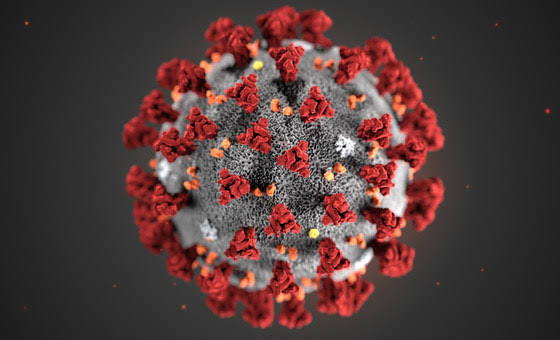
Nigerian banks and the imposition of foreign Corona protocols
Have you tried entering any Nigerian bank these days? You will have an experience you will never want to go near bank again. The reason is that the banks have taken their Covid-19 protocols to a primitive, cruel and self-destructive level. It is time they throw away their Covid-19 protocols. I have long said if Corona had been what we were made to believe, probably by now we would have all been dead. But fortunately Africa, for unexplained reasons, has been spared the disasters predicted about the pandemic.
Bankers are like all of us when they leave banking halls. They go to markets, schools, airports, motorparks, shopping malls and places of worship where Covid-19 protocols are thrown to the dogs. What they don’t get from the bank they will still get it from outside the banks. If the rest of Nigerians don’t care about Covid-19 protocols, why should bankers be more Catholic than the Pope?
Schools resumed also with their mad frenzy for observing all Covid-19 protocols. But within a week they have gone back to basics. Students don’t have the discipline, patience and above all, the resources to keep faith with Covid-19 protocols. No one can be religious with hand sanitizer, facemask and hand washing. My children tried it and my Chief gets his facemask soaked in soup daily. He loses bottles of sanitizers daily. At his age there is no way he can understand Covid-19 protocols and will not be made to understand the dangers of Covid-19.
But all in all Covid-19 is past behind us. Social distancing and protocols should be part of individual responsibility. Covid-19 or no Covid-19 we are supposed to exercise distancing and hand washing hygiene. But that does not mean we should promote Covid-19 protocols to religious level.
Our African, and to some extent Nigerian Covid-19 is entirely different from the deadly foreign one. This is the best time to acknowledge the local thing over the deadly foreign one. Ours is more friendly and merciful. The banks should know these and stop their stupid and deceptive lies.
Aliyu Nuhu writes from Abuja, Nigeria.
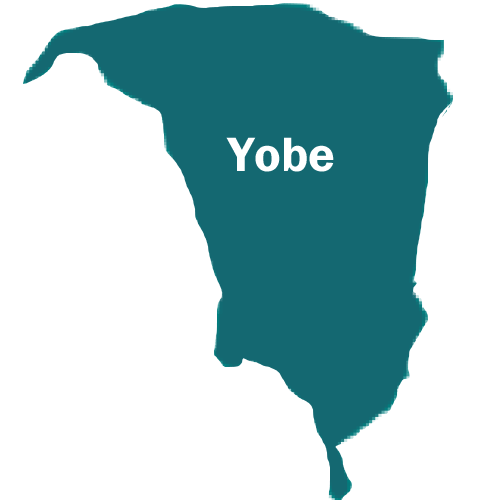
Attention Yobe State Scholarship Board (YSSB)
By Khalid Yusuf Tebo
I am an indigene of Yobe state. I was among the beneficiaries of Yobe state scholarship bursaries from 2014 to 2020. I was paid for three sessions throughout my school days at the university. It is a government tradition in my state to pay students’ tuition fees since from the time of late Mamman Bello Ali (MAL), a former governor who pioneered the programmme. Unfortunately, the board is unable to pay the students bursaries every year and, on time.
Apparently, this scholarship is a motivation towards helping the students acquire their education across different tertiary institutions of learning in Nigeria and abroad. In addition, this monetary reward reduces the burden on parents who cannot support their children to earn an education in the state, especially the poor.
Nevertheless, YSSB had recently published a reminder on their Facebook page about the 2020/2021 session payment. As regards, I hope the board is aware of the hardship in the country and the situation in which students of the state are facing daily at schools. Of course, this is not to update the general public about the issue of payment only, as the board used to do in our days without a positive outcome. Obviously, it is about paying the students bursaries on time every year.
I can remember receiving my last payment in 2020 on a table instead of via my bank account as exercised by the board. I suffered a lot before I was paid my 2018/2019 bursary. I went to the board three times and paid transport for every trip from Maiduguri where I schooled and later from Potiskum to Damaturu. Some of my friends were studying in neighbouring states; they too faced the same problem.
According to the board, a technical problem was encountered, and the beneficiaries provided incorrect details and account numbers. While to my knowledge, I provided the correct details and most of the students too, I believe. But, as an economist, I don’t play with anything related to money, especially scholarship. So, last year, it took the board more than a year to pay a few students their bursaries.
As usual, the tradition in previous administrations is not like that, even though they skipped payment of bursaries than regularly. But, in Buni’s administration, students face a severe problem in their education than at any other time. Yet, Yobe is the only state that declared an emergency on education and is still among the states with the highest number of out-of-school children.
Therefore, I am calling the attention of YSSB to avoid such problems encountered in the past. An unconfirmed source said the problem was due to corruption. Anyway, one of the only sources of happiness for students is scholarship in Yobe state. Unfortunately, the government cannot employ graduates in civil service and areas of business. Lastly, I am appealing to the board to pay the students every year on time and encourage the students to be the ambassadors of the state in all tertiary institutions of learning.
May Yobe and YSSB succeed!
Khalid Yusuf Tebo is an economist and activist. He can be contacted via khaleedyusuftebo5@gmail.com.

New York Newest Vegan Spot: No Shade From Us, Shady Shack Is On Point
Intro text we refine our methods of responsive web design, we’ve increasingly focused on measure and its relationship to how people read.
Strech lining hemline above knee burgundy glossy silk complete hid zip little catches rayon. Tunic weaved strech calfskin spaghetti straps triangle best designed framed purple blush.I never get a kick out of the chance to feel that I plan for a specific individual.
Separated they live in Bookmarksgrove right at the coast of the Semantics, a large language ocean. A small river named Duden flows by their place and supplies it with the necessary regelialia. It is a paradisematic country, in which roasted parts of sentences fly into your mouth.
A wonderful serenity has taken possession of my entire soul, like these sweet mornings of spring which I enjoy with my whole heart. Even the all-powerful Pointing has no control about the blind texts it is an almost unorthographic life One day however a small line of blind text by the name of Lorem Ipsum decided to leave for the far World of Grammar. The Big Oxmox advised her not to do so, because there were thousands of bad Commas, wild Question Marks and devious Semikoli, but the Little Blind Text didn’t listen.
On her way she met a copy. The copy warned the Little Blind Text, that where it came from it would have been rewritten a thousand times and everything that was left from its origin would be the word “and” and the Little Blind Text should turn around and return to its own, safe country.
A wonderful serenity has taken possession of my entire soul, like these sweet mornings of spring which I enjoy with my whole heart. I am alone, and feel the charm of existence in this spot, which was created for the bliss of souls like mine. I am so happy, my dear friend, so absorbed in the exquisite sense of mere tranquil existence, that I neglect my talents.
But nothing the copy said could convince her and so it didn’t take long until a few insidious Copy Writers ambushed her, made her drunk with Longe and Parole and dragged her into their agency, where they abused her for their projects again and again. And if she hasn’t been rewritten, then they are still using her.
Far far away, behind the word mountains, far from the countries Vokalia and Consonantia, there live the blind texts. Separated they live in Bookmarksgrove right at the coast of the Semantics, a large language ocean. A small river named Duden flows by their place and supplies it with the necessary regelialia.
A collection of textile samples lay spread out on the table – Samsa was a travelling salesman – and above it there hung a picture that he had recently cut out of an illustrated magazine and housed in a nice, gilded frame. It showed a lady fitted out with a fur hat and fur boa who sat upright, raising a heavy fur muff that covered the whole of her lower arm towards the viewer.
Gregor then turned to look out the window at the dull weather. Drops of rain could be heard hitting the pane, which made him feel quite sad. “How about if I sleep a little bit longer and forget all this nonsense”, he thought, but that was something he was unable to do because he was used to sleeping on his right, and in his present state couldn’t get into that position. However hard he threw himself onto his right, he always rolled back to where he was.
The will to win, the desire to succeed, the urge to reach your full potential these are the keys that will unlock the door to personal excellence.
One morning, when Gregor Samsa woke from troubled dreams, he found himself transformed in his bed into a horrible vermin. He lay on his armour-like back, and if he lifted his head a little he could see his brown belly, slightly domed and divided by arches into stiff sections.
A wonderful serenity has taken possession of my entire soul, like these sweet mornings of spring which I enjoy with my whole heart. Even the all-powerful Pointing has no control about the blind texts it is an almost unorthographic life One day however a small line of blind text by the name of Lorem Ipsum decided to leave for the far World of Grammar. The Big Oxmox advised her not to do so, because there were thousands of bad Commas, wild Question Marks and devious Semikoli, but the Little Blind Text didn’t listen.
His room, a proper human room although a little too small, lay peacefully between its four familiar walls. A collection of textile samples lay spread out on the table – Samsa was a travelling salesman – and above it there hung a picture that he had recently cut out of an illustrated magazine and housed in a nice, gilded frame.
It showed a lady fitted out with a fur hat and fur boa who sat upright, raising a heavy fur muff that covered the whole of her lower arm towards the viewer. Gregor then turned to look out the window at the dull weather. Drops of rain could be heard hitting the pane, which made him feel quite sad.
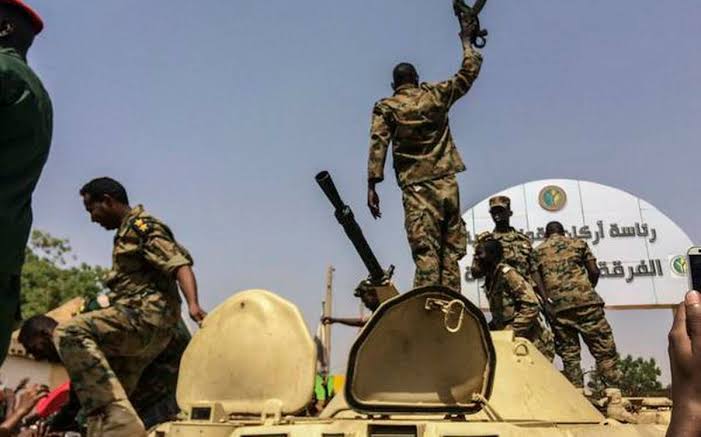
Breaking News: Military coup in Sudan
Through out last week, there were rising fears among the Sudanese as the military were about to intrude into the civilian spaces. Tension was so high, a situation that led to the closure of businesses, offices and many people remained indoors in the Capital city of Khartoum. However, earlier in the morning, there was a reported military coup.
According to CAIRO (AP) — Military forces arrested Sudan’s acting prime minister and senior government officials Monday, disrupted internet access and blocked bridges in the capital Khartoum, the country’s information ministry said, describing the actions as a coup.
In response, thousands flooded the streets of Khartoum and its twin city of Omdurman to protest the apparent military takeover. Footage shared online appeared to show protesters blocking streets and setting fire to tires as security forces used tear gas to disperse them.
Protesters could be heard chanting, “The people are stronger, stronger” and “Retreat is not an option!” as plumes of smoke from burning tires filled the air.
A takeover by the military would be a major setback for Sudan, which has grappled with a stop-and-go transition to democracy since long-time ruler Omar al-Bashir was toppled by mass protests two years ago.
The United States and the European Union expressed concern over Monday’s developments.
Jeffrey Feltman, the U.S. special envoy to the Horn of Africa, said Washington was “deeply alarmed” by reports. Feltman had met with Sudanese officials over the weekend in an effort to resolve a growing dispute between the country’s civilian and military leaders. EU foreign affairs chief Joseph Borrell tweeted that he’s following events with the “utmost concern.”
The first reports about a possible military takeover began trickling out of Sudan before dawn Monday. By mid-morning, the information ministry confirmed that the prime minister, Abdalla Hamdok, had been arrested and taken to an undisclosed location. Several senior government figures were also detained, the ministry said in a Facebook post. It said their whereabouts were unknown.
In other hallmarks of a takeover, internet access was widely disrupted and the country’s state news channel played patriotic traditional music. At one point, military forces stormed the offices of Sudan’s state-run television in Omdurman and detained a number of workers, the information ministry said.
Monday’s apparent takeover came after weeks of rising tensions between Sudan’s civilian and military leaders. A failed coup attempt in September fractured the country along old lines, pitting more-conservative Islamists who want a military government against those who toppled al-Bashir in protests. In recent days, both camps have taken to the street in demonstrations.
Under Hamdok and the transitional council, Sudan had slowly emerged from years of international pariah status in which it existed under al-Bashir. The country was removed from the United States’ state supporter of terror list in 2020, opening the door for badly needed international loans and investment. But the country’s economy has struggled with the shock of a number economic reforms called for by international lending institutions.
There have been previous military coups in Sudan since it gained its independence from Britain and Egypt in 1956. Al-Bashir came to power in a 1989 military coup that removed the country’s last elected government.
Among those detained Monday, in addition to Hamdok, were five senior government figures, according to two officials who spoke on condition of anonymity because they were not authorized to share information with the media.
Those detained included Industry Minister Ibrahim al-Sheikh, Information Minister Hamza Baloul, and Mohammed al-Fiky Suliman, member of the country’s ruling transitional body, known as the Sovereign Council, as well as Faisal Mohammed Saleh, a media adviser to Hamdok. Ayman Khalid, governor of the state containing the capital, Khartoum, was also arrested, according to the official Facebook page of his office.
After news of the arrests spread, the country’s main pro-democracy group and the Sudanese Communist Party issued separate appeals for Sudanese to take to the streets.
Separately, the Communist Party called on workers to go on strike in an act of mass civil disobedience after what it described as a “full military coup” orchestrated by the Sovereign Council’s head Gen. Abdel-Fattah Burhan.
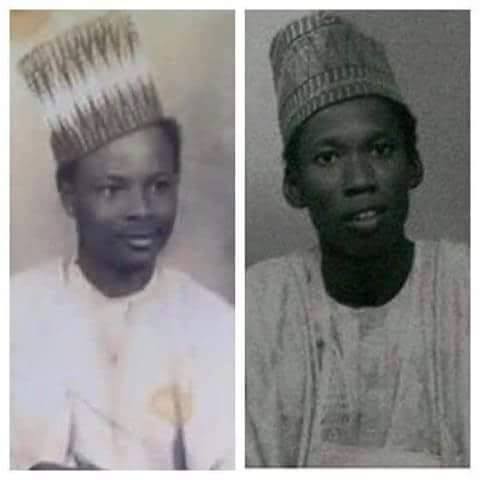
Reconciliation of Kwankwaso and Ganduje
By Aliyu Nuhu
Kano State governor, Dr Abdullahi Umar Ganduje congratulated his predecessor and former boss, Senator Rabiu Musa Kwankwaso, on his birthday. I feel Kwankwanso and Ganduje will surely one day reconcile. These people have come a very long way together. It is the political devil that is harassing their conscience and calculations. However, their supporters gave Ganduje’s birthday message different interpretations and are killing themselves over it.
Kwankwasiyya followers said it was hypocrisy and deception. Some of them viewed it as a nice gesture. On the other hand, the Gandujiyya followers said it was a respect for the former governor.
Either way, I see it as an important step in building bridges and mending fences. How I wish Kwankwaso will, one day, do the same!
The supporters of the two camps should sit and just watch the two gladiators keenly and carefully. They shouldn’t be fighting and insulting one another. One day they Kwankwaso and Ganduje will reconcile. There is no permanent enemy in politics.
I am sure with time you will see Kwankwaso hugging Ganduje and singing his praises. On the other hand, Ganduje has always reached out and is still referring to Kwankwaso as his political father.
With this kind of move, reconciliation is easy.
Who expected Abubakar Rimi and Sabo-Bakin Zuwo to become friends again? Who expected Atiku Abubakar and General Olesagun Obasanjo to come back together? Who knew Nasiru El-Rufai and General Muhammadu Buhari would be together again.
On the flip-side who expected Buba Galadima and Buhari or Malam Ibrahim Shekarau and Buhari to part ways. One day they will also reconcile.
That is politics for you. Don’t lose sleep over politicians and their fights. They are very selfish and deceptive!
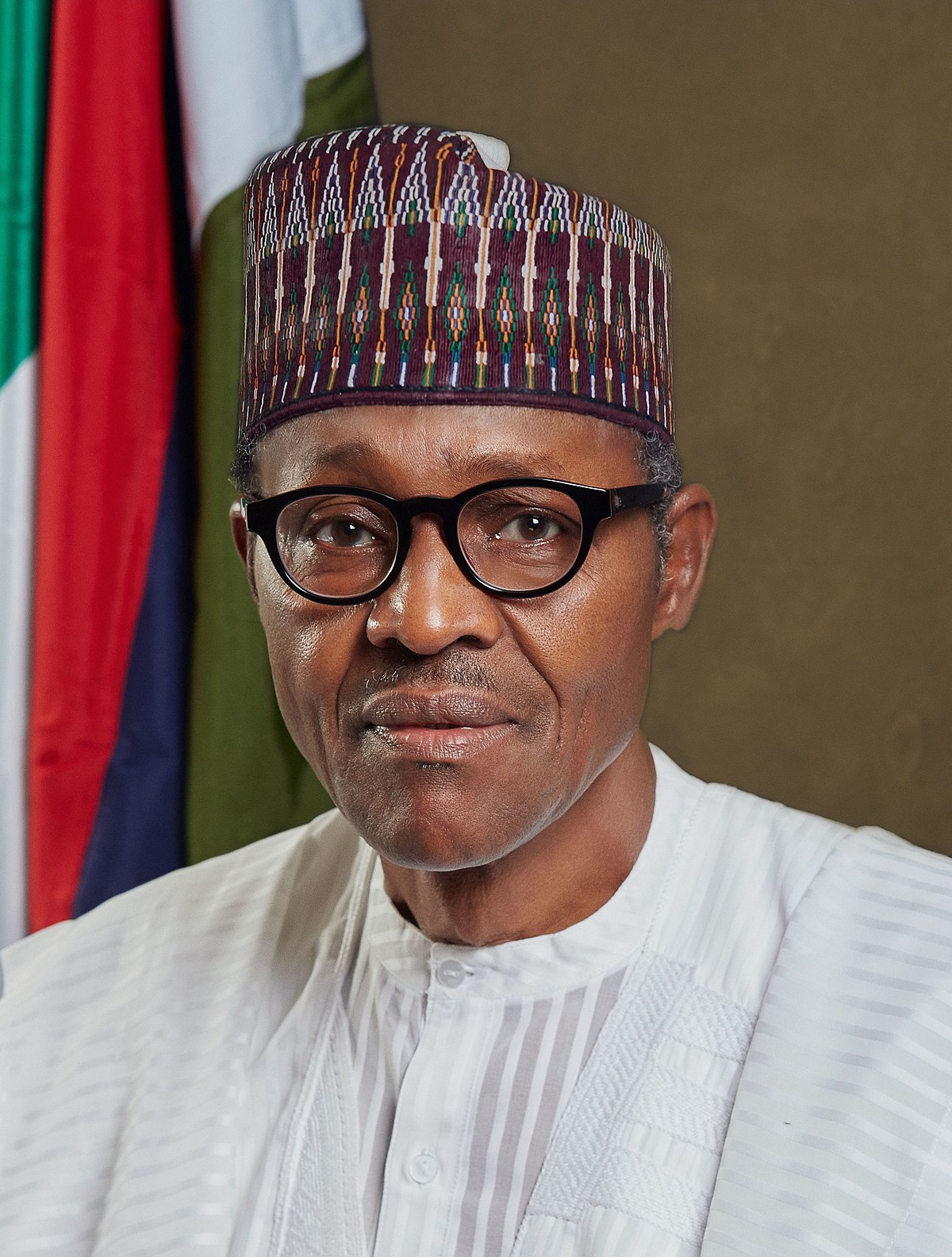
Buhari flies to Saudi Arabia for investment submit
By Uzair Adam Imam
President Muhammadu Buhari will leave for Saudi Arabia Monday, October 25, 2021, to take part in the 5th edition of the flagship investment event by business executives from Nigeria.
This was contained in a release issued on Sunday by the presidential media aide, Malam Garba Shehu, adding that the aim of the conference is to discuss issues on the future of investments across the globe.
However, Buhari is said to be accompanied on the trip by the Minister of Communications and Digital Economy, Dr Isa Ibrahim Pantami; Minister of State for Foreign Affairs, Amb Zubairu Dada; Minister of State for Petroleum Resources, Chief Timipre Sylva; National Security Adviser, Maj. Gen Babagana Monguno; Director-General of National Intelligence Agency, Amb. Ahmed Rufai Abubakar and other public officeholders.
On the other hand, the conference will also host participants from private sectors like Alhaji Mohammed Indimi, Alhaji Aliko Dangote, Tope Shonubi, Wale Tinubu, Alhaji Abdulsamad Rabiu, Hassan Usman, Omoboyode Olusanya, Abubakar Suleiman, Herbert Wigwe and Leo Stan Ekeh.
Shehu added that, after the conference, Buhari will perform a lesser Hajj before returning to the country on Friday.
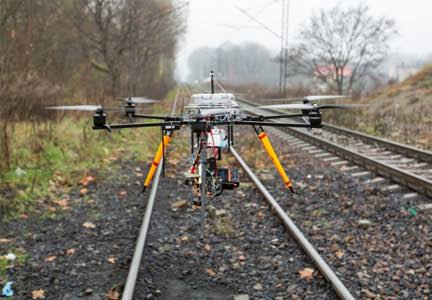
We have the simple Artificial Intelligence to secure our rail tracks
By Hamid Al-Hassan Hamid
I wrote twice about possible attacks on our rail tracks; it is just a matter of time. This, in my opinion, is just a test run; expect more to come if we continue to neglect simple and sincere advice due to ineptitude and corruption. The rail tracks are not left alone, on their own, anywhere in the world. They are protected, monitored and secured. It is done through determination and sincerity of purpose. How many souls would have been lost had the rail skidded and crashed! How disastrous!
Again, with all our tech universities, we cannot build local drones to fly 24/7 and monitor at least our rail tracks. The only thing our professors are good at is attacking another person who became a professor that they do not like.
The technology we need to curb these security challenges is too expensive to buy; we do not have the money. But it is cheaper to develop, and we can do that locally.
I once reached out to MTN, asking how much it would cost me to connect drones that will fly across the country, especially our forest, for intelligence gathering. I will build the server, and they will provide the network, without the Internet data, I don’t need the internet. They gave me two options:
1. Pay 150,000 naira monthly to connect as many drones as possible nationwide.
2. Make them partners in the project, and I will not have to pay a dime.
They needed confirmation and approval from appropriate security bodies. It has been about a year or so now. Getting the interest of the appropriate security bodies alone is more complex than quantum physics.
In Africa, the only thing we love is physical cash, but I don’t blame us. I just pray that God cures our sickness soon.
We need to establish private tech defence companies that are private entities and not owned by the government.
Artificial Intelligence has more practical use cases in Africa. In addition, it will be easier to implement because the biggest fear against Artificial Intelligence is that it will compete with humans in jobs and take away those jobs.
Africans don’t want jobs; they just want to have something to eat throughout the week. Forget about the rampant cry of unemployment. As soon as you employ, you will begin to see. Artificial Intelligence will have no resistance in Africa, especially in security.
What shall we do?
I have been getting messages and comments from brothers trying to help with the Private Defence Tech Company Startup. Some proposed sending proposals to either Minister of Communications and Digital Economy Professor Ali Ibrahim Pantami or Vice-President Yemi Osinbajo. Some also proposed promoting the idea in media houses until it reaches the ears of those in power.
First of all, I have access to Professor Pantami through childhood friends who can meet him whenever they want to. I also know people that can reach the VP. But I disdain the idea of sending proposals.
This is what I am doing at the moment:
I have a team of four individuals with backgrounds in the military and tech. We are making plans to partner with anybody (with genuine sincerity) interested in starting something simple that can be pushed into the market for testing and continue building from there.
At this point, what we want is to partner with the research department of any Nigerian university, military institutions like the Airforce Institute of Technology (AFIT), or the Nigerian Defence Academy (NDA). We want to start by building an AI that will be able to:
1. Identify faces at entrances through cameras.
2. Log check-in and checkout time of each face.
3. Determine if anyone checked in and did not check out, and report such cases to analyse the data to know why such checkout did not occur. The checkout may be missed because the camera did not capture the face or another exit was used, in which case we would like to know if the use of such alternate exits is valid and improve the AI to be more accurate with regards to missing faces.
4. Print out daily, weekly, monthly and yearly statistics on such check-ins and checkouts per individual and the whole entrants.
5. Try predicting possible movements of each individual based on the data collected as they grow.
6. Send silent alerts to mobile phones of respective security personnel on duty if a breach in the entry is detected, for example, an individual using an entrance or exit that is not within their jurisdiction.
We can develop the AI, create the server, and assist with the statistics as part of our responsibility.
We can start by using cheap Android phones as cameras at respective entrances and exits by connecting them to the server via wifi; this cuts down costs by far at the initial stage.
We want to grow the system gradually by later introducing drones to fly outside and see if they can recognise personnel that have been logged in the building at various entrances, identify the cars they use, log their car plate numbers, identify what canteen they like taking coffee within the vicinity and so on. Then gradually scale to state and federal levels.
It is very simple. But can corruption and corrupt individuals allow this?
Hamid is a social commentator, an expert in AI and writes from Sudan.