By Sabiu Abdullahi
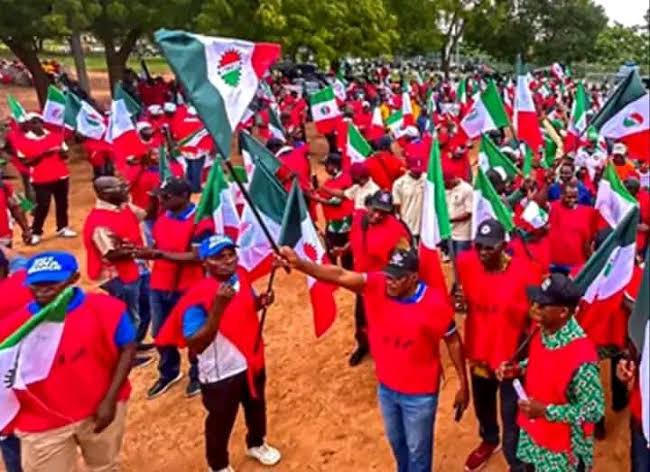
The Federal Government and the Nigeria Labour Congress (NLC) have agreed to begin minimum wage negotiations immediately and approved a ₦70,000 monthly transport allowance for workers for six months, starting in November 2026.
The decisions followed a conciliation meeting between government representatives and NLC leaders convened by the Federal Ministry of Labour and Employment in Abuja on Tuesday.
However, both parties have yet to resolve their disagreement over when a new national minimum wage should take effect.
According to resolutions signed by representatives of the government and organised labour, a Minimum Wage Negotiation Committee will be constituted immediately to commence discussions on workers’ demands.
The agreement comes amid growing pressure from labour unions for measures to ease the rising cost of living and improve workers’ purchasing power.
Under the transport intervention, workers across all levels are expected to receive ₦70,000 monthly for six months, beginning in November. The resolutions, however, did not specify the payment mechanism or whether the intervention would be extended beyond the approved period.
The meeting also addressed outstanding allowances, healthcare workers’ entitlements, tax relief, fuel prices and other welfare concerns.
Government agrees to settle outstanding allowances
The Federal Government agreed to begin paying accumulated peculiar allowances owed to eligible public servants in November 2026, with the arrears to be settled in three equal monthly instalments.
The government also approved the allowances with effect from May 1, 2026.
For health workers, the parties agreed that 19 months of outstanding allowances would be paid within three months, beginning in December 2026.
The meeting further considered outstanding hazard allowances for agricultural officers. According to the resolutions, the Federal Ministry of Agriculture and Food Security had submitted the list of beneficiaries and the associated financial implications to the National Salaries, Incomes and Wages Commission for verification.
On tax relief for workers, the parties agreed to refer the matter to the National Economic Council, noting that taxation is a statutory issue.
However, the resolutions did not indicate that labour’s separate demand for a reduction in petrol prices had been approved.
Other issues discussed included the adjustment of the Consolidated Health Salary Structure (CONHESS) and measures to cushion the economic hardship facing workers.
Pensioners demand outstanding palliatives
Meanwhile, the Federal Parastatals and Private Sector Pensioners Association of Nigeria (FEPPPAN) has urged President Bola Tinubu to direct the payment of three months’ outstanding ₦25,000 subsidy-removal palliatives meant for vulnerable citizens.
The association also called for urgent action on pension harmonisation, the payment of outstanding entitlements and improved access to healthcare for retirees under the Defined Benefit Scheme.
The demands were contained in a communiqué issued after the association’s National Executive Council meeting in Abuja and signed by its President-General, Benjamin Amako, and General Secretary, Franklin Erinle.
FEPPPAN expressed concern over the implementation of pension harmonisation, which it said took effect in January 2026.
It called on the government to release the circular guiding the policy to clarify the role of the Pension Transitional Arrangement Directorate (PTAD) and explain how the exercise would affect pensioners.
The association maintained that pension harmonisation should lead to increased monthly benefits for all pensioners and urged the relevant authorities to explain the policy’s terms, implementation process and implications.
The latest agreements represent steps towards addressing some workers’ welfare concerns, but the dispute over the effective date of a new national minimum wage remains unresolved.
The Daily Reality
FG Approves ₦70,000 Monthly Transport Allowance for Workers, Begins Minimum Wage Talks

ByAdmin
28 October 2026