


NBSL 2024: We must continue developing the game – Mahmud Hadejia
By By Muhammad Suleiman Yobe
The Coordinator of the Nigeria Beach Soccer League, Mahmud Hadeija, says the body remains committed to providing the necessary enablers for the game to excel in the nation.
Speaking with Sports Writers during the 2024 Nigeria Beach Soccer League, second round at Nnewi High School Beach Soccer Pitch, he said it would not relent in developing the sport through staging competitions.
While describing the game as unique and one of the fastest-growing leagues in Nigeria, he stressed that youngsters could demonstrate their skills and participate actively on a national scale through the game.
Hadeija, who is President of the African Beach Soccer League, emphasised that fostering a robust Beach Soccer League in the nation could enhance the growth of the game and the nation’s global sports presence.
“The good thing now is that we have the league that is ongoing for the fourth year, fourth season consistently and gradually both on the technical aspect, organisational aspect and also the structure of the teams.
He expressed gratitude to the Anambra State Beach Soccer Association for successfully hosting the event and providing the players with support services to pursue success.
Victor Madubuko, Contributing Chairman of Anambra State Beach Soccer Association, said his gift for innovation and passion for doing something new spurred him to contribute to the development of the game.
Madubuko said he was glad that the collaboration with stakeholders and sponsors, including Innoson Vehicle Manufacturing (IVM), was yielding the desired result.
One of the highest goal scorers in the league, Chimobi Ekwo, Anambra State Beach Soccer Team, said the team, which has remained unbeaten so far, would not relent in its determination to excel in the Super Four Competition slated to be held in Kaduna.
Six teams from Kebbi, Kaduna, Jigawa and Anambra States are participating in the League.

CC Oladeji takes community relations to grassroots, visits traditional rulers
By Sabiu Abdullahi
In a bid to strengthen customs community relations, Comptroller Kola Oladeji of the Federal Operations Unit Zone A, has embarked on a familiarisation visit to traditional rulers in the South West Zone.
During the visit, Comptroller Oladeji met with several traditional rulers, including the Alake and Paramount Ruler of Egbaland, Oba Adedotun Aremu Gbadebo, the Onikpokia of Ikpokia Kingdom, Oba Yisa Adeniyi Olaniyan, and the Olu of Owode Yewa Land, Oba Matthew Akindele.
Comptroller Oladeji noted the importance of community support in achieving the Nigeria Customs Service’s (NCS) mandates, stating, “We attach much importance to these communities and seek the blessing and guidance of Royal Fathers to strengthen customs community relations.”
He stated the innovative approaches introduced by the Comptroller-General of Customs, Adewale Adeniyi, which have enhanced the service’s performance.
The Olu of Owode Yewa Land, Oba Matthew Akindele, appreciated the improved relationship between the customs service and the community, stating, “The chaos we experienced with customs officers has reduced drastically, thank you for that, and we also thank the federal government.”
He also requested employment opportunities for youths and a more cordial relationship to foster peace and tranquility in the community.
Comptroller Oladeji assured the traditional rulers that the NCS would continue to discharge its responsibilities within the ambits of the law and observations of rules of engagement.
APC reconciliation committees proposed
By Uzair Adam Imam
The Speaker of the House of Representatives, Rt. Hon. Abbas Tajudeen, has called on the National Chairman of the All Progressives Congress (APC), Dr. Abdullahi Umar Ganduje, to establish reconciliation committees to unite party members nationwide.
Speaking at the APC stakeholders’ meeting for the Northwest in Kaduna, the Speaker emphasized the need to reconcile and make peace with aggrieved members, as the party faces internal conflicts in various states.
The Speaker urged Ganduje to constitute reconciliation committees for each state and zone to bring peace and unity to the party, stressing that elections are over, and it’s time for governance.
He also suggested that APC members who perform well should be given the opportunity to return in 2027, citing the high turnover rate of National Assembly members.
Additionally, the Speaker commended President Bola Ahmed Tinubu for giving key positions to the Northwest and called on party leaders to support the party structures at all times, not just during elections.
He also mentioned the ongoing constitution amendment by the National Assembly, highlighting areas like state police, local government autonomy, women’s inclusion, and traditional institutions’ roles.

Jigawa to start Mini Sports Festival 2024
By Muhammad Suleiman Yobe
The Chairman of the technical committee on the mini sports festival, Alhaji Musa Muhammad Yaalleman, also the chairman of the Jigawa State Badminton Association, went around to supervise the preparations to kick off the Jigawa State Mini Sports Festival 2024 across the five selected participating associations.
During the supervision, the chairman was accompanied by the senior special assistant on sports and other members of the technical committee. He commended the executive governor of the state, Mallam Umar Namadi, for approving the conduct of the festival for the teeming youths in the state.
He said the state has many potential and talented youths, which, if properly utilised, will make the state more productive in all sporting activities.
He equally appreciates the efforts of the state commissioner of sports, Hon. Sagir Ahmad, for giving all associations the necessary support directly to organise their program and selecting the experienced team to handle the successful conduct of the program.
He said that these initiatives have immensely benefited the association in terms of court repair, sporting equipment purchases, and the rest.
He thanked the governor and Commissioner for sports for fulfilling their promise about the conduct of this festival.
He also appealed to the Commissioner to make this program quarterly, as this would help reduce tension and crime and increase revenue and employment for the state.

NDLEA declares couple wanted over cocaine deal
By Uzair Adam Imam
The National Drug Law Enforcement Agency (NDLEA) has made a significant breakthrough in its fight against drug trafficking, arresting four members of a cocaine cartel and declaring a couple wanted in connection with the crime.
According to NDLEA spokesman Femi Babafemi, the agency arrested Imran Taofeek Olalekan and Ishola Isiaka Olalekan on April 3, 2024, at the Murtala Muhammed International Airport (MMIA) in Lagos, as they attempted to export 3.40kg of cocaine to Oman.
Investigations revealed that the duo was allegedly working for a cartel headed by Alhaji Kazeem Omogoriola Owoalade, aka Abdul Qassim Adisa Balogun, an Indian resident who has been declared wanted alongside his wife, Rashidat Ayinke Owoalade, aka Bolarinwa Rashidat Ayinke.
NDLEA operatives also arrested Hamed Abimbola Saheed, a member of the syndicate, on May 14, 2024, in the Abule Egba area of Lagos, and recovered 900 grams of phenacetine, a cutting agent for cocaine, from his residence.
A follow-up operation at the Owoalade couple’s residence in Ogudu Orioke, Lagos, led to the arrest of another suspect and the recovery of a new Toyota RAV4 SUV, 400 grams of cocaine, and other drug paraphernalia.
In related operations, NDLEA officers intercepted cocaine and amphetamine concealed in steel bolts and shea butter at a courier firm in Lagos, and thwarted attempts to export cannabis and opioids to Dubai, China, and the UK.
The agency also arrested several suspects and recovered large quantities of drugs in various operations across the country, including 840kg of cannabis in Lagos, 75,000 pills of opioids in Benue, and 2kg of cannabis and diazepam in Borno.
NDLEA Chairman/Chief Executive Brig. Gen. Mohamed Buba Marwa (Retd) commended the officers involved in the operations and reiterated the agency’s commitment to fighting drug abuse and trafficking.

Man arraigned for assaulting friend, causing tooth loss
By Uzair Adam Imam
A 26-year-old man, Yusuf Abdullahi, was arraigned before a Kano State Sharia Court, Fagge, for allegedly assaulting his friend, Aminu Umar, resulting in the loss of a tooth.
According to the prosecutor, Inspector Abdul Wada, the defendant and the complainant had a disagreement on May 9, which escalated into a physical altercation.
The defendant allegedly gave the complainant several blows to the head and body, causing injuries and resulting in the loss of a tooth.
The Khadi, Malam Umar Lawal-Abubakar, ordered the defendant to be remanded in a correctional center and adjourned the case until May 30 for further hearing.

A sight of relief in Jos as rain begins to drop
By Usman Muhammad Salihu
As the rainy season sets in over Jos, the Plateau State capital, residents are cautiously optimistic about relief from the persistent water scarcity that has plagued the city for months. The onset of the rainy season brings a glimmer of hope for the residents of Jos, replenishing parched earth and depleted water sources and offering a reprieve from the relentless struggle for access to clean water.
For many in Jos, the arrival of the rainy season symbolises the prospect of a brighter future. With each drop of rain, the reservoirs begin to fill, easing the burden on communities that have long been forced to endure rationing and scarcity. However, while the rains offer respite, they also underscore the need for sustainable solutions to Jos’s water woes.
The city’s infrastructure must be fortified to harness and manage this precious resource effectively. Investments in water treatment facilities, storage infrastructure, and distribution networks are imperative to ensure every resident can access safe and reliable water year-round.
Moreover, Jos’s challenges are not unique; they reflect broader issues of water scarcity and management that affect communities worldwide. As climate change intensifies, erratic weather patterns and dwindling water supplies pose increasingly urgent threats to global populations. The lessons learned from Jos’s struggle are pertinent not only for Nigeria but for all nations grappling with the repercussions of environmental degradation and resource depletion.
The resilience and resourcefulness of the people of Jos shine through in the face of adversity. Communities come together, sharing resources and supporting one another in times of need. This spirit of solidarity will propel Jos forward towards a future where access to clean water is no longer a luxury but a fundamental human right.
As the rain continues to fall over Jos, let us remember the lessons of the past and the challenges that lie ahead. Let us seize this opportunity to build a more sustainable and equitable future where every individual can thrive, nourished by the life-giving waters that sustain us all.
Usman Muhammad Salihu writes from Jos, Plateau state. He can be reached via muhammadu5363@gmail.com.

Forum calls for applications for training from budding writers in Northern Nigeria
By Sabiu Abdullahi
The Flame Tree Writers’ Project, in partnership with the Heinrich Böll Foundation, has announced a call for applications for a writers’ workshop targeting emerging writers from Northern Nigeria.
The initiative aims to support young writers in honing their craft and envisioning a more democratic and peaceful Nigeria.
According to Abubakar Adam Ibrahim, founder of the Flame Tree Writers’ Project, “This has been a passion project of mine for so long, and I am excited that, with the support of the Heinrich Böll Foundation, it is coming to fruition.”
The workshop, scheduled for June 24–28, 2024, in Abuja, will be co-facilitated by NLNG Nigeria Prize–winning authors Abubakar Adam Ibrahim and Chika Unigwe.
Participants will receive guidance in writing a short story suitable for publication in an anthology.
Ere Amachree, Program Manager at the Heinrich Böll Foundation, noted, “The foundation is excited about the Flame Tree Writers’ Project, as it advances our vision of promoting writing as a means of political expression, just like Heinrich Böll, the German writer after whom our foundation is named.”
The call for applications is exclusively for writers from the 19 Northern States of Nigeria, aged between 18 and 35. Female emerging writers are strongly encouraged to apply.
Interested participants must meet the eligibility criteria and submit their applications to flametreewritersproject@gmail.com by June 1, 2024.
Encouraging writers to apply, Mr. Abubakar said, “It’s not just a workshop but a project that will publish the stories from the workshop in an anthology of new writing and get them into institutions of learning, where they will be taught as part of the growing and exciting corpus of literature from this part of the country.”

I never chose Pharmacy, Allāh chose it for me – UDUS Pharmacy’s best-graduating student
By Mutalib Jibril
With ten awards and a CGPA of 4.88, Abdulsalam Ibrahim recently emerged as the best-graduating student of the Faculty of Pharmaceutical Sciences, Usmanu Danfodio University, Sokoto, for the 2022/2023 academic session. In this interview with Mutalib Jibril, after the Induction ceremony held on May 10, 2024, he speaks about his educational journey and how he achieved this feat.
Who is Abdulsalam Ibrahim?
Abdulsalam Ibrahim was born to the family of Alhaji Hussaini Abdulsalam and Hajiya Bashirah Ibrahim Abdulsalam in Minna, Niger state. I hail from Zungeru, Wushishi L.G.A of Niger State. I’m the fifth child of a family of six. I had my Primary and Secondary education at Minna before proceeding to the then School of Matriculation Studies, UDUS. I was admitted to study pharmacy at the most prestigious faculty of pharmaceutical sciences, UDUS.
With a Grade Index of 4.88, you emerged as the 2022/2023 best-graduating student of the faculty of pharmacy. How was this possible?
Alhamdulillah for the blessings of Allah upon me. Emerging as the best-graduating student is only possible because Allah has destined it to be so. Numerous factors contributed to this being a reality. Many of which are external and beyond my control. It couldn’t have been the hard work or the consistency. Many of my classmates were more hard-working and consistent. In summary, pray to the Almighty Allah always, try your best in a healthy manner and leave the rest. What Allah wishes for you will always prevail whether you like it.
Why did you choose to study Pharmacy?
I never chose pharmacy. Allah chose pharmacy for me. After completing the school of matriculation studies, UDUS (2016/2017 set). I was admitted to study medicine and surgery at the university. However, due to some challenges the university faced with JAMB, some of our admissions had to be changed to other courses. It was a bitter experience for me because I wanted medicine. After attending some lectures on the History and Ethics of Pharmacy, a course offered at 100 level. I became interested in the profession and decided not to write another JAMB. The rest is history.
Would you say you knew you were going to be the best–graduating student?
Not until some days before the induction did I know. Of course, the chances were high because I always had one of the best results in my class right from 100 level. The class was competitive with many hardworking, consistent, outstanding and intelligent scholars. Hence, the name “Mavericks” class of 2022”. The environment was encouraging because everyone contributed, and there was always much to learn. Alhamdulillah
What was your reading schedule like?
I don’t have a specific reading schedule. Pharmacy is overwhelming, with extended hours of lectures and practicals. The time available is always not enough. You keep studying even when you get tired. To pass a course with 50% as the pass mark is not for the lazy. Some courses even require a minimum of 60%. So, I was able to adapt to the system. The time at my disposal always determines my reading schedule for that particular time, except for my 100-level days when there was ample time to study during the day and sleep at night.
Which area of the course did you find most interesting?
Clinical pharmacy (therapeutics) and pharmaceutical microbiology.
How many awards did you receive? Please list them
10 awards, Alhamdulillah. These are:
– PCN award for the best-graduating student.
– Nigerian Association of Pharmacists in Academia (NAPA) award for the best graduating student.
– The faculty of Pharmaceutical sciences, UDUS award for best-graduating student.
– Award for the best-graduating student in clinical pharmacy and pharmacy practice.
– Board of Fellows of Pharmaceutical Society of Nigeria award for the best graduating student in clinical pharmacy and pharmacy practice.
– Award for the best-graduating student from Niger State.
– The faculty of Pharmaceutical Sciences has a UDUS certificate of distinction.
– PSN, Kebbi state cash award for the best-graduating student.
– Centre For Advanced Medical Research and Training (CAMRET) cash award for the best-graduating student.
– Bioraj Pharmaceuticals cash award for the best-graduating student.
Did you engage in extracurricular activities or take up leadership roles during your stay at the university?
Yes, there were some leadership roles. I served as the Asst. Sec. Gen., Pharmaceutical Muslim Students’ Society of Nigeria (PMSSN). I also served as deputy Ameer, PMSSN. I was part of the Imams at the Masjid in Amanawa Hostel for two sessions. I served as deputy Ameer Association of Muslim Health Students(AHMS).
I was Organizing Secretary NANISS Health wing (National Association of Niger State Students). I served as Sec. Gen., PANISS (Pharmaceutical Association of Niger State Students). And also President PANISS.
What was your best and lowest moment while in school?
My best moment was at the 200 level, when I passed all my courses with distinction, while my lowest moment was at the 300 level.
What are your future aspirations in your field?
I want to be a specialist in cardiovascular therapeutics or psychiatry. This will help me give back to society in a community or hospital setting. If Allah so wishes, I would like to be a researcher and teacher in clinical pharmacy or pharmaceutical microbiology.
What would be your advice to students aiming to attain academic excellence?
Restrict yourself from toxic situations. Know your limits. Maintain your physical and mental well-being. In academic settings, the brain does the work. You can easily achieve a lot in little time with a healthy lifestyle.
Secondly, you need to start strong and be consistent throughout. Your academic performance is a cumulative result of your effort from the 100 level. Additionally, always start reading early to grasp the concepts efficiently. This also allowsfor repetitive study. Proper understanding always saves the day.
Finally, always pray to Allah in everything you do. Eat well, sleep well, work hard, and trust in Allah.
The bandits, the vigilantes, and the government
By Rabiu Isah Hassan
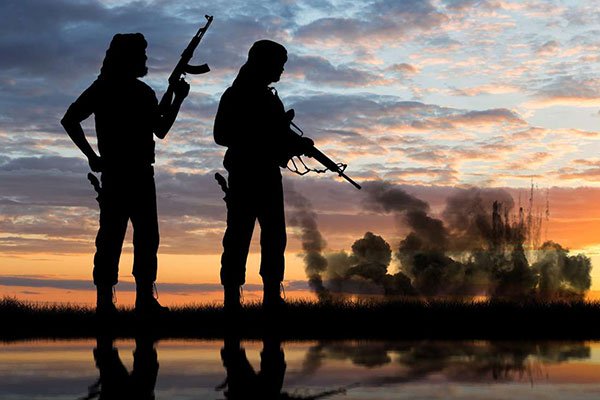
Citing the killing of an army officer by bandits in Katsina recently, Sheikh Musa Yusuf Assadussunnah shows the futility of military measures in resolving the pastoralist-peasant conflict in northern Nigeria. By this daring act, the insurgents have demonstrated that the military, much less the vigilante, cannot end the insurgency. According to him, the only solution is a truce. From other sermons by clerics and numerous online items from the conflict area, it appears Assadussunnah is misreading the situation. Not only are the insurgents receiving severe setbacks, but the signs are also ominous.
The army officer might have been killed not because the troops were weak or ill-equipped but because he exposed himself to unnecessary danger. The way the vigilante and locals praise his determination and commitment suggests he might have been motivated to sacrifice himself for Nigeria and significantly for a Hausa cause. In a way, the prolongation and viciousness of the conflict have started affecting the soldiers on the ground; as in any internal crisis, the armed forces, which are supposed to be neutral, are gradually and inexorably drawn into its vortex.
No group has drawn the wrath of most Nigerian groups, perhaps except for the Igbo during the Nigerian crisis of 1966-1970, like the ethnic Fulani presently. Anti-Fulani sentiments, always simmering below the surface mainly due to perceived historical wrongs, are now erupting due to the current widespread atrocities of mostly pastoral Fulani. An inchoate coalition of mostly Hausa youths and northern minorities is emerging based on shared grievances against the Fulani. Their violent rhetoric, both online and offline, reflects the extent to which the Fulani have slipped down from decent beings and citizens to savages and aliens. No amount of infractions against the ethnic Fulani is seen as grotesque or repugnant.
The troops on the ground and the Hausa vigilante have fused into a hardened armed fist against their perceived enemy. From diverse reports, a discernible pattern is emerging. As the soldiers attack the bandits, the vigilante form their rear, mopping up any stragglers and often dispersing or exterminating ethnic Fulani along their path. The vigilante are also at liberty to arrest, detain, and kill any ethnic Fulani or Hausa informers in an attempt to root out collaborators or destroy the bandits’ supply channels. When the bandits feel the heat, they attack, maim, and kill Hausa peasants randomly. They threaten to stop farming this season, forcing the government and the sedentary population into another truce. This only inflames the soldiers and the vigilante, resulting in more indiscriminate attacks against ethnic Fulani.
Some Islamic clerics still maintain that military operations will not end the insurgency and that the government should negotiate with the bandits to end the bloodletting. These statements make the bandits believe in their invincibility anddangerously encourage them to see their actions as serving an ethnic cause. In a bizarre twist, the bandits have come to link their survival with that of the ethnic Fulani. Since they no longer see themselves as the cause of the Fulani predicament, their removal from the scene is out of the question. This intransigence is further fueling the binary that currently pits the Fulani against the Hausa. Thus, instead of viewing the conflict as occupational and the bandits as criminals, some sections of the ulema have come to regard it as communal, with the insurgents seen as activists.
What some clerics and others fail to appreciate is that both the Hausa-speaking sedentary population of the Northwest and the pastoral Fulani have become one community through centuries of exchange. The pastoral Fulani are essentially an occupational and remnant group continuously absorbed into the general Hausa population. In other words, they do not exist as separate and closed groups. Like similar groups throughout history, the bandits are deviants that have emerged due to internal crises. They need to be tamed or destroyed, not hailed as vanguards of any ethnic group.
With the bandits vowing to fight to the bitter end, they risk dragging the rest of the ethnic Fulani into the abyss with them. The intensity and randomness of their attacks testify to this deranged stance. The indiscriminate reprisals from the other side are making life unbearable for the ethnic Fulani. As the noose tightens around them, there is little chance for their offspring to continue the fight as they hope. A war of attrition would only lead to their decimation; they cannot withstand the combined strength of the Nigerian state and the Nigerian masses.
Unlike the Igbo, who returned to their homeland following the pogroms in Northern Nigeria, the ethnic Fulani are losing their remaining sanctuaries. If the war becomes protracted or its viciousness intensifies, the country risks sliding into the fate of Mali and Burkina Faso. With the bandits terrorising almost half of the country and the army engaged in fighting them in about a quarter of it, hatred against the Fulani is increasing among the soldiers.
Like the inchoate movement developing among the ethnic Hausa and northern minorities online, a conspiratorial group with similar configuration and motivation could develop within the army. Given the toxicity across the land and the increasing hardship, they might attempt a putsch. As in Mali and Burkina Faso, where the raison d’être of the juntas is the containment of the Fulani in the case of the former and their destruction in the latter’s case, an idealistic junta in Nigeria would unleash its reign of terror not only against the ethnic Fulani but also against their symbols.
There is only one possible way to avert this Armageddon. Many groups before them have avoided this ruinous outcome. Recently, the Kanuri, who formed the bulk of the supporters of Boko Haram, quietly abandoned their weapons and dispersed among the general population as the magnitude of the catastrophe loomed. The followers of Maitatsine had followed the same course after realising the folly of confronting the state. After valiant resistance against Rabeh at the end of the nineteenth century, many Kanuri surrendered, and others fled. The leaders of the Sokoto Caliphate retreated in the face of superior arms. After their defeat at Burmi, a few withdrew from the territory and eventually submitted to the British authorities in Sudan. At the same time, the majority reconciled themselves to the new order in Northern Nigeria. When the Biafran secessionists realised that their intransigence would only lead to more destruction of the Igbo, they removed themselves from the scene to pave the way for surrender. These were the practical and noble paths taken in Germany and Japan at the end of the Second World War and countless previous conflicts.
The preservation of the ethnic Fulani must supersede the bandits’ ego, and only surrender would spare their kinsmen from possible destruction. They should give themselves up and be tried in a military tribunal. Like the Nuremberg trials at the end of the Second World War, they must be sentenced based on the gravity of their offences. The minors could be assembled and enrolled in a rehabilitation program. A bold resettlement and integration plan must be rolled out for the pastoral Fulani. Parallel communities should not be allowed to resurface; the pastoralists should be settled among the sedentary population to end mistrust and bigotry. The homogeneous, stable, and prosperous nation that would emerge would be the compensation for these painful sacrifices.
Rabiu Isah Hassan wrote from the Arewa House/Department of History, ABU Zaria. He can be contacted at rabiurafani@gmail.com.