


Sen. Kyari pledges action against climate change, food insecurity
By Uzair Adam
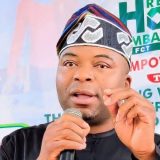
The Minister of Agriculture and Food Security, Senator Abubakar Kyari, has announced that the federal government is taking decisive actions to mitigate the impact of climate change and food insecurity, which have been major concerns in the country for some time.
He stated that the government is committed to investing in agricultural research and development, promoting climate-resilient agriculture, and empowering smallholder farmers through subsidies, training, and improved market access.
Senator Kyari disclosed this on Monday during the Crop Science Society of Nigeria (CSSN) National Conference at Bayero University, Kano (BUK).
He reiterated that these efforts would help address the lingering issues affecting the agricultural sector.
Represented by Engineer Abubakar Garba, Senator Kyari added that the government has established an effective early warning system to predict and prepare for climate-related disasters, among other initiatives.
He was quoted as saying, “Climate change is real, and we must work with it to develop resilience in agricultural production.
“The theme of this event is timely, given the pressing challenges facing agricultural development globally,” Senator Kyari added.
He further lamented that “climate change has wreaked havoc on crop production worldwide, exacerbating food insecurity, especially in Africa and other developing regions. The compounding challenges of climate change and the global economic downturn have triggered soaring prices, severely impacting agricultural development and the most vulnerable citizens in society.”
Also speaking at the event, the CSSN President, Professor M.I. Uguru, called on the federal government to ramp up investments in crop and livestock production to address Nigeria’s escalating food insecurity.
He stated, “Food prices are skyrocketing, and many communities are grappling with severe shortages,” Professor Uguru said, stressing the urgent need for a domestic agricultural response.
Bayero University’s Vice Chancellor, Professor Sagir Adamu Abbas, praised CSSN for organizing the conference, describing it as an essential platform for sharing research and advancements in crop science.
The conference was attended by agricultural experts, academics, and government officials, including Hajiya Salamatu Garba, Executive Director of the Women Farmers Advancement Network (WOFAN).

11 Kaduna inmates graduate from NOUN
By Sumayyah Auwal Ishaq
No fewer than 11 inmates at the Medium Security Custodial Centre, Kaduna, Kaduna State, graduated from the National Open University of Nigeria in various disciplines.
The inmates, who received their certificates at the convocation ceremony organized by the institution on October 16, 2024, were pronounced graduates after completing their various programs for the 2022/2023 academic session.
They comprised 11 males who had undertaken courses in the Post Graduate Diploma in Education and undergraduate degrees. The Daily Reality gathered that seven inmates graduated with Second Class Upper Division, while two graduated with Second Class Lower Division, and two inmates completed the Post Graduate Diploma in Education.
Speaking at the ceremony, the Vice Chancellor, who was represented by Dr. Baba, praised the Nigerian Correctional Service (NCoS) and the management of the facility for giving the inmates such an opportunity. He said such feats should be emulated by other inmates who have yet to undertake any program with the institution.
The Controller of Kaduna State Command, Nuru Mohammed Isah, advised other inmates to seize the opportunity and maximize their time by emulating their graduating colleagues.
Mr Isah also emphasized the role of the NCoS in reforming inmates. He implored the newly graduated inmates to continue embodying the good values they learned during their time in the correctional facility.
The officer in charge, DC Abdullahi Dangani, promised to continue giving support to all inmates to achieve their aspirations in life.

Former Deputy Director of SGS, Malam Umar Farouk passes away
By Uzair Adam
Adam Malam Umar Faruk, the former Deputy Director at the School of General Studies (SGS) and the first Head of Department (HOD) of the Mass Communication Department at Kano State Polytechnic, has died.
The Daily Reality reports that Malam Umar Faruk passed away today, Wednesday, after a brief illness.
According to his colleague, H. Kawu, Faruk’s sudden demise was deeply saddening, noting that his WhatsApp status remains active.
Kawu shared, “Even yesterday, he called me. Unfortunately, I wasn’t near my phone. Then, all of a sudden today, I heard of his death.”
According to his relatives, the Janaza (funeral prayer) will take place at 4:00 p.m. at his residence located in Saban Titi, Mandawari, near Abu Hanifa Academy.
The late Umar Faruk, who was the pioneer HOD of the programme in 2011, played a significant role in shaping the Mass Communication Department during its early years.
His contributions, many believe, to the polytechnic will be remembered by colleagues and students alik

CITAD, partners push for domestication of Freedom of Information Act (FoI)
By Sabiu Abdullahi
The Centre for Information Technology and Development (CITAD) and its partners, under the Open Government Partnership (OGP), urged the Ministry of Information to commit to domesticating the Freedom of Information Act (FOIA) in the state.
Mujahid Ibrahim, CITAD’s co-secretary, led the advocacy visit alongside Lawal Bako, representing state actors.
In his speech, Mujahid reiterated the importance of transparency in governance and the affairs of running public service.
Below is the full text of his speech:
Speech to the Hon. Commissioner, Ministry of Information, Bauchi State Honorable Commissioner
Distinguished Ladies and Gentlemen,
All Protocols Observed,
It is a great privilege to stand before you today on behalf of the Open Government Partnership (OGP) Steering Committee, to commend the Ministry of Information and the entire Bauchi State Government for the strides made in advancing transparency and good governance.
I especially want to recognize His Excellency, the Governor, for his bold decision in signing Bauchi State into the Open Government Partnership in November 2022.
This commitment to openness and accountability is commendable and stands as a beacon for other states to follow. As you are aware, the Freedom of Information Act (FOIA) was signed into law at the national level in 2011, providing the legal framework for citizens to access vital information that promotes accountability and good governance.
While this law exists nationally, the benefits it offers can only be fully realized when it is domesticated at the state level. This is why we are here today: to seek the Ministry’s invaluable support in pushing for the domestication of the FOI Law here in Bauchi State.
Honorable Commissioner, Bauchi State’s signing into the OGP is a testament to the state’s resolve to remain at the forefront of open governance.
However, for this resolve to translate into practical, everyday benefits for the citizens of Bauchi, the FOI Law must be domesticated. It is through such domestication that citizens will be empowered to access information freely, ensuring that public institutions remain transparent and accountable to the people they serve.
Your Ministry, being the voice of the government, plays a crucial role in ensuring that this process is initiated and sustained.
We believe that with your leadership and support, Bauchi State can once again take the lead in promoting openness, fostering an inclusive governance system, and enhancing citizen participation.
We therefore solicit your commitment and that of the Ministry toward making the FOI Law a reality in Bauchi State.
Together, we can create an environment where information flows freely, fostering trust between the government and its citizens. We are confident that with the Ministry’s dedication, this important law will be domesticated, marking yet another milestone in Bauchi State’s governance journey.
Thank you for your time and attention, and we look forward to working closely with you on this endeavor. God bless Bauchi State.God bless Nigeria.
Thank you.

Fuel tanker explosion kills 150 in Jigawa, hundreds hospitalised
By Uzair Adam
At least 150 people have been confirmed dead, and around 300 others hospitalized following a devastating fuel tanker explosion in Majia town, Taura Local Government Area of Jigawa State.
The Daily Reality learned that the incident, which occurred while the tanker was in motion, has left the community in shock.
Authorities are still gathering more details about the tragedy.

Taraba State govt dismisses rumors of palace, mosque demolition
By Uzair Adam
The Taraba State Government has debunked rumors that it is planning to demolish the Ukwe Takum Palace and the Central Mosque in Takum.
The allegations were made by the Kuteb Yatso of Nigeria (KYN), a cultural group representing the Kuteb people, during a press conference in Jalingo.
According to the group’s president, Mr. Emmanuel Ukwen, who was represented by Mr. Markus Apwende, a foreign contractor, backed by armed militia and heavy security, was seen marking the palace and mosque for demolition.
In response, the state’s Commissioner for Information, Zainab Usman Jalingo, labeled the claims as false and an attempt to incite fear and unrest.
She assured the public that the government remains committed to peace, unity, and the equitable development of all citizens, regardless of religion or ethnicity.
“These baseless rumors are the work of troublemakers and should be ignored,” she stated, reaffirming the government’s focus on the welfare and justice of its residents.

Adamawa man dies after trying to intervene between two fighters
By Uzair Adam
A man identified as Markus Dali from Sina Kwande, Michika Local Government Area of Adamawa State, tragically lost his life while attempting to mediate a conflict between two individuals.
The incident, which occurred on August 30, involved a dispute between Barka Yama and Alex Z. Tari.
Dali intervened in an effort to stop the fight but was struck by Barka, and that him go into a coma.
He was later confirmed dead at a hospital.
Barka, 32, has been arrested and charged with culpable homicide under Section 191 of the Penal Code.
The case was presented at a magistrates’ court in Yola, where ASP Francis Audu, the prosecuting officer, detailed the events leading to Dali’s death.
Chief Magistrate Muhammed Njidda ordered Barka to be remanded at a correctional facility, awaiting legal advice from the Department of Public Prosecutions.

EFCC explains arrest of journalists at Enugu radio station
By Uzair Adam
On Monday, October 14, 2024, a team of officers from the Enugu Zonal Directorate of the Economic and Financial Crimes Commission (EFCC) visited Urban Radio 94.5FM, Enugu, to invite Favour Ekoh, the host of the station’s program Prime Time, for questioning.
Ekoh is under investigation for her alleged involvement in a N700 million Ponzi scheme that affected about 50 victims.
The victims claimed Ekoh enticed them to invest in “Life Trading,” a scheme run by Leverage Index Limited, where they were promised 10 percent returns on their capital after a set period.
However, after they invested, the company, located at No. 1 Colliery Street, Okpara Avenue, Enugu, shut down, leaving them without their capital or any promised returns.
The victims said Ekoh was their primary point of contact for the scheme.
Upon arriving at the radio station with an arrest warrant, EFCC officers identified themselves to the station’s Managing Director, Bamikole Owoyomi.
However, in an unexpected move, a staff member called the station’s Chairman, who ordered the gates to be locked, trapping the EFCC officers inside the building.
The officers then called for backup, which led to the arrest of Owoyomi, Ekoh, and two security guards for obstructing the EFCC’s duties.
Ekoh, who was trailed to the station as part of a sting operation to prevent her from evading arrest, was allowed to make a statement at the EFCC’s Enugu office and has since been released.
Owoyomi and the guards, who were initially detained for preventing the officers from carrying out their duties, also made statements and were later released.
In a statement, Dele Oyewale, Head of Media & Publicity for the EFCC, emphasized that the commission holds the media in high regard but criticized the actions of the station’s staff as unlawful and obstructive.
He called on the International Press Institute (IPI) and the Nigerian Union of Journalists (NUJ) to examine the station’s conduct and Ekoh’s professional ethics, given her involvement in the fraudulent scheme.
The EFCC clarified that no equipment at the station was damaged and that there was no disruption to the station’s lawful operations during the arrest.

Who can tell you the truth?
By Tijani Abiola
In a spacy world saturated with information, the desert of personal interest and a space box of selfish interest, discerning the truth has become increasingly challenging, from social media feeds to 24-hour news cycles.
We are inundated with facts, opinions, and outright falsehoods. Yet, the quest for truth remains vital, influencing our decisions, shaping our beliefs, and guiding our actions. So, who can tell you the truth?
Science, by its very nature, is a rigorous pursuit of truth. Through the scientific method, hypotheses are tested, results are peer-reviewed, and conclusions are drawn based on empirical evidence. Institutions like the National Aeronautics and Space Administration (NASA), the World Health Organization (WHO), and universities worldwide are pillars of this endeavour. Their commitment to objectivity and reproducibility makes them reliable sources of truth, particularly in areas like medicine, climate change, and technology, but can we say they are the real source of truth?
Media outlets are a relaxed space for the most trusted outlets for news reports, an avenue that most use to suit themselves and tailor their way of life. Most of the time, the media can also be biased. Established organisations like the BBC, The New York Times, and Reuters have built reputations for thorough and responsible journalism. These institutions adhere to journalistic standards, including fact-checking, corroboration, and ethical reporting. Their role in a democratic society is to hold power accountable and inform the public, making them essential sources of truth, but yet, can they tell you the truth?
Experts with a deep understanding of their fields and elders with numerous past useful experiences can provide accurate information and insights. Whether it’s a doctor discussing health issues, a historian analysing past events, or an economist interpreting market trends, these individuals rely on years of study and experience. Their expertise and dedication to their disciplines make them credible sources of truth; still, will you accept trends, mind experience and expertise ideas as the truth?
Ultimately, each of us has the responsibility to discern the truth. Critical thinking is our best defence against misinformation. By questioning sources, analysing arguments, and seeking evidence, we can better navigate the complex landscape of modern information. No one takes information to trust and accepts it as truth, except if they are convinced to accept it as truth.
In a world where the truth can often seem elusive, it is essential to exercise critical thinking before accepting any information to be true. One can only convince and prove with past experiences or actions that seem to complement the existing information left for you to think deeply and analyse whether to believe or negate the information.
Still, you are the best person to tell yourself the truth through your critical thinking, valuing evidence over opinion, expertise over hearsay, and integrity over convenience. We can navigate the complexities of our information-rich world. Ultimately, the truth is out there, but we must seek and accept it diligently and responsibly.
Tijani Abiola T. wrote via abiolatijani001@gmail.com.
TCN nears full recovery of national grid after partial disturbance
By Uzair Adam
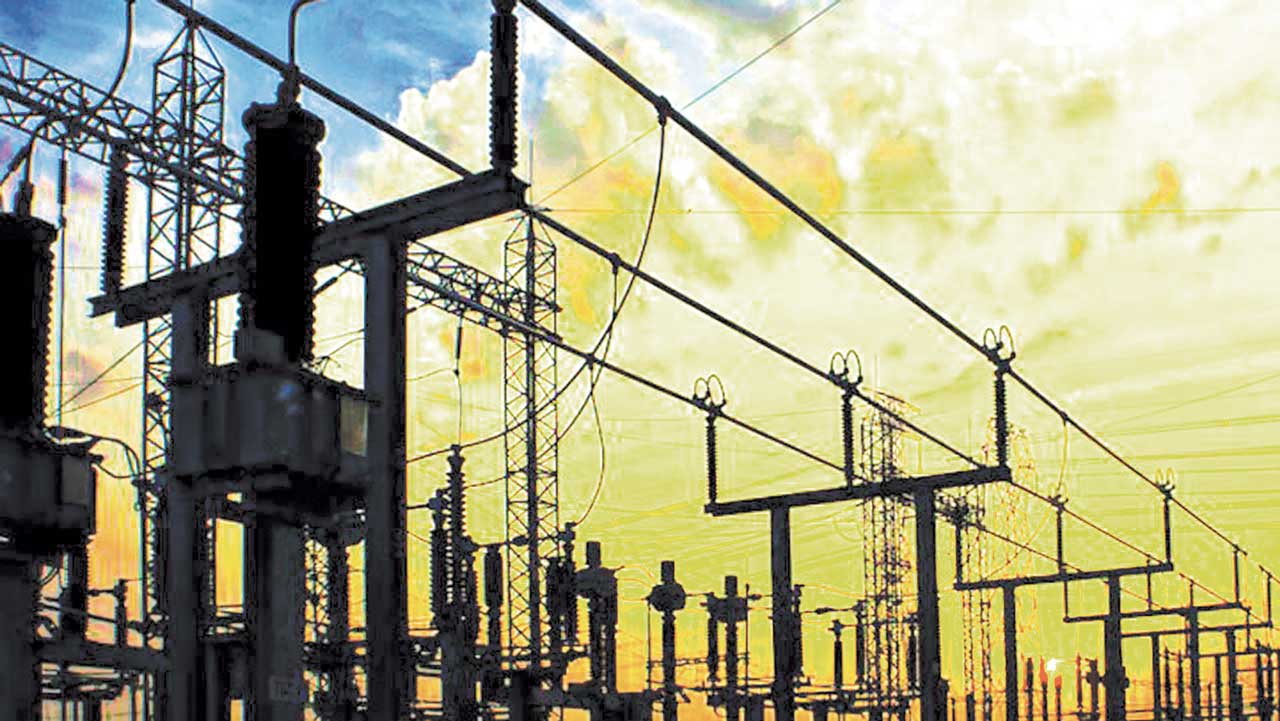
The Transmission Company of Nigeria (TCN) has made significant strides in restoring the national grid after a partial disturbance on Monday evening.
The incident, which occurred around 6:48 p.m., triggered an immediate response.
In a statement on Tuesday, Mrs. Ndidi Mbah, TCN’s General Manager of Public Affairs, confirmed that recovery efforts began swiftly, with the Azura Power Station providing the essential blackstart to stabilise the grid.
By 10:24 a.m. on Tuesday, the recovery process was in its advanced stages, despite a minor setback that briefly slowed progress.
Mbah reassured the public that the TCN continued working to restore full power, with about 90% of the country’s substations already receiving bulk electricity.
Power has been fully restored to Abuja and other key distribution centres.
She added that the disturbance did not impact the Ibom Gas generating station, which remained functional and continued to supply power to areas in the South-South, including Eket, Ekim, Uyo, and Itu transmission substations.