





Ribadu blames security personnel for arms sales to criminals
By Uzair Adam
The National Security Adviser (NSA), Nuhu Ribadu, has condemned policemen and soldiers for allegedly stealing and selling arms and ammunition from their units to criminal elements.
Speaking in Abuja on Thursday during the destruction of arms event organized by the National Centre for the Control of Small Arms and Light Weapons, Ribadu expressed concern over security agents involved in these activities, describing them as “worse human beings.”
He called for urgent measures to address the issue in order to restore peace and stability in the country.
Ribadu further denounced the actions of those facilitating the movement of weapons to terrorists, bandits, and other non-state actors, noting that many of the illicit arms used for crimes in Nigeria originally belonged to the government.
Nigeria continues to grapple with a range of security challenges, with insurgency, banditry, and violence affecting various parts of the country.

From friendship to tragedy: The unforgivable loss of my brother
By Abdulrazak Abdulrauf Mudi
No words can truly capture the bond between brothers, but for me, my younger brother was more than just a family member; he was my closest companion, a light in our home, and someone who always had a smile for everyone. Full of life and optimism, he never failed to see the good in others, even when it wasn’t deserved.
Sadly, one of his closest friends since childhood, someone he grew up with and trusted, would eventually be the cause of an unimaginable tragedy – a grand betrayal. It was a life cut too short.
Aminu Abdulrauf was born in Rugu-Rugu in 1999, a small community in Tudun Wada Local Government Area of Kano state. He was a kind, hardworking, and respectful young man loved by everyone in our family and known for his joviality.
Aminu wasn’t just a brother to me; he was inspirational. He led a peaceful, trouble-free life and enjoyed spending time with his friends, who he considered family.
Aminu completed his education at Rugu-rugu Central Primary School and graduated from Government Senior Secondary School Faskar Ma’aaji in 2018. From all indications, Aminu’s future seemed bright. He had built a house and was preparing for his marriage. But everything changed all of a sudden.
One fateful Monday afternoon in 2022, around 2:30 pm – a typical afternoon for Aminu, who was sitting with his friends, chatting and playing at their usual meeting point just opposite my house, he borrowed a knife from one of his friends who sold sugarcane, intending to fix a stick he was holding. As he worked on the stick, Mudassir Ashura, one of their childhood friends, had the other end. In a tragic accident, the knife Aminu was using slipped and cut Mudassir’s hand, leaving a minor injury.
Aminu was horrified at what had happened and immediately tried to help. He offered traditional medicine to stop the bleeding and even pulled out ampicillin from his pocket to provide some first aid. But Mudassir denied any help, instead muttering words of revenge.
Neither Aminu’s friends nor my brother himself took Mudassir’s threat seriously. They thought it was a passing comment born out of frustration.
But Mudassir’s anger wasn’t fleeting, so he rushed home, grabbed a sharp knife, and returned to confront Aminu. Without hesitation, he stabbed Aminu on the right side of his stomach. The air was filled with my brother’s cries for help as blood began to flow rapidly from the wound.
In the chaos, Mudassir fled the scene, leaving Aminu in the pool of his blood and gasping for breath.
We rushed Aminu to Tudun Wada General Hospital, where he was immediately admitted to the emergency ward. As soon as our father heard the news, he went straight to the Tudun Wada police station and filed a report. Inspector Aminu Shuaibu entertained the case, and an order was given for Mudassir’s immediate arrest.
For two agonising days, we stayed by Aminu’s side at the hospital, praying for his recovery. Despite the tests, treatment, and even the scan to assess the depth of the knife wound, his condition worsened. On Wednesday, he passed away, leaving us shattered and consumed with grief and anger.
The following day, Aminu was buried amidst hearts. We offered prayers in an attempt to find solace in our faith. Our father assigned me the responsibility of following up the case against Mudassir. The authorities charged him with murder,and we spent weeks going back and forth between the police station and state headquarters in Kano.
One of the most heartbreaking aspects of this process was how the system treated us. The police demanded money from us to fuel their vehicle to transfer the case, a painful reminder that justice can be costly even in tragedy.
After a week of efforts, the case was finally filed at court number 7 at No Man’s Land, Kano. I met with the court registrar and was informed that we would bring three witnesses to the trial.
When I returned home to update my father and family members, he made a decision that took me by surprise. With a heavy heart, he told me it was enough that no amount of struggle or court proceedings would bring Aminu back to us. He believed we should leave the matter to Almighty Allah, the ultimate judge.
In the end, my brother’s death left a permanent scar, not just in the heart of our family but also in the hearts of all who knew him. Aminu’s passing taught us painful lessons about the fragility of life, the unpredictability of those we called friends, and the dark consequences of unchecked anger.
As much as we wanted justice, my father’s decision to leave everything in the hands of Allah reminded me of the importance of faith and trust in divine wisdom, even in the face of heart-wrenching tragedy.
Abdulrazak Abdulrauf Mudi wrote from the Department of Mass Communication, Bayero University, Kano.

We suspended our agitation for Ganduje’s removal as APC chair—North-Central group
By Uzair Adam
A coalition of APC groups in North Central has said it ha suspended its agitation for Abdullahi Umar Ganduje as the National chairman of the All Progrssives congress (APC).
The Daily Reality reports that the chairman of the coalition, Hon Abdullahi Sale Zazzaga, disclosed this during an interview with DCL Hausa on Wednesday.
He said their superiors in the region cautioned then against the agitation, especially as the the party’s NEC meeting approaches. Zazzaga said that their agitation is purposely is for political and economic well-being of the region.
He said, “We have agitated steadfastly and we have bene heard loud and clear. This will not be the end of our agitation. We are doing it for our people.
“We suspended this agitation because webhad a talk with our supuriors. We sat at a table with them. They cited the upcoming NEC meeting of the party. They asked us to give the NEC a chance to make a final decision on the matter.
“We will wait to see what the NEC will do about it. Everybody in this country knows that we have agitation for the good of our people and our region. But we can’t go ahead with the agitation since we had a talk with our superiors.”

President Tinubu celebrates OONI of Ife’s 50th birthday
By Abdullahi Mukhtar Algasgaini
President Bola Tinubu has joined Nigerians, the people and chiefs of Ile-Ife, and the global Yoruba community in commemorating the 50th birthday of the Ooni of Ife, Oba Adeyeye Enitan Ogunwusi, CFR, the Ojaja II.
The President notes Ooni’s extraordinary leadership and maturity since ascending the throne at 41.
President Tinubu acknowledges Oba Ogunwusi’s deep sense of duty, wisdom, and knowledge as he fulfils his responsibilities as both the traditional ruler of Ile-Ife, Osun State, and the revered spiritual leader of the Yoruba people.
The President also recognises Ooni’s critical contributions as Co-Chairman of the National Council of Traditional Rulers of Nigeria, where he serves as a unifying figure, a steadfast supporter of government policies, and a passionate advocate for religious tolerance, peace, and the unification of our nation.

NNPP accuses APC of sponsoring crisis in opposition parties to secure 2027 victory
By Uzair Adam
The New Nigeria Peoples Party (NNPP) has alleged that the ruling All Progressives Congress (APC) is instigating crises within opposition parties to secure its hold on power beyond the 2027 elections.
This accusation was made by Ajuji Ahmed, the NNPP’s National Chairman, during the campaign launch for the party’s Ondo state governorship candidate, Olugbenga Edema, in Akure on Thursday.
Ahmed claimed that the APC has been meddling in the internal affairs of opposition parties, aiming to create divisions and destabilize them.
He further suggested that these actions are in response to plans by opposition leaders to engage in discussions about a possible merger to challenge the ruling party in the upcoming elections.
He expressed confidence in the NNPP’s readiness to form alliances with other parties to present a united front against the APC.
“We are open to forming coalitions to face the 2027 elections,” he stated, emphasizing that the opposition must stay united to challenge the APC both before and after the polls.
Ahmed urged the people of Ondo state to support Edema, describing him as a dedicated party member whose policies would address the economic hardship and crisis caused by the APC government.
Edema, speaking at the event, called on the Independent National Electoral Commission (INEC) to ensure a fair electoral process, warning against any manipulation similar to the alleged fraud in Edo state’s previous election.
“The people of Ondo are highly enlightened and will protect their votes,” Edema said, pledging that the NNPP is prepared to deliver a surprise in the upcoming election.

Bauchi gov urges FG to rethink economic reforms amid rising hunger
By Uzair Adam
Governor Bala Mohammed of Bauchi State has called on the federal government to reconsider its current monetary and fiscal policies, arguing that they are failing to alleviate the economic difficulties facing Nigerians.
Speaking during the launch of the Nigeria Development Update in Abuja, the governor emphasized the pressing need for change in the face of widespread hunger and economic hardship.
He urged the government to avoid rigid approaches and adopt more flexible policies to address the situation.
Governor Mohammed expressed concern about the growing frustration among citizens, stating that even those in leadership positions, like himself, face the threat of public backlash due to the tough economic conditions.
“When these reforms were introduced, the sub-nationals supported the President, but now, the inflation caused by these policies is overwhelming. People are suffering, and it’s clear the reforms are not benefiting Nigerians,” he said.
He called for immediate action to boost economic relief, warning that current funding levels are inadequate to combat the hunger crisis.
“The purchasing power of the people has drastically diminished. My brother Cardoso, these policies are not working. They need to be reviewed.”
Governor Mohammed also addressed rising electricity tariffs, noting that many Nigerians are unable to afford power costs, further worsening their situation.
He concluded that a review of the current policies is essential to preventing further public unrest.

Femicide in Nigeria
By Olanike Ometere Bolaji
Just like every other gender base violence against women and girls, femicide is a problem that affects every other country across the globe.
Femicide is the act of killing women or girls because of their gender, and it can take place in different ways, such as the murder of a woman by her intimate partner or the torture or slaying of women and girls in the name of honour.
According to the research carried out by the United Nations Women’s Organization in 2022. It shows that Africa recorded the largest number of female intimate partner and family-related killings with an estimated 20,000 victims, followed by Asia with 18,400, then America with 7,900, in Europe 2,300 and 200 in Oceania. This report also shows that these women or girls were mainly killed by their partners, close friends or other family members.
Nigeria is not left out on the issue of femicide or gender-based violence. We mostly wake up with such news that makes the headlines in many newspapers. An example of this is the issue of Adeleye Ayomide, a 23-year-old 200-level philosophy student at Olabisi Onabanjo University Ogun State. He kidnapped and murdered his friend Christianah Idowu, a student at the Federal University of Technology Abeokuta.
From the investigation carried out by the police, Christina was declared missing on 19 August 2024. Adeleye demanded 3 million from her family members. They negotiated with him, and then he reduced it to 1.5 million. After paying the sum of 350 thousand naira into his betting account, the police authorities were able to track him down. But he had already killed the girl and buried her in his family compound in the Ikorodu area of Lagos.
An X user with the username @adetejumi gave an in-depth narrative saying the young serial killer killed his ex-girlfriend in 2018 and his blood sister in 2020, which his parents were aware of. His cousin testified to this because they were part of those who secretly exposed him to the police. Though his parents refused to cooperate with the authorities, after he was arrested, he confessed to committing the crime. According to the report, he committed his first murder at the age of 17, the second at age 20 and the third at 23 precisely.
Another example is the case of Gracious David West. This 40-year-old man was sentenced to death by hanging in Port Harcourt by Justice Adolphus Enebeli for killing nine women from July to September 2019. He was caught at a bus stop while he was trying to escape to Uyo after the police circulated his pictures, which were taken from a CCTV camera of the hostel where he killed his last victim.
Curious audiences have raised a lot of questions and comments on femicide cases about how some of these serial killers are able to live normally without being caught easily. Some of the causes given by experts are:
1. Borderline disorder (the fear of abandonment or rejection).
2. Anti-social personality disorder: a mental health condition which makes people not show regard for right or wrong and ignore the rights or feelings of others.
3. Family background or Childhood experience.
4. Misogynistic (Hatred for women).
5. Schizotypal personality disorder is when an individual has unconventional beliefs, which causes them to act strange.
Doc Scott Bonn, a criminologist, author and public speaker, mainly said all serial killers or femicide have psychological compartmentalization, which means the ability to completely separate an aspect of one’s life that seems contradictory. They can successfully be good to people and sadistic without anyone noticing.
From the articles I read online, health personnel advised that those with the above disorder should seek help from doctors or therapists. Though these disorders can’t be cured completely, they can be appropriately managed. The issue of femicide cannot be wholly eradicated, but with certain measures like implementing policies for gender equality and creating rehabilitation programs for children who have been violated or traumatized by certain childhood experiences or orientations.
Olanike Ometere Bolaji wrote via nickyberry171@gmail.com.

Lawmakers urge FG to reverse hike in petrol, cooking gas prices
By Uzair Adam
The House of Representatives has called on the federal government to reverse the recent increase in the prices of petrol and cooking gas.
This demand was made during a plenary session on Wednesday after the lawmakers adopted a motion co-sponsored by Kingsley Chinda, the Minority Leader; Aliyu Madaki, the Deputy Minority Leader; and 109 other members.
The motion came in response to the Nigerian National Petroleum Company (NNPC) Limited’s decision to raise petrol prices across its retail outlets on October 9, 2024.
Aliyu Madaki, while presenting the motion, highlighted the financial strain that the surge in fuel prices has caused for ordinary Nigerians, noting that the prices of both petrol and cooking gas have “skyrocketed” in recent months.
Madaki explained that the removal of fuel subsidies, combined with global oil price volatility and the weakening naira, has worsened the situation, further burdening Nigerian households.
He pointed out that the rising fuel prices are significantly affecting the cost of transportation, food, essential goods, and healthcare, driving many families into deeper financial hardship.
He added that businesses, particularly small and medium-sized enterprises (SMEs), are struggling to cope with operational costs due to the increase in fuel prices, threatening economic stability and job security across the country.
Madaki expressed concerns that the federal government’s efforts to repair domestic refineries and boost local refining capacity have not yielded meaningful results.
During the debate, other lawmakers such as George Ozodinobi and Olumide Osoba echoed the concerns.
Ozodinobi noted that the petrol price hike has undermined the impact of the newly approved N70,000 minimum wage, while Osoba suggested referring the matter to a joint ad hoc committee of both the House and Senate.In the end, the motion was adopted by a voice vote led by Speaker Tajudeen Abbas.
The House urged the federal government to implement measures such as temporary price relief, tax reductions, or subsidies for cooking gas to alleviate the burden on low-income households.
It also called on the NNPCL and relevant agencies to expedite the repair of refineries and boost local refining capacity to reduce reliance on imported fuel.
Additionally, the lawmakers urged the Central Bank of Nigeria (CBN) to introduce monetary policies that would mitigate the inflationary impact of fuel price hikes on essential goods.
The incessant collapse of the national grid
By Zayyad I. Muhammad
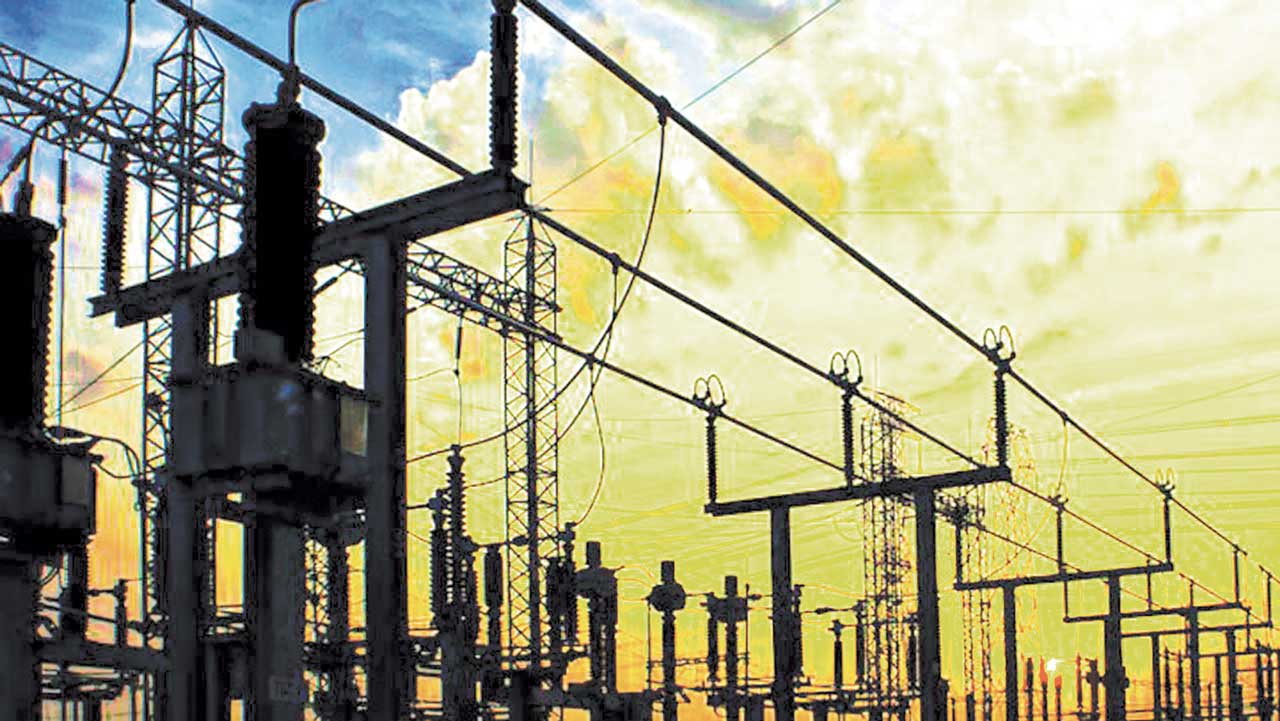
In just 24 hours, Nigeria’s national grid collapsed twice, marking the seventh collapse over the past year. These disruptions are not new; they reflect longstanding issues within Nigeria’s power sector, driven by inadequate infrastructure, maintenance challenges, vandalism, and systemic corruption. The persistence of the national grid across almost all administrations that came before President Bola Ahmed Tinubu’s administration highlights how deeply rooted the problem is.
Many ordinary Nigerians are unfamiliar with the concept of the national grid. The national grid is an interconnected network designed to deliver electricity from producers to consumers. The grid comprises generation stations that produce electricity, high-voltage transmission lines that carry this electricity over long distances, and distribution systems that reduce the voltage for delivery to homes and businesses.
Why does Nigeria’s national grid often experience collapses? Many Nigerians have accepted that these ‘collapses’ are part of the country’s electricity sector.
Can Nigeria stop the frequent collapse of its national electricity grid? Certainly. Many countries have achieved reliable and efficient electricity generation, transmission, and distribution systems, providing their citizens with consistent access to power. These nations have demonstrated that it is possible to overcome infrastructure challenges and create a resilient energy sector.
To achieve similar results, Nigeria should benchmark against the successes of other countries, learning from their strategies and best practices. However, it must also consider its local needs and unique challenges, such as geographical diversity, population distribution, people’s pockets, the need to support businesses and varying energy demands. An effective strategy would involve engaging local stakeholders and addressing issues like outdated infrastructure and insufficient maintenance.
This approach can realise stability and reliability in the national grid. Furthermore, substantial investments in infrastructure, technology, and human resources are essential. This includes upgrading existing facilities and investing in renewable energy sources to diversify the energy mix.
Building a skilled workforce to manage and maintain the grid will also be crucial. With the proper focus and investment, Nigeria can transform its electricity sector and ensure reliable power for all its citizens.
Zayyad I. Muhammad writes from Abuja via zaymohd@yahoo.com

Losing my foundation: A journey through grief and resilience
By Zainab Abubakar Abba
I was only nine years old when my world was shattered into a million pieces. My mom, my guiding light, my haven, left me too soon. The pain was unbearable, the grief overwhelming. I thought I would never survive without her warm embrace and loving smile. Not knowing life had other plans.
Ten years later, fate dealt me another cruel blow. My dad, my rock, my hero, passed away, leaving me alone and adrift in a sea of uncertainty. The loss was like a tsunami, sweeping away everything I thought I knew about love, family, and security. The pain of losing one parent was devastating, but losing both was like being stripped of my very foundation.
Growing up without both parents is a journey of unimaginable pain, struggle, and resilience. I have faced countless challenges, from navigating the complexities of adolescence to finding my place in a world that seemed determined to hold me back. The grief that followed was like a tidal wave, crashing over me with unrelenting force. I felt lost, alone, and scared. Simple tasks became monumental challenges, and everyday moments felt like a survival struggle.
But as the days turned into weeks and the weeks into months, I slowly began to find my footing. I realised that my parents may have left me physically, but their love, wisdom, and legacy remained. I held onto the memories we shared, the laughter we enjoyed, and the lessons they taught me.
Amidst the darkness, I have discovered a spark that refuses to be extinguished—a spark of hope, determination, and courage. Ihave learned to cherish my parents’ memories and hold onto their love and legacy like a beacon at night. And I haven’t been alone in this journey.
My siblings have been my lifeline, my support system, and my everything. Having supportive siblings has made all the difference in my journey. They have been my parents in every sense of the word, providing love, care, and encouragement when I needed it most.
Losing both parents at a young age has been the most challenging experience of my life, but it has also been a transformative journey. I have learned to cherish every moment, to never take love or life for granted, and to find strength amid vulnerability.
If you are walking a similar path, know you are not alone. Your pain is valid, your grief is real, and your resilience is remarkable. Hold onto the memories, lean on others, and find ways to honour your loved ones.
And if you are fortunate enough to have supportive siblings, cherish them, appreciate them, and lean on them when the future seems uncertain. You are stronger than you think and will rise wiser and more compassionate than ever.
Zainab Abubakar Abba wrote from the Department of Mass Communication, Bayero University, Kano.