
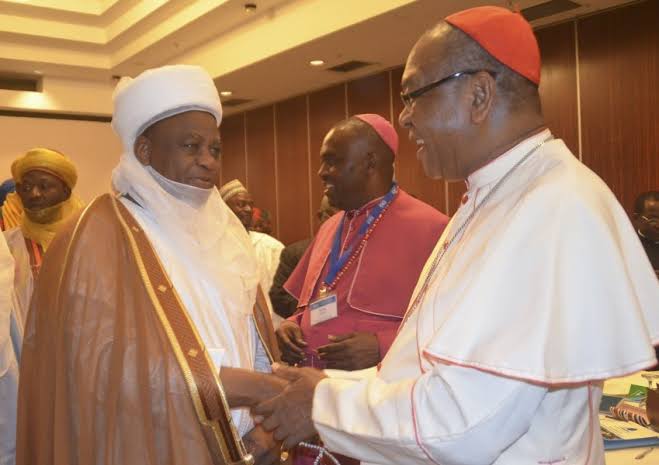
Politics and the erosion of integrity: The deterioration of Nigeria’s most esteemed institutions
By Muhammad Rabiu Jibrin (Mr. J)
Isn’t the religious institution now on the brink of suffering the same fate as the traditional institution, whose integrity, moral authority, and influence have been swept away by the political hurricane?
Historically, the Nigerian traditional and religious institutions were best known as the custodians of culture and justice, commanding immense respect and dignity. They were no-go areas with clear boundaries known to politicians. Their political neutrality, ethical brevity, and golden silence made them stand out, shielding them against political threats and disrespect. But with the gradual mental shift and negligence of purpose, the passage of time paved unnoticeable ways for political interference in their affairs, rendering them into a vulnerability that warms what once cooled them.
Although the Constitution of the Federal Republic of Nigeria does not clearly prohibit traditional rulers from engaging in politics, it expects public officeholders, including traditional rulers, to remain neutral. The state laws of most states, if not all, prohibit traditional rulers from participating in partisan politics, as such acts can be seen as a breach of their traditional duties and a justification for removal.
History has shown that most allegations against Emirs were connected to issues like partisan politics, outspoken nature, and mismanagement, among others. On March 9, 2020, the Kano State government under Governor Abdullahi Ganduje officially dethroned Sanusi Lamido Sanusi as the Emir of Kano. His grandfather, Emir Muhammadu Sanusi I (1953–1963), faced the same issue under the Premier of the Northern Region, Sir Ahmadu Bello, on April 10, 1963. Similarly, Emir Mustapha Jokolo of Gwandu (1995–2005) was deposed in June 2005 by the Kebbi State government under Governor Muhammad Adamu Aliero, while Emir Abubakar Atiku of Zurmi (2010–2012) was removed from his position by the Zamfara State government in 2012.
Having successfully influenced traditional institutions, are Nigerian politicians not now attempting to test the same waters on religious institutions through their appointments and donations services?
How our religious leaders glorify and endorse politicians while also criticising one another on political matters in mosques, churches, or during their religious sermons is akin to setting a bushfire that would consume all its inhabitants. It is not difficult for politicians to offer them lucrative sums of money, gift them extravagant cars, and so forth, enabling them to manipulate their views and dilute their words during sermons for material gain.
The silver lining is that the spiritual blueprints and the footsteps that guide them would resolutely remain unchanged till eternity, no matter their deviation.
The recent verbal altercation between Sheikh Sani Yahaya Jingir and Sheikh Muhammad Kabir Gombe, which stemmed from the issue of the ‘Qur’an Festival,’ is disheartening. I view Sheikh Sani Yahaya Jingir as a cleric who strives to speak the truth but often talks excessively. He is a mature, responsible Sheikh who should not demean himself by engaging in disputes with younger individuals like Sheikh Kabiru Gombe. His reputation, knowledge, and age should elevate him beyond such conflicts. He ought to discourage the young, emerging ‘Shuyukh’ under his mentorship from becoming involved in such matters, let alone involving himself.
As for Sheikh Kabiru Gombe, I see his utterances as disrespectful and illogical toward a man of that age, no matter the heat of the moment. If two ‘Shuyukh’ and their followers resort to ranting and calling each other names, what credibility do their preachings hold, and how will their followers perceive them? Where is the unity, patience, and love for one another that Islam teaches and which they claim to promote? No matter the misunderstanding, religious leaders should be careful with their words toward one another in all circumstances.
In conclusion, unless our religious leaders fight selfishness among themselves, adhere to the teachings of Islam, respect one another despite divergent views, and remain united, the future will unravel unfavourably. Only by adhering to the holistic teachings of Islam and the prophetic tradition can they stand resolute against any factor that seeks to erode their strength.
Muhammad Rabiu Jibrin (Mr.J) wrote via muhammadrabiujibrin@gmail.com.

Nigeria to witness new moon crescent on February 28, 2025—Space research agency
By Abdullahi Mukhtar Algasgaini
The National Space Research and Development Agency (NASRDA) has confirmed that the new moon crescent for 2025 will be visible in Nigeria on February 28.
According to a statement released by the Director of Communication and Public Relations of NASRDA on Saturday, the crescent will appear at exactly 1:45 AM Nigeria time (WAT).
This moment, known as the “Crescent Zero Hour,” marks the earliest point at which the new moon can be observed under optimal conditions using telescopes or special viewing equipment.
However, for those without such equipment, the crescent will be visible to the naked eye on the evening of Friday, February 28, between 6:17 PM and 7:35 PM in various parts of the country.
In Kachia, Kaduna State, the crescent is expected to be visible between 6:38 PM and 7:12 PM.
NASRDA has advised the public to use telescopes or special viewing glasses if necessary, and to choose open areas with unobstructed views of the western horizon after sunset.
Clear sky conditions are crucial for optimal viewing of the new moon crescent.

FRSC intensifies crackdown on mixed overloading after Kano fatal crash
By Uzair Adam
The Federal Road Safety Corps (FRSC) Kano Sector Command has intensified efforts to curb the dangerous practice of mixed overloading of trailers with goods, animals, and human passengers.
It was gathered that the initiative aims to enhance road safety and prevent fatal crashes resulting from unsafe transportation practices.
In a statement on Friday, FRSC Kano Public Relations Officer CRC Abdullahi Labaran disclosed that the sector command, led by Sector Commander CC UM Masa’udu, in collaboration with the Nigeria Police Force, conducted a special public sensitization campaign on February 20, 2025.
The exercise took place along Kano-Maiduguri Road, near the Muhammadu Buhari Interchange Flyover, Hotoro, from 4:00 PM to 6:00 PM.
The campaign was prompted by the tragic road crash on February 13, 2025, at the same location, which claimed 23 lives and left 48 others injured.
Investigations revealed that the accident was caused by a dangerously overloaded trailer, a practice that significantly increases the risk of fatal accidents.
During the sensitization exercise, CC UM Masa’udu warned drivers, transport operators, and stakeholders about the severe dangers of mixed overloading and emphasized the need for strict compliance with safety regulations.
He reiterated that the FRSC will not tolerate traffic violations that put lives at risk.
The campaign was attended by representatives of key transport unions, including the National Association of Road Transport Owners (NARTO) and the Road Transport Employers Association of Nigeria (RTEAN), who pledged their commitment to raising awareness among their members and ensuring safer road transport practices.
The FRSC Kano Sector Command reassured the public of its continued efforts to promote road safety awareness and strict enforcement to prevent further tragedies.
It urged road users to cooperate with authorities and adopt safer transportation practices for the well-being of all.

Plateau governor bans mining activities over insecurity
By Anwar Usman
The Governor of Plateau State, Caleb Mutfwang, has thwarted all mining activities in the state due to security concerns.In an executive order dated Friday, February 21, Mutfwang said the suspension, which is with immediate effect, subsists until further notice.
He added that his administration would undertake a rigorous review of the security situation in all the mining areas in the Plateau and ensure an appropriate Community Development Agreement to address the socio-economic contributions of the rights holders.
The statement reads, “There is the need to ensure measures taken to protect places of mining activities in Plateau State and to ensure only persons that are licensed to conduct mining can enter or leave such premises. The suspension of all mining activities has become necessary.There is an increase in illegal mining activities and insecurity associated with such mining activities in various Local Government Areas in Plateau State.
“There is an increased influx of foreigners in the mining areas of Plateau State, which significantly increased insecurity in the State, including but not limited to offences of Rape, Banditry, Illegal Possession of Firearms, Drug trafficking and Kidnapping.
He further stated that “I, Barr. Caleb Manasseh Muftwang, the Executive Governor and Chief Security Officer of Plateau State, deemed it necessary to suspend all mining activities in Plateau State for security reasons.”
The governor said his administration will partner with the federal government to come up with appropriate standards and monitoring framework between the state, local government areas, host communities and minerals right holders.

Germany gears up for crucial federal elections
By Hadiza Abdulkadir
The political atmosphere in Germany is intensifying as the country approaches its highly anticipated federal elections on February 23, 2025. With multiple parties in the race, the election results are expected to influence Germany’s domestic policies and international stance significantly.
Key political parties are ramping up their campaigns, focusing on issues such as economic stability, immigration, climate change, and Germany’s role in global affairs. Analysts predict a tight contest, with shifting voter sentiments crucial to determining the next government.
Among the key contenders is the ruling Social Democratic Party (SPD), led by Chancellor Olaf Scholz, facing strong challenges from the conservative Christian Democratic Union (CDU) under Friedrich Merz.
The Greens, led by Annalena Baerbock, are pushing a climate-focused agenda, while the Free Democratic Party (FDP), under Christian Lindner, is emphasising economic liberalisation.
The far-right Alternative for Germany (AfD) and the leftist Die Linke are also competing for voter support, making this election highly competitive and defining for Germany’s political future.
As Germany finds itself at a crossroads, the results of these elections will not only influence the nation’s governance but also have significant repercussions on European and global politics.

How I found my ideal students
By Ishaka Mohammed
My employers often commended my efforts, increased my salary and gave me bonuses even when I didn’t see any significant impact of my tutelage as a private school teacher. I was worried about my studentsʼ poor comprehension, negative attitude towards learning, and low morals. I couldn’t even stop them from cheating in tests and exams.
Although it was safe to link my failure to a lack of formal teaching qualifications, I expected the impact of the workshops I attended. And to cap it all, most of the teachers I knew (with the required qualifications) weren’t getting any better results. I was frustrated; I blamed parents, society and inadequate facilities—in that order.
However, I was joyous to get a job with an international school in 2024. The school offered excellent educational facilities, teacher training, a six-figure salary, pension, heavily subsidised lunch, and transport and accommodation allowances, among other things. Everything about the school was promising.
Nonetheless, my first meeting with the students ended my excitement. I worked harder than ever before, but as each new week brought tougher challenges, I conceded that I could neither minimise nor tolerate the disruptive behaviour and utter disrespect of the children of politicians, diplomats, business tycoons, etc. They came to the school for two reasons: to have fun and build rapport with their future business partners or political allies.
I quit the job after a term. While I was leaving, some senior colleagues commended my courage to do what they had been unable to do for years despite facing the same challenges that prompted my resignation.
I became jobless but happier, and I didn’t wish to teach again. But a call from a school proprietor in a distant state changed my mind. The head of the department I resigned from recommended that I attend a school he believed would suit me.
This happened when I was already preparing to start a new position in a different industry. My prospective employer is notorious for delaying salary payments.
After weighing the salary factor and the state of education in Yorubaland, I chose to return to teaching, and bingo! My new students meet all my criteria, particularly regarding their morals. Even though they come from privileged backgrounds, they are humble, respectful, and eager for knowledge.
There was a day when we didn’t have enough teachers to invigilate the tests, and I was the only one who seemed concerned. Two halls were left without invigilators, yet everything went smoothly. I was impressed by the students’ maturity and honesty.
My meeting with these students has reminded me of many things, one of which is the importance of being oneself. While I recognise the significance of adaptability, I still believe that some principles should not be compromised. I appreciate the gentleman who referred me to my new employer. I commend the parents and guardians of these learners, the school management, and all the staff for nurturing such remarkable members of society. Once again, I am optimisticthat Nigeria will be better in the future.
Ishaka Mohammed wrote via ishakamohammed39@gmail.com.

MB Shehu’s mega empowerment program – a timely support for Fagge people
By Dr. Muhammad Sulaiman Abdullahi
In Nigerian landscape today, people need help. Almost everyone needs one form of help of another. This is especially since after Buhari’s brutal leadership which took Nigerians 20 years backward. Baba Tinubu promised that he would continue, not to change and turn things around. And Nigerians are really witnessing a massive and huge form of suffocation, where everyone is gasping for air and therefore, many people don’t care much about what the leaders should do or not do.
A lot of people are hungry as a result of the reckless driving of the nations drivers. You won’t understand the depth of the challenges in Nigeri’as political arena until you engage some politicians, especially those who are genuinely interested in contributing positively to the community. That’s why people like us—who are so much inquisitive—struggle a lot in this field!
I don’t particularly enjoy discussing or praising politicians because whatever they do, they are just doing their jobs. However, there are some reasons that compel me to write on the MB Shehu’s empowerment program, and God willing, I will not do it to flatter; I will only share what I know about that support program, and I know that God is my witness regarding what I write. I also speak from a position of being part of the support committee.
MB Shehu is the current member federal house of representatives, representing the good people of Fagge. During his campaign rallies, he has mentioned and promised many things he intended to do to his people if elected. Today, he is the member, representing Fagge in Abuja. As part of promise fulfillment, he distributes, or rather, he has already distributed a lot of items, to his constituents, to mitigate and cushion the sad and bad effect of the T-pain. While I do not know where he got the idea for this kind of distribution, I believe it stems from the large number of people he has attracted politically, most of whom are needy and in dire need of such support and assistance. He has promised them that he will do good for them if given the opportunity and he is now doing exactly what he said.
Someone might ask, what is more important: meeting the needs of one person or meeting the needs of many people? Many will tell you that meeting the needs of many is more significant. However, how can one meet the needs of the entire community if one doesn’t start from individual people?
Initially, I don’t personally see such “empowerments” as worthy programs, but now, having seen the actions taken and how they have been implemented and also, hard situation which most of the beneficiaries are battling with, I believe that a leader, should, in such kind of situations, do two things:
1) Assist their community in a way that is pleasing to God, through proper channels—those that the people desire (not necessarily highly sophisticated and systematic way), even if a leader sees other ways as more beneficial.
2) A leader should strive to seek and identify certain vital good initiatives that are beneficial, even if many in the community do not see the immediate advantages. This is because most people lack the knowledge or understanding to discern what is more important for them.
Both the above two ways should be integrated! There should be plans for political accountability, and there should be thoughtful and dignified initiatives that can be recognized as good deeds even after one’s life.
During the opening ceremony of the program, the executive Governor of Kano, Abba Kabir Yusuf, aka Abba Gida-gida, inaugurated the program, and it was expected that around 3,000 people will directly benefit from the empowerment, indeed it is serious. Here are some of the items being distributed to the community members:
i) Cars
ii) Motorcycles
iii) Mechanic toolboxes
iv) Car diagnostic gadgets
v) Sewing machines
vi) Deep freezers
vii) Industrial sewing machines
viii) 50,000 Naira to over 1,000 people, with the total number reaching 1,107
ix) Welding machines
x) High-powered cameras, etc
These are just a few of the items I have seen, and some I have heard about.
The Governor of Kano, Abba Gida-gida, who was present during the inauguration of the support program, expressed his happiness and said that he was at a loss for words due to his joy. He added that he had never seen any member who did something like what MB Shehu has done.
This is indeed a significant achievement, and I know that MB Shehu is committed to implementing more initiatives. Anyone interested in knowing about such initiatives can contact Alkanawy, as they are the ones disseminating news and promoting the activities of the legislator.
Before the empowerment, a very strong committee was formed under the leadership of Professor Bashir Yusuf Fagge, and genuinely, there has been a commitment to identifying deserving beneficiaries. I can confidently say that a great effort has been made, day and night, to ensure this work is done perfectly.
In this current political climate under Tinubu, if someone gives you a car, motorcycle, or money, you certainly should appreciate them. Because in Nigeria, especially now, if they don’t give you, there’s nothing you can do. Many elected members do not contribute anything to their constituents and nothing happens.
Finally, some people oppose this empowerment due to their personal reasons or grudges against the one who did it, the committee members or the process. No one can do things that can be accepted by all. Just do your best and move on. No one (especially the politicians) would loved or hated by all. This is why doing things with great foresight and consultation is invaluable. I saw happiness in the faces of the recipients. I hope the money and items given will metamorphose and multiply into bigger fortune.
I call upon the respected member to continue working diligently, to fear God more in carrying out his responsibilities, and to keep doing good for the people. Amen.
Muhammad Kano

Senate’s spokesperson criticises Senator Natasha, warns against using NASS for drama
By Abdullahi Mukhtar Algasgaini
The Nigerian Senate has criticized Senator Natasha Akpoti-Uduaghan, representing Kogi Central, for her remarks about the President of the Senate, Godswill Akpabio, regarding seat allocations.
On Thursday, Akpoti-Uduaghan refused to accept the new seat assigned to her, citing her right to protection under the Senate’s Rule 10.
The dispute arose after her seat was changed following the defection of some opposition senators to the ruling party.
However, Senator Akpoti-Uduaghan rejected the move and accused the Senate leadership of attempting to silence her.
“I have no problem if they take away my right to speak. I am not afraid of you. You are denying me my rights,” she said, addressing the Senate President.
As tensions escalated, Akpabio ordered security personnel to remove her from the Senate chamber, but some senators intervened to de-escalate the situation.
Reacting to the incident in an interview on Channels Television’s Sunrise Daily, Senate spokesman Yemi Adaramodu said that the National Assembly is not a place for entertainment.
“What we are saying is that the National Assembly is not a place for creating entertainment or play. It is a place for serious legislative work,” he stated.
Regarding Akpoti-Uduaghan’s accusation of rights infringement, Adaramodu explained that, despite being a new senator, she had been assigned significant leadership roles in the Senate.
“If she is claiming that her rights are being denied or that she’s being prevented from speaking, as a new senator, she has been given three major committee leadership roles. Every senator is entitled to lead one committee, but she is now leading foreign affairs and NGOs,” he added.
The Senate spokesman further mentioned that the matter would not be revisited, as Senator Isah Jubril from Kogi had apologized on behalf of Akpoti-Uduaghan.
“The Senate has fully accepted this apology, and so the matter will not be reopened,” he said.

NUEE gives Kaduna Electric 7-day ultimatum over dispute, threatens to withdraw services
By Abdullahi Mukhtar Algasgaini
The National Union of Electricity Employees (NUEE) has issued a 7-day ultimatum to Kaduna Electric and threatened to withdraw its services entirely due to ongoing disputes, including the issuance of ‘service no longer required’ notices to several affected staff members.
Despite intervention from the Governor of Kaduna State, Senator Uba Sani, the situation remains unresolved and left employees and the public in a state of uncertainty.
The NUEE has made it clear that unless their concerns are addressed within the stipulated timeframe, they will take further action.
The potential withdrawal of services could result in power outages affecting residents across Kaduna, Kebbi, Zamfara, and Sokoto states, who are already bracing for another possible blackout.
As the deadline approaches, all eyes are on Kaduna Electric and the state government to find a resolution before the situation escalates.

Nigeria must be firm against the ‘Tigrans’
By Zayyad I. Muhammad
Nigeria is one of the most important countries in Africa and a key player in the global Black community. Its economic strength, strategic geographic location, and influence (on its own rights) in international affairs have made it a significant hub for investment and business. Therefore, it is no surprise that Binance and its leadership were drawn to Nigeria, seeing the country as a lucrative market.
However, recent developments involving Binance executive Tigran Gambaryan have raised serious concerns. His wild and unsubstantiated allegations against high-ranking Nigerian officials and lawmakers are not just an insult to the nation but a blatant attempt to blackmail and tarnish Nigeria’s international image. Such reckless accusations should not be ignored, as they undermine the country’s sovereignty and credibility on the global stage.
The Nigerian government must not take this matter lightly. To ensure that such behavior is met with firm consequences, further diplomatic, legal, and economic measures should be pursued against Tigran and his company, Binance. If Nigeria fails to act decisively, it risks setting a dangerous precedent—one where foreign actors can manipulate narratives, evade responsibility for economic crimes, and attempt to pressure the country through international channels.
This situation is not happening in isolation. In early 2024, Binance was accused of operating illegally in Nigeria, manipulating forex, and conducting economic activities that destabilised the Naira. Both Tigran Gambaryan and Nadeem Anjarwalla were arrested and charged with money laundering and illicit financial transactions. While Anjarwalla managed to escape, Tigran was released on diplomatic, health, and compassionate grounds—a gesture of goodwill that is now being repaid with hostility.
Nigeria cannot afford to tolerate individuals like Tigran, who engage in questionable financial practices and resort to baseless and outrageous accusations against the country’s leadership. If strong and unapologetic action is not taken, we will likely witness more figures like Tigran exploiting diplomatic loopholes and using ‘below-the-belt’ tactics to evade accountability for their economic crimes.
The Nigerian government must further explore all available legal options, including international legal action and targeted economic sanctions against Binance, to hold those responsible accountable. Nigeria is not a playground for foreign business entities looking to manipulate its financial system while disrespecting its institutions and high-ranking officials, including lawmakers.
Nigeria has the capacity to defend its interests and safeguard its economic stability. It must act decisively to ensure that those who attempt to undermine its economy and reputation face the full weight of the law. International diplomatic channels should be leveraged to demand a formal apology from Tigran Gambaryan if necessary.
Nigeria’s sovereignty, financial stability, and international standing must be protected at all costs. Any attempt to blackmail or pressure the country must be met with strong resistance, ensuring Nigeria remains in control of its economic and political destiny.
Zayyad I. Muhammad writes from Abuja via zaymohd@gmail.com.