



Nigerian Soldiers Arrest Suspected Terrorist Kingpin, Ammunition Courier in Kaduna
By Sabiu Abdullahi
Troops of the Joint Task Force North West, Operation FANSAN YAMMA, have arrested three suspected members of a terrorist network during separate operations across Kaduna State.
Those arrested include an alleged terrorist kingpin, a suspected ammunition courier and a suspected logistics supplier.
The operations took place on Wednesday in Kubau, Igabi and Birnin Gwari Local Government Areas as part of efforts to disrupt terrorist groups and their supply networks.
Security analyst Zagazola Makama disclosed the development in a post on X on Thursday night.
According to Makama, troops conducted a raid on Dabar Dabo in Kubau Local Government Area, which was identified as a hideout used by terrorists.
The operation led to the arrest of the suspected kingpin and two other members of his group.
“The suspects were taken into military custody for further investigation and intelligence gathering,” Makama wrote.
In a separate operation in Igabi Local Government Area, troops intercepted a 50-year-old woman suspected of transporting ammunition.
Security personnel reportedly recovered 300 rounds of ammunition concealed inside a bag in her possession.
Makama said preliminary investigations indicated that the woman had travelled from Zamfara State to Lafia, where she allegedly received the ammunition before proceeding to Birnin Gwari to deliver it to suspected terrorist elements in the area.
Later on Wednesday, troops, with support from a community vigilante group, arrested another suspected logistics supplier in Birnin Gwari Local Government Area.
“A search of the suspect led to the recovery of four communication devices believed to be linked to terrorist activities,” Makama wrote.
Makama said the suspects and items recovered during the operations remained in military custody as investigations continued.

2027: Kwankwaso Urges Atiku To Back NDC Presidential Bid
By Sabiu Abdullahi
The Vice Presidential candidate of the Nigeria Democratic Congress, NDC, Rabi’u Kwankwaso, has called on the presidential candidate of the African Democratic Congress, ADC, Atiku Abubakar, to abandon his 2027 presidential ambition and support the NDC.
Kwankwaso made the appeal on Thursday when he received members of the Fulani Farmers Association at his residence in Abuja.
The former Kano State governor urged Atiku to step aside for the NDC ticket and assured him that he would be taken care of if the party eventually wins the presidency.
“Step down for us; if we win, we will take care of you,” Kwankwaso said.
The appeal comes amid ongoing efforts by opposition politicians to form a united front against President Bola Tinubu and the ruling All Progressives Congress ahead of the 2027 general elections.
Atiku, a former Vice President, remains one of the prominent opposition figures seeking the presidency in 2027.
Kwankwaso and the NDC presidential candidate, Peter Obi, had previously been associated with the ADC before they left the party in May. They cited internal divisions and court cases within the party as reasons for their departure.
Their move to the NDC has added to the realignment among opposition politicians ahead of the next presidential election.

Nigeria’s Floods: A Disaster That Keeps Its Appointment
By Onumoh Abdulwaheed
The water came first to the Ojota Maryland bridge, then to Lekki, then to Oshodi. By mid-morning, offices sat locked, bus stops stood empty, and cars floated where traffic should have been. On social media, Lagosians did what they always do when the rains return: they joked, filmed, and asked again where the government was.
Nigeria has rehearsed this scene for years. Not a single flood, but a season that arrives on schedule, floods a familiar set of streets, and leaves behind the same unanswered question: why does this keep happening?
The numbers say it will keep happening. The Nigeria Hydrological Services Agency’s 2026 flood outlook warns that 33 states and more than 14,000 communities sit in high-risk zones this year. It is not a new warning. In 2022, floods killed over 600 people, displaced 1.4 million, and destroyed more than 82,000 homes. By 2024, another million people had been displaced, and 1.3 million hectares of farmland were lost. Economists put the average cost of the 2022 and 2024 disasters at $6.68 billion money that vanishes from an economy that can least afford it, shaving up to half a percentage point off agricultural GDP each bad season.
Nowhere is the pattern of official neglect clearer than at Dasin Hausa. In the 1980s, Nigeria and Cameroon agreed to build twin dams: Lagdo, in Cameroon, to hold back water, and Dasin Hausa, in Adamawa State, to absorb whatever Lagdo released. Cameroon built its dam. Nigeria did not. More than forty years on, Dasin Hausa exists mainly in feasibility studies and press statements, while Lagdo’s floodwaters continue to pour, almost on cue, into Benue, Kogi, Anambra and Delta.
Jonathan Ikwebe, a farmer in Benue whose rice fields were wiped out in 2022, put it plainly: “We are at the mercy of the water.” He said the government keeps promising a dam that nobody sees being built.
That promise has been renewed often. In 2023, the Senate urged President Bola Tinubu to prioritise the project. In 2025, officials announced a public-private partnership to fast-track it, citing renewed political will. In 2026, the dam is still on paper. Officials cite funding and bureaucracy; critics say what is missing isn’t money but the will to finish what’s been started.
From Blindness to Brilliance: How a Blind Man From Sokoto Pursued Education as a Tool for Success
By Dahiru Ƙasimu Adamu
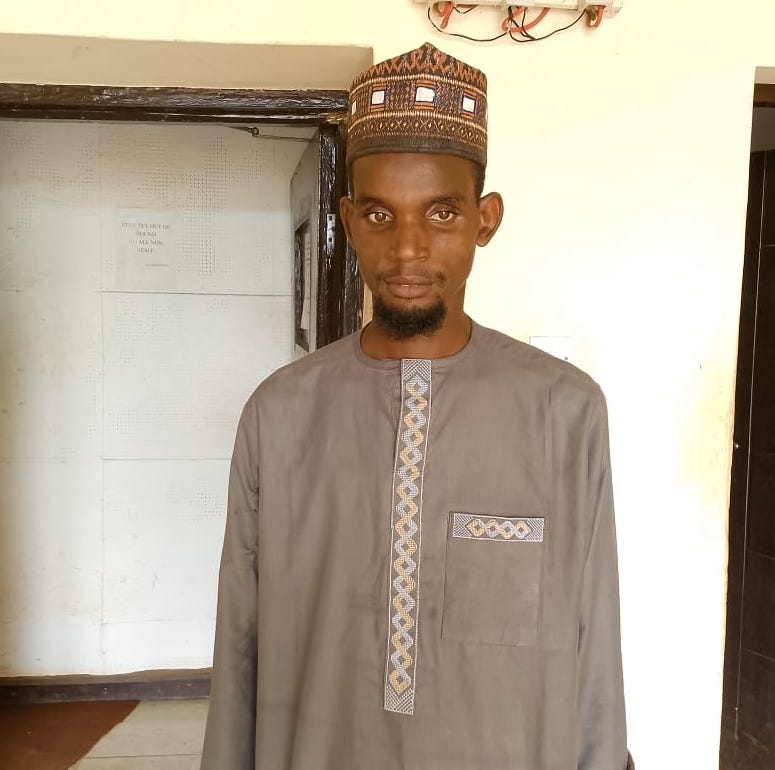
In northern Nigeria, disability has long been viewed as a one-way ticket to a life of begging. But Imrana Aminu Sifawa is rewriting that narrative through academic achievement.
When a child is born with a disability in northern Nigeria, tradition often dictates their future: they beg. It’s a grim expectation that has consigned countless individuals to a life of dependency rather than dignity.
But Imrana Aminu Sifawa refuses to be a statistic. Born completely blind in 2001 in Sifawa town, Bodinga Local Government Area, Sokoto State, this young man has spent his life shattering stereotypes and reaching academic heights that many sighted individuals never reach.
Imrana’s educational journey began at AA Raji Special School Sokoto, where he completed both primary and secondary education. But he didn’t stop there.
He later earned his National Certificate in Education (NCE) in Islamic Studies, with a specialisation in Special Education in Islam, from Shehu Shagari College of Education, Sokoto. Today, he is pursuing a degree in Islamic Studies at the same institution, affiliated with Usmanu Danfodiyo University, Sokoto (UDUS).
Recognising that the world is moving rapidly toward technology, Imrana earned a Diploma in Computer from Kebbi State School for Special Needs in Birnin Kebbi, where he mastered computer operation and networking.
“I have knowledge of operating computers,” Imrana declares with quiet confidence. “Even now, if you bring one to me, I will operate it. I understand its features, how it works, how letters are arranged, and how to type.”
Imrana’s intellectual pursuits extend beyond secular education. He has completely memorised the Holy Qur’an and studied Hadith extensively. His command of Islamic scholarship is evident when he quotes Imam Shafi’i: “Kulli yaumil zadal ilmi zadani ilmul bi jahali…” (Every day knowledge increases, and my knowledge of my ignorance increases…)
In Fiqh (Islamic jurisprudence), he has studied Mukhtasarul Khalil, Lawali, and Sani, among others.
What drives this remarkable young man? A deep-seated rejection of the fate society had planned for him.
“I grew up disinterested in begging, and I completely hate it,” Imrana states firmly.
His determination was fueled by his father’s unwavering support; his father, a retired civil servant, said that politicians and wealthy individuals never helped with his school fees.
Imrana’s path has been anything but smooth. He openly acknowledges the discrimination he has faced.
“The challenges are many, but to mention a few: discrimination,” he explains. “Whenever I set foot in education, some thought I could not do it. Some lecturers clearly hated me. Nevertheless, I endured, I resisted, and now I have attained it.”
He draws strength from the teachings of Ta’alimil Mutaalim: “Bijiddi la bi jiddi kulli muhataji…” (With effort, not with mere desire, every seeker achieves…)
Imrana is unequivocal in his message to people living with disabilities: shun begging, citing a powerful Hadith of the Prophet Muhammad (peace be upon him). He warns: “Anyone who engages in begging on the Day of Judgment will wake up without any flesh on his body; it is the sign of beggars.”
In another tradition, he notes that anyone who begs invites poverty through their own actions.
“Begging is not good,” Imrana insists. “Most of those who rely on begging have many cows and flocks of sheep, but they cannot leave it; they have become addicted.”
Rather than begging, Imrana advocates for entrepreneurship as a path to dignity and self-sufficiency.
When asked about his own source of income, he reveals: “Walima (ceremonial gatherings) is one of my sources of income. When people have occasions like marriages or naming ceremonies, they invite me to present and educate attendees, and I earn income through that.”
Imrana urges wealthy individuals to provide people with disabilities with capital for investments that enable them to pursue their dreams and become stable, contributing members of society.
Several other people like Imrana can do better but have yet to receive encouragement and support.
If our society truly wants to thrive, we must stop discriminating against people with disabilities. Instead, we must encourage them, integrate them, and support them in learning modern skills that will benefit them, their families, and society at large.
Imrana Aminu Sifawa’s story is not just about one man’s triumph over blindness; it’s a testament to the power of education, the strength of human will, and the urgent need to change society’s view of disability.
Imrana Aminu Sifawa’s message is clear: Disability is not a barrier. Begging is not a destiny. Education is the tool for success.

Charismatic Bishops Endorse Tinubu For 2027 Re-Election
By Sabiu Abdullahi
The Charismatic Bishops Conference of Nigeria (CBCN) has declared its support for President Bola Tinubu’s bid for a second term in the 2027 presidential election.
The endorsement was made on Wednesday during the 2026 synod of the conference held in Abuja.
The event was attended by George Akume, Secretary to the Government of the Federation, and Mohammed Idris, Minister of Information and National Orientation.
Representatives of the CBCN from Nigeria’s six geopolitical zones asked Leonard Kawas, the organisation’s president-general, to announce the position reached by the conference.
Kawas said the CBCN has members in 52 countries, including 950 “canonical” bishops in Nigeria.
He recalled that the organisation was among groups that expressed concerns over the Muslim-Muslim presidential ticket presented by the All Progressives Congress during the 2023 election.
According to him, however, Tinubu’s subsequent appointments of Christians to prominent government positions changed the group’s perception of his administration.
“Suddenly, the man, President Bola Ahmed Tinubu, began to roll out his appointments. Before we could say Jack Robinson, a Christian, who is loved by all of us, by Senator George Akume, was appointed the secretary to the government of the federation,” Kawas said.
“Our minds and BPs started coming down. Mr President, if you are watching us, for we, Christians, that was the turning point of your government.
“When we were still celebrating it, before we knew it, you appointed an FCT minister. For the first time in many years, a Christian brother, Barrister Nyesom Wike, was appointed.
“Mr President, when we have sat back and examined the way you balanced the religious imbalance that has existed for long. President Bola Tinubu came and balanced our diversity so very well. There is no iota of nepotism.”
Kawas also cited the appointment of Nentawe Yilwatda, a Christian, as national chairman of the APC as part of what he described as the president’s efforts to promote religious balance.
He further said Tinubu had supported Christian candidates who went on to become governors.
The CBCN president-general said the bishops would continue to support the president through prayers and advocacy.
“We are here today to reassure him of our solid support. We are standing with him in prayers and advocacy for the good programmes he has brought forth for the liberation of Nigeria,” he added.
“We stand with the president today, and as long as he is willing to be our president and even come in 2027, we will still be standing with him.
“So, it is safe to say that this house has endorsed him for the 2027 presidency. Let him go ahead.”
The endorsement places the CBCN among religious and interest groups that have publicly declared their positions ahead of the 2027 presidential election.

Panic in Nigeria as 24 Die After Consuming Herbal Substance
By Sabiu Abdullahi
At least 24 residents of Odigbo Local Government Area of Ondo State have died after consuming a herbal liquid substance, according to the state government.
The deaths occurred in Araromi Obu and Odigbo town, where eight people reportedly died in Araromi Obu and 16 others in Odigbo town.
The incident, which reportedly occurred on Saturday, has left the affected communities in mourning, while several other people who consumed the substance are receiving treatment in hospitals.
A resident familiar with the incident said some of those who consumed the substance later became unconscious before they died.
The source said, “They (the deceased) drank the herbal substance and started dying. Eight people died in Araromi Obu while 16 others lost their lives in Odigbo town, but we have yet to confirm if it was what they drank that killed them. But we are sure that the people died after drinking the herbal drinks.
“Some of the people died in their sleep while some died when they got home, and many are still in the hospital as I am talking to you.”
The Chairman of Odigbo Local Government Area, Taiwo Adegoroye, confirmed the deaths but said the actual cause had not been established.
According to him, health officials were expected to conduct further tests, including an autopsy, to determine what caused the deaths.
Adegoroye said, “We can confirm the death of 24 people, eight in Araromi Obu and 16 in Odigbo town, and many are still on admission at hospitals. But we have yet to ascertain the cause of the deaths, and we are still waiting for the team from the state Ministry of Health to carry out the test on the deceased. That is why we can’t specifically say the real cause.”
As a precaution, the council chairman announced a ban on the sale and consumption of locally brewed alcoholic drinks in the area.
He added that a preliminary verbal autopsy carried out by the local government health team suggested a possible connection between the deaths and the consumption of the substances. However, authorities said further medical investigation was required to establish the cause conclusively.
The state Commissioner for Health, Dr Banji Ajaka, also confirmed the deaths and said investigations were ongoing.
Ajaka did not identify the substance suspected to be responsible for the deaths but said health officials would carry out further assessments in the affected communities.
“The government is taking the matter seriously, and we will provide more details after the ongoing investigation has established the circumstances surrounding the incident.”
Meanwhile, some youths in Odigbo reportedly marched to the palace of the town’s traditional ruler to demand explanations and urgent action over the deaths.
The monarch, Oba Rufus Akinrinmade, appealed to the youths to remain calm. He assured them that efforts would be made to establish what caused the deaths and address the situation.
Authorities are yet to establish the exact cause of the deaths as medical investigations continue.
NAFDAC Raises Alarm Over Chinese Counterfeiters Setting up Factories in Nigeria
By Sabiu Abdullahi
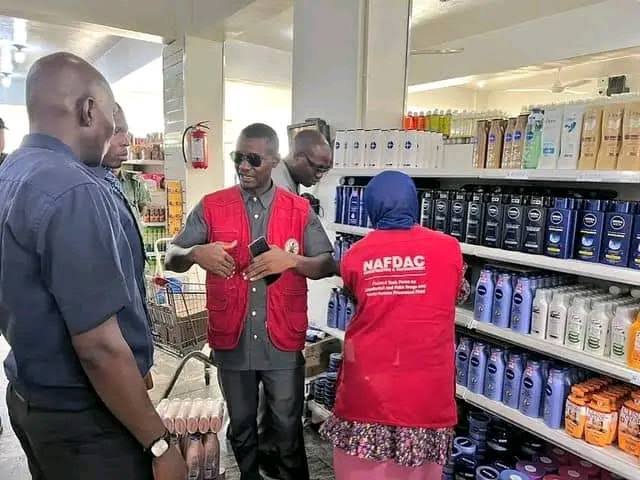
The National Agency for Food and Drug Administration and Control (NAFDAC) has raised the alarm over the alleged establishment of counterfeit manufacturing plants and distribution networks in Nigeria by Chinese nationals involved in the production of fake products.
Martins Iluyomade, NAFDAC director of investigation and enforcement, disclosed that intelligence gathered by the agency showed a shift in the counterfeit trade.
According to him, counterfeiters who previously imported fake goods from China are now producing and distributing them locally.
“Before, to fake a product, you needed to go to China to bring it. Now, they are here with us,” Iluyomade said.
“They identify moving products, send samples to China, and distribute them locally through logistics companies they own.”
Iluyomade said NAFDAC had commenced a systematic crackdown on illegal logistics facilities allegedly operated by foreign nationals linked to the counterfeit network.
The disclosure comes amid concerns over the circulation of dangerous and substandard consumer goods in the country. Products reportedly affected include adulterated toothpaste, contaminated bottled water, counterfeit cosmetics and unwholesome dairy products.
NAFDAC Director-General, Mojisola Adeyeye, said the agency had seized and destroyed regulated products valued at more than N1.5 trillion during coordinated enforcement operations in Lagos and parts of the South-East.
She added that the agency secured 64 convictions against counterfeiters between June 2025 and June 2026, describing the figure as the highest recorded by NAFDAC.
One of the convicted counterfeiters was reportedly sentenced to five years in prison in December after being found guilty of operating an illegal beverage laboratory.
NAFDAC also disclosed that criminal proceedings are ongoing at federal courts against several suspects arrested in Kano, Sokoto, Delta and Anambra states.
The suspects are facing allegations linked to the importation and distribution of counterfeit oral-care products.
The latest disclosure highlights the changing nature of counterfeit operations in Nigeria, with authorities now facing not only the challenge of stopping fake products at the point of entry but also the alleged local manufacture and distribution of such products.
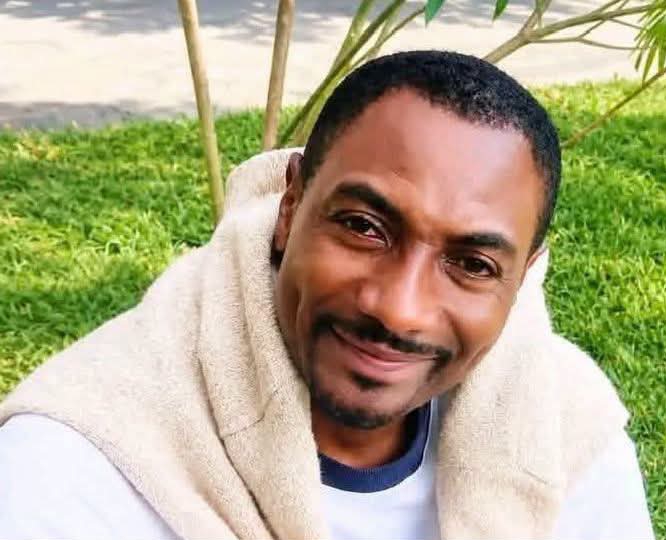
Kano Commentator Dan Shagamu Brutally Murdered Despite Raising Alarm of Threats on Social Media
By Sabiu Abdullahi
Popular Kano-based social media commentator and political analyst, Ibrahim Khalil Dan Shagamu, has reportedly been killed at his residence in Kano State after he allegedly raised an alarm on social media about threats to his safety, with no action reportedly taken before his death.
Dan Shagamu, who operated under the name Dan-shagamu International, was known for his social media videos and commentary on political, religious and community issues.
Reports circulating after his death said the commentator had earlier used social media to raise an alarm over concerns about his safety and called attention to the danger he faced. It was also alleged that his appeal did not receive the intervention he sought before he was killed.
Amnesty International Nigeria confirmed his killing in a statement issued on Wednesday, saying his body was found in a pool of blood at his home.
“Amnesty International strongly condemns the killing of a social media political commentator Ibrahim Khalil Dan Shagamu whose body was found today in a pool of blood at his home in Kano,” the organisation said.
“He was brutally slaughtered after being overpowered by his killers.”
Details of the incident, including the identity and motive of the assailants, remained unclear at the time of reporting.
Unverified accounts on social media claimed that Dan Shagamu was killed in a gruesome manner, with some describing the alleged attack as “yankan rago”, a Hausa expression referring to throat-slitting.
The reported killing has raised fresh concerns about the safety of individuals who speak publicly on sensitive political and social issues, particularly as the country approaches elections.
Amnesty International called on the authorities to investigate the incident and ensure that those responsible face justice.
“The Nigerian authorities must investigate this incident and ensure that those suspected of responsibility are brought to justice,” it said, while tagging the Nigeria Police Force.
The rights organisation also expressed concern over reported political threats and intimidation ahead of the elections.
“As the elections approach, we continue to receive disturbing reports of politically related threats to life and intimidation,” Amnesty said.
Dan Shagamu’s death has triggered widespread grief among his followers and residents, with many taking to social media to express shock over the killing and pray for the repose of his soul.
The circumstances surrounding his earlier warning, including whether any formal complaint was made to security authorities and what response it received, had not been independently established at the time of reporting.
Nigeria, Boko Haram Reportedly Agree To Secret Three-Month Ceasefire
By Sabiu Abdullahi
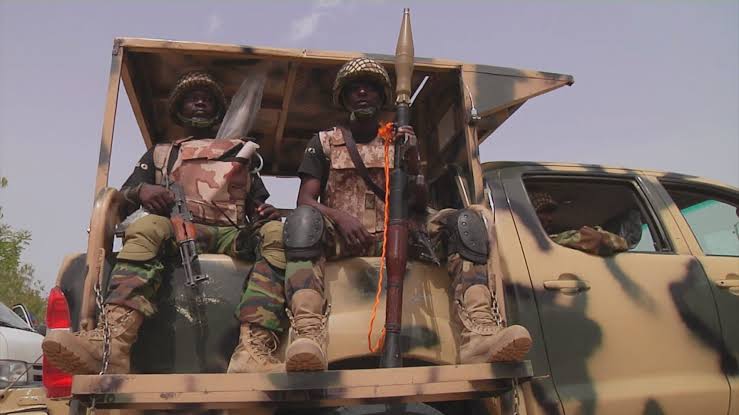
The Nigerian government has reportedly maintained a secret three-month ceasefire with Boko Haram after negotiations that led to the release of 360 civilians abducted in northeastern Nigeria.
According to an investigation by The New Humanitarian, the reported truce began in June after talks connected to the release of villagers abducted from Ngoshe, a community located near the Mandara Mountains along Nigeria’s border with Cameroon.
Three individuals with contacts within Boko Haram, including some who have links to senior members of the group, reportedly confirmed separately that the ceasefire has been in place since June. The sources also said the agreement could be extended for another 40 days.
Two of the sources told The New Humanitarian that Boko Haram attacks had stopped in communities around Ngoshe, which have faced repeated assaults by the armed group.
Release Of 360 Villagers Preceded Truce
The 360 villagers were reportedly abducted in March during an attack by Boko Haram on an army base near Ngoshe.
The negotiations that resulted in their release allegedly involved a payment of five billion naira ($3.7m) by the Nigerian government.
The reported payment has generated controversy, with the Nigerian government denying that it paid a ransom for the release of the abducted villagers.
The New Humanitarian said it approached government, defence and army spokespersons for confirmation of the reported ceasefire but did not receive a response before the publication of its investigation.
The reported agreement is said to involve Boko Haram alone and does not cover the Islamic State West Africa Province (ISWAP), a rival armed group that operates across northeastern Nigeria and the wider Lake Chad region.
Fighting between Boko Haram and ISWAP has reportedly continued.
Truce Contrasts With Government Position
The reported ceasefire comes despite the Nigerian government’s public position against negotiating with Boko Haram, which Nigerian authorities have designated as a “terrorist organisation”.
President Bola Tinubu has instead prioritised strengthening the country’s military capacity to combat armed groups. In July, he announced plans to recruit 30,000 additional personnel and establish four new army divisions.
However, The New Humanitarian reported that there have been several attempts behind the scenes to open dialogue with Boko Haram. The publication cited security officials, diplomats and mediators familiar with previous efforts.
Some of those attempts reportedly produced ceasefire arrangements that later collapsed.
Conflict researcher Malik Samuel cautioned against viewing the latest reported truce as evidence of a permanent peace process.
“It could be just a temporary, tactical ceasefire that benefits both sides, but doesn’t really affect the trajectory of the war,” Samuel said.
The reported pause could also provide Boko Haram with an opportunity to improve its position. Two sources reportedly warned that the group could use the period to move equipment into the Mandara Mountains.
Boko Haram has waged an insurgency in northeastern Nigeria and carried out attacks and kidnappings in neighbouring countries across the Lake Chad region since 2009. The group has since split into several factions, with ISWAP emerging as a separate and rival armed group.
The Daily Reality could not independently verify the reported ceasefire or the alleged five-billion-naira payment.
FG Warns Universities Against ‘Borrowed’ Staff, Equipment for Accreditation
By Anwar Usman
The Federal Government has warned tertiary institutions against presenting borrowed lecturers, equipment, laboratories and other facilities during accreditation exercises to give a false impression of their capacity.
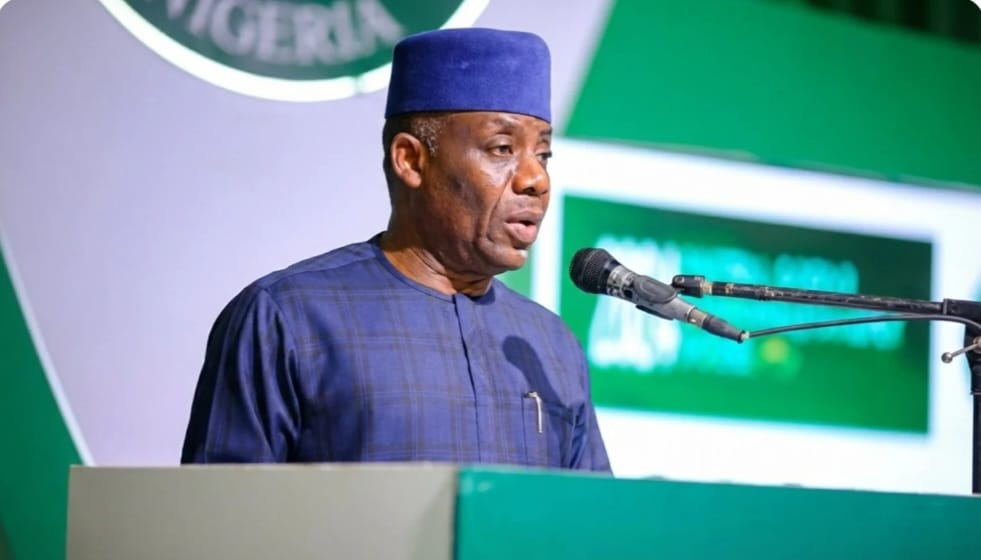
The minister made this known in Abuja at the inauguration of the Ministerial Committee on Strengthening the Accreditation and Quality Assurance System for Tertiary Institutions in Nigeria which was chaired by the immediate past Registrar, Joint Admissions and Matriculation Board (JAMB), Prof. Ish-aq Oloyede.
He stated that institutions would henceforth be assessed strictly on the resources they genuinely own and can sustainably make available to students, stressing that the practice of borrowing facilities to deceive accreditation teams would no longer be tolerated.
He further revealed that, government is doing its best to overhaul the accreditation system for universities, polytechnics and colleges of education to prevent institutions from creating a “temporary picture” of their capacity whenever accreditation teams visit.
He said accreditation process is designed to provide an accurate picture of an institution’s ability to deliver quality education, but showed concern that some institutions temporarily assemble personnel and facilities solely to satisfy accreditation requirements.
“An institution should not be able to prepare a temporary picture of itself simply for the purpose of an accreditation visit. Sadly, this is what we see in a majority of instances,” the minister said.
He said the government would tackle the temporary movement of academic and non-academic personnel to institutions ahead of accreditation visits.
“We must similarly address the temporary movement, borrowing or presentation of equipment, laboratory facilities, workshop resources, library materials and other infrastructure solely for accreditation purposes,” he said.
The minister further revealed that, the government would no longer be satisfied with what institutions merely present to accreditation teams, insisting that regulators must be able to verify that the resources actually exist and remain available after the accreditation exercise.
“When an accreditation team visits an institution, what it sees and verifies should represent the actual and sustainable capacity of that institution, not an arrangement assembled for the accreditation exercise,” he said.
The Guardian reports that, the National Universities Commission (NUC), National Board for Technical Education (NBTE) and National Commission for Colleges of Education (NCCE) would be required to strengthen mechanisms for verifying the authenticity and continuous availability of staff, facilities and equipment.
The government also plans to deploy technology to track institutional resources.
According to Alausa, critical equipment presented for accreditation should be digitally identified and linked to a specific institution and physical location.
Such equipment, he said, should have a unique digital record indicating its location, status and other relevant information.
The minister also announced plans for tighter verification of personnel presented by institutions during accreditation.
He said the government would develop a digital identity-management and staff-verification framework to establish that individuals presented as academic and non-academic staff are genuinely associated with the institutions claiming them.