
Five Vehicles Crash On Lagos Otedola Bridge, All Victims Rescued
By Sabiu Abdullahi
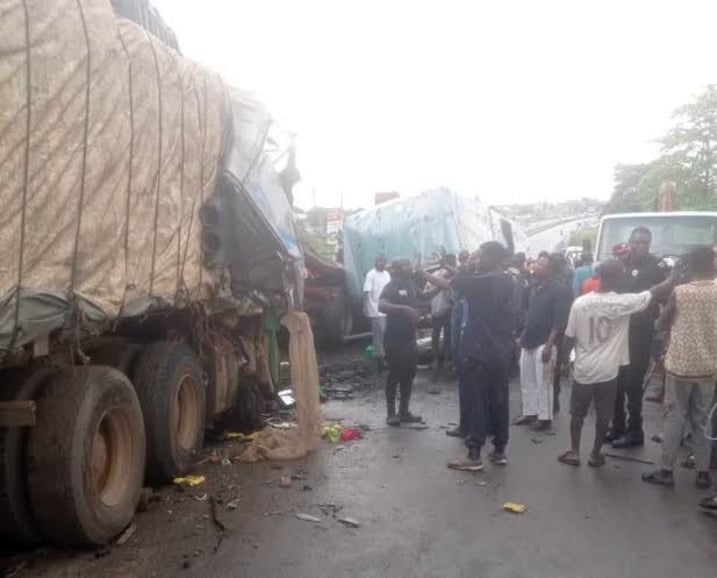
The Lagos State Emergency Management Agency (LASEMA) has rescued victims of a multiple-vehicle crash on Otedola Bridge, inward Berger, with no death recorded.
The accident occurred on Wednesday afternoon and involved five vehicles, including two trucks, a trailer, a white Honda and a Lexus.
LASEMA said its LRT Tiger Squad stationed at C3 was alerted to the incident at about 1:18 p.m. following a distress call. The team arrived at the scene about 10 minutes later.
The vehicles involved included a truck carrying a generator, a containerised truck with registration number ENU 135ZG, a loaded trailer with an unknown registration number, a white Honda with registration number LSR 870BF and a Lexus with registration number KTU 682HX.
Preliminary findings at the scene indicated that the containerised truck developed a mechanical fault while in motion. The driver reportedly lost control of the vehicle, which then crashed into three other vehicles.
Another truck later collided with the vehicles, causing further damage and creating a multiple-vehicle pile-up.
Following the incident, LASEMA activated its emergency response procedures and took charge of the rescue operation in collaboration with the Lagos State Traffic Management Authority (LASTMA) and the Nigeria Police Force.
Traffic control and safety measures were introduced at the scene to protect motorists, prevent additional collisions and manage the situation.
LASEMA paramedics provided immediate medical attention to the affected victims before they were taken to the Trauma Centre for further treatment.
The agency said recovery operations were still in progress, with private towing vehicles and a crane deployed to clear the damaged vehicles and help restore normal traffic flow along the route.
The Permanent Secretary of LASEMA, Dr Olufemi Damilola Oke-Osanyintolu, praised the emergency responders and partner agencies for their swift response.
He advised motorists, especially drivers of heavy-duty and articulated vehicles, to maintain their vehicles regularly, observe road safety rules and exercise caution on major highways.
LASEMA also urged members of the public to report emergencies through the toll-free 767 or 112 emergency numbers.
Kano PDP Replaces Dalhatu With Abacha, Settles Factional Dispute
By Sabiu Abdullahi
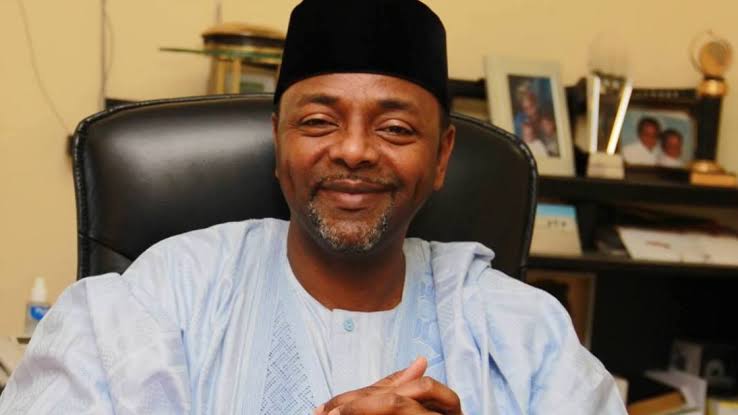
The Kano State chapter of the Peoples Democratic Party (PDP) has adopted Muhammad Sani Abacha as its governorship candidate for the 2027 election after Muhammad Bello Dalhatu withdrew from the race.
The decision was reached at an expanded meeting of the party’s State Executive Committee in Kano on Wednesday, September 16.
PDP state chairman, Dr Bello Gambo Bichi, said the process followed the party’s constitution and relevant electoral provisions governing the replacement of a candidate who voluntarily steps down.
“Last time we did a primary election in which Mohammed Bello Dalha was declared winner, but following consultations among stakeholders in Kano and Abuja, the candidate decided to withdraw.
“The law says that as a result of withdrawal, a replacement primary must be held. That is what brought us here today.
“We have affirmed Muhammad Sani Abacha as the gubernatorial candidate of our great party in Kano State,” Bichi explained.”
The party subsequently conducted a replacement primary on September 16, with Dr Abba Abdullahi, chairman of the electoral panel, declaring Abacha the winner.
Abdullahi said the exercise complied with the PDP’s internal guidelines and applicable electoral regulations. He also stated that Abacha fulfilled the conditions required to secure the party’s nomination.
The state chairman also announced that the party had reached an agreement to resolve its factional disagreements through a reconciliation arrangement.
Under the agreement, the deputy governorship ticket was allocated to the Turaki faction. Yusuf Ado Kibiya, a former factional PDP chairman and former Commissioner for Land and Agriculture, was subsequently announced as the party’s deputy governorship candidate.
“After a wide consultation and reconciliation, we agreed to give the deputy governorship slot to the Turaki faction here in Kano. With this, there is no faction in Kano PDP.
“We have reconciled,” he said, adding that representatives of the Independent National Electoral Commission (INEC) witnessed the process,” he said.
Bichi further disclosed that the reconciliation also resulted in changes to some of the party’s National Assembly and state assembly candidates.
He maintained that the developments had brought the different camps together and described the party as “waxing stronger” ahead of the elections.
The resolution of the internal dispute and the emergence of Abacha come after a period of disagreements within the Kano PDP.
Party leaders said the reconciliation was intended to bring members of the different camps together and strengthen the party’s organisation across the state ahead of the 2027 governorship contest.
Bichi expressed confidence in the party’s prospects, saying the resolution of the dispute and Abacha’s emergence had positioned the PDP to win the next general election.
Sanusi Traces Nigeria’s Insecurity To Divisive Ethnic, Religious Politics
By Sabiu Abdullahi
The Emir of Kano, Muhammadu Sanusi II, has attributed the persistence of insecurity in Nigeria to years of ethnic and religious divisions that, according to him, were fuelled by political rhetoric and public discourse.
Sanusi made the remarks in Abuja on Wednesday at the launch of a biography chronicling the tenure of retired Lieutenant General Tukur Yusufu Buratai as Chief of Army Staff.
The former Central Bank of Nigeria governor said the roots of Nigeria’s security challenges went beyond the emergence of Boko Haram, banditry and terrorism. He argued that the country’s present difficulties were preceded by a pattern of political and media discourse that divided Nigerians along regional, religious and ethnic lines.
“The fundamental point I wish to emphasise is that the security crisis in this nation did not commence with violence as we currently witness it, nor did it commence with banditry. It did not commence with Boko Haram and terrorism. It originated with the violence inherent in language that appeared in newspapers and emanated from political discourse, wherein we commenced categorising ourselves not as Nigerians, but as Northerners and Southerners, Muslims and Christians, Yoruba and Igbo and Hausa, thereby establishing an environment that facilitated the emergence of these movements,” stated the former Governor of the Central Bank of Nigeria.
Sanusi warned that the country could face another cycle of violence if political leaders and other influential groups fail to move away from the use of ethnicity and religion as tools of political mobilisation.
“We are only laying the foundation for a new round of violence. We have to go back to seeing ourselves as Nigerians, as people committed to this country, and focus on what is important, which is the development of our people. It is not the responsibility of politicians to give us religion. They are there to give us education, to give us healthcare, to give us an economy and allow the religion to be in the hands of those who are religious leaders.
“It is also not the duty of religious leaders to get into politics. Right now, there is no distinction between imams and bishops and senators and how everybody is a politician. We’ve got to start tracing ourselves. Otherwise, we create these interests that feed and benefit from insecurity.
“The moment we all get absorbed into the projects of politicians, we cannot hold political society in check. We cannot have a country that we want because we need to have those institutions who are not there on elections, the army cannot think in four-year cycles. The police cannot think in four-year cycles. The central bank cannot think in four-year cycles. We have to think 20 years, 30 years, 50 years, whereas elected officers are thinking in four-year cycles.”
Also at the event, retired Lieutenant General Domenico Giani, Inspector General of the Corpo della Gendarmeria, the police and security force of Vatican City, spoke about leadership, institutional accountability and the need to assess the legacy of those who command security institutions.
Giani said lasting institutional progress should be judged by the strength of institutions, protection of civilians and public trust.
“Transformation is measured by institutions strengthened, civilians protected, trust earned.
“Boko Haram was not born in 2015. Its roots lie in the poverty and distrust of the early 2000s North-East. After Yusuf’s death in 2009, it hardened under Shekau. Chibok in 2014 revealed what Borno, Yobe and Adamawa had endured. By 2016, it had split into JAS and ISWAP, fragmented, mobile, adaptive.
“A terrorist organisation that changes form must be met by a state that learns faster than its enemy. Intelligence and regional cooperation are essential, but so are schools, justice and opportunity. If the state arrives with weapons but not services, the vacuum returns.”
Kano Gov Appoints Hafsat Kutama Acting Chairperson of Anti-graft Agency
By Anwar Usman
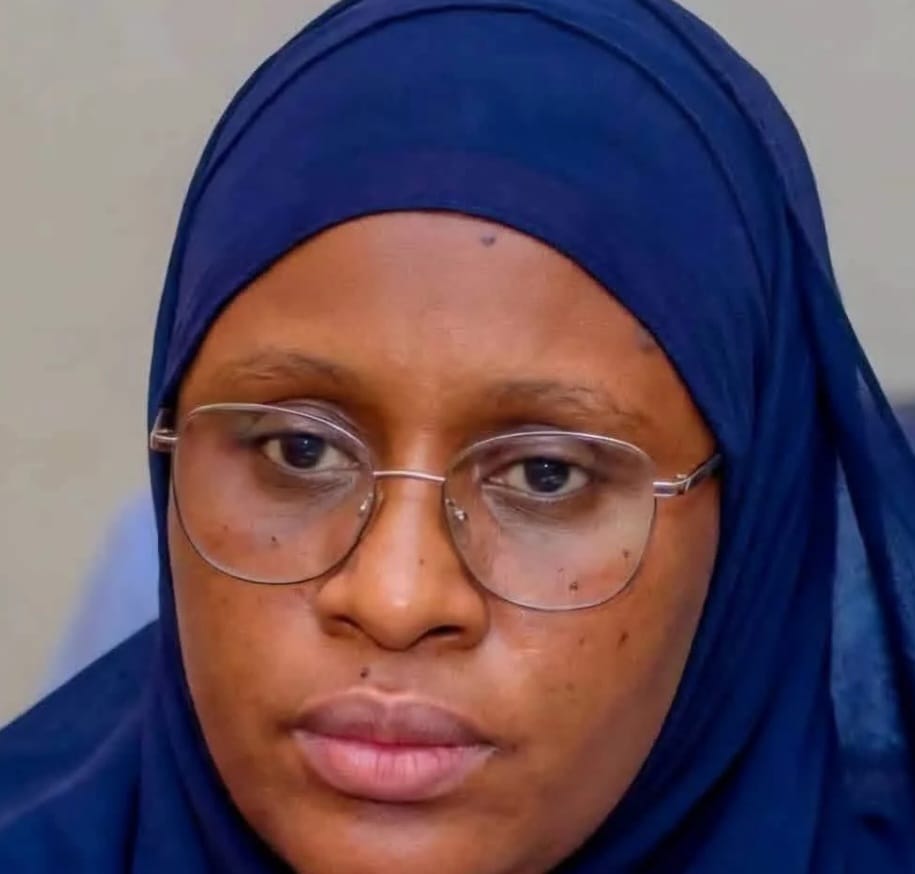
The Kano State Governor, Abba Yusuf, has appointed Barr. Hafsat Kutama as the Acting Chairperson of the state Public Complaints and Anti-Corruption Commission.
This was disclosed by the Special Adviser to the Governor on Social Media, Ibrahim Adam, on his verified social media handle on Wednesday.
“His Excellency, Governor Abba Kabir Yusuf, has appointed Barr. Hafsat Ada’u Kutama, as the Acting Chairperson of the Public Complaints and Anti-Corruption Commission (PCACC), Kano State,” he said.
“Until her appointment, Barr. Hafsat served as the Secretary of the Commission,” he added.
The Chairman of the anti-graft agency, Saidu Yahaya, was reported to have resigned his appointment on Tuesday, September 15, 2026.
Yahaya was appointed chairman of the PCACC in August 2025, following the expiration of the tenure of the former chairman, Muhuyi Rimin Gado.
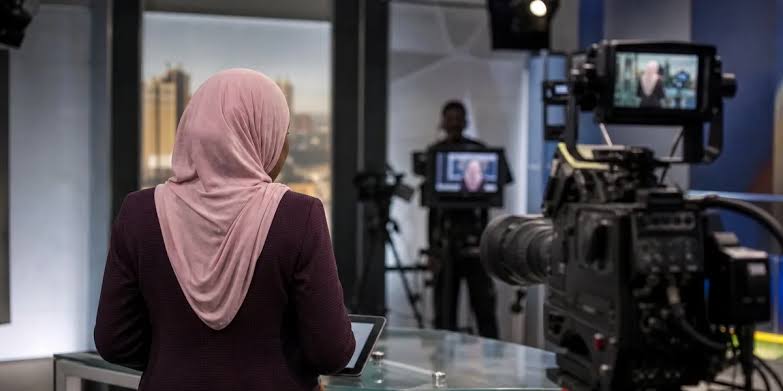
‘They Said They Don’t Project Hijab-Wearing Person’, Journalist Recounts BBC-Channels TV Ordeal
By Sabiu Abdullahi
Award-winning Nigerian journalist Zainab Bala, a former presenter of GIST Nigeria, has recounted the difficulties she said she faced after wearing her hijab while presenting the current affairs programme jointly produced by BBC Africa and Channels Television.
Bala, who spent about nine months with the BBC, spoke about her experience during an appearance on the second episode of The HSM Tribe, a YouTube platform focused on Muslim women. The episode was aired on August 28, 2026.
According to Premium Times newspaper, she said the issue began after she was recruited in 2023. She said she wore her hijab during the recruitment interview and was asked whether she would continue to cover her head if she got the job.
“I said yes because this is how I dress,” she said.
Bala later moved from Abuja to Lagos after receiving an offer from the BBC. She underwent training and subsequently recorded her first episode at the Channels Television headquarters in Lagos.
She said the programme was not broadcast for several weeks, while episodes presented by another member of the team continued to air.
According to Bala, her editor later informed her that discussions had taken place with Channels Television over her appearance.
“The reason why my programme was not aired was that they had been having a back-and-forth with Channels, and that’s because Channels said they do not project a hijab-wearing person on their screens,” she said.
She said the situation made her feel “stereotyped” and demoralised.
Bala said she had expected the matter to have been resolved before her recruitment because she had already made her position clear during the interview.
“I don’t think this is something to debate about,” she said.
She said the BBC later sought an arrangement with Channels Television that would enable her to remain on the programme while wearing a head covering, although she alleged that certain restrictions were attached to her appearance.
Bala said she initially considered leaving the programme. She eventually decided to stay because she believed her continued presence could create opportunities for other Muslim women.
“I stayed because I realised that this was deeply rooted, and there hasn’t been any conversation around this,” she said.
During her time on the programme, she presented several editions and said her background as a Muslim woman from northern Nigeria influenced some of the subjects she brought to the show. She particularly highlighted stories involving women who challenged stereotypes associated with northern Nigeria.
Bala Cites Other Reasons For Leaving
The journalist said the disagreement over her hijab was not the only factor behind her departure from the BBC.
She alleged that she experienced what she described as “mental and emotional bullying” from her editor. Bala said the experience contributed to her decision to leave, despite her earlier intention to move between BBC teams and continue her career with the organisation.
“I just left for my peace of mind. It was the most depressing nine months of my life,” she said.
She also alleged that other members of the team had raised complaints about the editor’s conduct.
Channels Television Denies Discrimination Claim
Channels Television rejected the allegations through its Assistant General Manager, Operations, Kingsley Uranta.
“For clarity, Channels Television does not discriminate based on religion. We respect Nigeria’s religious diversity and are committed to the principles of fairness, inclusivity, and equality that underpin our journalism and organisational culture,” Mr Uranta noted
Uranta also disputed Bala’s account that Channels Television told the BBC it did not allow people who wore hijabs to appear on its screens.
He further rejected the allegation that Bala was asked to change her appearance so that she would not look “too Muslim”.
BBC Says Hijab-Wearing Presenters Appear On Its Programmes
The BBC also responded to questions about Bala’s account of her recruitment, the delay in airing her first programme and whether restrictions existed on presenters wearing hijabs.
Robin Miller, Head of Communications, BBC News, responded on behalf of the organisation.
Miller initially questioned the premise of the enquiry, pointing out that the BBC had evidence that Bala had appeared on GIST Nigeria wearing her hijab.
“This contradicts much of what you have put to us in your questions below,” he said.
The publication subsequently clarified that its questions concerned the form of hijab Bala wore, including the discussions surrounding her appearance and allegations that she was asked not to “look too Muslim”.
The BBC was also asked about Bala’s allegation of mental and emotional bullying by her editor.
On September 10, Miller provided a photograph of Bala wearing a hijab while presenting a report, alongside the BBC’s response.
“The BBC strives to be an inclusive workplace where every colleague feels respected, supported and able to do their best work.”
He said BBC presenters and correspondents regularly appear on television in hijabs, “and this includes whilst presenting GIST Nigeria.”
“We do not comment on individual HR matters; however, as a general principle, we take complaints about bullying very seriously, and where allegations are made, they are fully investigated,” he added.
Bala Disputes BBC’s Evidence
After receiving the photograph from the BBC, Bala told Premium Times that the image did not show her presenting GIST Nigeria.
“This is a report, not a presentation of the show,” she said.
She also said she did not believe footage existed that showed her presenting the programme in the full hijab she normally wore.
Bala acknowledged that other Muslim women had presented BBC programmes while wearing hijabs. She suggested, however, that her circumstances may have been different because GIST Nigeria was jointly produced with Channels Television.
“I am hoping other Muslim women who come to these platforms are allowed to present shows without making compromises,” she said.
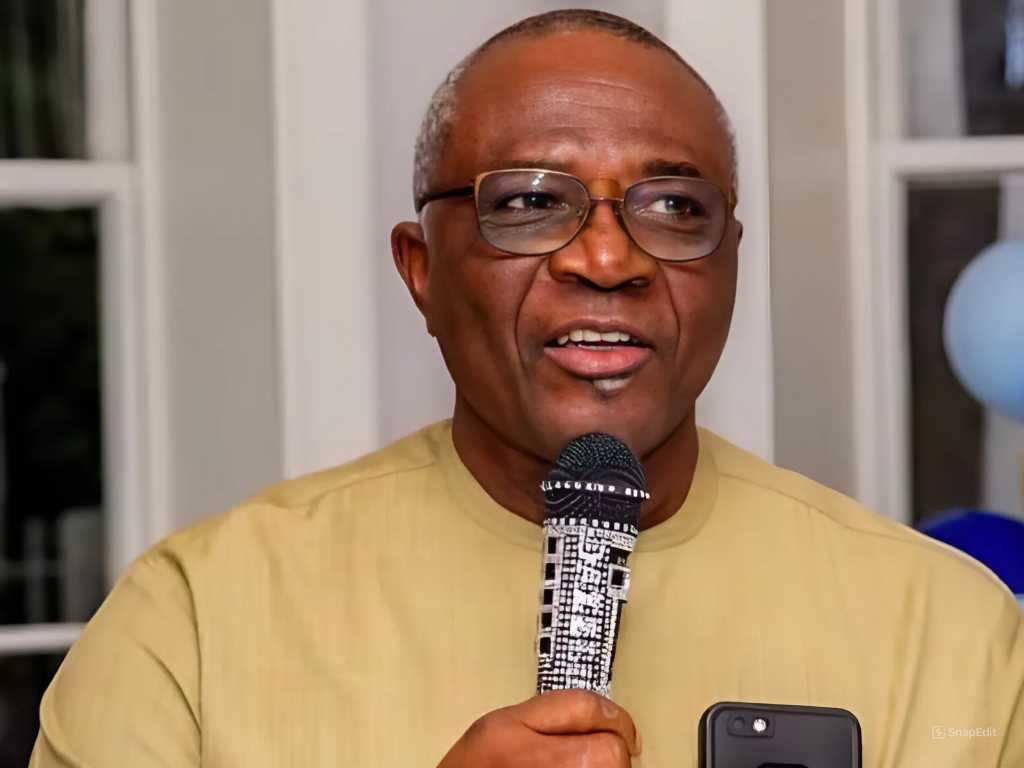
Presidency Challenges Peter Obi To Honour Quit-Race Pledge Over Anambra Debt Claims
By Sabiu Abdullahi
The Presidency has challenged the presidential candidate of the Nigeria Democratic Congress, Peter Obi, to honour his pledge to withdraw from the 2027 presidential race if claims that he left Anambra State with outstanding financial liabilities are established.
The challenge was issued by Bayo Onanuga, Special Adviser to President Bola Tinubu on Information and Strategy, in a post on X on Wednesday. It followed a fresh exchange between Obi and the Anambra State Government over the financial position of the state when he left office as governor in 2014.
Onanuga said Obi had previously claimed that he handed over Anambra without debt and had also pledged to stop his presidential campaign if evidence emerged to the contrary.
“Peter Obi claimed he left Anambra with a clean slate of debt and even threatened to quit the presidential race if his claims were proven otherwise.”
He said the Anambra State Government had now presented what it described as records of liabilities linked to Obi’s tenure.
“Now, the Anambra government has confronted him with facts and figures showing he owed Water Corporation workers, teachers, and pension and gratuities, and had also borrowed for frivolous things,” Onanuga said.
“The ball is back in his court. Will he follow through on his threat by quitting the race?” he asked.
The latest development came after the Anambra Government disputed Obi’s response to allegations that his administration left behind debts and other financial obligations.
Obi had maintained that his administration cleared more than ₦35bn in historical gratuities and arrears before leaving office. He also rejected claims that the state owed salaries, pensions, gratuities or contractors for duly completed and certified projects.
One of the major points of disagreement concerns an alleged ₦2.13bn ecological fund. Obi said the money was left untouched in a First Bank account for the Oko/Umuchiana erosion crisis.
The Anambra Government, however, disputed the description of the account and the amount claimed. Commissioner for Information and Value Reformation, Law Mefor, said a certified statement obtained by the government showed that the account was an Internally Generated Revenue Consolidated Revenue Account rather than an ecological fund account.
Mefor said, “We have obtained a certified printout of the account from inception to date. The account is an Internally Generated Revenue Consolidated Revenue Account, not an ecological fund account.”
He further stated, “From 2011 when the account was opened until date, there has never been any such amount—whether as inflow or balance—in the account.”
The state government also disputed Obi’s account of outstanding loans and arrears. According to Mefor, eight external loans remained after Obi left office, with their combined balance put at ₦127.4bn as of June 30, 2026, at the official exchange rate.
The loans listed by the government relate to projects in areas such as healthcare, education, erosion control, agriculture and community development.
The government also said it had addressed inherited gratuity arrears and alleged outstanding salary obligations involving some workers, including retired teachers and former Water Corporation employees.
On the Water Corporation workers, Mefor said, “salary arrears lingered through the Obi administration and were eventually settled under the Soludo administration, with the first two of three instalments already paid.”
He also said, “The Obi administration verified/certified 16 months of salary arrears for primary school teachers but paid only five months.”
The state government further questioned Obi’s claim that his administration left more than ₦75bn in savings.
Mefor said, “We will not engage in nebulous creative accounting. If there were ₦75 billion in savings, as claimed, where are the records?”
Obi, however, has challenged anyone who can establish that his account of Anambra’s finances was incorrect.
“If anybody can establish anything to the contrary, I will stop campaigning,” Obi said.
The dispute has therefore shifted from competing statements about Anambra’s finances to a demand for supporting records, with Obi and the state government maintaining different accounts of the state’s financial position at the end of his administration.
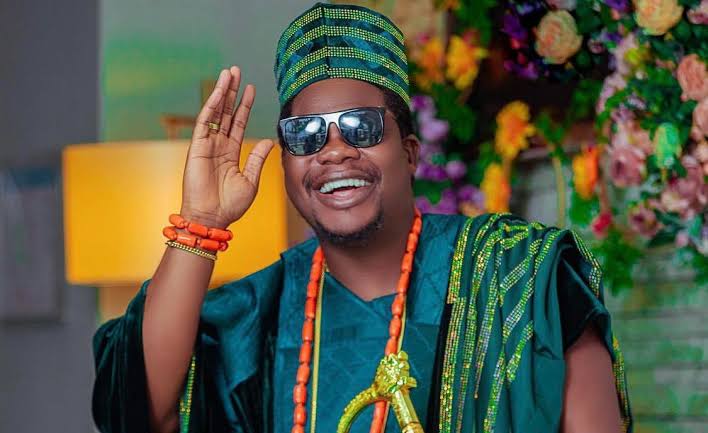
Mr Macaroni Explains Why He Took A Break From Government Criticism
By Sabiu Abdullahi
Nigerian actor and social commentator, Adebowale Adedayo, popularly known as Mr Macaroni, has explained his decision to reduce his public criticism of the government, citing exhaustion from repeating the same concerns, attacks from Nigerians and threats to his life.
Mr Macaroni made the clarification after Wazobia FM shared a video on Tuesday in which he discussed threats he received during the #EndSARS protests.
In a series of posts on X on Wednesday, the actor noted that the interview was conducted more than two years ago. He, however, maintained that the issues he raised during the interview remained relevant.
“Forget about the threats. My issue with us as Nigerians is how we move on quickly. We complain and move on. There is nothing I will say now that I haven’t already said hundred times over. Until we as a people are ready to fight for what is ours, saying the same thing over and over again is just TIRING,” he wrote.
He also referred to a statement he made in March 2026, in which he described President Bola Tinubu’s administration as “the Most Useless Government in the history of Useless Governments.” He said that period marked the point at which he decided to step back from political commentary.
According to him, a limited number of politicians continue to affect the lives of more than 200 million Nigerians “so brazenly without any resistance.”
He further argued that Nigerians must move beyond a “survival mentality” and demand conditions that allow citizens to thrive.
“then we are truly not ready,” he added.
Addressing the perception that he had become less vocal, Mr Macaroni said his reduced commentary should not be interpreted as a withdrawal from the issues he previously raised.
“I have been persecuted and vilified since I started speaking up against Government. Threats are a usual occurrence. Please don’t mix things up. I am only tired of saying the same thing over and over again. When Nigerians are finally ready, I will be ready too! But till then, please let me continue enjoying my break by redefining myself and Art, which I love as dearly as I love Nigeria.”
In the earlier Wazobia FM interview, the actor spoke about the personal consequences of his activism and the criticism he received from some members of the public.
He said his outspoken position often made him appear to be the source of trouble, even when he believed he was speaking on behalf of Nigerians.
“Nigeria is a very funny country. Nigerians are also very funny. And I say this with all seriousness, because I’m not so happy about how things have been. And you keep talking, and it seems like you are the troublesome person. It seems like na you be the—the same Nigerians that you speak for turn against you. They start to fight you,” he said.
Mr Macaroni also said he had no interest in becoming a politician. He expressed disappointment over the political careers of some individuals he once admired.
He recalled people he looked up to during his secondary school and university years who later entered politics and, in his view, harmed the reputations they had previously established.
On his activities after the #EndSARS protests, the actor said he continued to speak publicly despite receiving threats and facing pressure from his family.
“So, you know, End SARS came at risk to my life, threats here and there, serious threats. My family, no time, they were every time calling me, crying, ‘Debo, please. Debo, please.’ Every—every blessed time, my mother. Every blessed time. It was so bad they wanted to fly me out of the country. I said, ‘For what? I’m not running anywhere,’” he said.
He also recalled his involvement in the 2023 general election, when he urged Nigerians to vote wisely while publicly stating the candidate he intended to support.
“And I didn’t—I didn’t go silent after End SARS. I still came out. I said, ‘We must vote wisely.’ I did series of videos, series of tweets, series of—and not only me, a lot of other people too did, saying, ‘Vote wisely. Do this, do that wisely.’ And I said, ‘Okay, this is the person me I will vote for.’ I did not say vote—everybody should go and vote for this person,” he said.
According to him, his decision to identify his preferred candidate drew insults and verbal attacks from some Nigerians.
“See curse, see insult. ‘You are a omo ale, you are this one, you are that one.’ Now, everybody—people vote. Whether, uh, rig, I no know, there no rig, e—e no concern me, but president dey, yes or no? E dey,” he said.
Mr Macaroni said the experience surrounding the election also affected his willingness to continue making repeated political statements.
“Now, everything don dey as e be. Is affecting me too. But what—okay, okay, oya, what should I come and say again now?” he said.
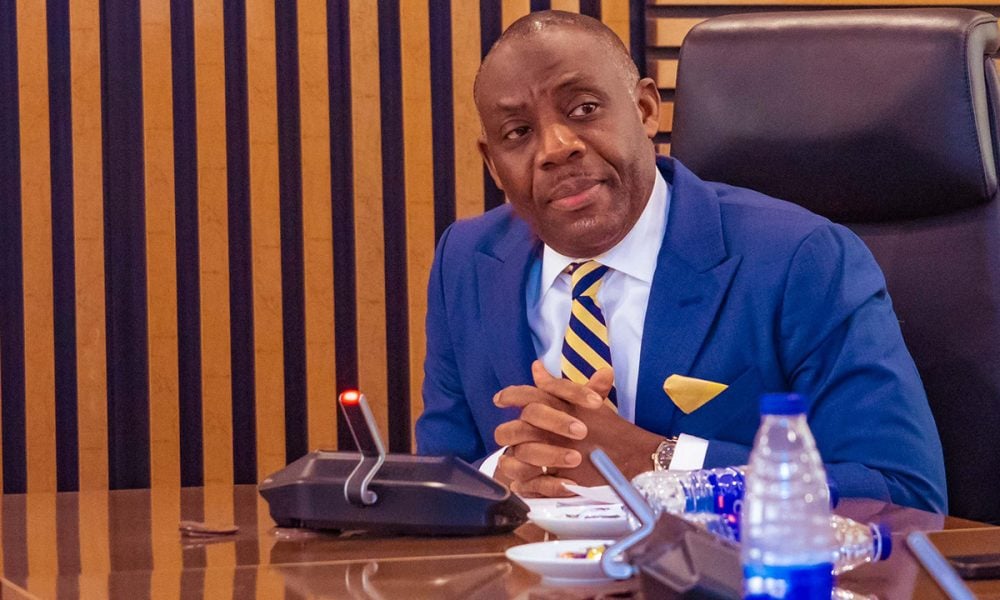
Education Ministry Workers Protest, Demand Alausa’s Exit
By Sabiu Abdullahi
Workers of the Federal Ministry of Education on Wednesday shut the entrance to the ministry’s headquarters, stopping the Minister of Education, Dr Tunji Alausa, and the Acting Permanent Secretary, Dr Folake Olatunji-David, from accessing their offices.
The workers assembled at the ministry’s entrance as a motorcade reportedly carrying the minister arrived at the premises.
A video shared on X showed the protesters occupying the entrance to the ministry. The workers were heard chanting, “Alausa must go,” as they prevented access to the premises.
The protest is linked to an unresolved disagreement between the ministry’s workers and the Federal Government over several issues, including the proposed concession of King’s College, Lagos.
The workers’ unions had earlier called for the minister’s removal and rejected the reported plan to grant a 35-year concession of the college to its old boys’ association.
Apart from the King’s College concession, the unions have raised concerns about staff welfare and other administrative matters within the ministry.
Wednesday’s action suggests that the disagreement between the workers and the ministry’s management has continued despite recent engagements aimed at addressing the issues between both sides.
Wike, APC Governors Trade Words Over 2027 Rainbow Coalition
By Sabiu Abdullahi
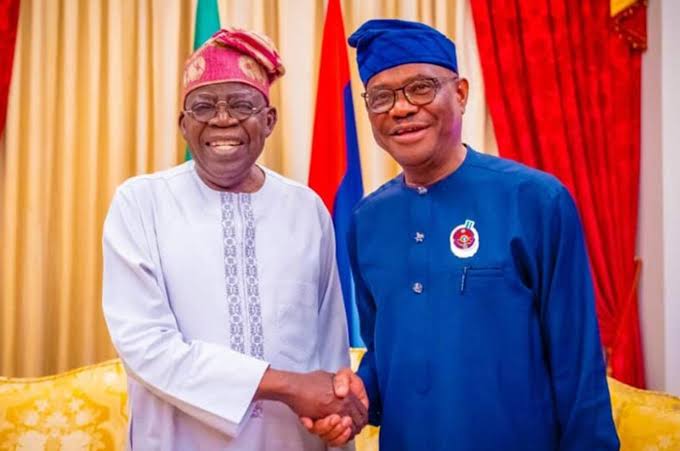
A fresh disagreement has emerged between Federal Capital Territory Minister Nyesom Wike and governors elected on the platform of the All Progressives Congress over the Rainbow Coalition ahead of the 2027 general elections.
The dispute centres on Wike’s support for President Bola Tinubu’s re-election while he remains associated with the Peoples Democratic Party and continues to back PDP candidates in other electoral contests.
The APC Governors’ Forum, led by its chairman and Imo State Governor, Hope Uzodimma, said its members would not support any political arrangement that could weaken the APC or affect its candidates.
Uzodimma made the position known after the governors met in Abuja on Monday night. He said the forum had not entered into any agreement with an individual or opposition party ahead of the elections.
He stated, “The APC Governors Forum unanimously resolved that its members will not participate in, support or endorse any alliance or political arrangement capable of undermining the re-election of Mr President, weakening the APC or adversely affecting any candidate of the party at all levels.
“In other words, the forum has no intention to support any candidate at any level that is not an APC candidate because our candidates who are contesting the election are being sponsored by our party.
“The governors’ campaign commitment is exclusively to all APC candidates. All levels of the party campaign architecture will align with the expectations of Mr President and the strategic objectives of the party.”
Wike, however, has maintained that his support is specifically for Tinubu’s presidential bid and does not amount to support for APC candidates in state and legislative elections.
Through his Senior Special Assistant on Public Communications and Social Media, Lere Olayinka, the minister said the Rainbow Coalition was not an APC structure. He described it as a platform for politicians from different parties who support Tinubu’s re-election.
The minister noted that “politics is local and those having problems in their states should resolve them instead of using the reelection of the President to whip up sentiments.”
Wike also said he never promised that the PDP would refrain from fielding candidates for governorship, National Assembly and state assembly elections.
“What I said and stand for is that I will mobilise support for the reelection of the President. I never promised anyone that PDP will not field candidates to contest governorship, National Assembly and state Houses of Assembly elections.
“Most importantly, the Rainbow Coalition has nothing to do with the APC. Rather, it is our own way of mobilising support accross political parties for Mr President, who has done well to deserve a second term,” he said.
In an interview on Arise TV’s Prime Time on Tuesday night, Wike also dismissed the concerns raised by the APC governors and defended his continued political activities within the PDP.
“They (APC governors) are politically lazy. When you have your local problems, don’t use Mr President as your excuse,” Wike said.
He said the disagreements surrounding his political activities were not new and recalled similar opposition during his time as Rivers State governor and later as FCT minister.
“This thing did not start today. It started at ministerial position. They were not happy that I was Minister of FCT. Also, they were unhappy when I was governor,” he said.
Wike added, “If they know what I know, they would not come out to shout.”
He also questioned why his support for Tinubu should affect his relationship with the PDP.
“I have said I will support the President and I am still supporting him. What has that got to do with my party?” Wike asked.
The FCT minister cited the political situations involving Anambra State Governor Chukwuma Soludo, Osun State Governor Ademola Adeleke and Abia State Governor Alex Otti to argue that backing a presidential candidate does not necessarily prevent political parties from contesting other positions.
“Take Soludo, Adeleke and Otti. Does it mean that their parties will not present other candidates? This thing they are saying does not have any basis,” he said.
Wike also criticised Kwara State Governor AbdulRahman AbdulRazaq over the political disagreement.
“The governor of Kwara, so unforunate. Anytime he sees a snake, it’s Wike. Any day he doesn’t eat, it’s Wike. I never see people who will give time to gossip more than the work they have been given. He has three serving senators, he changed all of them. He has House Reps, he changeed all of them.”
The disagreement has also drawn reactions from different factions of the PDP.
The PDP Publicity Secretary, Jungudo Mohammed, said Wike’s decision to support Tinubu should not be interpreted as an endorsement of the APC. He maintained that the PDP would continue to field candidates for the 2027 elections.
Mohammed stated, “I think the issue, or rather the position of the minister to support Tinubu, has been mistaken to mean absolute support for the APC. The minister never said he was going to support the APC. Rather, he said his support is for Tinubu as his President and the person who appointed him to the present position he occupies. So, the feeling that the minister’s gesture of support will be extended to all of them across their states was where they got it wrong. It is important for the APC governors to know that Wike is a force to reckon with, not a force to be rejected.
“It is a complete political misnomer and miscalculation for these governors to assume that the PDP, and indeed the minister, will not field candidates, will not contest against the APC, and will not be able to win against the APC.
“The issue is not even about Wike as a person. It is about how comfortable Nigerians are, particularly with the governors. I am not trying to speak for the President, neither am I trying to speak for the minister. But, in all honesty, the President has given these governors all that is required for them to provide infrastructure and human capital development for the good of the people in their respective states.
“There has been an increase in federal allocations and the issue of financial autonomy for local governments. Yet these governors have muzzled the local government chairmen and refused to allocate or account for the billions of naira accruing to them in their respective states. They have failed to provide good governance and failed to deliver the dividends of democracy.”
Mohammed further alleged that the APC governors were concerned about the PDP’s participation in the 2027 elections.
“Now that it is time for elections, they are afraid. The PDP has fielded credible and popular candidates with the capacity and credibility to defeat these APC governors. That is why they are crying wolf where there is none. That is why they are jittery.
“But I can tell you, if truly they are lovers of President Bola Ahmed Tinubu and are concerned about the success and victory of their presidential candidate, then I do not see any reason why they would be pushing away a strong political phenomenon like Minister Wike.
“For us, if there is a way we can make the minister rescind his decision not to support our presidential candidate, we would be glad to do that. But we are only respecting his constitutional right to choose whoever he wants to support as a citizen of this country, particularly as an appointee of the President.
“When you compare the records of the minister when he was governor and now that he is a minister, his record is something that cannot be matched by any of these governors. So why are they scared? I will call on them to go back to their respective states, deliver the dividends of democracy, keep the people and account for their stewardship. That is when they can begin to say Wike is not going with us or not.”
Meanwhile, the National Publicity Secretary of the PDP Interim National Working Committee led by Tanimu Turaki, Ini Ememobong, criticised the political arrangement that has seen Wike serve in the APC-led Federal Government while retaining his PDP identity.
Ememobong stated, “They created a monster, that monster ended up in their belly. And so, the APC governors and the President, who were enjoying the anomaly that Wike constituted, working for an APC government while claiming to be PDP and, obviously, working against the interests of the PDP.
“At some point, they were excited about it, and today it is their turn to play in the belly of the monster. If the President does not intervene and bring this to a stop, he will also end up in the belly of the monster. It is only a matter of time.
“Politics is not just a practice; it is also a field of study. Therefore, practice must follow theory, and there is no theory that can support what is being presented as political practice in Nigeria.”
The dispute has also prompted speculation from unnamed APC sources about the political interests behind the disagreement.
One source alleged that Wike and Uzodimma were positioning themselves and their allies ahead of the 2031 political cycle.
He stated, “Wike, Uzodimma and some of them are strategising for the vice-presidential position. People have very tall ambitions. We are trying to go into the 2027 election, but people are positioning themselves for 2031 in 2026.
“The first problem was with regard to the position of each of them in relation to the President. Wike and Uzodimma have been at daggers drawn over their closeness to President Tinubu. Initially, all of them were angling for the position of Director-General of the campaign. At the end, none of them got it.
“Both men are seriously competing, and they are recruiting the President’s friends, supporters and party chieftains into their respective camps. You will recall what played out in Rivers State, where Uzodimma was supporting (Sim) Fubara and others working against Wike’s interests. In Imo State, Wike is supporting the likes of (Samuel) Anyanwu and others against Uzodimma’s interests.
“At the national level, the rivalry has also played out several times. For instance, Uzodimma and some other governors approached the President with proposals on how to raise funds for his re-election campaign. Wike subsequently went to the President and alleged that the governors were not to be trusted and could divert the funds, urging him to be cautious.”
Another source said the disagreement also involved control of the National Assembly and political influence across various states.
The source stated, “Ultimately, it is about political ambition. It is about 2031 and, of course, control of the next National Assembly. They are all trying to expand their influence beyond their respective states to their geopolitical zones and even beyond.
“You also have to understand that the APC governors have candidates to protect. Some of them are also senatorial candidates, while their parties have governorship candidates and other candidates contesting elective positions in their respective states. But Wike’s faction of the PDP is also fielding candidates, many of whom are perceived political opponents of these APC governors. Some of these politicians moved to Wike’s faction of the PDP, and the governors feel aggrieved by it.
“If you look at what is happening in Kwara State, for instance, the Saraki political dynasty is being emboldened and empowered, which could make the Kwara State governor feel threatened. The same situation is playing out in Imo, Gombe and several other states. The APC governors, under the leadership of Uzodimma, are therefore unhappy about the development.
“So, the dirty dealings are many. One person is hitting another, and the other is hitting back. Now, they are going to team up against Hope through Wike’s Rainbow Alliance. Yesterday, Hope met with the governors and they opposed the Rainbow Alliance because the alliance is principally aimed at tthwarting their interests. The whole thing is actually a fight for political positions. Hope wants to be Vice-President in 2031, and Wike also wants to be Vice-President in 2031. That is what is driving much of this rivalry.
“This infighting is also considered a threat to President Tinubu’s re-election unless he does something urgently to resolve it. If allowed to continue into the campaign period, it may affect the party and some of its candidates.”
A second APC source said the disagreement was also connected to Wike’s continued political activities despite his membership of the PDP.
The source stated, “Of course, the infighting is about their political interests. Most APC governors are unhappy that Wike, a PDP member serving in an APC-led Federal Government, has been empowered by the President and is using the influence and resources available to him to mobilise politicians to contest for the State Houses of Assembly, Senate, House of Representatives and governorship positions in their respective states, mostly under the PDP, against the governors’ political interests.
“This is visible in many states, with Wike’s faction of the PDP accommodating APC members seeking to challenge serving governors. All these are part of the problem.
“Again, it is also about 2027 and 2031. Politicians plan early, and both Tinubu and Wike are positioning themselves strategically ahead of these elections so that discussions about the presidency will involve them and they can play a major role in key political decisions. It is also about the National Assembly leadership and who gets what in the next cabinet. That is probably the source of the problem.
“But we hope the President quickly swings into action and uses his influence to resolve the differences and bring them together in the interest of himself and his party. If not, it may affect everyone, including the party.”
The disagreement between Wike and the APC Governors’ Forum has thus centred on whether support for Tinubu at the presidential level should extend to APC candidates in other elections. Wike says his support is limited to the President, while the APC governors have declared that their campaign commitment covers APC candidates at all levels.
Dangote Blames Cross-Border Smuggling For High Petrol Prices
By Sabiu Abdullahi
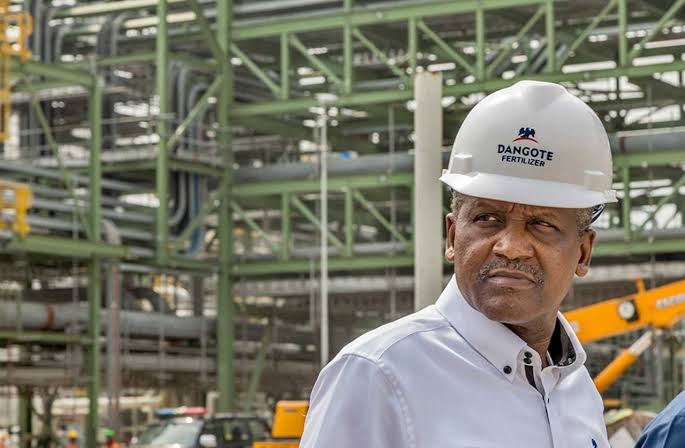
President of Dangote Industries Limited, Aliko Dangote, has linked part of the high cost of petrol in Nigeria to the continued smuggling of the commodity into neighbouring countries.
Dangote said petrol sells for between 30 and 50 per cent more in some neighbouring countries than in Nigeria, a price difference he said encourages traders to move the product across the borders for higher returns.
He made the remarks during an interview aired on Arise TV on Tuesday, where he discussed petrol prices, domestic supply and the possible impact of the ongoing crisis in the Middle East.
Addressing concerns over the cost of petrol in Nigeria, Dangote said the price should be considered alongside what consumers pay in neighbouring countries.
“You know, expensive is relative. In the sense that today, maybe, you know, a lot of them, there’s ignorance also. What they need to do is ask, what is the neighbour’s price?”
The businessman said the price gap had continued to encourage the movement of locally produced petrol out of Nigeria.
“I don’t know if you know that there’s still a lot of smuggling of the same petrol we are producing to our neighbouring countries.”
Dangote explained that petrol prices in neighbouring countries were significantly higher than those in Nigeria, making cross-border sales attractive to traders.
“Because those neighbouring countries are about 30 to 50 per cent more expensive than Nigeria. So, it’s not actually like for like.”
He cited Niger as an example, saying petrol sold at N1,350 in Nigeria could fetch between 20 and 25 per cent more across the border.
“And people can now go and ask, okay, fine, what is the price of, even now at N1,350? Okay, the price in Niger is 20 to 25 per cent more than Nigeria,” he said.
Dangote questioned what other legitimate business could offer such an immediate return.
“So, what business are you going to do that will make you have an instant 25 per cent return?” he asked.
He also described how petrol intended for the Nigerian market could be diverted towards border communities for resale.
“So, it means that, yes, you take the [petrol], you go and take it across the border. You pretend you are taking it to Sokoto, you go and just take it to Ilela, and you sell.
“Actually, they don’t have.”
According to Dangote, the cross-border movement reduces the amount of petrol available within Nigeria because traders can obtain higher returns outside the country.
Beyond the issue of price, Dangote warned that the ongoing crisis in the Middle East could create a different challenge for Nigeria’s petroleum market.
He said the major concern could shift from the cost of petrol to the availability of the product.
“And the problem now, going forward, I must also warn that this crisis in the Middle East is not even about price; it’s about availability,” Dangote said.
He, however, assured Nigerians that his refinery would continue to supply the domestic market despite possible disruptions in the international energy market.
“We will deliver to Nigeria. Nigerians don’t need to worry. There will not be any shortage from our own part.
“There won’t be any shortage. There will not be any queues. We will make sure that we keep satisfying the market, despite all odds,” Dangote added.
His comments came shortly after the Dangote Petroleum Refinery and Petrochemicals opened its N2.15tn initial public offering (IPO) on the Nigerian Exchange.
The IPO comprises 4.1 billion ordinary shares priced at N525 each, with a minimum subscription of 10 shares worth N5,250. The offer is open to retail, institutional and eligible African investors and is scheduled to close on October 13, 2026.