

Miners’ Deaths: IGP Visits Niger, Orders Thorough Police Investigation
By Anwar Usman
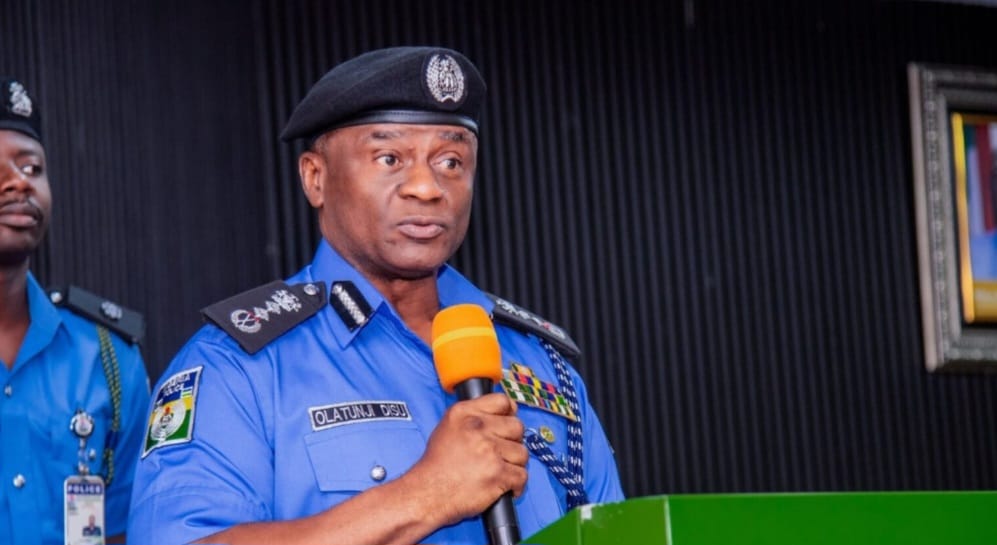
The Inspector-General of Police, Olatunji Disu, has visited Niger State promising that the police would leave no stone unturned in unraveling the circumstances surrounding the deaths of 37 suspected illegal miners in the custody of the Nigeria Security and Civil Defence Corps.
The IGP, who arrived at the Niger State Government House in Minna on Friday, said the police would work with the NSCDC and the state government to uncover the facts behind the deaths.
Disu said the police had a responsibility to investigate deaths in custody, describing the incident involving the 37 suspected miners as tragic.
“I am here this afternoon because of the tragic incident where we lost the lives of 37 citizens of Minna and of this same great state. It is a very tragic incident, and we want to assure you, Your Excellency, that we will leave no stone unturned to unravel the situation that led to these deaths,” he said.
He also urged residents to remain calm assuring them that the investigation would not be compromised.
He said “We want to assure them to be calm, that we would not compromise in ensuring that the proper thing is done to unravel the cause of this incident”
Disu warned residents against taking the law into their hands, saying the police would intensify efforts to prevent a breakdown of law and order.
Earlier, the governor of Niger, Umar Bago, had confirmed that 37 suspected illegal miners died in NSCDC custody and said the state government had commenced forensic examinations, medical examinations and autopsies to establish the cause of the deaths.
On the other hand, the Minister of Interior, Olubunmi Tunji-Ojo, had also ordered a full-scale investigation into the incident which resulted in suspending the Niger State NSCDC Commandant, Suberu Siyaka Aniviye

Tinubu Orders Probe Into Detained Miners’ Deaths
By Abdullahi Mukhtar Algasgaini
President Bola Ahmed Tinubu on Friday ordered a full and transparent investigation into the deaths of suspected illegal miners detained by the Nigeria Security and Civil Defence Corps (NSCDC) after enforcement operations around Lt. Gen. Mohammed Inuwa Wushishi Estate in Minna, Niger State.
Tinubu, in a statement by his Special Adviser on Information and Strategy, Bayo Onanuga, said the life of every Nigerian matters and that no citizen should lose his life in government custody due to negligence, abuse, inhumane treatment or dereliction of duty.
He expressed deep concern over the reported deaths, describing the development as a grave matter requiring urgent investigation and accountability.
“While the Federal Government would continue to combat illegal mining and other criminal activities across the country, enforcement operations must be conducted strictly within the law and with full respect for the dignity and fundamental rights of every person in custody,” the President said.
He added that suspicion of illegal mining does not remove a person’s right to life, dignity and humane treatment while in government custody.
“Government will not tolerate mass deaths arising from official negligence, dereliction of duty or failure by public officials to protect the lives placed under their care,” Tinubu said.
He directed that any official found to have contributed to the deaths through action, abuse or negligence must be arrested and prosecuted in accordance with the law. “There must be accountability,” he said.
The President directed relevant authorities to ensure the investigation is comprehensive, transparent and unhindered, covering the circumstances of the arrests, the condition of the detainees when taken into custody, the conditions under which they were detained, the number of persons held, the medical attention provided and the events leading to their deaths.
He also said the suspension of officers is only an administrative step and must not substitute for a proper determination of criminal responsibility where evidence warrants prosecution.
Tinubu directed the Ministry of Interior and the NSCDC leadership to cooperate fully with all relevant investigative authorities and ensure that no officer interferes with the process or attempts to frustrate the establishment of the truth.
He extended condolences to the families of the deceased and prayed for the repose of their souls. He also appealed for calm among affected families and communities, assuring them that the Federal Government would pursue the truth and take appropriate action based on credible evidence.
“We must never allow the pursuit of one form of illegality to create another. The government must enforce the law firmly, but it must also obey the law. The sanctity of human life is non-negotiable,” he said.

NSCDC Niger Commandant Suspended After 33 Miners Die in Custody
By Abdullahi Mukhtar Algasgaini
The Nigerian Government has suspended the Niger State Commandant of the Nigeria Security and Civil Defence Corps (NSCDC), Suberu Siyaka Aniviye, after more than 30 suspected illegal miners died following their arrest during enforcement operations.
The Minister of Interior, Olubunmi Tunji-Ojo, ordered the suspension on Friday pending a full investigation into the deaths. The minister’s spokesman, Alao Babatunde, said in a statement that Aniviye would remain suspended while authorities establish the circumstances surrounding the incident.
The suspects were arrested on September 15 and 16 during operations against illegal mining in Niger State and detained at an NSCDC facility in Minna. SaharaReporters had reported that no fewer than 33 suspected illegal miners were feared dead, with the deaths discovered in the early hours of Thursday, September 17, after a suspected disease outbreak among detainees.
“It is an unfortunate incident, however, a full investigation will be conducted while the commandant under whose watch this happened remains suspended,” Tunji-Ojo said.
The minister said the government’s priority remained the protection of lives, adding: “We run a government whose ultimate priority is security of lives and we have worked to stay true to this.”
The Federal Government did not provide further details on the number of people who died, their identities or the immediate circumstances that led to the deaths.
The investigation is expected to establish what happened between the arrests during the September 15 and 16 enforcement operations and the reported deaths in the early hours of Thursday.
Tunji-Ojo appealed to the public to remain calm and law-abiding, and urged Nigerians to allow authorities carry out what he described as a transparent investigation. He also commiserated with Niger State Governor Mohammed Umaru Bago and the families of those who died.
The NSCDC, which is supervised by the Interior Ministry, is responsible for protecting critical national assets and infrastructure, supporting law enforcement and maintaining public safety. Illegal mining has remained a major concern in several parts of Nigeria, with authorities frequently carrying out enforcement operations against unauthorised miners.
The government has not announced when the investigation will be concluded or named the officials or agencies that will conduct it.
Atiku Urges Tinubu To Halt Planned Electricity Subsidy Removal In 2027
By Sabiu Abdullahi
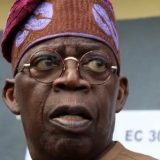
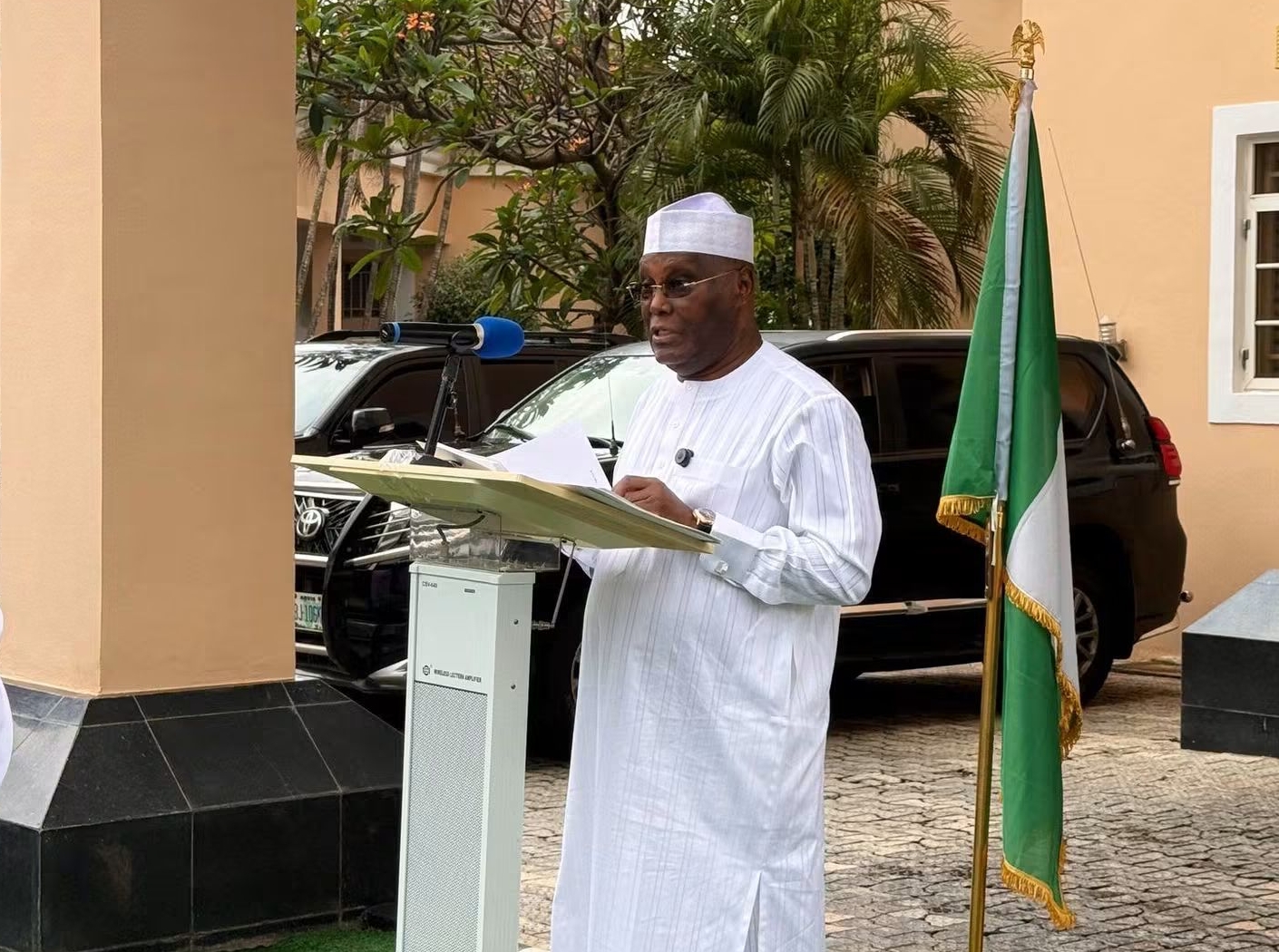
Former Vice President and African Democratic Congress (ADC) presidential candidate, Atiku Abubakar, has appealed to President Bola Tinubu to reconsider the Federal Government’s plan to end electricity subsidies from 2027.
Atiku made the appeal in a video address on Friday while discussing the rising cost of living, government interventions and increasing energy costs across Nigeria.
The Federal Government has said it intends to phase out electricity subsidies from 2027 as part of efforts to tackle accumulated financial obligations in the power sector and create a more sustainable electricity market.
Power Minister, Joseph Tegbe, said the government was developing measures to protect vulnerable electricity consumers from the impact of the reforms.
However, Atiku argued that removing the subsidy without first easing the financial pressure on households and businesses could further deepen the economic difficulties faced by Nigerians.
He said government measures such as food distribution and cash transfers could offer temporary relief but would not address the underlying causes of rising living costs.
“A bag of rice cannot repair an economy in which transportation costs outrun salaries,” Atiku said.
“A cash transfer cannot permanently compensate a worker for whose income is continually eroded by energy costs. Palliatives manage pain. Good policy addresses the source of the pain.”
The former vice president said Nigerians were already dealing with significant economic pressure, adding that the proposed electricity subsidy withdrawal could introduce another burden.
“And as if the pressure on families were not enough, Nigerians are now being told that electricity subsidies will be phased out in 2027,” he said.
Atiku maintained that electricity bills were already placing considerable pressure on households and businesses.
“Electricity is already expensive. Families are calculating how long their units will last,” he said.
“Small businesses are struggling to keep the lights on. Manufacturers are spending enormous amounts on electricity, diesel, and alternative power simply to keep factories running.”
He listed several businesses that rely heavily on electricity and could be affected by further increases in energy costs.
“The barber needs electricity for his clippers. The tailor needs it for her machines. The frozen food seller needs it to preserve her stock. The welder needs it for his equipment. The manufacturer needs it to keep the factory alive,” Atiku said.
The ADC presidential candidate also urged the administration to learn from the consequences of the removal of petrol subsidies before implementing another major energy reform.
“The lesson of petrol must not be repeated with electricity,” he said.
“Do not remove first and think later. Do not impose the pain first and search for palliatives afterwards.”
The planned withdrawal of electricity subsidies comes as the government seeks to address the financial difficulties within the power sector.
Tegbe said in July that the government was working towards ending electricity subsidy payments in 2027 while addressing an estimated ₦3.3 trillion in legacy debt within the electricity market.
Atiku urged Tinubu to devote the remaining period of his administration to measures that could reduce the financial pressure on Nigerians.
He also cautioned the government against treating the period before the 2027 general election as too short to make a difference in the lives of citizens.
“Eight months may sound short inside Aso Rock, but eight months is a very long time when you are living from hand to mouth,” he said.
“Use that time to reduce burden on Nigerians, please.”
Despite their political differences, Atiku said he was willing to share policy proposals with the Federal Government if they could help ease the difficulties facing Nigerians.
“And if your government requires policy ideas or technical input on how to bring relief, I am prepared to make mine available,” he said.
“Nigerians do not have to wait for another administration before they benefit from an idea that can help them today.”
He added: “If you need the framework, I will provide it. Implement it under your government. Give it whatever name you choose. Take the credit.”
Atiku said political competition between him and Tinubu should not come ahead of the interests of Nigerians.
“I ask for only one thing. Let Nigerians breathe,” he said.
“I am prepared to compete with you politically, but I will never compete with the welfare of the Nigerian people.”
The comments come as discussions over the future of energy subsidies continue ahead of the 2027 general elections. Atiku has also expressed support for restoring petrol subsidies if elected president, a position that has drawn criticism from the Tinubu administration and other commentators.
While the Federal Government maintains that electricity subsidies are no longer financially sustainable and that reforms are necessary to strengthen the power sector, Atiku is calling for a transition that would not place additional pressure on households and businesses.

NSCDC Opens Probe Into Deaths Of Suspected Illegal Miners In Niger
By Sabiu Abdullahi
The Nigeria Security and Civil Defence Corps has launched an investigation into the deaths of suspected illegal miners arrested during enforcement operations in Niger State.
The suspects were apprehended during operations carried out by the Niger State Command in the M.I. Wushishi/Lukoto axis on September 15 and 16, 2026, as part of efforts to tackle illegal mining activities.
Reports had earlier indicated that at least 33 suspected illegal miners died after they were detained at an NSCDC facility in Minna.
The deaths were reportedly discovered early Thursday. The Niger State Commandant, Suberu Aniviye, was said to have linked the deaths to a suspected disease outbreak.
However, the NSCDC National Headquarters said the exact cause of the deaths had not been established.
The Corps said claims that a particular disease caused the deaths would require medical and laboratory confirmation before such a conclusion could be reached.
The NSCDC National Public Relations Officer, Babawale Afolabi, disclosed this in a statement on Thursday.
According to Afolabi, the Commandant General, Ahmed Abubakar Audi, has ordered the formation of a high-powered investigative panel to establish what led to the deaths.
The panel will be headed by the Deputy Commandant General responsible for Intelligence and Investigation.
Afolabi said investigators would examine several aspects of the incident, including the condition of the suspects when they were arrested, their period in custody, the conditions under which they were detained and the medical attention they received.
The statement partly read:
“NSCDC has confirmed the death of some suspected illegal miners who were arrested during enforcement operations conducted in parts of Niger State on September 15 and 16, 2026.
“Following the development, the Commandant General, Ahmed Abubakar Audi, has directed the constitution of a high-powered investigative team, led by the Deputy Commandant General in charge of Intelligence and Investigation, to immediately look into the circumstances surrounding the incident.
“The team has been mandated to undertake a comprehensive investigation into the circumstances leading to the deaths, including the condition of the suspects upon arrest, their period in custody, the conditions of detention, medical attention provided, and other relevant circumstances surrounding the incident.”
Audi also ordered the Corps to give priority to the health and welfare of people who remain in custody.
The NSCDC said measures were also being taken to protect personnel who may have come into contact with the affected detainees.
The Corps expressed sympathy to the families of those who died and assured them that the circumstances surrounding the deaths would be investigated.
Afolabi further said the Corps would avoid drawing conclusions until medical examinations establish the cause of the deaths.
“The NSCDC wishes to clarify that reports attributing the deaths to any specific disease remain subject to medical and laboratory confirmation. The Corps will therefore refrain from speculation until the outcome of the medical examination is established.
“The Corps extends its condolences to the families of the deceased and assures them that the circumstances surrounding the incident will be thoroughly investigated and appropriately addressed based on established facts.”

Nigeria Defeats $3.38bn Mambilla Claims As ICC Ruling Clears Legal Obstacle
By Sabiu Abdullahi
Nigeria has secured a major victory in the long-running arbitration dispute with Sunrise Power and Transmission Company Limited over the Mambilla Hydroelectric Power Project in Taraba State.
An International Chamber of Commerce (ICC) arbitration tribunal in Paris, France, issued its final award on September 17, 2026, rejecting Sunrise Power’s claims against the Federal Government. The related claims had exposed Nigeria to potential liabilities of more than $3.38 billion.
President Bola Tinubu confirmed the ruling in a statement on Thursday. He said the decision had removed a major legal obstacle to the long-delayed power project.
“Today’s ICC ruling clears the single biggest legal hurdle that has paralysed the Mambilla hydro power project for years,” the President said.
The dispute dates back to 2003, when an agreement was reached for the development of a 3,050-megawatt hydroelectric plant in Taraba State under a build-operate-transfer arrangement.
Sunrise commenced arbitration proceedings against Nigeria at the ICC International Court of Arbitration on October 10, 2017. The company sought about $2.35 billion over what it described as a breach of contractual obligations.
A separate dispute later emerged from a 2020 settlement agreement. Sunrise sought $400 million, comprising a $200 million settlement sum and an additional $200 million default payment. The Presidency said the company also had a separate claim for more than $2.7 billion in compensation and interest, bringing the potential exposure from the related claims above $3.38 billion.
Tribunal Rejects Sunrise’s Claims
Details of the award show that the three-member tribunal rejected Sunrise’s request for a declaration that Nigeria had breached its obligations under the settlement agreement and its addendum.
The panel also dismissed the company’s demand for the $400 million settlement and default payments.
The tribunal further held that Leno Adesanya, the promoter of Sunrise Power, was bound by the arbitration agreement under the settlement arrangement and its addendum.
It also ruled that it had jurisdiction over Nigeria’s counterclaim against Adesanya and Sunrise.
The tribunal ordered Sunrise and Adesanya to reimburse Nigeria for 75 per cent of the legal fees and expenses incurred during the arbitration.
Nigeria’s legal fees were put at about $11.82 million. Of that amount, $2.5 million is expected to come from funds held in escrow by the ICC, while Sunrise and Adesanya are to pay the remaining $9.32 million.
The outstanding amount will attract 10 per cent annual interest, compounded annually, from notification of the final award until full payment. The tribunal also fixed the arbitration costs at about $1.66 million, with Sunrise and Adesanya responsible for 75 per cent and Nigeria for the remaining 25 per cent.
The tribunal was chaired by Melaine van Leeuwen, with Stavros Brekoulakis and Simon Nesbitt as co-arbitrators.
Nigeria’s defence team was led by Elizabeth Oger-Gross and Tolu Obamuroh of Paul Hastings LLP.
Tinubu commended Attorney-General of the Federation and Minister of Justice, Lateef Fagbemi, and officials of the Federal Ministry of Justice for their role in the case.
He also praised the lawyers who represented Nigeria.
“This latest decision affirms the Nigerian State’s determination not to succumb to predatory and exploitative claims by corrupt local and international entities and their enablers and funders,” Tinubu said.
Tinubu Praises Obasanjo, Buhari
The President also commended former President Olusegun Obasanjo and the late former President Muhammadu Buhari for their participation in the arbitration proceedings.
Both former presidents testified in Nigeria’s defence.
“I commend the patriotism and support of former President Olusegun Obasanjo, GCFR, and late President Muhammadu Buhari, GCFR, who testified in the case, which dated back to an illegal 2003 contract to build a 3,050-megawatt hydroelectric plant in Taraba State under a build-operate-transfer model. The Federal Executive Council never authorised the contract,” he said.
Tinubu also recognised former ministers Babatunde Fashola and Suleiman Adamu, as well as other witnesses and experts who took part in Nigeria’s defence.
He further commended the National Security Adviser for supporting the government’s position and the Economic and Financial Crimes Commission for its investigation into the matter.
The President said the government remained open to legitimate investment while maintaining that Nigeria would defend its interests against claims it considers unjustified.
“I want to assure you that while our country remains committed to partnering with genuine investors and honouring its legal obligations, it will continue to defend all opportunistic claims instituted against our commonwealth strongly,” the President said.
Mambilla Project Faces Long Delay
The Mambilla project has remained largely uncompleted despite its identification by successive administrations as a major addition to Nigeria’s electricity generation capacity.
The original proposal was for a 3,050MW facility. The Federal Government later reduced the planned capacity to about 1,525MW and subsequently rescaled it to approximately 1,500MW in an effort to improve its financial viability and make it “bankable” for lenders.
The project has faced several obstacles, including legal disputes, financing difficulties and changes to its implementation arrangements.
The parties had attempted to settle their dispute in 2020, but disagreements over the implementation of the settlement eventually resulted in another arbitration.
The latest ICC decision has therefore removed a major legal dispute surrounding the project, although the project still faces financing and implementation issues before construction can move forward.
Nigeria’s victory in the case comes after other major international disputes involving the Federal Government. In 2023, a UK court set aside an $11 billion arbitration award against Nigeria in the case involving Process & Industrial Developments Limited over a failed gas processing agreement.
The Mambilla project has also featured in investigations and court proceedings involving former officials of the power sector, while questions over financing and policy continuity have continued to affect major electricity projects in the country.

Kwara Shuts Unapproved Orphanage, Rescues 30 Children In Ilorin
By Sabiu Abdullahi
The Kwara State Government has closed an unapproved orphanage in Ilorin and taken 30 children found at the facility into government care.
Officials of the state Ministry of Social Development carried out the operation on Thursday at the Iranlowo Oluwa Orphanage and Children’s Home.
The children, made up of boys and girls between the ages of two and 15, have since been moved to a government-approved shelter.
The state government said the children would receive medical attention, food, education and psychosocial support at the shelter while officials determine their individual circumstances.
The intervention was disclosed in a statement issued by the Kwara State Ministry of Social Development and signed by its Press Secretary, Rasheedat Shodunnke.
The ministry said the action formed part of measures to protect children living in care institutions from neglect, abuse and other risks.
The Commissioner for Social Development, Mariam Nnfatima Imam, said authorities would first establish the needs and backgrounds of the rescued children before deciding on their long-term care.
She said the ministry would conduct family tracing and seek to reunite the children with their relatives where such reunification was considered safe and appropriate.
“The children are undergoing comprehensive medical screening, nutrition support and psychosocial counselling, while the ministry is also working on family tracing and reunification, where appropriate,” Imam said.
According to the commissioner, children whose return to their families is found to be unsafe will remain in government-approved care facilities.
She explained that the placement process would follow the required documentation and assessment procedures. Further assessments would also be carried out to ensure that each child continues to receive appropriate care.
Imam said the discovery had also led the ministry to intensify its monitoring of orphanages and other child-care institutions across Kwara State.
She directed operators of orphanages and children’s homes to secure government approval before operating.
The commissioner also instructed approved facilities to display the inscription, “Approved by the Kwara State Government,” prominently on their signposts.
She said the measure would help residents identify facilities that have received official authorisation from those operating without approval.
The Director of Social Work in the ministry, Hamzat Abdulfatah, who took part in the rescue operation, stressed the importance of cooperation among government agencies and other stakeholders involved in child protection.
“This intervention has given these children hope and encouraged us to work together. We now understand that if we manage this process properly and follow due process, these children will have the opportunity to live better and more fulfilled lives,” Abdulfatah said.
The ministry said efforts would continue to establish the identities and family backgrounds of the children and determine suitable long-term arrangements for their care.

South African Woman Sentenced To 25 Years For Bringing 5.75kg Heroin Into Nigeria
By Sabiu Abdullahi
A Federal High Court in Abuja has sentenced a 38-year-old South African woman, Will Ann, to 25 years in prison for importing 5.75 kilogrammes of heroin into Nigeria.
Justice Obiora Egwuatu imposed the sentence on Thursday after Ann pleaded guilty to the drug trafficking charges filed against her by the National Drug Law Enforcement Agency (NDLEA).
The convict was first brought before the court in August after the anti-narcotics agency accused her of importing the prohibited substance into the country.
According to the NDLEA, Ann was arrested in July during the inward clearance of passengers aboard Qatar Airways flight QR1433 from Doha at the Nnamdi Azikiwe International Airport, Abuja.
The agency said Ann had travelled with her three-year-old son and initially denied having check-in luggage.
However, the NDLEA said she later admitted ownership of two bags after its officers discovered that the tags on them corresponded with the claim tags attached to her passport.
The agency further disclosed that Ann’s husband was arrested in Johannesburg, South Africa, on July 27, 2026, over an alleged attempt to traffic 3.2 kilogrammes of illicit drugs to Hong Kong.
Court Considers Value Of Seized Heroin
After Ann entered her guilty plea, the prosecution asked the court to consider the quantity and estimated value of the heroin when determining the appropriate punishment.
The prosecution told the court that one kilogramme of the drug was worth approximately N18 million.
Ann appealed to the court for mercy. She said she was remorseful and promised not to commit a similar offence again.
She also claimed that she was unaware that the bags contained illicit drugs.
In his judgment, Justice Egwuatu noted that Ann had admitted the offence in an extrajudicial statement before entering her guilty plea in court.
The judge held that the law provides that a conviction follows a guilty plea and subsequently found Ann guilty.
While handing down the sentence, Egwuatu said “crime does not pay” and that the law does not recognise “emotions”.
The judge sentenced Ann to 15 years in prison on the first count and 25 years on the second count.
He ordered that both terms should run concurrently, meaning Ann will serve a total of 25 years behind bars.
The court also ordered the destruction of the seized heroin if the convict does not appeal the judgment within the period allowed by law.
Where Governor Buni’s Market Strategy Becomes a Public-Policy Question
By Maji Bappa Maina
What happens when markets are no longer treated as isolated projects, but as interconnected pieces of an economic system?
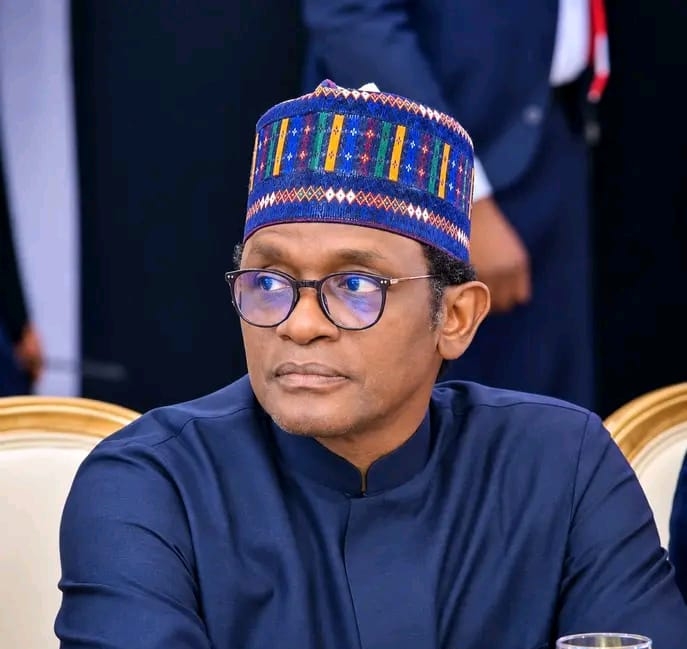
That question becomes interesting when we look at the spread of modern and ultra-modern markets being developed across Yobe State under Governor Mai Mala Buni.
From the Yobe City Mall in Damaturu to markets in Yunusari, Potiskum, Nguru, Gashua and Ngalda, and from Geidam, Buni Yadi, Machina and Jajere to Ngelzarma, Sabon Garin Nangere, Yusufari, Jajimaji, Bumsa and Gir Gir, the locations tell a story that goes beyond the construction of individual market buildings.
They suggest a broader attempt to create an economic network across the state.
To understand this, perhaps we need to change the way we look at a market.
A market is not simply a place where people come to buy and sell.
It is where farmers meet traders, where goods move from producers to consumers, where transporters find business, where small enterprises grow, where money circulates and where economic relationships are created.
In development planning, therefore, the location of a market can be just as important as the structure itself.
Consider Geidam.
Its proximity to Nigeria’s border with Niger Republic gives commercial infrastructure there a significance that extends beyond the immediate community.
A functional market in such a location can potentially serve local commerce while also connecting Yobe to wider patterns of regional trade.
Then consider Nguru, Gashua and Machina.
These are important points within Yobe’s commercial geography.
When modern trading facilities are introduced in such locations, they can help distribute economic activity across different parts of the state rather than concentrating everything around the capital.
Then there is Potiskum, with its long-standing reputation as one of the major commercial centres of Yobe.
And in Damaturu, the Yobe City Mall introduces another form of commercial infrastructure, one associated with a more formal and modern retail environment.
But perhaps the more interesting part of the strategy is found outside these major centres.
Ngalda. Buni Yadi. Jajere. Yusufari. Sabon Garin Nangere. Jajimaji. Bumsa. Gir Gir.
Why invest in markets across such a wide geographical spread?
Because development does not become inclusive simply because a state has a few major commercial centres.
Economic opportunity has to be connected to where people actually live and produce.
A farmer in a rural community needs somewhere to sell.
A trader needs somewhere to operate.
A transporter needs somewhere goods can be aggregated.
A small business needs customers.
And consumers need accessible places where goods and services can be exchanged.
This is where Governor Buni’s market strategy becomes interesting from a public-policy perspective.
The question is no longer simply how many markets are being constructed.
The more important question is:
What economic relationships can these markets create when they begin functioning as a network?
Imagine the possibility.
A farmer produces in one community.
The produce moves to a nearby market.
From there, traders aggregate it and transport it to a larger commercial centre.
From a major centre, goods can move toward other parts of Yobe or beyond the state.
At the border, commercial activity can potentially connect with regional markets.
Along the way, transporters, wholesalers, retailers, financial institutions and small businesses participate in the same economic chain.
That is how infrastructure begins to function as an economic ecosystem.
And there is another important dimension.
For a state that has experienced prolonged disruption to economic activities in some communities, rebuilding commercial infrastructure can also contribute to restoring normal economic life.
A market can become a sign that people are returning to ordinary economic activity.
Traders return.
Customers return.
Farmers have somewhere to sell.
Young people can establish small businesses.
Communities begin to reconnect economically.
In that sense, the market becomes part of a wider process of economic recovery and reintegration.
But there is a deeper lesson here for public administration.
Government projects should ultimately be judged not only by what is constructed, but by the systems they help create.
A beautiful market that remains empty is infrastructure without sufficient economic function.
A functioning market, however, can generate activity far beyond its walls.
That is why the next phase becomes just as important as construction itself.
Will traders occupy the shops?
Will farmers gain easier access to markets?
Will storage facilities reduce post-harvest losses?
Will transport networks connect the markets efficiently?
Will financial services follow the commercial activity?
Will the markets create employment?
Will they contribute to sustainable internally generated revenue?
These questions will determine whether the buildings become genuine economic assets.
And this is perhaps the most interesting way to understand the direction Governor Mai Mala Buni appears to be taking with market infrastructure.
The strategy is potentially bigger than building markets.
It is about creating places through which economic activity can move.
From Damaturu to Geidam, from Potiskum to Nguru, from Gashua to Ngalda, and from the larger towns to smaller communities, these projects can be understood as nodes within a wider economic geography.
The Yobe City Mall represents one end of that commercial spectrum.
The border communities represent another.
The modern markets scattered across the state provide the connecting points in between.
And when those points begin functioning together, something more important than individual buildings can emerge: a more connected local economy.
Perhaps, therefore, the real measure of this strategy will not be the number of markets opened.
It will be the number of economic opportunities that begin moving through them.
Because in development, infrastructure matters most when people can use it to move goods, services, ideas, income and opportunity.
That is where a market stops being merely a building.
It becomes part of the development system.
Maji Bappa Maina is a Political Writer | Voice of Development, Leadership & Public Insight

FG Seeks Solutions to Challenges Facing Teacher Education in North-East
By Sabiu Abdullahi
The Federal Government has begun consultations with provosts and other stakeholders in the North-East as part of efforts to address challenges that could affect the implementation of the Dual Mandate Policy for Colleges of Education.
The Executive Secretary of the National Commission for Colleges of Education, Dr Angela Ajala, disclosed this on Thursday at a stakeholder engagement held in Gombe.
Ajala said the engagement was designed to enable the commission to understand the specific difficulties confronting institutions in the region and work out practical measures before the policy becomes fully operational.
She explained that the consultations formed part of a wider engagement with Colleges of Education across the country, with the aim of strengthening teacher education and ensuring that graduates acquire both professional qualifications and practical skills.
Under the new policy, students of Colleges of Education are expected to have the opportunity to earn the National Certificate in Education, a Bachelor of Education degree and a skills certificate.
“We are here to know their challenges and how they can be solved. If it is what the colleges can solve on their own, what NCCE can solve or what the government needs to intervene,” she said.
Ajala added that issues beyond the capacity of individual institutions or the NCCE would be taken to the appropriate authorities for intervention.
She said challenges that require government action would be presented to the Minister of Education, Dr Tunji Alausa, while the commission would also seek the support of development partners where necessary.
According to her, the skills component of the policy is expected to equip graduates with abilities that can help them become self-reliant and develop solutions to problems within their communities.
Speaking on the theme, “Dual Mandate of Colleges of Education: Challenges, Opportunities and Expectations,” a former Provost of the Federal College of Education (Technical), Gombe, Dr Ali Adamu, listed inadequate funding, a shortage of qualified personnel and insufficient infrastructure among the major concerns that could affect the policy’s implementation.
Adamu, however, said the Dual Mandate Policy could create opportunities for improved career progression, revitalisation of Colleges of Education, better teacher quality and stronger human capital development.
He urged the government to provide more funding, improve infrastructure and sustain staff development programmes to support the successful implementation of the policy.
The Provost of the Federal College of Education (Technical), Gombe, Dr Mohammed Abdulhamid, commended the Federal Government and the NCCE for their efforts to reposition teacher education in Nigeria.