
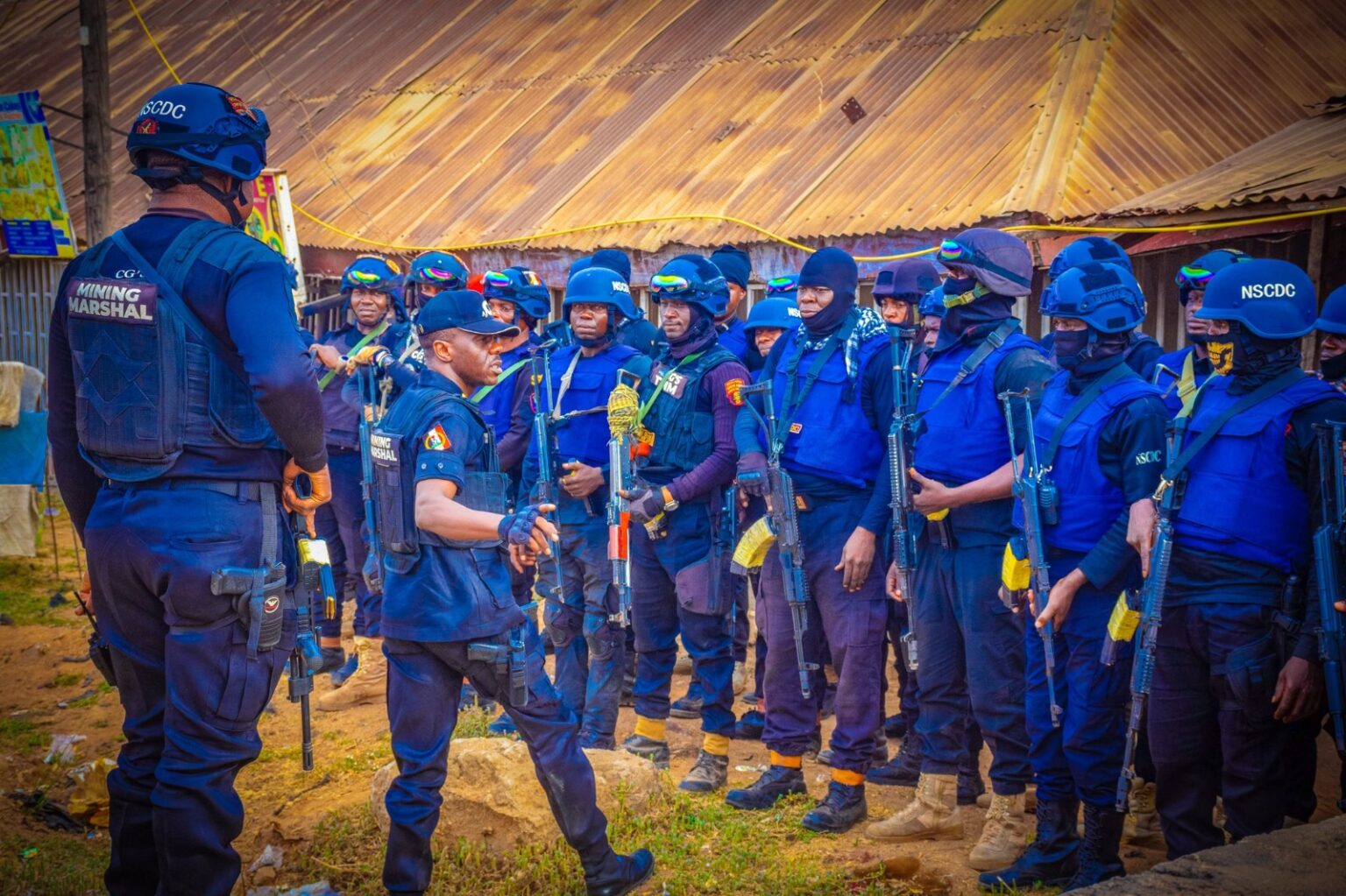
NSCDC Names New Niger Commandant After Deaths Of 37 Suspected Illegal Miners
By Sabiu Abdullahi
The Nigeria Security and Civil Defence Corps (NSCDC) has appointed Abdulhamid Kabara as the new Commandant of its Niger State Command following the deaths of 37 suspected illegal miners in the corps’ custody in Minna.
Kabara replaces Suberu Aniviye, whose suspension as the state commandant followed the deaths recorded on Thursday.
The NSCDC spokesman in Niger State, Abubakar Muti, disclosed in a statement on Saturday that Kabara formally assumed duty and took charge of the command on Friday, September 18.
The Federal Government had earlier directed the immediate suspension of Aniviye after the deaths of the 37 suspects.
Muti said the new commandant assumed office at a sensitive period for the command because of the incident involving persons arrested over suspected illegal mining activities in the state.
“The assumption of office comes at a particularly sensitive period for the Command, following the unfortunate deaths of some persons arrested in connection with suspected illegal mining activities in the State,” the statement reads.
According to the statement, Kabara expressed “deep sadness over the loss of lives and extended his heartfelt sympathy to the families of the deceased and everyone affected by the unfortunate incident”.
The new commandant reaffirmed the corps’ responsibility to tackle illegal mining through arrests, investigations and enforcement. He, however, stressed that the protection of human life must remain a central consideration.
“At a moment like this, beyond arrests, investigations, enforcement and the fight against illegal mining, we must remember one fundamental truth: every human life matters,” he said.
“The loss of any human life is painful, and our thoughts and prayers are with the families who are mourning at this difficult time.”
Kabara also said law enforcement responsibilities must be carried out alongside measures that protect the dignity, safety and welfare of people held in custody.
His deployment comes amid ongoing attention to the circumstances surrounding the deaths of the 37 suspected illegal miners while they were in NSCDC custody in Minna.
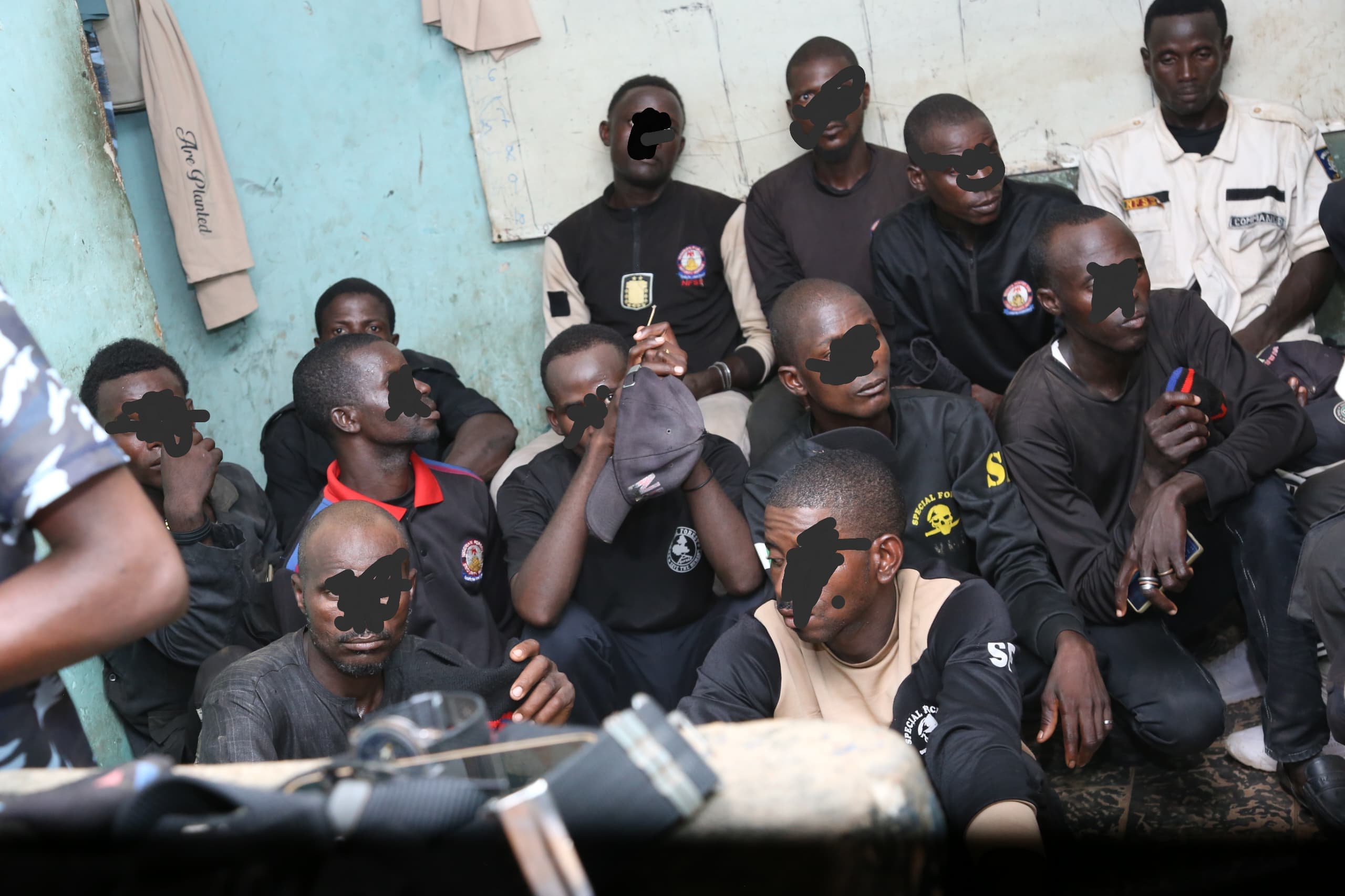
Police Arrest 47 Alleged State-Owned Security Operatives At Bauchi Polling Units
By Sabiu Abdullahi
The Bauchi State Police Command says it has arrested 47 persons who allegedly claimed to be operatives of a state-owned security outfit during the bye-election in Disina State Constituency, Shira Local Government Area.
According to the Command, the suspects were arrested on Saturday, September 19, 2026, at various polling units within the constituency. Police said they were allegedly found carrying firearms, cutlasses and sticks.
The arrests came despite an earlier warning issued by the Command on September 17 concerning security arrangements for the bye-elections in Disina State Constituency, Shira LGA, and Sakwa State Constituency, Zaki LGA.
The Police had earlier stated that state-owned security outfits, quasi-security agencies, private security guards and vigilante groups were prohibited from participating in election security operations.
The Command said only security agencies legally recognised under the Inter-Agency Consultative Committee on Election Security (ICCES) were authorised to provide security during the elections.
In a statement issued by the Police Public Relations Officer, SP Nafiu Habib, the Command said its personnel deployed for election duty apprehended the suspects after finding them within polling units with the weapons.
The suspects were subsequently taken into police custody, while firearms and other dangerous weapons allegedly recovered from them were also secured as exhibits.
The Commissioner of Police, CP Sani-Omolori Aliyu,mni, psc(+), condemned what he described as a disregard for lawful directives and an attempt to undermine the electoral process.
He ordered the suspects to be transferred to the State Criminal Investigation Department (SCID), Bauchi, for discreet investigation and prosecution in accordance with the law.
The Command reiterated its commitment to maintaining peace and ensuring a credible and hitch-free bye-election across the affected constituencies.
It also warned that individuals or groups who attempt to disrupt the electoral process or cause a breach of peace would face decisive action, regardless of their status.
The Police urged residents to remain law-abiding and report suspicious activities to security authorities.

Tinubu: Cheaper Energy, Cheaper Fares From Oct 1
By Abdullahi Mukhtar Algasgaini
President Bola Ahmed Tinubu has said Nigerians should begin to see measurable reductions in transportation costs from October 1 under the National Affordable CNG Transit Programme, pointing to existing compressed natural gas and electric transport schemes that have already cut fares in several states.
In a State House press statement on September 19, 2026, Tinubu said the objective was agreed with the 36 state governors on August 27, after which an implementation committee was established under the Nigeria Governors’ Forum, chaired by Governor AbdulRahman AbdulRazaq.
He said the committee, PI-CNG & EV, the states and other stakeholders were already working to identify priority transport corridors, determine appropriate interventions and put necessary arrangements in place.
“From October 1, more Nigerians should begin to see measurable reductions in transportation costs,” the President said, adding that the work had become more urgent amid the current global energy crisis.
Tinubu said there was already evidence across Nigeria that cheaper energy could translate into cheaper transportation.
In Borno, he said CNG-powered and electric public transport services were moving commuters for between ₦50 and ₦100 on routes where commercial operators charge between ₦300 and ₦600.
In Kaduna, 100 CNG-powered buses are providing free transportation on major routes. In their first year, the buses carried about 3.2 million passengers and saved commuters more than ₦3.5 billion, according to the President.
In Oyo, CNG buses deployed to Pacesetter Transport brought the Lagos–Ibadan fare down from about ₦8,000 to ₦3,200 during initial deployment, while Adamawa’s alternative-energy transit services cut fares by as much as 50 per cent, from ₦8,000 to ₦4,000.
In Enugu, where 100 CNG buses have been deployed, the Enugu–Nsukka fare has fallen from ₦2,500 to ₦1,500. In Plateau, government-supported buses carry about 13,000 commuters daily at ₦200, compared with more than ₦500 commercially.
Tinubu also said the partnership with the NURTW had given passengers on CNG-converted commercial vehicles on several Abuja routes a 40 per cent fare reduction. Area 1 to Gwagwalada dropped from ₦1,500 to ₦900; Nyanya from ₦700 to ₦420; and Wuse from ₦400 to ₦240.
In Niger State, passengers on the Suleja–Abuja service pay ₦550 compared with about ₦800, while Abia has deployed 40 electric buses with fares subsidised by 50 per cent.
“These are not projections. Nigerians are already experiencing these savings,” Tinubu said.
He commended governors and state governments that had moved quickly, but said more still needed to be done, pledging Federal Government support for further scaling.
The President said disruptions to global energy supplies were again pressuring petrol and diesel prices and increasing transportation costs worldwide. Nigeria, he said, cannot control global energy markets, but as a gas-rich nation it can reduce its exposure.
He said his administration had spent the last three years deliberately investing in a CNG transportation ecosystem. More than 120,000 vehicles have been converted, with over 400 certified conversion centres and more than 90 CNG refuelling stations nationwide, and the figures are increasing daily.
Tinubu rejected suggestions that Nigeria should return to the petrol subsidy regime, describing it as ruinous and saying it consumed trillions of naira and left the economy exposed to international oil price movements.
“We must accelerate the cheaper alternatives we have been building at home,” he said.
He noted that Edo already has 50 CNG buses in active service; Kano has converted more than 1,000 commercial vehicles while expanding its conversion and refuelling network; Delta, Kwara and Lagos are expanding CNG-supported transport services; and Akwa Ibom has taken delivery of 50 CNG buses ahead of commercial operations.
The President urged every state to maintain momentum towards October 1, work with transport unions and commercial operators, support conversion and fleet deployment, facilitate required infrastructure, and ensure savings from cheaper energy reach citizens through lower fares.
“The Federal Government will continue to support the scaling of CNG infrastructure and access, expand conversion capacity, and create the enabling environment for states, transport operators, manufacturers and private investors to participate,” he said.
“Nigeria has the gas. We are building the infrastructure. We are already seeing the savings. Now we must move faster and scale this so more Nigerians feel those savings in the fares they pay every day.”
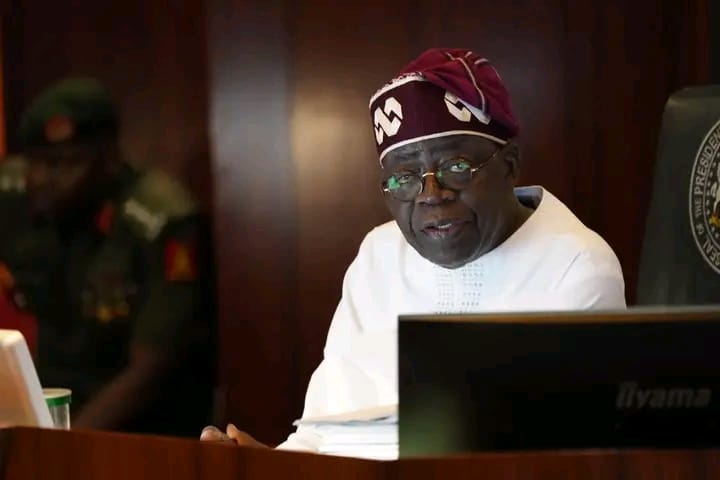
37 Custody Deaths: FG Sets Up Probe Panel, Suspends 21 NSCDC Officers
By Abdullahi Mukhtar Algasgaini
The Federal Government has constituted a 10-member independent committee to investigate the reported deaths of 37 people held in the custody of the Nigeria Security and Civil Defence Corps (NSCDC), Niger State Command, on suspicion of illegal mining.
The Minister of Interior, Hon. Olubunmi Tunji-Ojo, who announced the panel, also directed the suspension of all officers involved in the incident pending the conclusion of the investigation.
The action followed a directive by President Bola Ahmed Tinubu for a comprehensive, transparent and unhindered investigation into the incident, which occurred on Thursday, 17 September 2026.
Describing the deaths as deeply disturbing, the Minister said the government owes the families of the deceased and the Nigerian public a transparent account of the events leading to the incident.
The committee is expected to establish the identities of the deceased and investigate their arrests, detention and the cause and circumstances of their deaths.
It is also to determine responsibility, complicity, negligence and misconduct, and recommend appropriate action, compensation where applicable, and measures to prevent a recurrence.
Tunji-Ojo directed the NSCDC leadership and all relevant officers to cooperate fully with the committee, while ordering that all records and material evidence connected to the incident be preserved and made available to investigators.
“Any attempt to destroy or conceal evidence, intimidate witnesses or obstruct the investigation will be treated as a serious offence,” he warned.
The committee may co-opt relevant experts, access all necessary facilities and documents, visit relevant locations and request memoranda from members of the public. It has two weeks to complete its work and submit its report to the Minister.
The members of the committee are:
1. Mr Jonathan Kure, mni, retired Deputy Director-General, Department of State Services — Chairman
2. Prof. Isa Hayatu Chiroma (SAN), former Director-General of the Nigeria Law School — Secretary
3. AIG Hosea Hassan Karma (retired)
4. Prof. Olayinka Buhari, Professor of Histopathology and former Chief Medical Director of the University of Ilorin Teaching Hospital
5. Representative of the Minna Emirate Council
6. Representative of the Niger State Government
7. Alhaji Liman Sulaiman, National Secretary, Miners Association of Nigeria
8. Mr Deji Adeyanju, lawyer and human rights activist
9. Mrs Zainab Suleiman Okino of Blueprint Newspaper
10. Dr. George Agbakahi, Public Affairs Analyst
The suspended officers, in addition to the Niger State Commandant of the Corps, are:
1. O/C Station Guard, SC Usman Isah Ndamaka
2. Station Guard, ASCI Hassan Mohammed
3. Station Guard, CCA Bala Mohammed
4. Arresting Officer/O/C Investigation, CSC Oluwadare Sunday
5. Arresting Officer, DCC Obafemi Elvis
6. Arresting Officer, CSC Annas Shitto Lamino
7. HOD INT/INV, DCC Philip Ajayi
8. O/C Legal, ACC Barr. Stephen Tsado
9. Day/Night Duty Officer, ASCI Alhassan Mohammed
10. Guard Duty, IC Abdullahi Sale
11. Guard Duty, IC Mohammed Sonfada
12. Guard Duty, CAI Liman Abubakar
13. Guard Duty, CAI Bala Usman
14. Guard Duty, IC Mohammed Jiya
15. Guard Duty, DSC Isah Suleiman
16. Guard Duty, CAI Ahmed Wushishi
17. Guard Duty, IC Sale Adamu
18. Guard Duty, IC Haruna Mohammed
19. Guard Duty, ASCI Aliyu Sallah
20. Guard Duty, CAI Isah Sanusi
The Minister extended his condolences to the families of the deceased and appealed for calm while the investigation continues.
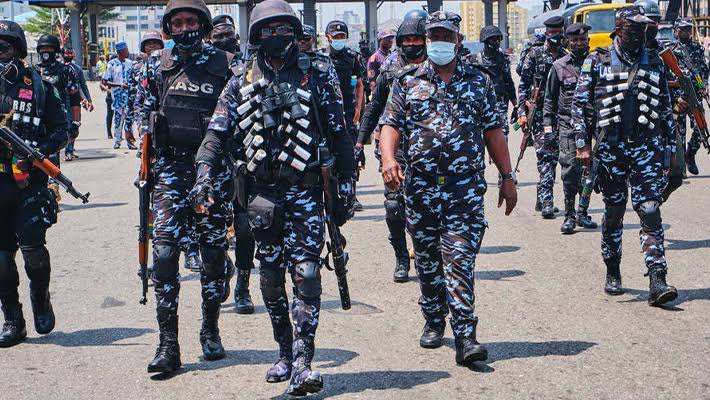
Kano Police Restrict Movement in Dawakin Kudu For Saturday’s By-Election
By Sabiu Abdullahi
The Kano State Police Command has imposed a temporary restriction on movement in Dawakin Kudu Local Government Area ahead of the Kano State House of Assembly by-election scheduled for Saturday, September 19, 2026.
The restriction will take effect from 12:00 am on Saturday and remain in force until 5:00 pm, according to the command.
The decision was reached after consultations with the Inter-Agency Consultative Committee on Election Security (ICCES) and in accordance with a directive from the Inspector-General of Police, IGP Olatunji Rilwan Disu.
The Commissioner of Police in Kano, CP Ibrahim Adamu Bakori, said residents would not be permitted to move around the affected area during the period except those performing essential duties and carrying valid identification.
The command said INEC officials, accredited election observers, medical personnel, firefighters and accredited journalists would be exempted from the restriction.
The police also barred security aides and escorts attached to VIPs, political office holders and government officials from accompanying their principals to polling units and collation centres.
Vigilante groups, quasi-security outfits and voluntary organisations were also prohibited from participating in election security operations or loitering around polling units.
The Commissioner warned residents against taking firearms or other dangerous weapons to polling units and other election-related locations.
“All forms of vote-buying, vote-selling, and political canvassing within the vicinity of polling units are strictly prohibited,” he added.
He further stated, “Only accredited INEC officials, security personnel, election observers and journalists will be allowed access to polling units and collation centres.”
The police called on political parties, candidates and their supporters to comply with the Electoral Act 2022, as amended, and conduct themselves peacefully throughout the electoral process.
According to Bakori, the command has deployed personnel and operational equipment to polling units, Registration Area Centres, collation centres and locations identified as potential flashpoints across Dawakin Kudu.
He said joint patrol teams would enforce the movement restriction and take action against anyone who attempts to disrupt public order.
The police commissioner warned that violators of the movement restriction or other electoral regulations would face arrest and prosecution in accordance with the law.
Bakori also urged parents and guardians to caution their children and wards against allowing politicians or other individuals to use them as thugs before, during or after the election.
Residents were advised to report emergencies and suspicious activities to the Kano State Police Command through 08032419754, 08123821575 or 09029292926.
The commissioner assured residents of Dawakin Kudu and the wider Kano State that the command would take measures to protect lives and property and maintain a secure environment for voters to exercise their civic rights.
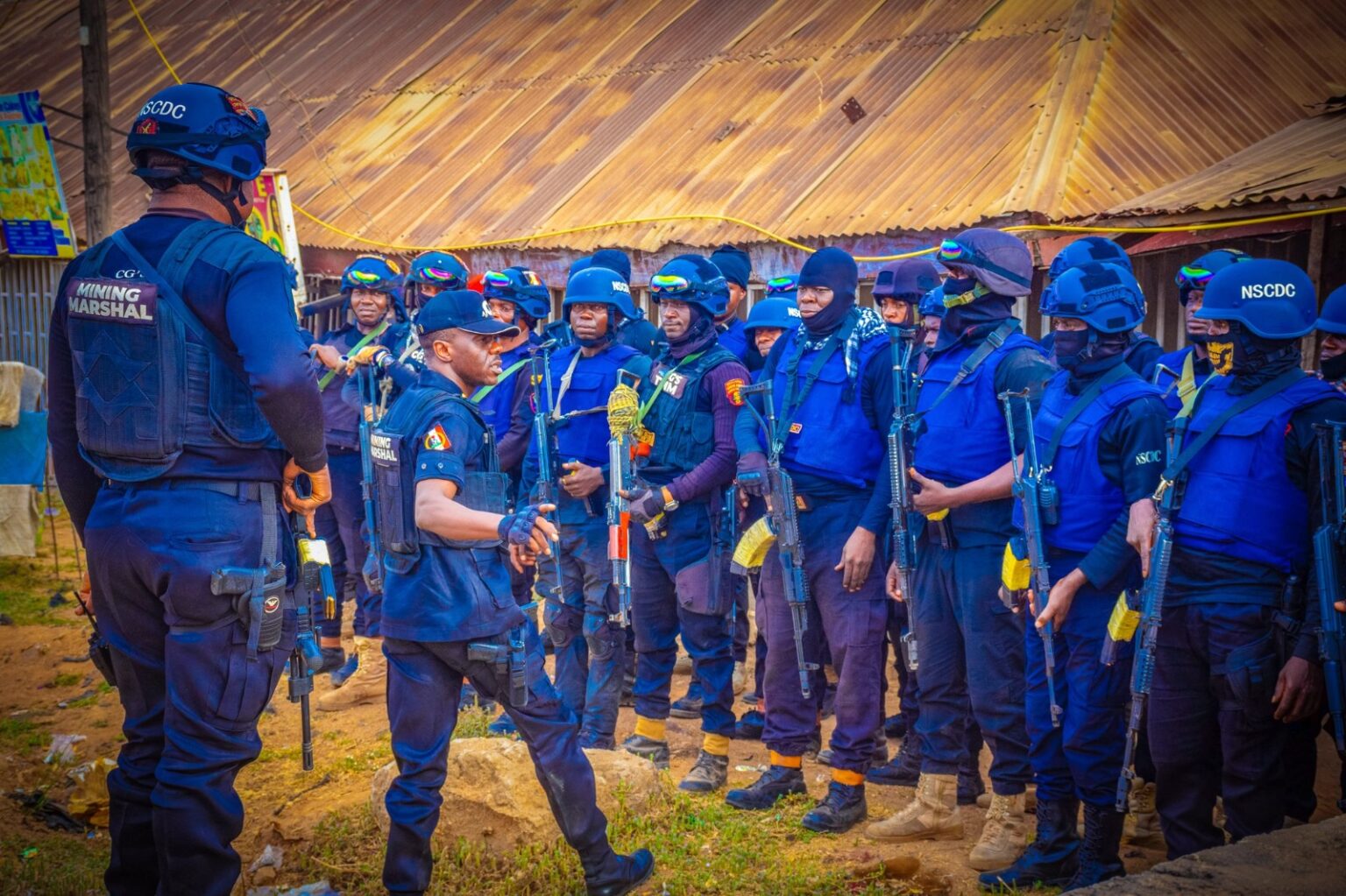
Niger Mining Tragedy: Survivor Alleges Substance Was Sprayed Inside Crowded Cell
By Sabiu Abdullahi
A survivor of the incident that reportedly claimed the lives of 37 suspected illegal gold miners in the custody of the Nigeria Security and Civil Defence Corps (NSCDC) has recounted what he described as distressing conditions inside the detention facility.
The survivor said several detainees were confined in a small room before more people were brought into the cell.
According to him, 17 people were initially locked inside the room. He said the detainees later complained about the limited space and excessive heat after additional people were brought in.
“They locked us in a very small room. We were 17 in number, then they added more people, and we started complaining that the room was small,” he said.
He said the situation became more difficult when the detainees were instructed to stand as the room was about to be locked.
The survivor also alleged that an unidentified substance was sprayed inside the room. He said the substance appeared to him to resemble perfume and that its smell began to cause discomfort among those inside.
“As they were about to lock the room, they sprayed something that looked like perfume, and the smell started disturbing everyone in the room,” he said.
The account comes amid growing concerns over the deaths of the suspected miners while in NSCDC custody.
The circumstances surrounding the deaths have prompted calls for a thorough investigation into what happened to the detainees and the conditions under which they were held.
The survivor’s account represents his description of events inside the cell. Further investigation would be required to independently establish the nature of the substance allegedly sprayed and whether it had any connection to the deaths.
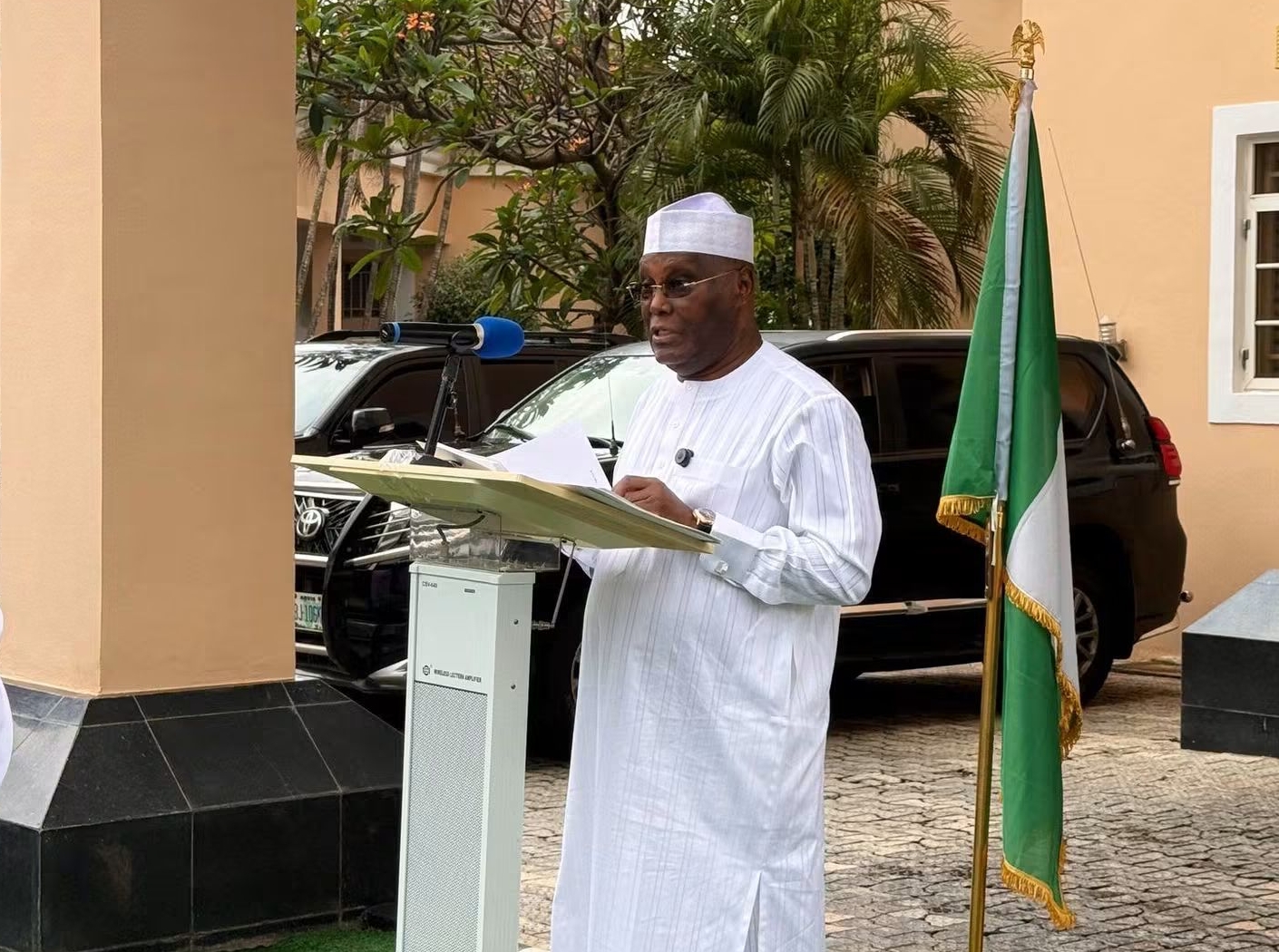
Atiku Challenges APC To Show Evidence Of Mambilla Bribery Verdict
By Sabiu Abdullahi
Former Vice-President Atiku Abubakar has rejected allegations by the All Progressives Congress (APC) Presidential Campaign Council that he compromised Nigeria’s interests in the Mambilla hydropower project.
Atiku, the African Democratic Congress (ADC) presidential candidate, said the International Chamber of Commerce (ICC) arbitration tribunal in Paris did not find him guilty of corruption or rule that he received a $500,000 bribe linked to the project.
His response came after the APC campaign council called on him to withdraw from the 2027 presidential race over allegations connected to the Mambilla project and a payment made to Jennifer Douglas, his then-wife, in 2003.
The dispute followed the ICC tribunal’s recent ruling in favour of Nigeria in the arbitration involving Sunrise Power and Transmission Company Limited and the Federal Government.
The tribunal rejected Sunrise’s claims over the Mambilla project and ordered the company and its promoter, Leno Adesanya, to reimburse Nigeria for part of its legal expenses. Reports on the award put the recoverable Nigerian legal costs at about $11.82 million.
A major issue examined during the arbitration was a $500,000 payment that Adesanya transferred through China Castle Investments Limited to Douglas’s United States bank account on January 30, 2003.
Adesanya told the tribunal that the money represented a foreign-exchange transaction carried out for Atiku. The tribunal, however, rejected his explanation because it was not supported by sufficient documentary evidence.
The APC subsequently linked the payment to negotiations over the Mambilla project and alleged that Atiku, who was vice-president at the time, worked with then Minister of Power Olu Agunloye to facilitate the contract.
Atiku, through a statement issued by his Senior Special Assistant on Public Communication, Phrank Shaibu, challenged the APC to identify where the ICC award made the alleged finding against him.
He accused the ruling party of presenting allegations considered during the arbitration as though they amounted to a corruption verdict.
“The APC cannot manufacture the missing finding simply because the actual award does not provide the political conclusion it desperately wants,” Atiku said.
He added:
“Nigeria alleged before the tribunal that the transfer was connected to the disputed Mambilla contract. Sunrise and Adesanya denied that allegation.
“Adesanya offered an explanation which the tribunal did not accept.
“But an unsuccessful explanation by Leno Adesanya does not automatically become a corruption verdict against Atiku Abubakar.
“I was not a member of the technical process that evaluated the competing proposals and recommended Sunrise. I did not sit on the procurement panel.
“I did not award the contract. So anyone alleging that I manipulated that process has a simple responsibility: show the instruction I gave, show the intervention I made, and show the paragraph of the tribunal award where that corrupt influence was found.
“If the tribunal wanted to find that the $500,000 was a bribe paid to Atiku, it could have said so plainly. If it wanted to find that Atiku abused his office to procure the contract for Sunrise, it could have said so plainly.
“The APC cannot insert into an international arbitral award words and conclusions that the arbitrators themselves did not put there.”
Atiku Rejects Claim That Tribunal Summoned Him
The former vice-president also disputed the claim that the tribunal summoned him to give evidence but that he refused to appear.
He said the fact that former Presidents Olusegun Obasanjo and the late Muhammadu Buhari participated in the proceedings did not mean that he was also summoned.
“For the avoidance of doubt, I was not a party to the arbitration and I did not testify before the tribunal,” Atiku said.
“The reported contents of the award do not establish that the tribunal summoned me, ordered me to testify or found that I disobeyed any directive to appear.
“There is a world of difference between a party to an arbitration attempting to secure somebody’s testimony and the tribunal itself summoning that person to appear.
“Those distinctions matter. The APC cannot erase them simply because doing so makes for a more convenient headline.”
Atiku also compared the allegations against him with the long-running controversy over a $460,000 forfeiture involving President Bola Tinubu in the United States.
The ICC proceedings themselves examined Atiku’s role in the Mambilla project and his reported involvement in discussions around the project. However, reports on the final award indicate that the tribunal did not make a finding that Atiku personally received the $500,000 as a bribe.
The arbitration arose from a dispute between Sunrise and the Nigerian government over the Mambilla hydropower project. Sunrise had sought billions of dollars in claims against Nigeria, but the tribunal ultimately ruled against the company’s claims.
The latest exchange has added another political dimension to the Mambilla controversy, with the APC and Atiku offering different interpretations of what the ICC tribunal’s findings mean for the former vice-president.
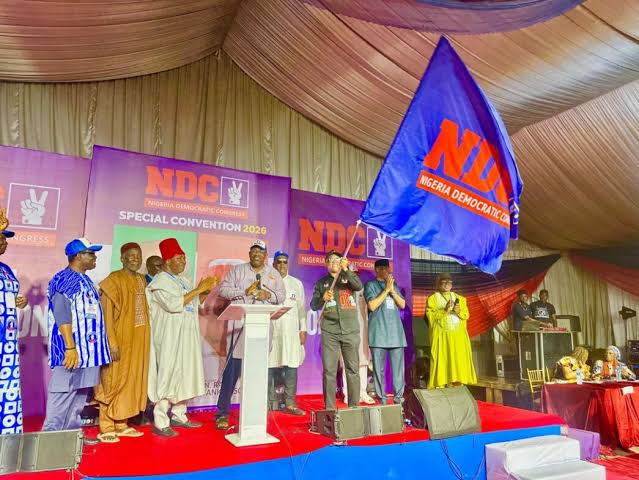
Appeal Court Restores NDC Registration, Overturns Lokoja High Court Ruling
By Sabiu Abdullahi
The Abuja Division of the Court of Appeal has overturned a Federal High Court judgment in Lokoja that had invalidated the registration of the Nigeria Democratic Congress (NDC) as a political party.
The appellate court delivered its decision on Friday, September 18, 2026, in a case arising from the June ruling of the Federal High Court, Lokoja, which had set aside an earlier judgment directing the Independent National Electoral Commission (INEC) to register the NDC.
Justice Isah Dashen had previously ruled that the December 10, 2025 judgment directing INEC to register the NDC was delivered without hearing all parties with a legal interest in the matter.
The decision followed an application by the Peace Movement Party (PMP), which argued that it had sufficient legal interest in the case and ought to have been joined before the earlier judgment was delivered.
Justice Dashen accepted the argument and held that the failure to include the PMP affected the validity of the proceedings.
The NDC subsequently challenged the Federal High Court’s decision at the Court of Appeal. The appellate court has now set aside the Lokoja judgment and restored the legal position that recognised the party’s registration.
Dickson Welcomes Court Decision
Reacting to the judgment, Seriake Dickson, national leader of the NDC, said the ruling means the party’s registration “remains valid and subsisting”.
Dickson also said the party would now turn its attention to the 2027 general elections and its political contest with the All Progressives Congress (APC).
In a statement posted on his X handle, he said: “We want to use this opportunity once again to commend the Nigerian judiciary, and in particular, Hon. Justice Danjuma and Hon. Justice Hassan, for upholding the integrity of the Nigerian judiciary and, by their decisions, expanding the sphere of multiparty democratic participation in Nigeria,” the statement reads.
He added: “We have said repeatedly that the NDC was set up to expand the frontier of multiparty democracy in Nigeria. Justice Dashen’s judgment a few months ago was an unexpected assault on our constitutional right to participate and an attempt to narrow the democratic space.
“Happily, today, by the decision of the Court of Appeal, the Nigerian democratic space has been protected, and the NDC’s right to participate in all political activities as a registered political party has been upheld.”
The Court of Appeal ruling comes as political parties prepare for the 2027 general elections. Reports on the judgment indicate that the appellate court’s majority decision overturned the Lokoja ruling, while a dissenting view was also recorded by a member of the panel.
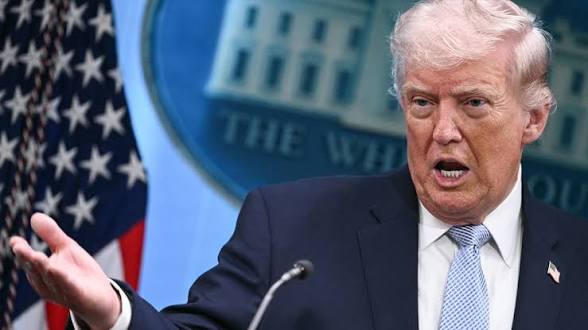
Trump Bans CNN, MS NOW And Politico From White House Over Critical Coverage
By Sabiu Abdullahi
US President Donald Trump’s administration has announced an immediate ban on CNN, MS NOW and Politico from the White House.
The decision followed Trump’s criticism of the three media organisations over their coverage of his administration.
Trump expressed his displeasure in a social media post on Friday, accusing the outlets of publishing what he described as false reports about him, his government and the United States.
He wrote that the organisations were “‘reporting’ FAKE NEWS!” before adding, “Other Fake News Media Outlets to follow,” suggesting that further media restrictions could follow.
The White House announcement has raised questions about press freedom and the constitutional rights of journalists to cover the US government.
Reporting from Washington, Al Jazeera correspondent Alan Fisher said the decision would likely face a legal challenge.
“This will be challenged, probably before the end of the day,” Fisher reported. “The United States has the First Amendment [of its Constitution] that says the government cannot restrict access to this sort of thing.”
Fisher noted that previous US presidents had also expressed anger over unfavourable media coverage and considered restricting access to the White House.
“Other presidents have been angry at the press coverage before. Linden B Johnson used to rail about it. Richard Nixon wondered whether or not he could ban certain people from the White House as well,” he said. “At every point they were told it’s not a good look.”
The development is expected to generate further debate over the relationship between the Trump administration and the American media, particularly concerning the limits of presidential authority and the First Amendment’s protection of press freedom.
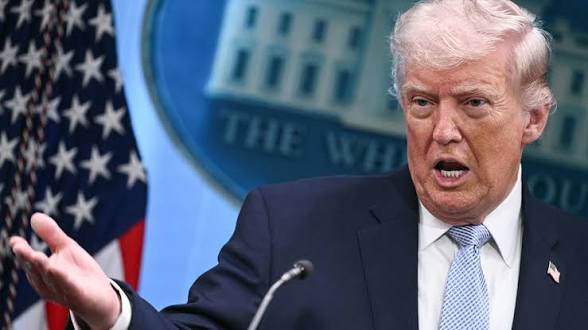
Trump Bans CNN, MS NOW And Politico From White House Over Critical Coverage
By Sabiu Abdullahi
US President Donald Trump’s administration has announced an immediate ban on CNN, MS NOW and Politico from the White House, Al-Jazeera reports.
The decision followed Trump’s criticism of the three media organisations over their coverage of his administration.
Trump expressed his displeasure in a social media post on Friday, accusing the outlets of publishing what he described as false reports about him, his government and the United States.
He wrote that the organisations were “‘reporting’ FAKE NEWS!” before adding, “Other Fake News Media Outlets to follow,” suggesting that further media restrictions could follow.
The White House announcement has raised questions about press freedom and the constitutional rights of journalists to cover the US government.
Reporting from Washington, Al Jazeera correspondent Alan Fisher said the decision would likely face a legal challenge.
“This will be challenged, probably before the end of the day,” Fisher reported. “The United States has the First Amendment [of its Constitution] that says the government cannot restrict access to this sort of thing.”
Fisher noted that previous US presidents had also expressed anger over unfavourable media coverage and considered restricting access to the White House.
“Other presidents have been angry at the press coverage before. Linden B Johnson used to rail about it. Richard Nixon wondered whether or not he could ban certain people from the White House as well,” he said. “At every point they were told it’s not a good look.”
The development is expected to generate further debate over the relationship between the Trump administration and the American media, particularly concerning the limits of presidential authority and the First Amendment’s protection of press freedom.