



Dangote Blames Cross-Border Smuggling For High Petrol Prices
By Sabiu Abdullahi
President of Dangote Industries Limited, Aliko Dangote, has linked part of the high cost of petrol in Nigeria to the continued smuggling of the commodity into neighbouring countries.
Dangote said petrol sells for between 30 and 50 per cent more in some neighbouring countries than in Nigeria, a price difference he said encourages traders to move the product across the borders for higher returns.
He made the remarks during an interview aired on Arise TV on Tuesday, where he discussed petrol prices, domestic supply and the possible impact of the ongoing crisis in the Middle East.
Addressing concerns over the cost of petrol in Nigeria, Dangote said the price should be considered alongside what consumers pay in neighbouring countries.
“You know, expensive is relative. In the sense that today, maybe, you know, a lot of them, there’s ignorance also. What they need to do is ask, what is the neighbour’s price?”
The businessman said the price gap had continued to encourage the movement of locally produced petrol out of Nigeria.
“I don’t know if you know that there’s still a lot of smuggling of the same petrol we are producing to our neighbouring countries.”
Dangote explained that petrol prices in neighbouring countries were significantly higher than those in Nigeria, making cross-border sales attractive to traders.
“Because those neighbouring countries are about 30 to 50 per cent more expensive than Nigeria. So, it’s not actually like for like.”
He cited Niger as an example, saying petrol sold at N1,350 in Nigeria could fetch between 20 and 25 per cent more across the border.
“And people can now go and ask, okay, fine, what is the price of, even now at N1,350? Okay, the price in Niger is 20 to 25 per cent more than Nigeria,” he said.
Dangote questioned what other legitimate business could offer such an immediate return.
“So, what business are you going to do that will make you have an instant 25 per cent return?” he asked.
He also described how petrol intended for the Nigerian market could be diverted towards border communities for resale.
“So, it means that, yes, you take the [petrol], you go and take it across the border. You pretend you are taking it to Sokoto, you go and just take it to Ilela, and you sell.
“Actually, they don’t have.”
According to Dangote, the cross-border movement reduces the amount of petrol available within Nigeria because traders can obtain higher returns outside the country.
Beyond the issue of price, Dangote warned that the ongoing crisis in the Middle East could create a different challenge for Nigeria’s petroleum market.
He said the major concern could shift from the cost of petrol to the availability of the product.
“And the problem now, going forward, I must also warn that this crisis in the Middle East is not even about price; it’s about availability,” Dangote said.
He, however, assured Nigerians that his refinery would continue to supply the domestic market despite possible disruptions in the international energy market.
“We will deliver to Nigeria. Nigerians don’t need to worry. There will not be any shortage from our own part.
“There won’t be any shortage. There will not be any queues. We will make sure that we keep satisfying the market, despite all odds,” Dangote added.
His comments came shortly after the Dangote Petroleum Refinery and Petrochemicals opened its N2.15tn initial public offering (IPO) on the Nigerian Exchange.
The IPO comprises 4.1 billion ordinary shares priced at N525 each, with a minimum subscription of 10 shares worth N5,250. The offer is open to retail, institutional and eligible African investors and is scheduled to close on October 13, 2026.

Wike Tackles APC Governors, Says They Are Politically Lazy
By Sabiu Abdullahi
The Minister of the Federal Capital Territory (FCT), Nyesom Wike, has criticised governors of the All Progressives Congress (APC) over their opposition to the Rainbow Coalition ahead of the 2027 general elections.
Wike described the APC governors as “politically lazy” during an interview on Arise Television’s Prime Time on Tuesday.
The former Rivers State governor was responding to the governors’ position against his political activities and their opposition to alliances that could affect President Bola Tinubu’s re-election campaign.
Wike maintained that his support for Tinubu did not amount to abandoning his political party or preventing other political parties from presenting candidates for elections.
The APC governors, led by their chairman, Imo State Governor Hope Uzodimma, had stated that they would neither participate in, support nor endorse any alliance that could undermine Tinubu’s re-election or affect APC candidates at any level.
Reacting to the position, Wike said, “They are politically lazy. When you have your local problems, don’t use Mr President as your excuse.”
The FCT minister also argued that disagreements over his political activities predated his decision to support Tinubu. He recalled that he faced opposition during his tenure as governor of Rivers State and later after his appointment as FCT minister.
“This thing did not start today. It started at a ministerial position. They were not happy that I was Minister of FCT. Also, they were unhappy when I was governor,” he added.
Wike further said those criticising his political activities might have a different understanding of his decisions if they had access to the information available to him.
He maintained that his understanding of the political situation was based on information that his critics did not have access to.
12 Die in Kaduna-Kachia Road Crash, Two Injured
By Sabiu Abdullahi
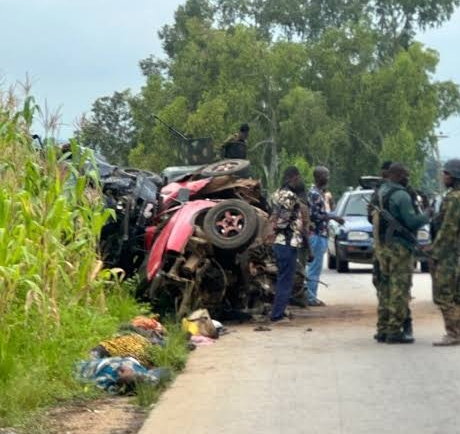
Twelve people have died in a road crash along the Kaduna-Kachia Road in Kaduna State, the Federal Road Safety Corps (FRSC) has confirmed.
The crash, which occurred at Doka Village in Southern Kaduna, involved two Volkswagen Golf cars. Two other occupants sustained serious injuries in the incident.
The FRSC Sector Commander in Kaduna, Mr Andrew Paul Longkam, said 14 people were travelling in the two vehicles when the crash occurred.
According to him, the victims comprised eight males and six females. All eight males and four of the females died, while the remaining two females survived with injuries.
The vehicles involved were a blue Volkswagen Golf with registration number APP 394 FN and a red Volkswagen Golf bearing registration number ACN 205 HK.
Longkam identified a tyre burst as the possible cause of the crash. He also said none of the occupants, including the two drivers, was wearing a seat belt or using any protective device when the accident occurred.
The two injured victims were evacuated to Rapha Hospital for medical attention, while the bodies of the deceased were deposited at Idon General Hospital pending contact with their relatives.

NYSC to Decentralise Registration From 2027
By Anwar Usman
The National Youth Service Corps (NYSC) has planned to fully decentralise registration of prospective corps members (PCMs) starting in 2027, to enable eligible graduates to complete the process remotely from their homes.
Director-General of the NYSC, Brig.-Gen. Olakunle Oluseye Nafiu, revealed this on Monday in Abuja, at the opening ceremony of the 2026 Batch ‘C’ Pre-Orientation Workshop.
The DG said the proposed arrangement would solve the challenges of prospective corps members queuing at cybercafés for registration and make the process easier and more seamless.
Foreign-trained graduates are also expected to benefit significantly, as some currently have to travel to Nigeria for registration, return abroad and make another trip for their national service.
“In the coming year, the management is considering completely decentralising the registration process to enable prospective corps members to register from the comfort of their homes, eliminating the challenges of queuing at cybercafés to register.
“It will equally make registration easier and seamless for our foreign-trained PCMs, some of whom have to travel into the country to do registration and sometimes travel back before returning to the country to serve their fatherland. We feel that it is a needless journey and a relief for parents,” he said.
Meanwhile, the Federal Government appreciate security personnel for the rescue of 15 kidnapped corps members and renewed its warning against night journeys.
Nafiu further stated that, the Batch ‘C’ Pre-Orientation Workshop would enable the NYSC management, partners and stakeholders to review previous orientation exercises, examine emerging challenges and develop strategies to improve the scheme.
He identified new technologies, socio-economic uncertainties, misinformation and insecurity among challenges requiring the NYSC to continually review its operations.
The Director General reiterated the need for sustained collaboration among federal and state governments, security agencies, traditional institutions and other stakeholders to assess risks, take preventive measures and ensure the safety of corps members throughout the service year.
The Gimmicks of “Next Level” are no Different from “Renewed Hope”
By Isyaka Laminu Badamasi
During the build-up to the 2019 general elections, former President Muhammadu Buhari’s campaign slogan was “Next Level”—a misleading slogan intended to make people believe that the 2015–2019 administration had anything to write home about.
Public affairs commentators throughout most of the campaign period cautioned Nigerians not to accept this slogan and to vote the system out. Those who survived Buhari’s second coming have many stories to tell the next generation.
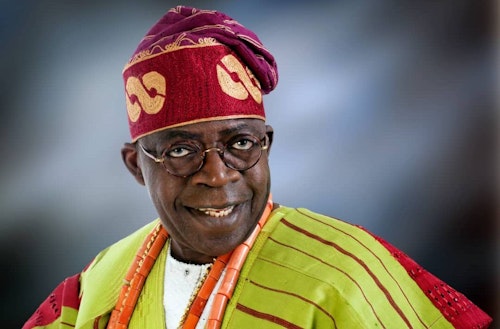
This administration’s re-election campaign slogan, “Renewed Hope,” relies on similar gimmicks. What kind of hope is the Tinubu administration renewing? Is it the hope of addressing lingering insecurity, such as banditry and kidnapping, or the hope of reversing poor economic policies and programmes that have plunged the common man into avoidable hardship?
This administration, deceitfully designed, introduced several palliative programs to cushion the negative effects of subsidy removal, such as promoting compressed natural gas (CNG) and electric vehicles, as well as establishing social safety nets. Tinubu administration halted the N-Power scheme, the National Home-Grown School Feeding Programme, and other social security initiatives without offering any convincing reasons.
The Tinubu administration also established a dedicated agency, the National Credit Guarantee Company Limited (NCGC), as a financial institution designed to expand financial inclusion and drive economic growth across Nigeria and appointed the former Speaker of the House of Representatives, Rt. Hon. Yakubu Dogara, as its chairman, backed by a 100 billion Naira budget allocation.
Three years into this administration, the agency has not yet secured an office building; it is squatting within the Bank of Industries building, and no official records of beneficiaries are available for verification.
The same administration is currently prosecuting an individual who, according to reports, established a fake agency, received funding, and spent huge amounts of money. This is Nigeria for you.
Dear Nigerians, vote wisely to avoid experiencing a situation similar to, or worse than, Buhari’s second term.
Isyaka Laminu Badamasi writes from no 555 Ajiya Adamu Road, Bauchi, Bauchi State.
Police Warn of Planned Terror Attacks on Schools, Worship Centres, NYSC Camps
By Sabiu Abdullahi
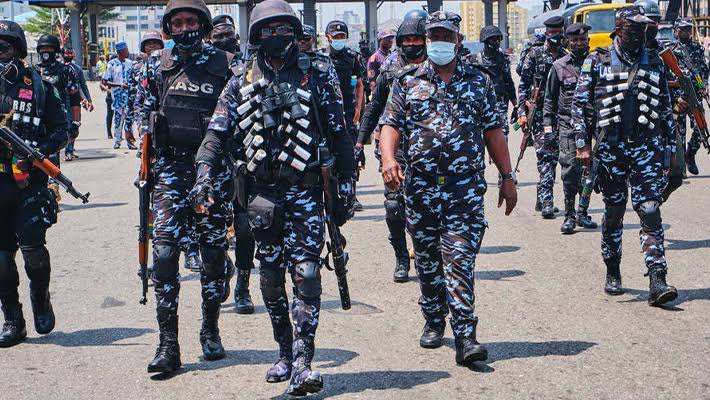
The Nigeria Police Force has warned of possible coordinated terrorist attacks on schools, places of worship, NYSC orientation camps and other vulnerable locations across the country.
The warning follows intelligence reports indicating increased mobilisation of terrorist elements and surveillance of potential targets, particularly ahead of the resumption of the 2026/2027 academic session.
In a security alert circulated to police formations nationwide, the Force said intelligence available to its Department of Operations had revealed an “increased mobilisation of terrorist elements for possible coordinated attacks” on vulnerable locations.
The alert was sent to Assistant Inspectors-General of Police overseeing Zones 1 to 17, Commissioners of Police across the states, Mobile Police formations, counter-terrorism units and other specialised formations.
The police also reported the movement of armed elements from Katsina through Kaduna towards Plateau State.
“There is an increased mobilisation of terrorist elements for possible coordinated attacks on places of worship, schools, NYSC orientation camps and other vulnerable locations,” it stated.
The Force further disclosed that suspected Islamic State West Africa Province operatives and their local collaborators were carrying out surveillance and reconnaissance of potential targets.
The police described the threat to educational institutions as a major concern because of the possibility that attacks could coincide with the reopening of schools.
As a result, affected commands and formations were directed to strengthen security around schools, religious centres, NYSC camps and other locations considered vulnerable to attacks.
“All personnel should maintain heightened vigilance and report suspicious persons, vehicles, movements or objects through established channels,” it added.
Commanders were also instructed to intensify intelligence-led surveillance, patrols, stop-and-search operations, access control and rapid-response arrangements around identified targets.
Police commissioners were directed to strengthen security at state borders, entry and exit routes and other strategic approaches to restrict the movement and infiltration of armed groups.
The Defence Headquarters said it was also monitoring the situation.
“We are monitoring the situation,” the Director, Defence Media Operations, Maj. Gen. Michael Onoja, said.
The Nigeria Security and Civil Defence Corps, NSCDC, meanwhile, said it had expanded its intelligence network across its state commands to protect schools and other educational institutions.
The NSCDC spokesperson, Babafemi Afolabi, said intelligence-based operations conducted by federal and tactical teams had prevented more than 100 attempted attacks on schools.
He said the Commandant-General had briefed state commandants and directed personnel to remain alert as schools reopened.
“All tactical squads, officers, and men of the Corps in different state commands — the Commandant General has already briefed them through their commandants. So, now that schools have resumed, they’ve doubled their intelligence network, and I’m very sure that nothing of such will happen,” he said.
Afolabi appealed to parents to allow their children to return to school, while urging communities to cooperate with security agencies.
“I would advise parents and their wards to just let them free to go to school. Nothing of such will happen. That’s why we’ve been able to work in collaboration with other stakeholders, even the community leaders,” he said.
“This is the time we have to work and we have to do it all together because security is a collective responsibility. When they notice anything going on in their area, they should quickly alert us and let us know.”
He said the NSCDC was also working with private security personnel across the country to strengthen intelligence gathering.
“Not only Civil Defence are doing this; we work together with other sister agencies, and also the private guards. We have millions of them all over the federation,” he said.
“So, part of the training we are giving to them is to put their ear on the ground and to furnish us with any information—whatever that is going on in their area—that they should furnish us and let us know.”
Ex-Security Chiefs Urge Vigilance
Former Assistant Inspector-General of Police, Ali Amodu, described the security alert as part of the responsibility of law enforcement agencies to gather intelligence, warn citizens and prevent attacks.
He urged Nigerians to take the warning seriously and remain alert to suspicious activities.
He said, “Whichever department must have actually ignited or sent the alert is going to serve one and the same purpose. And it is a good thing; it’s a responsibility of the law enforcement, not only to enforce law but to gather intelligence and send alerts so that citizens can always be alert.
“Citizens can always be ready. They cannot take things for granted. When such an alert is given, from experience, you discover that everybody will sit up.
“Security is everybody’s business. I must be very frank with you, over the years, we Nigerians have taken things for granted. It is now dawning on us that there is a need for us to be very cautious in what we do and to be alert.”
Amodu advised residents to report suspicious persons, unfamiliar movements and questionable vehicles, especially around places of worship.
He said the police, Department of State Services and military have intelligence-gathering responsibilities and should act on information received through security alerts.
“Now that election is by the corner, there’s need for everybody to be more of that alertness. The security agents are doing what they are supposed to do,” Amodu said.
Former Director of the Department of State Services, Mike Ejiofor, also urged Nigerians and security agencies to treat the warning seriously and take preventive action.
He said, “If you get such an advisory, we should take it seriously so that people are not caught unawares.”
Ejiofor stressed that preventing terrorist attacks required cooperation among security agencies, governments and members of the public.
“Now that we have preventive information, we should be sitting up. All of us—the military, the police, the state government, the Federal Government—everybody must be involved. But most importantly, the people must be security conscious,” he said.
He also urged residents to share useful intelligence with security agencies.
“The people must be security conscious, and they must also report back to the security agencies. That’s what this ‘see something, say something’ is important for,” Ejiofor said.
Parents Fear Return To School
The security warning has also raised concern among some parents, according to the National Secretary of the Uche Onyia-led faction of the National Parent Teacher Association of Nigeria, Ibrahim Nabayi.
Nabayi described the situation as “an unfortunate” development and called on governments at all levels to improve security around schools.
“Parents are worried now, parents are scared of sending children back to school,” he said.
He said the government had the resources to address the security situation and should deploy them to protect schools and students.
Nabayi also called for the deployment of technology capable of detecting threats approaching schools.
“I want to implore the Federal Government as well to develop, to deploy technology whereby from about five kilometres in the radius of a school, any weapon, any danger that is approaching towards the head of the school, government should be able to watch it from a distance and contain it and avoid this situation,” he said.
According to him, many schools remain vulnerable because the security personnel assigned to them may lack the capacity to confront heavily armed attackers.
“All our schools are porous. The kind of ammunition these guys move around with is more that what the security guards in the schools have. They cannot contain them until there’s intervention of a superpower,” he said.
Nabayi recalled the Safe School Initiative introduced when Christopher Musa was Chief of Defence Staff, saying it involved mapping schools for improved surveillance, coordination and rapid response.
“When the present Minister of Defence was the Chief of Defence Staff, he rolled out a military kind of system, what he called Safe School Initiative, whereby schools were mapped out for proper coordination, for swift response and surveillance,” Nabayi said.
He said the association raised the matter with the Defence Minister during a courtesy visit about three months ago, adding that Musa promised that the Federal Government would strengthen the initiative.
“So, this is the climax of where we need him and the ministry and all paraphernalia of government to contain this situation,” he said.
Nabayi also called for stronger cooperation between security agencies, communities and parent-teacher associations.
“We want synergy between the government and the communities where schools are located. Security is not the responsibility of the government alone. The communities where schools reside should be proactive. They should say something when they see foreign objects around them,” he said.
On whether schools in areas considered highly vulnerable should be temporarily closed, Nabayi said, “Of course, that’s the best way.”
He, however, proposed moving students from high-risk areas to safer schools rather than shutting down their education completely.
“I think instead of closing down schools, they transfer to the nearby schools that are safer and more reliable in terms of security. It’s a dynamic approach,” he said.
He warned that prolonged school closures could worsen educational inequality, especially for children who lack access to online learning.
Nabayi further urged the Federal Government to involve parent-teacher associations in school security and community sensitisation programmes.
“And we implore the Federal Government to involve critical stakeholders like PTA. We can sensitise people on how to mitigate such ugly incidents,” Nabayi said.
He said NAPTAN had previously conducted sensitisation programmes for school administrators, students and other stakeholders but stopped the initiative because of funding challenges.
Nabayi expressed concern over what he described as inconsistency in government policies on school security and called for renewed attention to the Safe School Initiative.
“The most unfortunate thing in this country is the somersault in policy decision-making. And the issue of the Safe School Initiative—we have been clamoring for the Safe School Initiative right from the attack on the Chibok girls,” Nabayi said.
He again advocated the use of technology to monitor activities around schools and detect possible threats before attackers reach their targets.
“We are saying that the government should be more proactive. We should evolve another strategy using technology in our schools,” he said.
On parents’ concerns, Nabayi said their fears were understandable and that government had a responsibility to provide safe learning environments.
“For parents who are apprehensive, it is a genuine fear, and I respect that. I cannot send my child where he is not safe,” he said.
He called for the Safe School Initiative to be “dusted off and implemented properly” and challenged journalists to investigate its current state in schools.
“As a journalist, go around and investigate. Conduct an independent investigation. In the schools in your community, is there any Safe School Initiative active? Who is the anchor person in that school? Who do you report to directly as the first point of contact?” he asked.
Nabayi maintained that education could not thrive without adequate security.
“Once the government can create a safe environment, education thrives. When there is fear, nothing can be learned,” Nabayi said.
The latest warning follows previous attacks on educational institutions and other public facilities across the country.
In May 2026, several students and teachers were abducted in separate attacks on schools. On May 15, armed men reportedly attacked three schools in Oriire Local Government Area of Oyo State, abducting 49 pupils, teachers and a toddler. A mathematics teacher was also killed while in captivity.
The Department of State Services had also warned Muslim and Christian leaders in Osun State about an alleged plan by terrorists to attack places of worship and other public gathering centres ahead of the 2027 general elections.
Kaduna Recovers 500,000 Hectares of Farmland From Bandits, Govt Says
By Sabiu Abdullahi
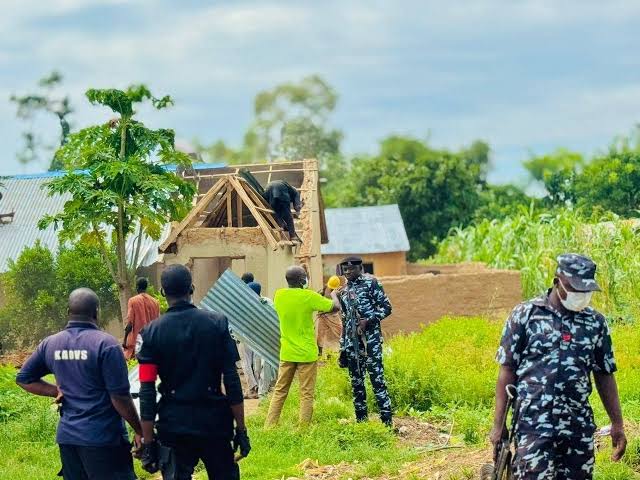
The Kaduna State Government says it has regained control of more than 500,000 hectares of land previously occupied by bandits across the state.
The Commissioner for Information and Culture, Ahmed Maiyaki, disclosed this on Sunday at a gala night hosted by his ministry for members of the Kano Correspondents’ Chapel of the Nigeria Union of Journalists.
The journalists were in Kaduna for their 2026 Retreat, which focused on “2027 General Elections: Navigating Legal, Security and Ethical Challenges in the Media.”
Maiyaki said the recovery of the affected areas had improved the security situation and allowed farmers who were previously prevented from accessing their farms to return to agricultural activities.
He said, “I’m happy to tell you that the present administration under the able leadership of Governor Uba Sani has, within the past three years, recovered over 500,000 hectares of land from bandits.
“As you know, without security you cannot achieve anything. Before now, farmers in such areas were unable to go to their farms due to the activities of the bandits.”
According to the commissioner, insecurity had previously disrupted movement between Kaduna and Abuja, with some travellers avoiding the route because of attacks by bandits.
“I’m happy to say that that has now become a thing of the past because the security situation in Kaduna State has greatly improved,” the commissioner said.
Maiyaki maintained that security remained central to the state government’s development agenda, describing it as a foundation for economic and social progress.
He also highlighted the government’s interventions in agriculture, saying 500 trucks of fertiliser were distributed free of charge to more than 150,000 farmers during the 2026 farming season.
“In 2024, the government distributed 400 trucks of fertiliser to farmers free of charge. Similarly, 500 trucks of the commodity were distributed in 2025 in addition to the 500 trucks distributed to over 150,000 farmers in 2026,” he said.
On education, Maiyaki said the number of out-of-school children in the state had dropped from 550,000 to 187,000.
He added that the state government purchased 100 compressed natural gas buses in July 2025 to provide cheaper transportation for students and civil servants.
“From July 2025, no fewer than 3.5 million people have been transported with the vehicles, and nothing less than N3.8m has been saved for people.
“Even the Nigeria Labour Congress has confirmed that workers have saved 40 per cent of their income since the introduction of the CNG buses,” he added.
The Chairman of the Kano Correspondents’ Chapel, Murtala Adewale, commended the Kaduna State Government for hosting the gala night.
Army Arrests Six Kidnappers in Adamawa as Boko Haram Fighter Surrenders in Borno
By Sabiu Abdullahi
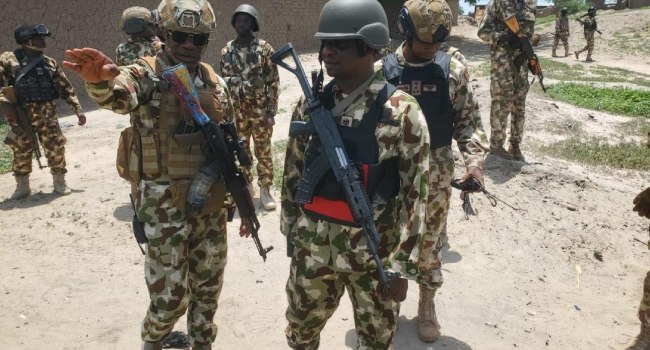
Troops of Operation Hadin Kai have arrested six suspected kidnappers in Adamawa State, while a Boko Haram/ISWAP terrorist surrendered to the military in Borno State.
The six suspects were arrested around Soktu Hill in Song Local Government Area of Adamawa State after troops received intelligence on the activities of a suspected kidnapping syndicate operating in the area.
The acting Military Information Officer of the Northeast Joint Task Force, Operation Hadin Kai, Capt. Mohammed Goni, disclosed this in a statement on Monday.
According to Goni, troops from Sector 4 of Operation Hadin Kai, working with local hunters, raided the suspected hideout after receiving credible intelligence about the group.
The statement read, “Following credible human intelligence on the activities of a suspected kidnapping syndicate operating around Soktu Hill in Song Local Government Area of Adamawa State, troops of Sector 4 OPHK, in conjunction with local hunters, swiftly mobilised and raided the identified hideout.
The operation, he said, “led to the arrest of three suspected members of the syndicate and the recovery of one Dane gun.
“Further investigation and subsequent covert operations led to the arrest of three additional members of the syndicate, bringing the total number of suspects arrested to six.”
Goni said preliminary investigations indicated that the suspects had been active across the Soktu, Dumne and Maigero areas of Song LGA.
He added that the suspects reportedly confessed to taking part in several abductions for ransom as well as other violent crimes in the area.
“They remain in military custody for further investigation and appropriate legal action,” he stated.
In Borno State, Goni said troops had also received a repentant Boko Haram/ISWAP terrorist who surrendered at Borgozo in Benisheikh, Kaga Local Government Area.
He said the development occurred on September 13, 2026, when troops of 29 Task Force Brigade under Sector 2 of Operation Hadin Kai, alongside Forest Guards, received the terrorist.
“Preliminary investigation revealed that the terrorist escaped from an enclave with the intention of abandoning terrorism,” he said.
According to the military, the surrendered fighter was found with an AK-47 rifle, 14 rounds of 7.62mm special ammunition, four magazines, an Improvised Explosive Device, a magazine pouch and a bicycle.
“The surrendered terrorist is currently in military custody undergoing further investigation and profiling in accordance with extant procedures,” he stated.
Goni described the arrests and surrender as evidence of continued military pressure against terrorists and other criminal groups within the Operation Hadin Kai Joint Operations Area.
“The Theatre Command remains committed to sustaining offensive operations, denying terrorists and other criminal elements freedom of action, creating a safer environment for law-abiding citizens and enabling an environment for socioeconomic activities to thrive,” he assured.
Atiku Demands Answers as Petrol Price Hits N1,470 Per Litre
By Sabiu Abdullahi
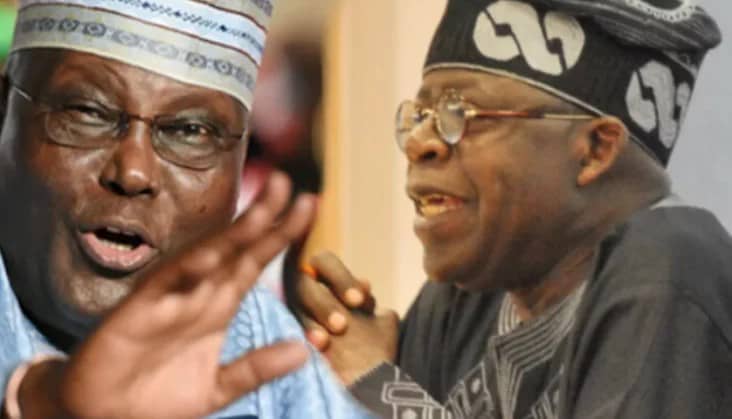
Former Vice President Atiku Abubakar has questioned the Federal Government over the rising cost of petrol, following the latest increase in the pump price to N1,470 per litre.
Atiku, through his spokesperson, Phrank Shaibu, said the development had added to the economic pressure confronting Nigerians, especially as higher fuel prices continue to affect transportation, food and other household expenses.
The former vice president also challenged the government to explain how the savings from the removal of the petrol subsidy have been used to cushion the impact of rising living costs.
According to him, Nigerians who have endured the effects of subsidy removal deserve to know what has happened to the funds saved by the government.
He said, “Petrol at N1,470 per litre is not merely a figure at the filling station. It enters the price of transportation, food, school runs, farming, manufacturing and virtually everything Nigerians buy. Every increase at the pump travels directly into the household budget.
“After all the pain imposed on Nigerians, they have a right to ask: where are the subsidy savings and where is the money?”
Atiku, who is the presidential candidate of the African Democratic Congress, ADC, also compared the current petrol price with the situation in 2008, when crude oil prices were significantly higher but petrol sold at a much lower price under the administration of the late President Umaru Musa Yar’Adua.
“With crude oil around $102.52 per barrel, Nigerians are paying as much as N1,470 per litre. In 2008, when crude oil reached about $147 per barrel, petrol sold at N65 per litre under the Yar’Adua administration. The difference is that government then understood that economic policy must ultimately protect the welfare of citizens,” he stressed.
The latest increase in petrol prices has continued to raise concerns over its wider effect on the cost of living, with transportation operators, businesses and households facing higher operating and daily expenses.
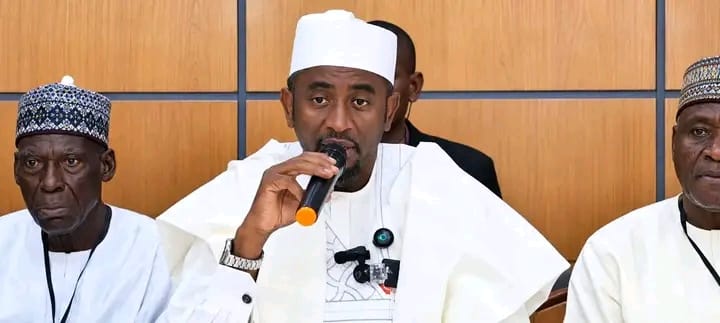
I Have Nothing to Hide: Senator Shehu Buba Denies Banditry, Terrorism Links, Submits Self to DSS, Police, DIA
By Abdullahi Mukhtar Algasgaini
Senator Shehu Buba Umar has vehemently denied allegations linking him to banditry, terrorism financing, kidnapping, and other violent crimes, describing the claims as “politically motivated smear campaigns” that have persisted since 2014.
Addressing a press conference in Abuja on Monday, the Bauchi State lawmaker said the allegations had reached a point where “silence is no longer sufficient,” particularly given their implications for national security and public confidence in security institutions.
“I categorically and unequivocally deny these allegations. I have never sponsored, financed, armed, facilitated, or supported banditry, terrorism, kidnapping, or any criminal organization or activities whatsoever,” Umar declared.
The senator, who previously served as Chairman of the Senate Committee on National Security and Intelligence, announced that he had voluntarily submitted himself to the Department of State Services (DSS), the Nigerian Police Force, and the Defence Intelligence Agency (DIA) for thorough investigation.
Through his legal team led by Yakubu Chonoko Maikyau, SAN, former President of the Nigerian Bar Association, Umar said formal letters had been written to the three agencies requesting comprehensive investigations into every allegation against him.
“I have nothing to hide and I have nothing to fear from any legitimate investigation,” he stated. “I do not believe allegations of terrorism, banditry, and kidnapping against a serving senator of the Federal Republic of Nigeria should be allowed to remain matters of social media speculations. These are serious crimes; they should be investigated seriously.”
The senator issued a direct challenge to his accusers, inviting politicians, activists, social media influencers, and journalists to present any credible evidence to security agencies rather than hiding behind “edited videos, insinuations, propaganda, or anonymous allegations.”
He also revealed that he had made himself available to international bodies, including Amnesty International, and expressed willingness to cooperate with all relevant security agencies.
Umar stated that if a prima facie case is established against him based on credible evidence, he is prepared to face prosecution, and would accept the consequences prescribed by law if found guilty by a competent court.
Reflecting on his tenure as Senate Committee Chairman on National Security and Intelligence, Umar noted that his legitimate engagements with military, intelligence, and security agencies were now being “distorted and weaponized” to create a false impression of relationships with criminal elements.
The senator disclosed that he had previously pursued lawful remedies against his accusers, including a September 2025 petition to the Nigerian Police Force that resulted in criminal proceedings currently before the Federal High Court in Abuja.
He further revealed that one Hassan Sani Hussain, believed to be behind several allegations, is reportedly operating from Niger Republic, with the matter reported for INTERPOL intervention and legal counsel engaged in Niger Republic to pursue appropriate measures.
“I seek no special treatment. Let every allegation be subjected to impartial scrutiny, let every piece of evidence be examined, and let the truth prevail,” Umar concluded.