


EFCC keeps mum as naira notes are sprayed on singer Rarara during Tinubu’s visit to Adamawa
By Sabiu Abdullahi
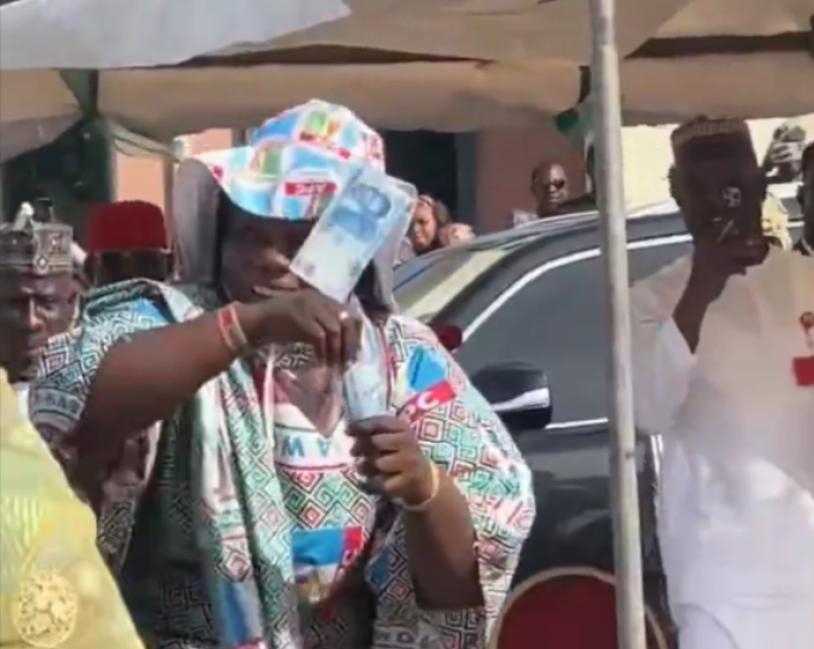
The Economic and Financial Crimes Commission has remained silent after a video emerged showing individuals spraying naira notes on popular praise singer, Dauda Kahutu Rarara, during President Bola Ahmed Tinubu’s official visit to Adamawa State.
The footage, circulated online, captured unidentified persons throwing ₦1,000 notes at the singer while he performed in praise of the president. The incident reportedly happened in Tinubu’s presence at the public event.
The development is coming despite repeated warnings by the Central Bank of Nigeria against abuse of the national currency.
The apex bank had earlier renewed its campaign in Abuja, cautioning Nigerians against acts such as spraying, mutilating, hoarding, or mishandling the naira.
Speaking at the campaign launch, the Deputy Governor of Operations, Mr. Bala Bello, represented by Dr. Adetona Adedeji, Director of Currency Operations and Branch Management, condemned such practices.
He said, “The naira is more than just a means of payment. It represents our national pride, sovereignty, and shared destiny.”
He added, “Unfortunately, careless practices like spraying money at events, tearing or writing on notes, and mutilation destroy its dignity and make it expensive to maintain.”
Observers have pointed out that the commission’s silence over the Adamawa incident contrasts with its previous enforcement actions.
Not long ago, the anti-graft agency arraigned and secured the conviction of musician Hamisu Sa’id Yusuf, popularly known as Hamisu Breaker, alongside Kano-based TikToker Abubakar Ibrahim, also called G-Fresh, for abusing the naira.
Justice S.M. Shuaibu of the Federal High Court sitting in Kano delivered the judgment after viral videos showed the duo spraying and mishandling the currency.
According to case details, Abubakar Ibrahim sprayed and stepped on ₦1,000 notes totaling ₦14,000 while dancing at Rahma Sa’idu’s shop in Tarauni Local Government Area in November 2024. The charge was filed under Section 21(1) of the Central Bank of Nigeria Act, 2007.
The Adamawa video has since triggered fresh reactions, with many questioning why similar action has not been announced by the EFCC following the latest incident.
INEC bows to pressure, reportedly proposes new dates for 2027 elections over clash with Ramadan
By Sabiu Abdullahi
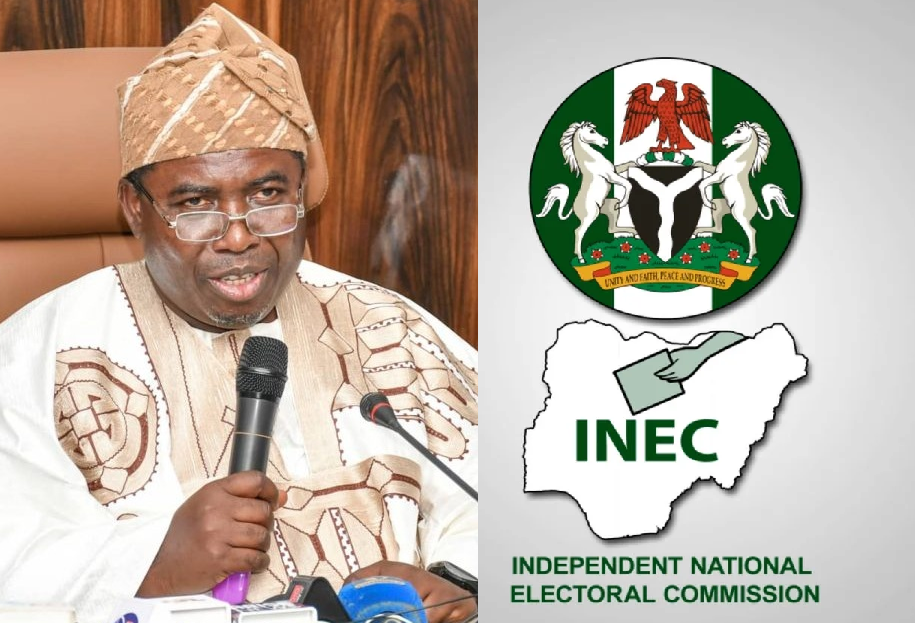
The Independent National Electoral Commission (INEC) and the National Assembly have reportedly agreed to revise the timetable for Nigeria’s 2027 elections, moving the presidential poll from February 20 to January 16 and the governorship elections from March 6 to January 30. The decision comes after widespread criticism that the original schedule coincided with the Ramadan fasting period.
Insiders within the electoral body and federal legislature confirmed the shift, describing it as a response to mounting concerns from religious groups, political stakeholders, and civil society organizations.
“After several meetings, both sides agreed that the February date is no longer tenable. The new proposal now on the table is January 16 for the presidential election and January 30 for the governorship polls,” a senior INEC official told newsmen on condition of anonymity.
A ranking senator echoed the development but noted that the proposal would still undergo debate in the National Assembly.
“That is the working proposal. But until it is formally adopted, it remains subject to change,” the lawmaker said.
The change follows intense opposition to the initial schedule. INEC had first set February 20, 2027, for presidential and National Assembly elections, with governorship and state assembly elections slated for March 6. Muslim groups and political actors criticized the timing, pointing out that it fell within the 2027 Ramadan period, projected from February 7 to March 8.
Former Vice President Atiku Abubakar publicly warned that holding elections during fasting could suppress voter turnout among Muslims. Former presidential aide Bashir Ahmad also urged the commission to reconsider, stressing that meaningful participation could be affected during a period traditionally devoted to fasting and spiritual reflection.
Over the weekend, some lawmakers reportedly proposed February 13 as a compromise. However, fresh consultations between INEC and the National Assembly appear to have produced a more substantial adjustment, pushing the elections into January. If approved, January 16 would rank among the earliest presidential election dates in Nigeria’s Fourth Republic.
The National Assembly acted swiftly to reflect the urgency of the matter. Clerk to the National Assembly Kamoru Ogunlana directed senators and members of the House of Representatives to reconvene at 11:00 a.m. on Tuesday, February 17, 2026, for what was described as a session to take “very crucial decisions.”
Although the official notice did not outline the agenda, insiders confirmed that reconsideration of the 2027 election timetable was the primary reason for the emergency plenary session. Consequently, a conference committee meeting scheduled for Monday to harmonize differences in the Electoral Act Amendment Bill was suspended.
Sada Soli, a member of the House conference committee, confirmed the suspension, while another member, Iduma Igariwey, acknowledged the postponement. A Senate source said lawmakers would prioritize resolving the sensitive issue of election dates before returning to other contested provisions of the bill.
The proposed change signals INEC’s willingness to respond to public and political pressure, illustrating the influence of citizen engagement, religious concerns, and political discourse in shaping electoral arrangements in Nigeria.
Zamfara governor raises alarm over security agencies’ negligence, lack of urgency
By Sabiu Abdullahi
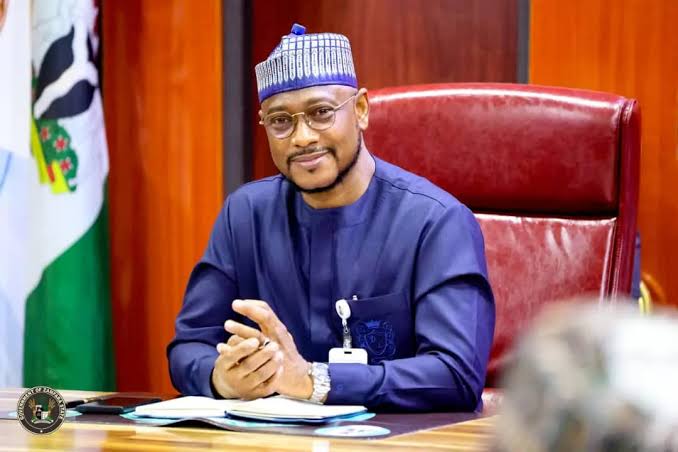
The Zamfara State Governor, Dauda Lawal, has expressed serious concern over what he described as the inadequate response of security agencies to intelligence on criminal activities, claiming that crucial information is often ignored because it is “not their priority.”
In an interview, Governor Lawal said that despite advances in technology that allow real-time tracking of criminal movements, security operatives have repeatedly failed to act decisively.
“If you follow all my interviews about insecurity, I strongly believe that we are not ready for this. I still believe we are not ready because it doesn’t take anything. With technology, every movement of any bandit, I have it in my system because we have satellites and drones. Every movement is communicated to all the relevant security operators: police, military, DSS and civil Defence real-time. But it is not their priority and it’s frustrating. When you have the tool, you can neutralise these guys easily. They live within us. How is it difficult? You are telling me a bandit, a terrorist is superior to the state? How is that possible? It’s not,” he said in the interview with Vanguard.
Governor Lawal stated that he personally briefed President Bola Tinubu about the true level of insecurity in Zamfara and parts of Kaduna, insisting that federal authorities have not been accurately informed.
“I met the president and I made it very clear to him that this is what you need to do, that they are not telling you the truth,” he added.
The governor lamented that, despite deploying advanced surveillance systems, security agencies have allegedly failed to treat intelligence as urgent, allowing attacks to continue unchecked.
Reflecting on the state he inherited upon taking office, Governor Lawal described Zamfara as “a very, very serious and dysfunctional state,” noting challenges such as unpaid salaries, an empty treasury, collapsed healthcare services, lack of potable water in Gusau for five months, students unable to sit for WAEC and NECO examinations, and widespread infrastructural decay. Electricity had also been disconnected from government offices, including the Government House, due to unpaid bills, forcing him to rely on personal resources to run the state.
Despite these challenges, the governor emphasized that insecurity remains the most pressing issue and warned that neglect by security agencies could continue to undermine peace efforts in Zamfara and neighbouring states such as Kaduna.
His remarks come amid continued violence in the state. Last Monday, SaharaReporters, a Nigerian online newspaper, reported that bandits armed with sophisticated weapons attacked Moriki town in Zurmi Local Government Area, killing a senior local government official and abducting several residents.
The attackers reportedly fired sporadically, causing panic as residents fled. During the attack, Lauwali Musa Moriki, the Zurmi LGA Health Educator, was shot dead, and members of his family were abducted, according to a local source, Bakatsine.
The incident has plunged Moriki town into mourning and heightened fears over worsening insecurity, with residents accusing security agencies of failing to prevent repeated attacks despite multiple warnings. Moriki town, like many rural communities in Zamfara, has faced frequent assaults by armed groups exploiting poor security presence and difficult terrain.
One dead, several injured as gunmen in US invade high school hockey match
By Sabiu Abdullahi
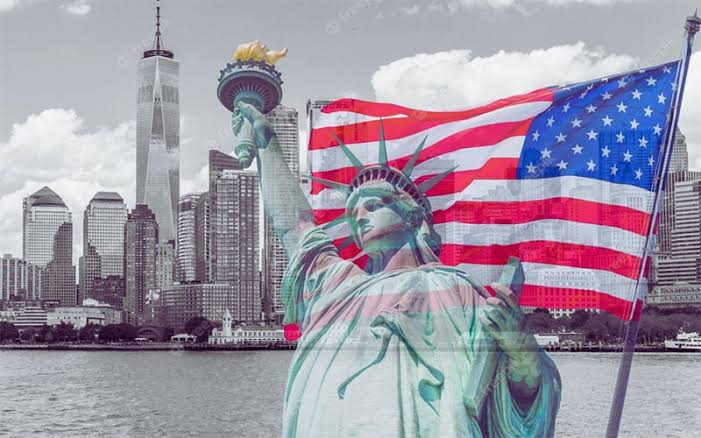
A shooting disrupted a high school hockey game in Pawtucket, United States, leaving one person dead and several others injured.
The incident occurred on Monday afternoon at Lynch Arena, an ice rink known as the home venue of the hockey team of Johnson & Wales University, according to NYPost.
Authorities confirmed that the suspect involved in the daytime attack died at the scene. Officials, however, did not immediately provide a confirmed figure for the number of injured victims as emergency responders transported the wounded to nearby hospitals.
Eyewitnesses recounted moments of panic inside the arena. Students, parents, and other spectators ran for safety after gunshots suddenly echoed during a match between rival schools, Coventry and Blackstone Valley.
An employee of a nearby Walgreens store told local media that terrified individuals rushed into the shop in search of protection shortly after the shooting started. Staff members were asked to close the store and evacuate, while some people remained hidden inside as emergency services were alerted.
Branden Mello, a local sports editor who followed the situation, said the shooting started from the spectator stands behind the Blackstone Valley team’s bench. The development sparked fear across the facility.
He added that a parent at the venue reportedly confronted the attacker and succeeded in wrestling a firearm away from him. Reports indicated that the suspect possessed another weapon at the time, which heightened the danger before order was eventually restored.
The shooting has again raised concerns about gun violence in public places across the United States, particularly at school-related events where families and students usually gather.
Law enforcement authorities have opened an investigation into the incident. Officials are also monitoring the medical condition of those who sustained injuries.
RKK holds a symposium in honor of Nigeria’s slain leader, Murtala Ramat Muhammad
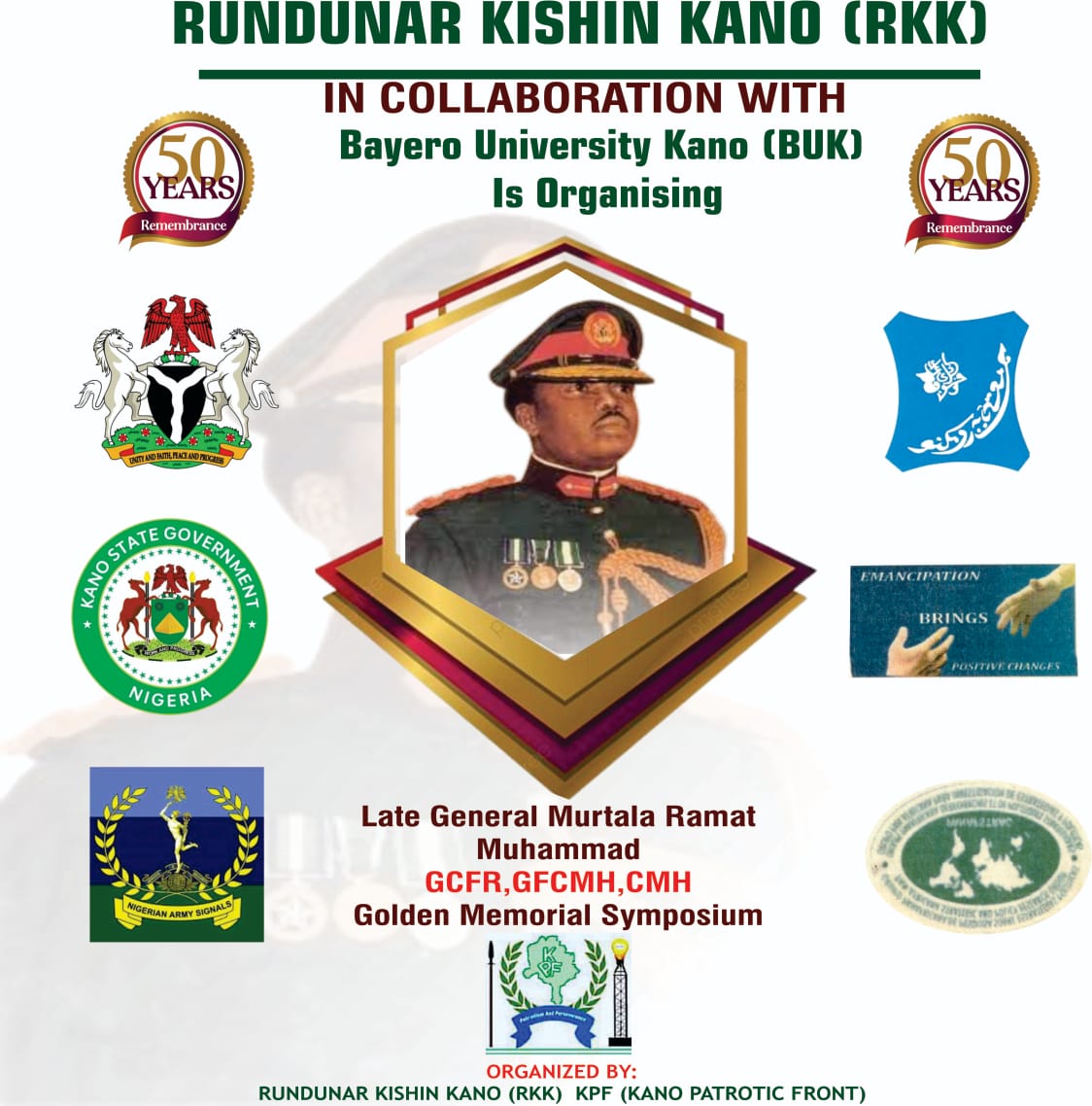
Today marked a poignant and memorable milestone in Nigerian history as hundreds of students, dignitaries, scholars, veterans and guests from within and outside Kano converged at Bayero University, Kano for the 50-year Commemoration Symposium organised by Rundunar Kishin Kano (RKK) — also known as the Kano Patriotic Front. The event was held in honour and remembrance of the late General Murtala Ramat Muhammed, the former Head of State whose leadership left an indelible impact on Nigeria’s governance and national identity.
Punch Newspapers
The symposium, convened on the anniversary of General Murtala’s assassination on 13 February 1976, brought together a diverse audience, including university dons, students, political leaders, community figures and patriotic Nigerians who came to reflect on and celebrate the life, leadership philosophy and enduring legacy of one of the country’s most revered leaders.
In his opening remarks, the Convener of the event and National Coordinator of RKK, Major General Ibrahim Sani (rtd) received widespread praise for spearheading a well-executed and inspirational program that resonated deeply with all present. The event was noted for its meticulous planning, vibrant energy and strong turnout — a testament to both General Murtala’s continued relevance and RKK’s organizational capacity.
“General Murtala Ramat Muhammed remains one of the most powerful voices of integrity and reform in our national memory,” General Ibrahim declared. “Today, we do not only remember the man, but we recommit ourselves to the values he championed — patriotism, leadership with integrity and unwavering service to our nation.” The address set a reflective and aspirational tone for the day’s activities.
The symposium featured a range of speeches, video show, purposeful discussions and academic reflections on the late Head of State’s life and leadership. Distinguished speakers shared insights on his role in reshaping Nigeria’s civil service, tackling corruption, restoring national discipline and positioning the country as a principled voice on the global stage — contributions widely acknowledged as foundational to the modern Nigerian state.
Students from various faculties at Bayero University actively participated in the discussions, underscoring the relevance of historical leadership lessons for the country’s youth.
Special prayers were offered for the repose of General Murtala’s soul and for the nation’s continued unity and progress.
Guests attending from outside Kano described the symposium as “inspiring and deeply moving,” highlighting the significance of such platforms in preserving Nigeria’s historical consciousness and encouraging cross-generational dialogue.
As Nigeria commemorates this golden jubilee of General Murtala’s legacy, events like today’s symposium reflect a broader national effort to celebrate and critically engage with the leadership ideals that have shaped the nation’s trajectory.
About General Murtala Ramat Muhammed:
General Murtala Ramat Muhammed was Nigeria’s Head of State from July 1975 until his assassination in February 1976. Though his tenure was brief, his leadership remains celebrated for decisive reforms that revitalised the civil service, strengthened national governance and anchored Nigeria’s international stance on justice, Pan-African solidarity and anti-colonial advocacy.
The successful commemoration by RKK at Bayero University stands as a fitting tribute to a leader whose legacy continues to inspire Nigerians five decades after his passing.
Sultan declares 2025 a year of anti-Islamic obsession against Nigerian Muslims
By Sabiu Abdullahi
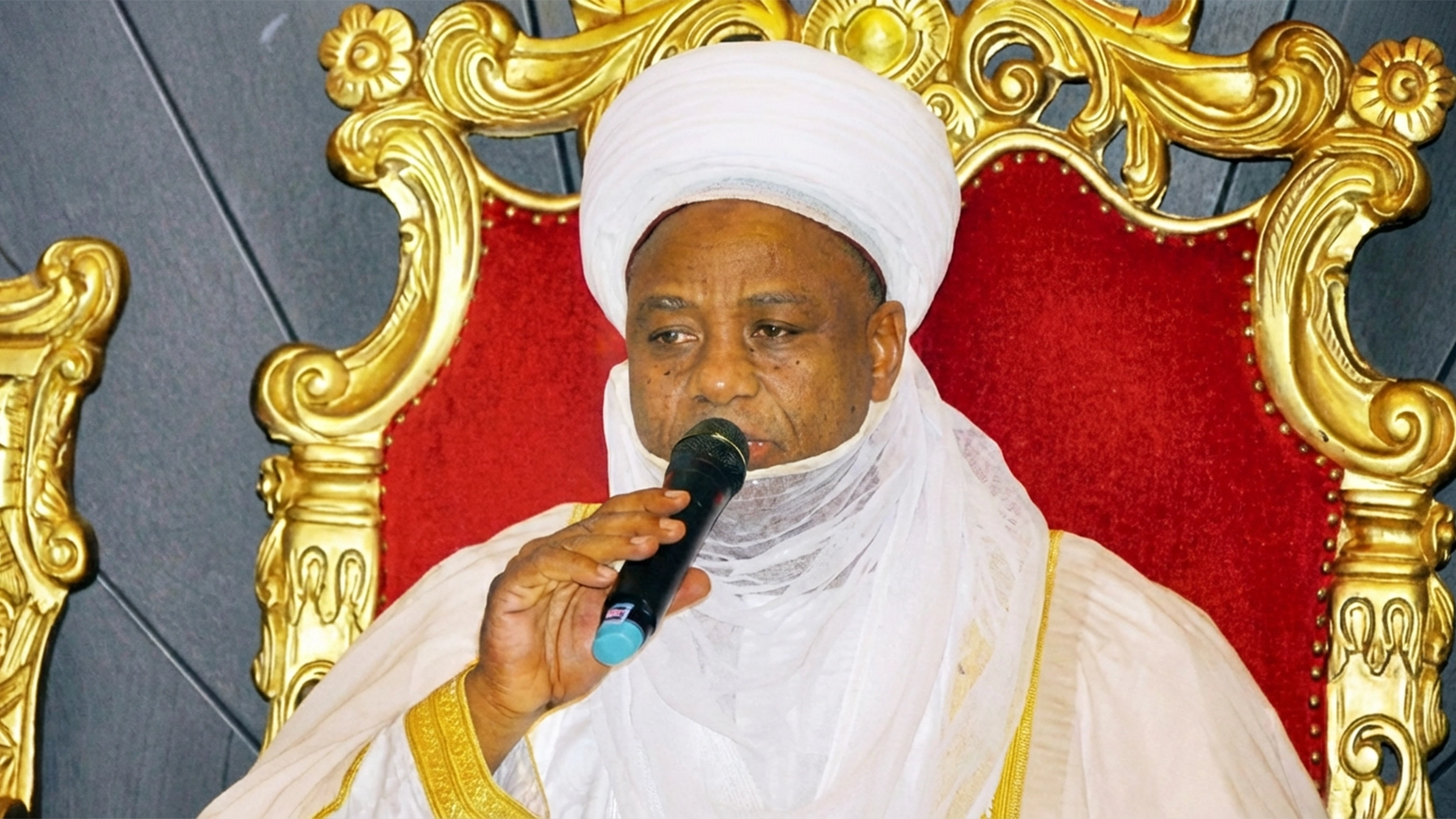
The Nigerian Supreme Council for Islamic Affairs (NSCIA) has described 2025 as a period during which Muslims in Nigeria experienced an unprecedented wave of anti-Islamic sentiment. The statement comes amid controversies over claims of a so-called ‘Christian genocide.’
The Council, led by its President-General and Amirul Mumineen, His Eminence, Alh. Muhammad Sa’ad Abubakar, Sultan of Sokoto, issued the statement in a release on Sunday. The release, signed by NSCIA Secretary-General, Professor Is-haq Oloyede, also called on Nigerian Muslims to observe the crescent of the month of Ramadan immediately after sunset on Tuesday, February 17.
According to NSCIA, last year presented significant challenges for Islam and Muslims in Nigeria, reflecting difficulties faced by millions of Muslims worldwide.
The Council stated, “Muslims have found themselves in the vortex of heightened Islamophobic hysteria that seeks to criminalise Muslims through spinning narratives that are inconsistent with the reality of insecurity in Nigeria.
“The agenda of the secessionist elements and bigoted religious leaders is to turn Nigeria into a war theatre where Muslims would be annihilated in millions through the spurious ‘Christian Genocide’ that was manipulated to gain the attention of imperial powers.”
NSCIA also highlighted that Muslims have been pressured to condemn actions they did not commit, while victims of attacks are often portrayed as perpetrators. “Muslims have thus become ‘double victims’ who are, on the one hand, the major victims of Boko Haram, banditry, and Lakurawa, the most heinous of such incidents happening in the underreported gruesome murder of about 200 Muslims in Kwara state and also, on the other hand, the victims of negative narratives that erase Muslim suffering.
“The culture of inequality against Muslims is being entrenched because Christians have foreign powers to defend them while Muslims appear defenseless.”
The Council criticized media coverage for failing to uphold fairness and objectivity in reporting matters concerning Muslims. It cited previous cases to illustrate the bias. “These assertions can be illustrated with the deliberate attempt to demonise Islam and Muslims by the media in the case of Yunusa (a Muslim) versus Eze Oruru (a Christian) in 2015, with the incident sensationalised as Muslim jihad to forcefully convert a Christian minor into Islam. Then, a media mob trial of Muslims in general preceded the eventual trial and conviction of Yunusa.
“Conversely, in 2026, it is now public that for years, one Christian, Ifeanyi Onyewuenyi, had abducted a Muslim minor, Walida Abdullahi, and allegedly forced her both into marriage and conversion to Christianity.
“Yet, no one has condemned Christianity or Christians for this individual act. No faith community is accused of complicity.
“Similarly, Muslims in Nigeria and Islam are being taunted, scandalised and condemned because a mob with a Muslim identity took law into their hands and murdered Deborah for an alleged blasphemy.
“In contrast, Pastor Dio Idon of ECWA, Kasuwan Magani, Southern Kaduna, was on 4th January 2026, killed and totally burnt by a Christian mob that accused him of witchcraft. However, the media have been silent on the religion of the mob in the Christian-dominated community.
“The recent attempt to Christianise the victimhood of Muslim worshippers in Maiduguri by Channels television and the hasty Christianisation of the unfortunate abducted girls in Kebbi are also still fresh in our memory.”
The NSCIA statement reflects ongoing concerns over religious inequality, biased narratives, and the safety of Muslims in Nigeria. The Council urged its followers to remain vigilant while observing religious duties, highlighting the need for accurate reporting and fair treatment in public discourse.
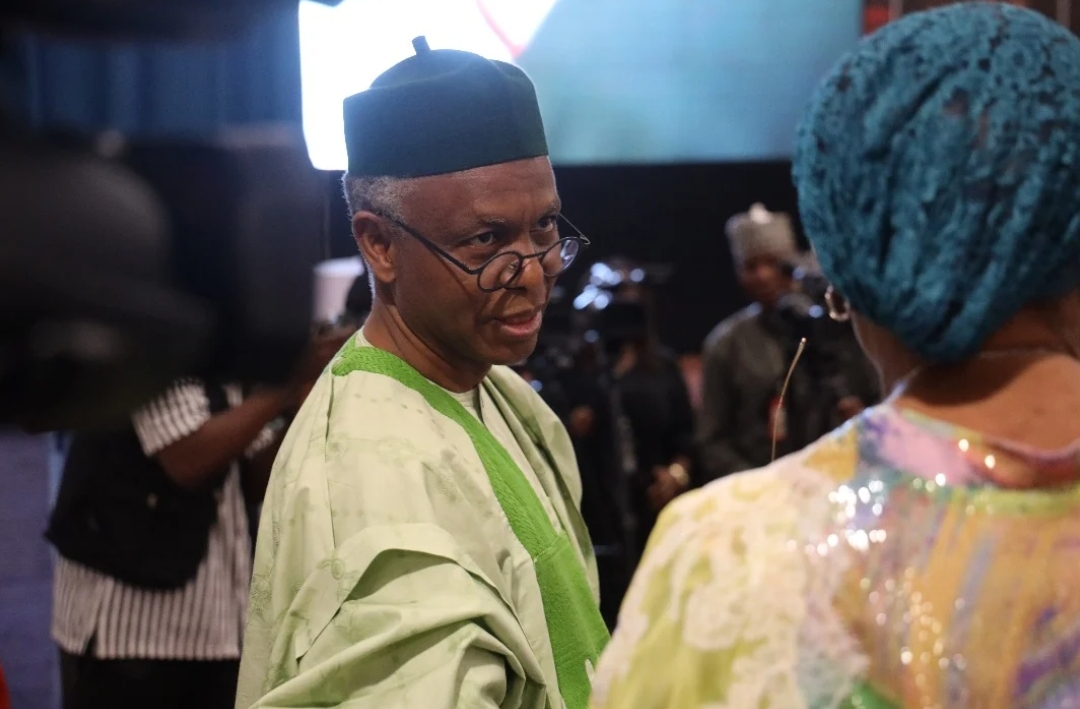
El-Rufai will be in EFCC custody until tomorrow, aide confirms
By Sabiu Abdullahi
Former Kaduna State Governor, Malam Nasir El-Rufai, will remain in the custody of the Economic and Financial Crimes Commission (EFCC) overnight, his media aide, Muyiwa Adekeye, has confirmed.
El-Rufai honoured the invitation of the anti-graft agency on Monday morning. He has since been responding to questions from EFCC detectives regarding matters under investigation.
Providing an update late Monday, Adekeye disclosed the development in a post shared at 10:07 p.m.
“UPDATE: Malam Nasir @elrufai today honoured the invitation extended to him by the EFCC. He had a frank and fruitful interaction with the EFCC officials, whom his counsel noted were entirely professional in their approach and conduct. He remains with the EFCC.”
A source, quoted by NAN, said investigators questioned the former governor over alleged fraudulent activities linked to his administration during his tenure from 2015 to 2023.
“He is with our investigators, but cannot confirm how long he would be questioned, it is still early to know how long he will stay there,” the source was quoted to have said.
Another source indicated that there is a possibility he may be taken to court for arraignment after the interrogation process.
Meanwhile, as the EFCC engagement continued, the Department of State Services (DSS) filed charges against El-Rufai over allegations that he bugged the phone of the National Security Adviser, Nuhu Ribadu.
El-Rufai had spoken on ARISE Television during the weekend. He alleged that someone tapped Ribadu’s phone and overheard him ordering his arrest.
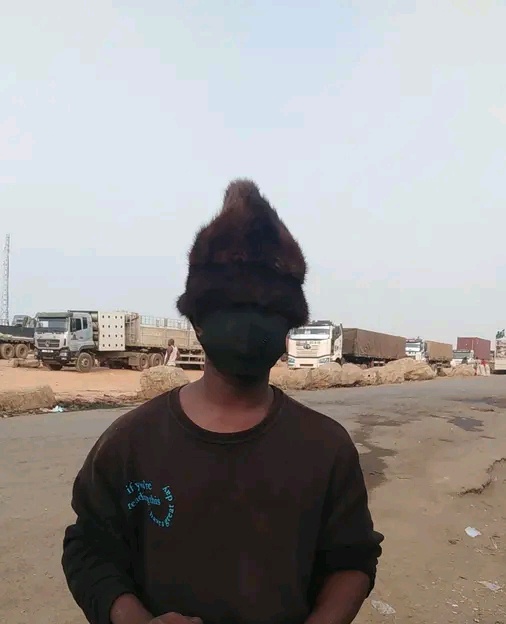
Kano indigene’s “Japa” dream turns nightmare: Sulaiman’s Algerian ordeal
By Kamal Alkasim
It began with hope. Like many young Nigerians chasing a better life, Sulaiman Abubakar left Kano with dreams of greener pastures. But four years after crossing into Algeria illegally, his journey has become a nightmare — one of arrest, detention, and silence that has left his loved ones pleading for help.
Sulaiman Muhammad, a native of Kano, fled his hometown’s rising cost of living and crossed into Algeria illegally. After four years abroad, he was arrested and has been detained there for more than four months.
In an interview with The Daily Reality, his fiancée Khadija Abubakar, 20, shared the untold story:
“I met him before he left for Algeria. The hardship at home forced him to go. We lost touch for a long time,” she said.
“When we reconnected, he sent ₦1 million to my family so my parents could buy marriage materials (Lefe) and prepare our wedding. A month later, back in Kano, he returned to his business, and I haven’t heard his voice since.”
Her words, spoken with sorrow, highlight the human cost of irregular migration.
His Kindness and Impact on My Life
“He is generous and very good to me. If I marry him, I know he will be a supportive partner. He sent me money as capital to grow my business, and in every situation he has never failed to support me. He always told me that if he had enough capital, he would return to Kano, start his own business, and stay home rather than travel again. Missing him is a great loss to me.”
“After he went missing, I contacted his boss on WhatsApp. We spoke, and he told me to stay calm and promised to do his best to rescue him. He thought the police might have arrested him. We talk every day, but the story remains the same. I don’t know what to do.”
A Mother’s Plea
Sulaiman’s mother, Aishatu Abubakar, who asked not to be photographed, shared her anguish: “My son is one in a million. He’s obedient. If I lose him, they will finish me. He always takes on my responsibilities. The whole family is proud of him. He promised to finish building my home. This tragedy ends that hope for me. But in my body, I feel my son will escape soon.”
Final Call for Help
“I called on people who can help me to rescue him,” Khadija said. His mother, Aisha Abubakar, added, “I call on anyone who can do anything to help us. We are ready to join hands.”
What Algerian law says about illegal immigration
Algeria’s main rule for people who enter the country without a visa or proper documents is set out in Law No. 08-11 of 25 June 2008 on the conditions of entry, residence and movement of foreign nationals. The law makes “illegal entry” a punishable offence, and once caught, migrants can be detained, fined, and then deported.
In practice, authorities often place undocumented migrants in administrative detention centres while arranging removals, and they may also issue re-entry bans. Human rights bodies have repeatedly urged Algeria to decriminalise irregular migration and to use detention only as a last resort, but the 2008 law remains the legal basis for treating unauthorised entry as a criminal matter.
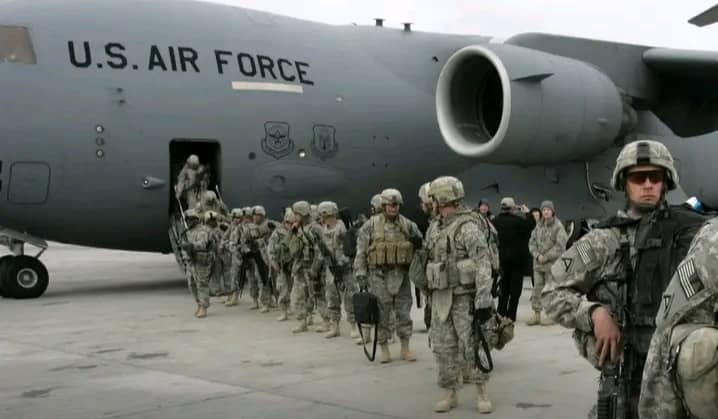
US military personnel arrive in Bauchi for training, intelligence support
By Abdullahi Mukhtar Algasgaini
The Defence Headquarters (DHQ) has confirmed the arrival of approximately 100 United States military personnel at the Bauchi Airfield to bolster the Armed Forces of Nigeria through training and intelligence-sharing initiatives.
In an official statement on Monday, Director of Defence Information, Major General Samaila Uba, clarified that the deployment follows formal diplomatic engagements and was initiated at the request of the Nigerian Federal Government.
“The deployment forms part of the deliberations during a working group engagement by the Nigerian delegation and its US counterpart,” Maj. Gen. Uba stated. He emphasized that the presence of the US personnel is a “planned and deliberate” move designed to address specific military training requirements and enhance technical support.
The DHQ stressed that the collaboration is strictly non-combative. “The US personnel are technical specialists serving strictly in an advisory and training capacity. They are not combat forces,” the statement read, adding that all activities will be conducted under the authority and control of the Nigerian government.
The joint exercises will focus on strengthening the capacity of Nigerian troops to identify and neutralize extremist threats. The partnership aims to provide Nigeria with access to specialized technical capabilities, ultimately helping to protect vulnerable communities and deter terrorist activities.
“These activities are designed to enhance the capacity of Nigerian troops to effectively identify and neutralise extremist terrorist groups seeking to destabilise the nation,” Maj. Gen. Uba added.
The Defence Headquarters reassured the public of its commitment to transparency throughout the cooperation, promising to provide clear and timely information regarding the military engagement.
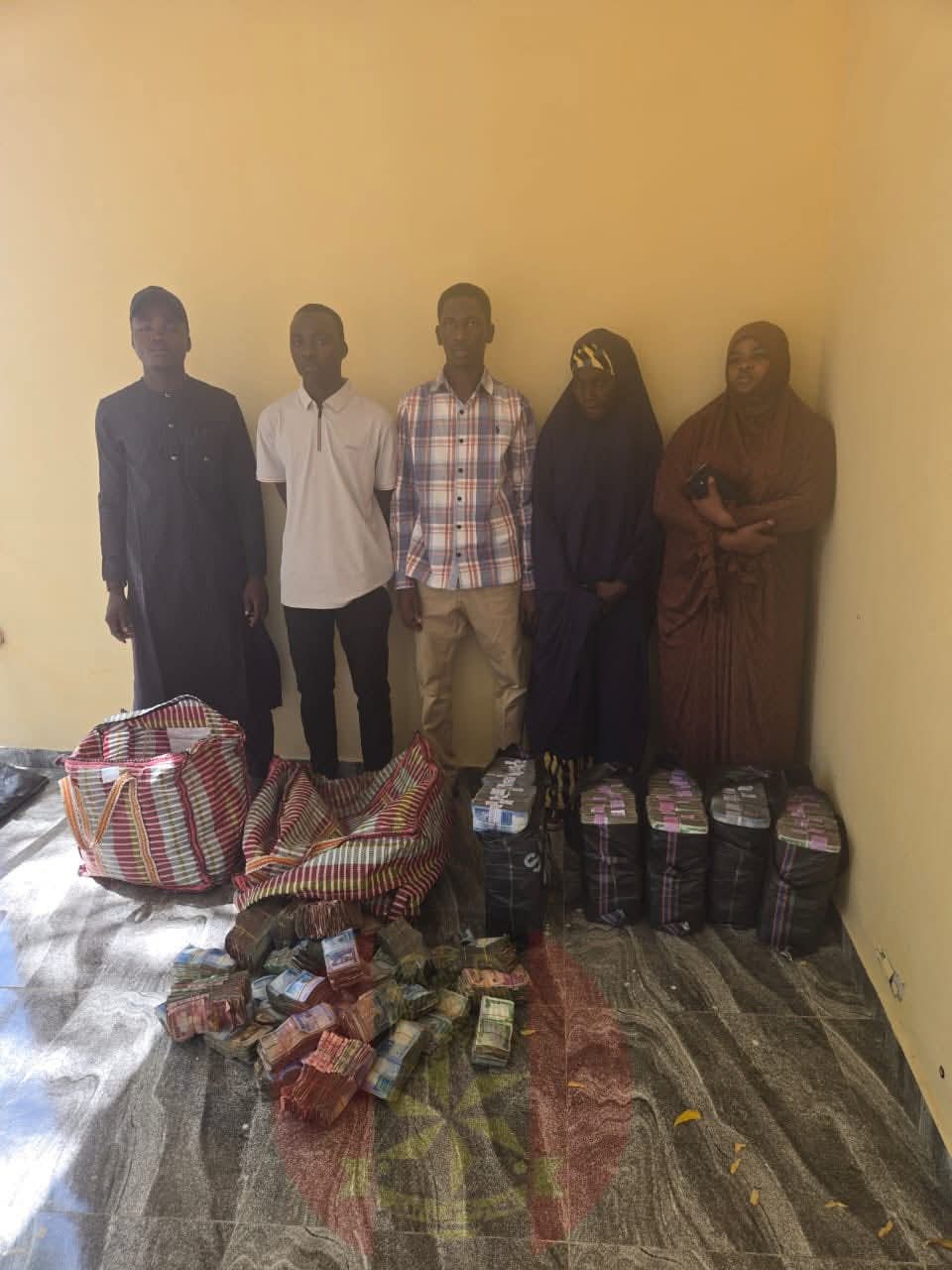
Troops sustain anti-terror operations, recover ₦37 million linked to insurgent financing
By Sabiu Abdullahi
The Joint Task Force (North East) Operation HADIN KAI has continued its offensive against terrorist networks, with fresh operations targeting logistics and financial structures that sustain insurgent activities.
Military authorities said the renewed push followed recent defensive victories recorded in Pulka and Madara-Girau. The successes, they noted, created the momentum for troops to expand operations aimed at cutting supply routes and weakening terrorist support systems across the theatre.
According to the press statement, the coordinated efforts are designed to retain operational advantage, restrict the movement of insurgents, and dismantle their logistics and funding framework.
On 16 February 2026, troops of Sector 1, working with Vigilante Forces, launched a night ambush along a crossing route often used by ISWAP عناصر moving from the Cameroon axis into Nigeria. The fighters were unaware of the concealed troop positions. They advanced into heavy enfilade fire and retreated in confusion after the engagement.
Security forces later searched the scene of the encounter. They recovered a large quantity of logistics materials believed to have been meant for terrorist resupply. The development, according to military sources, has reduced the group’s ability to sustain operations in the area. Troops still dominate the location and continue follow-up actions to consolidate their hold.
In a separate operation, soldiers at the Forward Operating Base, Chabbal Checkpoint, intercepted a suspicious vehicle carrying five occupants. A detailed search led to the discovery of approximately Thirty-Seven Million Naira (₦37,000,000.00) hidden in bags. Several mobile phones were also recovered. Authorities suspect the items are linked to terrorist financing and coordination.
The military described the interception as a major success in efforts to dismantle financial channels believed to support insurgent logistics and operations.
Officials added that the combined actions reflect a broader strategy focused on choking supply chains while targeting funding sources. Pressure on transit routes and support networks, they said, is intended to weaken terrorist elements and limit their ability to rebuild combat strength.
The Military High Command praised the vigilance, professionalism, and resilience of troops as well as collaborating security agencies. It stated that the morale and combat efficiency of personnel remain high.
Operation HADIN KAI reaffirmed its commitment to defeating terrorist threats and restoring lasting peace and economic stability across the North-East region.
The statement was signed by Sani Uba, Lieutenant Colonel and Media Information Officer, Headquarters Joint Task Force (North East) Operation HADIN KAI, and dated 16 February 2026.